
DUBAI, United Arab Emirates (AP) — American military forces stepped up their campaign against Iran in the early hours of Thursday, striking targets deeper into the country’s northern regions while also firing on a ship accused of attempting to break through a U.S. naval blockade. Iran answered with missile and drone strikes aimed at Bahrain, Jordan, and Kuwait before sunrise.
The ongoing exchange of strikes between the U.S. and Iran across the Middle East — combined with renewed threats to the Strait of Hormuz — has put the interim agreement meant to end the Iran war in serious jeopardy and threatens to push the entire region back into full-scale conflict. Iranian officials report that U.S. strikes have already killed more than 35 people and left over 300 others wounded. For the first time in this current round of fighting, strikes also reached areas surrounding Iran’s capital, Tehran.
When the U.S. and Israel launched the war against Iran on February 28, Tehran effectively shut down the strait to shipping, a move that sent oil, fertilizer, and other commodity prices surging well beyond the region and gave Iran significant leverage at the negotiating table.
Those climbing prices present a serious problem for U.S. President Donald Trump and his Republican Party, which is looking to hold onto its majority in Congress during November elections. Washington has struggled to force the waterway back open, which led Trump to reinstate the naval blockade on Wednesday.
Iran’s parliament speaker and chief negotiator, Mohammad Bagher Qalibaf, warned that Iran was ready for a more intense military confrontation if the U.S. fails to honor the terms of the interim agreement. Iran’s paramilitary Revolutionary Guard also threatened to cut off all energy exports from the Middle East in response to the blockade.
“The export of oil and gas from the region will be either for everyone or for no one,” the Guard declared.
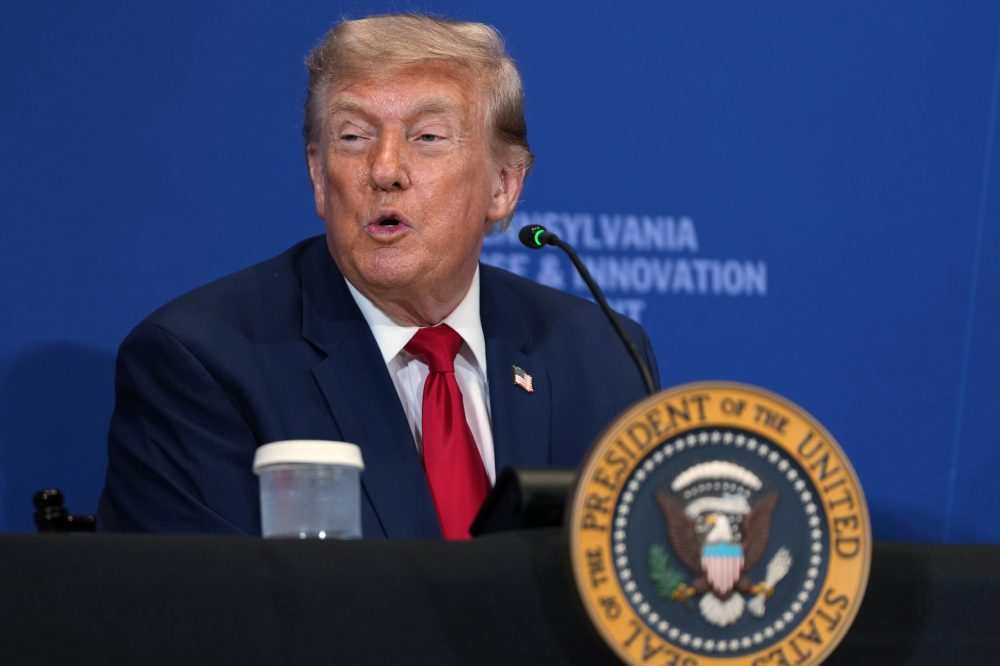
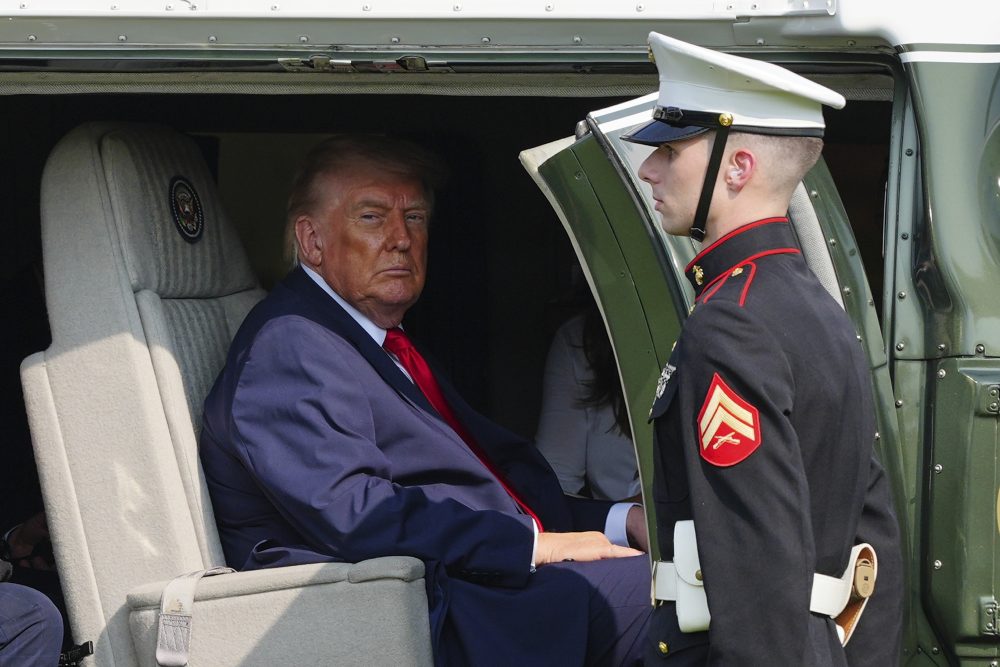
Trump continued to maintain that Iran was willing to reach a peace agreement, though he offered no specifics. “They don’t like what we’re doing, and they do want to settle. We’ll find out whether or not we settle with them, or we just finish it off,” he said Wednesday while speaking at the U.S. Army War College in Pennsylvania.
Trump also posted on social media that Tehran had made a goodwill gesture by freeing an American citizen who had been wrongly held in Iran since 2024, though he provided no additional details. Human rights attorney Jared Genser issued a statement identifying the released detainee as his client Dena Karari, a U.S.-Iranian citizen who leads a nonprofit organization and had been charged with espionage.
Iran did not immediately confirm the release, and her case had not been publicly known — a situation that is not uncommon with detentions inside the Islamic Republic.
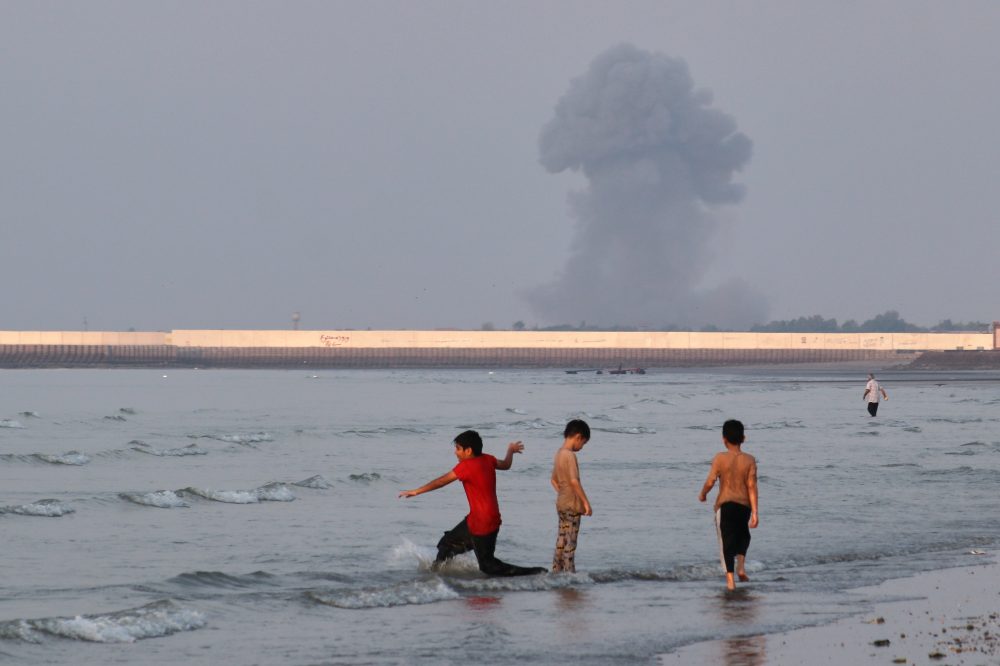
Iranian state media reported that Thursday’s early U.S. strikes hit areas around Tehran. State media also reported that American forces targeted Semnan province, which is home to Iran’s ballistic missile manufacturing and space program operations.
On Wednesday, U.S. forces resumed striking Iran during daylight hours, signaling a quickening pace of attacks. Central Command reported that a strike on Greater Tunb Island — a strategically important location in the Strait of Hormuz — hit Iranian defense and missile installations.
The U.S. military also announced that it opened fire on the Curacao-flagged oil tanker Belma as it sailed toward Kharg Island, Iran’s primary oil export terminal in the Persian Gulf. After the vessel “ignored multiple warnings,” a U.S. aircraft disabled the ship by firing a missile directly into its smokestack.
A separate American strike on Wednesday targeted barracks belonging to Iran’s 388th Mechanized Infantry Brigade — a unit that operates tanks and armored vehicles — located in Sistan and Baluchestan province, according to Iranian state television. The report indicated that at least 13 missiles were fired in the attack, killing seven people including both conscripts and career military personnel, with additional troops wounded.
Authorities in Bahrain, Jordan, and Kuwait — all countries hosting U.S. military forces — confirmed that Iran launched missile and drone attacks against them on Thursday. No immediate reports of damage or casualties were released.
The current phase of fighting is centered on the Strait of Hormuz, a critical waterway that has posed a challenge for U.S. efforts since Iran choked off shipping traffic in the war’s early days.
Under the interim agreement, some vessels had been moving through a passage near Oman that is monitored by the U.S. military and falls outside Tehran’s control. In recent days, Iran began attacking ships using that route, triggering another round of retaliatory strikes. The U.S. has threatened to force the strait open by military means, though experts warn that doing so would require a significantly larger naval force — or potentially tens of thousands of ground troops. The blockade is being used as an alternative form of pressure against Iran.
Meanwhile, oil prices continue to climb. Brent crude, the international benchmark, was trading above $85 per barrel on Thursday — more than 15% higher than pre-war prices, though still well below the nearly $120 per barrel reached at the peak of the conflict.