
Renewed fighting in the Gulf region is sending oil prices higher, and airline investors and industry executives are seeing growing signs that Europe’s financially weaker carriers could be heading for a major shakeout.
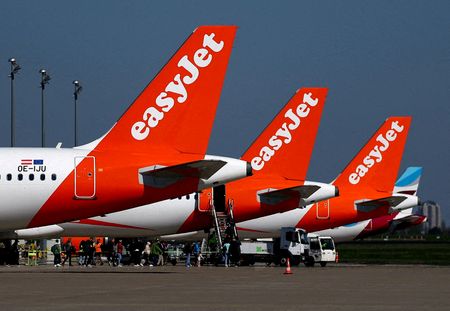
British budget airline easyJet is approaching a U.S.-led takeover deal that would take the 30-year-old carrier private at a valuation well below where it stood before the pandemic. Meanwhile, Latvia’s airBaltic is seeking short-term financing to avoid defaulting on its debts, and Norway’s Norse Atlantic has launched a strategic review of its operations.
Although much of the airline industry repaired its finances in the wake of COVID-19, the recent spike in fuel prices has hammered share values and laid bare the shaky financial foundations of some carriers that are now weighing restructuring options, potential buyouts, or bankruptcy protection.
“We are pitching, I think, four or five very large airlines on restructuring situations just at the moment across Europe,” said Barema Bocoum, head of EMEA at financial advisory firm Interpath, in an interview with Reuters.
Last month, the global airline industry slashed its 2026 profit forecast by nearly half, pointing to the Middle East conflict as the driver behind surging fuel costs, disruptions to major flight routes, and the exposure of an industry that already operates on razor-thin margins.
Bankers, investors, and analysts say the ongoing Iran war — which triggered a dramatic jump in fuel prices this year — has piled additional pressure on top of the cost burdens that have lingered since the pandemic era.
“It feels as though the cycle is over almost before it began,” said UK-based aviation analyst Rob Morris.
The difficult environment has caused airlines to pull back on expansion. Airbus this month lowered its 20-year forecast for passenger aircraft demand, as the combination of war and trade tensions has slowed what had been a strong post-pandemic recovery in air travel.
“Airlines are mostly maintaining very modest growth in U.S., Europe and Southeast Asia,” said aviation adviser and former sector banker Bertrand Grabowski. “Apart from some exceptions like Turkish Airlines, carriers are mostly being very prudent in increasing capacity.”
Jet fuel can account for more than a third of an airline’s total costs when prices are elevated, and those high costs have raised serious concerns about the financial stability of carriers this year. Although fuel prices have leveled off somewhat in recent weeks, fresh instability in the Middle East has renewed doubts about whether weaker European airlines can bring in enough revenue during the critical summer travel season to make it through the slower winter months.
“The smaller (airlines) are the ones probably in danger,” said London-based aviation analyst James Halstead, noting that a loss of traffic during the peak summer period could be fatal for some carriers in an industry heavily dependent on cash flow. He added that airlines might manage to get through the summer but could face steeper challenges early next year. “The usual thing is that airlines run out of cash in February,” he said.
Poland’s LOT has long been considered a potential consolidation target, and the yield on airBaltic’s 2029 bond has surged this year — a sign that investors see greater risk in the carrier. Shares of Norse Atlantic have plummeted to near zero since the airline’s high-profile market listing in 2021.
An airBaltic spokesperson declined to comment on the situation. LOT said its performance in recent years reflects the strength of its business model and long-term strategy. Norse Atlantic did not respond to a request for comment.
The airline industry has a long history of proving doom-and-gloom predictions wrong, often showing resilience in the face of major disruptions. However, some analysts say there are early warning signs that the optimistic trend that took hold after the pandemic is beginning to fade under the weight of higher fuel prices. Analysts are watching indicators such as capacity plans, prices for used aircraft, and the frequency of bankruptcies for signs that the industry’s strong run may be losing momentum.
In the United States, rising costs for fuel, labor, maintenance, and aircraft leasing have steadily eroded the cost edge that budget carriers once enjoyed, contributing to the collapse of Spirit Airlines in May. Analysts have also flagged budget carrier Wizz Air’s balance sheet as vulnerable, making it a possible takeover target.
Wizz Air says it has sufficient liquidity, though its CEO told reporters in April that he expected more airline bankruptcies to hit the sector at the end of summer as forward bookings for the less profitable winter season decline. He noted, however, that Wizz could benefit from rivals’ difficulties by picking up routes from struggling competitors. “We remain opportunistic,” he said.
The director general of the International Air Transport Association, the industry’s main trade body, told Reuters in June that some airlines would either go out of business or be absorbed by larger carriers — particularly if fuel prices stay high. “Unfortunately, I think there will be some carriers that will find this high fuel price very difficult to cope with,” he said.