Author: Admin

  • AI Investors Quietly Shift Bets as Chip Spending Boom Shows Signs of Slowing

    AI Investors Quietly Shift Bets as Chip Spending Boom Shows Signs of Slowing

    The explosive rally in artificial intelligence chipmakers is hitting a rough patch, as worries about sky-high valuations and the long-term sustainability of massive spending have prompted some investors to quietly change course — moving away from semiconductor stocks and toward the very tech giants writing the checks.

    For much of the last two years, the prevailing strategy was straightforward: pour money into chip and infrastructure companies, betting that Microsoft, Amazon, Alphabet, and Meta would keep ramping up spending on data center construction at a breakneck pace.

    But that era of rapid acceleration may be nearing its end. UBS estimates that the combined capital expenditures of these major tech companies will climb 76% this year to $673 billion — but then grow by only 25% the following year, and just 6% by 2028.

    Some active fund managers have already trimmed their holdings in chip stocks and are instead purchasing shares of the hyperscalers themselves, which have notably underperformed the chip sector’s rally. They are also moving into software companies and industries expected to benefit as AI technology gets adopted more broadly, including financial services and healthcare.

    “Once they stop increasing their capex, it will definitely be a relief for hyperscalers and a negative signal for the semi industry,” said Alexis Bossard, global equity portfolio manager at Edmond de Rothschild Asset Management. Bossard has already reduced his exposure to semiconductor stocks, which he believes have become overpriced relative to realistic expectations.

    The Philadelphia Semiconductor Index — whose top holdings include Nvidia, Broadcom, Micron, ASML, and TSMC — has more than doubled over the past year, even after falling nearly 18% from its June peak. That compares with an 11% gain in the equal-weighted S&P 500 and an 8% rise in Europe’s AI-light STOXX 600.

    A July fund manager survey from Bank of America found that 82% of respondents viewed semiconductors as the most crowded trade in the market, and not a single manager reported holding a short position in the sector.

    The central question for investors now is how to position if AI spending remains strong but no longer grows fast enough to justify the lofty expectations already built into AI infrastructure stocks.

    Bossard said he has increased exposure to Amazon and favors areas including liquid cooling, cybersecurity, and select software companies. “We have a massive underexposure to semis right now,” he said.

    LFG+ZEST CIO Alberto Conca has made sharp cuts to positions in memory-chip and equipment makers while building up stakes in hyperscalers and healthcare stocks. He has also backed that view by purchasing put options on certain semiconductor names.

    After initially funding AI infrastructure buildout with their own cash reserves, the major tech companies are increasingly turning to outside financing — raising questions about whether capital market pressures could eventually put a ceiling on spending growth.

    The corporate bond market has absorbed billions of dollars in Big Tech debt issuance this year, and investors had been eager to buy — until recently. Apollo Chief Economist Torsten Slok noted that cover ratios, a measure of investor demand relative to bond supply, have dropped to below 2 times in July, down from nearly 5 times back in February.

    In June, the Basel-based Bank for International Settlements warned that if returns disappoint, it could trigger a sudden withdrawal of financing and transform the current spending boom into a prolonged bust.

    “Cash flow is starting to be almost completely drained by capex,” said Conca, who argues that hyperscalers will be forced to become more disciplined about spending growth.

    Research firm Empirical Research has flagged a growing disconnect between moderating capital expenditure growth and the still-ambitious revenue expectations built into chipmaker and AI infrastructure supplier stocks — suggesting something will eventually have to give.

    “Either the capex trajectory of the hyperscalers will be upgraded again, or the revenue growth pencilled in for their suppliers will have to come from elsewhere,” the firm stated.

    Not everyone is turning bearish. Madeleine Ronner, senior portfolio manager at DWS, expects upcoming earnings season commentary from hyperscalers to remain supportive of continued investment. “The surprise would be if it’s not like that,” she said, adding that buy-side forecasts for 2027 spending remain well above analyst estimates.

    DWS has taken some profits in semiconductor stocks following their strong run but remains overweight in the sector, and some of its funds have added exposure to industrial and electrical equipment companies after recent price declines.

    Growing community opposition to data center construction in the United States could also put a brake on spending. Empirical Research estimates that roughly 70% of data center projects face some level of local pushback.

    New York this week became the first U.S. state to halt construction of large new data centers, imposing a one-year moratorium amid concerns that the facilities powering the AI boom are driving up electricity costs, straining water supplies, and placing burdens on local communities.

    Despite these headwinds, investor appetite for AI infrastructure remains strong overall. Data from Morningstar shows that chip-focused investment funds attracted a record $10 billion in net inflows through May.

    Jurrien Timmer, Director of Global Macro at Fidelity Investments, argues that demand for computing capacity remains robust and that the recent volatility may simply be another temporary shakeout. He drew a comparison to the late-1990s internet boom, when leading technology stocks repeatedly fell 20% to 30% before eventually pushing higher.

    “The AI story is well known, it’s ongoing, the earnings are still supporting the trend,” Timmer said.

    Even so, Timmer believes investors should diversify their exposure, noting that companies benefiting from AI adoption — such as those in the financial sector — may increasingly matter alongside the companies building the AI infrastructure itself.

    “I want to participate in the boom, but I also want to protect myself in case that boom is overdone,” he said.

  • Iran’s Revolutionary Guards Claim Strike on US Base in Syria

    Iran’s Revolutionary Guards Claim Strike on US Base in Syria

    Iran’s Revolutionary Guards announced Friday that they carried out an attack on a U.S. special operations command center located at al-Tanf in Syria. The strike, according to Iranian state media, was described as retaliation for the killing of Iranian soldiers in the city of Iranshahr.

    Reuters was unable to independently confirm the claim. As of the time of the report, neither the Syrian government nor the U.S. military had issued any statement in response.

    It is worth noting that the U.S. military announced in February that it had finished withdrawing from the al-Tanf base, which sits at the point where the borders of Syria, Jordan, and Iraq meet.

    Syria has been working to keep itself out of the broader regional conflict that has drawn in neighboring countries. Lebanon has seen fighting between Hezbollah and Israeli forces, while Iran-backed armed groups in Iraq have carried out drone and rocket attacks.

    Syrian President Ahmed al-Sharaa stated in March that his country intended to remain neutral unless it was directly attacked. Speaking at an event hosted by the Chatham House think tank in London, Sharaa said: “Unless Syria is targeted by any party, Syria will remain outside any conflict.”

    In addition to the strike claim, the Revolutionary Guards stated that Iran maintains full control over the Strait of Hormuz. They warned, according to state media, that no oil or gas would be allowed to pass through the waterway for as long as U.S. attacks continue.

  • New Zealand Finds H5N1 Bird Flu in Native Hawk After First Confirmed Cases

    New Zealand Finds H5N1 Bird Flu in Native Hawk After First Confirmed Cases

    New Zealand officials confirmed Friday that a native bird has tested positive for the deadly H5N1 strain of bird flu, just days after the country recorded its very first case of the disease.

    The infected bird is a swamp harrier hawk — called a kahu in the local Maori language — that was discovered in the Wairarapa region of the North Island. Biosecurity Minister Andrew Hoggard announced the finding in an official statement.

    New Zealand’s initial bird flu detection was reported on Wednesday, when a brown skua found near Wellington tested positive — the country’s first ever confirmed case of the disease.

    “While it’s disappointing to find a native bird with H5 bird flu, it’s not unexpected following the confirmation earlier this week of our first case,” Hoggard said.

    He also explained how the hawk likely came into contact with the virus. “This hawk can go out to the coast — especially in winter to hunt. Hawks can get bird flu by hunting, eating, or scavenging infected birds,” Hoggard said.

    Officials noted that no cases of bird flu have been detected in any poultry at this time.

    As a precautionary measure, health officials have begun vaccinating 300 core breeding birds from five of the nation’s most at-risk endangered species, which include the flightless takahe and kakapo.

    The developments follow a similar situation in Australia, which earlier this month reported its first bird flu case in a local seabird. Prior to that, all confirmed Australian cases had involved migratory birds passing through the region.

  • Argentina-England World Cup Semifinal Shatters English-Language TV Viewership Records

    Argentina-England World Cup Semifinal Shatters English-Language TV Viewership Records

    Fox Sports capped off a historic week for soccer television ratings when Argentina’s dramatic 2-1 semifinal victory over England on Wednesday became the most-watched World Cup semifinal ever broadcast in the English language, according to Variety.

    The match pulled in an average of 15.063 million viewers on Fox, easily surpassing the record set just 24 hours earlier when Spain blanked France 2-0 in Tuesday’s semifinal, which had averaged 11.462 million viewers.

    The matchup in Atlanta — featuring Argentina’s global superstar Lionel Messi going head-to-head with England’s star striker Harry Kane — hit a peak audience of 22.177 million viewers between 4:45 and 5 p.m. ET on Wednesday.

    To put those numbers in perspective, Fox averaged just 6.531 million viewers across the two 2022 World Cup semifinals. The previous English-language record for a World Cup semifinal was 6.595 million viewers, set during the France-Morocco match in December 2022 in Qatar.

    Across the Atlantic, the numbers were equally staggering. Radio Times reported that Wednesday’s England match was the most-watched live television broadcast in the United Kingdom so far in 2026, peaking at 24 million viewers — representing 85% of all TV viewing at that moment — and averaging 22.1 million on BBC One and BBC iPlayer.

    The match surpassed England’s quarterfinal win over Norway on ITV1, which peaked at 16.8 million viewers based on overnight figures. It also marked the BBC’s largest live audience since England fell to Italy in the Euro 2020 final back in 2021.

    Looking ahead, defending World Cup champion Argentina will take on European champion Spain in the tournament final this Sunday in East Rutherford, N.J. England and France will square off Saturday in the third-place match in Miami Gardens, Fla.

  • Global Chip Stocks Slide as Semiconductor Selloff Spreads to Europe

    Global Chip Stocks Slide as Semiconductor Selloff Spreads to Europe

    Global markets faced fresh turbulence Friday as a widespread selloff in semiconductor stocks rolled through Asia and set the stage for a shaky opening in Europe, according to a morning markets report from Rae Wee.

    Stocks in Taiwan and Japan took the heaviest hits from the ongoing chip market downturn, while South Korean markets were closed for a holiday and avoided the damage.

    Even a blockbuster earnings report couldn’t rescue sentiment. TSMC, the massive Taiwanese chip manufacturer, posted earnings growth of 77% — well above expectations — yet its shares still dropped 4% as investors remained unconvinced.

    The ripple effects reached Europe quickly. EUROSTOXX 50 futures dropped 0.9%, and DAX futures fell 0.6% ahead of the trading day.

    After a strong run for semiconductor stocks this year, investors have started stepping back from crowded positions in the sector, with renewed worries about heavy spending on artificial intelligence coming back into focus.

    Adding to the cautious mood, the Chinese memory chip company CXMT saw its $8.6 billion initial public offering draw far less investor interest than most recent Chinese IPOs, with a lower-than-expected over-subscription rate.

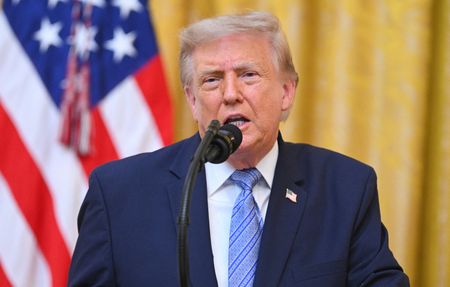
    On the political front, U.S. President Donald Trump on Thursday declassified intelligence documents he said demonstrate that China interfered in American elections. The move revived his repeated claims about election security, even though a U.S. intelligence assessment previously found no evidence that Beijing had any impact on the 2020 election, which Trump lost.

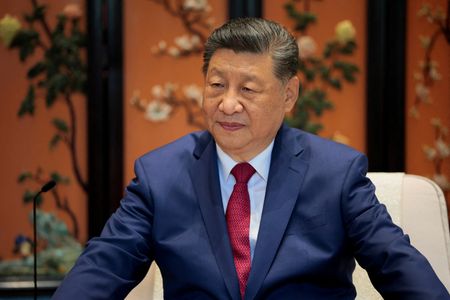
    Financial markets largely shrugged off Trump’s accusations, but analysts warned that his sharp rhetoric toward China could destabilize a relationship that had been slowly recovering after last year’s damaging trade war. Trump has expressed hope to sit down with Chinese President Xi Jinping in September to discuss improving trade ties between the two nations.

    Conflict in the Middle East also continued to simmer. Iran announced Friday that it had launched new attacks against U.S. facilities in the Gulf, coming after a sixth straight night of American strikes on Iranian military sites.

    In China, the country’s foreign exchange regulator announced Friday it would be issuing new investment quotas for qualified institutional investors looking to put money overseas — a move that follows a recent crackdown on illegal cross-border money transfers.

    Key items to watch Friday that could move markets include U.S. import price data, industrial production figures, and housing statistics. Earnings reports are expected from Swedbank, Danske Bank, Sweco, Volvo, and Burberry Group. The United Kingdom is also reopening auctions on one-month, three-month, and six-month government debt.

  • Wildfire Smoke Blankets Midwest and East Coast, Officials Warn: Stay Indoors

    Wildfire Smoke Blankets Midwest and East Coast, Officials Warn: Stay Indoors

    Thick, foul-smelling wildfire smoke rolled across a broad stretch of the country on Thursday, stretching from the Great Lakes all the way to portions of the East Coast. The haze reduced visibility and triggered urgent warnings from officials telling people to avoid breathing outdoor air.

    Across many cities, residents were told to remain indoors or wear protective masks if going outside was unavoidable. Air quality climbed to unhealthy and hazardous levels — conditions considered dangerous for everyone, not just those with pre-existing health concerns. The smoke originates primarily from wildfires burning in Canada, with additional fires in northern Minnesota also contributing. A stalled high pressure system has been pushing the smoke down toward ground level, according to Steven Freitag, a meteorologist with the National Weather Service in Detroit, where air quality ranked among the worst of any major city in the world.

    “Sure enough, it arrived in force here and it’s really pretty extreme levels,” Freitag said, adding that visibility in certain spots had dropped to just half a mile.

    Detroit resident Omar Mitchell, 50, had a mask on as he made his way to his restaurant, glancing up at the sky with concern. “It’s scary,” he said. “You don’t know necessarily what the side effects may be. That’s days or months later.”

    Health experts warn that the tiny particles in wildfire smoke can penetrate deep into the lungs and enter the bloodstream, potentially causing heart and lung complications along with other serious long-term health consequences.

    Sky turns yellow, air reeks across the region

    The entire state of Michigan and large portions of Minnesota were placed under hazardous air quality alerts. In the Chicago metropolitan area, air quality fluctuated between very unhealthy and hazardous readings.

    National Weather Service meteorologist Jake Petr cautioned that even if northwest winds help clear the air later in the week as forecast, smoky conditions could keep returning until the fires are fully extinguished — a process that could stretch on for months, possibly until snowfall arrives in Canada and northern Minnesota.

    In downtown Chicago, 76-year-old Bill Ostrowski walked through streets shrouded in smoke, a mask covering his face. “It stinks. It’s not a good sign when you wake up in the morning and you can smell the air,” he said.

    In St. Paul, Minnesota, Brent Williams, who heads the soil, water and climate department at the University of Minnesota, described the sky as “glowing yellow.” He said the region “could be looking at weeks to months of continued smoke and flare-ups off and on as the winds blow in different directions.”

    A study released this year determined that prolonged exposure to fine particles from wildfire smoke was linked to an average of 24,100 deaths annually across the lower 48 states. Extended exposure can worsen existing medical conditions and lead to serious chronic illnesses, including respiratory disease, cardiovascular and neurological problems, and early death.

    New York City hands out masks, cancels outdoor plans

    Over the New York City area, a dense haze cast an orange and yellow tint across the morning sky, partially hiding Manhattan’s skyline from view.

    City officials opened cooling centers, and health authorities asked New Yorkers to cut back on vigorous or lengthy outdoor activities. Schools, parks, and other city agencies moved programming indoors, postponed events, and adjusted how they operated. State officials handed out tens of thousands of face masks at transit hubs and other high-traffic locations.

    Gwen Moseley, 65, was among the first to pick up a free mask at Rosedale Library in Queens. She spends much of her workday traveling as a therapist for children with autism. “Who wants to be breathing this? It’s not healthy,” she said while waiting for a young client. “When I’m out walking, I can feel the scratchiness in my throat.”

    Weather service meteorologist Maureen Hastings said the smoke had eased somewhat but was expected to thicken again by late afternoon or evening, potentially lingering through the night. She indicated it might shift southward briefly on Friday before returning after dark.

    The state Department of Environmental Conservation flagged the potential for temporary spikes of “very unhealthy” air quality stretching from Buffalo in the western part of the state to Rochester near Lake Ontario, then to Syracuse in the central region and down into the greater New York City area.

    In Philadelphia, officials encouraged residents to avoid strenuous outdoor activity and to stay inside when possible, or wear N95 or KN95 masks if heading out. “Today is not the day to start your marathon training plan,” said Dr. Palak Raval-Nelson, the city’s public health commissioner.

    Minnesota wildfires continue to spread

    In Minnesota, forest rangers spent Thursday searching a remote wilderness area to locate anyone who might still be present, days after wildfires forced officials to close the region.

    The Boundary Waters area along the U.S.-Canada border was shut down on Tuesday. Between 6,000 and 10,000 people were believed to be inside at the time of the closure, though Superior National Forest staff estimated by Wednesday that they had made contact with approximately 90 percent of them, according to Karen Harrison, a spokesperson for the state and federal agencies coordinating the response.

    Harrison said Thursday that heavy smoke has grounded helicopters and that the fires are continuing to spread despite active firefighting efforts. “There will be fire on the landscape until fall, and some fire will be burning until snow cover,” she said.

    In a separate development, the Royal Canadian Air Force successfully evacuated 11 Minnesota teenagers and four staff members on Wednesday from wildfires burning in an Ontario provincial park located roughly 175 miles north of the Minnesota border.

  • From Manchester Mayor to Britain’s Prime Minister: The Rise of Andy Burnham

    From Manchester Mayor to Britain’s Prime Minister: The Rise of Andy Burnham

    LONDON (AP) — Andy Burnham’s journey to the top of British politics has been defined by equal parts persistence and bold decision-making.

    Ten years ago, Burnham walked away from a two-decade career climbing the Labour Party ranks in London to head north and seek the position of mayor of Greater Manchester. Just one month ago, he secured a seat in Parliament through a high-stakes special election. This Monday, he will be sworn in as Britain’s 59th prime minister.

    The rapid collapse of Prime Minister Keir Starmer’s government after only two years in power has thrust the 56-year-old Burnham into the country’s highest office — without a national electoral mandate and with limited experience at that level. He will step through the door of No. 10 Downing Street carrying enormous public expectations and serious questions about whether he can meet them.

    “A whole range of people across the Labour movement and in the country have projected onto Andy Burnham their hopes and their fantasies about how the country should be run and what Labour should stand for and what Andy Burnham stands for,” said Joshi Herrmann, founder of Manchester news site The Mill, who has reported on Burnham for years.

    “He has got lots of people’s hopes up,” Herrmann added.

    Though Burnham built his political reputation in Manchester, he was actually born in Liverpool and raised in a commuter village nestled between those two rival cities in northwest England.

    His father worked as an engineer for British Telecom and his mother served as a receptionist. He grew up in a tight-knit Catholic household. Burnham has described himself as “not particularly religious,” but he has credited Catholic values and the center-left Labour Party with shaping his commitment to social justice.

    Burnham and his brothers were the first in their family to attend university — and it was Cambridge, one of England’s oldest and most prestigious schools.

    “He needed a lot of persuading to apply because he felt that as a working-class boy, going off to Cambridge wasn’t for him,” said Stephen Harrington, Burnham’s former English teacher at St. Aelred’s Catholic High School, in remarks to the BBC. “He didn’t believe in himself. But he did it, and the rest is history.”

    Burnham has spoken openly about feeling like an outsider at Cambridge, where many of his fellow students came from wealthy backgrounds and elite private schools in southern England. He earned a degree in English and met his future wife, Dutch fellow student Marie-France Van Heel, now a marketing executive. The two wed in 2000 and have three children — a son and two daughters.

    Following graduation, Burnham worked as a journalist at trade publications before transitioning into a role as a researcher and adviser to Labour politicians.

    He won a seat in Parliament in 2001, representing the Manchester-area constituency of Leigh, and steadily moved up through government under Labour Prime Ministers Tony Blair and Gordon Brown. Between 2007 and 2010, he held three Cabinet positions under Brown: chief secretary to the Treasury, culture secretary, and health secretary.

    A pivotal moment in his political life came in 2009, when he was heckled while attending a memorial for the 1989 Hillsborough Stadium disaster — a tragedy in which 97 Liverpool soccer fans were crushed to death. For years, bereaved families had fought to challenge a false police account that blamed unruly fans for the catastrophe.

    Burnham became a fierce advocate for those families, helping push for a new inquest, a formal apology, and legislation requiring public officials to be truthful about disasters regardless of the reputational consequences.

    After Labour fell from power in 2010, Burnham ran for the party’s leadership that year and again in 2015, falling short both times. In 2017, with Labour at a low point nationally, he left Parliament to pursue the Greater Manchester mayoral race.

    The mayoral role suited him well. He demonstrated a talent for coalition-building, an eye for political opportunity, and a strong streak of practicality. His governing style earned the label “Manchesterism” — a form of business-friendly socialism that seeks to blend private and public investment in areas like transportation, housing, and infrastructure.

    Manchester, once a cornerstone of Britain’s industrial era and widely considered the birthplace of the Industrial Revolution, had long suffered from the decline of British manufacturing. Under Burnham’s leadership, the city experienced a resurgence, with new high-rise developments rising on former industrial land. He was particularly praised for consolidating the region’s fragmented public transit system under public control and improving its performance.

    He traded in formal suits for jeans and dark T-shirts, talked openly about his love of bands like Oasis, The Smiths, and New Order, and spent his free time playing soccer or competing in DJ battles spinning 1990s music.

    During the COVID-19 pandemic, Burnham publicly clashed with Conservative Prime Minister Boris Johnson, accusing him of taking a “London-centric” approach that unfairly penalized cities in the north. That confrontation earned him the nickname King of the North — a nod to the television series “Game of Thrones” that reflected both his regional advocacy and his broader political ambitions.

    Burnham has described his time in national government as “unfinished business,” and his opportunity came when Starmer was pressured to resign by Labour colleagues worried about the party’s declining popularity.

    To re-enter Parliament, Burnham needed a seat. A sitting Labour lawmaker agreed to step down, triggering a special election in the Manchester-area district of Makerfield. Burnham won decisively against the candidate from the anti-immigration party Reform UK, reinforcing his image as an electable figure.

    When the contest to choose a new Labour leader opened, Burnham ran unopposed.

    He has pledged to deliver “a new politics based on unity and hope” and “an economy that works for everybody,” regardless of where people live. A central part of his agenda involves expanding the powers of regional leaders, and he has announced plans to establish a satellite prime minister’s office — a “No. 10 North” — in Manchester.

    Herrmann said Burnham’s greatest assets include a gift for compelling storytelling and a sense of empathy that sets him apart from most politicians. He also credited the incoming prime minister with holding “a set of principles about trying to make the country fairer, trying to bring people out of poverty, that he really does believe in.”

    Critics, however, argue that Burnham’s policy platform lacks specifics — particularly around how he intends to fund his promises. He will also inherit many of the same challenges that undermined Starmer, including a sluggish economy, strained public services, and a persistent cost-of-living crisis. His background offers little preparation for foreign policy matters, from the ongoing war in Ukraine to navigating relations with U.S. President Donald Trump.

    And governing a nation of 70 million people is a vastly different undertaking than leading a region of 3 million.

    Still, Sacha Lord, a Manchester music entrepreneur who served as Burnham’s adviser on the nighttime economy, pushed back on any notion that the new prime minister is too soft for the job.

    “He’s not scared of locking horns with people,” Lord said. “Everybody thinks Andy’s this nice, cheeky-chappy guy. But trust me, when he wants something … he tends to get it.”

  • US Airstrikes Appear to Topple Tower at Iranian Port on Gulf of Oman

    US Airstrikes Appear to Topple Tower at Iranian Port on Gulf of Oman

    DUBAI, United Arab Emirates — American airstrikes carried out Friday appear to have caused the collapse of a tower at Iran’s Chabahar port, a facility located along the Gulf of Oman that serves as a critical trade gateway for Afghanistan.

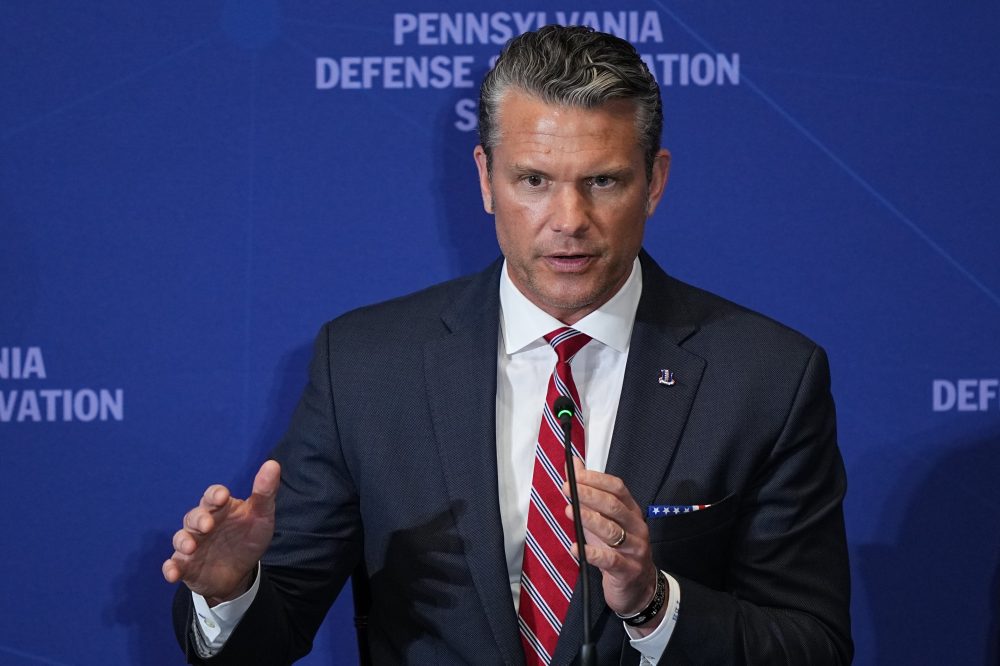
    U.S. Defense Secretary Pete Hegseth posted surveillance imagery appearing to show the tower coming down. The footage had already been circulating on social media through activist channels before Hegseth shared it publicly.

    Chabahar port has been struck multiple times by U.S. forces. Iranian state media confirmed that a third wave of strikes had hit the location, though officials did not immediately address reports of the tower’s collapse.

    Iranian authorities characterized the tower as a structure used to monitor commercial vessel traffic entering the port. However, Iran’s paramilitary Revolutionary Guard is also known to maintain a presence at ports throughout the country.

  • India’s Tech Mahindra Shares Jump 3% After Strong Revenue Report

    India’s Tech Mahindra Shares Jump 3% After Strong Revenue Report

    Shares of Tech Mahindra, India’s fifth-largest IT services company, climbed 3% in early Friday trading after the firm reported revenue that exceeded analyst expectations, boosted by gains in its manufacturing division and a weaker rupee.

    The company’s stock was changing hands at 1,555 rupees per share, making it the top-performing stock on the Nifty IT index, which itself was up 2% on the day.

    Market analysts noted that Tech Mahindra appears positioned to record the strongest growth among major IT services firms during the first quarter of fiscal year 2027.

  • Japan’s Largest Power Generator Eyes U.S. Stock Market Listing

    Japan’s Largest Power Generator Eyes U.S. Stock Market Listing

    JERA, the largest power generation company in Japan, has quietly begun exploring whether to list its shares on a U.S. stock exchange, according to three individuals with knowledge of the matter.

    The company, which is privately held and jointly owned by Tokyo Electric Power and Chubu Electric Power, has traditionally looked toward the Tokyo Stock Exchange as its most likely venue for going public. However, sources say JERA is now examining ways to connect with international investors as it pushes forward with global expansion plans.

    Two of the sources, all of whom asked not to be named due to the sensitive nature of the discussions, said JERA has begun reviewing U.S. market conditions, the level of interest from potential investors, and what regulatory hurdles it would need to clear.

    The review is still in its earliest stages. No decisions have been reached on when an initial public offering might take place, how it would be structured, or what the company’s market value might be, the sources indicated.

    JERA has previously signaled its interest in pursuing a public offering as a way to raise capital and grow its corporate profile. One source noted that rising interest from overseas institutional investors has pushed the company to strengthen its outreach efforts internationally.

    JERA declined to offer any comment on the matter. Representatives for Tokyo Electric and Chubu Electric were not available to respond.

    In terms of scale, JERA is Japan’s largest buyer of liquefied natural gas and brings in annual revenue of 3 trillion yen — roughly $18.48 billion — supported by assets totaling around 10 trillion yen. Its domestic power generation capacity stands at 59 gigawatts, including projects still under development, and it accounts for approximately 30% of Japan’s total electricity supply.

    Looking ahead, JERA plans to invest 5 trillion yen between fiscal year 2024 and 2035, with a target of reaching 350 billion yen in net profit by that point, up from 183.6 billion yen in fiscal 2025.

    The company handles roughly 35 million metric tons of LNG each year and has been building out its supply chain through upstream investments, fuel purchasing, and trading — with recent activity concentrated in the United States. JERA has also been growing its renewable energy operations.

    The Nikkei newspaper reported in June that JERA is weighing the development of large-scale natural gas power plants in the U.S. to help meet the rapidly growing electricity demand driven by data centers — highlighting how significant its overseas business has become.

    A successful U.S. listing could give JERA greater financial firepower to fund major energy projects and global expansion, while also raising its visibility among international investors and giving it stock that could be used in potential merger or acquisition deals.

    JERA’s exploration comes amid a broader trend of Japanese companies turning to U.S. capital markets as their operations become more global. PayPay, which is backed by SoftBank Group, listed on the Nasdaq exchange this year, and memory-chip manufacturer Kioxia is preparing to list American depositary shares. Reuters also reported last year that the Rakuten Card unit of Rakuten Group was weighing a U.S. listing.

  • Iran Strikes U.S. Gulf Facilities as Six Nights of American Attacks Continue

    Iran Strikes U.S. Gulf Facilities as Six Nights of American Attacks Continue

    DUBAI — Iran announced Friday that it carried out new strikes against U.S. facilities in the Gulf, following a sixth consecutive night of American military operations targeting Iranian military infrastructure, marking the breakdown of a ceasefire agreement reached just last month.

    The U.S. military confirmed it had completed another round of strikes aimed at weakening Iran’s military capabilities, with targets including areas on Qeshm Island and near Bandar Abbas — the location of Iran’s largest port and major navy and Revolutionary Guards installations.

    “U.S. forces, including fighter jets, aerial drones, and warships, launched precision munitions that hit dozens of Iranian military targets such as coastal surveillance and air defense sites, military logistics infrastructure, and maritime capabilities,” U.S. Central Command said in an official statement.

    Iran has responded by firing missiles and drones at American military bases in neighboring countries, including an air base in Jordan. In the early morning hours of Friday, Iran’s military announced it had struck U.S. facilities in Bahrain and Kuwait. In the Qatari capital of Doha, witnesses reported hearing multiple explosion-like blasts, and that country’s Ministry of the Interior confirmed a child was wounded by shrapnel.

    Iranian state media reported that five bridges were struck in the latest wave of U.S. attacks, along with the train station in the coastal city of Bandar Khamir and Iranshahr Airport in southeastern Iran. Seven people were killed in the bridge strikes in Bandar Khamir, a port city in southern Iran, according to state news agency IRNA. Those reports could not be independently confirmed by Reuters.

    SHIPPING THROUGH HORMUZ HALTED AGAIN

    The ongoing military exchange has once again brought traffic through the Strait of Hormuz to a near standstill. The strait is considered the world’s most critical shipping corridor for oil and gas, and the disruption has pushed global energy prices higher. Tehran has reinstated its blockade of the strait, while Washington reimposed a blockade of Iranian ports beginning Wednesday.

    Iran has also signaled it may encourage its Houthi allies in Yemen to shut down another major waterway — the Bab al-Mandeb at the entrance to the Red Sea — if the U.S. continues striking Iranian infrastructure, according to sources who spoke with Reuters.

    Last week, Iran attacked ships traveling through a corridor in the strait. White House press secretary Karoline Leavitt told reporters Thursday that U.S. President Donald Trump would not “sit by and allow these active acts of terrorism to take place in the strait without ensuring Iran pays consequences for that.” She also noted, however, that the president was “always open to diplomacy at the very same time.”

    Iranian sources told Reuters that Tehran’s goal is to assert control over the strait, though Iran does not want the situation to escalate to the point of collapsing June’s memorandum of understanding — an agreement it views as largely favorable to its interests.

    Inside Iran, the renewed bombing campaign has left residents on edge. “Living with this fear that war could start again is very exhausting. You cannot live like this… Personally, I want diplomacy to prevail,” said Mahlegha, 46, a government employee speaking to Reuters from Tehran.

    IRAN’S DEMANDS OVER THE STRAIT

    Iran is demanding that all vessels passing through the Strait of Hormuz travel along a route close to its coastline, and plans to begin collecting passage fees once a 60-day negotiation window established in last month’s memorandum expires. The U.S. has urged ships to take an alternate southern route along the Omani coast instead.

    American forces said their airstrikes along the Iranian coastline are intended to undermine Iran’s ability to dominate the strait. However, Iranian Army spokesperson Brigadier General Mohammad Akraminia pushed back Thursday, saying the effort would fail because Iran has the capability to strike the strait from anywhere within its territory.

    President Trump has not ruled out deploying ground forces, including a potential move to seize Kharg Island, where Iran’s primary oil export terminal is located. He has also repeated threats to target Iranian power plants and bridges in the coming week if Tehran does not return to the negotiating table.

  • North Korea Slams South Korea as ‘Puppet’ After U.S.-Led Naval Drills

    North Korea Slams South Korea as ‘Puppet’ After U.S.-Led Naval Drills

    North Korea’s state-run media fired back at South Korea on Friday, labeling the country a “puppet” after its navy played a central role in a large-scale maritime exercise organized by the United States, warning that both Seoul and Washington would be held accountable for any “unpredictable escalation” that might follow.

    The remarks from the North Korean state media outlet KCNA came in response to last week’s Rim of the Pacific Exercise, known as RIMPAC, held in Hawaii. It marked the first time South Korea’s naval forces took the lead role among participating maritime units in the exercise’s history.

    RIMPAC is recognized as the largest international maritime exercise in the world and takes place every two years. This year’s event drew participation from roughly 30 nations, among them Japan, Canada, and Australia, according to the RIMPAC website.

    KCNA stated that “the South Korean puppet forces took part as a main component” during a period when “military collusion is becoming increasingly overt,” a reference to the deepening military cooperation between South Korea and Japan, as well as Seoul’s growing relationship with NATO.

    This is the first time in approximately one year and three months that North Korea has used the word “puppet” to describe South Korea. The last time was following an April 2025 incident in which a fuel tank and gun pods fell from a South Korean air force aircraft during a training exercise, landing in a mountainous area of Gangwon Province.

    North Korea’s state outlet also argued that RIMPAC was far more than a “routine drill against a hypothetical adversary,” characterizing it instead as a show of military force by the U.S. and its allies directed at nations throughout the Indo-Pacific.

    “All these facts point to which forces are truly shaking the foundation of world peace and security and they foreshadow the possibility of unwanted situations occurring on the Korean Peninsula and in the region if not anticipated,” KCNA stated.

    The outlet went on to criticize a joint U.S.-South Korean Marine Corps exercise, saying the air drill simulated “deep infiltration into enemy rear areas” launched from the U.S. Navy vessel USS Essex.

    The sharp rhetoric comes at a time when North Korea has been publicly showcasing its own efforts to strengthen its naval capabilities. Earlier this month, KCNA reported that leader Kim Jong Un watched the launch of a strategic cruise missile and observed weapons system tests aboard the newly built 5,000-ton destroyer Kang Kon.

  • What You Need to Know About Trump’s Election Fraud Claims

    What You Need to Know About Trump’s Election Fraud Claims

    President Donald Trump renewed his effort to raise doubts about U.S. elections on Thursday, releasing declassified intelligence documents he claims reveal widespread fraud and foreign meddling — even as existing intelligence findings and independent research contradict several of his assertions.

    Throughout the first half of 2026, Trump has repeated claims that the 2020 elections were “rigged” more than 100 times. He has used those claims to push Congress to pass the SAVE America Act, a restrictive voter ID measure that would impose strict identification requirements on voters and expand federal involvement in elections. The bill has passed the Republican-controlled House of Representatives multiple times with a simple majority, but falls short of the 60 votes needed to break a filibuster in the Republican-led Senate.

    CLAIM 1: China Worked to Help Democrats in Recent Elections

    Trump accused the Chinese government of attempting to hurt Republican candidates in the 2018 midterm elections and undermine his 2020 reelection bid. He also alleged that Beijing obtained and compromised data on American voters.

    A prior U.S. intelligence assessment tells a different story. A 2021 report concluded that while China considered launching influence operations to affect the outcome of the 2020 election, it ultimately chose not to move forward. That assessment was carried out under John Ratcliffe, who served as Trump’s director of national intelligence at the time and now leads the CIA.

    The intelligence report did find that China had been collecting information on U.S. voters, public opinion, and political parties going back to at least 2008. However, the voter data China gathered was not classified, and there is no evidence it was used to change any votes.

    CLAIM 2: Venezuela Tampered With Electronic Voting Machines

    Trump pointed to CIA documents about alleged election manipulation by former Venezuelan President Nicolas Maduro to argue that American voting machines are vulnerable to being hacked. He claimed Maduro’s government was able to digitally change vote tallies.

    A CIA document summarizing intelligence gathered between 2004 and 2020 did find that the Venezuelan government had the technical ability to digitally alter election results.

    However, there is no evidence that any such manipulation has taken place in U.S. elections, and Trump himself did not claim these methods were used here. A theory promoted by Trump’s supporters — that Maduro’s government hacked American voting machines in 2020 — has been thoroughly debunked.

    CLAIM 3: Hundreds of Thousands of Non-Citizens Are Registered to Vote

    Trump stated that a Department of Homeland Security review identified approximately 278,000 non-U.S. citizens registered to vote in federal elections, which would be a violation of federal law. He and his allies have repeatedly cited such figures to argue for stricter voting requirements.

    A number of Republican-led states have voluntarily shared private voter registration data with the Trump administration in an effort to identify and remove alleged non-citizens from their rolls. According to Democracy Docket, an online publication focused on election security, the Trump administration has lost 15 lawsuits in which it sought to force other states — most of them led by Democrats — to hand over similar data.

    Independent research suggests that non-citizen voting is extremely uncommon. The Bipartisan Policy Center found that when states reviewed voter eligibility, only 0.04% of cases involved individuals identified as non-citizens. Election experts have also warned that large-scale efforts to purge voter rolls could result in eligible citizens being wrongly removed from registration lists.

  • Dover Toll Plaza on DE 1 Has Rolling Lane Closures Through 6 AM

    Dover Toll Plaza on DE 1 Has Rolling Lane Closures Through 6 AM

    Motorists traveling along Delaware Route 1 through the Dover Toll Plaza should plan for brief delays as rolling lane closures are currently in effect in both directions.

    According to DelDOT, the temporary closures are the result of an ongoing spraying operation at the toll plaza. Both northbound and southbound lanes are affected on a rolling basis, meaning lanes will be closed and reopened periodically as crews move through the area.

    The operation is expected to wrap up by 6:00 AM. Drivers are encouraged to use caution when passing through the area and to follow the direction of any posted signs or traffic control personnel on site.

  • Philadelphia Man Charged with Arson After Mosque Fire

    Philadelphia Man Charged with Arson After Mosque Fire

    The U.S. Department of Justice announced Thursday that a Philadelphia man has been charged with arson in connection with a fire set at a mosque in the city last week.

    Vincent Lang, 60, of Philadelphia was taken into custody and charged with one count of maliciously damaging or destroying — or attempting to destroy — a building or property used in interstate commerce by means of fire, according to a DOJ statement. The charge stems from a fire that broke out at a Philadelphia mosque.

    Court documents allege that on July 5, Lang walked up to the Northeast Philadelphia Islamic Center, ignited a homemade incendiary device, and hurled it into the mosque’s entryway, starting a fire inside the structure.

    According to an NBC News affiliate, no one was hurt in the incident. The DOJ confirmed the fire occurred during the early morning hours of July 5.

    Should Lang be found guilty, he faces a maximum penalty of 20 years in prison. Federal sentencing guidelines also include a mandatory minimum of five years behind bars, the DOJ noted.

    Attempts to reach a representative for Lang were unsuccessful.

    U.S. civil rights advocates have pointed to a pattern of rising anti-Muslim sentiment in the years since the September 11, 2001 terrorist attacks, with more recent contributing factors including anti-immigration policies, white supremacist ideology, and tensions surrounding Israel’s ongoing war in Gaza.

  • US 13 Northbound Lane Closures in Effect Overnight for Construction

    US 13 Northbound Lane Closures in Effect Overnight for Construction

    Northbound travelers on US Route 13 are facing restricted lanes overnight due to ongoing construction activity.

    Three left lanes on US 13 northbound are currently closed in the stretch between 2nd Avenue and 3rd Avenue. Drivers in the area should plan for potential slowdowns and allow extra travel time.

    The lane closures are expected to remain in effect until 5:00 AM, at which point the roadway is anticipated to return to normal traffic flow. Motorists are advised to use caution when passing through the construction zone.

  • Catastrophic Flooding Devastates Texas: Hundreds Rescued as Waters Rise

    Catastrophic Flooding Devastates Texas: Hundreds Rescued as Waters Rise

    UVALDE, Texas — Days of heavy rainfall have triggered catastrophic flooding across parts of Texas, overwhelming communities and forcing emergency teams into round-the-clock rescue operations.

    Homes and roads have been swallowed by rising floodwaters, with hundreds of people requiring rescue as conditions continue to deteriorate. Emergency responders have been stretched to their limits as they work to reach those trapped or endangered by the ongoing disaster.

    The flooding remains an active threat, with communities across the affected region bracing for further danger as floodwaters persist.

  • Wildfire Smoke Forces Schedule Changes for MLB, MLS, and Other Sporting Events

    Wildfire Smoke Forces Schedule Changes for MLB, MLS, and Other Sporting Events

    PHILADELPHIA — Wildfire smoke billowing down from Canada and northern Minnesota created hazardous air quality conditions across a wide stretch of the United States Thursday, forcing changes to several professional sporting events including an MLB game in Philadelphia and a Major League Soccer match in Chicago.

    The thick, foul-smelling smoke cast a dark haze over skies stretching from the Great Lakes region to portions of the East Coast, cutting down visibility and triggering warnings that outdoor air had become dangerous to breathe for everyone, regardless of health status.

    Authorities in numerous cities called on residents to remain indoors or wear masks if venturing outside, as air quality readings climbed into the unhealthy and hazardous ranges. The National Weather Service attributed the ground-level smoke buildup to a persistent high pressure system holding the smoke down near the surface.

    In Philadelphia, where hazy and smoky skies settled over the region, the only MLB game on the schedule coming out of the All-Star break — a matchup between the New York Mets and the Phillies — had its start time pushed up an hour to 6:10 p.m. EDT, moved from the originally scheduled 7:10 p.m.

    Phillies first baseman Bryce Harper spoke about the unusual conditions while being broadcast on ESPN during the game. “It’s definitely different,” Harper said. “Not the greatest idea, I guess, to come out here and play in this type of weather, but we’re doing it.”

    The Mets went on to win the game 4-1. Afterward, Mets interim manager Andy Green was asked whether the smoky conditions had any real impact on play. “I don’t think they really did,” Green said. “I think it felt like they could have at any moment, especially as visibility got tougher. But, guys managed to see baseballs that I couldn’t when they went up in the air as popups. So, good thing we’ve got good athletes on the field that can see things.”

    Phillies manager Don Mattingly noted that tracking fly balls became more of a challenge as the game wore on. “It didn’t seem to be a huge problem,” Mattingly said. “The vision, later on, was a little bit like foggy conditions more than the air quality. As far as the guys were concerned (visibility) seemed to be the problem.”

    This marks the second time Philadelphia has seen a baseball game disrupted by wildfire smoke. Back in June 2023, a game between Detroit and Philadelphia was called off entirely because of poor air quality tied to smoke from Canadian wildfires.

    In Chicago, the MLS game between the Vancouver Whitecaps and the Fire at Soldier Field was postponed due to the poor air quality, along with a postgame concert that had been planned for the same evening. The contest, which had been expected to draw around 40,000 fans, has been rescheduled for October 6.

    The Canadian Premier League also called off Thursday’s scheduled match between Forge FC and Pacific FC in Hamilton, Ontario, citing “worsening air quality issues.” The league noted on its website that conditions “deteriorated in the final hours leading up to kickoff.”

    U.S. women’s national team member Trinity Rodman spoke out about the difficult conditions she experienced during Wednesday night’s NWSL game between the Washington Spirit and Gotham FC at Citi Field in New York. Rodman expressed frustration with mandatory hydration breaks every 15 minutes as temperatures climbed into the 90s.

    “Air quality was rough,” Rodman told The Athletic. “Not to make excuses at all, but I think on both sides we were all like, ‘another break, another break, another break.’”

    More than 42,000 fans attended that contest — a rematch of last season’s NWSL championship teams — setting a record for a women’s sporting event in New York City.

    Rodman was direct about her feelings on whether the game should have been played at all. “If we have to have a hydration break every 15 minutes, then we shouldn’t be playing the game, and that’s my opinion,” she said. “But at the end of the day, there’s 40,000 people. It’s a whole event, so it’s really tough. It’s just a really hard situation for everyone to work around.”

  • Robotic Suit Technology Dresses You in 10 Seconds — No Hands Required

    Robotic Suit Technology Dresses You in 10 Seconds — No Hands Required

    A joint research team from South Korea and the United States has introduced a robotic dressing system capable of suiting up a person in roughly 10 seconds — no hands needed and no help from anyone else.

    The technology, developed by researchers at South Korea’s KAIST and Stanford University, relies on soft, bendable structures called “vines” that are built into clothing and powered by air pressure. Once pressurized, these vine-like tubes guide the fabric up and around the wearer’s body — much like an ivy plant wrapping itself around a surface — even while the person is moving.

    The idea came to lead researcher Kim Nam Gyun, a postdoctoral researcher at KAIST, during an everyday moment. “When I was riding a bicycle, it started to rain … and I thought it would be helpful if a raincoat could be put on automatically (as I ride),” he said.

    Kim explained how the system works: “The vine robot stays close to the person and dresses them by turning the clothing inside out as it moves, allowing it to climb stably along the shape of the body.” He noted that a complete suit can be put on in approximately 10 seconds.

    One of the standout features of this technology is that it doesn’t require the person to stand completely still, and it operates without the need for a complicated control algorithm, the research team noted.

    Ryu Jee-Hwan, a civil and environmental engineering professor at KAIST, said the design draws inspiration from climbing ivy, which grows from its tip rather than moving its entire body. This allows it to navigate curved surfaces with stability. “It can pass through narrow gaps, grow while adapting to the shape of its surrounding environment, and move regardless of whether the surface is slippery, sticky, or sloped,” Ryu said.

    While the technology holds clear promise for helping older adults and people with disabilities, the research team also sees applications in settings where fast, hands-free dressing is critical — such as semiconductor cleanrooms and emergency situations where workers need to quickly put on or remove protective gear.

    Ryu also pointed out a broader message behind the invention. With artificial intelligence commanding so much attention these days, he said this self-dressing robot demonstrates that mechanical engineering still has a vital role to play alongside software development.

    The findings were published in IEEE Robotics and Automation Letters, a peer-reviewed scientific journal.

  • Chipotle Opens First Mexico Location in Taco’s Home Country

    Chipotle Opens First Mexico Location in Taco’s Home Country

    MONTERREY, Mexico — To the sound of popping confetti and amid floating balloons, American Cal-Mex restaurant chain Chipotle threw open the doors of its very first Mexican location on Thursday, bringing burrito bowls and chicken salads to the very country where tacos were born.

    The chain chose Monterrey’s upscale San Pedro Garza Garcia neighborhood for its debut — a corporate enclave widely regarded as the wealthiest municipality in all of Latin America, situated in Mexico’s northern border state of Nuevo Leon.

    A dramatic chili-shaped covering was pulled away in a shower of confetti, and eager crowds quickly lined up to try the California-born chain for themselves, snapping photos as workers assembled wraps and salads along a bustling counter.

    Ricardo Aguilar, a 26-year-old Mexican resident who showed up on opening day, said he first discovered Chipotle during trips to the United States and has been a fan ever since, praising the restaurant’s fresh ingredients and generous serving sizes.

    “It’s a different kind of offering,” he said. “It’s definitely not your street-corner taco stand.”

    Chipotle’s Mexico director Pablo de Brito spoke with Reuters at the opening, saying the company intends to launch six to eight additional Monterrey locations over the next 14 months before pushing into Mexico City and eventually the rest of the country.

    “We’re more than happy with this opening,” he said, explaining that Monterrey was selected as the launch city partly because its population skews young and has strong ties to American culture, giving the brand a built-in familiarity.

    Chipotle’s arrival comes after fast-food chain Taco Bell made two failed attempts to crack the Mexican market — once in 1992 and again in 2007 — both times finding that locals had little interest in its offerings when authentic Mexican food was readily available.

    Mexico’s national statistics office, INEGI, counts more than 147,000 registered taquerias throughout the country. The overwhelming majority are informal street-side stands serving a variety of meat-filled tacos topped with salsas and garnishes.

    In 2021, a geographer at Mexico’s National Autonomous University named Baruch Sangines mapped out 1.6 million taco shops across the country. His research found that 95% of Mexico City residents live within 400 meters — roughly a five-minute walk — of a taqueria. In the Monterrey metro area, home to more than 5 million people, that figure was still a substantial 75%.

    Sara Senatore, a senior restaurants analyst at Bank of America, sees promise in Chipotle’s decision to partner with Alsea — a company that already franchises Starbucks and Domino’s Pizza throughout Latin America and Europe.

    “They’re the ones building the restaurants and they bear a lot of the risk,” she said, adding that Alsea’s willingness to invest is a signal that the brand has real potential. She also noted that a certain cultural “mystique” surrounding U.S. brands often helps them perform well in foreign markets.

    Senatore also pointed to Chipotle’s menu range — from mild carnitas to a “pretty darn hot” salsa — as a factor that could appeal to a wide variety of Mexican customers.

    Spice levels have become a culturally charged issue in Mexico in recent years. A number of traditional sauces have reportedly been toned down due to gentrification, a trend that accelerated during the COVID-19 pandemic when large numbers of American remote workers relocated to Mexico, often outspending local residents.

  • Three Seeded Players Upset in Umag ATP Quarterfinals

    Three Seeded Players Upset in Umag ATP Quarterfinals

    It was a day of stunning results at the Plava Laguna Croatia Open Umag on Thursday, as every seeded player who took the court in quarterfinal action walked away with a loss.

    Alex Molcan of the Slovak Republic was the first to deliver a shock, beating second-seeded Alejandro Davidovich Fokina of Spain by a score of 3-6, 6-1, 6-2. Molcan capitalized on 4 of his 8 break-point chances, while Davidovich Fokina converted just 1 of 4. Despite having more winners on the day — 24 to Molcan’s 21 — the Spaniard was undone by 34 unforced errors compared to just 19 from his opponent.

    In the longest match of the day, Damir Dzumhur of Bosnia and Herzegovina outlasted fourth-seeded Matteo Arnaldi of Italy in a grueling three-hour, 42-minute battle, winning 7-6 (5), 6-7 (4), 7-6 (4). Arnaldi dominated the statistical categories — racking up 62 winners to Dzumhur’s 29 — but was also plagued by 67 unforced errors and five double faults, compared to just 25 and 1 for his opponent.

    A clash between two Argentine players rounded out the seeded upsets, with unseeded Roman Andres Burruchaga defeating seventh-seeded Camilo Ugo Carabelli 6-2, 2-6, 6-3. Burruchaga dominated with 21 winners to Carabelli’s 9 and converted 4 of 5 break-point opportunities, while Carabelli managed only 3 of 7.

    The day’s fourth quarterfinal featured two unseeded players, with Spain’s Daniel Merida comfortably dispatching France’s Titouan Droguet 6-1, 6-3.

    EFG Swiss Open Gstaad

    In Gstaad, Switzerland, second-seeded Casper Ruud of Norway rallied after dropping the opening set to defeat Portugal’s Jaime Faria 6-7 (1), 6-4, 6-2 in the second round. Ruud, ranked 13th in the world, needed two hours and 32 minutes to get past Faria, ranked 92nd, converting 4 of 14 break-point chances to Faria’s 1 of 6.

    Sixth-seeded Juan Manuel Cerundolo of Argentina followed a similar script, recovering from a first-set loss to beat Serbia’s Miomir Kecmanovic 3-6, 6-3, 7-5. Cerundolo, who will next face Ruud in the quarterfinals, recorded nine aces to Kecmanovic’s two and saved 2 of 3 break points, while Kecmanovic saved 2 of 4.

    Greece’s Stefanos Tsitsipas also advanced after his match against Swiss wild card Jerome Kym was suspended Wednesday night due to darkness with the third set level at 5-5. Tsitsipas completed the victory Thursday, winning 6-4, 6-7 (2), 7-6 (5). He will face fourth-seeded Arthur Rinderknech of France in the quarterfinals.

    Nordea Open

    In Bastad, Sweden, top seed and defending champion Andrey Rublev avoided an upset, defeating Italy’s Andrea Pellegrino 7-6 (3), 6-7 (7), 6-3 to reach the quarterfinals. The Russian, who claimed this title in 2023, served 18 aces against four double faults and won 80 percent of his first-serve points — going 53 for 66. Remarkably, he did not face a single break point, while Pellegrino saved 6 of 7.

    Third-seeded Alejandro Tabilo of Chile also moved on, beating Argentine qualifier Lautaro Midon 6-4, 6-7 (5), 6-4. Seventh-seeded Thiago Agustin Tirante of Argentina topped Georgia’s Nikoloz Basilashvili 7-5, 3-6, 6-4, and eighth-seeded Sebastian Baez of Argentina made quick work of the Netherlands’ Jesper De Jong, winning 6-4, 6-2 in just one hour and nine minutes.

  • China’s Xi Calls for ‘People-Centred’ AI Development at Shanghai World Conference

    China’s Xi Calls for ‘People-Centred’ AI Development at Shanghai World Conference

    SHANGHAI — Chinese President Xi Jinping took center stage at the opening of the World Artificial Intelligence Conference in Shanghai on Friday, calling for an approach to artificial intelligence that keeps people at its core.

    In his keynote address at the conference, known as WAIC, Xi stressed the importance of a “people-centred” philosophy when it comes to developing AI technology.

    Beyond domestic priorities, Xi also turned his attention to the global stage, highlighting China’s intention to ensure that developing nations are not left behind in the AI revolution. He warned that unequal access to AI resources could lead to what he described as “new historical injustices.”

    To help prevent that outcome, Xi announced that China plans to work alongside a range of international organizations and partner nations — including those from Africa, Latin America, Asia, and BRICS member countries — to expand AI-related opportunities for developing economies.

  • U.S. Military Completes Sixth Straight Night of Strikes on Iran

    U.S. Military Completes Sixth Straight Night of Strikes on Iran

    The U.S. military confirmed late Thursday evening that it had wrapped up its most recent wave of attacks on Iran, carried out under orders from President Donald Trump — the sixth night in a row that American forces have struck the country.

    U.S. Central Command released a statement detailing the operation: “U.S. forces, including fighter jets, aerial drones, and warships, launched precision munitions that hit dozens of Iranian military targets such as coastal surveillance and air defense sites, military logistics infrastructure, and maritime capabilities.”

    Thursday’s strikes included hits on Qeshm Island and areas near Bandar Abbas — the location of Iran’s largest port and major navy and Revolutionary Guards installations — both situated along the Strait of Hormuz.

    Iranian media outlets reported additional U.S. strikes Thursday night on three bridges and a train station in the coastal city of Bandar Khamir, as well as a missile strike on Iranshahr Airport in southeastern Iran. Reuters was not immediately able to confirm those reports independently.

    Iran responded by launching missiles and drones at U.S. military bases in neighboring countries, including a recently expanded air base in Jordan. Iran claimed that base was used in a U.S. attack on an Iranian children’s cancer hospital on Wednesday night.

    President Trump this week repeated his threats to target Iranian energy infrastructure and warned that bridges could be hit as early as next week. Those kinds of threats have drawn scrutiny from legal experts, who earlier this year said such attacks could potentially constitute war crimes under international law. The 1949 Geneva Conventions prohibit attacks on sites considered essential to civilian life.

    Trump faced widespread international condemnation back in April after threatening to destroy Iran’s entire civilization, before eventually agreeing to a ceasefire with Tehran.

    The current conflict traces back to February 28, when the U.S. and Israel launched attacks on Iran. Iran responded with strikes on Israel and Gulf states that host American military bases. Since then, U.S.-Israeli strikes on Iran and Israeli attacks on Lebanon have killed thousands of people and displaced millions more.

    The ongoing war has also pushed oil prices higher and sent shockwaves through global financial markets.

  • Lane Closure on US 13 NB Between Llangollen Blvd and Lisa St Until 6AM

    Lane Closure on US 13 NB Between Llangollen Blvd and Lisa St Until 6AM

    Motorists traveling northbound on US Route 13 should be aware of a lane restriction currently in place between Llangollen Boulevard and Lisa Street.

    The left lane in that stretch is closed as a result of construction activity. The closure is expected to remain in effect until 6:00 a.m.

    Drivers heading through that corridor are encouraged to allow extra travel time or consider alternate routes until the lane reopens.

  • Lane Closure on US-13 Southbound Near Llangollen and Schaffer Blvds

    Lane Closure on US-13 Southbound Near Llangollen and Schaffer Blvds

    A right lane on US-13 southbound has been closed in the stretch between Llangollen Boulevard and Schaffer Boulevard, according to traffic incident information.

    Motorists traveling through that corridor should be aware of the lane restriction and allow extra time for their commute. No information regarding the cause of the closure or an estimated reopening time was immediately available.

    Drivers are encouraged to use caution in the area and watch for workers or equipment that may be present near the roadway.

  • Sports Roundup: LeBron Undecided, Giannis Heads to Miami, British Open Surprises

    Sports Roundup: LeBron Undecided, Giannis Heads to Miami, British Open Surprises

    LeBron James Still Mum on His Next Move

    NBA all-time scoring leader LeBron James is keeping everyone guessing about where he’ll suit up this season. The veteran free agent appeared at Fanatics Fest in New York on Thursday but walked away without dropping any clues about his future. While recording an episode of his podcast “Mind the Game,” James mentioned several possible destinations — including Cleveland, Miami, and Golden State — but stopped short of pointing to any one of them. He did confirm that his eight-year run with the Lakers has come to an end. Now in his 24th season as the league’s oldest active player, James is leaving fans in suspense as speculation continues to swirl.

    Unknown Jackson Suber Stuns Field at British Open

    The British Open’s first round at Royal Birkdale delivered a string of surprises on Thursday, with 26-year-old American Jackson Suber stealing the spotlight. Not only was it Suber’s first time playing links golf, it was his very first trip to Europe — yet he fired an impressive 65 to claim the first-round lead over Dan Brown and Sungjae Im. Bryson DeChambeau quietly posted a 67, joining four other players making their British Open debut. Defending champion Scottie Scheffler carded a 68, while Rory McIlroy struggled through a tough day on the greens, finishing with a 72.

    McIlroy’s Putting Woes Put Him Seven Back at British Open

    Rory McIlroy didn’t need words to express his frustration at the British Open on Thursday — his body language said it all. The veteran golfer shot a 2-over 72 in his opening round at Southport, England, a performance that included six bogeys and three missed putts from inside four feet across a rough stretch of holes around the turn. He now sits seven shots behind surprise leader Jackson Suber, who is ranked 115th in the world. McIlroy’s appearance at the Open came on the heels of a seventh-place finish at the Scottish Open, where he went viral for shouting “I’m so bad at golf” after a wayward approach shot in his final round. McIlroy is the sixth player — and the only European — to have completed the career Grand Slam.

    Giannis Joins Miami Heat, Drawing Inspiration from Messi

    Giannis Antetokounmpo has arrived in Miami with championship ambitions and a star-studded blueprint for success. After departing the Milwaukee Bucks, Antetokounmpo was acquired by the Miami Heat in a trade and says he’s motivated by the example set by athletes like Lionel Messi, LeBron James, and Cristiano Ronaldo. He believes Miami is the right environment to push him to new heights, saying he needs pressure in order to grow. Heat head coach Erik Spoelstra expressed enthusiasm about working alongside the star. Antetokounmpo has his sights set on adding more championship rings to his resume.

    Wildfire Smoke Forces Schedule Changes for MLB, MLS

    Thick wildfire smoke drifting down from Canada and northern Minnesota prompted schedule adjustments for professional sports in the East on Thursday. The start time for the MLB matchup between the New York Mets and the Philadelphia Phillies was pushed up one hour due to dangerous air quality conditions in Philadelphia. Meanwhile, an MLS contest in Chicago was postponed entirely. The heavy smoke blanketed areas from the Great Lakes to parts of the East Coast, drastically reducing visibility. Officials in numerous cities urged residents to remain indoors or wear masks if venturing outside, as air quality reached levels deemed unhealthy to hazardous for everyone — regardless of individual health status.

    MLB Eyes Earliest-Ever Opening Day in 2027 — If a Season Happens

    Major League Baseball has penciled in March 24, 2027 as its earliest opening day ever — but there’s a significant catch. The league announced Thursday that the 2027 season is slated to kick off with a single televised game on Netflix that evening, though the participating teams have yet to be selected. The big question mark hanging over the announcement is baseball’s labor situation: the current contract between players and management expires December 1, and a lockout is widely anticipated. In 2022, a similar standoff pushed opening day back from March 31 all the way to April 7 after a deal wasn’t struck until March 10.

    WNBA’s New Officiating Approach Driving Record Scoring

    A renewed focus on officiating is paying dividends for the WNBA, with teams putting up record offensive numbers through the first half of the season. The league formed an offseason task force — which includes coach Cheryl Reeve — aimed at reducing excessive physical play and giving players greater freedom of movement on the court. The results so far have been striking: teams are averaging 86.4 points per game, the highest figure in league history, while shooting 45% from the field — also a new record. Reeve acknowledged there are still areas that need improvement but noted that cleaning up years of habits takes time beyond just 20 games.

    NBA Commissioner: Caitlin Clark Has Become a ‘Political Football’

    NBA commissioner Adam Silver weighed in on the controversy surrounding WNBA star Caitlin Clark, saying she has been turned into a “political football” amid ongoing debates about officiating and physical play in the league. Silver made the remarks during an on-stage conversation with Andrew Ross Sorkin at the Game Plan Summit, presented by CNBC and Boardroom. The controversy stems from a June 24 game between the Fever and the Phoenix Mercury, in which Mercury forward Alyssa Thomas made contact with her fist to Clark’s throat. No foul was called during the game, but the league later upgraded the play to a flagrant foul and handed Thomas a one-game suspension.

    Spain Practices Through Wildfire Haze Ahead of World Cup Final

    Spain’s national soccer team held an outdoor practice session in northern New Jersey on Thursday despite hazardous air conditions caused by smoke from Canadian wildfires. With haze blocking out the sun, media were only permitted to observe the first 15 minutes of what was scheduled to be an hour-long session in East Hanover. Meanwhile, Argentina remained in the Atlanta area to prepare for Sunday’s final, having rallied to beat England just a day earlier to reach the championship match for the second straight tournament. The Georgia location proved far enough south to avoid the worst of the smoke. Conditions are expected to improve before the final takes place Sunday in East Rutherford.

    Messi Fires Back at Argentina’s Critics: ‘Nothing Was Handed to Us’

    Lionel Messi has a pointed response for those questioning Argentina’s path through the World Cup: “Nothing was handed to us.” The Argentine superstar pushed back against critics who have accused the defending champions of benefiting from favorable officiating and establishment bias. Messi pointed to his team’s repeated ability to come from behind as proof of their championship character. Most recently, Argentina trailed England 1-0 heading into the 85th minute before rallying for a 2-1 semifinal victory. Earlier in the tournament, the team also survived matches against Cape Verde and Switzerland in extra time and pulled off an unlikely 3-2 comeback win over Egypt.

  • Business Roundup: Tariffs, Mortgages, Buffett, and More

    Business Roundup: Tariffs, Mortgages, Buffett, and More

    Trump Media Plans to Sell Fast-Track Access to Truth Social Posts

    President Donald Trump’s media company has announced plans to offer paid, high-speed access to posts on Truth Social — potentially including posts from the president himself that could move financial markets. The service, called Truth PSI, was announced Thursday and would allow Wall Street trading firms and other financial institutions to receive posts in milliseconds, giving them an edge in trading stocks, bonds, and interest rates. The arrangement is similar to paid access programs at other platforms, though with the notable difference that the platform’s most prominent user is the sitting president. The company did not respond when asked whether the service amounts to profiting from his position in office.

    Trump Team Racing to Rebuild Tariff Framework After Supreme Court Ruling

    The administration is working against a ticking clock to restore tariff revenue after the Supreme Court struck down the largest of President Trump’s import taxes in February. Those tariffs had generated significant revenue for the U.S. Treasury last year by taxing goods from nearly every country in the world. A deadline of July 24 is fast approaching, but trade attorneys and analysts believe the administration will find a way to get it done. As one trade lawyer put it, “They’re going to raise the tariff wall again.”

    US Safety Agency Takes Over Ryanair Window Incident Investigation

    American aviation safety officials have assumed leadership of the investigation into a frightening incident aboard a Ryanair flight on July 10, when a window came loose and a passenger was partially pulled out of the aircraft before fellow travelers — including his wife — pulled him back inside. The National Transportation Safety Board announced Thursday that the incident occurred in Greek airspace, not over North Macedonia as originally reported. Under international aviation rules, Greece’s safety authority was able to transfer the case to the NTSB. The flight was traveling from Thessaloniki to Memmingen, Germany.

    Retail Sales Rise Modestly in June, But Shoppers Show Strength Away from Gas Pumps

    Consumer spending slowed slightly last month compared to May, but shoppers showed surprising resilience when gas station sales are set aside, according to a Commerce Department report released Thursday. Overall retail sales climbed just 0.2% in June, down from a revised 1% increase in May. However, when gas stations are excluded from the calculation, sales rose a solid 0.7%. The government’s figures are not adjusted for inflation, meaning falling gas prices weighed down the overall number.

    Buffett Says His Children — Not the Gates Foundation — Will Distribute His Fortune

    Billionaire Warren Buffett opened up Wednesday about his decision to redirect his charitable giving away from the Gates Foundation, saying the choice is primarily about his confidence in his three children’s readiness to manage the distribution of his entire fortune. Speaking on CNBC, the 95-year-old investor acknowledged that Bill Gates’ connection to convicted sex offender Jeffrey Epstein is “distasteful,” but said Gates’ actions were not dramatically different from his own past mistakes in choosing the wrong people. Buffett added that no one has a perfect track record when it comes to judging others.

    25% Tariffs on Some Brazilian Goods Set to Begin July 22

    The United States will begin imposing a 25% tariff on certain imports from Brazil starting July 22, citing what officials described as a range of unfair trade practices by the South American nation, which ranks as the world’s tenth-largest economy. The tariffs were first proposed last month. Several goods will be exempt from the new taxes, including coffee, beef, oranges, orange juice, certain oil and gas products, and aerospace components — items either not produced domestically or considered critical to U.S. supply chains.

    30-Year Mortgage Rate Climbs to Highest Point in Nearly a Year

    Prospective homebuyers are facing steeper borrowing costs after the average 30-year fixed mortgage rate rose to 6.55% this week, its highest level in almost a year. Mortgage buyer Freddie Mac reported Thursday that the rate increased from 6.49% the previous week. A year ago, the average stood at 6.75%. Rates on 15-year fixed mortgages, commonly used for refinancing, also moved higher. Mortgage rates are shaped by multiple factors including Federal Reserve policy and bond market expectations around inflation and economic growth.

    Trump’s Teleprompter Operator on Unpaid Leave Over Alleged Prediction Market Bets

    The White House confirmed Thursday that President Trump’s teleprompter operator has been placed on unpaid leave following reports that he used insider knowledge of the president’s speeches to place bets on an online prediction platform called Kalshi. According to ABC News, which first broke the story, Gabriel Perez allegedly won more than $100,000 by wagering on what the president would say in addresses such as the State of the Union earlier this year. The platform’s enforcement chief said Kalshi reached out to federal regulators about the bets. Perez has operated Trump’s teleprompter since 2016.

    Federal Investigators: Driver, Not Tesla’s Self-Driving System, Caused Fatal Texas Crash

    Federal safety investigators have concluded that the driver of a Tesla involved in a deadly crash last month was responsible for the accident — not the vehicle’s self-driving software. The National Transportation Safety Board determined Wednesday that the driver had pressed the accelerator to full speed, overriding the automated feature, before the car crashed into a home in Katy, Texas, killing a 76-year-old woman inside. The crash attracted widespread attention in part because Tesla’s CEO has been publicly promoting the safety of the company’s self-driving technology as he works to expand its use across vehicles already on the road.

    Netflix Profits Rise in Second Quarter, But Cautious Forecast Spooks Investors

    Netflix reported strong second-quarter earnings Thursday, driven by new subscriber sign-ups and higher subscription prices. However, the company’s stock fell sharply in after-hours trading after its outlook for the current quarter came in below what Wall Street had anticipated. The streaming giant earned $3.4 billion, or 80 cents per share, during the April-June period — a 9% increase from $3.13 billion, or 72 cents per share, during the same stretch a year ago.

  • ICE Agents Tackle Man at Las Vegas Airport, Sparking Outrage

    ICE Agents Tackle Man at Las Vegas Airport, Sparking Outrage

    Video recorded at Harry Reid International Airport in Las Vegas is fueling public anger and drawing sharp criticism from elected officials after two Immigration and Customs Enforcement agents were seen tackling a man inside the terminal.

    Footage circulating on social media captured a man crying and yelling on the floor of Terminal 3 on Monday, while two plainclothes individuals — a man and a masked woman — attempted to restrain him, place him in handcuffs and take him into custody. When the pair noticed they were being recorded, they walked away, leaving the man on the ground with a handcuff still attached to one wrist.

    Las Vegas Metropolitan Police responded and found no outstanding warrants for the man. Officers removed his handcuffs and contacted ICE.

    The Department of Homeland Security confirmed that ICE agents did not complete the arrest at the Las Vegas airport on Monday. The target of the attempted detention was Phu Nguyen, a 57-year-old Australian citizen who had overstayed his visa. ICE ultimately arrested Nguyen the following day, Tuesday, as he was boarding a departing flight at Los Angeles International Airport.

    Democratic U.S. Senator for Nevada Jacky Rosen issued a statement condemning the incident. “ICE is continuing to act with impunity — instilling fear in our communities and scaring tourists, which hurts our tourism economy,” she said. “Enough is enough. ICE must follow the same commonsense guardrails as other law enforcement agencies.”

    The Nevada Latino Legislative Caucus and the Asian American Native Hawaiian Pacific Islander Caucus are both demanding a thorough investigation into the failed arrest. The groups are urging Gov. Joe Lombardo to provide clarity on how transparency and accountability are being maintained when federal law enforcement agencies operate within Nevada.

  • MLB Sets Record With Earliest Opening Day Ever Planned for 2027

    MLB Sets Record With Earliest Opening Day Ever Planned for 2027

    Major League Baseball is making history before the 2027 season even begins, announcing what will be the earliest traditional Opening Day the league has ever seen.

    MLB revealed on Thursday that the 2027 campaign will kick off with an Opening Night game on March 24, with 14 games scheduled the following day on March 25. That slate of games represents the earliest traditional Opening Day in the league’s history, surpassing the previous earliest start of March 26.

    The 2027 schedule also includes the continuation of “Rivalry Weekend,” which will run from July 15 through July 18, immediately following the All-Star break. The weekend will spotlight interleague matchups, mirroring the rivalries that were featured during the 2025 edition. A single game will get Rivalry Weekend started on Thursday before the full slate follows.

    Before Rivalry Weekend tips off, baseball fans will be treated to the 97th All-Star Game on July 13 at Wrigley Field in Chicago. The Home Run Derby will take place the night before, on July 12.

    Wrigley Field’s hosting of the Midsummer Classic will be a historic occasion in itself. It will mark the fourth time the iconic ballpark has hosted the event — in 1947, 1962, 1990, and now 2027 — making it the only currently active venue to reach that milestone and just the third venue ever in league history to do so.

    The regular season will wrap up on September 26, with 10 divisional matchups on the schedule as teams potentially fight for playoff spots.

    Several notable holidays will feature full slates of games, including Jackie Robinson Day (April 15), Memorial Day (May 31), Lou Gehrig Day (June 2), Independence Day (July 4), Labor Day (September 6), and Roberto Clemente Day (September 15).

    Specific featured matchups on those days include the Los Angeles Dodgers hosting the Colorado Rockies on Jackie Robinson Day, the New York Yankees welcoming the Kansas City Royals on Lou Gehrig Day, and the Pittsburgh Pirates taking on the St. Louis Cardinals on Roberto Clemente Day.

    Other schedule highlights include the Boston Red Sox hosting the Cleveland Guardians on Patriots Day (April 19), the Athletics hosting back-to-back series at Las Vegas Ballpark against the San Diego Padres starting May 31 and the Cincinnati Reds beginning June 3, the Padres hosting the Chicago Cubs in a split doubleheader on June 22, the Toronto Blue Jays hosting the Los Angeles Angels on Canada Day (July 1), and the Colorado Rockies hosting the Padres in a split doubleheader on July 10.

  • Qatar Military Stops Missile Attack, Government Says Threat Has Passed

    Qatar Military Stops Missile Attack, Government Says Threat Has Passed

    Qatar’s defense ministry announced Friday that its armed forces successfully stopped an incoming missile attack, while the country’s interior ministry followed up by declaring the security threat over.

    Witnesses in Doha, Qatar’s capital city, reported hearing several loud booms before a government security alert was pushed out to mobile phones across the country.

    Neither ministry identified who was responsible for launching the attack.

    The incident comes as Iran has escalated its attacks against Gulf nations in response to U.S. strikes on Iranian territory, with Iran targeting military installations in the region that are used by American forces.

  • Australia Demands Serious Charges After Two Young Women Die From Tainted Alcohol in Laos

    Australia Demands Serious Charges After Two Young Women Die From Tainted Alcohol in Laos

    Australia took a strong diplomatic step on Friday, summoning the Lao ambassador to Canberra to express its anger over how Laos is handling criminal charges related to the deaths of two young Australian travelers who were poisoned by contaminated alcohol.

    Holly Bowles and Bianca Jones, both 19 years old, lost their lives in 2024 after drinking methanol-laced alcohol in Vang Vieng, a town in Laos that draws large numbers of international backpackers. The town is located roughly a two-hour drive north of the Lao capital, Vientiane.

    Australian Foreign Minister Penny Wong made clear that her government has not stayed silent on the matter. “We have consistently made clear our expectations that charges should reflect the gravity of the tragedy that claimed the lives of Holly and Bianca in November 2024,” she said in an official statement.

    Wong also announced she plans to personally raise Australia’s concerns with her Lao counterpart at an upcoming meeting of the Association of Southeast Asian Nations foreign ministers in Manila next week.

    The two Australians were not the only victims. Four additional tourists — two Danish nationals, one American, and one British citizen — also died after consuming the same contaminated alcohol.

    According to the Australian Broadcasting Corp, which did not name its sources, Lao officials may be looking to charge those allegedly responsible under two offenses that together carry a maximum of one year in prison and a fine of up to A$1,600, which is roughly $1,120 in U.S. dollars. The families of the victims were described as “furious” over the potential charges and have called on the Australian government to step in.

    Laos’ embassy in Canberra had not responded to a request for comment at the time of this report.

    Methanol is a highly toxic substance used in industrial settings as a solvent, pesticide, and alternative fuel. It is not safe for human consumption and can be deadly even in small amounts.

  • China’s Major Airlines Brace for $1.3B in Losses as Summer Travel Demand Falters

    China’s Major Airlines Brace for $1.3B in Losses as Summer Travel Demand Falters

    China’s three dominant carriers are entering the busiest travel months of the year under serious financial strain, having disclosed that their combined losses for the first half of 2025 could reach as high as 9 billion yuan — roughly $1.33 billion U.S. dollars.

    Air China, China Eastern Airlines, and China Southern Airlines each issued warnings Tuesday about the expected losses, a dramatic turnaround from the combined profit they recorded in the first quarter, when strong Lunar New Year travel had boosted their bottom lines.

    The airlines now face a difficult balancing act: raising ticket prices to offset surging fuel costs risks driving away passengers, but keeping fares low means the carriers must absorb those higher expenses themselves.

    Parash Jain, HSBC’s global head of transport and logistics research, pointed to what he called a “negative wealth effect” reshaping how Chinese consumers spend money as economic growth has slowed. He warned that every fare increase risks pushing travelers away.

    “The rising ticket prices are hurting demand and pushing people to use high-speed rail more for shorter distances,” Jain said, also citing weather disruptions and a shrinking school-age population as factors weighing on summer travel. “But the single largest reason for weaker demand is the increased ticket prices.”

    HSBC analysts project the three major carriers will post combined losses of approximately 16.8 billion yuan in 2026 — a stark contrast to the current market expectation of a combined profit of 1.3 billion yuan.

    In a filing with the stock exchange, Air China stated that elevated fuel prices had “drastically squeezed” profit margins across the airline industry.

    Unlike many of their Asian competitors, Chinese airlines do not hedge much of their fuel purchasing, which has left them more vulnerable to the oil price spike triggered by the Iran conflict. While jet fuel prices have retreated from their peak in the second quarter, they still sit roughly 50% above pre-conflict levels.

    “Given that jet fuel normalization will take time, weak demand conditions are likely to remain the key concern heading into the summer peak season,” analysts at Bank of America wrote in a recent note.

    While the third quarter is historically the most profitable stretch for Chinese airlines, aviation data company Flight Master is forecasting that passenger traffic on both domestic and international routes will drop 3.6% compared to the same period last year — falling to 142 million passengers in July and August. That would represent the first contraction during peak summer travel since 2022.

    Between July 1 and July 14, the average number of daily flights dropped 2.2% year-over-year, with domestic flights declining 1.8% and international routes falling 3.6%, according to Flight Master. Economy class tickets averaged 831 yuan during that stretch, down 1.2% from a year ago and 6.1% below 2019 levels.

    China’s domestic air travel demand shrank 6.2% in May compared to the previous year, according to the International Air Transport Association — the weakest showing among major domestic aviation markets worldwide and the first monthly decline in China unrelated to Lunar New Year timing since the pandemic era.

    The three big carriers, which depend on international routes for around 30% of their revenue, have seen a boost in bookings on European flights since the Iran conflict began, as travelers have avoided disrupted Middle Eastern hub airports. However, Flight Master data indicates those gains are beginning to erode as Gulf airlines resume operations and offer more competitive fares.

  • MLS Commissioner Calls Messi’s World Cup Heroics a Dream Come True for American Soccer

    MLS Commissioner Calls Messi’s World Cup Heroics a Dream Come True for American Soccer

    Major League Soccer is riding a wave of excitement following the World Cup, with the league’s biggest star, Lionel Messi, preparing to trade his Argentina jersey for his MLS club’s colors once Sunday’s final is complete.

    The league has long relied on a combination of domestic players and internationally recognized names to grow its profile. Former England captain David Beckham helped elevate the league two decades ago when he joined LA Galaxy, and Messi — a Golden Boot contender — has made an equally powerful impact since joining the Beckham-owned MLS franchise three years ago.

    Messi’s stunning performances at the World Cup, including two late assists that helped Argentina eliminate England in Wednesday’s semifinal, are expected to make him an even greater attraction when he returns to club play.

    MLS Commissioner Don Garber reflected on just how remarkable the moment is. “None of us in the league understood what Messi was when he was playing at Barcelona, other than as fans,” Garber said.

    “The fact that he would have a right-footed cross at the last moment — see, I even know what that is — and be able to win a game in front of the world and be in the final, and then take off his Argentina jersey and put on an MLS jersey. I never dreamed that that could happen,” he added.

    Garber previously told Reuters that he sees the World Cup being held on American soil as a launching point for a new chapter in the league’s history.

    Adding to the league’s star power is Antoine Griezmann, the all-time leading scorer for LaLiga club Atletico Madrid, who recently joined Orlando City as a forward. Griezmann noted that the quality of play in MLS has risen considerably compared to previous years.

    “The World Cup also helps so all kinds of American kids can enjoy soccer and want to start kicking a ball,” Griezmann said. “Hopefully, we can put on a show in the stadiums to make kids want to play soccer.”

  • Trump Delivers Primetime Address on Elections, Revisits 2020 Conspiracy Claims

    Trump Delivers Primetime Address on Elections, Revisits 2020 Conspiracy Claims

    (AP) — President Donald Trump took to the airwaves Thursday evening in a primetime address centered on elections and voting machines, using the occasion to rehash thoroughly debunked conspiracy theories surrounding his 2020 defeat to Democrat Joe Biden. The address came amid his growing pressure on Republicans to enact stricter federal voting laws before November’s midterm elections.

    The speech also touched on the ongoing U.S. conflict with Iran. At his last primetime presidential address in April, Trump said the country would achieve its Iran war goals “very shortly.” Since then, a temporary pause in fighting has fallen apart, with U.S. strikes intensifying early Thursday against an expanding list of targets — including a ship accused of violating a blockade on Iranian ports. Iran responded by launching attacks against U.S. allies in the region.

    Trump Closes Speech with Push for SAVE Act

    After 24 minutes at the podium, Trump wrapped up his remarks by calling on Congress to pass the SAVE Act — the Safeguard American Voter Eligibility Act. The legislation would require people registering to vote to provide documentary proof of U.S. citizenship. Voting rights organizations have cautioned that such a requirement could strip millions of Americans of their ability to vote. It is worth noting that voting by noncitizens is already illegal under federal law and is considered rare.

    Trump Targets California’s Vote Count

    Trump took aim at California’s lengthy vote-counting process, calling it “worse than any Third World country.” However, his characterization significantly exaggerated the situation. He pointed out that the state didn’t finalize its June 2 primary count until July 10 — but that date refers to the formal certification of results, a process that takes most states a month or more to complete. Winners in major California races were determined earlier, though not quickly. For instance, the Los Angeles mayoral primary took a full week to be called, in part because California counts mail-in ballots that arrive up to a week after Election Day, provided they were postmarked by the close of voting. While California’s drawn-out counting process has its critics, there is no evidence of any fraud. Notably, Trump did not question California election results in 2022 when Republicans performed well in the state’s congressional races.

    Networks Split on Whether to Air the Speech

    Television networks took widely different approaches when Trump stepped up to the lectern. Fox News and Fox aired the address in its entirety. ABC and NBC chose to stay with their regular programming, though both were prepared to break in if events warranted. CBS preempted a summer rerun of “Georgie & Mandy’s First Marriage” to air a special report anchored by Tony Dokoupil. CNN anchor Kaitlan Collins, hosting her nightly program, told viewers, “We aren’t taking it live,” citing the president’s well-documented record of making false statements. MSNBC began airing the speech on host Jen Psaki’s program but cut away after 17 minutes for analysis. By 9:25 p.m., Fox News was the only network still carrying the speech live.

    Trump Disputes His Own Intelligence Appointees’ 2020 Findings

    Among the vaguer claims in the speech was an attack on what Trump called “members of the deep state.” He alleged that intelligence agencies covered up China’s efforts to interfere in U.S. elections. However, the officials who led those agencies in 2020 were Trump’s own appointees. On January 7, 2021, those agencies presented Trump with an assessment concluding that no foreign nation attempted to alter vote totals or fabricate ballots. There is no record of Trump disputing those findings at the time. Since then, Trump has filled intelligence agency leadership positions with individuals who repeat his frequently debunked election claims.

    Trump Touts Progress in Iran Conflict

    Even while delivering a speech focused on election security, Trump commented on the military situation with Iran, telling the audience that the U.S. is “winning big in Iran and you will see the fruits of that labor very, very shortly.” The remarks came as the U.S. expanded its airstrike campaign early Friday, targeting bridges and other infrastructure to pressure Tehran over its grip on the Strait of Hormuz.

    White House Launches New Election Security Website

    Coinciding with the speech, the White House launched a new website featuring documents that Trump says highlight major “areas of concern” related to election security. The site went live Thursday evening as Trump delivered his primetime address on foreign interference and influence in U.S. elections.

    Speech Opens with List of Administration Accomplishments

    Trump used the opening minutes of his address to run through what he described as his administration’s achievements, including claims of cutting drug prices, in what resembled a campaign-style recap rather than a policy-focused introduction.

  • Lane Closure on US-13 Southbound Near Llangollen and Schaffer Blvds

    Lane Closure on US-13 Southbound Near Llangollen and Schaffer Blvds

    A right lane closure is currently in effect on US-13 southbound between Llangollen Boulevard and Schaffer Boulevard, according to traffic officials.

    Drivers traveling in that direction should be prepared for potential slowdowns in the area and are encouraged to use caution while passing through the closure zone.

    No information was released regarding the cause of the lane restriction or when the affected lane is expected to reopen. Motorists should check for updated traffic conditions before heading out.

  • NBA Commissioner: Caitlin Clark Has Become a ‘Political Football’

    NBA Commissioner: Caitlin Clark Has Become a ‘Political Football’

    NEW YORK — The debate surrounding WNBA star Caitlin Clark and league officiating has now drawn in NBA Commissioner Adam Silver, who says the young player has been caught in the middle of a much larger cultural battle.

    Speaking Thursday at the Game Plan Summit — a event presented by CNBC and Boardroom — Silver sat down with Andrew Ross Sorkin for an onstage discussion that touched on the controversy surrounding Clark and a recent on-court incident involving Phoenix Mercury forward Alyssa Thomas.

    “Ultimately, the issues around Caitlin Clark are not largely about officiating,” Silver said, “and that particular incident is not about whether a foul should have been called at the time in the game or whether that was ultimately a flagrant on review.”

    Silver went on to describe his personal impressions of the star guard. “I have come to know Caitlin really well,” he said. “She’s an incredible player and also an incredible person. And she wants to focus on being the best player she can. She has become a bit of a political football in this country, and I think it’s incredibly unfair to her. I don’t think that issue is ultimately about officiating. It’s become political ping-pong with her. And she’s a young woman who’s trying to improve her game.”

    The incident at the center of the controversy took place during a June 24 matchup between Clark’s team and the Mercury. Thomas made contact with her fist to Clark’s throat during the second quarter of that game. No foul was called during live play, but the league later reviewed the incident and upgraded it to a flagrant foul, handing Thomas a one-game suspension for “recklessly making contact with her fist.”

    Thomas has maintained the contact was accidental. However, in the aftermath, she revealed she received death threats and was subjected to racial slurs. She also publicly criticized WNBA Commissioner Cathy Engelbert, saying the league failed to do enough to protect its players from that kind of abuse.

    Both Clark and her head coach Stephanie White have spoken out against the threats directed at Thomas.

    Since arriving in the WNBA, Clark has been credited with driving a dramatic rise in ticket sales and television viewership. Despite that positive impact, much of the public conversation around her has been pulled into divisive territory, including debates about race, officiating standards, and politics.

    Silver addressed the broader officiating question directly. “I don’t even think it’s fair to her that this has become a separate storyline about one foul,” he said, before adding: “Do we need to improve WNBA officiating? No doubt about it.”

  • Maine Shooting Puts ICE’s Rapid Hiring Practices Under the Microscope

    Maine Shooting Puts ICE’s Rapid Hiring Practices Under the Microscope

    WASHINGTON — A shooting incident in Maine involving an Immigration and Customs Enforcement officer is raising fresh questions about how the agency screens and trains the thousands of new officers it has brought on board in recent months.

    Family members of the officer involved, identified as David Brouillette, told The Associated Press that he had battled serious mental health problems since he was a young child and, in their view, should never have been hired to carry a firearm and enforce immigration law on American streets.

    The exact details of how Brouillette came to be hired by the agency remain unclear. However, the information that has come to light about his background is drawing renewed scrutiny to ICE’s aggressive recruitment campaign and the broader immigration enforcement push by the Trump administration.

    ICE has been dramatically growing its workforce, backed by billions of dollars in congressional funding. In January, the Department of Homeland Security announced it had brought on 12,000 new officers and agents since the hiring surge began, with many already deployed in the field. That total covers both deportation officers and agents working for Homeland Security Investigations, a separate division that operates under ICE.

    The agency has stated that most of its new hires come from law enforcement or military backgrounds. However, an earlier Associated Press investigation found mounting evidence that some applicants with troubling histories were either not thoroughly checked before being hired or were brought on despite red flags in their past.

    At the time, Homeland Security declined to answer questions about individual hiring decisions but maintained that the agency conducts thorough vetting. The department has also pushed back against suggestions that it has softened its standards.

    During a congressional hearing in February, ICE’s former acting director, Todd Lyons, defended the hiring campaign, which attracted more than 220,000 applications. “This expansion of a well-trained and well-vetted workforce will help further ICE’s ability to execute the president’s and secretary’s bold agenda,” he said.

    The standard vetting process involves reviewing criminal histories and credit scores, as well as background investigations that can include interviews with former employers and other contacts — a process that can take several weeks. ICE also offered signing bonuses of up to $50,000, dropped the college degree requirement, and lowered the minimum hiring age to 18.

    An internal memo, first reported by Reuters in February, instructed ICE supervisors to refer any concerning information about newly hired employees — such as prior firings or forced resignations — to an internal affairs unit for review.

    The Department of Homeland Security’s inspector general announced plans last August to audit ICE’s hiring and training procedures, but no results have been made public.

    Current job postings for deportation officer positions list several requirements: applicants must be U.S. citizens, pass a background investigation and drug test, complete a physical fitness test, and be able to obtain a security clearance. Anyone with a domestic violence conviction is automatically disqualified because the job requires carrying a firearm. Applicants may also be required to undergo a polygraph exam, and any false statements on an application can result in a job offer being rescinded or, if already employed, termination or criminal charges.

    Claire Trickler-McNulty, who served as an ICE official under multiple administrations, described the deportation officer hiring process as similar to other federal government jobs. After an initial application review, candidates who receive a tentative job offer then go through a background check. For positions requiring a security clearance, applicants must disclose drug use, police interactions, group affiliations, mental health history, prior addresses, and employment history.

    “You want to make sure the person is appropriate for a public trust position,” she said.

    Trickler-McNulty said she has concerns about reports that the agency shortened its training program while trying to rapidly hire thousands of new officers. ICE overhauled its training curriculum as part of an effort to quickly bring on an additional 10,000 deportation officers after receiving a large infusion of congressional funding last summer. At the time, the agency had roughly 6,500 deportation officers, leading to accusations of corner-cutting — which both ICE and Homeland Security have consistently denied.

    Ryan Schwank, a former ICE attorney who oversaw training for new deportation officers, told the AP that the agency reduced both the overall training hours and the passing standards for graduation. Homeland Security has denied those claims.

    Standard training for new deportation officer candidates involves a 50-day immigration law enforcement program, according to job postings. In June, Homeland Security Secretary Markwayne Mullin announced the agency would be increasing training time for new officers starting this month, extending it from 42 days to 72 days.

  • Lane Closures Expected on DE-24 Eastbound Near Daniels Way Overnight

    Lane Closures Expected on DE-24 Eastbound Near Daniels Way Overnight

    Travelers using DE-24 eastbound near Daniels Way should be prepared for intermittent lane closures as road work crews are active in the area.

    The lane restrictions are expected to remain in place until 12:00 AM. Drivers are encouraged to use caution when passing through the work zone and to expect possible delays.

    No additional detour information was provided. Motorists should stay alert for work zone signage and flaggers that may be directing traffic in the area.

  • Dollar Heads for Weekly Loss as Rate Hike Bets Cool

    Dollar Heads for Weekly Loss as Rate Hike Bets Cool

    The U.S. dollar steadied on Friday but was still on pace to finish the week lower, after a softer inflation reading earlier this week prompted traders to pull back their bets on a near-term interest rate increase from the Federal Reserve.

    Adding complexity to the currency picture, rising hostilities in the Middle East — where Iran and the United States have been exchanging increasingly aggressive actions, largely unraveling a truce reached last month — have driven some investors toward the dollar as a safe-haven asset, pushing oil prices close to one-month highs.

    Markets were also awaiting a scheduled speech from U.S. President Donald Trump, set for 0100 GMT.

    In currency trading, the euro stood at $1.1445, putting it on track for a weekly gain of 0.29%. The British pound was trading at $1.3476, heading for a 0.56% weekly rise — its third consecutive week of gains — as worries about the United Kingdom’s fiscal situation continued to ease.

    The Japanese yen sat at 162.39 per dollar, hovering near the 40-year low of 162.84 it reached at the beginning of the month, with traders staying cautious about the possibility of intervention by Japanese authorities.

    The dollar index — which tracks the greenback against six other major currencies — was at 100.72, pointing toward a weekly decline of 0.24%. The index had touched a one-month low earlier in the week as expectations for a near-term rate hike faded, though safe-haven flows have since offered some support.

    Strategists at OCBC noted that “the USD remains the highest-yielding safe-haven currency in the G10 complex.” They also wrote that “near-term FX price action is likely to continue reflecting the ‘USD smile’ framework, under which the greenback tends to outperform when markets price either stronger U.S. growth and higher rates or a rise in global risk aversion.”

    Thursday’s data showed U.S. retail sales edged higher in June, as a drop in gasoline prices weighed on service station receipts, while online spending jumped — leading economists to revise upward their estimates for second-quarter economic growth.

    Further signs of economic resilience came from data showing the labor market remained stable. Economists now expect the Federal Reserve to hold interest rates steady later this month, following a report showing consumer price inflation cooled in June.

    Still, policymakers are cautious about reading too much into a single month of favorable data, particularly after inflation had been moving in the wrong direction for several months prior.

    Federal Reserve Vice Chair Philip Jefferson indicated he would be willing to consider raising interest rates if inflation does not show further improvement in the near term.

    According to the CME FedWatch tool, the probability of a Fed rate hike in July has dropped to 11%, down from 25% implied just last week. Traders are now pricing in roughly 26 basis points of rate increases by December, compared to 44 basis points earlier in the week.

  • Taco Bell Pulls Lettuce From Supply Chain Amid Parasite Outbreak

    Taco Bell Pulls Lettuce From Supply Chain Amid Parasite Outbreak

    Taco Bell announced Thursday that it has pulled lettuce from one of its suppliers in certain U.S. states, following reports that investigators have linked the ingredient to an ongoing outbreak of cyclosporiasis — a parasitic intestinal infection that has made thousands of Americans sick.

    In a statement, the fast food chain said: “Based on ongoing conversations with public health officials, and out of an abundance of caution, Taco Bell has taken immediate action to voluntarily remove potentially impacted lettuce from a supplier in select states.”

    The company added: “The affected ingredient from our supplier is being indefinitely removed from our supply chain nationwide and will be replaced within 24 hours in select states.”

    Taco Bell did not identify the supplier involved or disclose which states are affected by the removal.

    The Washington Post reported Thursday that shredded iceberg lettuce supplied to Taco Bell locations by California-based Taylor Farms has been flagged by investigators as a possible source of contamination in the outbreak.

    The outbreak began on May 1 and has hit Michigan especially hard, with Ohio and New York also seeing significant numbers of infections. Michigan health officials reported 4,312 confirmed cases of the illness as of Thursday.

    Health officials have noted that while cyclosporiasis outbreaks have occurred in the U.S. before, this year’s outbreak is considerably larger in both scale and geographic reach, raising serious concern.

    Earlier this week, Taco Bell had already said it removed a small number of ingredients from some of its restaurants as a precautionary step.

    Bloomberg News reported Thursday that the U.S. Food and Drug Administration is expected to soon issue guidance warning consumers to avoid shredded lettuce at Taco Bell restaurants in Michigan, Ohio, West Virginia, Kentucky, and Indiana.

    The Department of Health and Human Services, which oversees the FDA, and Taylor Farms had not responded to requests for comment at the time of the report.

    Cyclosporiasis is spread through consuming food or water contaminated with feces — most commonly raw fruits and vegetables. Symptoms include diarrhea, nausea, and other gastrointestinal issues.

    The outbreak is unfolding at a time when U.S. public health agencies are dealing with reduced monitoring capabilities due to recent funding cuts.

  • South Korea Raids Chinese Chipmaker Montage Technology in Competition Probe

    South Korea Raids Chinese Chipmaker Montage Technology in Competition Probe

    South Korean authorities have raided the local office of Chinese chipmaker Montage Technology as part of an investigation into a possible violation of competition law, the company disclosed in a stock exchange filing.

    In the filing, released Thursday, Montage stated it has been working fully with the Fair Trade Investigation Division of the Seoul Central District Prosecutors’ Office. The company also noted that none of its directors or employees have been charged with any wrongdoing by any government authority at this point.

    South Korea is a significant market for Montage, accounting for 2.93 billion yuan — equivalent to approximately $432.63 million — in sales during fiscal year 2025. That figure represents more than half of the company’s total group revenue, according to the filing.

    Established in 2004, Montage holds the title of the world’s largest memory interconnect chip supplier, commanding a 36.8% share of the global market by revenue in 2024, according to its prospectus citing research and consulting firm Frost & Sullivan.

    The company had a strong stock market debut in Hong Kong earlier this year, with shares jumping 64% on their first day of trading after the company raised HK$7.04 billion — about $897.99 million — in a share sale aimed primarily at funding research and development.

    News of the South Korean investigation hit Montage’s stock hard. Its Hong Kong-listed shares dropped 23%, closing at HK$278.6 on Thursday, while shares trading in Shanghai fell 16.4%.

  • Road Closure: Old Furnace Rd Shut Down After Crash

    Road Closure: Old Furnace Rd Shut Down After Crash

    Old Furnace Road is currently closed between Waller Road and Asbury Road as a result of a crash, according to transportation officials.

    Motorists traveling through the area are advised to avoid the stretch of roadway and plan alternate routes until further notice. The closure remains in effect as crews address the situation on the ground.

    No additional details regarding the crash, including the number of vehicles involved or any injuries, have been made available at this time. TV Delmarva will continue to monitor this developing situation and provide updates as more information becomes available.

  • U.S. Safety Board Takes Over Probe Into Ryanair Flight Where Passenger Was Partially Sucked Out

    U.S. Safety Board Takes Over Probe Into Ryanair Flight Where Passenger Was Partially Sucked Out

    U.S. aviation safety officials announced Thursday that they are now heading the investigation into a frightening incident aboard a Ryanair flight departing Greece, during which a window broke loose and partially pulled a passenger out of the aircraft before others were able to bring him back inside.

    The National Transportation Safety Board said that after reviewing the aircraft’s flight path more carefully, investigators concluded the event took place within Greek airspace — not over the Republic of North Macedonia as they had originally thought.

    Under international aviation rules, Greece’s Hellenic Air and Rail Safety Investigation Authority was permitted to transfer control of the investigation to the NTSB. The U.S. federal agency confirmed it accepted the handover and is now directing the probe, with Greek authorities participating in a supporting role.

    The alarming event unfolded on July 10 aboard a morning flight departing the northern Greek city of Thessaloniki and bound for Memmingen, near Munich. The flight was operated by Malta Air, a subsidiary of Ryanair, which is Europe’s largest budget airline.

    The passenger involved, a 61-year-old man whose name was not released, sustained neck and shoulder injuries along with friction burns, according to a Greek hospital official. It was unclear as of Thursday whether he was still receiving hospital care.

    The NTSB had previously stated it was informed the flight turned around due to “a right engine issue and cabin decompression.” Ryanair has not publicly commented on the engine issue. When contacted by email about the matter, the airline repeated its earlier statement, which only referenced the window coming loose as the reason the plane returned to Thessaloniki.

    Passengers who spoke to Greek media described hearing a loud bang, followed by oxygen masks dropping from above and the plane beginning to lose altitude. Short videos recorded inside the cabin and shared by Radio Thessaloniki showed passengers with oxygen masks on after the cabin lost pressure. One clip appeared to show the blown-out window, with a nearby passenger wearing a mask. A third video, seemingly recorded after the plane had landed, showed emergency responders working in the aisle.

    Shye Gilad, a former airline captain who now teaches at Georgetown University’s business school, explained that a window blowing out would trigger rapid decompression — a sudden drop in cabin pressure that can produce a brief but intense suction effect near the opening before conditions stabilize.

    “The seat belt can help in those first few seconds. It’s a difference maker and people should keep their seat belts fastened at all times,” Gilad said. He added that incidents like this are “very rare” because “it takes a lot to breach a cabin.”

    Flight data shows the aircraft — a Boeing 737-800 that was delivered new to Ryanair in 2008 — had been climbing through 15,000 feet (4,570 meters) approximately six minutes after takeoff before rapidly descending to around 6,000 feet (1,830 meters). Flight-tracking service Flightradar24 reported the plane held at the lower altitude for about 30 minutes to burn off fuel before returning to Thessaloniki roughly an hour after it had originally departed.

    Ryanair stated in its public comments that one passenger requested and received medical attention after the plane landed, and that a replacement aircraft was later arranged to carry passengers on to Germany.

  • Japan’s Parliament Moves to Lock In Male-Only Imperial Succession

    Japan’s Parliament Moves to Lock In Male-Only Imperial Succession

    TOKYO (AP) — Japan’s parliament was poised to pass legislation Friday that could threaten the survival of its 1,500-year-old imperial institution by cementing a rule that only men may serve as emperor — a move drawing sharp criticism as the royal family continues to shrink and age.

    Emperor Naruhito’s 24-year-old daughter, Princess Aiko, enjoys widespread public support and many Japanese citizens would like to see her succeed her father. However, because she is a woman, she is disqualified under the male-only succession rule. That rule directs the line of succession to the emperor’s younger brother and then to his 19-year-old nephew, Prince Hisahito. After Hisahito, the next in line is the emperor’s 90-year-old uncle.

    Hisahito is the first male royal baby born in four decades — a reflection of just how male-scarce the imperial family has become. Of the 16 adults currently in the imperial family, with no children among them, only five are men.

    Prime Minister Sanae Takaichi and fellow conservatives argue that the male bloodline is “the only source of the emperor’s authority and legitimacy,” a position that forms the foundation of the upcoming legislation.

    Under the Imperial House Law, while an emperor’s mother may be a commoner — as is true with the current emperor — only boys born to men of royal blood can be heirs to the throne.

    The legislation parliament was expected to approve Friday revises the long-standing law to reinforce that bloodline principle. It would allow the adoption of distant male relatives from former royal branches to father future heirs. The measures would also permit princesses to retain their royal status if they choose to marry commoners.

    “It’s a declaration to prevent female monarchs … and to defend the male-lineage at all costs,” said Hideya Kawanishi, a monarchy expert at Nagoya University. “They cannot say it’s male chauvinism, so they call it tradition.”

    Japan has had eight female monarchs throughout its history. The most recent was Empress Gosakuramachi, who reigned from 1762 to 1770.

    The requirement for paternal male succession was first written into law in the 1890 Imperial House Law, during a period when Japan was promoting patriarchal social structures. That framework was largely preserved in the current 1947 version of the law.

    The Friday proposal has sparked public protests from Japanese citizens who believe the government’s push is designed to block Princess Aiko from ever ruling and to entrench discrimination against women.

    “It’s very ironic that the first female prime minister herself is the leading proponent of the obsession with male-succession,” wrote prominent feminist scholar Chizuko Ueno in a recent piece, referring to Takaichi.

    Ueno also argued the new measures “treat male royals as stallions and put female royals under pressure as ‘childbearing machines’ to produce male offspring.”

    After Aiko’s birth, her mother Empress Masako — a Harvard-educated former diplomat and commoner — developed a stress-induced mental health condition, reportedly stemming from criticism over her failure to produce a male heir.

    Former Imperial Household Agency chief Shingo Haketa recently told Kyodo News that the monarchy’s future after Hisahito is “extremely unstable,” a consequence of the male-only succession rules and the tradition of dismissing princesses who marry commoners.

    Historians note that the male-only system is no longer workable in modern Japan, which is already grappling with a rapidly aging and shrinking population. Historically, the system functioned because concubines produced roughly half of all emperors — a practice that continued until about a century ago, when it ended under Naruhito’s great-grandfather, Emperor Taisho.

    A government proposal in 2005 would have allowed female monarchs, but it was abandoned after Prince Hisahito was born.

    Naruhito’s two male heirs are his 60-year-old brother, Crown Prince Akishino, who is only six years younger than the emperor and has reportedly indicated he would be too old to serve, and Hisahito, Akishino’s 19-year-old son. Third in line is Naruhito’s uncle, Prince Hitachi, who is 90 years old.

    The more contentious of the two proposed measures would allow unmarried male descendants — aged 15 or older — of distant imperial relatives to be adopted into the royal family, but only if they come from the paternal line.

    Imperial Household Agency official Yoshimi Ogata told a recent parliamentary session that 51 members from 11 branch families gave up their royal status in 1947, largely to reduce the postwar financial burden on the monarchy. Ogata noted these individuals are at least 36 generations removed from Emperor Naruhito, having branched off from a shared male-line ancestor roughly 600 years ago.

    Many see the government’s efforts as extreme. “Who wants the son of an adoptee who nobody knows to be emperor instead of Aiko?” asked Yoshinori Kobayashi, a cartoonist who has been campaigning for Aiko’s succession.

    There are also practical concerns about whether former royals would even want to return to what is described as “an enclave without human rights” — a highly regimented lifestyle in which royals have no say over their careers or where they live.

    “I wonder if anyone would raise a hand,” said 81-year-old Asahiro Kuni, whose family gave up its royal status when he was just 3 years old, in comments to TBS television. “I imagine many people, by age 15, have some idea about their future. It’s cruel to tell them … to change the course of their life.”

    Kuni, who built a career as an engineer at a major Japanese company, said he would advise his own family to decline if the palace came calling. “You are asked to sacrifice your life for the happiness of the people. I can’t tell my family to choose such a difficult life.” He has also expressed support for female monarchs in other Japanese media interviews.

    Princess Aiko, known for her warm smile, enthusiasm, and quick wit, remains a favorite with the public.

    Five unmarried princesses — including Aiko and her popular 31-year-old cousin Kako — could be affected by the other key revision to the Imperial House Law. That change would allow them to keep their royal status and continue carrying out official duties after marrying commoners, though their spouses and children would not be recognized as royals.

    Aiko’s older cousin Mako gave up her royal title and relocated to New York following her marriage to a college boyfriend — a commoner who now works as a lawyer. That decision was widely interpreted as her effort to escape the constraints of imperial life.

    Scholar Ueno has called the system inhumane and is urging the remaining princesses to follow Mako’s lead and leave while they have the chance.

    Kawanishi warned that Hisahito, any future adoptees, and their wives will face immense pressure to produce male heirs.

    “The emperor is a symbolic figure, and I don’t see why women cannot serve in the role,” said 78-year-old Junichiro Tsujimaru, a sushi chain founder.

    Also 78, Yoshio Iwase argued that Aiko, as the emperor’s own daughter, is the rightful successor. “I think it’s fine because there used to be female emperors in the past,” he said.

    There is concern that the government’s actions could undermine the legacy of former Emperor Akihito, whose reign was marked by efforts to make amends for the suffering caused during World War II, which was fought in his father’s name. Akihito, who stepped down in 2019, also worked to make the historically distant monarchy more accessible to ordinary people — a path his son Naruhito and his family have continued to follow.

    Akihito is reported to support Aiko’s succession. While he avoided directly addressing the 2005 government proposal, he commented that female royals play a vital role in the monarchy and that the institution exists to serve the happiness of the people — a statement widely interpreted as backing for female monarchs.

    In June, Naruhito himself expressed hope that discussions about the measures would reach a conclusion that “will gain understanding of the people” — a carefully worded remark that palace observers interpreted as a subtle signal of his own reservations.

  • Devastating Floods Strike Texas for Second Straight Year, Killing at Least One

    Devastating Floods Strike Texas for Second Straight Year, Killing at Least One

    Before the sun came up Thursday morning in Texas, the Guadalupe River surged to heights matching a two-story building — and it did so in just five hours — sending a wall of water crashing through a region that is still recovering from last summer’s deadly flash floods.

    For the second year in a row, severe flooding has triggered dozens of high-water rescues, washed out roads, and claimed at least one life, according to authorities. Days of nonstop heavy rain have served as yet another terrifying reminder of just how dangerous the flood-prone Texas Hill Country can be. Experts say this latest event was fueled by a combination of atmospheric conditions and an abundance of available moisture in the air.

    “Last year, it was one big wave that came through. And it wiped everything out, and then it receded, and then we could deal with the damage. This time, we’re on day three of heavy rain and everything keeps continuing to rise, and it’s expected to rain today and tonight,” said Suzanne Sutphin Gschwind of Kerrville, one of the communities hit hardest by the flooding.

    A mass of hot air sitting over the center of the continental United States caused storm systems to stall and move very slowly, allowing round after round of rain to fall — sometimes at a rate of several inches per hour over roughly the past three days. Bob Oravec, a meteorologist with the National Weather Service, described the flooding as being “about as bad as it gets,” calling these kinds of conditions typically rare.

    “Obviously, something like this doesn’t occur every year, but it has occurred over two years in a row and it has occurred over a region that is prone to flash flooding by its topography,” Oravec said.

    Over those three days, nearly 1 trillion gallons of rain fell across the three counties hit hardest in Texas. According to Ryan Maue, former chief scientist at the National Oceanic and Atmospheric Association, Uvalde County alone received more rainfall during that stretch than the entire state of California has seen over the past month.

    The flooding that struck over the Fourth of July weekend last year killed more than 100 people, including approximately two dozen children and camp counselors at Camp Mystic, a now-closed Christian summer camp for girls. This week’s storms dropped rain across an even broader area, overlapping with many of the same locations where floodwaters overturned vehicles, tore down trees, and forced rescuers into emergency action last July.

    A local official in Travis County, which encompasses Austin, reported that residents were stranded on barn rooftops and in trees. Texas Gov. Greg Abbott confirmed that drones and helicopters had been deployed to carry out rescues.

    “We are looking at every square inch of the entire area for anybody who may be stranded anywhere. And there will be help coming very rapidly to whoever may be displaced, wherever they are,” Abbott said.

    The storms hit the Texas Hill Country, a region of central and south Texas defined by steep, rugged terrain. Thin layers of soil sit on top of limestone hills that have been saturated for days. Rather than soaking into the ground, rainwater rushes directly into rivers with steep banks, causing water levels to spike dangerously fast — a scenario that can catch people completely off guard.

    Tyler Roys, a senior meteorologist with the forecasting company AccuWeather, said that when rivers rise that quickly, “it’s almost like a river tsunami.” He noted that these situations are so deadly because water is both extremely heavy and fast-moving. A single cubic foot of water — roughly the size of a box slightly larger than a basketball — weighs about 62 pounds, or 28 kilograms.

    Texas State Climatologist John Nielsen-Gammon noted that while this week’s flooding is serious, the rain has fallen somewhat less intensely than last year’s event in many locations, and rivers have generally not risen quite as rapidly.

    “This one is producing greater overall precipitation totals, but it is mostly doing it with lower rain rates. They are still fairly high, but they aren’t as high as they were last year,” he said.

    Although the Guadalupe River is running very high, its levels have mostly stayed below the record marks set during last year’s deadly floods — with one notable exception. At the small community of Comfort, the river climbed to 37 feet, or 11.3 meters, early Thursday morning. That is 1.5 feet, or about half a meter, higher than it reached at the same location last year. At its peak last year, water equivalent in weight to the Empire State Building was flowing downstream roughly every minute. The all-time record at that location stands at 42.3 feet, or 12.9 meters, set back in 1869.

    Scientists say it is difficult to directly link any single storm to climate change, especially while events are still unfolding. Oravec noted that the atmospheric conditions responsible for this storm — hot air that slows and steers storm systems — have existed for a long time, but that climate change could make those conditions more frequent. A warmer atmosphere is also capable of holding more moisture, which can lead to heavier rainfall.

    Last year’s deadly floods did increase public awareness of the dangers that flash floods pose, particularly when they strike at night, Oravec said.

    “I think overall it has been a good forecast. The effects are catastrophic, but the signal was there for potential heavy rainfall,” he said.

  • Lane Closures on US-40 Eastbound at Glendale Blvd Until Midnight

    Lane Closures on US-40 Eastbound at Glendale Blvd Until Midnight

    Travelers using US-40 eastbound near Glendale Boulevard should be aware of intermittent lane closures that are expected to remain in effect until midnight.

    The lane restrictions may cause delays in the area, and drivers are encouraged to use caution when passing through the affected stretch of roadway.

    No additional details regarding the cause of the closures were provided. Motorists are advised to consider alternate routes if possible and to stay alert for traffic control personnel or signage in the area.

  • Texas Flooding Claims Two Lives as ‘Record-Shattering’ Rains Threaten Region

    Texas Flooding Claims Two Lives as ‘Record-Shattering’ Rains Threaten Region

    Two people are dead in Texas after being swept away in their vehicles by floodwaters, and state officials are warning that the worst may still be ahead. Texas Governor Greg Abbott announced Thursday afternoon that the state is preparing for what he called “record-shattering” rainfall expected over the following 24 hours.

    Emergency crews have already carried out 230 rescues across the affected areas, including a dramatic operation in which a man and his dog were lifted from a submerged truck using a helicopter and a rescue swimmer, according to Abbott.

    The state has mobilized 2,350 emergency responders along with 1,400 pieces of equipment — among them Black Hawk helicopters and swiftwater rescue boats. Officials are determined to avoid a repeat of last year’s tragedy, when flooding in the same Texas Hill Country region killed at least 135 people, including 27 campers and counselors — most of them children — at a summer camp.

    “We’re facing record-shattering rainfall that leads to very dangerous flooding. We want to do everything we possibly can to protect our lives,” Abbott told reporters following a briefing, standing alongside emergency response officials.

    The National Weather Service reported that 10 to 20 inches of rain — roughly 25 to 50 centimeters — had already fallen across parts of the Hill Country over the previous two days. That region includes Camp Mystic, a Christian summer camp for girls located along the Guadalupe River, which was the site of last year’s deadly disaster.

    Abbott identified the two victims as a man who was swept away while in his recreational vehicle and a woman whose vehicle was overtaken by rising floodwaters.

    The governor urged residents to stay off the roads until the storms pass, which is expected sometime late Friday. Across the state, 125 roadway sections have been impacted, with 87 of them closed — including a bridge that was struck by a barge.

    Uvalde and Johnson City were highlighted as areas of particular concern. The Nueces River near Uvalde was forecast to surpass its record crest set in 1996, while the Frio and Pedernales rivers were expected to reach some of their highest levels ever recorded.

  • Experts Warn Trump’s Election Fraud Claims Could Undermine Upcoming Midterms

    Experts Warn Trump’s Election Fraud Claims Could Undermine Upcoming Midterms

    As President Donald Trump prepares to deliver a national address, election security experts are warning that if he uses the speech to once again claim the 2020 election was taken from him — something many analysts anticipate — the consequences could reach far beyond old grievances.

    According to those experts, such claims could pose a real threat to the legitimacy of future American elections, including this November’s midterm contests.

    Reuters reported earlier this week that Trump’s upcoming speech is expected to touch on alleged vulnerabilities in voting machines and that the White House is considering releasing sensitive intelligence related to China’s role — or potential role — in disrupting the 2020 election. Both subjects have been central to Republican theories suggesting that Beijing or other foreign governments manipulated the outcome in favor of Trump’s opponent, Democrat Joe Biden.

    However, eight analysts, academics, and election security professionals told Reuters there is no credible evidence that the 2020 vote was meaningfully tampered with. They described it as one of the most transparent, thoroughly audited, and heavily contested elections in recent memory.

    Three of those experts went further, saying that renewed suggestions of foreign interference are part of a broader effort to gain control over U.S. election administration — and to pre-emptively discredit any future election outcome that does not go Trump’s way.

    Eva Galperin, director of cybersecurity at the Electronic Frontier Foundation — a digital rights group with a long track record on election security — put it bluntly: “The purpose of litigating this is to set the stage for the upcoming midterms so that the Trump administration can claim that any election that does not go their way is illegitimate.”

    Eddie Perez, a board member at the OSET Institute, an organization focused on building public trust in elections, agreed that the upcoming announcement appears aimed at least partly at future races. “If his party loses, he can cry foul,” Perez said.

    White House spokeswoman Karoline Leavitt pushed back on reports about the speech’s content, calling them speculative. “The truth is, nobody knows yet what President Trump will ultimately say,” she said. Trump has continued to insist he defeated Biden, posting a digitally altered photo of Biden wearing an “I Lost to Trump” hat just three days ago. He and his allies have long maintained they were cheated out of victory through widespread fraud.

    Experts acknowledge that foreign hackers do attempt to influence U.S. elections and that voting machines, like any technology, are theoretically hackable. But Princeton University professor emeritus Andrew Appel, who has spent two decades working on election security, said no credible evidence has ever surfaced that voting machines were actually compromised. He added that some of the more extreme theories circulating among Trump’s supporters — involving mysterious satellites, special inks, or ballots made from bamboo and shipped from China — “make no sense technologically.”

    On the question of foreign interference, a document produced by Trump’s own intelligence community tells a different story. An unclassified summary of a classified assessment released by multiple intelligence agencies in early 2021 found that Russian operatives worked to benefit Trump, Iranian actors tried to hurt him, and China largely stayed out of the election entirely.

    Renee DiResta, an associate research professor at Georgetown University who specializes in digital disinformation, said any effort to retroactively revise that intelligence assessment would serve a specific narrative — that “elections are not free and fair, they’re rigged, ergo we need to increase federal control over elections.”

  • Jury Orders Kioxia to Pay Viasat $229 Million in Patent Case

    Jury Orders Kioxia to Pay Viasat $229 Million in Patent Case

    A federal jury in Waco, Texas handed down a verdict Thursday requiring Japanese chipmaker Kioxia to pay $229 million to satellite-communications company Viasat, finding that Kioxia violated Viasat’s patent rights related to computer memory technology. The decision was outlined in a court document.

    According to the jury’s findings, Kioxia’s flash-memory devices infringe on a Viasat patent covering technology that helps such devices use less power while also boosting their reliability and lifespan.

    Representatives for both companies had not yet responded to requests for comment following the verdict.

    Viasat, which is headquartered in Carlsbad, California, stated that it developed enhancements to flash-memory technology — a type of storage that saves data on transistors using electrical charges — while working on error-correction systems for its satellite operations.

    The company alleged that Kioxia’s flash-memory products incorporate error-correction technology that functions in essentially the same way as Viasat’s patented method.

    Kioxia pushed back against those claims, denying any wrongdoing and contending that the patent in question should be considered invalid.

    This is not the only legal battle Viasat is fighting on this front. The company has filed a similar lawsuit against data-storage firm Western Digital, and that case remains ongoing.

  • Heat Advisory Lifted for Delmarva Region and Surrounding Areas

    Heat Advisory Lifted for Delmarva Region and Surrounding Areas

    Good news for residents across the Delmarva Peninsula and neighboring communities — the Heat Advisory that was in effect has now ended, according to the National Weather Service office in Mount Holly, New Jersey. The advisory, which covered a wide swath of the region including New Castle, Kent, Queen Anne’s, Talbot, Caroline, and surrounding counties in Delaware, Maryland, Pennsylvania, and New Jersey, was officially canceled at 7:51 PM Wednesday evening. While the immediate threat has passed, meteorologists remind residents that summer heat can remain dangerous even after an advisory expires. Health officials recommend continuing to drink plenty of water, avoid prolonged time outdoors during peak afternoon hours, and check on elderly neighbors, young children, and pets who may be especially vulnerable to heat-related illness. Residents should also remain aware that heat conditions can change quickly during the summer months. TV Delmarva will continue monitoring any developing weather threats across the peninsula and bring you the latest updates as conditions evolve. For the most current weather information, stay tuned to TV Delmarva and visit our website.
  • Route 13 Southbound Lane Closed Between 4th and 2nd Ave Until Midnight

    Route 13 Southbound Lane Closed Between 4th and 2nd Ave Until Midnight

    Drivers heading southbound on Route 13 should be aware of a right lane closure currently in effect between 4th Avenue and 2nd Avenue.

    The lane restriction is scheduled to remain in place until midnight. Motorists traveling through the area are encouraged to allow extra travel time or seek an alternate route to avoid potential delays.

  • Lane Closures on Kirkwood Hwy Between Pike Creek Rd. and Green Valley Cir.

    Lane Closures on Kirkwood Hwy Between Pike Creek Rd. and Green Valley Cir.

    Motorists traveling along Kirkwood Highway, also known as Delaware Route 2, are facing lane closures in both the eastbound and westbound directions due to ongoing construction activity.

    The left lanes are closed in both directions between Pike Creek Road and Green Valley Circle. Drivers should plan for possible delays and allow extra travel time while passing through the affected stretch of roadway.

    The lane restrictions are expected to be lifted by 6 a.m. Travelers are encouraged to use caution in the construction zone and watch for workers and equipment near the roadway.

  • U.S. Quietly Pulls Troops from Eastern Europe, Raising Alarm Among NATO Allies

    U.S. Quietly Pulls Troops from Eastern Europe, Raising Alarm Among NATO Allies

    When Estonia’s Defence Minister Hanno Pevkur headed to this month’s NATO summit in Ankara, he disclosed to reporters at home that several hundred American troops who had been stationed in the Baltic nation since winter had been quietly withdrawn — and there was no clear timeline for their return.

    At the Ankara summit, representatives from the Baltic states and Poland wore badges identifying themselves as members of the so-called “five percent club” — the only NATO nations to have already met the defense spending goal established at last year’s alliance meeting in The Hague. Those nations had believed that reaching that benchmark would guarantee continued U.S. military support.

    Despite what observers described as some of the most assertive behavior yet from U.S. President Donald Trump at a major international gathering, NATO leaders — including Secretary General Mark Rutte — declared the summit a success. They pointed to new defense agreements, increased European spending commitments, and what they called an “ironclad” pledge of mutual defense.

    However, many of those commitments — among them a nine-nation defense financing arrangement led by Canada and a long-range missile strike consortium involving a dozen countries valued at $50 billion — are expected to take years before they become operational.

    Publicly, even leaders skeptical of Trump, such as Canadian Prime Minister Mark Carney, credited the U.S. president for pressuring NATO members to boost their defense budgets.

    Yet on the ground this summer, the reality looks different. The U.S. has drawn back forces from some of the most exposed areas in Eastern Europe at a time when concern is growing that a Kremlin increasingly embarrassed by Ukraine’s long-range drone and missile strikes deep inside Russian territory could be tempted to strike back against NATO neighbors.

    An analysis of European news coverage by AI monitoring and predictive analytics firm Omniforecaster estimates an 18% probability of a deadly clash between Russia and a NATO member nation before the end of 2026 — a level of risk significant enough to put governments on alert, especially as Washington quietly reduces its troop presence in the region.

    At the annual Chatham House conference last week, former UK Armed Forces Minister Al Carns said the current strategic environment was the most dangerous since the Cuban missile crisis of 1962.

    Even so, most analysts and government officials believe Russia is more likely to keep pressing its campaign of so-called “hybrid warfare” — covert disruption and sabotage — rather than launching direct military action.

    The risk of unintended escalation, though, extends beyond Europe. The U.S. appears increasingly entangled in tensions in the Gulf region, with Trump suggesting in Ankara that he could order further strikes against Iran’s core infrastructure — a prospect that has alarmed U.S. allies in the Gulf who worry they could face the worst of Iran’s retaliation.

    In the Middle East, the U.S. began pulling personnel from forward operating bases in mid-January as a precautionary move amid rising tensions with Iran. Most analysts doubt the U.S. will again station significant numbers of non-air defense troops or equipment in countries such as Qatar or Kuwait, following a complete withdrawal from Syria and a reduction in Iraq.

    In some instances, operations have been relocated back to the United States — including most coordination work previously conducted by the Coalition Air Operations Centre at Qatar’s Al Udeid air base. In other cases, the U.S. has chosen to station aircraft and drones in locations it considers more secure, such as Jordan, Israel, Turkey, and parts of mainland Europe.

    UNCERTAINTY AND NERVES

    Foreign officials widely believe that decision-making in Washington has become so concentrated around Trump and his closest advisers that future moves of this nature could happen with little or no advance notice.

    As recently as May, Estonia’s Pevkur had been telling local media that “U.S. forces are in Estonia and will remain there,” though he conceded that “nothing can be ruled out” given the unpredictability of recent U.S. policy decisions.

    He has since acknowledged that the number of American troops in Estonia has fallen to fewer than 100 — roughly one-sixth of the level from last winter, when a contingent of U.S. tanks was stationed in the country’s southern region.

    Senior U.S. military commanders in Europe told him that another detachment could arrive later in the summer — but Pevkur noted that even that possibility may be subject to an ongoing policy review.

    According to Baltic, Polish, and U.S. defense officials, the Baltic troop reductions were a direct result of the Trump administration’s surprise decision last month to cancel a long-scheduled deployment of approximately 5,000 troops to Poland — a move that caught the Polish government off guard and left some soldiers literally about to board flights to Europe before being turned around.

    That cancellation had a cascading effect on troop movements through the Baltic states. Around 1,000 U.S. troops reportedly departed Lithuania in June and were not replaced.

    Defense Secretary Pete Hegseth and Pentagon policy chief Elbridge Colby have both repeatedly emphasized the need to focus U.S. military resources on countering a rising China, promoting what they call “NATO 3.0” — a vision in which European nations shoulder far more responsibility for their own defense.

    But uncertainty is also spreading in the Pacific. Most traditional U.S. allies in the region — including Japan, Australia, South Korea, Taiwan, and the Philippines — are growing increasingly anxious that the long-term trajectory may point toward at least a partial American military withdrawal from that part of the world as well.

    Some Ukrainian commentators have speculated that the U.S. pullback from the Baltic states may be intended to appease Russia. Certain pro-Kremlin voices, and occasionally Russian President Vladimir Putin himself, have called for U.S. and broader NATO troop withdrawals from Eastern Europe as part of any eventual peace settlement in Ukraine.

    BASING QUESTIONS

    But there is another possible explanation: that the U.S. is positioning itself so that, if conflict does break out in Eastern Europe and NATO territory comes under attack, fewer American troops will be directly in harm’s way.

    That would represent a significant change in U.S. military strategy — and one that may not be clearly telegraphed ahead of time. In Washington, some voices — including the Defense Priorities think-tank, which has long advocated for reducing the U.S. military footprint abroad — have argued for years that American forces should avoid exposed positions overseas, pulling back not only from the Middle East and Europe but also from vulnerable Pacific locations.

    Those include the Japanese island of Okinawa and U.S. installations on Guam, which some military strategists argue would be highly vulnerable to Chinese attack in the event of a conflict.

    Advocates of this approach argue that where U.S. forces are deployed, they should be highly mobile units equipped with long-range missile systems such as ATACMS, capable of threatening both Chinese naval vessels and the Chinese mainland. Some of those systems were used for the first time in U.S.-led military exercises in Japan and the Philippines earlier this summer.

    Concerns about the long-term reliability of U.S. commitments are already pushing allies in both Europe and the Pacific to deepen coordination among themselves — including on weapons procurement — though that effort has drawn pushback from some U.S. officials.

    Pentagon policy chief Colby wrote this week that without U.S. involvement, such allied efforts would simply squander resources. “The simple fact of the matter is that no alternative country or countries can compete with the U.S. defence industrial base either in quantity or quality,” he wrote.

    Last week, the head of the German air force, Holger Neumann, told Politico that Europe does need to buy more American weapons. “Developing our own capabilities takes time,” he said. “Right now, we do not have time.”

    German officials believe the threat environment will peak in 2029, though some fear it could arrive sooner. Either way, those who had counted on the presence of U.S. troops as a deterrent “tripwire” may find themselves disappointed.

  • Road Closure: Summit Bridge Rd Shut Down at Armstrong Corner Rd After Crash

    Road Closure: Summit Bridge Rd Shut Down at Armstrong Corner Rd After Crash

    Summit Bridge Road is currently closed at its intersection with Armstrong Corner Road following a crash, according to Delaware transportation officials.

    Motorists traveling through the area are advised to avoid the road and plan for alternate routes until the closure is lifted. The cause and severity of the crash have not been detailed in available reports.

    Drivers should use caution in the surrounding area and allow for extra travel time as crews work at the scene. Updates are expected as more information becomes available.

  • NBA Investigating Milwaukee Bucks’ Signing of Gary Trent Jr. for Possible Cap Violations

    NBA Investigating Milwaukee Bucks’ Signing of Gary Trent Jr. for Possible Cap Violations

    The NBA has opened an investigation into how the Milwaukee Bucks went about signing Gary Trent Jr., a deal that was formally announced Thursday.

    A league spokesperson confirmed that “the NBA is continuing to look into it.” ESPN was first to report that the league is examining whether the Bucks violated salary cap rules when completing the signing.

    While the Bucks did not reveal the financial terms of the agreement at the time of the announcement, ESPN has reported that Trent landed a four-year contract worth $64 million — a substantial deal despite a down year statistically.

    In the 2025-26 season, Trent averaged 8.1 points and 21.2 minutes per game with Milwaukee — his lowest marks in both categories since his rookie year back in 2018-19.

    The 6-foot-4 guard originally joined the Bucks in 2024 by accepting a veteran minimum contract, coming off a season with the Toronto Raptors in which he had averaged 13.7 points per game and connected on 39.3% of his three-point attempts.

    He came back to Milwaukee the following year after putting up 11.1 points per game and shooting 41.6% from beyond the arc during the 2024-25 season. He finished that year on a high note, scoring more than 30 points in two of the Bucks’ five playoff games before the team was eliminated by the Indiana Pacers in the first round.

    His contract from last year included a $3.9 million player option for the 2026-27 season, which Trent chose not to exercise before agreeing to the new deal.

    The heart of the NBA’s investigation is whether there was an informal agreement in place — that Trent would accept below-market pay for two consecutive seasons with the understanding that he would be compensated handsomely down the road.

    The probe into the Bucks comes as the NBA is simultaneously investigating the Los Angeles Clippers over a separate but unrelated salary cap matter. That case involves a $28 million endorsement deal between seven-time all-NBA forward Kawhi Leonard and a now-bankrupt California-based sustainability services company called Aspiration Fund Adviser LLC. The ongoing investigation has placed the Clippers’ trade of Leonard to the Toronto Raptors on hold.

  • SpaceX Starship Rocket Aborts Launch With Seconds to Spare

    SpaceX Starship Rocket Aborts Launch With Seconds to Spare

    SpaceX’s enormous Starship rocket came agonizingly close to launching on a test flight Thursday, only to have the mission scrubbed at the last possible moment after several engines failed to ignite, triggering an automatic abort.

    The company founded by Elon Musk says engineers will need to identify the cause of the engine failure before another launch attempt can be made. The planned mission would have sent Starship on a suborbital path halfway around the globe. It would have marked the 13th test flight for the vehicle, which stands 407 feet — or 124 meters — tall and is powered by 33 main engines, making it the largest and most powerful rocket ever built.

    Aboard the spacecraft were 20 of SpaceX’s newest and most advanced Starlink internet satellites, which were scheduled to be released during the roughly one-hour flight. Those satellites were going to attempt to communicate with existing Starlinks already circling Earth, while also capturing images of Starship’s heat shield. Neither the rocket’s first-stage booster nor the upper spacecraft were intended to be retrieved — both were expected to splash down in the ocean.

    The stakes are high for the program: NASA is banking on Starship to serve as the vehicle that will deliver its astronauts to the lunar surface within the next several years.

  • ICE Officer in Maine Shooting Had Long History of Violent Behavior, Family Says

    ICE Officer in Maine Shooting Had Long History of Violent Behavior, Family Says

    AUGUSTA, Maine — The Immigration and Customs Enforcement officer who fatally shot a Colombian man in Maine this week is an Army veteran with a long history of serious mental health struggles and violent behavior — and should never have been placed in a law enforcement role, several of his close relatives told the Associated Press.

    David Brouillette, 37, has a pattern of terrifying conduct toward the women in his life, according to those relatives. They allege he physically attacked women over the years, and one family member shared a voicemail with the AP from last winter in which he said he believed someone should have her throat slit.

    The disturbing background raises serious questions about how carefully the Department of Homeland Security screens new recruits, particularly as the agency expanded its hiring to support President Donald Trump’s aggressive immigration enforcement campaign.

    At least ten people have died during encounters with immigration agents since Trump resumed office and launched the crackdown. Among them is 25-year-old Johan Sebastián Durán Guerrero, a Colombian national who was shot and killed by Brouillette on Monday while sitting in his car near his home in the coastal Maine city of Biddeford.

    DHS has not publicly identified the officer involved in Durán Guerrero’s death. The agency has stated that the victim’s vehicle attempted to flee and that an officer fired his weapon out of concern for public safety.

    Brouillette did not reply to text messages or an email requesting comment. Three relatives — including an ex-wife and his daughter — said they spoke with him following the shooting and that he told each of them he acted in self-defense.

    When the AP contacted ICE for comment about Brouillette’s background and his involvement in Monday’s shooting, spokesperson Lauren Bis issued a statement saying, “We will never confirm or deny attempts to dox our law enforcement officers,” and added that “The ICE officer in question has nearly a decade of federal law enforcement experience with required training including use of force training.”

    The White House directed all questions about the shooting and about Brouillette to ICE.

    His ex-wife, Ashley Brouillette, told the AP that David informed her late last year that he had been hired by ICE. Given his lengthy history of psychiatric problems, she assumed he was experiencing a mental health episode and didn’t believe him — until videos from the shooting began appearing online this week.

    Ashley Brouillette said she connected with her ex-husband through a Facebook audio call, during which he admitted he had killed Durán Guerrero. Their 18-year-old daughter, Madison Brouillette, also told the AP that her father called her Wednesday and told her directly that he had shot and killed Durán Guerrero.

    David and Ashley Brouillette were high school sweethearts who married in 2007. She said she divorced him in 2009 after he became physically violent with her — behavior that began when she became pregnant with their daughter. She said he once threw boiling water at her while she was holding their child, an incident also described by her mother.

    The abuse did not stop after the marriage ended, she said.

    A check with the Maine Department of Public Safety found no criminal record for David Brouillette in the state. However, hundreds of family court documents obtained from the Augusta District Court clerk’s office paint a troubling picture spanning years. His second ex-wife — whom the AP is not naming due to her fear of retaliation — alleged in multiple requests for temporary protection orders that he stalked and harassed her and physically and verbally abused his daughter.

    According to those filings, Brouillette tackled his teenage daughter and smashed spaghetti into her hair. During another incident, he dragged his daughter around the house while she cried. In a 2021 application for a temporary protective order on behalf of his teenage daughter — which a judge granted — his second ex-wife wrote: “Dave needs counseling or something for his PTSD & depression.”

    In his own court filings, David Brouillette denied the allegations and accused his second ex-wife of slander.

    His oldest daughter, Madison, said she personally witnessed her father’s volatility. “I watched my dad struggle a lot with a lot of things,” she told the AP. She recalled coming home from school one day to find him telling her he had been sitting on a tree stump with a gun pressed to his head.

    “If you don’t really, truly take care of yourself, there’s no way you can protect other people. And with my dad, he never wanted to get help,” she said.

    An immediate relative of Brouillette, speaking on the condition of anonymity, said he was diagnosed with manic bipolar disorder and attention deficit disorder as a child — a diagnosis Ashley Brouillette confirmed. The relative described him as “extremely mentally ill” and said he attempted suicide twice at age 12 and was hospitalized on multiple occasions. That relative said they have been estranged from him for years after cutting off contact out of fear he would harm them.

    Brouillette grew up in Gardiner, a city of roughly 6,000 people located about 60 miles northwest of Biddeford, where Monday’s shooting took place. Relatives said he was drawn to law enforcement and the military from an early age. High school yearbook photos show him as a member of the school’s Naval Junior ROTC, and he wrote that he intended to attend college and become a police officer.

    Military recruiters initially rejected him because of his mental health diagnoses, but encouraged him to stop taking his medications for a year and reapply — which he did, according to his immediate relative. He was eventually allowed to enlist.

    Pentagon records show Brouillette joined the Maine Army National Guard in November 2007 as a chemical equipment repairer before switching to a medical logistics role. He served in the Guard until January 2010, when he enlisted in the regular Army as a human intelligence collector. He deployed to Afghanistan from May 2012 through February 2013 and was discharged from the Army as a sergeant in December 2015.

    A 2009 article in the Kennebec Journal listed him as a private in the Maine Army National Guard’s 152nd Maintenance Company in Augusta.

    His immediate relative believes the time spent in Afghanistan made his emotional problems significantly worse: “Afghanistan destroyed him — trained him to be a killing monster, a machine. They took someone who was extremely mentally ill and turned him into a killing machine.”

    In March 2025, Brouillette passed a licensing exam to become a real estate sales agent. A Facebook post from Realty of Maine announced he would be working out of the firm’s Bangor office, noting that “David lives in Maine after retiring from the United States Army.” That post has since been removed, and Brouillette is no longer listed on the company’s website. Messages left for Realty of Maine were not returned.

    Public records show that in March, the Maine agency responsible for child support matters filed a lien against him, suggesting he may have been expecting a permanent impairment or disability settlement.

    Around the time he joined ICE in late 2025, Ashley Brouillette said he left her a three-minute voicemail mocking her for obtaining a restraining order against him. In the recording she shared with the AP, he repeatedly called her “disgusting” and suggested that she and the other women in her “bloodline” should die.

    “And all of you should have your f——-g throats cut,” the voicemail said. “Yeah, you should. Am I threatening that I’m gonna do that? Nope. Nope. But do I think that you should have your f——-g throats cuts? Or should have had them cut? Yep.”

    Ashley Brouillette said she had cut off all contact with him until this week, when his photo began circulating online. She then reached out to his current wife through Facebook, and the two spoke by phone. David Brouillette joined the call, and cellphone screenshots of the exchange she shared with the AP show he acknowledged fatally shooting Durán Guerrero.

    “He was asking if I could tell them that he was a good person and not to talk about the abuse and stuff that I had endured well with him and he said that the most important thing is his character right now,” she said.

    She said he told her he is currently in protective custody. When she asked why he did it, he told her it was a justified shooting. “The guy was trying to run him over with a car,” she said he explained.

    His daughter Madison echoed that her father also told her the shooting was justified. “I don’t think he sees himself as a killer,” Madison Brouillette said. “I think he thinks that he genuinely did the right thing. All he said was that he did what he had to do. He said that he had to protect himself.”

  • Family Plans Vigil for Man Fatally Shot by ICE Agent in Houston

    Family Plans Vigil for Man Fatally Shot by ICE Agent in Houston

    The family of a man killed by a federal immigration agent in Houston is gathering Thursday evening for a public vigil, with his son saying the event was organized in response to an overwhelming wave of support from the community.

    Lorenzo Salgado Araujo, a 52-year-old Mexican national, was fatally shot last Tuesday by a U.S. Immigration and Customs Enforcement officer while he was transporting his construction crew to a job site in Houston. He had lived in the United States for 35 years and had no criminal record.

    His son, Ronaldo Salgado, shared a message on Facebook Thursday expressing the family’s appreciation. “My family would like to express our heartfelt gratitude for the unbelievable and incredible support we have received,” he wrote.

    The shooting has added to mounting criticism of President Donald Trump’s aggressive immigration enforcement policies. Since the start of Trump’s second term, encounters with ICE have led to at least 10 deaths — including two that occurred in the days following Salgado Araujo’s killing.

    The government’s account of what happened has been sharply contested. The Department of Homeland Security, which oversees ICE, claims Salgado Araujo rammed an ICE vehicle and that an agent fired in self-defense. However, three men who were riding with Salgado Araujo at the time have strongly disputed that version of events.

    Republican Texas Gov. Greg Abbott, a vocal supporter of the Trump administration’s immigration crackdown, announced Wednesday that the state’s top law enforcement unit would conduct its own investigation into the fatal shooting.

    More than a week after the incident, newly released court records reveal the FBI is also investigating whether drugs were present in the van. A search warrant application, signed by a federal judge on Tuesday, includes a statement from FBI Special Agent David McNeilly, who said he observed four plastic bags containing a white substance that appeared to be methamphetamine inside the vehicle.

    DHS has not indicated that suspected drugs were the reason ICE officers initiated the traffic stop. The FBI directed all questions on the matter to the U.S. Attorney’s Office for the Southern District of Texas.

    U.S. Attorney Aaron Reitz addressed the investigation in a recorded video statement Thursday, cautioning that nothing has been confirmed. “We are doing everything we can to seek the truth and do the right thing,” Reitz said. “In the meantime, I encourage the public to give the FBI and DHS the opportunity to investigate.”

    An attorney representing Salgado Araujo’s brother — who was inside the van at the time of the shooting and was later detained by ICE — offered a different explanation for the white substance. Attorney Ruby L. Powers said the powder is a homemade electrolyte mixture the construction workers used to stay hydrated while laboring in the intense Texas heat.

    Powers called on authorities to test the substance to confirm it is not illegal. “But no test result, whatever it ultimately shows, will change the fact that deadly force was used against Lorenzo,” she said. “You cannot shoot first and ask questions later.”

  • Andy Burnham Set to Become UK Labour Leader and Next Prime Minister

    Andy Burnham Set to Become UK Labour Leader and Next Prime Minister

    LONDON — Andy Burnham, widely known by his nickname the ‘King of the North,’ is poised to officially take the helm of Britain’s ruling Labour Party on Friday, placing him just days away from becoming the country’s next prime minister.

    A specially convened party conference on Friday will serve as the formal occasion for Burnham’s election as Labour leader — a step widely regarded as a formality given the overwhelming backing he has already received from the party’s lawmakers. He is expected to replace Keir Starmer as Britain’s leader when Monday arrives, at which point attention will quickly turn to who he selects for his cabinet and what direction he plans to take the government.

    Burnham, 56, earned his ‘King of the North’ reputation through years of fiercely advocating for the Greater Manchester region’s interests during his time as its mayor. He returned to parliament last month after winning a seat in Makerfield, kicking off the four-week process that will culminate in his installation as prime minister and the departure of Starmer, whose widespread unpopularity ultimately turned his own lawmakers against him.

    A Major Shift of Power Away from London

    Since returning to parliament, Burnham has laid out portions of his domestic vision, centering on what he describes as the ‘biggest rebalancing of power’ away from London and toward Britain’s various regions. He argues this approach will chip away at inequality and address the frustration felt by so-called ‘left-behind communities’ — areas that have increasingly thrown their support behind Reform UK.

    It was precisely this strategy for countering Reform’s rise that persuaded Labour lawmakers to back him. Many feared losing their seats to the populist party led by veteran Brexit campaigner Nigel Farage, which has sat atop opinion polls for several months heading into the next national election, due no later than 2029.

    Reform’s momentum has shown some signs of slowing in recent weeks, however, following Farage’s acceptance of money from wealthy donors — a development that could hand Burnham an opportunity to rebuild Labour’s standing with voters.

    Still, time is not on his side. With a general election at most three years away, Burnham faces pressure to move quickly on his promises, many of which are built around longer-term thinking.

    Nigel Wilcock, executive director at the Institute of Economic Development — an independent organization representing professionals in the economic development field — noted that Burnham has spent years championing a different model for economic growth. However, Wilcock cautioned: “The challenge is turning that vision into a reality.”

  • China Bets on Central Infrastructure Push to Sustain Growth, Skip Broad Stimulus

    China Bets on Central Infrastructure Push to Sustain Growth, Skip Broad Stimulus

    China can keep its economy stable this year by moving faster on already-approved national infrastructure investments, according to economists and one government adviser — a strategy that makes sweeping fiscal stimulus less likely.

    Beijing is looking to offset an unexpected broad drop in investment, which figures released Wednesday showed has weighed on economic growth this year. At the same time, authorities are keeping a tight grip on how local governments spend money.

    The investment decline stems in part from local officials now facing stricter oversight of how they spend capital. Central authorities have pointed to wasteful infrastructure projects, industrial overcapacity, and manufacturers engaging in price wars as consequences of looser spending in the past.

    “The single biggest factor behind the current cooling of China’s economy was local governments,” said Li Daokui, an economics professor at Tsinghua University, speaking at an economic forum on Saturday. “They are now under pressure to repay debt,” he added.

    Speeding up nationally directed infrastructure projects could help soften the impact of tighter local budgets. According to state media, Beijing plans to spend 7 trillion yuan — roughly $1 trillion — this year on improvements and new construction across water networks, logistics systems, underground pipelines, power grids, telecommunications, and computing infrastructure. Changjiang Securities estimates that such spending could reach 26.9 trillion yuan over a five-year span.

    Economists caution, however, that this effort amounts to a fine-tuning of the same investment-driven growth model China has relied on for years — not the shift toward consumer spending that trading partners have long pushed for. The goal, they say, is to reduce waste and excess industrial capacity.

    Policymakers are counting on centrally championed projects and investment in high-tech industries to create jobs and improve productivity, breaking a pattern over the past decade in which investment produced more debt than economic gains.

    “China is now putting everything behind technology to raise productivity,” said Dan Wang, China director at Eurasia Group. “That is the only way out, and also the best way out.”

    One government adviser expressed cautious optimism about investing in computing infrastructure, but raised concerns that expanding water networks into areas with shrinking populations could waste resources. “Frankly, I think this kind of large-scale investment makes little economic sense, and it’s bound to become another cycle of borrowing to repay old debts,” the adviser said, asking not to be identified given the sensitivity of the topic.

    “Some policy advisers, including myself, think the money should be spent on people, rather than poured again into inefficient, or even useless, fixed-asset investment and infrastructure,” the adviser continued.

    Data show China’s fixed-asset investment fell 5.7% compared to a year earlier in the first six months of 2026. Infrastructure investment dropped 2.4%, manufacturing declined 1.2%, and real estate — which has been in a serious slump since 2021 — plummeted 18%.

    Local government spending has dropped from around 41% of GDP a few years ago to roughly 35%, with capital expenditure falling more sharply than payroll or other operating costs, according to estimates from Tsinghua’s Li.

    Reuters calculations indicate local governments issued 2.07 trillion yuan in special bonds during the first half of the year — 47% of the quota set by Beijing, compared with 49% during the same period in 2025.

    The adviser said a Politburo meeting expected at the end of July — a top decision-making body within the Communist Party — could push local governments to move faster on projects and allow them to “moderately frontload” their fourth-quarter debt allowance into the third quarter. Still, the adviser doubted that projects unable to cover their own financing costs would receive the green light.

    Goldman Sachs economist Lisheng Wang said the Politburo might increase its language around easing policy, but that “significant, broad-based stimulus” appeared unlikely. Beijing would probably “draw on remaining fiscal buffers quickly to stabilise investment and growth,” he said.

    A civil servant in a northwestern province of China said no new projects have been launched in the region this year, aside from some necessary renovations of older housing and routine utilities maintenance. “There are still some small-scale repair and maintenance projects, but large-scale development and construction projects have basically disappeared,” the official said.

    Beyond raising standards for project approvals, Beijing has also issued a list of practices that local officials are prohibited from carrying out. That list has not been made public, but analysts believe it likely covers unauthorized tax and fee rebates, discounted land and electricity rates, and subsidies directed at individual companies rather than entire sectors.

    These restrictions on local governments place greater responsibility on Beijing itself to fund the investment needed to hit annual growth targets. “The central government itself carries very little debt — less than 30% of GDP — and it holds a large amount of commercial assets that could be monetised,” said Tsinghua’s Li.

  • NTSB Takes Over Investigation of Ryanair Engine Failure That Partially Ejected Passenger

    NTSB Takes Over Investigation of Ryanair Engine Failure That Partially Ejected Passenger

    The U.S. National Transportation Safety Board announced Thursday that it will take the lead in investigating last week’s alarming mid-flight incident involving a Ryanair Boeing 737 over Greece, after Greek authorities handed the agency that responsibility.

    The incident occurred on July 10, shortly after the aircraft departed from Thessaloniki, Greece, bound for Germany. A piece of the plane’s engine broke away and struck a window, shattering it. The resulting loss of cabin pressure forced the crew to make an emergency landing.

    A passenger identified as Serbian national Ljubisa Karovic was partially pulled through the broken window during the incident. Other passengers grabbed hold of him and kept him from being fully ejected. Karovic was injured and taken to a hospital.

    The episode drew comparisons to two earlier incidents involving Southwest Airlines Boeing 737 NG aircraft in 2016 and 2018. During the 2018 incident, a passenger died after being partially sucked out of a window that had been damaged by a broken fan blade.

    However, FAA Administrator Bryan Bedford cautioned against drawing direct parallels. Speaking to Reuters, Bedford said: “I don’t think the early indications are that (the recent Ryanair problem) mimics what the Southwest incident was.”

    Following the 2018 Southwest incident, the NTSB urged Boeing to redesign the fan cowl structure on its 737 NG aircraft. The FAA followed up with an airworthiness directive in 2023, setting a completion deadline of 2028. Southwest Airlines said Thursday it has already finished the required work on roughly 80% of its affected planes and is on pace to beat the July 2028 deadline.

    Bedford said the new Ryanair investigation is prompting the FAA to take a fresh look at how it handled the fallout from the 2018 crash. “Did we miss something? Way too early to tell — but we can’t take it off the board yet,” he said.

    Ryanair equips all of its Boeing 737 NG planes with CFM56 engines produced by CFM International. The 737 NG is the generation of the aircraft that came before the current MAX model.

  • SpaceX Starship Rocket Scrubbed at Last Second During 13th Test Flight

    SpaceX Starship Rocket Scrubbed at Last Second During 13th Test Flight

    SpaceX’s massive Starship rocket came to within seconds of launching Thursday before an automated system triggered an abort, halting what would have been the vehicle’s 13th test flight from its Texas facility.

    The last-second scrub grounded the mission for a minimum of 24 hours as the company works to determine what set off the automatic shutdown sequence before any liftoff occurred.

  • Philippines Blasts China Daily Over AI Video Showing Filipinos as Monkeys

    Philippines Blasts China Daily Over AI Video Showing Filipinos as Monkeys

    The Philippine government has strongly condemned China Daily, a state-run Chinese media outlet, for publishing an AI-generated video that portrayed Filipinos as monkeys — calling the imagery “racist,” “offensive, distressing and unacceptable,” and drawing a firm line against what it described as dehumanizing propaganda.

    Manila formally demanded the removal of the video, which was posted to China Daily’s Facebook account on July 10. The Chinese Embassy in Manila had not responded to requests for comment at the time of this report.

    The video depicted a monkey dressed in Filipino clothing being directed by arms representing the United States and Japan, instructing it on what to sing. After being called “stupid,” the monkey pulled out lyrics referencing the “South China Sea arbitration award” before being thrown into the ocean and hit by a water cannon from a vessel.

    Philippine Defense Secretary Gilberto Teodoro was swift and blunt in his response, calling the material “contemptible propaganda” and “a disgrace to any State that claims to exercise responsible regional leadership.” He argued the video revealed “the weakness of a government that resorts to racism, threats, and manufactured hatred because it has utterly failed to defend its ridiculous claims through reason, evidence, or law.”

    Teodoro went further, saying: “This mockery of the lawful 2016 Arbitral Award and the video’s glorification of violence against the Filipino people and soldiers expose the moral and intellectual bankruptcy of China’s propaganda machine.”

    The video’s release on July 10 was not coincidental — it came as the Philippines was holding events marking the 10th anniversary of a major international arbitration ruling that struck down China’s broad territorial claims in the South China Sea. Beijing has consistently refused to recognize that ruling.

    “The recent spate of schizophrenic behaviour of the Chinese Communist Party is too clear to disregard or to ignore. This latest act of dehumanization further reveals them as neither a secure and confident actor nor a trustworthy neighbour,” Teodoro added in his statement.

    The Philippine foreign ministry also weighed in, stating: “We draw a firm line at the depiction of Filipinos as monkeys in the 10 July 2026 video, which is deeply offensive, distressing, and unacceptable.”

    This latest diplomatic flashpoint comes amid ongoing friction between the Philippines and China over the South China Sea, which has included repeated confrontations between vessels at sea, aggressive actions by Chinese ships, Beijing imposing sanctions on Secretary Teodoro, and a dispute over a floating barrier China installed at the entrance to the contested Scarborough Shoal — which was later removed following protests from the Philippines.

  • Crash Closes Left Lane on DE-273 Eastbound at DE-7

    Crash Closes Left Lane on DE-273 Eastbound at DE-7

    A collision on DE-273 eastbound has resulted in the closure of the left lane at the DE-7 intersection, according to Delaware Department of Transportation officials.

    Motorists traveling through the area should be prepared for slowdowns and consider using alternate routes until the lane is reopened. DelDOT is monitoring the situation as crews work to clear the scene.

    No additional details regarding the cause of the crash or the number of vehicles involved have been released at this time. Drivers are urged to use caution when passing through the affected area.

  • Defense Secretary Hegseth Defends Low-Altitude Military Flyovers Amid Safety Concerns

    Defense Secretary Hegseth Defends Low-Altitude Military Flyovers Amid Safety Concerns

    WASHINGTON — Defense Secretary Pete Hegseth is doubling down on his support for low-altitude military flyovers, even as a Navy demonstration jet’s close pass over a packed Florida beach this week has put a fresh spotlight on the Pentagon’s repeated dismissal of safety reviews tied to such maneuvers.

    The most recent incident was captured on video that spread rapidly across social media, showing a Blue Angels jet from the Navy’s demonstration squadron skimming so low over a crowded Pensacola beach on Wednesday that beach chairs and tents were sent flying, sand swirled into the air, and children covered their ears from the noise.

    Shortly after the incident, the U.S. Navy released a statement saying it was “conducting a thorough safety review.” But by Thursday morning, multiple Trump administration officials were publicly praising the maneuver.

    “The flyovers will continue until morale improves,” Hegseth wrote on his personal X account, offering no further explanation.

    Pentagon top spokesman Sean Parnell posted “Carry on Patriots” on social media alongside an image showing a Blue Angels jet with its wingtip just feet above the heads of people on the beach. The White House also shared a cartoon depicting beachgoers photographing a Blue Angels aircraft, accompanied by the phrases “Freedom” and “It’s okay to love America.”

    This marks at least the third time Hegseth and other officials have publicly backed military aviators for performing maneuvers that, while often thrilling for onlookers, have drawn public concern and triggered military investigations.

    In both previous cases, Hegseth’s public statements led to the termination of safety probes. In the Florida case, acting Navy Secretary Hung Cao, a Trump administration political appointee, declared the Navy had “no problem” with the flight and confirmed there would be no reprimands or firings. Hegseth retweeted Cao’s post.

    Cao also stated Thursday that the Blue Angels conducted a “flight debrief,” though Navy officials declined to confirm whether that routine post-flight session was the same “thorough safety review” the Navy had pledged the day before.

    Aviation safety consultant Jeff Guzzetti, who previously investigated crashes for both the National Transportation Safety Board and the Federal Aviation Administration, said low-altitude flights like these have historically been linked to crashes.

    “It’s shocking to me as an aviation safety professional that the top leaders of the military would excuse this type of reckless behavior,” Guzzetti said. “A cavalier attitude like that can only lead to accidents in my view.”

    The Pensacola flyover follows a March incident in which video surfaced of two Army helicopters hovering near musician Kid Rock’s Tennessee home during a training exercise while he clapped and saluted. The Army initially suspended the helicopter crews and launched a safety investigation.

    Within days, Hegseth stepped in, lifted the suspension, and shut down the investigation, declaring, “No punishment. No Investigation. Carry on, patriots.” The singer is a well-known supporter of President Donald Trump.

    Then, months later, eight South Carolina National Guard helicopter pilots were suspended after Army Apache helicopters made a low-flying pass over beachgoers during a July 4 event honoring military service members.

    Less than a week after that event, Hegseth announced he was intervening again, posting on social media: “We’ll fix this.” The following day, Parnell announced that “effective immediately, the suspension of all involved South Carolina pilots has been lifted,” adding “Carry on Patriots” to his post.

    When reporters asked Thursday whether the similar language used in those posts signaled that Hegseth’s office was once again halting a safety investigation, Pentagon spokesman Jacob Bliss said he had “nothing further to provide at this time.”

    Guzzetti said the military’s top leadership is sending a troubling message by excusing what he described as dangerous and unprofessional conduct.

    “That sends out a powerful signal that this type of deviant behavior is acceptable and, in fact, desired,” he said. “And that’s dangerous. That’s the antithesis of a good safety culture.”

    Former Transportation Department Inspector General Mary Schiavo, also a licensed pilot who worked air shows in the past, said these flyovers likely don’t break military rules since the Pentagon isn’t bound by the same FAA restrictions that apply to civilian flights over crowds. Still, she said that doesn’t make them a wise choice — especially given the extreme nature of Blue Angels maneuvers.

    “They are air demonstration teams, and what they do is exceedingly dangerous — amazing and wonderful — but dangerous,” Schiavo said. “And so it is really not something to be performed over people.”

    Not everyone on the Pensacola beach was alarmed. Florida beachgoer Alexandra Belcher, 34, described the Blue Angels flyover as a once-in-a-lifetime moment.

    “I didn’t realize how close it was, until everyone around me was like, ‘That was so cool,’” she said. “It was not normal, but it was such a blessing to be able to witness that with everybody that I was with.”

    A Navy official, speaking anonymously to discuss internal planning, confirmed the Blue Angels’ next scheduled show on Saturday will proceed as planned.

    The debate over military aviation safety comes in the wake of sharp criticism the Army received from the NTSB following last year’s deadly midair collision between a Black Hawk helicopter and an American Airlines jet near Washington, which killed 67 people. The NTSB concluded that “the Army’s aviation safety system failed to consistently detect, interpret, and act on signals of latent hazards, resulting in degraded safety assurance, organizational learning, and safety culture.”

    Even routine flyovers have proven fatal in the past. In April 2025, a Japanese woman died after the propeller wash from an Air Force HH-60W helicopter knocked her onto a concrete walkway, causing severe head injuries. A subsequent Air Force investigation found that contributing factors included “allowing deviation from safe spectator distances” and “an operational mindset fostering a false confidence of safety.”

    In 2011, the then-commander of the Blue Angels, Cmdr. Dave Koss, voluntarily stepped down just days after a performance at a regional air show where he executed a low-altitude maneuver the Navy publicly described as “unacceptable.” The Blue Angels were forced to cancel multiple air shows that year as a result.

  • National Guard Deployment in Washington D.C. Extended Through End of Trump’s Term

    National Guard Deployment in Washington D.C. Extended Through End of Trump’s Term

    The National Guard’s presence in Washington D.C. is not going away anytime soon. The Pentagon confirmed Thursday that the troop deployment to the nation’s capital has been extended by more than two years, with the mission now set to run through January 20, 2029 — or until President Donald Trump decides to end it.

    The extension pushes what had previously been expected to wrap up at the end of this year well into the future. Trump first ordered the deployment through an executive order issued in August 2025, citing what he described as a crime emergency in the city. Along with Guard troops, additional federal law enforcement officers were also called in at that time.

    The White House has credited the operation with significantly reducing crime, pointing to figures showing 12,000 arrests made by a joint task force since the mission began, including 62 known gang members, along with the seizure of thousands of illegal firearms. However, local Washington officials have pushed back on that narrative, arguing that crime was already trending downward before the 2,500 troops arrived.

    Those crime statistics have since come under additional scrutiny after allegations surfaced that local police may have manipulated the numbers, prompting an investigation.

    Phil Mendelson, chairman of the District of Columbia Council, voiced sharp criticism of the deployment in April. “Taxpayers are paying more than a million dollars a day to have them walk around,” he said, adding that “the presence of armed soldiers on American streets is not a good look.”

    Despite the controversy, Guard members continue to be a visible presence throughout the city, patrolling metro stations, tourist sites, neighborhoods, and parks. During their time in D.C., troops have also responded to medical emergencies, assisted with arrests, helped clear snow, and participated in beautification efforts.

    The deployment has been marked by tragedy as well. In November, a Guard member was fatally shot and another was wounded after authorities say a man traveled from Washington state to D.C. and opened fire outside a subway station just three blocks from the White House. The soldier killed, Spc. Sarah Beckstrom, and the wounded Staff Sgt. Andrew Wolfe were both deployed from West Virginia.

    Similar military deployments to other American cities have faced legal obstacles. Courts in California and Illinois have either ended or paused those operations, while more limited missions continue in cities such as New Orleans. Washington D.C., however, occupies a unique legal position — as a federally established district rather than a state, President Trump has direct authority over both local police and the D.C. National Guard, allowing him to sidestep the court challenges that have slowed operations elsewhere.

    Guard members themselves do not make arrests, but the Trump administration maintains that their support role has been a key factor in the broader effort to reduce crime in the heavily Democratic city.

  • Trump Admin Slashes Foreign Journalist Visas to 240 Days, Chinese Reporters Get Just 90

    Trump Admin Slashes Foreign Journalist Visas to 240 Days, Chinese Reporters Get Just 90

    WASHINGTON — The Trump administration announced Thursday a sweeping change to how long foreign journalists are permitted to work in the United States, slashing their visa duration to 240 days — a dramatic reduction from what had previously been stays measured in years. Journalists from China face an even steeper cut, limited to just 90 days under the new rule.

    The Department of Homeland Security’s final rule eliminates what was known as the “duration of status” system, which had allowed foreign journalists to remain in the U.S. and continue working as long as they remained eligible. In its place, journalists will now be limited to a fixed time period, though renewals will be possible.

    The agency argues the change is needed to more thoroughly screen visa holders. However, organizations that advocate on behalf of foreign journalists are pushing back hard, saying the shortened window would make it nearly impossible for international reporters to effectively live and work in the country.

    The 90-day restriction placed specifically on Chinese journalists — which does not apply to reporters from Hong Kong or Macau, both of which are considered special administrative regions — is especially severe. Analysts warn it could further strain the already tense relationship between Washington and Beijing, even as both governments have expressed a desire to stabilize their ties.

    The announcement comes as President Donald Trump has been pursuing legal actions and issuing threats against domestic news organizations, and as his administration continues to tighten immigration policies more broadly. Foreign journalists, however, are not classified as immigrants under U.S. law.

    The new rule takes effect 60 days after it appears in the Federal Register. While Congress has the authority to block such a rule, doing so is exceedingly rare.

    The advocacy organization Reporters Without Borders responded sharply to the announcement. “We are outraged that the Trump administration has cruelly limited the duration of visas for foreign journalists from a period of up to five years to a fixed eight months,” the group said in a statement. “This change destroys international journalists’ ability to report from the U.S. and makes it extremely difficult for international outlets to operate here at all.”

    The group also warned of a chilling effect on reporting. “The relentless cycle of visa renewals restricts press freedom, as journalists will feel compelled to avoid drawing the administration’s ire, lest their applications be rejected,” it added.

    When the agency first proposed the change in August 2025, it stated that the growing number of foreign journalists in the country “poses a challenge” to its ability “to monitor and oversee these nonimmigrants while they are in the United States.” The same rule also affects international students and foreign visitors, who will similarly see their open-ended “duration of status” arrangement replaced with fixed time limits.

    By setting defined time periods for entry, the Department of Homeland Security said it would be better equipped to vet visa holders and confirm their activities remain within legal boundaries. Extensions will be available.

    This is not the first time such a change has been attempted. During Trump’s first term, a similar proposal was put forward in 2020, but it was pulled back in 2021 after President Joe Biden took office.

    The Biden administration did, however, tighten visa rules for Chinese journalists to 90 days in response to how American reporters were being treated in China — including the expulsion of three Wall Street Journal correspondents — during a period of heightened tensions tied to the COVID-19 pandemic. Biden later eased that restriction, extending allowable stays to up to one year.

    When the Trump administration floated the idea of reinstating the 90-day rule last year, China’s Foreign Ministry publicly objected, saying it opposed “the U.S.’s discriminatory move targeting a specific country.” The Chinese Embassy in Washington had not responded to a request for comment on the latest decision as of Thursday.

  • Ethics Complaint Filed Against Doctor in Botched Tennessee Execution Attempt

    Ethics Complaint Filed Against Doctor in Botched Tennessee Execution Attempt

    NASHVILLE, Tenn. — The sister of a Tennessee man on death row has filed a formal complaint against the physician who participated in a failed execution attempt earlier this year, accusing him of multiple ethics violations.

    Tonya Hervey submitted the complaint Wednesday to the Tennessee Department of Health, alleging that her brother, Tony Carruthers, endured severe pain during the May 21 lethal injection attempt. The family also believes Carruthers has since developed partial paralysis, which they attribute to a stroke — though the complaint does not specify when or how they believe the stroke took place. Hervey declined to speak with reporters.

    According to accounts of the attempted execution, the IV team successfully placed a primary line immediately, but then spent more than an hour struggling to insert a backup line. Maria DeLiberato, an attorney with the American Civil Liberties Union who represents Carruthers and witnessed the procedure, said the team made attempts in Carruthers’ arm, hand, and foot before Dr. Mark Fowler stepped in to try inserting a central line.

    Gov. Bill Lee ultimately halted the execution and granted Carruthers a one-year reprieve.

    The complaint against Fowler outlines several alleged violations of medical ethics: participating in an execution at all; administering the anesthetic lidocaine to Carruthers without first confirming he had no allergy to it; and pressing forward with the procedure despite what was described as Carruthers’ “visible agony and distress.” The complaint further alleges Fowler was not qualified to place a central line, having not performed one in more than ten years.

    When contacted by phone, Fowler declined to respond to the allegations.

    Dr. Ervin Yen, a retired cardiac anesthesiologist who has observed numerous executions in Oklahoma and had no involvement in the Carruthers case, offered a different perspective. He said the fact that Fowler had not placed a central line in years does not automatically disqualify him, and added that it is highly unlikely the IV attempts could have caused a stroke.

    The Tennessee Department of Correction refused to address the allegations. The Health Department noted that all complaint and investigation information remains confidential unless and until formal charges are brought — including whether any investigation has even begun.

    Carruthers, 58, was convicted in the 1994 kidnapping and murders of Marcellos Anderson, Anderson’s mother Delois Anderson, and Frederick Tucker. Prosecutors said Marcellos Anderson was involved in drug dealing and that Carruthers sought to take control of the illegal trade in their Memphis neighborhood.

    Carruthers has consistently maintained that he is innocent. He represented himself at trial after repeatedly objecting to his court-appointed attorneys and making threats against several of them.

  • At Least 13 Dead as Russian and Ukrainian Strikes Hit Civilian Areas

    At Least 13 Dead as Russian and Ukrainian Strikes Hit Civilian Areas

    At least 13 people lost their lives on Thursday as both Russian and Ukrainian forces carried out strikes against civilian areas in towns and cities, many situated along the front lines of a war now in its fifth year, local officials reported.

    In Ukraine’s southeastern city of Zaporizhzhia, a Russian guided bomb attack claimed three lives and left 15 others wounded, according to regional governor Ivan Fedorov, who posted the update on Telegram. Video footage from Reuters TV captured firefighters battling the aftermath of fires while rescue crews picked through the wreckage of destroyed buildings. The city has faced an uptick in attacks in recent weeks.

    The Black Sea port city of Odesa, another location that has repeatedly drawn Russian strikes, was hit by Russian missiles that killed two people, injured six more, and caused damage to civilian infrastructure.

    Near the city of Kharkiv, close to the Russian border, a Russian drone strike took one life, according to national emergency services. Earlier that same day, a separate drone attack near the city of Kupiansk, located farther to the east, killed three people.

    In the Donetsk region — the central focus of much of the fighting along the approximately 1,200-kilometer (775-mile) front line — the regional governor reported that one person was killed and five were injured near Kramatorsk, one of what officials have described as “fortress towns” where Ukrainian defenses have been strengthened.

    Across the border inside Russia, officials in Belgorod Region reported that one person died after Ukrainian forces shelled a settlement near the border.

    Additionally, Denis Pushilin, the Moscow-appointed leader of the Russian-controlled portions of the Donetsk region, stated that one person was killed in territory held by Russian forces.

    Reuters was not able to independently verify the accounts provided by either side.

  • Lane Shift in Effect on Papermill Rd Between Willow Creek Ln and Limestone Rd

    Lane Shift in Effect on Papermill Rd Between Willow Creek Ln and Limestone Rd

    A lane shift is currently in effect on Papermill Road (Route 72) in both the eastbound and westbound directions between Willow Creek Lane and Limestone Road.

    The lane shift is expected to remain in place until 5 PM. Drivers traveling through this stretch of roadway should use caution and be prepared for altered traffic patterns.

    Motorists are encouraged to allow additional travel time or consider an alternate route if possible.

  • Lane Shift in Effect on Rt. 896 South at I-95 Ramp Until 5PM

    Lane Shift in Effect on Rt. 896 South at I-95 Ramp Until 5PM

    Drivers using Route 896 southbound near the Interstate 95 northbound ramp — known as Ramp D — should be aware of an active lane shift in the area.

    The lane adjustment is currently in place and is scheduled to remain until 5 p.m. Travelers passing through this stretch are encouraged to slow down and proceed with caution.

    No additional details regarding the cause of the lane shift were immediately available. Drivers should allow for extra travel time and stay alert for any traffic control measures on the roadway.

  • Flood Sirens Sound in South-Central Texas as Guadalupe River Surges Dangerously

    Residents in Comfort, Texas, were jolted awake early Thursday morning as flood warning sirens rang out across the community, signaling a rapidly worsening situation along the Guadalupe River.

    According to the U.S. Geological Survey, the river climbed more than 30 feet in a span of just three hours — a dramatic and dangerous rise that prompted urgent concern for people living along its banks.

    Making the situation even more alarming, forecasters warn that this storm system has the potential to drop even more rainfall on the region than the deadly floods that struck on the Fourth of July last year, which already left a devastating mark on central Texas.

    Flash flooding swept through parts of central Texas, forcing evacuations and triggering multiple water rescues as emergency crews worked to respond to the rapidly developing crisis.

  • Malaysia Orders Immediate Deportation of Israeli Citizens Amid Tech Community Probe

    Malaysia Orders Immediate Deportation of Israeli Citizens Amid Tech Community Probe

    Malaysian Prime Minister Anwar Ibrahim declared Wednesday that his government will immediately expel any Israeli citizens discovered within the country’s borders, as federal investigators look into allegations that Israelis holding dual passports have been living inside a technology-focused community in the Johor region.

    Speaking directly to reporters, Anwar made his government’s position clear: “We will not allow it. If there are Israeli nationals, since we do not recognize Israel, they will be deported immediately.”

    The controversy revolves around a group called Network School — a co-living community designed for startup founders and digital nomads. The project was created by former Coinbase executive Balaji Srinivasan and is situated within the China-backed Forest City development, a man-made island located across the Johor Strait from Singapore.

    The community first attracted public attention after a promotional video began circulating widely online. In the video, residents describe their home as “a man-made island near Singapore,” while Srinivasan declares, “We’re building Silicon Valley outside Silicon Valley.”

    The video also sparked sharp criticism on social media. One user summed up the reaction this way: “Sounds like a cult, definitely operates like a cult, recruits like a cult.”

    Following the online backlash, the Johor state government formally requested a federal investigation into both the activities taking place at the community and the nationalities of those residing there.

    Malaysia’s Immigration Department subsequently reported that agents had checked 266 foreign nationals from 40 different countries at the location. Officials said all individuals inspected were carrying valid travel documents, but emphasized that a broader investigation into the identities and activities of those involved is still underway.

    Beyond the deportation order, Anwar directed authorities to scrutinize the project’s business operations, including its licensing, housing arrangements, and how the land is being used. He warned that any rule violations would be met with what he called “firm action without compromise.”

    Malaysia has long maintained that Israeli passport holders are barred from entering the country without explicit government permission, as the two nations have no diplomatic ties. Officials acknowledged that individuals holding citizenship in more than one country could potentially enter Malaysia using a passport from a different nation, bypassing the restriction.

    Anwar reaffirmed that his administration will not back down on either national security matters or its political stance regarding Israel. The prime minister has consistently supported the Palestinian cause and has maintained open communication with Hamas since the conflict in Gaza intensified.

  • Israel Arrests Senior Officials from Group Tied to Terror Organization

    Israel Arrests Senior Officials from Group Tied to Terror Organization

    Israeli authorities have taken senior members of the Health Work Committees, known as HWC, into custody. Israel classified the organization as a terrorist group in 2020, citing its alleged connections to the Popular Front for the Liberation of Palestine, or PFLP.

    The detentions coincide with a report from Channel 12 on Thursday indicating that the Shin Bet, Israel’s internal security service, recently foiled several alleged plots aimed at the country’s political and security leadership. The broadcaster also reported that the agency dismantled a number of social media operations believed to have been run by foreign actors seeking to sway Israeli public opinion.

    One of the networks identified in the operation was a Telegram channel called Bnei Eretz, which reportedly posed as an Israeli platform while actually being controlled by what Channel 12 called a “hostile foreign actor.” Israeli security officials, according to the report, anticipate these types of campaigns will grow more frequent as the country approaches its next legislative elections, with outside actors looking to exploit existing political divisions and social tensions.

    The arrest of HWC officials drew a sharp response from NGO Monitor founder and president Prof. Gerald M. Steinberg, who said the detentions underscore what he characterized as the group’s deep-rooted ties to the PFLP.

    Steinberg pointed out that despite Israel’s 2020 terrorist designation, HWC has continued to operate in the West Bank. He noted that multiple senior staff members — including the organization’s former general director, a former fundraiser, and at least three individuals who held financial roles — have been convicted on terror-related charges.

    Steinberg also took aim at European governments that have continued providing financial support to HWC, specifically naming Belgium as a donor country even after Israel’s designation of the group.

    “This is yet another example of how terror groups like the PFLP repeatedly exploit the NGO facade,” Steinberg said. “We call on donor states to immediately halt any remaining funding to HWC based on its leaders’ ongoing ties with the PFLP.”

    Channel 12 did not reveal the identity of the foreign actor allegedly behind the influence campaigns, nor did it provide further details about the alleged terror plots or the specifics of the HWC arrests.

  • White House: Iran Still Wants a Deal Even as Military Strikes Resume

    White House: Iran Still Wants a Deal Even as Military Strikes Resume

    Despite renewed military conflict between the United States and Iran, the White House stated Thursday that Washington remains willing to pursue a diplomatic resolution, saying Tehran has signaled it still wants to strike a deal.

    White House Press Secretary Karoline Leavitt addressed reporters on the matter, explaining that the administration is simultaneously maintaining diplomatic channels and responding to Iranian military provocations.

    “The president will hold them accountable when they turn their back on the words that they state to the United States. But he is always open to diplomacy at the very same time,” Leavitt told reporters.

    Leavitt further noted that Iran has directly communicated its interest in continuing negotiations with the Trump administration.

    “They have expressed they still want to make a deal to the president. We’re talking to them, but again, the president is not going to allow them to fire on ships in the Strait without paying a consequence for that,” she said.

    The White House comments come as armed conflict between the two nations has flared up again following the collapse of ceasefire talks. Those negotiations had centered on a memorandum of understanding aimed at ending the war, but ultimately reached a standstill.

    Prior to ordering military strikes against Iran, President Trump announced on Truth Social that the ceasefire had ended. He has also issued warnings that the U.S. military campaign could be broadened to target Iranian power plants and bridges if Iran does not return to the negotiating table.

    Leavitt’s briefing came the day after President Trump publicly thanked Iran for freeing a U.S. citizen who had been held in detention since December 2024. That release was widely seen as a potential diplomatic opening, even amid the escalating hostilities between the two countries.

  • Giannis Arrives in Miami, Inspired by Messi’s Blueprint for Greatness

    Giannis Arrives in Miami, Inspired by Messi’s Blueprint for Greatness

    MIAMI (AP) — While watching Lionel Messi compete in the World Cup semifinals this week, Giannis Antetokounmpo found himself inspired. To him, Messi represents true greatness — and it’s a path he intends to follow.

    On Thursday, Antetokounmpo received his official welcome at the Heat’s arena, with fans chanting his name as he stepped onto his new home court for the first time following a tour of the city.

    “I need pressure at this time of my career,” Antetokounmpo said. “I think in order for me to go to the next level, I’ve got to get out of my comfort zone — and I feel like Miami was the place for me to be.”

    Messi joined Inter Miami three years ago and went on to add MLS MVP awards and another championship to his already impressive legacy. Now Antetokounmpo has made a similar move to Miami, hoping his transition brings the same kind of success.

    “That’s the blueprint,” Antetokounmpo said. “LeBron James, Cristiano Ronaldo, Lionel Messi, they set the blueprint and you just got to follow, right? It’s hard. You have to be disciplined. You have to be dedicated to your craft, but it’s there. And if you want to follow, you follow. If you don’t want to follow, then you go home.”

    He chose not to go home. Instead, he has a new one.

    The formal introduction came a couple of weeks after Miami completed the trade that brought the two-time MVP to South Florida, along with Bobby Portis Jr., from the Milwaukee Bucks. In return, Miami sent Tyler Herro, Jaime Jaquez Jr., Kel’el Ware, Kasparas Jakučionis, and draft capital to Milwaukee.

    For the Heat organization, the acquisition is the latest in a long line of high-profile moves made since Pat Riley took over as team president in 1995.

    “I think this is just part of who the Heat are in the pursuit of excellence,” Riley said. “But you don’t win championships unless you have greatness on the court and on the bench. … I’m just so excited for this challenge.”

    Since entering the NBA in 2013, Antetokounmpo has accumulated 21,531 points, 8,882 rebounds, and 4,484 assists. His point and rebound totals rank fifth best in the league over that span, while his assist total ranks 13th. Those numbers are a big part of why the Heat view him as still one of the top five players in the game today.

    Beyond the statistics, Antetokounmpo has been a consistent nightmare for opposing defenses. No player has drawn more fouls over those 13 seasons — a fact that thrilled Heat head coach Erik Spoelstra.

    “A little while ago Pat called me into his office and he looked at me,” Spoelstra recalled. “He said, ‘Do you want to coach Giannis?’”

    Spoelstra’s answer was immediate: “Yes.”

    He then stepped out and waited while Riley, Heat general manager Andy Elisburg, and the rest of the front office worked to finalize a deal. When Antetokounmpo showed up early Thursday morning for his first workout as a member of the Heat, Spoelstra was already there to greet him.

    “I just want to be coached hard,” Antetokounmpo said. “I’d rather you tell me the ugly truth than a beautiful lie. … I’m excited to be coached by him.”

    In Milwaukee, Antetokounmpo finished as the franchise’s all-time leading scorer by a wide margin — more than 7,000 points ahead of Kareem Abdul-Jabbar’s total during his time with the Bucks. He also holds the team’s all-time records in rebounds and assists and ranks second on the franchise’s career steals list.

    He enjoyed tremendous success in Milwaukee, but he’s chasing more in Miami. That winning-focused mentality is also what drew Bobby Portis Jr. to the Heat.

    “The conversations I have with Giannis have always been about winning. ‘Where can we go to win? How can we impact winning? How can you get another ‘chip? That’s always been the talk,’” Portis said at his own introductory news conference earlier Thursday. “It hasn’t been about anything else but winning. … All he cares about is winning.”

    By every indication, the Giannis-in-Miami era is off to a promising start. Antetokounmpo was thrilled by the reception he and his wife received when their plane touched down in Miami — right after watching Messi and Argentina defeat England in Atlanta on Wednesday. He says he already loves the Miami weather, describing it simply as “warmer than Milwaukee,” though he’s made clear he has no interest in the city’s resident iguanas: “Those guys, stay away from me,” he said.

    Riley told him the Heat are focused on winning at the highest level — and that was exactly what Antetokounmpo needed to hear. He has one championship ring. He wants more.

    “You’ve got to work,” Antetokounmpo said. “They show you, they show you the way. It’s not hard. Just listen and open your eyes. It’s something that I wanted. I was able to accomplish it once in my career. Hopefully, it will happen a second time.”

  • Netflix Profits Rise in Q2, But Weak Forecast Sends Shares Tumbling

    Netflix Profits Rise in Q2, But Weak Forecast Sends Shares Tumbling

    Netflix announced Thursday that its profits climbed during the second quarter, crediting new subscriber growth and recent price increases that the company said “had gone well and as expected.”

    Despite the positive earnings report, the streaming company’s stock dropped sharply in after-hours trading after its financial outlook for the current quarter came in lower than what Wall Street analysts had anticipated.

    During the April through June period, Netflix brought in $3.4 billion in profit, or 80 cents per share — a 9% jump compared to $3.13 billion, or 72 cents per share, during the same stretch one year ago.

    The company’s revenue climbed 13% to $12.56 billion, up from $11.08 billion in the prior year’s second quarter. Analysts surveyed by FactSet had projected earnings of 79 cents per share on revenue of $12.58 billion, meaning Netflix narrowly beat those earnings expectations while falling just short on revenue.

    Looking ahead to the current quarter, Netflix is projecting revenue growth of roughly 12%. That falls short of the approximately 13% growth — totaling around $13 billion — that analysts had been expecting.

    The Los Gatos, California-based company said its advertising business remains a key focus, with expectations to generate around $3 billion in ad revenue this year. Netflix also noted strong viewer interest in live event programming, including the Women’s World Cup.

    On the content front, Netflix said its animated film “Swapped” is tracking to become its second-most watched original animated movie ever, trailing only last year’s hugely popular “KPop Demon Hunters.”

    The quarter’s top-performing titles included Harlan Coben’s “I Will Find You,” the U.K. series “Legends,” the South African production “The Polygamist,” and the K-drama “Teach You a Lesson.”

    Netflix also highlighted technology upgrades, saying it is deploying large language models to help users discover content more easily. The platform is also rolling out voice search and artificial intelligence-powered natural language search tools.

    Earlier this year in February, Netflix withdrew its bid to acquire Warner Bros. Discovery’s studio and streaming operations.

    Netflix shares fell $5.33, or 7.2%, to $69.02 in after-hours trading following the earnings release.

  • US Strikes Iranian Missile and Space Sites as Iran Fires Back at Gulf Bases

    US Strikes Iranian Missile and Space Sites as Iran Fires Back at Gulf Bases

    The United States launched a new series of strikes against Iranian military targets, hitting sites in and around Tehran as well as Semnan province — a region that houses Iran’s ballistic missile manufacturing facilities and its space program.

    In response, Iran claimed it fired missiles and drones at American military assets located in Jordan, Kuwait, and Bahrain, while also renewing threats directed at the Strait of Hormuz.

    Early Thursday morning, US Central Command, known as CENTCOM, announced that American forces deployed precision weapons to strike a range of targets, including command centers, air defense systems, missile installations, drone facilities, and coastal surveillance sites in Bandar Abbas. The military stated the goal of the operation was to diminish Iran’s capacity to threaten commercial vessels passing through the Strait of Hormuz. Officials also noted that an earlier round of strikes — lasting roughly 90 minutes — had targeted coastal defense infrastructure and cruise missile sites on Tunb Island.

    Iran’s Islamic Revolutionary Guards Corps, or IRGC, claimed responsibility for launching ballistic missiles at a US air base in Jordan, saying it was a direct response to what they characterized as an American strike near a children’s cancer hospital inside Iran. The IRGC also said it conducted drone attacks against US bases and facilities in both Kuwait and Bahrain. Iranian state television reported that the military struck radar systems, a Patriot air defense battery, and fuel storage areas at Ali Al Salem Air Base in Kuwait, as well as US military facilities at Isa Air Base in Bahrain. None of those claims have been independently confirmed. Jordan’s military, however, did confirm that it intercepted eight Iranian missiles that had been fired toward the country.

    Separately, a spokesperson for Iran’s Khatam al-Anbiya military headquarters declared that Tehran considers any US interference in the Strait of Hormuz a “red line.” Responding to President Donald Trump’s warning that the US would consider striking civilian infrastructure if Iran refuses to agree to a ceasefire, the spokesperson stated, “If the recent threats he made are carried out, including attacking Iran’s infrastructure, all infrastructure in the region will be destroyed by the powerful attacks of Iranian forces.”

    On Wednesday evening, President Donald Trump told attendees at a security conference in Pennsylvania that “The Iranians will be defeated soon.” He also blamed former President Barack Obama for the current conflict, accusing him of “turning his back on Israel and turning to Iran — that’s why we’re in this situation today.”

  • Rabbis From Across the Muslim World Bring Urgent Plea to European Union

    Rabbis From Across the Muslim World Bring Urgent Plea to European Union

    A group of rabbis representing Jewish communities spanning from Morocco to Iran gathered in Brussels on Monday, meeting with European Union officials inside the European Parliament and calling on the EU to help sustain and strengthen Jewish life throughout the Muslim world.

    Among those present was Iran’s chief rabbi — and the meeting came on the very day Britain officially banned Iran’s Islamic Revolutionary Guard Corps and identified a Tehran-backed organization as the group responsible for a series of attacks on Jewish locations across Europe. The communities these religious leaders serve vary widely in size, from just a few families to tens of thousands of people. Since October 2023, maintaining a visible Jewish presence has become increasingly difficult in many of these regions, stretching from the Gulf to the Caucasus.

    The Alliance of Rabbis in Islamic States, known as ARIS and established in 2019 by Rabbi Mendy Chitrik — the Ashkenazi rabbi of Istanbul — presented a detailed survey to EU officials. The document, titled “Jewish Communities and Heritage in the Muslim World,” covers communities from the Balkans to Southeast Asia. It functions as both a record and a request, addressing issues such as synagogue registration, visas for rabbis, protection of Jewish cemeteries, and the ability to transport religious items across borders without interference.

    ARIS frames its mission as practical and deliberately nonpolitical. Chitrik drew on the biblical book of Jeremiah, which instructed Jewish exiles in Babylon to seek the well-being of the city they lived in and pray on its behalf. “We pray for the welfare of our countries and our governments,” Chitrik said. “We are loyal citizens, deeply rooted in the societies we call home. We are not political actors.” He added that the simple act of these rabbis gathering carries its own message — that Jews and Muslims are not destined to be in conflict, and that the coexistence they maintain across the Muslim world could serve as a model for Europe.

    Much of what ARIS does involves the everyday infrastructure of Jewish religious life in places where Jewish populations are extremely small: kosher food supervision, ritual baths, weddings, funerals, and education. In 2021, the alliance helped Zebulon Simentov — widely described as Afghanistan’s last openly practicing Jew — safely leave the country.

    “Before ARIS, every rabbi was often working alone,” Chitrik told The Media Line. “Today, when a community needs help, whether rebuilding a mikvah in Tunisia, strengthening Jewish education in Nigeria, or resolving practical challenges in Central Asia, that rabbi is no longer on his own. We share experience, mobilize partners, and, when needed, engage governments together. The alliance gives even the smallest Jewish community the confidence that it is part of something larger.”

    Three EU commissioners participated in the meeting: Dubravka Šuica, commissioner for the Mediterranean; Magnus Brunner, commissioner for internal affairs; and Olivér Várhelyi, commissioner for health and animal welfare. Katharina von Schnurbein, the European Commission’s coordinator on combating antisemitism, was also present, along with members of the European Parliament and various diplomats.

    Two additional guests attended a dinner connected to the event: Nikolay Mladenov, the Board of Peace’s high representative for Gaza, and Aryeh Lightstone, a senior adviser to the board. Neither man addressed the group directly. Chitrik noted that both have longstanding connections to the alliance.

    The Most Difficult Case

    The rabbi drawing the most attention was Yehuda Gerami, who has served as Iran’s chief rabbi since 2011.

    ARIS shared Gerami’s remarks to Commissioner Brunner with The Media Line. “When tensions rise in the region, we also feel the consequences, both as Iranians and as Jews,” Gerami said. “Our community is not political. Our concern is to preserve our religious life, our institutions, and this ancient heritage for future generations.” He noted that the Jewish community has maintained a continuous presence in Iran for more than 2,500 years and asked the EU for understanding, cooperation, and practical support.

    According to Chitrik, Gerami also told Brunner that nearly 20,000 Jews currently live in Iran, that the community operates approximately 60 synagogues and six kosher restaurants, and that Iranian synagogues do not require security guards at their entrances.

    That same Monday morning, Britain announced that an Iran-backed organization had orchestrated a campaign of arson and vandalism targeting Jewish sites throughout the country. London banned the group — the Islamic Movement of the Companions of the Right — and designated Iran’s IRGC as a threat to national security. Security Minister Angela Eagle stated that the group had claimed responsibility for seven attacks in Britain and that the IRGC’s Quds Force had almost certainly directed attacks across Europe more broadly. Britain’s foreign secretary summoned Iran’s ambassador. The same group has also claimed credit for attacks on synagogues in Belgium and the Netherlands.

    Gerami’s statements were not entirely new. In 2021, he told an American audience that Iran is the only country where synagogues require no guards, while also acknowledging that Jews there must be cautious as they are considered guests, and that insisting they are apolitical can sometimes be very difficult.

    The ARIS survey takes a more measured tone on Iran. It describes the Jewish community there as religiously active but operating within a politically sensitive environment shaped by emigration, restrictions on travel to the United States and Europe, forced separation from family members in Israel, and the burden of military service and movement limitations on young men.

    Jewish life in the United Arab Emirates expanded rapidly following the 2020 Abraham Accords. The alliance describes the UAE as a tolerant and welcoming environment, and the survey estimates a few thousand Jewish residents along with as many as half a million Jewish visitors each year. However, public Jewish life there has become more subdued since October 2023, particularly following the killing of Chabad Rabbi Zvi Kogan in late 2024. In Dagestan, a Muslim-majority republic within Russia, the survey documents a mob storming an airport in Makhachkala in October 2023 after a false rumor spread that Israelis were on an incoming flight, followed the next summer by attacks on synagogues and churches in both Derbent and Makhachkala.

    Throughout the survey, the recurring theme is of Jewish communities caught up in the consequences of conflicts and events they had no role in creating.

  • Fiji Launches 65th Israel Allies Caucus, PM Calls It Historic Milestone

    Fiji Launches 65th Israel Allies Caucus, PM Calls It Historic Milestone

    Fiji moved to deepen its relationship with Israel on Tuesday with the official launch of the 65th Israel Allies Caucus, as government leaders expressed hope that the move would inspire other nations across the Pacific to follow suit.

    A diverse group of lawmakers, diplomats, government officials, faith leaders, and international representatives convened at Fiji’s parliament in Suva to formally create a new parliamentary body aimed at strengthening the bond between Fiji and Israel. The event was followed by a Jerusalem Summit dinner, co-hosted with the International Christian Embassy Jerusalem (ICEJ), where regional leaders explored the diplomatic, economic, and faith-driven dimensions of Fiji’s decision.

    Deputy Prime Minister Viliame Gavoka chairs the newly established caucus, which is expected to advance pro-Israel legislation, work to combat antisemitism, and build greater cooperation between the two nations based on what organizers describe as shared democratic and biblical values.

    Prime Minister Sitiveni Rabuka, whose remarks at the event were obtained by The Media Line, spoke passionately about the significance of the occasion. “The establishment of the Fiji Israel Allies Caucus is the most welcome development in the history of the Fiji-Israel relationship,” he said. Rabuka also noted that he was present not simply in his role as prime minister, but “as a member of the caucus,” underscoring his personal investment in the new alliance.

    The gathering drew a notable lineup of attendees, including Israeli Ambassador Maya Yaron, Israel Allies Foundation (IAF) President Josh Reinstein, ICEJ Senior Vice President David Parsons, Australian Member of Parliament Andrew Wallace, and diplomatic representatives from Samoa, the Marshall Islands, Vanuatu, Micronesia, and Papua New Guinea.

    The Jerusalem Summit portion of the evening highlighted Fiji’s decision to relocate its embassy to Jerusalem as a potential blueprint for other Pacific nations weighing similar steps. Organizers contended that recognizing Jerusalem as Israel’s capital carries both diplomatic advantages and reflects religious values that have historically connected many Pacific Island nations to Israel.

    Reinstein called the caucus launch and the summit “a defining moment for the Pacific,” praising Fiji for showing “courageous leadership by standing with Israel and recognizing Jerusalem as its eternal capital.” He said the summit was meant not only to honor Fiji’s actions but also to highlight “the profound strategic, economic, and spiritual blessings that come from aligning with Israel.”

    Reinstein further described the effort as “faith-based diplomacy in action,” bringing partners together around “truth, security, and shared values for a better future across the region.” He added that through its embassy relocation and the creation of the caucus, “Fiji has fulfilled its prophetic calling to lead a new wave of support for Israel from nations of the ends of the earth.”

    David Parsons, Senior Vice President and spokesman for the ICEJ, also viewed the day’s events as both politically and spiritually meaningful. He called it “a momentous day for Fiji-Israel relations” and praised Fiji’s leaders for showing “wisdom and discernment in a time of moral confusion and compromise among so many other world leaders concerning Israel.”

    Parsons framed the caucus as an expression of deeper spiritual conviction, stating, “The Lord is building Zion and Fiji is rightly aligning with His redemptive purposes in restoring Jerusalem and the Land of Israel to the Jewish people.”

    The IAF operates a worldwide network of more than 1,600 legislators connected through parliamentary caucuses that champion faith-based diplomacy in support of Israel. With Fiji now becoming its 65th caucus globally, the organization is looking to Fiji’s example as a catalyst for broader engagement from Pacific Island nations.

  • Syria Returns to OIC Women’s Conference After 14-Year Absence as Afghan Rights Crisis Dominates

    Syria Returns to OIC Women’s Conference After 14-Year Absence as Afghan Rights Crisis Dominates

    The 9th OIC Ministerial Conference on Women came to a close Monday in Islamabad, with the Organization of Islamic Cooperation calling on its member nations to bolster women’s roles in politics, the economy, education, and broader society.

    Among the most striking elements of the conference’s final document, known as the Islamabad Declaration, was a pointed reference to Afghanistan. The declaration expressed serious concern about ongoing restrictions on girls’ schooling and women’s ability to work, characterizing those restrictions as contrary to Islamic values. It called for the elimination of educational and professional barriers so that Afghan women and girls can participate fully and equally in public life.

    The declaration also reaffirmed the OIC’s wider commitment to advancing women’s social, economic, and political standing across the Muslim world. It stated that “the empowerment of women and girls is essential to the progress, resilience and prosperity of OIC societies,” and described investments in women’s education, skills, leadership, protection, and economic participation as “an investment in the future of the Ummah.”

    The conference, held under the theme “Socio-Economic and Political Empowerment of Women in the OIC Countries: Challenges and Way Forward,” drew more than 190 delegates and participants — among them ministers, senior government officials, and representatives from all 57 OIC member states. Discussions centered on women’s education, economic involvement, social inclusion, and empowerment within an Islamic framework.

    OIC Assistant Secretary-General Tarig Ali Bakheet, delivering remarks on behalf of OIC Secretary-General Hissein Brahim Taha, stressed that lifting up women must be treated as a top priority requiring dedicated resources and genuine political will. He cautioned that passing conference resolutions is not enough, emphasizing that real change depends on sustained cooperation, adequate funding, and firm political commitment.

    Pakistan’s federal minister for law, justice and human rights, Azam Nazeer Tarar, took on the chairmanship of the conference and reaffirmed his country’s dedication to advancing women’s empowerment across the Muslim world through joint action. He told attendees that women’s empowerment is “not only a social imperative but also an economic necessity, a governance priority and a cornerstone of sustainable development.”

    Women’s Development Organization Executive Director Sarah Al-Shoura spoke about her organization’s work to build cooperation among member states and promote policies that expand women’s access to education, economic opportunity, and leadership positions.

    One of the conference’s most notable moments was the attendance of a Syrian delegation led by Syria’s minister of social affairs and labour, Hind Kabawat. Her presence marked Syria’s first participation in the OIC Ministerial Conference on Women in 14 years, following a lengthy period of isolation. Kabawat described Syria’s involvement as an important step toward rebuilding the country’s international engagement. The Syrian Arab News Agency quoted her as saying that Syria’s participation offers a valuable opportunity for expanded cooperation and the sharing of expertise with other attending nations.

    The gathering took place against a backdrop of ongoing concern over women’s rights in several Muslim-majority countries. Since the Taliban reclaimed power in Afghanistan in August 2021, women and girls there have faced sweeping restrictions — including bans on secondary and higher education, severe limits on employment, and travel rules requiring a male guardian.

    Although Afghanistan received an invitation to attend the conference, no official Taliban government delegation showed up. A small number of Afghan women living in exile did attend, but only in their personal capacities rather than as official representatives.

    When The Media Line reached out to Taliban chief spokesperson Zabihullah Mujahid for comment on Afghanistan’s decision to skip the conference and on the state of women’s rights in the country, he did not address those questions directly. Instead, Mujahid said, “Islam has made it obligatory to ensure women’s rights, including inheritance, marriage, protection from forced marriage, and dignity and honor in society.” He claimed that Afghan women had long been denied those rights and asserted that since returning to power, the Islamic Emirate had restored them, adding that it remained committed to upholding all rights prescribed for Muslim women under Islamic Sharia.

    Pakistani officials kept the situation facing Afghan women front and center throughout the conference. Pakistan’s minister of state for law and justice, Aqeel Malik, called the circumstances confronting women and girls in Afghanistan “an alarming” test of the Muslim world’s collective conscience. In an interview with Saudi-based Arab News, Malik said, “You really need to see the plight of those girls in Afghanistan because they are banned from attending schools and classes. This is an alarming situation.” He argued that the OIC should leverage its collective diplomatic influence to push for meaningful change.

    Tahmina Safi, a former judge of the Afghan Supreme Court, told The Media Line that Islam grants women and men equal fundamental rights — including dignity, education, property, inheritance, financial independence, and the right to consent in marriage, employment, and public participation. She noted that while the Taliban claim their policies are rooted in Sharia, many prominent Muslim scholars believe the group’s treatment of women runs counter to Islamic teachings and established principles of Islamic jurisprudence.

    Safi further argued that the Taliban’s documented record of extrajudicial killings, arbitrary detentions, and systematic repression — as recorded by the United Nations — cannot be squared with Islamic principles. “Unfortunately,” she said, “the Taliban have no female officials capable of representing the rights, interests, and perspectives of Afghan women who believe in the equal rights granted to them by Islam at conferences dedicated to women’s rights in Islam.”

    Safi also noted that OIC member states, including Pakistan, do not recognize the Taliban as Afghanistan’s legitimate rulers. “Inviting them to participate in such meetings indirectly signals the OIC’s support for the Taliban,” she added. She suggested that the OIC should instead engage directly with Afghan women scholars, judges, diplomats, and civil society leaders living in exile, and that a willing OIC member state could help establish a legitimate Afghan representative office in exile while supporting an inclusive Afghan-led political process.

    Nazifa Jalali, a Norway-based Afghan Muslim scholar and director of Dialogue Hub for Common Ground, told The Media Line that “it is essential to distinguish between Islam and the policies of the Taliban.” She pointed out that throughout Islamic history, women have served as scholars, educators, business leaders, and active participants in public life. Under Taliban rule, she argued, women and girls have been systematically stripped of education, employment, freedom of movement, and other basic rights.

    Jalali noted that UN experts, the European Union, and international human rights advocates have described the situation in Afghanistan as gender apartheid — a term reflecting systematic and institutionalized discrimination. She added that women who have peacefully demanded their rights have faced arbitrary detention, enforced disappearances, torture, intimidation, and violent crackdowns, with documented cases showing Taliban forces using lethal force against protesters and civilians.

    Jalali emphasized that OIC member states, prominent Islamic scholars, and religious institutions have repeatedly urged the Taliban to restore girls’ education, women’s right to work, and their full participation in society — demonstrating, she said, that the Taliban’s interpretation is neither universally accepted nor representative of Islam. She concluded that the international community, including the OIC, has both a moral and political responsibility to continue standing up for Afghan women, and that doing so aligns with Islam’s core values of justice, human dignity, and the pursuit of knowledge.

    Dure Shawar, a prominent female entrepreneur from Lahore who attended the OIC summit, described the Islamabad conference as a meaningful opportunity to deepen cooperation on women’s empowerment throughout the Muslim world. She argued that economic empowerment forms the foundation of genuine inclusion, saying that women with greater access to education, vocational training, financing, and business opportunities are better positioned to drive economic growth and social progress.

    Shawar maintained that the Islamabad Declaration should be seen as the starting point of a long-term effort rather than a finished product, stressing that its real value would depend on whether member states turn their pledges into concrete reforms that remove barriers for women entrepreneurs, professionals, and future leaders. She added that stronger collaboration among OIC countries could open new doors for women-led businesses through investment partnerships, regional trade, and knowledge sharing, and that sustained political commitment could make the conference a landmark moment for women’s empowerment across the Muslim world.

  • Chip Stock Selloff Drags Nasdaq Lower as AI Uncertainty Rattles Global Markets

    Chip Stock Selloff Drags Nasdaq Lower as AI Uncertainty Rattles Global Markets

    Global financial markets took a hit Thursday as U.S. semiconductor stocks experienced a sharp selloff, dragging down the tech-heavy Nasdaq while anxiety over artificial intelligence investments spread around the world. At the same time, stronger-than-expected U.S. economic data gave the dollar and Treasury yields a boost.

    A closer look at market data reveals that foreign investors continue to pour money into U.S. stocks at a remarkable pace, suggesting that confidence in America’s AI-driven economic story — often called “U.S. exceptionalism” — remains intact, at least for now.

    Key Market Moves for Thursday

    Stock markets in South Korea plunged 7%, while Japan fell 2.8%. European and British markets were largely flat. On Wall Street, the three major indexes each slid between 0.2% and 1.5%.

    In individual sectors, the U.S. chip index dropped 4% and communications services fell 3%, while consumer staples bucked the trend with a 3% gain. Sandisk tumbled 12.5% and Seagate Technology fell 10%. Netflix dropped 5% in after-hours trading, while Nike gained 4%.

    The U.S. dollar rose 0.3%, while the British pound fell 0.5%. The dollar-to-yen exchange rate continued hovering near 40-year highs above 162.00.

    On the bond side, short-term U.S. Treasury yields climbed 3 basis points, flattening the yield curve. In commodities, oil slipped 1%, U.S. natural gas hit a two-month low of $2.823 per million British thermal units, gold fell 2%, and silver dropped 4%.

    South Korea in Crisis Mode

    South Korean financial authorities are scrambling to rein in extreme swings in the country’s stock market. Their latest effort on Thursday targeted leveraged, derivative-based exchange-traded funds linked to major technology companies such as Samsung and SK Hynix.

    Volatility in South Korea’s KOSPI index has reached historic levels — 30-day realized volatility is higher than at any point on record except for late 1998, during the LTCM crisis and Russian debt default. Foreign investors are also pulling out of South Korean stocks at the fastest pace in 25 years.

    The Fed’s New Communication Strategy

    In central banking, the signals policymakers send can sometimes matter just as much as the decisions they make. New Fed Chair Kevin Warsh has pledged to overhaul the Federal Reserve’s communications approach, moving toward a “less is more” philosophy — a shift that is creating uncertainty among investors.

    It remains unclear how the Warsh-led Fed will respond to changing economic conditions, what would trigger a policy move, or what form that move would take. The Fed is currently in a quiet period ahead of its July 28-29 policy meeting.

    AI’s Growing Role — and Risk

    A new paper from the Federal Reserve and fresh data on U.S. capital flows both highlight just how central artificial intelligence has become to the American economy and its markets. The Fed paper suggests that AI-related imports could widen the U.S. current account deficit more than previously anticipated. Meanwhile, the latest Treasury International Capital data shows foreign investors are still pouring enormous sums into U.S. stocks, chasing AI-driven returns.

    However, growing concern over the enormous costs of building out AI infrastructure is starting to shake Wall Street. The “SOX” chip index has fallen 20% over the past month. If that slide continues — or if foreign investors begin to pull back — the consequences for U.S. markets could be significant.

    What Could Move Markets Friday

    Investors will be watching developments in the Middle East, global sentiment toward AI and semiconductor stocks, and remarks from German Chancellor Merz and French President Macron. On the data front, the preliminary July reading of the University of Michigan’s consumer sentiment and inflation expectations survey will be released, along with June U.S. industrial production figures.

    Opinions expressed in this report are those of the author and do not reflect the views of Reuters News.

  • Delays on DE-1 Northbound: Expect 15-20 Minute Wait

    Delays on DE-1 Northbound: Expect 15-20 Minute Wait

    Travelers on Delaware Route 1 northbound are running into delays this afternoon between DE-1A and US-9, according to traffic reports.

    The backup is causing an estimated 15 to 20 minutes of additional travel time for drivers moving through that corridor.

    Motorists in the area are encouraged to allow extra time or seek an alternate route until conditions improve.

  • House GOP Budget Panel Advances $95B Iran War and Farm Aid Package

    House GOP Budget Panel Advances $95B Iran War and Farm Aid Package

    WASHINGTON — Republicans on the House Budget Committee pushed forward a $95 billion spending package Thursday that bundles funding for the Iran war, agricultural assistance, and President Donald Trump’s push for stricter voter identification rules — all on a party-line vote of 20-14.

    Budget Committee Chairman Jodey Arrington, a Republican from Texas, cast the proposal as a final opportunity to deliver on promises to voters before midterm elections that will decide which party controls Congress.

    “We are rallying to finish what we started when the American people sent us here,” Arrington said.

    The largest chunk of the package — roughly $60 billion — is earmarked for the Iran war. Arrington acknowledged that debate exists over “why we’re there” in the overseas conflict, but argued the funding comes down to basic battlefield necessities. “Just the bombs, bullets and battlefield readiness for our men and women in uniform to finish the fight successfully and return home safely — that’s it,” he said.

    Beyond war funding, the resolution directs congressional committees to develop proposals allocating $13 billion for Intelligence, $12 billion for Agriculture, and $10 billion for Administration, which oversees voting and elections.

    This marks the third time Republicans have used the budget reconciliation process this session to push Trump’s agenda past Democratic opposition. The procedure requires only a simple majority for passage. House Speaker Mike Johnson previously used the same approach to pass Trump’s major tax cuts legislation and to secure four years of Homeland Security funding after Democrats refused to fund the department following the deaths of Americans protesting Immigration and Customs Enforcement earlier this year.

    Johnson has been driving the effort largely on his own, without full support from his narrow House Republican majority or from Senate Republicans. He held extended meetings with Trump at the White House this week and brought Republican members together for a private session at Camp David to work through the details.

    Even so, the 47-page package faces a steep climb — viewed by some members as too modest and by others as too expensive — ahead of an expected full House vote next week.

    Rep. Chip Roy, an influential Freedom Caucus member who has raised concerns about the package, was absent from Thursday’s committee vote as his home state of Texas dealt with flooding.

    Democrats remained firmly opposed, voting against the measure during Thursday’s committee session. Rep. Brendan Boyle of Pennsylvania, the top Democrat on the Budget Committee, pointed out that the 6,500-word document never once addresses what he called the number one issue on Americans’ minds: the cost of living.

    “People know this is a failed presidency, and a failed Republican majority,” Boyle said.

    Democrats introduced more than a dozen amendments during the lengthy committee session and pressed for answers on how the new spending would be financed — whether through cuts to existing programs or by adding to the national debt.

    Boyle pushed an amendment to restore enhanced Affordable Care Act subsidies that Republicans let expire last year, which contributed to a government shutdown. Rep. Ilhan Omar of Minnesota sought to bring back funding for the Supplemental Nutrition Assistance Program, commonly known as food stamps. Rep. Scott Peters of California attempted to redirect Homeland Security funds to cover costs elsewhere.

    Rep. Lloyd Doggett of Texas tied rising living costs directly to the Iran war, saying Americans are “paying for a war that should never have been started” every time they open their refrigerators or fill up at the gas pump.

    The path forward remains uncertain. The House is scheduled to hold a rare Saturday pro forma session — a mostly administrative meeting — that will allow the resolution to be formally filed in time for a vote next week. Johnson has little room for error, as he is relying solely on Republican votes and can only afford to lose a handful of members from his side.

    The resolution would also need Senate approval. Republican senators have largely been critical of the House’s approach, taking a wait-and-see stance on whether Johnson can get it through. Sen. Ron Johnson of Wisconsin, who is expected to chair the Senate Budget Committee following the sudden death of Sen. Lindsey Graham, has been a vocal critic of the nation’s growing deficits.

    House committees are expected to work on the detailed bill language during the August recess, with a final vote on the full package anticipated in the fall.

  • Trump’s Media Company Plans to Sell Fast-Track Access to Truth Social Posts

    Trump’s Media Company Plans to Sell Fast-Track Access to Truth Social Posts

    NEW YORK (AP) — The media company owned by President Donald Trump is preparing to sell premium, high-speed access to posts on Truth Social — and that could include the president’s own messages touching on national security and financial markets.

    The plan, revealed Thursday, would give Wall Street trading firms and other large institutions the ability to receive Truth Social content in milliseconds, allowing them to act quickly on any market-moving information. The service is being called Truth PSI, and while similar paid access programs exist at other social media platforms, this one comes with a significant twist: the platform’s most prominent user is the sitting president, who also happens to be the largest shareholder of the publicly traded company behind it — meaning he would personally profit from the arrangement.

    Kathleen Clark, a government conflicts of interest expert at Washington University School of Law, did not mince words about the plan. “He’s selling expedited, privileged access to information about what he is doing as president,” she said. “It’s yet more brazen corruption, an improper exploitation of government power to enrich himself.”

    The Trump family’s company declined to offer any comment on the matter. Trump Media & Technology, the publicly traded parent company of Truth Social, did not respond to questions sent by email, including whether the president’s posts would be left out of the new service.

    A press release issued by the company suggested Trump would in fact be included, noting that the service would give paying customers early access to posts from “the highest-ranking Truth Social accounts.” The president currently has 12.9 million followers on the platform. The release did not specify what customers would be charged for the service.

    Over recent months, Trump has used Truth Social to share major announcements and commentary on topics including the conflict with Iran, tariffs, and immigration enforcement actions in American cities. His posts about Iran have drawn particular attention from investors, who are concerned that rising oil prices could fuel inflation and potentially push the Federal Reserve to raise interest rates.

    The timing of the announcement is notable: shares of Trump Media & Technology have dropped 70% since the president returned to the White House earlier this year.

    Trump Media has indicated it hopes to launch the new service as soon as next month and said it has already secured customers ahead of the rollout.

  • Gov. Meyer Signs Executive Order on Conflict-of-Interest Rules for Unclaimed Property Panel

    Gov. Meyer Signs Executive Order on Conflict-of-Interest Rules for Unclaimed Property Panel

    DOVER, Del. — Delaware Governor Matt Meyer has put his signature on Executive Order 26, a measure designed to raise the bar on conflict-of-interest rules for executive branch officials who serve on the state’s Unclaimed Property Task Force.

    The order establishes enhanced standards intended to ensure that task force members from the executive branch operate with greater accountability and transparency, reflecting the administration’s stated dedication to maintaining public trust.

  • Air Quality Alert in Effect for the Region Starting July 16

    Air Quality Alert in Effect for the Region Starting July 16

    The National Weather Service office in Mount Holly, New Jersey issued an Air Quality Alert on July 16 at 3:45 PM Eastern Daylight Time.

    The alert was put in place to notify the public of air quality conditions that may pose a concern, particularly for individuals who are sensitive to poor air quality, such as those with asthma or other respiratory conditions.

    Residents are encouraged to limit prolonged outdoor activity during the alert period, especially those in sensitive groups including the elderly, children, and people with breathing-related health issues.

    For the most up-to-date information on current air quality conditions and when the alert is expected to expire, residents should monitor updates from the National Weather Service and local authorities.

  • Canadian Wildfire Smoke Drifting Into Sussex County, Delaware

    Canadian Wildfire Smoke Drifting Into Sussex County, Delaware

    GEORGETOWN, DE (Thursday, July 16, 2026, 3 p.m.) — A large wildfire burning across Canada is sending plumes of smoke into the eastern United States, and southern Delaware is among the areas feeling the effects.

    Shifting winds combined with the sheer scale of the fire have pushed massive columns of smoke southward, creating hazy skies and reduced visibility across parts of Sussex County. People living in or visiting the area may notice an unusual smell or a hazy atmosphere over the coming days.

    The Sussex County Emergency Communications Division — the county’s 9-1-1 Center — has fielded numerous calls from residents concerned about the smoke and odor. Fire crews sent out to investigate those reports have verified that the conditions are tied directly to the Canadian wildfires.

    At this time, officials say there is no direct danger to the health or safety of Sussex County residents and visitors. The Sussex County Department of Public Safety is actively monitoring the situation as it develops.

    Anyone who is sensitive to smoke or experiences difficulty with poor air quality is encouraged to stay inside and minimize outdoor activity until conditions improve. Residents are also reminded to dial 9-1-1 only in the case of a true emergency.

    For the latest information and updates, follow the Sussex County Department of Public Safety and Sussex County Emergency Management on Facebook at www.facebook.com/SussexCountyDPS or www.facebook.com/SussexCountyEmergencyManagement.

  • Air Quality Alert in Effect for the Region

    Air Quality Alert in Effect for the Region

    The National Weather Service office located in Mount Holly, New Jersey has issued an Air Quality Alert, effective as of 3:45 PM Eastern Time on July 16.

    During periods of poor air quality, residents — especially those with asthma, heart disease, or other respiratory or cardiovascular conditions — are encouraged to limit prolonged outdoor activity. Children and the elderly are also considered more vulnerable during these alert periods.

    Residents should monitor local forecasts and updates from the National Weather Service for the latest information on air quality conditions in the area.

  • Air Quality Alert Issued for Region by NWS Mount Holly

    Air Quality Alert Issued for Region by NWS Mount Holly

    The National Weather Service office located in Mount Holly, New Jersey has issued an Air Quality Alert for the region.

    Residents are encouraged to stay informed about current air quality conditions and take appropriate precautions, particularly those who are sensitive to air pollution, including the elderly, children, and individuals with respiratory conditions such as asthma.

    During periods of poor air quality, health officials generally recommend limiting prolonged outdoor activity, especially strenuous exercise. Those with pre-existing health conditions should consult with their healthcare provider about additional precautions.

    Stay tuned to TV Delmarva and your local National Weather Service forecast for the latest updates on the duration and scope of this Air Quality Alert.

  • MLB Sets Earliest Opening Day for March 24, 2027 — If a Season Happens

    MLB Sets Earliest Opening Day for March 24, 2027 — If a Season Happens

    NEW YORK — Major League Baseball has penciled in March 24, 2027 as its earliest-ever domestic opening day — but whether that day actually arrives depends on the outcome of looming labor negotiations.

    The league announced Thursday that the 2027 season will open with one game broadcast that evening on Netflix. The two teams set to play in that showcase matchup have not yet been determined.

    The full slate of opening day games includes Cleveland visiting the Chicago Cubs, St. Louis heading to Cincinnati, the Chicago White Sox traveling to Detroit, Texas at Houston, Minnesota at Kansas City, Atlanta at the Los Angeles Dodgers, the New York Mets at Miami, the Los Angeles Angels at Milwaukee, Toronto at the New York Yankees, the Athletics at Pittsburgh, Arizona at San Diego, Colorado at San Francisco, Boston at Seattle, Baltimore at Tampa Bay, and Philadelphia at Washington.

    The big question mark hanging over all of it is the labor situation. Baseball’s collective bargaining agreement expires December 1, and a management lockout is widely expected to follow. In 2022, a similar standoff wasn’t resolved until March 10, which pushed opening day back from March 31 to April 7.

    On the bright side for fans, Chicago’s Wrigley Field is set to host the All-Star Game on July 13, followed by a rivalry weekend. The regular season is currently scheduled to wrap up on September 26.

    The Athletics will spend most of their 2027 home schedule at a ballpark in West Sacramento, California, for the third consecutive year before eventually relocating to a new facility in Las Vegas. The team will also hold a homestand at the Triple-A ballpark in Las Vegas beginning May 31, with games against San Diego and Cincinnati.

    Because no new labor agreement is in place for 2027, no international games are currently on the schedule.

  • Chase Burns Signs Historic $105M Deal to Stay with Reds Through 2033

    Chase Burns Signs Historic $105M Deal to Stay with Reds Through 2033

    Cincinnati Reds starting pitcher Chase Burns has reached an agreement on a seven-year, $105 million contract extension that will keep him with the club through the 2033 season, according to two people familiar with the agreement who spoke to the Associated Press on Thursday.

    Both sources requested anonymity because the Reds had not yet formally announced the deal. Under his current arrangement, Burns earns $785,000 when on the major league roster and $198,173 if he were to be sent down to the minors. The new contract does not contain any options or deferred money.

    The extension covers three years of arbitration eligibility under the existing labor agreement, along with the first two seasons of what would have been Burns’ free agency window.

    The 23-year-old right-hander earned his first All-Star Game selection this season, but was unable to take part after straining his right groin during a July 8 contest against Philadelphia. The injury occurred in the second inning while he attempted to field a throw home on a wild pitch.

    Burns has been dominant on the mound this year, compiling an 11-1 record across 18 starts. Fifteen of those outings have seen him surrender two runs or fewer. His 11 victories are tied for second most in all of baseball, and his 2.54 ERA ranks sixth lowest in the majors. He has also struck out 118 batters, placing him seventh in the National League.

    His fastball averages 97.8 miles per hour, and he pairs it with an above-average slider. Burns is posting a 31.7% whiff rate on swings, which ranks seventh across the majors.

    With his performance before the All-Star break, Burns became just the third pitcher in Reds history to reach at least 11 wins and 118 strikeouts before the midsummer classic, joining Edinson Volquez, who accomplished the feat in 2008, and Jim Maloney, who did it in 1963.

    The signing is the latest example of teams locking up young talent before they reach free agency. The Reds’ longtime NL Central rival, the St. Louis Cardinals, made a similar move last week, signing rookie second baseman JJ Wetherholt to an eight-year, $112.5 million contract.

    Burns was chosen with the second overall pick in the 2024 amateur draft out of Wake Forest. He posted a 7-3 record and a 1.77 ERA in 13 starts in Cincinnati’s minor league system before earning a call-up to the majors last June. In his rookie season, he went 0-3 with a 4.57 ERA over 13 appearances, eight of which were starts.

    The agreement is the largest guaranteed contract ever given to a pitcher with fewer than four years of major league service time, surpassing the previous benchmark by 40% among those with at least one year of service. Burns is also the first pitcher to sign a deal worth $100 million or more before reaching five years of service time without any club options attached.

    The contract matches Homer Bailey’s record for the largest guaranteed deal ever awarded to a Reds pitcher and ranks third all-time in franchise history, behind only contracts given to Joey Votto and Ken Griffey Jr.

    Burns is set to make his first start following the All-Star break on Tuesday in Seattle. Meanwhile, Cincinnati is struggling this season, sitting in last place in the NL Central with a 43-52 record — eight games back of a wild-card berth — after reaching the postseason a year ago.

  • National Security or Political Cover? The Fight Over Offshore Wind Explained

    National Security or Political Cover? The Fight Over Offshore Wind Explained

    Since late last year, President Donald Trump’s administration has been working to shut down offshore wind energy development, arguing the projects represent a threat to national security.

    Construction on several major projects was frozen, and the government has been buying back offshore wind leases — all while pointing to national security concerns as the driving reason. Interior Secretary Doug Burgum has stated that a classified report from Defense Secretary Pete Hegseth confirms offshore wind poses a genuine national security threat.

    The push to stop wind development comes as the Republican president has long expressed opposition to wind turbines and has prioritized expanding fossil fuel production to achieve what he calls “energy dominance” in global markets. National laboratory estimates indicate that turbines placed along U.S. coastlines could generate more than enough electricity to meet the entire country’s annual power needs.

    Wind turbines are known to interfere with radar systems — but this is not a new challenge. The Pentagon already reviews wind farm construction proposals and has the authority to declare certain areas off-limits. Radar technology upgrades also exist to reduce the impact of turbines on detection systems.

    Burgum has specifically raised concerns about autonomous drones potentially flying through offshore wind installations undetected due to radar interference. He also said the vibration produced by wind towers could disrupt undersea sonar systems.

    The Department of Energy notes that radar systems can be adjusted to raise detection thresholds, though doing so may cause actual targets to be missed.

    Kirk Lippold, a national security expert and former commander of the USS Cole, said radar operators are trained to distinguish real targets — whether boats, submarine periscopes, drones, or incoming missiles — from background interference. If drones aren’t being caught before they reach a wind farm, he said, “we have bigger national security issues.”

    According to the Department of Justice, defense officials provided the Bureau of Ocean Energy Management with classified information in November 2025 outlining new national security concerns tied to offshore wind projects.

    Just days before Christmas, BOEM halted construction on five large East Coast wind projects. Burgum said the action was necessary to address the rapid advancement of adversary technologies and the vulnerabilities these projects create near major East Coast cities. The move came after courts had already blocked the administration’s earlier attempts to stop wind development through executive orders.

    Sweden is also raising national security concerns about offshore wind. Officials there announced Thursday they are approving two offshore wind farms but rejecting 11 others.

    Green Power Sweden CEO Nils Grunditz questioned why Sweden is scaling back its offshore wind plans when radar interference solutions are already in use elsewhere in the region. Denmark has been at the forefront of wind energy since constructing the world’s first offshore wind farm in 1991.

    In March, the UK government announced it purchased new air defense radar systems capable of handling anomalies caused by offshore wind farms, calling it technology that allows air defense and offshore wind to coexist. The independent climate think tank E3G has argued that turbines in the North Sea could actually serve as a defense asset by incorporating surveillance and monitoring equipment.

    Wind energy developers affected by the construction freeze, along with several states, filed lawsuits. The DOJ argued that national security considerations take priority and that federal courts should not second-guess military officials’ risk assessments.

    Federal judges reviewed the classified materials and ultimately allowed all five wind farms to resume construction.

    At the U.S. District Court for the District of Columbia, Senior Judge Royce Lamberth raised concerns that the national security reasoning offered by the administration may have been “pretextual” — used to disguise the real motivation behind stopping offshore wind development.

    When reinstating a major wind project serving Rhode Island and Connecticut called Revolution Wind in January, Lamberth pointed out that the government had not applied its newly stated security concerns specifically to that project, that Burgum had publicly criticized offshore wind around the time of the stop-work order for reasons having nothing to do with national security, and that BOEM waited until December to act on information it had received back in November.

    The administration’s actions extend beyond offshore wind — the Pentagon is also delaying the development of onshore wind farms, and emergency orders have been used to keep fossil fuel power plants running.

    Meghan Greenfield, a partner at Jenner & Block LLP in Washington, said the administration has leaned so heavily on national security arguments across so many different situations that “it has caused increased skepticism by the courts.”

    In buying back offshore wind leases — including those off the California coast — the Interior Department again cited national security concerns.

    Retired U.S. Navy Vice Admiral Dennis McGinn, who once commanded the fleet overseeing naval operations across the eastern and northern Pacific Ocean, said there is no “showstopping national security issue” that would undo years of analysis done on those lease areas.

    McGinn said he believes the administration is exaggerating the risks and costs of offshore wind while downplaying its benefits, all to justify pushing more fossil fuels — and that “it doesn’t pass commonsense tests.” He noted that offshore wind generates electricity without pollution, while oil, coal, and natural gas all release carbon emissions when burned.

    McGinn, who also served as an assistant secretary of the Navy, said radar interference from turbines was recognized early on and has been adequately addressed, pointing to thousands of turbines already operating across Europe and Asia.

    “National security and offshore wind are compatible, if it is done right, in the right locations,” McGinn said.

    Not everyone agrees. Economist Diana Furchtgott-Roth, a distinguished fellow at the Energy Policy Research Foundation, said defense concerns related to wind turbines have been recognized for decades, that the military’s perspective deserves serious weight, that the country should not rely on Chinese-manufactured turbines, and that gas, coal, and nuclear energy provide affordable and dependable power. She said the administration is acting prudently.

    Democratic U.S. Sen. Jack Reed of Rhode Island said he attended a classified briefing on the matter months ago and did not find the security rationale convincing. Reed, who serves as the ranking member of the Senate Armed Services Committee, is pushing to include a provision in the defense bill that would require a military office known as the siting clearinghouse to evaluate wind projects and explain its conclusions within 180 days.

    “They have to be able to produce a thoughtful and thorough analysis which justifies their decision,” Reed said Wednesday. “That’s the way to go.”

    Even so, Reed acknowledged that this administration finds many ways to block things it opposes, and he expects the effort to stop wind energy development to continue.

  • TSA Nominee Defends Private Screening Expansion at Senate Hearing

    TSA Nominee Defends Private Screening Expansion at Senate Hearing

    President Trump’s nominee to lead the Transportation Security Administration appeared before a Senate panel Thursday, working to calm fears about a push to expand private airport screening while promising to stand up for the agency’s workforce.

    David Cummins, who previously served as a senior vice president at government contractor Serco, is being considered to head an agency with approximately 60,000 employees who handle security at more than 440 airports across the country. He would take the reins of an agency already struggling with staffing and morale issues — problems made worse by this year’s record-breaking partial government shutdown, during which TSA workers went weeks without a paycheck. That funding gap caused thousands of officers to call in sick and led roughly 1,100 to resign, resulting in lengthy lines at airports around the nation.

    In his opening remarks, Cummins said his top priority upon confirmation would be visiting airports in person to reassure workers that he would “do everything in my power to protect and support them in the future.”

    “The challenges ahead are significant,” Cummins told the Senate Committee on Commerce, Science and Transportation. “But the opportunities to transform the TSA on the eve of its 25th anniversary are even greater.”

    The TSA, which operates under the Department of Homeland Security, was established following the September 11, 2001 terrorist attacks to consolidate passenger screening under one federal authority. However, a program created shortly afterward permits airports to hire private contractors for screening duties, with TSA maintaining oversight.

    Democratic senators and the union that represents TSA officers have voiced concerns that growing this initiative — known as the Screening Partnership Program — essentially privatizes a critical government security role and could put TSA workers at a disadvantage.

    Cummins pushed back on that view and stood behind the Trump administration’s intention to grow the program, arguing it is not hostile to workers. He pointed out that airports operating under the private screening arrangement continued paying their employees during previous government shutdowns.

    “Some will suggest that the SPP is all about privatization and that it is anti-worker,” Cummins said. “I hold that it is in fact pro-worker to pay your employees, as the SPP airports did during the last shutdowns.”

    Cummins also stated that current TSA employees would have the “right of first refusal” for screening positions at any airport that transitions to the program, adding that “in our experience, all of them take the jobs and they stay there.”

    He expressed support for legislation including the bipartisan Keep America Flying Act, which would ensure TSA employees are paid during any future government funding gaps. He said there is “too much at stake” to allow the agency to remain exposed to political standoffs over the budget.

    When Democratic lawmakers pressed Cummins about Homeland Security Secretary Markwayne Mullin’s threats to withdraw Customs and Border Protection officers from airports in so-called sanctuary cities, Cummins said he had not received any briefing on “near-term plans” to do so. He did, however, acknowledge the role politics can play in aviation security decisions.

    “What I would say is that we are in a very sort of politicized environment. We all need to recognize that aviation security is impaired oftentimes by politics,” Cummins said, adding that he would be straightforward with Congress if any such order threatened TSA operations.

    Before his nomination, Cummins worked at Serco, a firm that partners with federal, state, and local government agencies. A since-deleted LinkedIn profile indicated he helped develop transportation technologies and was co-awarded roughly a dozen patents in transportation systems. The profile also noted he directed operations planning for the 2002 Winter Olympics held in Salt Lake City.

  • Trump’s Labor Nominee Faces Senate Grilling Over Worker Protections

    Trump’s Labor Nominee Faces Senate Grilling Over Worker Protections

    WASHINGTON — The man President Donald Trump wants to permanently lead the Department of Labor sat before a Senate panel Thursday, making the case that his background in private law practice, academic teaching, and federal service makes him the right person for the job.

    Keith Sonderling has actually been running the department in an acting capacity since April, when the White House announced that his predecessor, Lori Chavez-DeRemer, was departing for a private sector role. Her exit came amid multiple allegations that she had misused the authority of her position.

    Unlike some of the more contentious confirmation hearings that have marked Trump’s second term, Thursday’s session was relatively measured — though it was far from without disagreement. A notable point of contention was the administration’s decision to have the Department of Labor take on the management of certain grant programs that previously fell under the Department of Education.

    Sonderling’s resume includes time as a senior advisor at the Labor Department during Trump’s first term, followed by a stint as a Republican member of the Equal Employment Opportunity Commission. He also taught labor law as an adjunct professor at George Washington University before returning to the department in Trump’s second term. He was confirmed as deputy secretary in March of last year.

    “Few people have had the opportunity to experience the department from so many perspectives,” Sonderling told lawmakers during the hearing.

    While Sonderling is widely expected to be confirmed, Sen. Patty Murray, D-Wash., made no effort to hide her opposition to his record. She pointed out that the department this year rolled back a Biden-era rule that had expanded overtime pay eligibility — a rule the department itself had estimated would have extended overtime protections to an additional 4 million lower-wage salaried workers. A federal judge had also placed the rule on hold during the final stretch of the Biden administration.

    Murray further criticized the department’s pursuit of a new rule governing how workers are classified as either employees or independent contractors, arguing that the change would allow large corporations to label workers as contractors and pay them less — costing workers billions of dollars each year. She also highlighted that the department had dismissed the large majority of staff in the office responsible for shielding workers from discrimination by federal contractors.

    “I fear any vote to confirm you is for more of the same: to strip overtime protections for our workers, to undercut our unions and to let giant corporations get away with robbery, literally,” Murray said.

    On the other side of the aisle, Sen. Rick Scott, R-Fla., offered strong support for the nominee, calling him unquestionably qualified for the role. Scott also credited Sonderling with providing stability at the department following Chavez-DeRemer’s sudden departure.

    “He is committed to making America the best place to get a job,” Scott said.

    The question of Department of Education grant programs being handled by the Labor Department surfaced repeatedly throughout the hearing. Democrats raised concerns as Trump pushes forward with his campaign promise to shut down the Department of Education altogether. Sonderling explained that Education Department staff have been assigned to work within his department and are the ones making policy decisions, with the Labor Department handling the financial disbursement side. As one example, he said $1.5 billion arrived at his department at midnight on July 1 and was sent out to recipients within an hour or two.

    “And the states love this,” Sonderling said.

    Senators from both parties also raised questions about how the rapid expansion of artificial intelligence is affecting American workers. Sonderling said his department is gathering information from both companies and unions about how AI is being used in the workplace. The Bureau of Labor Statistics will then analyze that data to help direct job training funds to states more efficiently.

    He pushed back on what he described as a “gloom and doom narrative” surrounding AI’s effect on jobs, saying that narrative is largely being driven by consultants and the technology industry.

    “What we believe we’re going to see is that AI-impacted jobs can potentially make you more productive. It can make your workplaces safer, but we can’t get that information yet,” Sonderling said.

    Sonderling also highlighted his collaboration with Vice President JD Vance on a task force aimed at reducing fraud in government programs. He said he is urging states to “verify first and pay later” when processing unemployment insurance claims, and noted that the department is partnering with Alabama on a centralized verification system.

    “They have some of the lowest fraud and improper payment rates in the country because they are verifying,” Sonderling said.

  • Diplomacy Still Possible as U.S.-Iran Conflict Escalates Over Strait of Hormuz

    Diplomacy Still Possible as U.S.-Iran Conflict Escalates Over Strait of Hormuz

    Even as military strikes between the United States and Iran grow more intense over the Strait of Hormuz, the door to a diplomatic resolution has not fully closed.

    Pakistan’s Foreign Ministry pushed back Thursday against reports that it had stepped away from its role as a mediator between Washington and Tehran. Pakistan had brokered an initial ceasefire agreement last month, but that deal has since broken down.

    “Let me dispel the impression that Pakistan has done hands up, and this is not the case,” ministry spokesperson Tahir Andrabi told reporters at a news conference. He added that the two sides eventually “will have to come to the negotiating table to settle all outstanding issues.”

    Senior officials from both countries have also signaled they haven’t abandoned the idea of talks. In a podcast interview with Joe Rogan that aired Wednesday, Vice President JD Vance said the Trump administration is “not going to bomb and bomb and bomb” and acknowledged that “you’ve got to actually be willing to talk and to try to figure out the problem.”

    “We’re going to try to use our military force as one of the many tools that we have to solve the problem,” Vance said, calling diplomacy “another tool.”

    Regional officials, speaking anonymously due to the sensitivity of the ongoing negotiations, said mediators from Pakistan, Qatar, and Egypt have been working to restart talks. Those officials noted that neither side has formally notified Pakistan that it is withdrawing from or terminating the initial ceasefire agreement.

    Those behind-the-scenes efforts have been overshadowed by a sharp escalation in fighting. The U.S. military on Thursday launched strikes deeper inside Iran and fired on a vessel it accused of attempting to break through its naval blockade of Iranian ports. Iran responded by firing missiles and drones at American allies in the region and warned that future attacks could target “all the infrastructure in the region.”

    Naysan Rafati, a senior Iran analyst at the Washington-based International Crisis Group, described the current moment as delicate and potentially pivotal, saying it “leaves open the possibility of moving up the escalation ladder.”

    Andrabi, Pakistan’s foreign ministry spokesperson, acknowledged that mediating between the two countries has grown significantly harder, but maintained that peace efforts are still alive.

    “It can be put on the backburner, but it stays,” he said, adding that “whenever the parties exhaust the logic of escalation, the formula for peace is there.”

    Regional officials involved in the mediation said work to salvage a deal continued this week. They acknowledged that the 60-day negotiating window outlined in the interim agreement has stalled, but said mediators are pushing both sides to return to talks.

    The central dispute involves control of the Strait of Hormuz, a critical energy shipping route that represents Tehran’s strongest bargaining chip. The language in the interim deal is ambiguous — Iran claims authority over how ships transit the strait, while the U.S. maintains the waterway should be open to free passage and has explored an alternate shipping route along Oman’s coastline.

    In his interview with Rogan, Vance suggested diplomacy may ultimately be the only real path forward. “I’m very frustrated by the Americans and frankly by people in other countries who are like, ‘You cannot negotiate with the Iranians,’” he said. “Well, then what is your proposal to get people to stop shooting at ships in the Strait of Hormuz?”

    The conflict reignited over Iran’s refusal to allow oil tankers and other commercial ships to pass freely through the strait — a route through which roughly 20% of the world’s oil normally flows. Iran has been attacking commercial vessels that ignored its rules, disrupting global energy markets and pushing up prices in a way that could create political headaches for Republicans ahead of November’s midterm elections.

    When reporters have asked Trump in recent days whether he remains open to negotiations, he has repeated threats that Iran coming back to the table is the only way to prevent U.S. strikes on civilian infrastructure such as bridges and power plants. However, Trump said he would not set a specific deadline.

    “I don’t like giving deadlines, but they pretty much know, they know the story,” Trump said Wednesday in Pennsylvania. “They better behave.”

    Shortly before Trump’s remarks, Iran’s parliament speaker and lead negotiator, Mohammad Bagher Qalibaf, said Iran is not declaring the interim deal void. But he made clear that Iran’s commitment to the agreement depends on the United States following through on its obligations. If Washington fails to do so, he argued, Iran would have no reason to remain bound by it.

    The original June 17 agreement called for a permanent end to hostilities, a reopening of the strait, and launched a 60-day negotiating clock aimed at reaching a final deal on Iran’s nuclear program and other unresolved issues.

    Qalibaf also indicated that Iran does not intend to keep the Strait of Hormuz closed indefinitely. He said Tehran’s goal is to maintain what he called “Iranian arrangements” governing navigation through the waterway while allowing maximum safe passage of commercial shipping under those rules.

    To counter Iran’s attacks on shipping, Trump has ramped up military strikes and reinstated a Navy blockade of Iranian ports to apply economic pressure.

    However, Bradley Bowman, a former Army helicopter pilot and scholar at the Foundation for Defense of Democracies, a hawkish Washington think tank, said it would be unrealistic to expect the U.S. to wipe out Iran’s missile and drone capabilities anytime soon.

    “Unfortunately, Iran only needs to hit a ship every now and then to create serious problems and dilemmas for insurers and ship captains and reduce the flow of traffic in the strait,” Bowman said. “That reduced flow exerts significant economic and political pressure on Washington, especially as midterm elections approach. Iran understands the leverage it now has — and so does Trump.”

    Bowman and other experts also question whether more strikes and economic pressure will actually bring Iran back to the table. Mark Cancian, a retired Marine colonel and senior defense adviser with the Center for Strategic and International Studies, put it bluntly: “We’re doing things that have not affected Iranian behavior in the past. So why would it affect Iranian behavior now?”

  • Bird Strike Blamed in NYC Helicopter Crash That Killed 6 Last Year

    Bird Strike Blamed in NYC Helicopter Crash That Killed 6 Last Year

    Investigators announced Thursday that goose remains were discovered among the wreckage of a sightseeing helicopter that plunged into the Hudson River in New York City last year, killing all six people on board.

    The National Transportation Safety Board said both physical evidence and accounts from witnesses support the theory that the helicopter collided with multiple birds before going down on April 10, 2025.

    According to the Federal Aviation Administration, helicopters face a heightened risk from bird strikes due to the low altitudes at which they typically operate. While such strikes are relatively rare for helicopters, the consequences can be catastrophic.

    Those who lost their lives included a Siemens business executive from Spain, his family, and the aircraft’s pilot. Passengers Agustin Escobar, 49; his wife, Mercè Camprubí Montal, 39; and their three children — Victor, age 4; Mercedes, age 8; and Agustin, age 10 — all perished in the crash. The pilot, Seankese Johnson, 36, was a U.S. Navy veteran who had earned his commercial pilot’s license in 2023. Following the disaster, New Jersey’s governor called for tighter restrictions on nonessential helicopter flights in the region.

    The hazard posed by bird strikes gained widespread attention back in 2009, when a US Airways jet collided with a flock of birds shortly after takeoff, causing both engines to fail. Pilot Chesley “Sully” Sullenberger became a national hero after successfully landing the powerless aircraft on the Hudson River, saving all 155 people aboard — an event that became known as the “miracle on the Hudson.”

    Eyewitnesses to last year’s crash described a terrifying scene: the helicopter’s tail and main rotor appeared to break apart, and smoke was visible as the aircraft spun before hitting the water.

    The flight had departed from a downtown heliport that afternoon and traveled north along the Manhattan skyline before turning south toward the Statue of Liberty. Wreckage began falling into the river less than 18 minutes after takeoff.

    Rescue boats arrived at the scene within minutes and pulled the victims’ bodies from the water. Recovery crews later lifted the badly damaged Bell 206L-4 helicopter from the riverbed for examination by investigators.

    New York Helicopter Tours ceased operations following the crash. The FAA also issued an emergency order grounding all of the company’s flights after discovering that the firm had terminated its operations director just minutes after he had agreed to voluntarily suspend flights during the investigation.

    Federal aviation officials said at the time that they believed the firing was an act of retaliation against the director for making a safety-related decision.

    The company’s director of operations, Jason Costello, had agreed to halt flights while the crash was under investigation. However, just 16 minutes after Costello emailed the FAA to confirm the voluntary suspension, the company’s chief executive officer sent a separate message to the agency stating he had not authorized the halt and that Costello was no longer employed by the company.

  • White House Teleprompter Operator on Unpaid Leave Over Alleged Insider Betting

    White House Teleprompter Operator on Unpaid Leave Over Alleged Insider Betting

    The White House announced Thursday that the man responsible for operating President Donald Trump’s teleprompter has been placed on unpaid leave, following reports that he allegedly used his behind-the-scenes access to win bets on an online prediction platform by wagering on what the president would say in public speeches.

    According to a report from ABC News, Gabriel Perez — who has been running Trump’s teleprompter since 2016 — allegedly used his advance knowledge of speech content to win more than $100,000 on the platform Kalshi. Among the speeches he allegedly bet on was the State of the Union address earlier this year.

    White House Press Secretary Karoline Leavitt addressed the situation with reporters, saying the president is aware of what happened and is not pleased. She called the situation “unfortunate” and “a disgrace.”

    “The White House has extremely strict ethical guidelines with respect to issues like this,” Leavitt said, confirming the aide had been placed on unpaid leave.

    Kalshi’s head of enforcement and legal counsel, Robert Denault, posted on X that the company’s surveillance team identified and investigated the suspicious trades before referring them to the U.S. Commodity Futures Trading Commission, the federal agency that oversees such matters. Denault’s statement did not identify Perez by name.

    “We have been assisting regulators on this matter and provided all evidence that we collected, as we do with any referral,” Denault wrote.

    The ABC News report was based on multiple sources with knowledge of the situation who requested anonymity in order to speak freely about the details. The report pointed to suspicious activity on Kalshi’s “Mentions” market, where users can place wagers on specific words or phrases that might appear in public speeches. Kalshi recently introduced a requirement for users to disclose where they work, and the platform’s rules bar users from betting based on information they obtain through their employment.

    The incident is part of a broader conversation about members of the administration benefiting financially from their proximity to the presidency — a discussion that has extended to Trump himself.

    In his most recent financial disclosures, Trump reported earning $1.2 billion from his cryptocurrency ventures in 2025, even as investors in those same markets saw losses. Trump has pushed back against stricter federal oversight of the crypto industry.

    The disclosures, filed with the Office of Government Ethics, showed that Trump’s company World Liberty Financial brought in more than $500 million from selling new crypto products, including what are called “governance tokens.” A separate crypto venture, CIC Digital LLC, collected more than $600 million from sales of souvenir-style “meme” coins featuring his image. The value of both the tokens and the coins has dropped sharply since they were sold.

    Beyond crypto, Trump has also generated income through merchandise deals and high-priced events held at his personal properties, substantially growing his net worth since returning to office.

    When asked about the president’s financial activities earlier this year, Leavitt defended his conduct, saying, “The president is abiding by all conflict-of-interest laws that are applicable to the president,” and calling it “absurd for anyone to insinuate that this president is profiting off of the presidency.”

  • Ghost Gun Maker Ordered to Pay $104M in Kentucky Teen’s Death

    Ghost Gun Maker Ordered to Pay $104M in Kentucky Teen’s Death

    LOUISVILLE, Ky. — A company that sells ghost gun kits has been hit with a $104.2 million jury verdict in connection with the death of a Kentucky teenager who bought one of the firm’s pistol assembly kits through its website.

    The award, handed down by a jury on Wednesday, is believed to be the largest of its kind ever levied against a gun seller. The two-day trial centered on whether the vendor, Husky Armory LLC, deliberately bypassed federal rules that prohibit the sale of gun-assembly kits to individuals younger than 21.

    Editor’s Note: This story contains discussion of suicide. Anyone in need of support can reach the national suicide and crisis lifeline by calling or texting 988. Online chat is also available at 988lifeline.org. For helplines outside the United States, visit www.iasp.info/suicidalthoughts.

    A wrongful-death lawsuit filed by the family of Henry Willis states that he was 18 years old when he ordered a Glock G19 pistol “build kit” from Husky Armory’s website in 2023. Willis assembled the firearm in his garage — telling his father it was a transistor radio — and took his own life six days after completing it.

    Everytown Law, the organization that represented the Willis family, said the $104.2 million judgment surpasses the previous record of $73 million, which was the settlement paid by rifle-maker Remington to families of victims in the Sandy Hook Elementary School shooting.

    The verdict arrives more than a year after the U.S. Supreme Court upheld Biden administration rules requiring that homemade firearms carry serial numbers and that buyers undergo background checks and age verification. Attorneys for the Willis family argued that Husky Armory violated every one of those requirements.

    The company’s website had promoted the kit as containing “everything you need to build your own Glock style pistol from the comfort of your home,” and claimed the weapon could be put together by “nearly anyone with a brain,” according to the lawsuit.

    Requests for comment sent to Husky Armory LLC and its owner, Cody Yurk, went unanswered. The Omaha, Nebraska-based company did not appear at trial, according to the family and their legal team.

    At a news conference held Thursday, Willis’ mother, Laura Herp, remembered her son as a “kind, gentle child” who had been struggling with mental health challenges in the months before his death.

    “A child in crisis should never be able to access a deadly weapon,” Herp said. “Companies like Husky Armory thrive off selling to folks who shouldn’t have access to firearms, and they didn’t care who Henry was. They didn’t even bother showing up to the trial.”

    A Louisville state court had previously issued a default judgment against Husky Armory after the company failed to respond to the lawsuit. Following the trial, the jury awarded the Willis family $4.2 million in economic damages and an additional $100 million in punitive damages.

    “This historic verdict sends a powerful message to ghost-gun sellers who set up businesses to profit by circumventing critical safeguards like background checks and age verification,” said Dana Mulhauser, an attorney with Everytown Law. “Henry should be home with his family today, and Laura deserved more time and opportunity to help her son heal.”

  • Florida Plans Dual Executions on Same Day for First Time in Over 60 Years

    Florida Plans Dual Executions on Same Day for First Time in Over 60 Years

    Florida is preparing to carry out two executions on the same day for the first time in more than six decades, after a stay was lifted for a former police officer originally set to be put to death earlier this year for the 1987 rape and murder of an 11-year-old girl.

    James Aren Duckett, 68, is now scheduled to be executed at noon on July 28 at Florida State Prison near Starke. Republican Gov. Ron DeSantis signed the death warrant on Tuesday. Duckett was found guilty of raping and drowning the young girl while he was serving as a police officer in a small central Florida city.

    Also set to die that same day — at 6 p.m. — is Dominick Anthony Occhicone, 80, who was convicted of fatally shooting his former girlfriend’s parents in 1986. That execution had already been on the calendar before Duckett’s warrant was signed.

    This marks the first time Florida has planned to execute two people on the same day since the U.S. Supreme Court restored the death penalty in 1976, following a temporary nationwide halt that began in 1972. Florida Department of Corrections records show that the last time two executions occurred on the same day was May 12, 1964, when Emmett C. Blake and Sie Dawson were both put to death for murder. Historical records indicate that multiple executions in a single day were far more common in earlier eras.

    Should both executions proceed as planned, Duckett and Occhicone would be the 11th and 12th inmates executed in Florida this year. Both cases are expected to go through additional appeals, including review by the U.S. Supreme Court, before any execution is carried out.

    Court documents reveal that on the night of May 11, 1987, Duckett was the sole officer on duty in Mascotte — a small city roughly 40 miles west of Orlando. Witnesses said they saw 11-year-old Teresa McAbee climb into Duckett’s patrol car outside a convenience store that evening. Her mother reported her missing hours later, and her body was discovered the following morning in a nearby lake. Investigators said DNA from fluids and hair found on the girl’s body were probable matches to Duckett, and fingerprints belonging to both Duckett and the victim were lifted from his patrol car.

    In Occhicone’s case, investigators said he arrived on the morning of June 10, 1986, at a home in Holiday — a community just north of Clearwater — where his former girlfriend was living with her parents and two children. When the woman refused to speak with him, Occhicone left and returned about an hour later armed with a handgun. He cut the phone lines outside the home and then shot and killed Raymond and Martha Artzner as his former girlfriend escaped with her daughter. While Occhicone did not deny pulling the trigger, his defense team argued at trial that the killings were not premeditated.

    DeSantis has overseen a record 19 executions in 2025 — more than any other Florida governor in a single year since capital punishment was reinstated in 1976. The previous record was eight executions, set in 2014.

    DeSantis had previously signed a death warrant for Duckett back in February, setting March 31 as the execution date. However, the Florida Supreme Court stepped in with a stay just days before that date to allow for DNA testing of old evidence that could not be properly analyzed due to technological limitations at the time of the original trial. The test results came back inconclusive — neither clearing Duckett nor definitively tying him to the crime. Judges allowed the jury’s guilty verdict to stand, and Duckett’s stay was lifted earlier this month.

    Duckett’s attorney, Mary Elizabeth Wells, issued a statement condemning the rescheduled execution and arguing that the inconclusive DNA results stem from how the state handled the evidence.

    “Mr. Duckett has consistently maintained his innocence,” the statement read. “The State’s duty is to ensure that justice is done, and not rush to kill in a case with such serious doubts over guilt. We are committed to seeking every avenue of relief for Mr. Duckett ahead of his scheduled July 28 execution so that the State of Florida does not execute an innocent man.”

    The governor’s office declined to address Duckett’s case or these specific executions directly, but DeSantis has spoken publicly about his approach to capital punishment before. At a November 2025 news conference, he said: “Some of these crimes were committed in the ’80s. Justice delayed is justice denied. I felt I owed it to them to make sure this ran very smoothly. If I honestly thought someone was innocent, I would not pull the trigger.”

    If executed, Occhicone would become the oldest inmate ever put to death in Florida’s history. On June 25, the state executed 74-year-old Dusty Ray Spencer for killing his estranged wife — making him the oldest at the time. That record was then broken just days later on Tuesday, when Dennis Sochor — only a week older than Spencer — was executed for killing a woman in the early hours of 1982 after meeting her at a New Year’s Eve party.

    Occhicone would also rank as the second oldest prisoner executed in the modern era of U.S. capital punishment, behind 83-year-old Walter Moody Jr., who was put to death in Alabama in 2018 for a series of mail bomb attacks that killed a federal judge and a Black civil rights attorney.

    Florida carries out executions using a three-drug lethal injection protocol consisting of a sedative, a paralytic agent, and a drug that stops the heart, according to the state Department of Corrections.