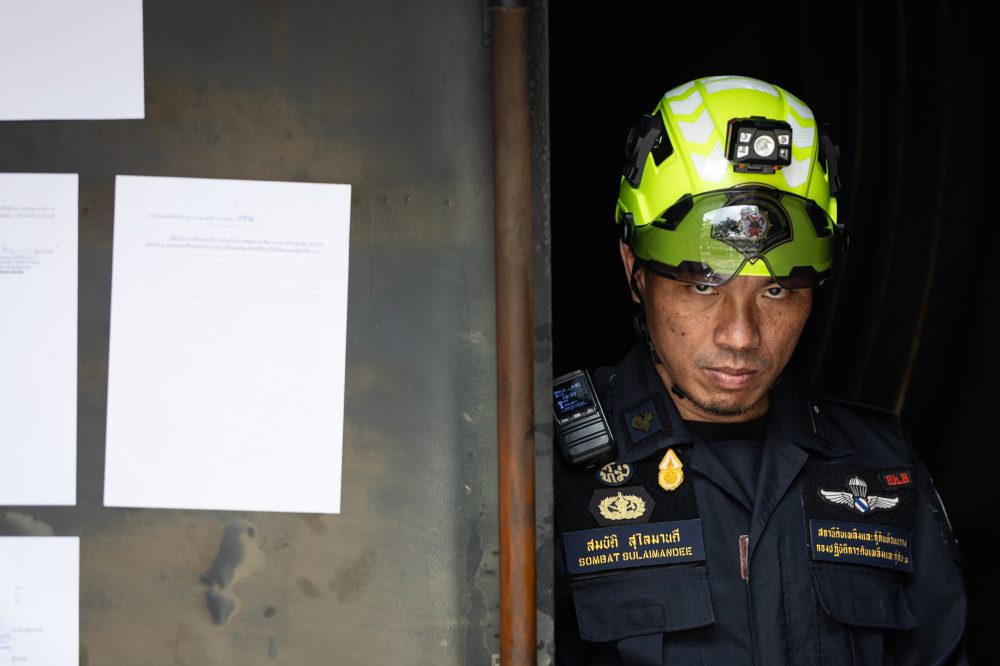

BANGKOK — A fire that tore through a Bangkok music bar earlier this week has claimed at least 33 lives and left more than 70 people injured, reigniting a fierce debate about the safety regulations — and the legal gaps — that govern Thailand’s bustling nightlife scene.
Bangkok is internationally known for its lively bar and club culture, but critics say the country’s licensing framework has long allowed venues to sidestep the toughest safety requirements.
The fire broke out Sunday night at the Rong Beer Na Ladprao bar in northern Bangkok. As of Thursday, 27 people remained hospitalized, according to Erawan emergency services. Officials said most of the fatalities resulted from smoke inhalation, while a smaller number died from burn injuries.
The bar had advertised on social media that it could hold roughly 600 guests, though the number of people inside when the fire started remains unknown.
Investigators are still working to determine what triggered the rapid blaze and why the death toll was so high. Amorn Pimanmas, president of the Thailand Structural Engineers Association, pointed to possible factors such as overcrowding, flammable materials within the venue, and blocked exits — an assessment shared by other fire safety and engineering professionals.
Amorn stated the disaster could have been avoided “if proper engineering principles and all relevant laws and regulations had been strictly followed.”
Thailand’s main law covering nightlife establishments, the Entertainment Place Act, was originally passed in 1966. It was updated in 2012 — three years after a fire on New Year’s Eve 2009 at the Santika nightclub killed 67 people and injured more than 200.
The updated rules require entertainment venues to use fire-resistant or non-flammable interior materials and proper acoustic soundproofing. Venues must also install smoke ventilation systems, sprinklers, and fire exits large enough to handle their expected crowd size.
However, these requirements only apply to venues that are officially licensed and operating within designated entertainment zones — three of which exist in Bangkok. Opposition lawmaker Paramait Vithayaruksun of the People’s Party described the law as “outdated and unrealistic.”
Speaking to Parliament on Monday, Paramait explained that despite bars and clubs existing throughout Bangkok, venues outside the three designated zones are legally barred from obtaining proper entertainment licenses — even when owners are prepared to meet the safety standards.
As a result, many of these businesses register instead as restaurants with alcohol service and live music, a classification that carries far less stringent safety requirements, he said.
The bar where Sunday’s fire occurred sits outside Bangkok’s designated entertainment zones and was officially registered as a restaurant with live music, according to officials.
Thailand’s entertainment zone restrictions are in place across 55 provinces, while 22 other provinces offer no entertainment venue licenses at all, according to the Department of Provincial Administration.
Paramait said this structure has effectively allowed nightlife businesses to “evade strict safety standards and face much lighter legal penalties.” Restaurants, for example, are not required to use the same soundproofing materials — meaning operators can legally install cheaper foam insulation for live music events.
Thailand’s conservative, Buddhist-influenced values have also played a role in shaping these policies. Nightlife venues are prohibited from operating within 2 kilometers — about 1.2 miles — of a temple or school.
Prime Minister Anutin Charnvirakul acknowledged this week that the existing laws fall short and said they need to be revisited. “Times have changed. I’ve asked officials to study how we should adjust the rules,” he said. “We need to look at it from every angle — what society is like today, as well as our culture, customs and traditions.”
Wasawat Kitsiriteeraphak, former president of the Building Inspectors Association, argued that safety inspections should be based on how a building is actually being used, not simply on how it is classified on paper. “The risks to lives and assets of the people depends on the actual use of the building rather than how the business is called,” he said in a statement, calling on authorities to conduct a comprehensive review of similar venues across Thailand to prevent future tragedies.