
BEIRUT (AP) — Lebanon’s capital is overwhelmed with displaced families.
One month has passed since Hezbollah launched rockets toward Israel following the U.S.-Israeli strike on Iran, prompting Israeli bombing campaigns across Lebanon and ground forces entering the country. More than one million residents from southern and eastern regions, along with Beirut’s southern neighborhoods, have abandoned their homes. Most have packed into increasingly crowded areas of the capital where airstrikes have not yet reached.
The Israeli military operations and evacuation directives — unmatched in their reach across what aid organizations say covers 15% of the small nation — have cleared out southern Lebanese communities and forced nearly all residents from southern neighborhoods into central Beirut, altering the city’s population distribution and geography while raising concerns about what lies ahead.
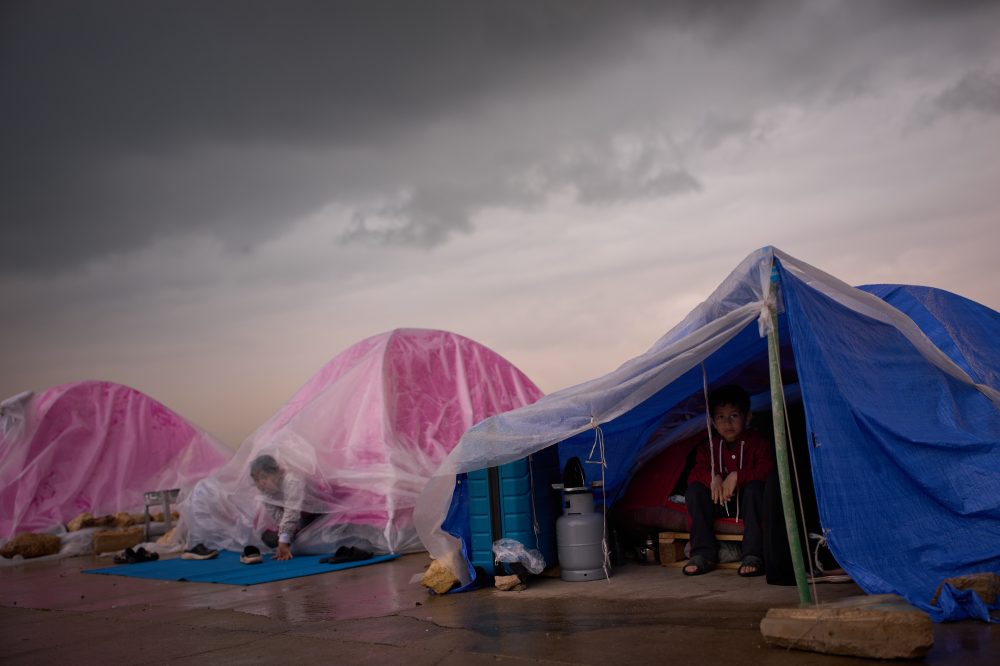
A massive temporary settlement of tents has emerged in the grass between a yacht club and entertainment district, completely changing Beirut’s waterfront appearance. Some families have taken shelter in empty shops, religious buildings, and the vehicles they escaped in, creating long lines of parked cars on major roads. Others have gathered in makeshift shelters constructed from tarps along the curved seaside boulevard or near Horsh Beirut, a pine tree park on the edge of the southern district called Dahiyeh.
“It’s horrid because we feel this tension, that we’re not wanted here,” said Noor Hussein, who arrived at the waterfront in early March after escaping the initial Israeli airstrikes on Dahiyeh. She observed wealthy joggers weaving through a maze of tents and dirty mattresses while her three youngest children climbed onto her lap.
“We don’t want to be here,” she said. “We have nothing here and nowhere to go.”
Previous displacement waves have disrupted this city before, including during the 2024 Israel-Hezbollah conflict. However, experts find it difficult to remember such a massive population movement — roughly 20% of the nation’s residents, according to official reports — affecting Beirut this rapidly.
“The scale and intensity of this is just unprecedented,” said Dalal Harb, the spokesperson for the United Nations refugee agency in Lebanon. She explained that the one million displaced figure is likely conservative since it doesn’t include those who haven’t officially registered as displaced through the Ministry of Social Affairs.
Officials have transformed hundreds of public schools into temporary housing and erected tents for displaced families under the bleachers of the city’s primary sports stadium. Charitable organizations have rushed to assist, with one group converting an abandoned slaughterhouse damaged in Beirut’s 2020 port explosion into sleeping quarters for nearly 1,000 displaced individuals.
However, urban planning experts point to an extraordinary number of people living on the streets compared to previous conflicts, making it challenging for regular residents to ignore the war and its devastating effects.
“This is relatively new, that you have so many people spending time in these open spaces, who are very vulnerable, living in very precarious conditions,” said Mona Harb, a professor of urban studies at the American University of Beirut. “You have to confront this visually when you’re coming and going to work, to school … and there are strong, mixed feelings associated with this presence that’s unregulated.”
Displaced families report difficulty securing space at government-operated shelters in Beirut and prefer enduring outdoor conditions rather than traveling north to cities where better housing might exist but where they lack family or social connections.
“The further away we go, the more we’ll lose hope about finding our way back,” said Hawraa Balha, 42, explaining why her family of four was cramming into the small car they drove from the destroyed southern border village of Duhaira instead of sleeping in an available shelter further north. “We don’t want to move again.”
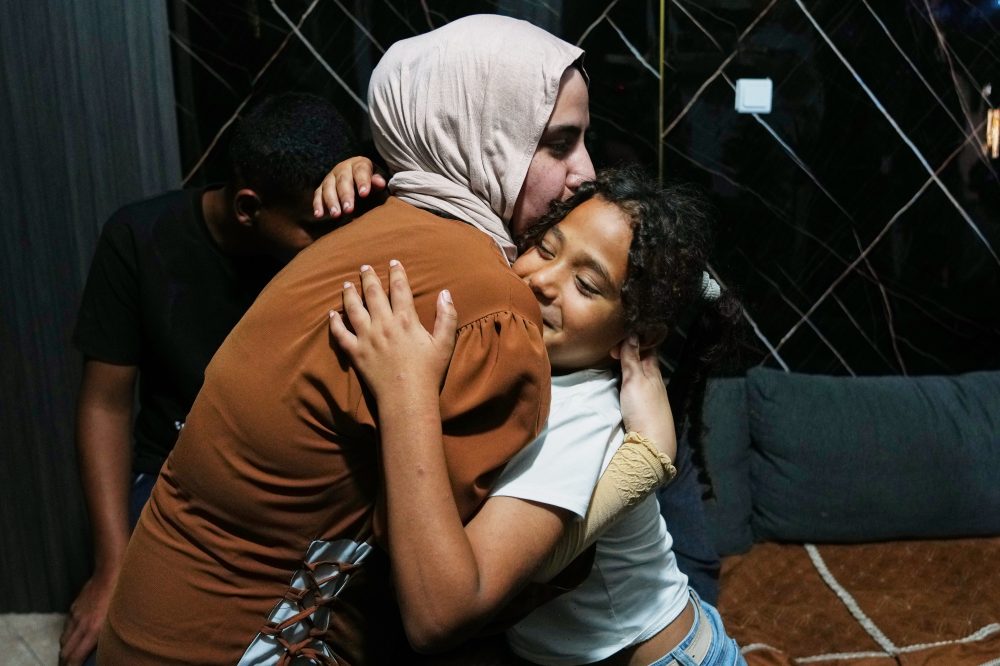
People from the Dahiyeh suburbs have mostly chosen to stay in Beirut. This allows them to occasionally return to collect possessions and verify whether their homes remain intact, though these visits require quick trips under bombardment threats. Hussein mentioned her children became so desperate for bathing facilities after almost a month without proper restrooms that they hurried home to clean up last week despite constant Israeli drone activity overhead.
The movement of hundreds of thousands of Shiites has heightened Lebanese concerns about the nation’s delicate religious balance. Since its devastating 15-year civil war ended, Lebanon has depended on a power-sharing system to balance the interests of Christians, Shiite Muslims and Sunni Muslims, the country’s three largest religious communities, which comprise roughly equal portions of the population.
“It’s generating anxieties in Beirut, where the bulk of the displacement is, that this may cause a significant transformation in the demographic balance within the country, or within certain spaces and cities,” said Maha Yahya, director of the Beirut-based Carnegie Middle East Center.
Each passing day brings more tents to the waterfront settlement. Children have begun developing skin irritations. Recent heavy rains flooded the grassy area and penetrated tents, creating trails of wet clothing and causing sore throats. A dispute erupted last week when volunteers came to distribute donated items.
“We’re not used to living like this — we had a house, we had normal lives,” said Lina Shamis, 51, warming herself beside a fire at the base of a billboard advertising luxury watches. She, her three adult daughters and their young children established their camp here after following Israeli evacuation orders for Dahiyeh in a rush, bringing almost no belongings.
“Now the kids are out of school and hungry, and our neighborhood is gone,” she said. “All I feel is despair.”
With Israeli forces advancing deeper into Lebanon and threatening to occupy Lebanese territory extending to the Litani, a river 20 miles (30 kilometers) north of the Israeli border, the circumstances for displaced people in Beirut “will be even worse than what we’re seeing now,” warned Harb, from the U.N. refugee agency.
“The needs will continue to increase,” she said. “It’s an imminent humanitarian catastrophe.”