
President Donald Trump announced Tuesday that American military operations against Iran could conclude within the next few weeks, telling reporters that Tehran does not need to reach a diplomatic agreement for the conflict to end.
Speaking from the White House, Trump indicated the timeline for withdrawal could be swift. “We’ll be leaving very soon,” the president stated, adding the departure might happen “within two weeks, maybe two weeks, maybe three.”
When questioned whether successful negotiations with Iran were necessary before the U.S. concludes what officials have called “Operation Epic Fury,” Trump made clear they were not required.
“Iran doesn’t have to make a deal, no,” he stated. “No, they don’t have to make a deal with me.”
The president’s statements highlight the fluctuating and sometimes conflicting messages coming from Washington regarding how the five-week conflict might conclude.
Earlier Tuesday, Defense Secretary Pete Hegseth indicated Trump remained open to reaching an agreement with Iran to halt the war, which has resulted in thousands of casualties, expanded throughout the region, disrupted global energy markets, and threatened worldwide economic stability.
According to Hegseth, diplomatic discussions are progressing and gaining momentum, though the U.S. remains ready to continue military action if Iran fails to cooperate.
“We have more and more options, and they have less … in only one month we set the terms, the upcoming days will be decisive,” Hegseth said during remarks in Washington.
Iran’s Revolutionary Guards responded Tuesday with fresh warnings targeting American corporations operating in the region, effective Wednesday evening.
The Iranian forces identified 18 companies for potential targeting, including major tech and aerospace firms Microsoft, Google, Apple, Intel, IBM, Tesla and Boeing, beginning at 8 p.m. Tehran time.
Asked about his concerns regarding these corporate threats, Trump dismissed them. “They don’t have much left to threaten,” he said regarding Iran’s capabilities.
Iranian Foreign Minister Abbas Araqchi confirmed Tuesday he has been receiving direct communications from U.S. special envoy Steve Witkoff, though he clarified these do not amount to formal “negotiations,” according to Qatar’s Al Jazeera television.
Araqchi described the communications as including warnings or exchanged perspectives delivered through intermediary “friends.”
Trump also criticized allied nations that have not supported the American war effort, specifically mentioning Britain.
In a social media message, he suggested that in response to global fuel shortages, these countries should purchase energy from America or find “some delayed courage, go to the strait and just TAKE IT.”
Sources indicate that France and Italy have objected to certain U.S.-Israeli military operations, revealing how the conflict has created divisions among NATO partners.
U.S. General Dan Caine, chairman of the Joint Chiefs of Staff, reported Tuesday that American forces continue targeting critical manufacturing and research facilities and have destroyed more than 150 Iranian naval vessels.
As military strikes show no signs of diminishing, Pakistan is attempting to broker peace in the conflict. Chinese and Pakistani foreign ministers called for an immediate ceasefire Tuesday following their Beijing meeting, advocating for peace negotiations to begin immediately.
Despite sustained American and Israeli attacks over the past month, Iran has maintained its defiant stance as neighboring countries have been drawn into the fighting.
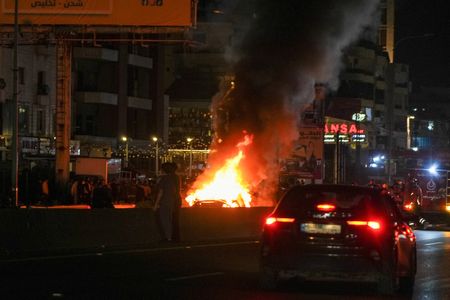
Security sources reported heavy bombardment in Beirut Tuesday evening.
Israeli military officials confirmed they had targeted a senior Hezbollah commander and another high-ranking fighter in two separate Beirut strikes.
Syrian state television reported that explosions heard in Damascus resulted from Israeli air defense systems intercepting Iranian missiles.
A regional official told state media that a weather station’s radar equipment and building in the Iranian port city of Bushehr were disabled Tuesday after being struck twice in coordinated U.S.-Israeli attacks.
The Mobarakeh steel facility in central Isfahan was attacked for the second time in seven days, according to semi-official Tasnim news agency, while portions of the Sefiddasht Steel Complex in Borujen were also targeted, Fars news agency reported.
Reuters could not immediately confirm these battlefield accounts.
Rising oil and fuel costs have begun impacting American household budgets and present a political challenge for Trump and the Republican Party ahead of November’s midterm elections.
American retail gasoline prices exceeded $4 per gallon Monday for the first time in over three years, according to GasBuddy price-tracking data.
A Reuters/Ipsos poll revealed that two-thirds of Americans believe the U.S. should work toward quickly ending its involvement in the Iran conflict, even if that means not accomplishing the Trump administration’s stated objectives.