
HAVANA — In a crumbling Havana neighborhood, Yuneisy Riviaux faces a reality she never thought possible: watching her young daughters go hungry because there simply isn’t enough food.
The 42-year-old mother, currently without work, shares a deteriorating home with multiple families after the building’s upper level caved in years earlier. As she holds her 2-year-old daughter Seinet, Riviaux describes their desperate situation.
“Things have been going very, very badly for me,” Riviaux explained. “Some days I manage to get food.”
“But other times I can’t — like right now, when I have to bite my lip and swallow my tears because I don’t have lunch for the girls.”
Cuba’s worsening financial collapse, now in its sixth year and made worse by energy sanctions implemented during Donald Trump’s presidency, has hit families like Riviaux’s the hardest. Constant power outages, reductions in government food distributions, and critical shortages of clean water and medical supplies have made survival a daily struggle for Riviaux, her 61-year-old husband Cristóbal Estrada, and their two children.
Earlier that morning, Estrada had prepared breakfast for their 7-year-old daughter Edianet: a slice of rationed bread topped with a small amount of butter — a rare treat given to the family by a passing tourist exploring their neighborhood.
After taking Edianet to school, Estrada began the challenging journey to Cotorro, roughly 12 miles away, hoping to collect food and financial assistance from family members. The nationwide power failure on March 21 had destroyed all the perishable items in their refrigerator.
“He has to see if he can find a ride, a bus or whatever it takes to get there,” Riviaux said.
Cuba’s transportation network has nearly ground to a halt due to fuel shortages after the United States blocked oil shipments to the island following January’s attack on Venezuela — Cuba’s primary petroleum source. The island only produces about 40% of its required crude oil.
These fuel shortages have triggered nationwide blackouts that have frustrated Cubans already dealing with years of hardship. The lack of gasoline and essential supplies has devastated healthcare facilities and caused dramatic increases in food costs and availability problems.
Mexico previously provided oil to Cuba during the island’s ongoing energy struggles, but stopped these deliveries when faced with potential US trade penalties, now limiting assistance to humanitarian supplies only.
This Tuesday, a Russian oil tanker arrived at Cuba’s Matanzas port carrying 730,000 barrels of petroleum after the Trump administration allowed the delivery despite the US energy blockade — the first such shipment in three months. However, energy analysts estimate this supply will only meet the island’s diesel requirements for approximately nine to ten days.
Riviaux and Estrada previously operated a small vendor stand outside their residence, selling drink mixes and basic packaged goods.
However, in February, Estrada became seriously ill and required hospitalization for a collapsed lung. The medical expenses proved financially devastating as the couple exhausted their savings purchasing medications on the illegal market when government-subsidized pharmacies had no supplies available.
“We had to sacrifice that business to buy the medicine and save his life,” Riviaux said.
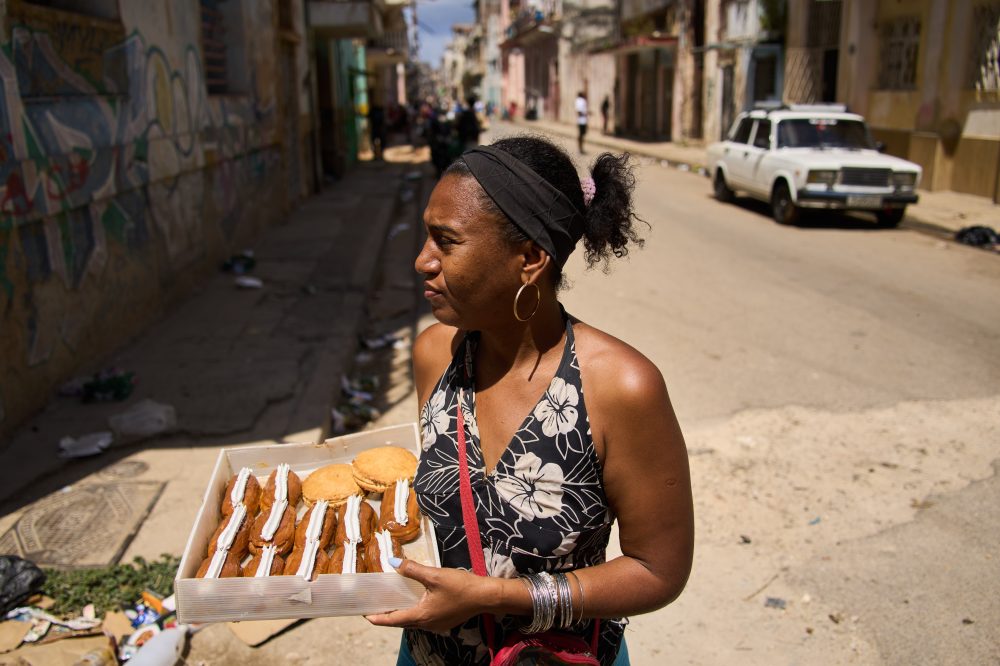
Currently, Riviaux sells sweet baked goods prepared by her sister whenever they can obtain flour — an item not included in the limited monthly government rations that provide rice, beans, sugar, cooking oil, coffee, and daily bread.
Cuba’s previously celebrated universal healthcare system has deteriorated so severely that it cannot deliver basic medical services. Medical facilities face enormous backlogs, with approximately 96,000 surgical procedures delayed, including 11,000 for pediatric patients, based on local government and United Nations data.
Almost 5 million citizens with ongoing medical conditions cannot access necessary medications, while critical treatments including cancer radiation therapy and kidney dialysis have been suspended for 16,000 and 2,800 patients respectively.
The United Nations announced a $94 million emergency assistance program this week to address what officials described as a “life-threatening” situation for Cuban citizens. Francisco Pichón, the UN’s resident coordinator in Cuba, noted the appeal follows Cuba’s historical leadership in Latin American maternal healthcare and immunization programs — achievements now seriously threatened.
By midday, with her husband still away, Riviaux had no option but to feed her 2-year-old a piece of bread and the family’s remaining milk — a donation from Mexico. Riviaux went without eating. Her 7-year-old continues receiving free school meals, as classes persist despite the national emergency.
Riviaux looks back wistfully to the period before the COVID-19 pandemic, when she recalls “Cuba had everything.”
“I know the pandemic hit the whole world, but it hit us much harder,” she said.
Before the pandemic, each family’s ration booklet included rice, beans, daily milk for children, sugar, oil, chicken, ground meat, and approximately 30 food and hygiene items. These supplies typically lasted about 20 days, requiring families to purchase additional items from private businesses using currency tied to the US dollar.
Enhanced US sanctions that began during Trump’s first term, combined with tourism’s collapse during the pandemic and Cuba’s unsuccessful economic strategies, created a severe recession.
Cuba’s economic output has dropped 15% during the past six years, causing a massive population exodus. The island lost over 1 million residents — roughly 10% of its total population — in 2024 alone.
Following the US capture of Venezuelan President Nicolás Maduro, Trump has intensified his statements about Cuba, initially suggesting a “friendly takeover” and recently telling conservative Latin American allies he would “take care” of Cuba after concluding the conflict with Iran.
Riviaux acknowledged that despite attempting to avoid political discussions, Trump’s aggressive language has caused her significant concern.
“We heard the news that Trump wanted to take over. What will happen if the U.S. gets involved?” she questioned as her husband returned late that afternoon.
He brought plantains, chicken, and sufficient money to purchase a kilogram of rice from a neighboring vendor — providing small comfort during an unpredictable week.