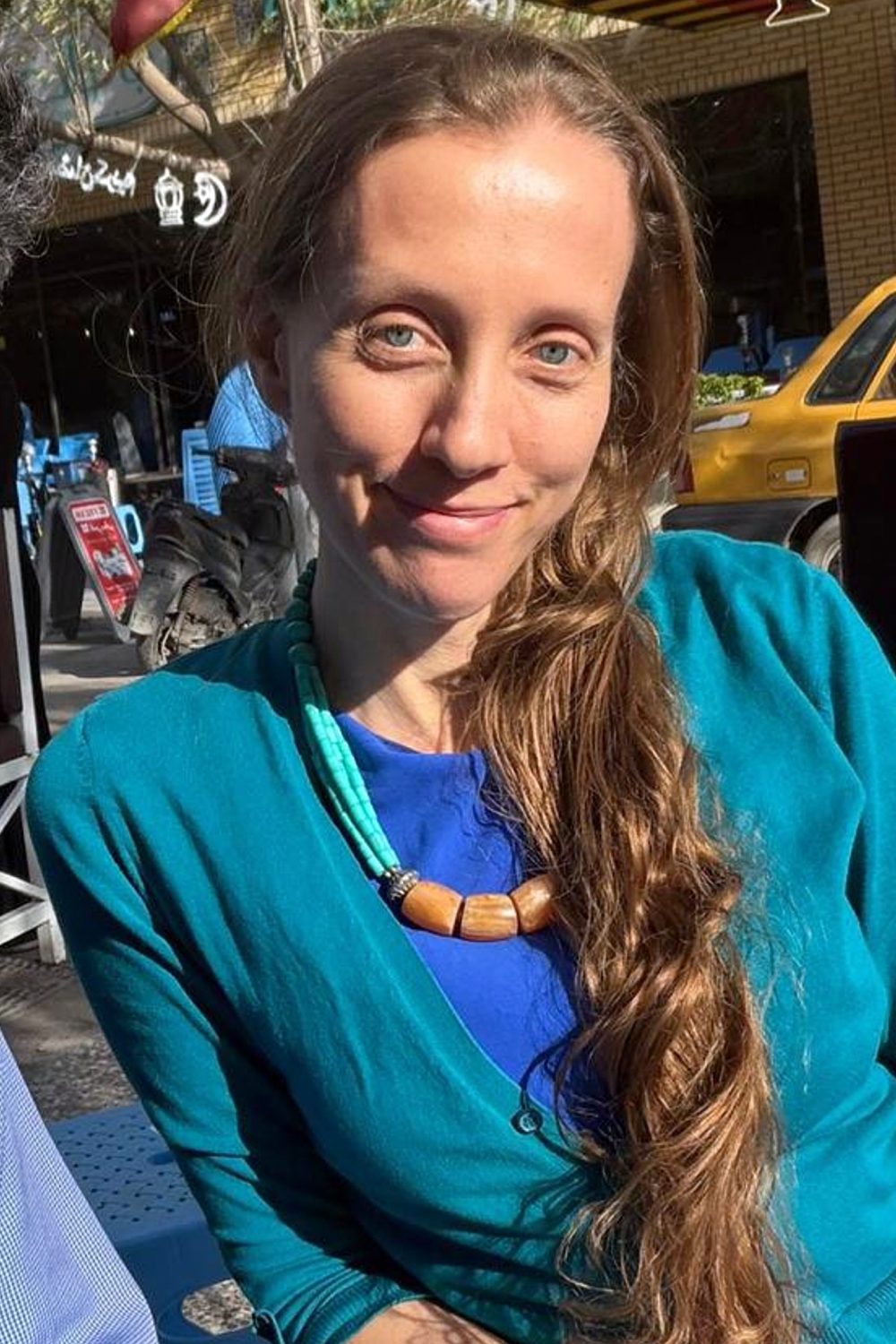

BAGHDAD — A 49-year-old American freelance journalist who disappeared Wednesday in Baghdad was recognized for her bold approach to reporting, frequently venturing into dangerous territories across the Middle East with minimal financial resources.
Shelly Kittleson, originally from Wisconsin, had established herself as a respected correspondent throughout the region after years of living overseas, including time based in Rome. Security footage captured the moment she was abducted by two individuals who forced her into a vehicle at a crowded Baghdad street corner on Wednesday.
Patrizio Nissirio, who previously worked as an editor at Italian news agency ANSA and has known Kittleson since 2011 when she served as a translator, praised her dedication. “She is a great reporter and always wants to go to areas where no one wants to go,” Nissirio explained.
He recalled advising her about safer reporting options: “I said to her, ‘You don’t need to be in a war zone to do good journalism,’ and she told me, ‘I think my work is worth something when I am in those areas,’” Nissirio said.
Colleagues and friends characterize Kittleson as a fearless and persistent journalist who dedicated more than ten years to covering Iraq, Syria, and the broader Middle East region for various publications, including Al-Monitor, a specialized regional news website.
Known for her inquisitive nature and self-reliance, she frequently immersed herself within local populations, sometimes choosing to stay with host families instead of commercial accommodations.
Her freelance status meant she typically operated solo, covering vast distances while carrying all her possessions, without the security resources that larger news organizations might provide their staff.
Friends describe the Wisconsin-born journalist as compassionate and spiritually minded, having converted to Islam during her time in the region.
She maintained a vegetarian diet, which Iraqi acquaintances noted was challenging in the meat-centric cuisine of Middle Eastern nations. She was often good-naturedly mocked for her heavy bags, which she refused to leave unattended at the basic Baghdad hotel where she resided.
Three Iraqi associates agreed to discuss Kittleson only without revealing their identities, concerned about potential retaliation from militant organizations if connected to her publicly.
During her last communications before the kidnapping, she inquired with contacts about transportation options between various cities while continuing her efforts to secure story access.
Just hours before her abduction, Kittleson met with an acquaintance in Baghdad’s Karrada district and revealed she had been warned that U.S. officials informed her of a militia group’s plan to target her. However, she dismissed the threat as lacking credibility.
Iraqi colleagues mentioned that security personnel and militia members had detained Kittleson at checkpoints previously, but she had consistently secured her freedom. “They will not hurt me,” she assured her friend that afternoon prior to her capture.
Rather than security concerns, she expressed worry about her financial difficulties, mentioning she lacked any work assignments during her Baghdad stay. Financial hardship had been a persistent challenge throughout her career of modest living.
Working independently, she frequently depended on assistance from Iraqi journalism professionals.
On March 9, Kittleson attempted to enter Iraq from Syria through the al-Qaim border crossing. While border authorities issued her a visa, Iraqi intelligence personnel subsequently blocked her entry, referencing kidnapping risks, according to three separate accounts from individuals she contacted that day.
She then traveled to Jordan and successfully entered Iraq through that route without complications.
“She always complained of the treatment of freelance journalists, saying they are not paid enough. She was always trying to make ends meet and said she would sleep on any couch she could find, unlike the big foreign correspondents that sleep in fancy hotels,” Nissirio explained.
“Her job has always been difficult, but she had a burning passion for it that I respect and appreciate.”
Kittleson’s most recent publication appeared in Il Foglio on Monday, March 31, examining how the Iran conflict has impacted Iraq’s Kurdish territories.