
DUBAI, United Arab Emirates — Tehran launched new strikes Wednesday morning against a commercial vessel near Qatar’s coastline and Kuwait International Airport, continuing its aggressive campaign against Gulf Arab nations while confirming for the first time that Washington has made direct contact regarding potential ceasefire negotiations.
Israeli forces issued alerts about incoming projectiles from Yemen and Iran while conducting their own operations in Lebanon that resulted in at least five deaths.
As the conflict shows no signs of diminishing after claiming more than 3,000 lives, President Donald Trump indicated the fighting might conclude within two weeks, even as he deploys additional thousands of military personnel to the Middle East.
Growing pressure mounts on Trump to halt the warfare as Tehran’s control over Strait of Hormuz shipping lanes and strikes against regional energy facilities have pushed gasoline costs to their peak levels since 2022, triggering widespread stock market volatility.
Tehran restricted vessel movement through the strategic waterway connecting the Persian Gulf to international waters following U.S. and Israeli strikes on February 28. During normal operations, twenty percent of global oil shipments pass through this corridor, and Brent crude prices have surged over 40% since hostilities began, now exceeding $104 per barrel.
Washington has presented Tehran with a comprehensive 15-point ceasefire proposal demanding the strait’s reopening. Iran’s five-point counter-proposal insists on maintaining control over the waterway, with Trump suggesting Tuesday that hostilities might end even with continued Iranian dominance of the passage.
The United States “will not have anything to do with” developments in the Strait of Hormuz, Trump told media, stating that nations dependent on the waterway bear responsibility for maintaining its accessibility.
“That’s not for us. That’ll be for France. That’ll be for whoever’s using the strait,” Trump stated.
Trump’s reference to France remained unclear, given Europe receives minimal oil through the strait compared to Asian nations. The president plans a prime-time national address Wednesday.
Trump, who has alternated between claiming diplomatic progress with Iran and threatening expanded military action, declared the U.S. is “finishing the job” in Iran and predicted completion in “maybe two weeks, maybe a couple of days longer to do the job.”
Trump has cautioned that without a “shortly” achieved ceasefire and strait reopening, America would expand operations, potentially targeting the Kharg Island oil terminal and desalination facilities.
Thousands of Marines and paratroopers have received deployment orders for possible Kharg Island operations, though naval access would require passage through the Strait of Hormuz and Persian Gulf, which Iran has threatened to mine.
During an Al Jazeera interview, Iranian Foreign Minister Abbas Araghchi confirmed receiving direct communications from U.S. Middle East envoy Steve Witkoff. However, he emphasized no formal negotiations exist and expressed zero confidence in productive American discussions, stating “the trust level is at zero.”
Regarding potential ground operations, he warned “we are waiting for them.”
“We know very well how to defend ourselves,” Araghchi declared.
Wednesday morning brought reports of a projectile striking a tanker off Qatar’s coast, according to the British military’s United Kingdom Maritime Trade Operations center. Crew members reportedly escaped injury. A loaded Kuwaiti oil vessel suffered attack near Dubai Tuesday, joining more than 20 ships targeted by Iran during the conflict.
Bahrain issued dual missile alerts and reported an Iranian strike ignited fires at a commercial facility.
In Kuwait, state-run KUNA news agency confirmed a drone struck a fuel storage tank at Kuwait International Airport, creating a “large fire” that emergency crews worked to contain.
Saudi Arabia intercepted two drones amid repeated Iranian attacks, while air raid warnings sounded across Israel without immediate damage or casualty reports.
Within Iran, Israeli forces claimed striking a facility manufacturing fentanyl allegedly intended for chemical weapons development. Iran acknowledged the attack on Tofigh Daru factory but maintained it only produces “hospital drugs” for medical applications.
Both Israeli and Iranian sources confirmed Tuesday’s strike timing.
Medical facilities widely utilize fentanyl for severe pain management, though small quantities prove lethal.
Israel and the United States have previously accused Iran of incorporating fentanyl into weapons systems.
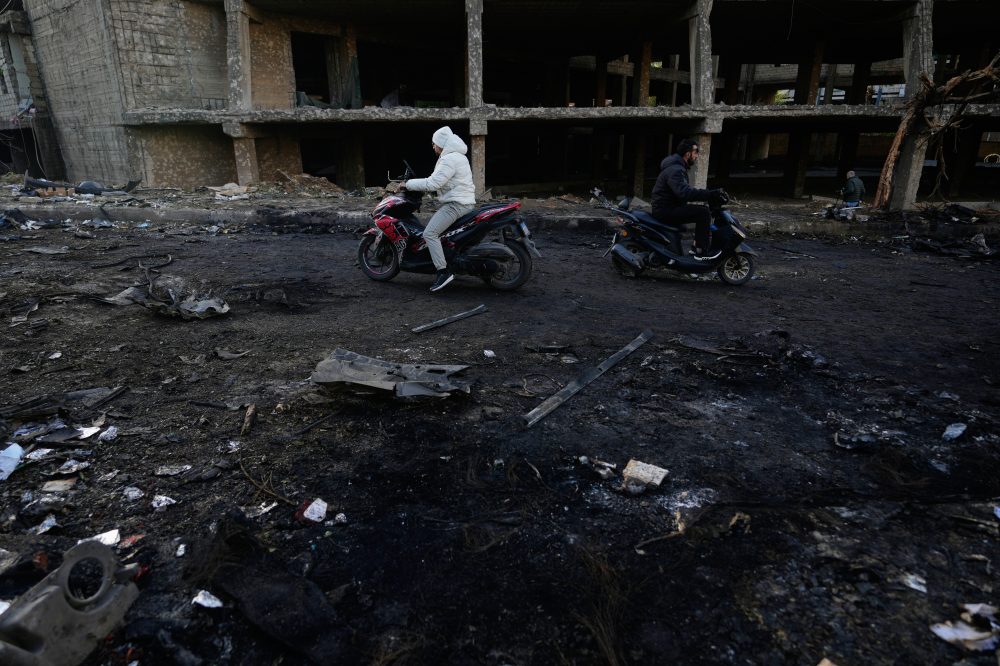
In Beirut, Israeli strikes on a residential area killed at least five people, with Lebanon’s Health Ministry reporting 21 additional injuries.
Israeli forces entered southern Lebanon following missile attacks from Iran-affiliated Hezbollah militants targeting northern Israel shortly after broader hostilities erupted. Many Lebanese citizens fear another extended military occupation.
Lebanese authorities report over 1,200 deaths and more than one million displaced residents, while ten Israeli soldiers have died in Lebanon operations.
Iranian officials cite more than 1,900 domestic casualties, compared to 19 reported Israeli deaths.
Since the Iran conflict began, 13 U.S. service members have died with 348 wounded, including six seriously injured, according to U.S. Central Command.
Over two dozen fatalities have occurred across Gulf states and the occupied West Bank.