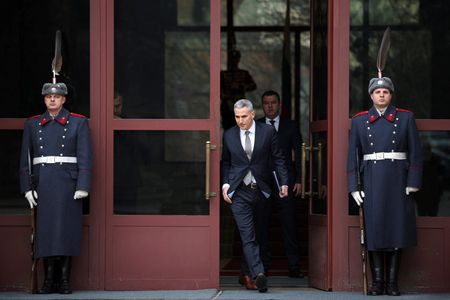

Bulgaria’s interim Prime Minister Andrey Gyurov declared that the nation’s upcoming elections will represent some of the most transparent voting in recent memory, following his administration’s campaign against corruption and electoral fraud.
Gyurov, who assumed leadership in February after the prior government stepped down amid public demonstrations last year, believes the April 19 elections could restore citizens’ faith in democratic institutions.
Law enforcement has detained numerous individuals in recent weeks connected to suspected vote-buying schemes as Gyurov works to address Bulgaria’s long-standing election integrity issues. The nation ranks among Europe’s most corruption-plagued countries, and officials report finding suspects with money and voter lists.
“We think that this will be one of the fairest elections that we have seen in recent years,” Gyurov stated during his recent trip to Kyiv, noting that corruption reports to authorities have increased dramatically as citizens witness government action against wrongdoing.
While previous Bulgarian elections saw poor participation due to voter cynicism, Gyurov anticipates significantly higher turnout this time.
“I think this will have a multiplier effect on the confidence that people have in the institutions of the country,” he added.
The December resignation of the former government followed sustained public demonstrations against economic policies and perceived inaction on corruption. This snap election marks the eighth time Bulgarians will vote in just five years, reflecting the EU and NATO member’s deep political instability.
With polling suggesting no party will secure a majority, Gyurov – formerly a deputy governor at Bulgaria’s central bank – called on political leaders to form stable governing coalitions.
Current surveys show the Progressive Bulgaria center-left alliance, led by former President Rumen Radev, ahead with approximately 30% support. Radev left the presidency in January to pursue the election.
He has committed to fighting corruption in a nation where prosecutors claim hundreds of millions in European Union funding has been illegally diverted to business leaders and government officials through rigged contracts.
A new report from the Civil Liberties Union for Europe, a Berlin-based rights organization, identified Bulgaria among five European nations weakening legal institutions.
Gyurov acknowledged corruption’s widespread impact on society, including press freedom, and emphasized the need for judicial system reforms by future administrations.
“There should not be people, oligarchs, that are able to influence the political processes in the country,” he stated, specifically naming businessman and politician Delyan Peevski, who faces U.S. and UK sanctions for corruption.
“What we have shown as a government in recent weeks and months is that…the influence of such people can be fully isolated from the public political process,” Gyurov concluded.