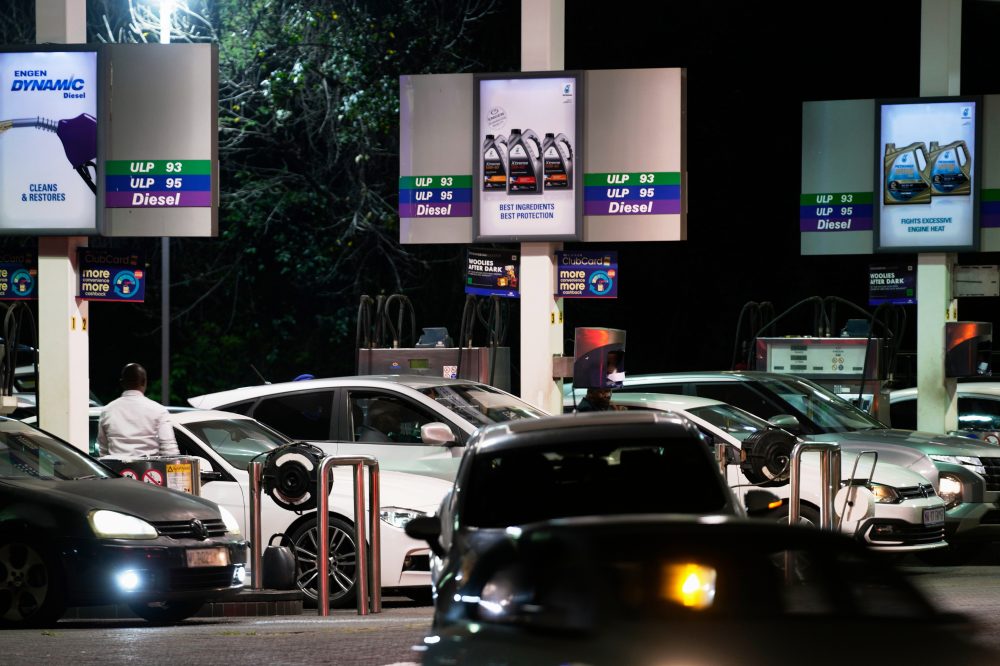

JOHANNESBURG (AP) — Drivers across South Africa flocked to fuel stations Tuesday evening as the nation braced for unprecedented gasoline and diesel price jumps scheduled to begin at midnight, driven by ongoing Middle East conflicts affecting worldwide energy markets.
Finance Minister Enoch Godongwana attempted to soften the blow by announcing a 3 rand ($0.18) reduction in fuel taxes per liter on Tuesday, though the relief proved insufficient to prevent sticker shock.
The diesel price surge of 7.51 rand ($0.44) represents the largest single increase in the country’s history, while gasoline climbed 3.06 rand ($0.18), creating widespread concern throughout the southern African nation.
By evening hours Tuesday, multiple fuel stations in eastern Johannesburg had exhausted their supplies of both diesel and gasoline, forcing operators to turn customers away. Other locations offered only gasoline while denying service to diesel customers, with lengthy queues forming at remaining stations with available fuel.
According to Godongwana, the continuing Middle Eastern warfare has elevated risks within international energy markets while applying significant pressure to South Africa’s domestic fuel costs.
The temporary fuel tax reduction for April, implemented before new pricing adjustments are announced in March, will result in lost government tax collections exceeding 6 billion rand (more than $351 million).
Distribution challenges and operational disruptions have compounded the nation’s fuel crisis, with numerous stations running completely dry while others implemented purchase limits ranging from 30 to 50 liters (8 to 13 gallons) per vehicle.
“Even after fuel levies were reduced, these are the largest increases in recent history and would be devastating for consumers,” said Theuns Du Buisson, an economic researcher at the Solidarity Research Institute.
Du Buisson warned that the price jumps, particularly the record-breaking diesel increase, would severely impact logistics and transportation expenses, creating ripple effects on inflation in upcoming months.
Since most South Africans depend on public transportation including minibus taxis and buses, low-income families will likely bear the heaviest burden from these increases, Du Buisson explained.
Public bus operations in Pretoria, the capital city, experienced disruptions Tuesday due to fuel shortages affecting municipal bus facilities, according to city officials.