
LONDON — Tensions between the United States and its European allies have reached a breaking point as President Donald Trump threatens to withdraw America from NATO over disagreements regarding the ongoing conflict with Iran.
In an interview with Britain’s Telegraph newspaper published Wednesday, Trump delivered some of his harshest criticism yet of the military alliance, suggesting he’s seriously considering ending U.S. membership entirely.
When asked if he would reconsider American participation in NATO following the conclusion of the Iran conflict, Trump responded: “Oh yes, I would say (it’s) beyond reconsideration.”
The remarks represent Trump’s most definitive statements to date about potentially abandoning the alliance, indicating the relationship may have deteriorated beyond repair.
NATO officials did not immediately respond to requests for comment from The Associated Press.
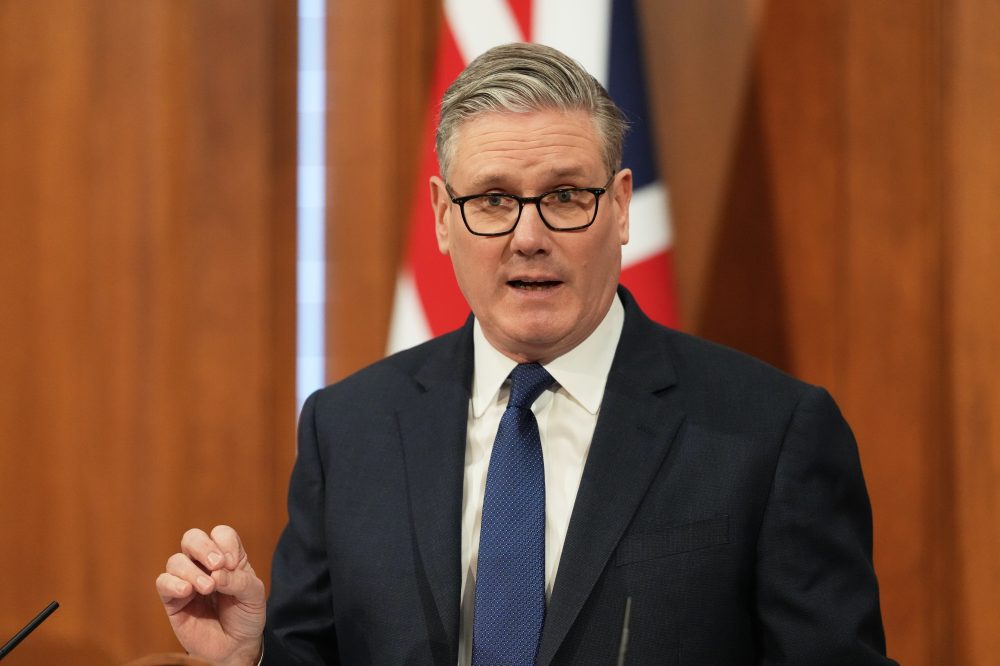
British Prime Minister Keir Starmer defended the organization when questioned about Trump’s comments, stating Britain remained “fully committed to NATO” and describing it as “the single most effective military alliance the world has ever seen.”
European governments have faced significant domestic opposition to the Middle East conflict, which has driven oil prices higher after Iran effectively blocked the Strait of Hormuz, a critical shipping lane that handles roughly 20 percent of global oil transport.
“Whatever the pressure on me and others, whatever the noise, I am going to act in the British national interest in all the decisions I make,” Starmer declared Wednesday.
The current crisis has reignited longstanding disagreements within the alliance. With energy costs climbing, Trump has urgently sought naval support from partner nations to address the Strait of Hormuz situation. He has labeled NATO members “cowards” and employed increasingly harsh rhetoric to pressure allies into assisting with a conflict they never agreed to join.
Trump has consistently criticized European partners for years, demanding they take greater responsibility for regional security and increase defense spending. He maintains that America has contributed more to the partnership than it has received in return.
An American withdrawal would effectively destroy NATO, which has operated successfully under U.S. leadership for decades.
Through his Truth Social platform Tuesday, Trump attacked nations “like the United Kingdom, which refused to get involved in the decapitation of Iran,” and recommended they purchase American oil or travel to the Strait of Hormuz independently to “just take it.”
Trump also expects allies to assist with reconstruction efforts following a war they played no role in initiating.
Britain is developing proposals that might help address Trump’s concerns.
Foreign Secretary Yvette Cooper will lead a virtual conference Thursday with 35 nations committed to providing shipping security in the Strait following the conflict’s end. Starmer indicated military officials are also preparing post-war security arrangements for the waterway.
NATO’s foundation rests on Article 5 of its charter, which guarantees that an attack against any member nation will trigger a collective response from all others.
As the Iranian conflict has expanded, missiles and drones have targeted NATO member Turkey and a British military installation in Cyprus, raising questions about what circumstances might activate the alliance’s mutual defense provisions.
The organization has not intervened or indicated any intention to do so. Secretary-General Mark Rutte, who has expressed support for Trump and America’s alliance role, has concentrated primarily on Russia’s invasion of Ukraine, which shares borders with four NATO countries.
NATO functions through unanimous agreement. All 32 member states must consent before the organization can act, making political considerations crucial. Even Article 5 activation requires allied consensus, meaning Turkey or Britain cannot invoke it independently.
Regarding the Middle East situation, Trump has expressed frustration with universal rejection from European allies, other partners, and even rival China to help secure the Strait of Hormuz.
Many European Union and NATO leadership figures have remained angry since the conflict began February 28, as they received no advance warning, breaking established diplomatic protocol.
Trump defended the lack of consultation by citing the need for tactical surprise, though he had publicly discussed potential military action and visibly increased American forces in the region before the war commenced.
European officials have demanded an end to hostilities and urged both the United States and Iran to resume nuclear program negotiations, as America and Israel view Tehran’s atomic ambitions as threatening.
European opposition to Trump’s Iranian campaign has evolved from criticism into concrete action.
Spain, Europe’s most outspoken critic, announced Monday it had closed its airspace to American aircraft participating in the Iran operation.
France reached an agreement last month allowing U.S. Air Force use of a southern French base after receiving “full guarantee” from Washington that only non-combat aircraft would utilize the facility.
Additional countries have voiced disapproval: German President Frank-Walter Steinmeier recently characterized the Iranian aggression as a “dangerous mistake” violating international law.
American-European relations had already deteriorated in recent months following Trump’s proposal that Greenland, a semi-autonomous Danish territory, should join the United States, prompting widespread EU support for Denmark.