
BERLIN (AP) — Economic analysts significantly lowered Germany’s growth projections for the next two years on Wednesday as European nations rush to implement emergency policies to shield citizens from rising prices caused by the ongoing Iran conflict.
Five leading economic research institutes now expect Germany’s gross domestic product to grow just 0.6% in 2026 — less than half their September prediction of 1.3% — and 0.9% in 2027, a reduction from their earlier 1.4% estimate. These revised projections fall short of the government’s own estimates from two months ago of 1% and 1.3% growth for those respective years.
The conflict in Iran has emerged as a significant barrier to economic expansion throughout Europe. Inflation in the 21-country eurozone accelerated to 2.5% in March, up from 1.9% the prior month, driven primarily by energy costs that surged 4.9% as warfare and the closure of the Strait of Hormuz pushed fuel expenses higher.
“This energy price shock is hitting a German economy in which a recovery set in last year after a several-year downturn,” said Timo Wollmershäuser, an expert with the Munich-based Ifo institute, one of those that issued the joint forecast for Europe’s biggest economy.
The shock “will dampen this recovery in Germany, but should not completely stop it,” he continued, citing upcoming government expenditures on defense and infrastructure as stabilizing elements. Germany’s economic output expanded 0.2% last year following two consecutive years of contraction.
Wollmershäuser cautioned against “short-term activism,” specifically opposing government-mandated fuel price reductions, which he claimed would be “costly, benefit many people who don’t need relief, distort the signal of scarcity from the price and keep up demand for crude oil.”
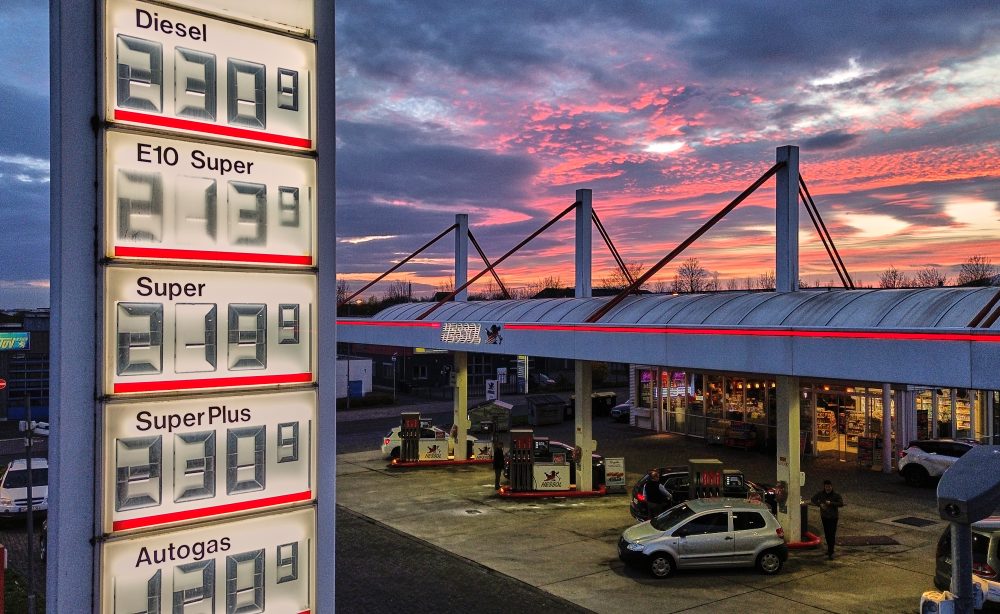
Germany’s approach has remained measured compared to other nations. New legislation that became effective Wednesday restricts gas stations to raising prices only once daily at noon, attempting to eliminate volatile price swings at fuel pumps. The law also expands the national antitrust authority’s ability to combat excessive fuel pricing.
Several other European countries have adopted more aggressive measures, despite the European Union’s executive commission encouraging member states to “consider the promotion of demand saving measures” and “refrain from taking measures that may increase fuel consumption.”
Poland introduced emergency measures this week establishing daily maximum fuel prices set by government officials, threatening penalties up to 1 million zlotys ($268,000) for businesses exceeding the price ceiling. The country also temporarily reduced fuel taxes.
Austria implemented fuel tax reductions Wednesday to lower pump prices. Sweden’s government has proposed decreasing gasoline and diesel taxes beginning May 1. The country also acted on another front Wednesday, cutting the value-added tax on food and beverages purchased in stores or for takeout from restaurants from 12% to 6%.
Latvia and Lithuania are planning to reduce diesel duties. Norway, though not an EU member, enacted temporary fuel tax cuts Wednesday following a parliamentary mandate last week.
Nevertheless, the EU’s energy commissioner cautioned Tuesday that oil and gas prices will not normalize quickly even if Middle Eastern peace is achieved soon.
Wollmershäuser explained the German forecast assumes the Strait of Hormuz will reopen during the second quarter and energy prices will decline starting in summer, “but without reaching the prewar level.”
This disruption occurs as Chancellor Friedrich Merz’s governing coalition considers comprehensive reforms to address Germany’s structural challenges — including elevated production costs, insufficient private investment, and mounting healthcare and pension expenses — while stimulating long-term economic growth.
Economy Minister Katherina Reiche stated the latest growth forecast delivers a clear message: “The conflict in the Middle East is increasing the pressure on German politicians to tackle structural reforms forcefully.”