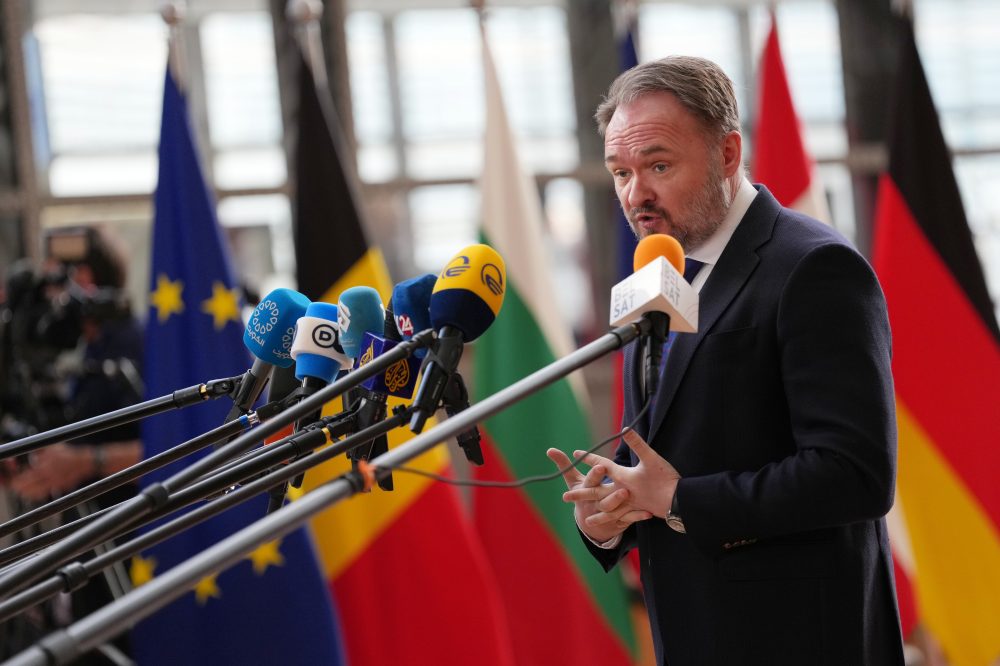

NICOSIA, Cyprus (AP) — Europe’s energy chief delivered sobering news Tuesday, cautioning that the dramatic surge in fuel costs triggered by the Iran conflict will persist long after any potential peace agreement.
EU Energy Commissioner Dan Jørgensen emphasized that while the 27-nation European Union isn’t facing immediate fuel shortages, the bloc is grappling with strained diesel and jet fuel availability plus growing limitations in worldwide gas markets that are pushing electricity costs higher.
“What I find extremely important is to state as clearly as I can, that even if that peace is here tomorrow, still we will not go back to normal in a foreseeable future,” Jørgensen stated during a press briefing following discussions among EU energy ministers.
The commissioner revealed that European officials are developing a comprehensive package of relief measures to help households and companies cope with massive energy cost increases that have sent gas prices soaring 70% and oil climbing 60% across Europe. The conflict has added 14 billion euros to the EU’s fossil fuel import expenses, Jørgensen reported.
He stressed the need for unified action among all member nations to “avoid fragmented national responses and disruptive signals to the markets.”
The upcoming relief package, which Jørgensen promised would be announced “quite soon,” will feature options to help countries separate gas pricing from electricity rates. Officials are also considering an electricity tax reduction proposed by Commission President Ursula von der Leyen.
While Jørgensen doesn’t anticipate a repeat of 2022’s natural gas emergency that generated enormous profits for energy companies during price spikes, he noted that a temporary “windfall tax” on such firms remains “a possibility.”
The commissioner highlighted current “good opportunities” for member countries to provide financial assistance to vulnerable populations and industries experiencing “extraordinary stress,” promising the Commission would make “these possibilities even simpler and wider.”
Jørgensen also urged EU nations to adopt the International Energy Agency’s 10-step conservation plan, which features remote work policies, lower highway speed limits, enhanced public transportation, and expanded carpooling programs.
The EU maintains its prohibition on Russian gas imports, designed to decrease Moscow’s energy influence and eliminate funding for Russia’s Ukrainian military campaign. Russian gas dependency has plummeted from 45% before the conflict to just 10% currently, with plans to reach zero once alternative suppliers increase deliveries, particularly from America. European leaders are exploring new energy partnerships with Azerbaijan, Algeria, and Canada, along with smaller producers globally.
Jørgensen cautioned against repeating “the mistakes of the past allowing Putin to weaponize energy against us and blackmail member states.” He declared it “would be totally unacceptable” for the EU to continue purchasing energy that would “indirectly help finance the terrible war that Putin is conducting in Ukraine.”