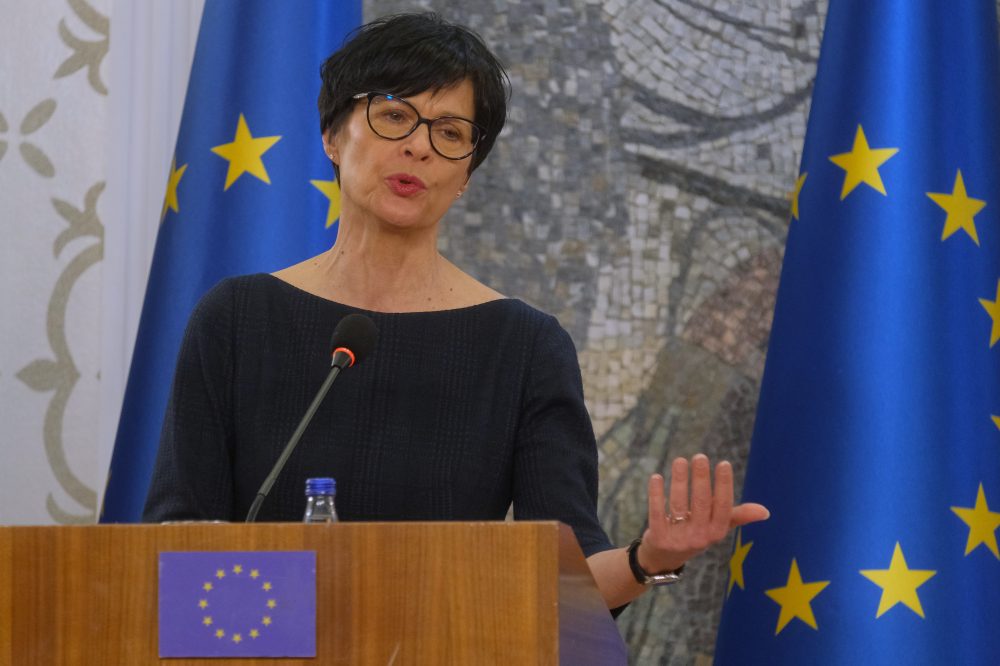

BRUSSELS — The European Union is threatening to withhold approximately $1.8 billion in funding from Serbia unless the country addresses growing concerns about its democratic institutions, according to a warning issued Monday by EU Enlargement Commissioner Marta Kos.
The threat comes after international observers reported witnessing violent incidents and voting irregularities during local elections held last month across 10 Serbian municipalities.
Speaking to European Union lawmakers, Kos expressed mounting alarm about Serbia’s trajectory. “We are increasingly worried about what is happening in Serbia,” she stated, adding that the European Commission is currently “assessing whether the country still fulfills the conditions for payments under the EU’s financial instruments.”
The commissioner outlined a range of troubling developments that have prompted EU scrutiny, including “laws that undermine the independence of the judiciary, to crackdowns on protesters and recurrent meddling in independent media.”
Serbia currently has access to substantial EU funding designed to support growth in nations seeking membership, contingent on implementing democratic reforms. While Belgrade has already received $130 million from these programs, Kos noted that this “leaves around 1.5 billion under a question mark.”
The European Union has intensified its efforts to bring Western Balkan countries into the fold since Russia launched its full-scale invasion of Ukraine in February 2022, amid concerns that Moscow might attempt to destabilize a region still recovering from conflicts during the 1990s.
Serbian President Aleksandar Vucic, a populist leader, publicly states his intention to guide Serbia toward EU membership while simultaneously maintaining strong ties with Russia. Last year, he ignored EU objections and participated in Russia’s Victory Day parade alongside President Vladimir Putin.
Democracy experts from the Venice Commission, Europe’s primary constitutional affairs organization, conducted a fact-finding mission to Serbia last month. They met with political figures and senior judicial officials to evaluate concerns brought forward by Serbia’s parliamentary president.
The commission plans to issue an “urgent opinion” based on their investigation in the coming weeks. Kos emphasized that Brussels expects Serbia “to fully align its judicial laws with the Venice Commission’s recommendations and to restore the independence of its media.”
“Serbia has to deliver,” she concluded.