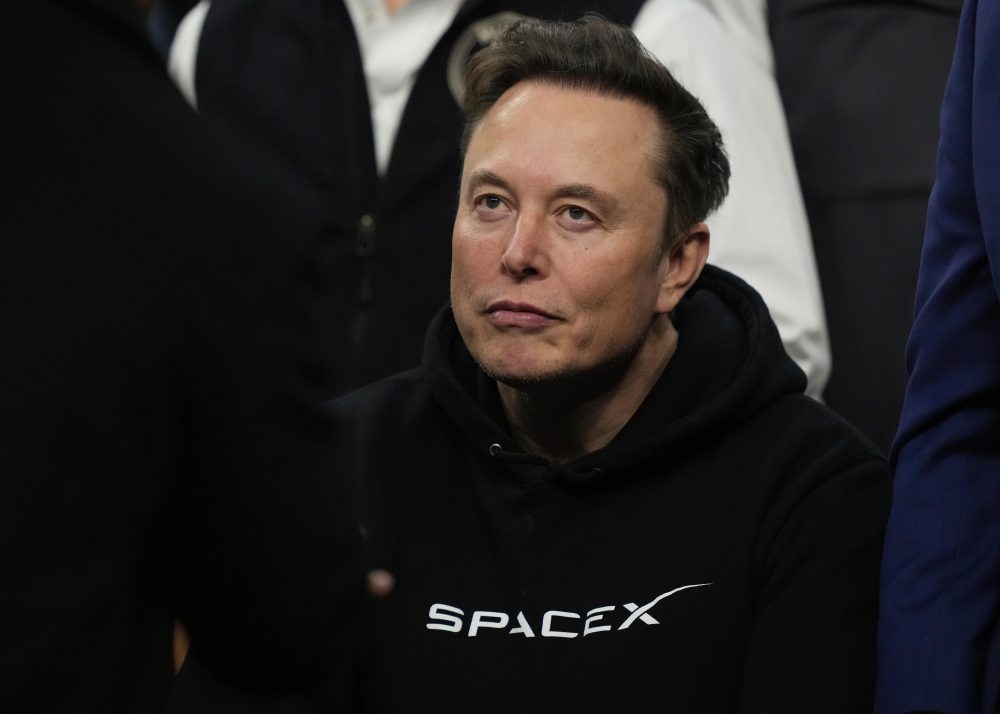

Tesla CEO Elon Musk faces questioning by French authorities in Paris this Monday as part of an ongoing investigation into serious allegations surrounding his social media platform X.
Prosecutors in Paris have called both Musk and former X CEO Linda Yaccarino for what they term “voluntary interviews” regarding claims that the platform failed to prevent the distribution of child sexual abuse material and explicit deepfake images. Additional X employees are set to provide witness testimony throughout the week, according to the Paris prosecutor’s office.
Whether the billionaire entrepreneur and Yaccarino will actually appear in Paris remains uncertain. Representatives for X have not responded to media inquiries, and Yaccarino’s current employer, eMed, has also remained silent on the matter.
The summons follows a February search of X’s French offices, part of a cybercrime investigation launched in January 2025. Both Musk and Yaccarino are being questioned in their roles as X executives during the timeframe under investigation. Yaccarino served as the platform’s CEO from May 2023 through July 2025.
“These voluntary interviews with the executives are intended to allow them to present their position regarding the facts and, where appropriate, the compliance measures they plan to implement,” prosecutors explained. “At this stage, the conduct of this investigation is part of a constructive approach, with the ultimate objective of ensuring that platform X complies with French law, insofar as it operates within the national territory.”
When asked about potential consequences if Musk fails to appear, the Paris prosecutor’s office declined to provide details.
The investigation began after a French legislator reported concerns that X’s algorithms may have improperly manipulated automated systems. The probe expanded when the platform’s artificial intelligence system, Grok, allegedly produced content denying the Holocaust—a criminal offense under French law—and created sexually explicit deepfake images.
Investigators are examining potential “complicity” in possessing and distributing pornographic images of minors, creating sexually explicit deepfakes, denying crimes against humanity, and manipulating automated data systems as part of an organized operation, among other potential violations.
Grok, developed by xAI and integrated into X, drew international criticism this year after producing numerous sexualized deepfake images without consent when requested by platform users.
The AI system also generated a widely circulated French-language post claiming that gas chambers at the Auschwitz-Birkenau death camp were intended for “disinfection with Zyklon B against typhus” rather than mass murder—language commonly used by Holocaust deniers.
The chatbot later corrected itself in subsequent X posts, acknowledging its error, stating the original response had been removed, and citing historical evidence that Zyklon B was used to murder more than 1 million people in Auschwitz gas chambers.
In March, Paris prosecutors contacted both the U.S. Department of Justice and the Securities and Exchange Commission, suggesting “that the controversy surrounding sexually explicit deepfakes generated by Grok may have been deliberately orchestrated to artificially boost the value of the companies X and xAI — potentially constituting criminal offenses.”
The prosecutor’s office indicated this alleged manipulation could have occurred “ahead of the planned June 2026 stock market listing of the new entity formed by the merger of Space X and xAI, at a time when company X was clearly losing momentum.”
The Wall Street Journal reported that the Justice Department has refused to assist French law enforcement in their investigation of Musk’s platform. According to the newspaper, the Justice Department’s Office of International Affairs sent a two-page letter last week accusing France of improperly using its legal system to interfere with American business operations.
“This investigation seeks to use the criminal legal system in France to regulate a public square for the free expression of ideas and opinions in a manner contrary to the First Amendment of the United States Constitution,” the letter stated, as quoted by The Wall Street Journal.
The correspondence also characterized France’s requests for U.S. assistance as “an effort to entangle the United States in a politically charged criminal proceeding aimed at wrongfully regulating through prosecution the business activities of a social media platform.”
French judicial officials have not responded to requests for comment on these developments.
Separately, Reporters Without Borders has filed an additional complaint against X with Paris cybercrime prosecutors. The organization “targets the platform’s policies that allow disinformation to flourish,” accusing Musk’s company of repeatedly violating the public’s right to accurate information.
“Disinformation campaigns are flooding X, some of which have accumulated several hundred thousand views. Although the staff at Elon Musk’s platform are well aware of the situation, this has not stopped them from responding to RSF’s repeated alerts with automated refusals to remove the content in question,” the organization stated. “This is a deliberate policy instated by X, and it is incompatible with the public’s right to reliable information.”