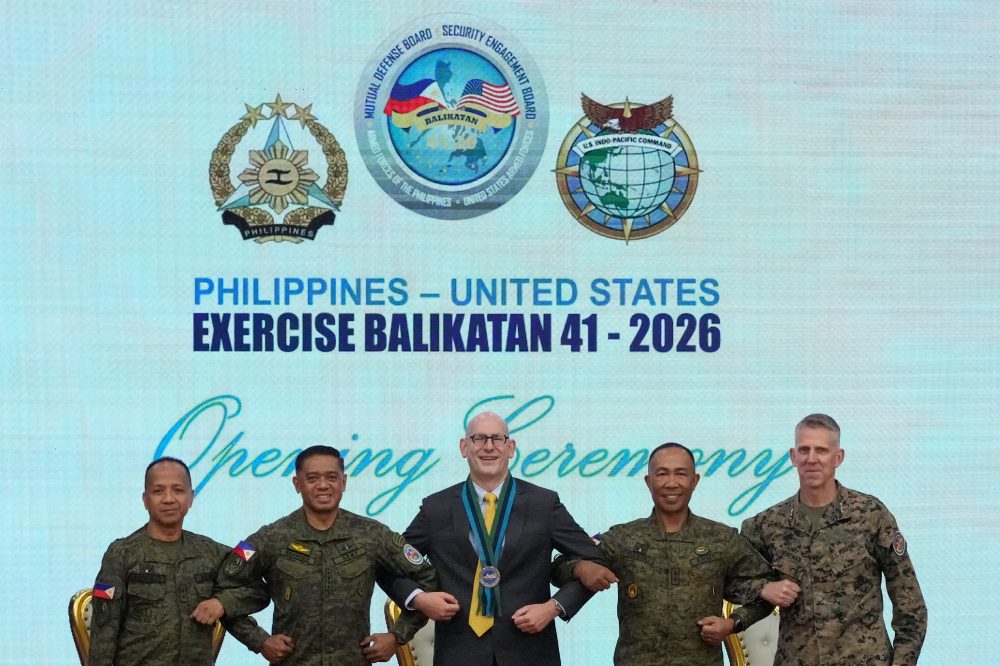

MANILA, Philippines — Despite ongoing tensions in the Middle East, the United States and Philippines launched one of their most extensive annual military exercises Monday, demonstrating allied strength designed to discourage regional aggression in Asia.
This year’s large-scale military training will involve additional international forces from Japan, France and Canada, all of which have established visiting forces agreements with Manila, according to Philippine military officials.
Over 17,000 American and Filipino service members will take part in the Balikatan exercise — meaning “shoulder-to-shoulder” in Tagalog. The nearly three-week operation will feature simulated combat scenarios and live ammunition exercises across multiple locations, including Philippine territories overlooking the contested South China Sea and Taiwan Strait.
Approximately 10,000 U.S. military personnel will join the training exercises, representing a significant deployment that American military leaders say demonstrates Washington’s dedication to the Asia-Pacific theater despite Middle Eastern conflicts.
“Regardless of the challenges elsewhere in the world, the United States focus on the Indo-Pacific and our ironclad commitment to the Philippines remains unwavering,” Marine Lt. Gen. Christian Wortman stated during opening ceremonies.
Philippine Armed Forces Chief of Staff Gen. Romeo Brawner explained that these multinational military exercises strengthen deterrence capabilities and regional resilience against hostile actions. While avoiding naming specific nations in his remarks, Brawner has previously condemned China’s escalating aggressive behavior toward Philippine naval and coast guard vessels in the South China Sea, which Beijing claims almost entirely.
Multiple nations including the Philippines, Vietnam, Malaysia, Brunei and Taiwan maintain competing territorial claims over these waters, which serve as a crucial international shipping corridor. However, confrontations between Chinese and Filipino forces have intensified significantly in recent years.
Beijing has criticized the U.S.-Philippine military exercises, claiming they’re designed to limit China’s expanding global influence. Philippine military officials counter that the training doesn’t target any particular nation and helps prepare allied forces for natural disaster response.
The United States has consistently stated its treaty obligation to defend the Philippines, America’s longest-standing alliance partner in Asia, should Filipino forces face armed attacks in disputed maritime areas.
“We remain guided by a shared commitment to uphold international law, to respect sovereignty and to contribute to a free and open Indo-Pacific where nations can thrive without coercion,” Brawner declared.
Exercise activities will include Japanese forces launching missiles from coastal positions in northwestern Ilocos Norte province to target a simulated enemy vessel approximately 40 kilometers offshore in South China Sea waters, Philippine Marine Col. Dennis Hernandez revealed to reporters.
American forces will deploy explosive-equipped marine drones to continue attacking the mock enemy ship, Hernandez added.
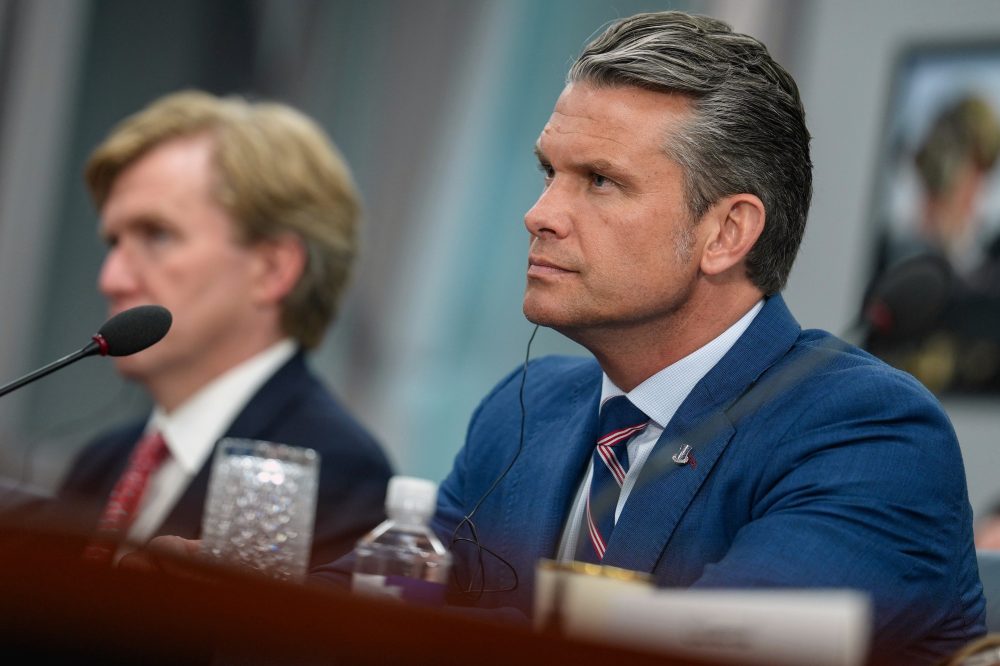
During a Manila visit last year, U.S. Defense Secretary Pete Hegseth promised Philippine leaders that the Trump administration would collaborate with allies to strengthen deterrence against global threats, including Chinese aggression in the South China Sea.
“Friends need to stand shoulder to shoulder to deter conflict, to ensure that there is free navigation whether you call it the South China Sea or the West Philippine Sea,” Hegseth told Philippine President Ferdinand Marcos Jr.