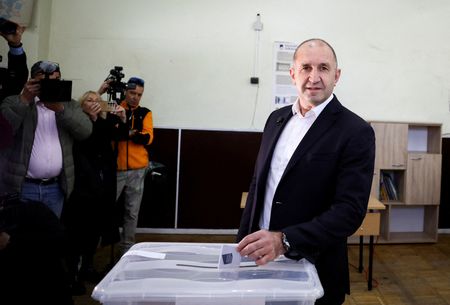

Former Bulgarian President Rumen Radev has achieved a stunning electoral triumph, capturing the most decisive parliamentary victory the country has witnessed in decades. The 62-year-old ex-fighter pilot left his ceremonial presidential position in January to pursue Sunday’s legislative contest, where he campaigned on eliminating what he called the “corrupt officials, conspirators and extremists” controlling the nation.
Bulgarian citizens delivered an overwhelming mandate to Radev, enabling him to establish the country’s first single-party administration in almost three decades. This decisive outcome promises to bring political stability after the nation endured eight separate elections over five years.
“This represents a victory of hope over distrust, a victory of freedom over fear,” Radev declared following the results.
The timing proved crucial for Radev, who had occupied Bulgaria’s largely ceremonial presidential office for nine years. During a political breakdown that began in 2020, he remained positioned above the parliamentary turmoil, selecting interim administrations when necessary and steadily building his political influence while established parties struggled with unstable coalition arrangements.
Throughout his campaign, Radev embraced positions favorable to Moscow, rejecting military assistance for Ukraine in its conflict with Russia and condemning Bulgaria’s euro adoption in January. He had been preparing for this political opportunity for years.
His transition to parliamentary politics coincided with mounting public anger toward traditional parties. Mass demonstrations that toppled the previous short-term administration in December reflected widespread demand for governmental reform.
Established political forces suffered significant defeats in Sunday’s voting, including the pro-European GERB party led by former Prime Minister Boyko Borissov and the Movement for Rights and Freedoms controlled by businessman Delyan Peevski, who faces U.S. and UK sanctions for corruption allegations.
“Radev’s success stemmed from widespread frustration following years of unsuccessful anti-corruption campaigns, anxiety about increasing costs, and significant pro-Russian attitudes,” explained Atanas Rusev, who directs the security program at Sofia’s Centre for the Study of Democracy. “Radev skillfully exploited these concerns.”
Radev initially assumed the presidency in January 2017 following his military service and American training. During his first term, he emerged as an opponent of then-Prime Minister Borissov, who confronted corruption accusations.
When authorities searched Radev’s offices in 2020, Bulgarians viewed the action as politically motivated, sparking the largest public protests since Bulgaria entered the European Union in 2007. These demonstrations contributed to Borissov’s downfall, while Radev secured reelection for a second presidential term in 2021.
A subsequent period of political instability followed, characterized by fragile coalitions that quickly collapsed. Additional protests erupted last year over a proposed budget featuring substantial tax increases.
Following the government’s resignation, Radev announced his decision to abandon the presidency and seek parliamentary office.
Critics have questioned his unclear campaign platform, and many voters describe him as lacking personal magnetism, noting his stern appearance in campaign advertisements wearing a white shirt and burgundy tie.
However, he has successfully conveyed strength through social media videos showing him piloting military aircraft.
Political observers, voters, and diplomatic officials are monitoring how closely a Radev administration will align with Russian interests. During his final campaign event last week, he projected large-screen images of himself meeting world leaders, including Russian President Vladimir Putin.
Radev’s campaign messaging resembled that of Hungary’s pro-Moscow former Prime Minister Viktor Orban, particularly when discussing restoration of Russian oil and gas imports to Europe.
“I’m deeply concerned because if he maintains such pro-Russian positions, this could create serious problems,” said Tsvetan Hristov, a 36-year-old information technology worker.
Nevertheless, no evidence suggests he would block Ukrainian aid or attempt withdrawing from the eurozone, and experts doubt he would risk essential EU funding designated for Bulgaria.
His primary challenges exist domestically in one of the European Union’s most impoverished and corruption-plagued member states, where prosecutors claim hundreds of millions of euros in European assistance have been illegally diverted to businesspeople and government officials, public contracts have been manipulated, and electoral fraud occurs regularly.
“Following his overwhelming domestic victory, he will likely pursue international credibility by developing relationships with other European leaders,” said Maria Simeonova, who leads the Sofia office of the European Council on Foreign Relations.