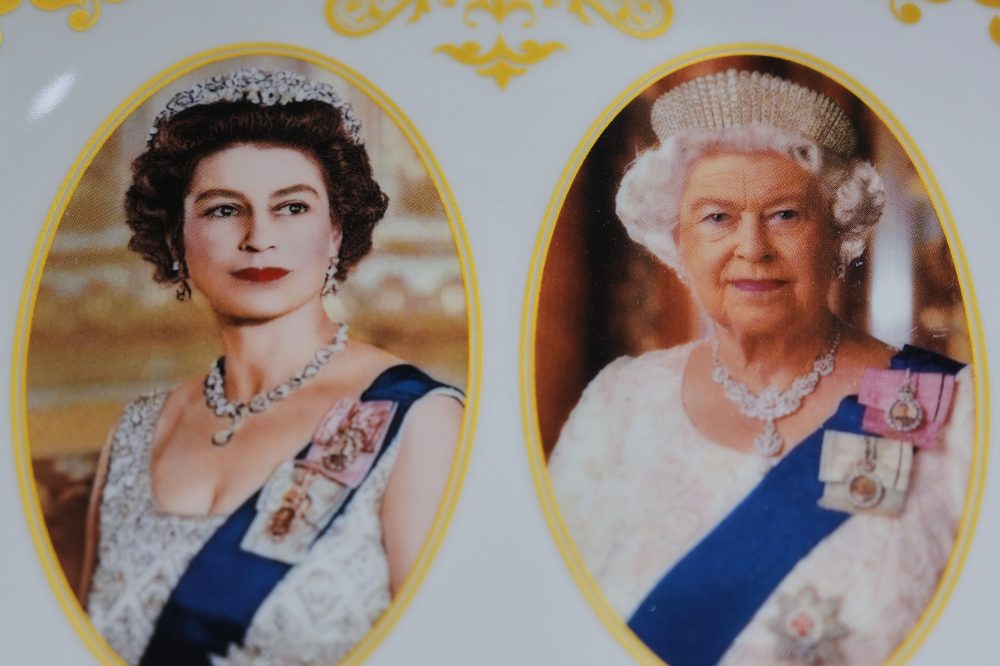

LONDON (AP) — The memory of Queen Elizabeth II continues to dominate the British royal family at a souvenir store situated across from Buckingham Palace.
Nearly four years following the monarch’s passing, the Cool Britannia gift shop maintains strong sales of commemorative items including coffee cups, kitchen linens, and keychains featuring Britain’s longest-serving ruler as the country observes her 100th birthday anniversary on Tuesday. Merchandise showcasing her successor King Charles III remains far less popular.
“We still sell more than the king any day,” said Ismail Ibrahim, the store’s manager.
The deceased monarch’s influence continues to cast a shadow over the royal institution following her seven-decade rule, during which she transformed from an elegant young ruler who lifted British spirits in the difficult post-war era to a cherished national figure who provided comfort during the COVID-19 crisis.
At the time of her death in September 2022, Elizabeth represented the sole sovereign that most British citizens had experienced during their lifetimes. Today, references to “the queen” still commonly bring Elizabeth to mind rather than Queen Camilla, Charles’ spouse.
However, the years since her passing have also brought scrutiny to the late queen’s record. Though praised as an emblem of stability and consistency who helped bind together a Britain transformed by the end of its empire, economic hardships, and demographic changes, questions have emerged regarding her handling of former Prince Andrew’s connections to convicted sex offender Jeffrey Epstein and why she allowed the controversy to persist.
“Despite her absence, Elizabeth II remains this key presence whenever we think about the monarchy,” Ed Owens, author of “After Elizabeth: Can the Monarchy Save Itself?” told The Associated Press.
“She’s certainly the most significant figure in the history of the institution in the last 100 years and, I think, therefore deserves probably the attention that’s going to be focused on her in connection with what would have been her 100th birthday.”
Commemoration events include a Buckingham Palace gathering where Charles will honor centenarians born on the same date as his late mother, plus the unveiling of a memorial garden at London’s Regent’s Park. A display featuring the queen’s wardrobe is currently running.
Elizabeth Alexandra Mary Windsor was never intended for the throne. Born April 21, 1926, she entered the world not in a royal residence but at 17 Bruton St., a residence in London’s upscale Mayfair neighborhood.
As the firstborn child of King George V’s younger son, Elizabeth seemed destined for the typical existence of a lesser royal. A quiet life filled with pets and equestrian pursuits, a country estate, and an appropriate marriage appeared to await her.
However, fate altered her path. Ten years following Elizabeth’s birth, her uncle King Edward VIII gave up the crown to wed American divorcée Wallis Simpson. Elizabeth’s father ascended as King George VI, placing the young princess directly in line for succession.
Elizabeth assumed the throne upon her father’s death on Feb. 6, 1952. At just 25 years old, she received the news while in Kenya and immediately returned home to begin her royal responsibilities.
Throughout the following decades, she conducted the ceremonial opening of Parliament wearing her crown and ceremonial robes, welcomed foreign dignitaries at Buckingham Palace, and participated in countless public events throughout the United Kingdom, frequently dressed in vibrant outfits to ensure visibility among crowds.
She also served as an international representative for Britain, completing over 200 foreign visits that strengthened relationships with former colonies including India and Tanzania, previous adversaries like Germany and Japan, and longtime allies such as the United States.
During her later years, the queen gained internet fame through her collaboration with James Bond actor Daniel Craig in a staged parachute entrance at the 2012 London Olympics opening ceremony and her partnership with Paddington Bear to mark her 70th anniversary on the throne.
In an era of constant transformation, she adapted to changing times — celebrating national achievements and comforting citizens during challenging periods while maintaining political neutrality, according to Robert Hardman, author of “Elizabeth II: In private. In public. The Inside Story.”
Yet these successes make her inability to resolve the controversy surrounding her second son particularly notable.
Despite ongoing concerns about Andrew’s inappropriate conduct, questionable financial activities, and problematic associations, he served a decade as Britain’s special trade representative and retained his royal status until details of his Epstein relationship emerged recently. To protect the monarchy from continued damage, Charles ultimately removed his brother’s royal titles. He now goes by Andrew Mountbatten-Windsor.
“He was problematic and that gave her cause for worry,” Hardman said. “But I do think people let him have an easy ride because they thought if they came down hard on him, they might somehow upset the queen. Now that’s partly attributable to her, but partly attributable to others.”
Nevertheless, her “great achievements” far outweighed any mistakes, Hardman noted.
Elizabeth began her reign as a young mother of two small children during an era before commercial aviation and space exploration, then maintained her public presence throughout multiple generations.
“She just reigned through this vast span of the ages and was as authoritative and loved and respected at the end as she was at the beginning,” Hardman said. “And she was working till the very end, ’til her last day.”
While scholars continue evaluating the queen’s impact, ordinary people form their own opinions.
Consider Sylvie Deneux and her daughter Clara, who visited Cool Britannia during a London trip from their home in Lille, France.
They commended the late monarch for her grace and called her an icon. However, when questioned about Mountbatten-Windsor, Sylvie Deneux, 49, hesitated and glanced at her daughter. The failure to swiftly address the scandal was an error, she acknowledged. Yet Deneux maintained empathy for Elizabeth, recognizing those choices came from maternal instincts rather than royal duty.
“Can we blame her?” she asked. “I’m not sure.”