
The anticipation weighs heavily on his heart, but Keung Mak knows he must face what awaits him.
On Monday, the 78-year-old will enter his apartment for the first time since November’s devastating fire — Hong Kong’s most fatal blaze in decades — destroyed his building. Mak already knows to expect the worst after his social worker shared a photograph revealing the extensive damage.
The home where Mak and his wife spent more than four decades raising their family now shows exposed steel reinforcement bars through the burned ceiling. Broken tile pieces cover the floors, while sections of the structure require additional support to prevent complete collapse.
“My heart is heavy, I’m very disappointed. I didn’t expect the first floor would be burned like this,” Mak said before his planned return.
The November fire rapidly consumed seven out of eight buildings within the Tai Po district apartment complex, claiming 168 lives. Beginning this Monday, thousands of displaced residents will start visiting their former homes to collect whatever belongings survived. Officials expect this process to extend through early May.
Residents continue awaiting findings from the ongoing investigation into the fire’s origin. During this period, they’ve been managing temporary living situations throughout the city, with many staying in provisional housing while seeking permanent relocation options.
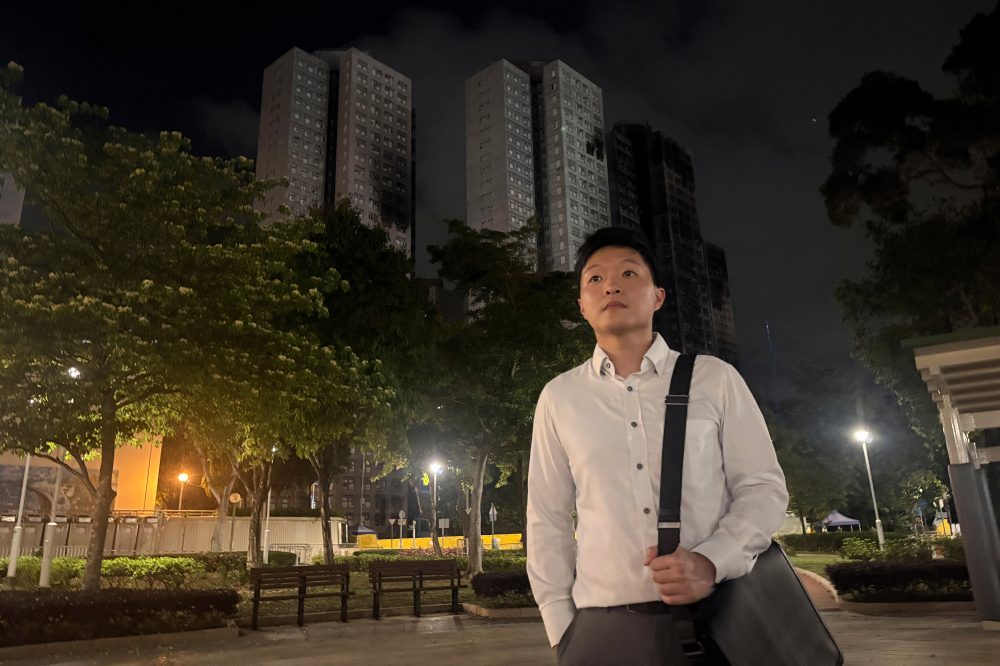
Burn marks still darken the exteriors of several buildings, serving as visible reminders of the catastrophe.
The homecoming process will prove especially challenging for the complex’s senior residents, who comprised more than one-third of the approximately 4,600 people living there before the disaster.
Since the elevators remain inoperable, some elderly residents have been participating in fitness programs to prepare for climbing stairs in the 31-story structures.
According to Radio Television Hong Kong, Deputy Chief Secretary Warner Cheuk reported that more than 1,400 registered returnees are age 65 or older.
Mak’s family treasures numerous items they hope to recover from their apartment: a fishing rod their son gave as a present, wedding photographs from fifty years ago, and correspondence from their son spanning many years. The family believes nearly everything has been destroyed.
“A lot of things with commemorative value are all gone,” said Mak’s 74-year-old wife, Kit Chan. “Not even a single piece of paper will be left.”
Most residents will receive up to three hours inside their apartments, with a maximum of four people permitted entry. In severely compromised units, only one person may enter safely.
Due to their apartment’s poor condition, only Mak and his son will be allowed inside, though Chan hopes officials might permit her a brief look as well.
Thirty-nine-year-old Cyrus Ng previously lived with his parents on the tenth floor of the Wang Fuk Court complex for more than ten years before relocating.
Following the fire’s immediate aftermath, Ng experienced sleeplessness, anger, sadness, and concern for his elderly parents. Nearly five months later, while more emotionally stable, he hasn’t completely processed the events.
“We know there are suspicious issues behind this,” he said. “I hope we can really find the truth.”
According to a lawyer representing an independent committee investigating the fire’s cause, nearly all fire safety equipment within the apartment buildings malfunctioned on the day of the blaze due to human mistakes.
Ng feels conflicted about returning next week to their apartment, which avoided the most severe damage. While concerned about the emotional toll on his parents, he anticipates retrieving their property deed, old photographs, clothing, and other precious belongings.
He also expressed concerns about potential theft following months of vacancy. In March, police detained three individuals suspected of stealing from the estate.
Government officials previously stated that cost-effective repairs to the damaged buildings would prove challenging. Authorities lean toward demolishing the seven fire-damaged structures and have proposed purchasing homeownership rights from affected residents.
They referenced resident survey results, disappointing those hoping to rebuild their homes at the original location.
Some residents have challenged this position. Fire inquiry data revealed that only half of approximately 1,700 apartments across the seven buildings sustained various levels of damage.
Ng questioned whether some buildings could be repaired to allow certain residents to return, though his parents were already considering the government’s alternative apartment offer. He plans to photograph his apartment during the visit to document its condition and demonstrate that some homes remain unaffected.
Other residents from the single building that escaped the fire must cope with traumatic memories while living at the same location.
Stephanie Leung, a resident of the undamaged building, feels hesitant about returning to the same apartment. She explained that her family would experience significant psychological distress whenever they viewed the seven other buildings where former classmates and friends perished.
She hopes the government will include her building in the same plan as the damaged structures while allowing those who wish to stay the option to remain.
“Whenever I go back, I want to cry,” she said.