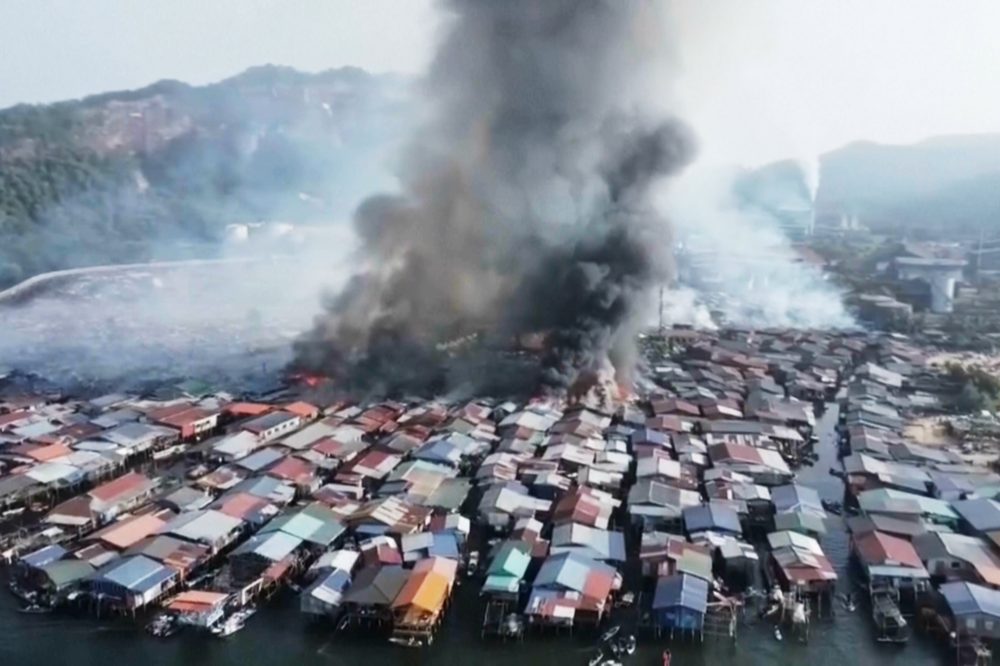

KUALA LUMPUR, Malaysia — More than 9,000 residents were forced to evacuate after a devastating blaze swept through a waterfront settlement in Malaysia’s Sabah state on Borneo Island, wiping out approximately 1,000 homes, local authorities reported.
The devastating blaze began in the early morning hours on Sunday within the Sandakan district, quickly engulfing multiple rows of wooden stilt houses that were built above the ocean waters, fire and rescue officials confirmed.
Emergency responders faced significant challenges containing the inferno due to powerful wind conditions and the tightly packed nature of the dwellings, authorities explained. Narrow pathways for emergency vehicle access combined with low tide levels further complicated firefighting operations and delayed crews from reaching the most severely affected zones.
While no fatalities have been confirmed, thousands of displaced residents have been relocated to emergency shelters as relief operations continue.
These waterfront communities, known locally as water villages, represent informal housing developments that extend across much of Sabah’s shoreline, which ranks among Malaysia’s most economically disadvantaged regions. The densely constructed dwellings are primarily built from timber and other flammable materials, frequently lacking essential utilities and safety infrastructure. These communities predominantly house low-income families and marginalized populations, including native communities and individuals lacking official citizenship documentation.
According to reporting by Sabah’s Daily Express newspaper, village leader Sharif Hashim Sharif Iting indicated that an uncontrolled cooking fire may have sparked the disaster. However, fire investigators have not yet determined the official cause, and the investigation continues.
Malaysian Prime Minister Anwar Ibrahim announced that both federal and regional government agencies are working together to coordinate emergency response efforts, with priority given to providing immediate support for displaced families.
Similar fire incidents have repeatedly affected Sabah’s waterfront communities throughout recent years. State officials have consistently recognized the extreme fire vulnerability of these settlements, though implementing comprehensive safety improvements across such communities continues to present significant logistical challenges.