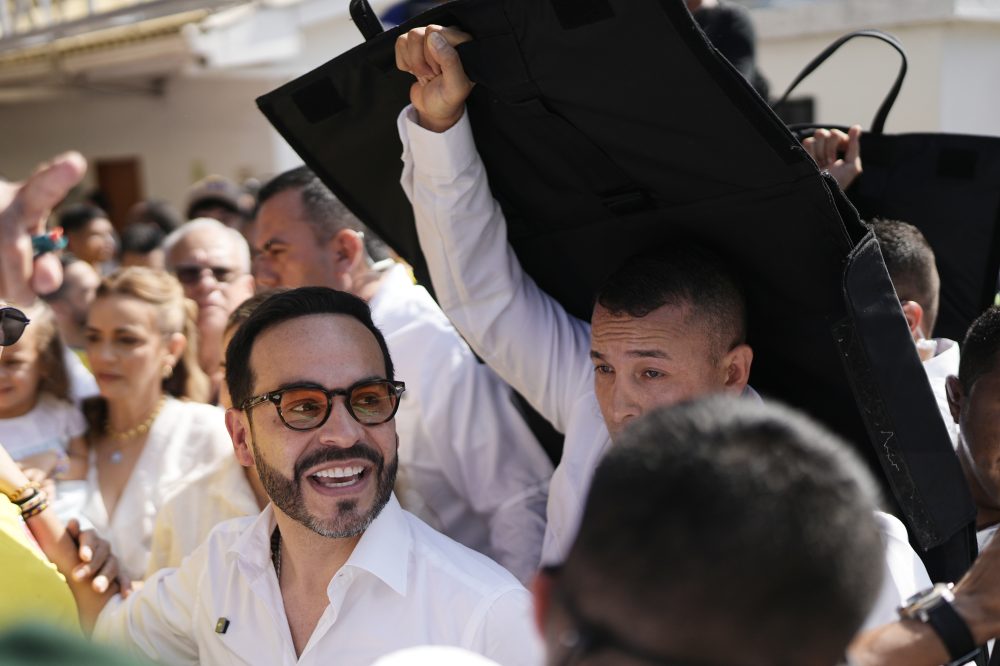

BOGOTÁ, Colombia — A flamboyant attorney who supports former President Trump has emerged as the frontrunner in Colombia’s presidential contest following first-round voting over the weekend, tapping into widespread demand for tough action against criminal organizations throughout Latin America.
However, the runner-up, progressive senator Iván Cepeda, along with his political partner President Gustavo Petro, challenged Sunday night’s election outcomes without offering proof.
Aberaldo de la Espriella quickly built momentum before Sunday’s voting, securing almost 44% of ballots cast, overtaking progressive senator Iván Cepeda, who had maintained polling leads during the campaign but received less than 41% of votes.
Both candidates will advance to a runoff contest scheduled for June 21, where de la Espriella is anticipated to gain additional support from Colombians who backed other conservative contenders in the initial round.
Cepeda faces significant challenges in the upcoming runoff, according to Colombian political analyst Sergio Guzmán. “Abelardo de la Espriella won the first round. In other words, that’s a shift in public opinion that is very difficult to overcome. So now Abelardo is emerging as the likely favorite to win.”
De la Espriella, nicknamed “El Tigre” or “The Tiger,” has no previous governmental experience in Colombia and boasted about his lavish lifestyle in Italy before choosing to seek the presidency. He marketed himself as a political outsider who would align with President Donald Trump and adopt El Salvador President Nayib Bukele’s anti-gang strategy, which has reduced murder rates while sparking human rights violation allegations.
“I will wipe out narcoterrorism and those who I’ve declared a military target like cockroaches, like rats. I will unleash upon them the wrath of God never seen before,” De la Espriella said in an interview with The Associated Press in the final stretch of the campaign, where he promised to open 10 mega-prisons to fight crime.
He represents a growing trend of leaders throughout Latin America – from Chile to Honduras – attempting to embrace the “Bukele model” as voters across the region increasingly reject leaders who promoted progressive policies designed to tackle underlying conflict causes, including limited youth opportunities and corruption.
De la Espriella’s backers represent diverse demographics. Yolanda Peréz, a 64-year-old woman serving coffee in downtown Bogotá who smoked a cigarette, said with a wink the day before the election: “I’m thinking of voting for El Tigre.”
Miguel Maheca, a 20-year-old first-time voter, displayed a paper proving he voted to his mother while leaving the polling location on Sunday, saying with a smile, “Love isn’t what’s going to make us safe in Colombia.”
However, analysts argue El Salvador’s security achievements will be virtually impossible to duplicate in a nation like Colombia, which is more than 50 times larger than the Central American country and contains many more armed factions fighting for control.
The divided election occurs as the Trump administration takes a more assertive stance in Latin America than any U.S. government in recent decades, applying increased pressure on nations including Colombia, Mexico, and Ecuador to combat crime.
De la Espriella, 47, built his reputation as an attorney representing prominent clients including former President Álvaro Uribe (2002–2010), along with controversial individuals like Alex Saab, a close associate of Venezuela’s ousted president Nicolás Maduro who faces legal troubles in the U.S. and whom he ceased representing approximately seven years ago.
De la Espriella’s emergence as a presidential contender creates difficulties for progressive Cepeda, who maintained polling advantages before Sunday’s election, although his opponent rapidly gained momentum in the weeks preceding the vote.
Cepeda is a progressive senator who has pledged to continue his ally Petro’s troubled strategy to achieve “total peace” through negotiating peace agreements with guerrillas and criminal gangs.
Their political movement emerged from strong opposition by many Colombians to a militarized campaign by Uribe in previous decades used to defeat the Revolutionary Armed Forces of Colombia, or FARC, guerrillas, which resulted in thousands of civilian deaths by Colombian forces in a scandal called “false positives.”
Mr. De la Espriella “represents a return to the paramilitary politics and drug-trafficking, – a mafia-run, plutocratic, and corrupt past that the country experienced during Álvaro Uribe’s two administrations,” Cepeda said on Sunday.
Petro, a former rebel, captured Colombia’s presidency in 2022 in a landmark election that concluded decades of right-wing control by leaders from Uribe’s political faction. He received enormous support from rural, indigenous and lower-income Colombians who believed they had never been directly addressed by Colombian leaders.
Currently, that movement finds itself in a defensive position.
“This is De la Espriella’s election to lose,” wrote Renata Segura, director of International Crisis Group’s Latin America and the Caribbean Program. “Cepeda thought he could win appealing squarely to the left, and that proved to be a massive mistake. How he pivots in the next month will determine if he has any chance to win.”