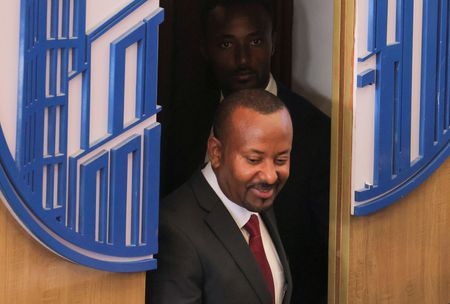

Parliamentary and regional elections scheduled for Monday in Ethiopia are predicted to deliver an overwhelming victory for Prime Minister Abiy Ahmed’s political party, according to analysts, even as large portions of the nation experience ongoing violence and instability.
Over 50 million Ethiopian citizens have registered to participate in the voting process, though ballots will not be cast in the northern Tigray region. Election officials have pointed to “unfavourable conditions” in that area following a civil conflict that lasted from 2020 to 2022 and persistent political upheaval.
The 49-year-old Abiy seeks to strengthen his control over the country’s political landscape. He assumed power in 2018 after widespread demonstrations against the EPRDF coalition that had governed for years, and his recently established Prosperity Party secured 410 of 484 parliamentary positions during 2021 voting.
Campaign efforts by Prosperity Party representatives have focused on the administration’s economic achievements, highlighting enhanced food security and economic expansion in this African nation with the continent’s second-largest population. Government officials forecast economic growth will exceed 10% by 2026, representing one of Africa’s most rapid growth rates.
The country’s 135 million residents include nearly half who are younger than 18 years old.
However, Abiy confronts armed rebellions in Ethiopia’s two largest regions, stemming from complaints by various ethnic communities about perceived discrimination within the nation’s federal structure.
In Oromiya, the region where Abiy was born in the southern part of the country, clashes between government troops and the separatist Oromo Liberation Army have resulted in hundreds of casualties over recent years.
In the adjacent Amhara region, a militia group called Fano has taken control of large rural areas since 2023. Consequently, voting will be suspended in no fewer than eight of Amhara’s 138 electoral districts.
While a 2022 peace agreement brought an end to the Tigray civil war, which studies indicate led to hundreds of thousands of deaths, recent actions by the region’s primary political organization to regain administrative control have prompted Ethiopian authorities and experts to caution about potential renewed violence.
Despite these challenges, the Prosperity Party is projected to overwhelmingly win against a divided opposition weakened by internal disputes. Election outcomes are anticipated by June 11.
Opposition groups claim the federal administration has undermined their efforts through leader arrests and legal barriers to their political operations, allegations the government rejects.
Reuters has been unable to conduct reporting from within Ethiopia since mid-February, when the Ethiopian Media Authority chose not to extend credentials for its three journalists based in Addis Ababa.
When Abiy took office in 2018, he initiated efforts to open up Ethiopia’s strictly regulated economy and released journalists, activists and other political detainees. He received the Nobel Peace Prize in 2019 for resolving conflicts with neighboring Eritrea.
Critics and human rights advocates claim his administration has rolled back those improvements in recent years through journalist detentions, civil society organization shutdowns, and military operations characterized by human rights violations.
The government has rejected claims of systematic human rights abuses and stated its measures are required for national security protection.
The improved relationship with Eritrea has deteriorated into renewed tensions over recent years, partly due to Abiy’s repeated statements that landlocked Ethiopia deserves access to the sea.
Eritrea, which gained independence from Ethiopia in 1993, has interpreted these remarks as an implicit threat of military action. Abiy has stated that while sea access represents an “existential” issue for Ethiopia, he plans to pursue it through negotiations.