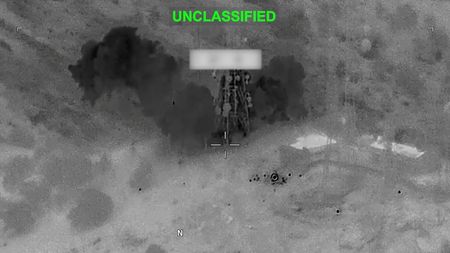

The Israel Defense Forces has taken control of Beaufort Castle in southern Lebanon, hoisting Israeli and Golani Brigade flags over the historic fortress following military operations designed to dismantle Hezbollah’s infrastructure in the region, military officials announced.
The mission brought Israeli soldiers to one of southern Lebanon’s most strategically important locations. Military officials reported that forces moved past the Litani River near Metula to reach the castle, which offers commanding views of northern Israel and the Nabatieh region.
The Israel Defense Forces stated that the territory around Beaufort and Wadi Saluki had functioned as a key Hezbollah command center. Military officials reported that the militant organization had built extensive infrastructure in the location with Iranian support and utilized the site to plan attacks and fire hundreds of rockets toward Israel and Israeli troops operating in southern Lebanon.
Military officials indicated that forces continue operations near Nabatieh and stand ready to expand their mission.
“The IDF is operating near Nabatieh, a significant Hezbollah stronghold in southern Lebanon, and is prepared to expand the offensive as required,” the military said, “to destroy [Hezbollah] infrastructure and eliminate terrorists, as part of strengthening operational control in southern Lebanon and removing the direct threat to the Galilee Panhandle and Metula,” as well as to “expand the forward defense line.”
Defense Minister Israel Katz stated that regaining control of Beaufort held special meaning due to the location’s role in Israel’s previous military operations in Lebanon.
“Forty-four years after the heroic Battle of the Beaufort, and on the memorial day for the Peace for the Galilee War, including the Golani soldiers who fell in the Battle of the Beaufort, IDF soldiers, led by the Golani Brigade, returned to the summit of Beaufort and once again raised the Israeli flag and the Golani flag there,” Katz said.
The medieval fortress, originally constructed during the Crusades, was initially taken by Israeli forces during the early phases of the First Lebanon War in 1982. In that conflict, Golani Brigade troops battled Palestinian Liberation Organization (PLO) forces at the location. Dozens of PLO fighters were killed, while six Israeli soldiers lost their lives. Israeli forces maintained control of the position until withdrawing from Lebanon in 2000.