
KHUJAND, Tajikistan (AP) — Dawn breaks at 5:30 a.m. as activity kicks into high gear at the Panjshanbe Bazaar, among the nation’s most expansive marketplaces. Merchants empty trucks filled with fresh cabbage while pigeons gather near the adjacent mosque, all under the watchful gaze of a towering image of President Emomali Rahmon.
Since taking office in 1992, Rahmon has led this Central Asian nation through decades of change following its break from the crumbling Soviet Union. The landlocked, mountainous territory ranks as the most economically disadvantaged among the 15 nations that gained independence, enduring a brutal five-year conflict between Moscow-supported government troops and opposition groups made up primarily of democracy advocates and Islamic forces. The Khujand region served as a stronghold for government supporters during this period.
Now, with the nation approaching its 35th independence milestone, the area enjoys stability and relies heavily on money sent home by workers employed in Russia. Images of Rahmon are displayed throughout educational institutions, lodging facilities, dining establishments and cultural sites. His stern expression and prominent eyebrows even watch over patrons at the community swimming facility, surrounded by Soviet-inspired artwork.
Similar to other areas across the country, Khujand’s marketplace retains elements from the Soviet period, including aging infrastructure and Cyrillic lettering mixed with Islamic designs. Though Panjshanbe means Thursday in the local language, Sunday brings the weekly livestock market to life. Colorful parakeets, rabbits and hedgehogs are available for purchase while youngsters and their fathers observe cockfighting matches in the parking area.
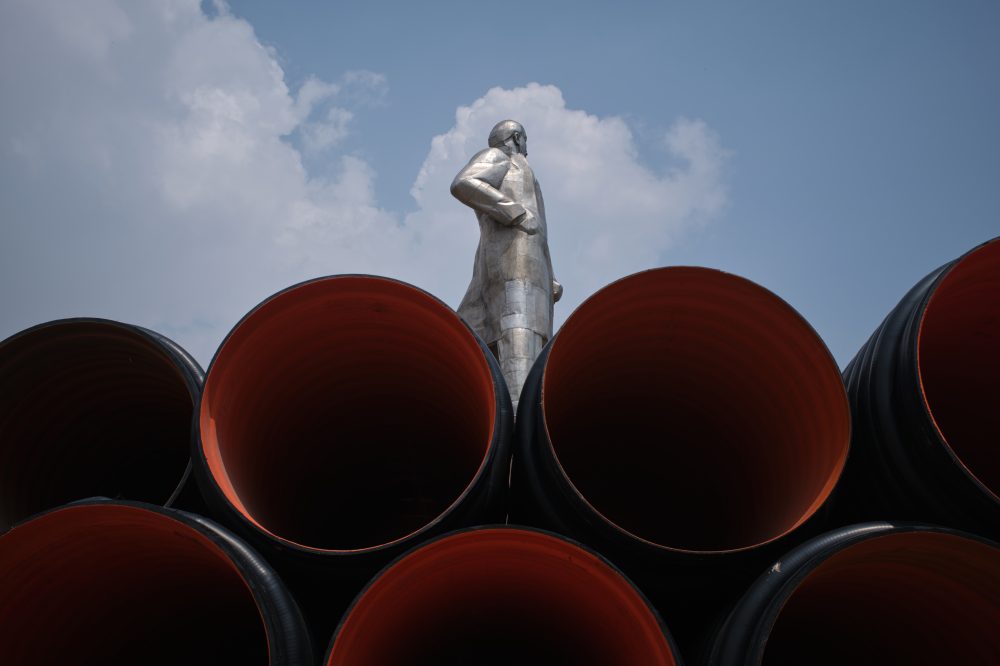
Despite the ever-present reminders of its Soviet heritage, Tajikistan has joined other Central Asian nations in developing its distinct cultural identity. In Khujand, previously known as Leninabad, a monument honoring Soviet Union creator Vladimir Lenin once stood prominently in the city center. Authorities relocated it in 2011 to the city’s edge, where it now sits between a muddy lot and a gravel pathway.
Government statistics show Tajikistan welcomed 1.8 million visitors in 2025, with more than 91.5% arriving from other former Soviet territories. Though tourist numbers continue growing annually, travelers from English-speaking nations remain uncommon. Local bread makers, surprised to encounter an American visitor, eagerly displayed their 3-somoni ($0.32) non, or lepyoshka, bread.
At an educational facility, uniformed female students prepared for an inspection by a regional administrator by cleaning the building’s front, which displayed a banner commemorating Tajikistan’s 34th independence year and featured words from poet Rudaki, whom the government honors as a national icon: “Whoever has not learned from the passing of time will also not learn from any teacher.”