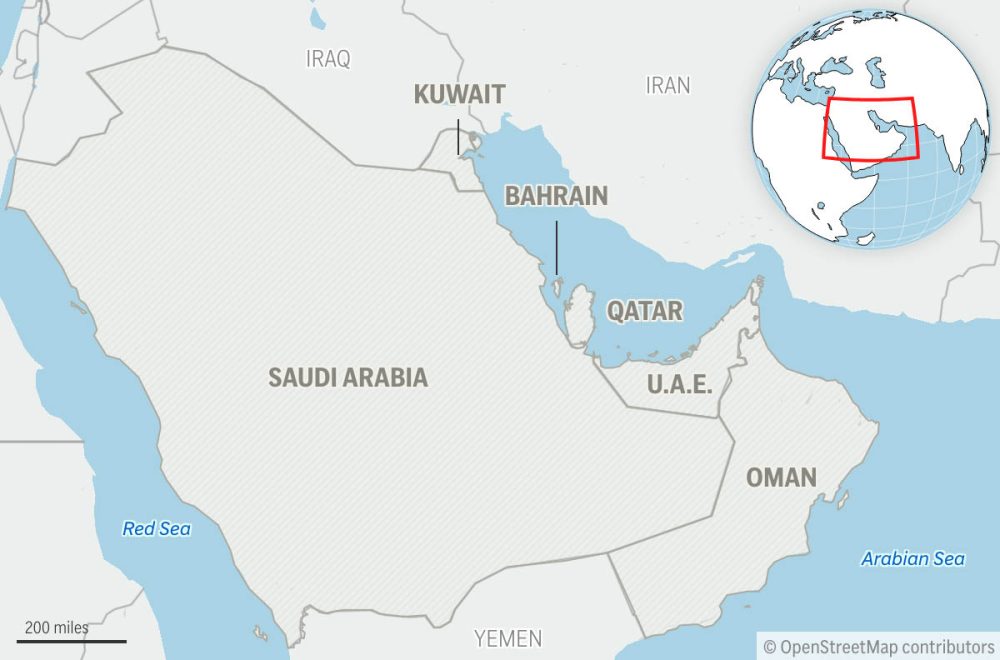

DUBAI, United Arab Emirates (AP) — American military forces conducted airstrikes against Iranian radar installations and drone command centers following Tehran’s destruction of a US MQ-1 Predator drone over the weekend, military officials announced Monday. Iranian forces confirmed they launched counter-attacks, while Kuwait reported defending against incoming drone and missile strikes.
These competing military actions highlight how tenuous the multi-week ceasefire remains in the Iran conflict, with continued hostilities occurring despite ongoing diplomatic efforts between American and Iranian representatives to extend the truce. Tehran continues controlling the Strait of Hormuz during this period, creating disruptions to worldwide energy markets since one-fifth of global oil and natural gas shipments previously traveled through this critical Persian Gulf passage.
At the same time, combat operations are intensifying as Israel expands its military presence in Lebanon past the Litani River while Hezbollah militants persist in sending drones toward Israeli territory.
Central Command announced its military operations took place Saturday and Sunday in areas surrounding Geruk city and on Qeshm Island.
“The measured and deliberate strikes occurred … in response to aggressive Iranian actions that included the shootdown of a U.S. MQ-1 drone that was operating over international waters,” Central Command said.
“U.S. fighter aircraft swiftly responded by eliminating Iranian air defenses, a ground control station, and two one-way attack drones that posed clear threats to ships transiting regional waters.”
While the Air Force has discontinued Predator operations in favor of the MQ-9 Reaper, the Army continues operating Predator aircraft. Military officials reported no American personnel sustained injuries during these operations.
Kuwait’s defense systems engaged early Monday to counter approaching drone and missile attacks. Iran’s Revolutionary Guard forces issued a statement through the state-controlled IRNA news agency claiming American forces had struck a communications tower on an island location.
The Guard confirmed conducting a retaliatory operation without specifying the target location, presumably referencing the Kuwait incident. Kuwait hosts U.S. Army Central, serving as the regional Army command headquarters for Middle East operations.
These military exchanges mark the most recent escalation between Washington and Tehran, even as both nations claim ongoing diplomatic discussions, particularly regarding Iran’s highly enriched uranium reserves. During the weekend, American forces fired a missile into a Gambia-flagged cargo vessel’s engine compartment as it attempted to breach the Iranian port blockade.
Limited shipping traffic has managed to exit the strait, though global energy markets remain under strain, along with chemical fertilizer supplies that have raised concerns about potential food shortages. The Gulf area accounts for 30% of international chemical fertilizer trade.
U.S. President Donald Trump conducted meetings with advisers Friday but has not yet determined whether to proceed with an agreement extending the ceasefire and reopening the strait. Iranian officials have stated no final deal has been reached.
Trump shared optimistic views about negotiations in an early Monday post on his Truth Social platform, dismissing critics while avoiding discussion of the current military exchanges.
“Iran really wants to make a deal, and it will be a good one for the U.S.A. and those that are with us,” he wrote. “Just sit back and relax, it will all work out well in the end — It always does!”