
The leader of the United Nations maritime organization says conditions in Gulf waters remain too dangerous to evacuate thousands of sailors trapped on ships, even with an ongoing ceasefire between the United States and Iran.
Arsenio Dominguez, secretary-general of the International Maritime Organization, spoke with Reuters on Sunday before the Posidonia shipping industry week began in Athens. He explained that rescue operations cannot begin until underlying issues are resolved.
“We will not be able to activate anything until the root causes are addressed and there is more of a final agreement, a ceasefire, or complete agreement, between the parties involved in the conflict,” Dominguez stated.
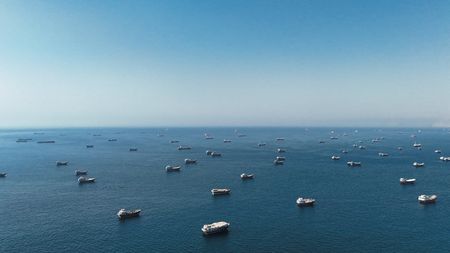
Approximately 20,000 seafarers remain trapped on ships in the Gulf as Iran continues limiting vessel movement through the Strait of Hormuz.
“In the meantime, it’s going to be too risky to take any actions in moving the seafarers because there are no guarantees on their safety,” Dominguez explained.
According to IMO statistics, eleven sailors have lost their lives in Gulf waters since the U.S.-Israeli conflict with Iran started on Feb. 28.
The maritime organization has been working to establish a secure shipping corridor that would allow trapped vessels to leave safely. Dominguez said recent discussions involving Iran took place in Oman.
“You get announcements that the Strait of Hormuz is open, and then a few hours later, the Strait of Hormuz is closed. We can’t take the risk until we have something more secure,” he noted.
The strait typically handles 20% of global daily crude oil and liquefied natural gas shipments, but traffic has dwindled to just a few tankers.
Shipping companies say their crews desperately need a negotiated safe passage after three months of being stranded.
Pankaj Khanna, CEO of Heidmar Maritime Holdings Corp, spoke to Reuters during a Capital Link shipping conference in Athens on Monday. He described the human cost of the crisis.
“The seafarers on board are missing out, not only on seeing their families but also on births, on deaths, on marriages,” Khanna said.
Khanna’s company has one vessel that has been trapped in Gulf waters for three months.
“What we need is obviously a framework, rules, regulation, whatever tells us exactly how we can go in and get out. So even if a peace deal was signed, that needs to be clarified,” he added.