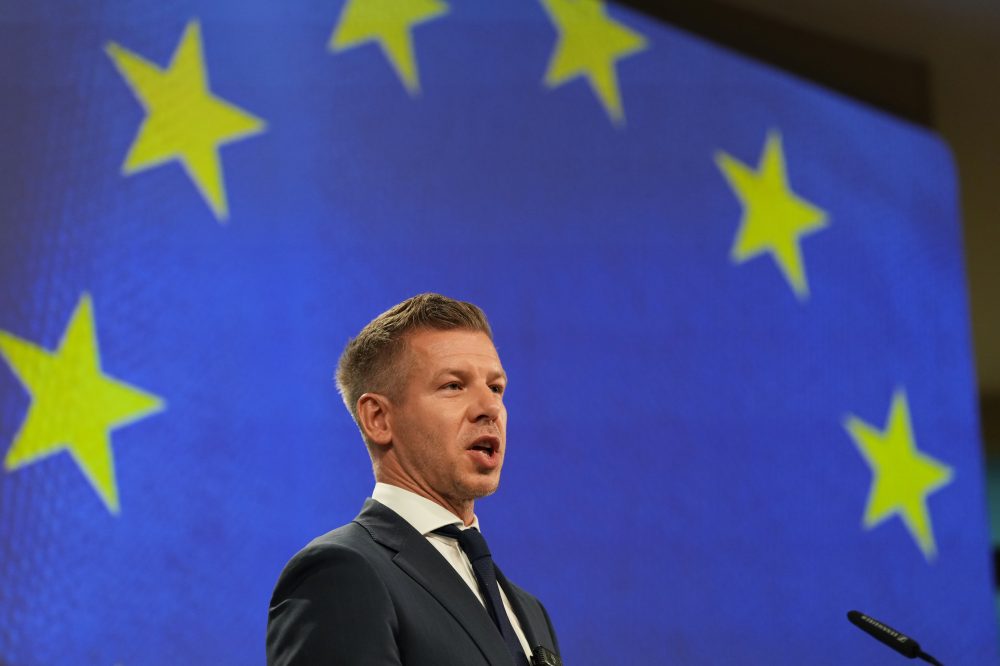

BUDAPEST, Hungary — The Hungarian government plans to modify the nation’s constitution in order to oust the current president, as part of new Prime Minister Péter Magyar’s campaign to eliminate officials installed during former populist Prime Minister Viktor Orbán’s tenure.
Magyar’s Tizsa party secured a decisive electoral win in April, gaining a two-thirds parliamentary majority that enables them to implement major reforms to the authoritarian system Orbán established during his 16-year leadership.
Following his electoral success, Magyar has consistently demanded that President Tamás Sulyok, who was selected by Orbán’s party, step down or face constitutional removal. Magyar had set a May 31 deadline for Sulyok’s departure, frequently describing him as “Orbán’s puppet.”
Although the presidency is largely ceremonial, Hungary’s president holds responsibility for approving legislation and possesses authority to refer parliamentary bills to the constitutional court for examination, creating worries among the new administration’s allies that he might use this power to block their agenda.
Magyar met with Sulyok at the presidential Sándor Palace on Monday morning. During a subsequent press briefing, Magyar announced that the president had declined to step down. He stated he would direct his party’s legislators to immediately initiate the “necessary procedures” for presidential removal, estimating the process would require approximately one month.
“Hungary does not belong to Tamás Sulyok, nor to Viktor Orbán. It doesn’t belong to a single party or political system,” Magyar said. “The constitution states quite clearly that the president showcases the unity of the nation and guards the democratic functioning of the state.”
The prime minister did not provide details about which type of constitutional modification would be employed to remove Sulyok.
Magyar also criticized Sulyok for neglecting his responsibilities on various matters, including remaining silent when Orbán made dehumanizing remarks about political adversaries and critics, and when the former government enacted laws prohibiting the LGBTQ+ Pride event.
“It is in Hungary’s interest that this institution — the office of the president — regain the prestige that has been eroded by its silence and inaction,” Magyar said.
Last Friday, Sulyok’s office issued a statement declaring that Magyar’s resignation demands “adversely affect both the constitutional functioning and the authority of the institution of the President of the Republic.”
The statement also noted that Sulyok had sought a legal evaluation of the dispute from the Venice Commission, a panel of legal experts affiliated with Europe’s leading human rights organization, the Council of Europe.