SRN News brings listeners a brief but informative audio feature called “Global Landscape,” a two-minute segment designed to keep audiences up to date on the most important religion-focused news stories happening around the world.
The feature covers a wide range of topics, from significant faith-based developments to cultural shifts and major events where religion and global affairs come together. Each edition is crafted to give listeners a timely and accessible overview of what is happening at the intersection of faith and world news.
“Global Landscape” is available through SRN News and airs as a regular feature for those looking to stay informed on religious developments shaping communities worldwide.
Several Christian athletes are using the World Cup stage to share their beliefs openly. Among them are players from Iraq — a country where the Christian population has dropped dramatically, from an estimated 1.5 million in 2003 to roughly 150,000 today. Iraqi midfielder Aimar Sher has been vocal about his faith, posting photos to social media showing him in an “I Belong to Jesus” T-shirt. U.S. forward Christian Pulisic has also been open about his Christian faith, frequently wearing a cross necklace his mother gave him. Pulisic has led Bible study sessions with teammates and has shared photos on Instagram of scripture passages he has personally underlined.
The Federal Trade Commission, along with the states of Alaska, Iowa, Nebraska, and Texas, has filed a lawsuit against the World Professional Association for Transgender Health. The suit alleges the organization made misleading claims about puberty-blocking drugs and gender transition surgeries for minors, and that its members financially benefited from those claims. FTC Chairman Andrew Ferguson posted on X: “Parents have a right to make informed decisions about their children’s health. This department will not allow parents and children to be deceived by medical organizations and providers who are prioritizing profit over children’s health and safety.”
Missouri Republican Senator Josh Hawley has written a formal letter to Major League Baseball Commissioner Rob Manfred regarding an incident earlier this month in San Francisco. Manfred issued a reprimand to several members of the Giants after they wrote Bible verses on their uniforms as a protest against the team’s Gay Pride Night festivities. In the letter, Hawley states he has “grave concern” about the league’s warning to those players, arguing that MLB is compelling players to show support for the LGBT agenda through Pride-themed uniforms. Hawley’s letter requests answers to several questions, including a full accounting of all uniform violation fines issued over the past five years.
Clergy members and other Evangelical Christian leaders are sounding the alarm over a fast-growing form of gambling known as prediction markets. Platforms such as Kalshi and Polymarket allow users to place bets on real-world events, including political and news-related outcomes. Critics argue this type of wagering could potentially sway events like elections. There have already been documented cases of campaign staffers admitting to using insider knowledge about polling results to place bets on their own candidates before favorable data became public. Some candidates have also faced criticism for placing wagers on the outcomes of their own campaigns.
A new hate crimes law in Canada has cleared its final legislative hurdle and is now set to become official law — and it’s drawing sharp criticism from faith communities.
The measure eliminates what was known as the good faith religious expression defence, which had previously shielded individuals from criminal hate speech convictions when expressing sincerely held religious beliefs. With that protection removed, someone in Canada who quotes Biblical passages regarding homosexuality could now face imprisonment.
Conservative Member of Parliament Brad Redekopp took to the social media platform X to voice his opposition after the bill passed. In his statement, he described the moment as “a dark day for Canada and an assault on faith.”
Germany has recognized a dedicated humanitarian worker at the Rawalpindi Leprosy Hospital with its most prestigious civilian distinction — the Order of Merit, also known as the Federal Cross of Merit — in acknowledgment of her extraordinary decades-long commitment to some of Pakistan’s most vulnerable patients.
The award was presented during a ceremony held Wednesday at the German Ambassador’s Residence in Islamabad. German Ambassador Ina Lepel conferred the honor on behalf of German President Frank-Walter Steinmeier, who had officially approved the award on April 29.
Considered Germany’s highest civilian recognition, the Order of Merit is bestowed upon individuals who have made remarkable contributions to society through humanitarian efforts and public service.
The recipient this year is Sister Annette Dimigen, a member of the Protestant Sisterhood of the Christ Bearers, who has devoted nearly 30 years of her life to service at the Rawalpindi Leprosy Hospital — a facility also referred to as the German Leprosy Hospital.
Sister Annette first came to Pakistan in 1997 and has since been a central figure in both the administrative side of the hospital and its humanitarian outreach efforts through the Aid to Leprosy Patients (ALP) Association.
Born in Hanover in 1964, she originally pursued a career as an agricultural engineer and inspector before choosing to join the sisterhood and commit herself to volunteer work in Pakistan.
Throughout her time there, she has helped care for thousands of individuals suffering from leprosy, tuberculosis — including drug-resistant strains — and cutaneous leishmaniasis.
The German embassy praised her unwavering commitment, noting that she served “with deep dedication, guided by charity and compassion for those in need,” and called her one of Germany’s most effective humanitarian representatives in Rawalpindi.
The embassy also recognized her teamwork with hospital colleagues, including Dr. Chris Schmotzer, and the wider medical and nursing staff who have worked for years to broaden access to treatment and chip away at the social stigma that surrounds leprosy.
The Rawalpindi facility continues to serve as one of the region’s primary specialized care centers, providing treatment to hundreds of thousands of patients each year through both inpatient and outpatient programs.
The hospital was originally founded by Sister Ruth Pfau, a German-born physician and Catholic nun who gave her life to combating leprosy across Pakistan. She arrived in the country in 1960 and became a pioneering force in building a nationwide network for treating and rehabilitating leprosy patients, which eventually expanded into specialized care centers, including those connected to Rawalpindi.
Through her leadership and work alongside local medical teams, Sister Ruth Pfau helped introduce modern treatment methods, train healthcare workers, and dramatically reduce the stigma tied to the disease.
Her lifelong dedication earned her widespread recognition both within Pakistan and internationally, and she is regarded as one of the most influential figures in the country’s public health history. Pakistan honored her with some of its highest civilian awards, treating her as a national icon of humanitarian service.
She passed away on August 10, 2017, in Karachi, at the age of 87. Following her death, Pakistan honored her with a state funeral in Karachi, complete with full military honors.
LIMA, Peru — Peruvian President José María Balcázar announced Thursday that Pope Leo XIV is expected to travel to Peru during the first half of November.
Following a meeting with the pontiff at the Vatican, Balcázar said the Pope’s itinerary would include stops in Puno, Iquitos, Cusco, Pucallpa, Piura, and Chiclayo — the city where Leo spent nearly a decade carrying out his pastoral ministry. The Chicago-born pope previously resided in Trujillo, along Peru’s northwestern coast, and became a Peruvian citizen in 2015.
Speaking to local radio station RPP, the Peruvian president explained that specific details of the schedule would be disclosed at a later date, citing “religious policy and security reasons.”
While the Vatican has yet to officially confirm any upcoming travel plans, a visit to Peru — with possible stops in other South American nations — has been widely discussed. Pope Leo himself has spoken publicly about his desire to make such a journey.
“Argentina and Uruguay are awaiting the Pope’s visit. I believe Peru would also welcome me with open arms, and if I go to Peru, I would also visit many neighboring countries, but the plan is not yet finalized,” the pontiff told reporters in December upon returning from Lebanon.
Chiclayo, located roughly 14 kilometers (9 miles) from the Pacific Ocean, is a city of more than 800,000 residents and serves as a key commercial center along Peru’s northern coast. The city also grapples with significant social challenges, with approximately 20% of its population living in poverty.
Leo lived and worked in Chiclayo for nearly a decade before departing for Rome in 2023, when then-Pope Francis asked him to take over the presidency of the Pontifical Commission for Latin America.
When Leo XIV delivered his first public words as pope to the jubilant crowd gathered in St. Peter’s Square, he spoke in Spanish and made a direct reference to the city: “My beloved diocese of Chiclayo, in Peru, where a faithful people have accompanied their bishop and shared their faith.” The people of Chiclayo responded with tremendous joy and celebration.
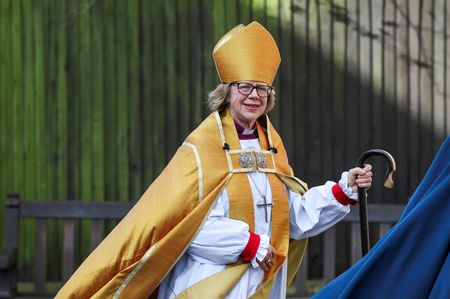
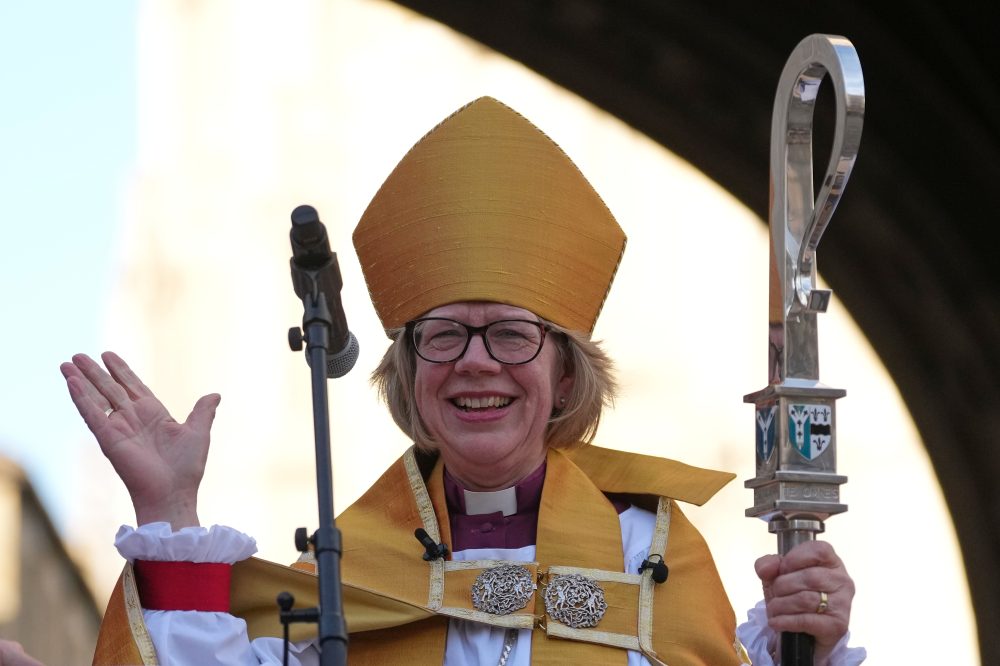
The Archbishop of Canterbury, Sarah Mullally, delivered a formal apology Thursday on behalf of the Church of England for its part in a decades-long practice that resulted in 185,000 children being taken from unmarried mothers and placed for adoption in the years following World War Two.
During that era, Christian churches and the British government worked together within a system that shamed and pressured young women who had children outside of marriage into surrendering their babies, all in the name of conforming to the social expectations of the time.
The Church of England’s involvement centered on facilities known as “mother and baby homes,” where unmarried women — frequently sent there against their will — lived during and after their pregnancies before being separated from their newborns. A comparable program was operated in Ireland by the Catholic Church.
“We are profoundly sorry for the pain, trauma and stigma experienced — and still carried — by many people because of historical adoption practices in homes affiliated to the Church of England,” Mullally said in a statement released by the Church.
The British government is also anticipated to issue its own apology on behalf of the state. Ireland and Australia are among the other nations that have already made similar acknowledgments in recent years.
The Adult Adoptee Movement, an organization representing individuals who were forcibly adopted, pushed back against the Church’s statement, calling it “minimising, passive and distancing language” and saying the Church did not adequately recognize the specific harms that were inflicted.
A report released by the Church alongside Thursday’s apology estimated that as many as 200 of these mother and baby homes may have operated between 1949 and 1976. The report described daily life inside those homes — where some women were forced to stay for several years — as being “characterised by domestic work, prayer and penitence.”
A separate government report issued in March described the treatment of expectant mothers, many of whom were under 18 years old, during pregnancy and childbirth as “inhumane,” and noted that those who were adopted have faced lasting consequences from being separated from their birth mothers.
Mullally also acknowledged that women and girls in these homes were sometimes required to perform menial and physical labor as a form of so-called “correction.”
“Today, we say to each of you: the shame you were made to feel was wrong. You have nothing to be ashamed of. Rather, we are deeply ashamed that this happened to people in the care of Christian communities,” she stated.
Peru’s interim president Jose Balcazar announced Thursday that Pope Leo XIV is scheduled to travel to the Andean nation during the first half of November, according to an official statement released by the Lima government.
The announcement followed a meeting between Balcazar and the pope at Vatican City, where the two leaders discussed the upcoming visit to the South American country.
LONDON — The Church of England issued a formal apology Thursday for its role in forced adoptions that occurred as recently as the mid-1970s, recognizing the suffering endured by unmarried women who were sent to church-affiliated mother and baby homes across the United Kingdom.
Archbishop of Canterbury Sarah Mullally — the first woman to serve in that role and the recognized spiritual leader of the global Anglican Communion — delivered the apology alongside the release of a report examining conditions at those homes during the period from 1949 to 1976.
The report revealed that many women and girls were required to perform menial labor as a form of punishment for having children outside of marriage. In some cases, their babies were described in terms that likened them to goods available to satisfy the demand for adoptions.
“We are profoundly sorry for the pain, trauma and stigma experienced — and still carried — by many people because of historical adoption practices in homes affiliated to the Church of England,” Mullally stated. “We have heard firsthand the accounts of mothers who were separated from their babies in circumstances where they had very few meaningful choices.”
Researchers found that during the time period covered by the report, approximately 185,000 children born to unmarried mothers were placed for adoption in England and Wales. The era was defined by what the report described as a “culture of shame, stigma and secrecy” surrounding unmarried mothers and their children, even as broader societal views on sex and marriage were beginning to shift.
Although church policies at the time stated that unmarried women had the right to keep their children — and that children had a right to remain with their mothers — staff at these homes frequently disregarded that guidance and worked in close coordination with adoption agencies, according to researchers.
The report noted that the official guidance “sat alongside language which expressed dehumanizing and dismissive attitudes, falling short of what would be expected towards anyone in the church’s care, not least people who were rendered especially vulnerable by their circumstances.”
SRN News brings listeners a daily feature called “Global Landscape” — a compact, two-minute audio segment designed to keep audiences informed on the most important religion-focused news stories happening around the world.
The feature covers a wide range of topics, from significant faith-based developments to cultural shifts and key events where religion and global affairs come together. Each edition is crafted to give listeners a timely and informative snapshot of what’s happening in the world of faith.
For the full audio segment, visit SRN News online.
A federal judge has thrown out a lawsuit claiming the Equal Employment Opportunity Commission is illegally failing to protect transgender workers on the job. Chief Maryland District Judge George Russell ruled that the court does not have the authority to hear the case and that the plaintiff — a Maryland LGBT advocacy organization — does not have legal standing to bring the suit. Under Chair Andrea Lucas, the EEOC has moved quickly to align with President Trump’s 2025 executive order recognizing only two biological sexes that cannot be changed. The agency has significantly reduced legal actions taken against employers on behalf of individuals living as the opposite sex.
In Idaho, a judge has decided that men will not face criminal prosecution for entering women’s restrooms, at least for now. U.S. District Judge Amanda Brailsford issued a ruling that temporarily blocks enforcement of major parts of a law that was scheduled to go into effect July 1st. The Idaho law goes beyond similar measures in other states by prohibiting men from using women’s restrooms in both publicly and privately owned facilities. Idaho Attorney General Raul Labrador announced plans to appeal, saying the ruling “misapplied the law, confused the issues, and misrepresented the position of the State. Biological sex is not vague, and neither is this law.”
A new study from the Barna Group, conducted alongside Gloo, shows that the overwhelming majority of pastors are already incorporating artificial intelligence into their work — only 13 percent report never using it. However, the same survey found that 71 percent of pastors describe themselves as cautious about AI, while 40 percent say they feel torn about the technology. Barna spokesman Daniel Copeland explained that “Pastors are predominantly using AI for behind-the-scenes work. They’re using it to prepare for ministry, not to replace what happens when they’re actually with people.” The study also found that a large share of pastors are concerned that AI could begin to substitute for a personal relationship with God.
As the United States approaches its 250th anniversary, a new AP-NORC poll is taking stock of how Americans feel about their constitutional rights. Roughly 90 percent of adults say freedom of speech is central to the nation’s identity, and about 80 percent feel the same way about religious freedom. Despite that, nearly half of those surveyed believe free speech is currently facing a major threat, and around three in ten say the same about religious liberty. An overwhelming majority of respondents view voting rights as critically important, and two-thirds believe those rights are also under threat.
A legal showdown may be on the horizon in Texas after Rockwall County officials erected a monument displaying the Ten Commandments outside their courthouse last month.
The Freedom From Religion Foundation is demanding the monument be removed, warning that it will pursue a lawsuit if county officials refuse to comply. Despite the pressure, Rockwall County is holding its ground and has no plans to take the display down.
The county is being represented by First Liberty Institute, which points out that the monument is nearly identical to a Ten Commandments display at the state capital in Austin — one that was previously upheld by the U.S. Supreme Court.
A European court has delivered a significant victory for religious freedom after striking down a Bulgarian law that banned door-to-door evangelism. The law had prohibited people of faith from going door to door to share their beliefs, even as political canvassers were permitted to do exactly that.
The European Court of Human Rights ruled that the Bulgarian ban violates the European Convention on Human Rights, determining that believers must be afforded the same rights of expression as any other group.
Nicholas Bauer of the European Center for Law and Justice spoke with EWTN about the ruling, stating: “The court ruling reaffirms a basic requirement of religious freedom for believers: the right to the same freedom of expression as everyone else.”
A newly released survey from the Cultural Research Center at Arizona Christian University is shedding light on how Americans think about the value of human life — and the results may surprise you.
According to the poll, 57% of the general population believes that human beings are created in God’s image and likeness, are morally fallen, and are in need of redemption. However, when it comes to the sanctity of life, the numbers tell a different story.
Just 27% of those surveyed believe that human life is sacred — the same percentage as those who say human life holds no intrinsic value at all. That means an equal share of Americans see life as sacred as those who believe it has no inherent worth.
Perhaps most striking is the finding among people who identify as born-again Christians. Despite their faith background, only 44% of that group said they believe human life is sacred.
Many of the countries sending teams to this year’s World Cup are struggling with serious social divisions back home. Yet on the soccer field, those same nations are presenting a very different story — one where players of varying backgrounds and religious beliefs are working side by side in pursuit of a shared goal.
This dynamic stands out most clearly among Western European national teams, which for the vast majority of soccer’s history were made up almost entirely of white Christian players. As those countries have become more culturally and religiously diverse, so have their rosters — now featuring both Christian and Muslim players who are open and public about their beliefs.
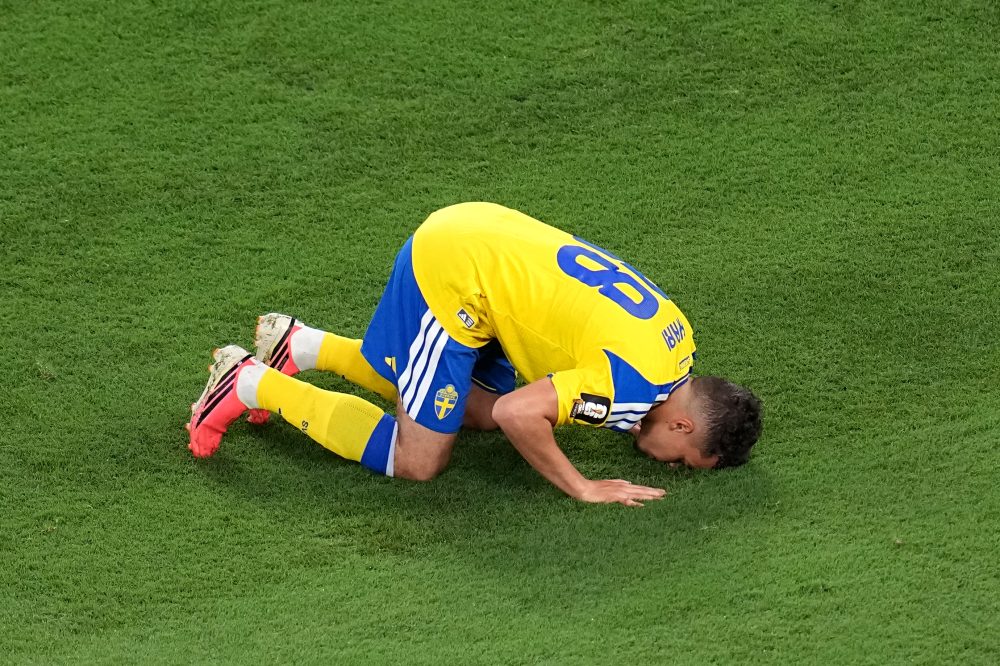
England’s national team has, for the first time, a Muslim player on its squad. France’s roster includes players from Protestant, Catholic, and Muslim backgrounds. Spain’s breakout star, 18-year-old Lamine Yamal, is a practicing Muslim. Sweden’s Yasin Ayari is as well — and after scoring the first of his two goals in Sunday’s win over Tunisia, the country where his father is from, Ayari dropped to the ground in prostration to give thanks to God.
All four of those countries — along with several other European nations — have faced political tension tied to the arrival of large numbers of Muslim immigrants. So does the religious diversity seen on these World Cup rosters carry a meaningful message?
Eboo Patel, president of Interfaith America, an organization that promotes religious pluralism and cooperation, says it absolutely does. “It is symbolic yet also substantive,” he said.
Patel described the image of Christian players making the sign of the cross and Muslim players raising their hands in prayer. “My identity really matters to me and it makes me a better soccer player,” he said those gestures communicate.
“They score, they each say their respective prayers, and then they’re hugging each other,” Patel added. “You’re cooperating to build a community and a team. … It’s not a contrived television ad or a condescending afterschool special. It’s the way you build an excellent soccer team.”
Several players at this World Cup have drawn attention for how openly they express their faith:
Egypt’s Mohamed Salah is by far the most recognized player on his country’s squad. A Sunni Muslim, Salah is consistently open about his faith both on and off the field — frequently prostrating himself after scoring to give thanks to God. His presence has had measurable effects beyond the sport: after he joined Liverpool in England’s Premier League, researchers found that anti-Muslim posts on social media by the club’s fans dropped by half.
Croatia’s Luka Modrić, 40, is competing in his fifth World Cup and is on pace to surpass 200 international appearances during the tournament. A devout Catholic, Modrić has frequently worn shin guards bearing images of Jesus and the Virgin Mary. Just days before the team departed for the United States, Modrić and his Croatian teammates gathered to celebrate Mass together at a chapel in the town of Icici.
England’s Djed Spence has been identified by the BBC and other media outlets as the first Muslim player to appear for the senior England national team, though the Football Association has not officially tracked players’ religious affiliations. Spence, a fullback who plays for Tottenham, previously represented England six times at the under-21 level. “It’s good to make history and hopefully inspire young kids around the world that they can make it as well,” Spence told the BBC. “They can do what I am doing.”
Spain’s Lamine Yamal, an 18-year-old Muslim whose father is Moroccan, made international headlines in May when he was seen waving the Palestinian flag during Barcelona’s celebration after winning the Spanish league title. Barcelona’s coach Hansi Flick publicly questioned that decision, and Israel’s defense minister, Israel Katz, later accused Yamal of spreading “hate.”
England defender Marc Guéhi, 25, is the son of a Christian minister based in London and is playing his first season with Manchester City. He was chosen as one of England’s defenders for the World Cup. While serving as captain at his previous club, Crystal Palace, Guéhi wrote religious messages on his uniform during a Premier League campaign supporting LGBTQ+ inclusion — a move that violated Football Association rules, which bar players from displaying religious messages. He was not punished for the act.
Iraq’s World Cup squad reflects the country’s complex religious and ethnic landscape. Religious minorities have faced persecution in Iraq for decades, yet this year’s team includes Kurds, Sunni Muslims, Shiite Muslims, and several Christians — a notable fact given that Iraq’s Christian population is estimated to have dropped from 1.5 million in 2003 to roughly 150,000 today. One of those Christian players, midfielder Aimar Sher, has been eager to share his faith publicly, posting photos on social media of himself wearing a shirt that reads “I Belong to Jesus.”
U.S. forward Christian Pulisic has spoken candidly about his Christian faith and is frequently seen wearing a cross necklace given to him by his mother. He has led Bible study sessions with teammates, and his Instagram account has included photos of scripture passages he has personally underlined. Several of his U.S. teammates are also publicly open about their Christian faith, including Weston McKennie and goalkeeper Matt Freese. McKennie’s Instagram biography consists of just four words: “All glory to God.”
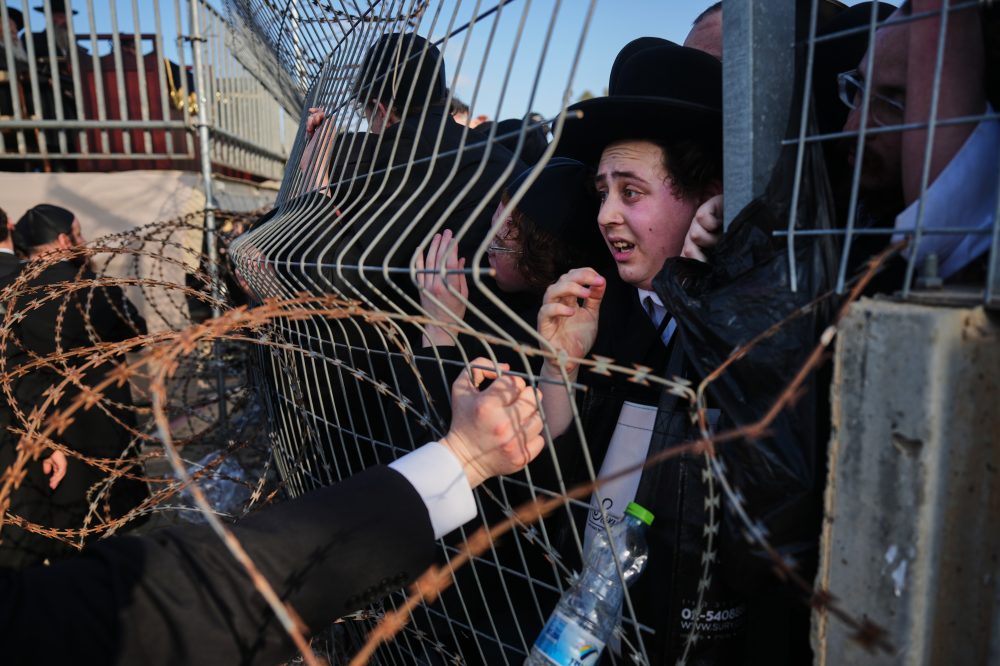
Demonstrations have broken out in Israel as ultra-Orthodox Jewish community members rally against government efforts to conscript them into military service.
Photographs from the protests show large gatherings of ultra-Orthodox Jews expressing their opposition to mandatory military service, a requirement that has long been a source of conflict between this religious community and Israeli authorities.
The issue of military conscription for ultra-Orthodox men has been a deeply divisive topic in Israel, with many in the community arguing that their religious studies and way of life should exempt them from mandatory service in the armed forces.
The demonstrations highlight the ongoing struggle over how Israel balances national defense needs with the religious and cultural practices of its ultra-Orthodox population.
Bethany Christian Services is making a major policy reversal, announcing it will no longer place children with same-sex couples — a significant shift from the direction the agency took five years ago.
When Bethany first announced it would allow children to be placed with gay couples, the decision drew intense criticism from many within the Christian community. Now, the agency is walking that back entirely.
In an official press release, the organization stated: “The Board of Directors has voted to take steps to clarify and reinforce the Christian faith commitments and beliefs that have shaped our work for more than 80 years.”
The move signals a return to the agency’s traditional, faith-based adoption policies that defined its work for decades before the earlier policy change.
SRN News brings its regular ‘Global Landscape’ feature to listeners this Wednesday, offering a compact two-minute rundown of the most noteworthy religion-focused stories making headlines around the world.
The segment is designed to keep audiences informed about significant events, cultural developments, and major shifts at the crossroads of faith and international affairs. Each edition delivers timely coverage in a format that is easy to follow and digest.
For the full audio segment and more details, listeners can visit SRN News online.
Nearly half of all American school-age children will soon live in states that provide public funding for private education. Texas has become the newest state to join the movement, setting aside one billion dollars to fund private and religious school scholarships as well as homeschooling costs starting this fall. Beginning next year, the federal government plans to offer incentives to encourage private school scholarship programs in states that have not previously had them. The shift is being driven in part by parents who want to remove their children from public schools due to concerns over issues including transgenderism and reading materials they consider inappropriate. Religious schools have emerged as a major beneficiary, with many families turning to them in search of a stronger educational environment.
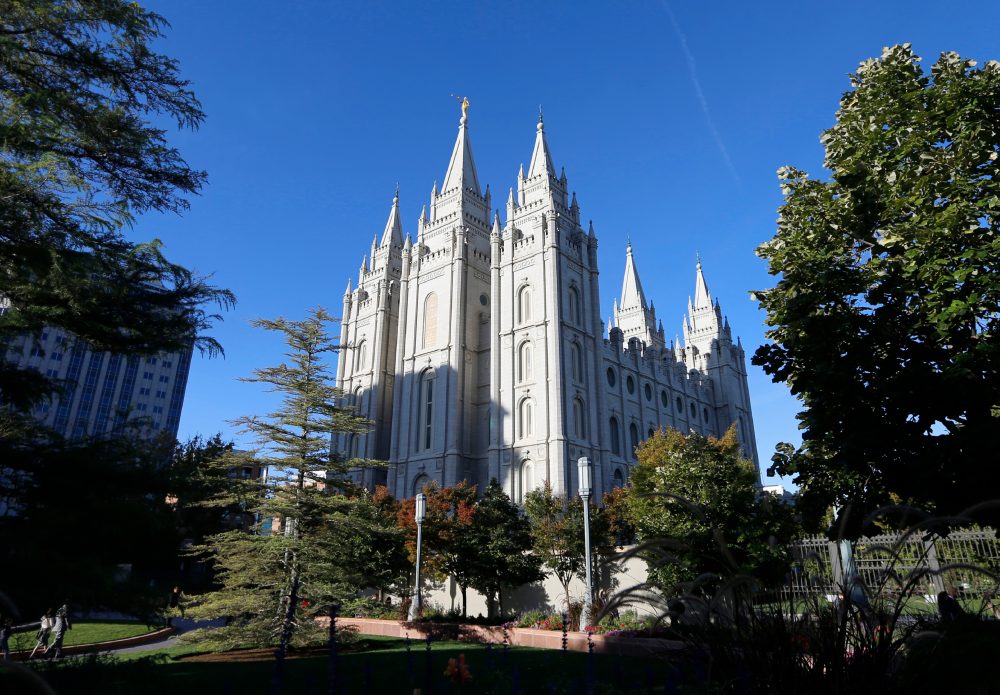
A small community in Texas finds itself in an unusual standoff with a major religious institution. The town of Fairview is asking the Mormon Church to voluntarily scale back the steeple on its planned Fairview Temple — from 120 feet down to 100 feet. Town officials have described the request as a goodwill gesture toward the church’s surrounding neighbors. Fairview already went to court in an attempt to require the shorter steeple and lost that legal battle. The town council is now seeking a direct conversation with Mormon leadership to find a resolution. When the town previously attempted to use zoning rules to limit the structure, the Church successfully defended itself by invoking the Religious Land Use and Institutionalized Persons Act. The Fairview Temple is projected to be finished in the summer of 2028.
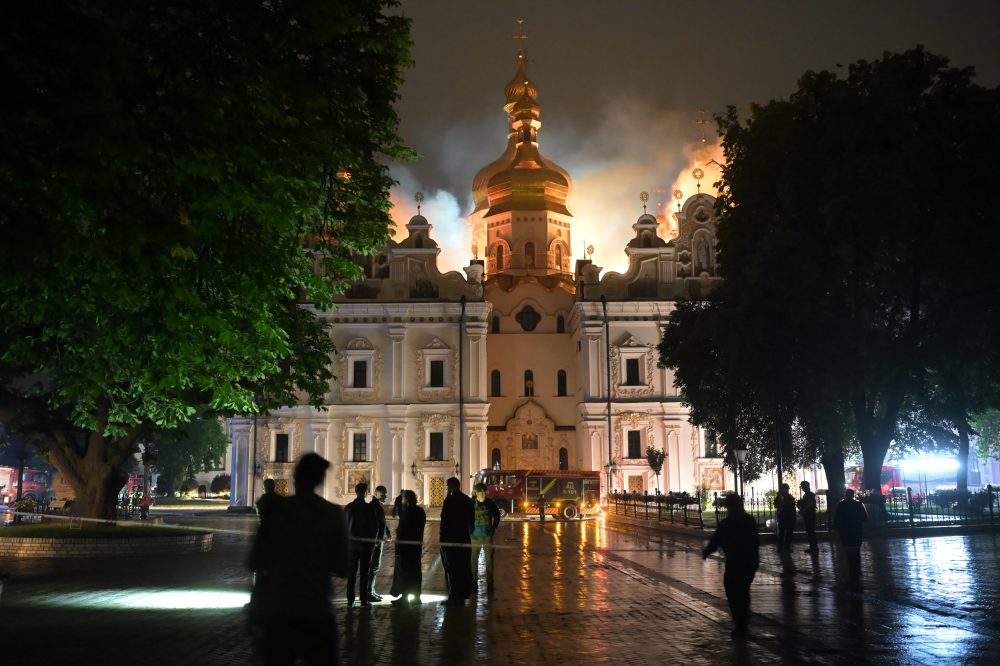
Among the lesser-discussed consequences of Russia’s ongoing war against Ukraine is the widespread destruction of the country’s historic religious buildings. The latest wave of Russian bombardment targeting Ukraine’s major cities has set fire to a portion of a significant Eastern Orthodox landmark. Church and cultural heritage officials report that the Dormition Cathedral, located within a historic monastery complex in Kyiv, sustained damage this week. The monastery was constructed over a period spanning the 11th through 19th centuries and holds UNESCO World Heritage status. Since Russia launched its invasion in 2022, approximately 740 churches and other religious structures across Ukraine have been either destroyed or seriously damaged. While the majority have been Orthodox sites, Protestant, Catholic, and Jewish buildings have also been hit.
Vice President J.D. Vance, for whom religious faith has played a defining role in his adult life, has authored a new book tracing his personal spiritual path. The book, titled “Communion: Finding My Way Back to Faith,” is being viewed by some observers as a potential foundation for a future presidential run. Vance worked on the project during an eventful decade that included a Hollywood film based on his upbringing, a term as a U.S. senator from Ohio, and his current role as vice president alongside Donald Trump. “Communion” functions in part as a statement of beliefs about the place of religion in public life. The book is arriving in stores fewer than five months before the midterm elections.
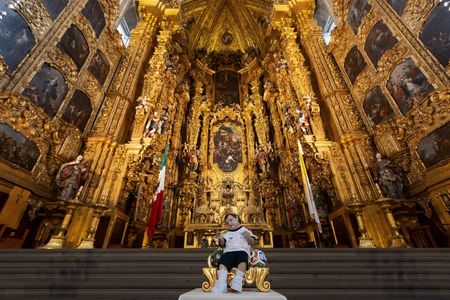
MEXICO CITY — Thousands of devoted soccer fans are descending on Mexico City’s Metropolitan Cathedral, hoping a little divine intervention might help their favorite teams win the World Cup. The draw? A figure of the baby Jesus dressed in the Mexican national team’s soccer uniform.
The tradition of dressing the baby Jesus in a Mexican soccer kit stretches back 55 years to the San Miguel Arcangel church, located in a low-income neighborhood of the city. That practice began in 1970, when Mexico first hosted the World Cup tournament. However, this year a newly assigned parish priest put a stop to it at that church, calling it disrespectful.
The ban sparked widespread outrage among fans, and some worried the decision could even hurt Mexico’s chances on the field. In response, the Metropolitan Cathedral — the country’s main cathedral — stepped in and put its own baby Jesus figure on display wearing the jersey of ‘El Tri,’ as the Mexican national team is known.
Canon Manuel Corral explained the significance of the move to Reuters. “It’s the first time it’s been here in the cathedral… the people themselves asked for it,” he said.
Corral also noted that the prayers being offered weren’t just from Mexican supporters. “Today, for example, we have Colombians here saying their prayers to ask for victory,” he said on Tuesday — the day before Colombia was set to face Uzbekistan at the Azteca stadium.
In Mexican Catholic tradition, it is common to dress baby Jesus figures in different outfits to represent various blessings — as a pilgrim for safe travels, or as a doctor to bring good health, for example.
On Tuesday, the figure was dressed in a white jersey and green shorts, resembling the kit that co-host Mexico was scheduled to wear in their Thursday match against South Korea in Guadalajara. The figure will remain on display in the cathedral’s atrium and other areas throughout the entire tournament, no matter how Mexico performs.
Visitors from Argentina, Colombia, Spain, Mexico, and other nations have stopped to take photos with the figure or offer up prayers for their home countries.
Not everyone, however, was comfortable with the display. Mexican fan Eleazar Martinez, who arrived at the cathedral just before noon on Tuesday, shared his reservations. “As a Catholic it’s very strange for me to see the baby Jesus dressed like that. I don’t really agree with it,” he said.
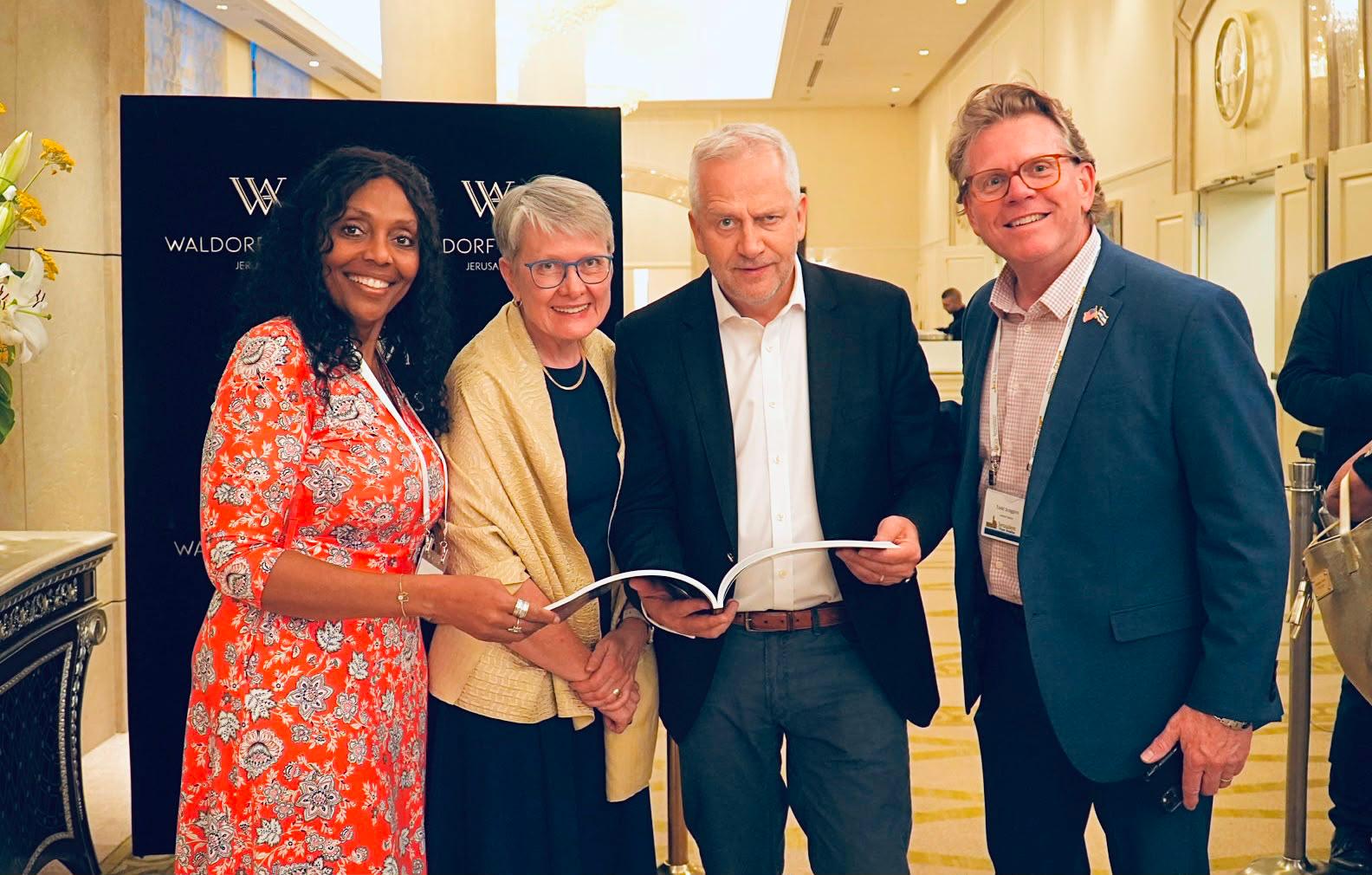
Just getting to Jerusalem had become a challenge in itself for those attending a major religious gathering this month.
U.S. military strikes on Iran, Iranian missile attacks directed at Israel, and repeated disruptions to regional air travel left many attendees uncertain about their travel plans. Tourists and residents in the area were also left wondering when they might be able to depart. Despite the turmoil, pastors, theologians, diplomats, and Jewish leaders pressed on to attend the International Christian Embassy Jerusalem, or ICEJ, summit — and the chaotic backdrop gave the event an intensity that organizers likely had not anticipated.
The Jerusalem Summit ran from June 9 through June 11, bringing together participants over three days to examine the relationship between Israel, the Christian Church, and the rise of antisemitism. By the time the summit opened, the regional conflict had moved well beyond background context — it had become part of the very atmosphere surrounding the discussions.
But the speakers who addressed the gathering were not focused solely on missile strikes, Iran, or airline schedules. Their central message pointed to a different kind of crisis — one brewing within segments of Christianity itself. According to those who took the stage, support for Israel among Christians is being steadily undermined by a lack of biblical knowledge, political grievances, narratives spreading through social media, and a resurgence of replacement theology, a belief that the Church has replaced the Jewish people in God’s covenant promises.
The warning delivered at the summit was clear: while the threats from outside Israel’s borders are visible and immediate, the erosion of Christian Zionist support from within faith communities may represent an equally serious long-term challenge.
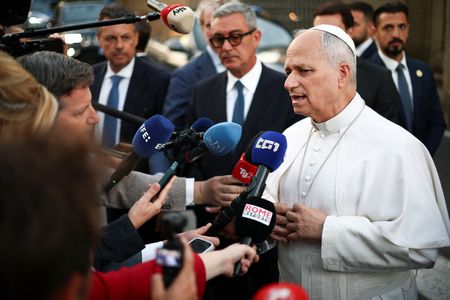
CASTEL GANDOLFO, Italy — Pope Leo is welcoming the temporary agreement between the United States and Iran aimed at ending the ongoing war in the Middle East, offering words of gratitude and hope as the two nations prepare to make the deal official.
Speaking to reporters outside his residence in Castel Gandolfo, Italy on Tuesday, Leo expressed relief over the development, saying “thanks be to God” as the formal signing is set for Friday.
The pontiff, who previously drew criticism from U.S. President Donald Trump after speaking out against the Iran war, made clear he is optimistic — but realistic — about the road ahead.
“There will still be several points to settle, but it is always better to do so through dialogue, through negotiations, and not by returning to war,” said Leo, who holds the distinction of being the first American-born pope.
He added that he is holding out hope for a permanent resolution to the conflict. “I hope that it truly is a solution to the war, that the war really is over, and that we can move forward,” he told journalists.
SRN News brings listeners a daily feature called “Global Landscape,” a compact two-minute audio segment designed to keep audiences informed about the most important religion-focused news stories from around the world.
The feature offers a timely overview of major developments, cultural changes, and noteworthy events occurring at the crossroads of faith and global affairs. Each edition is crafted to give listeners a clear and concise snapshot of what is happening in the world of religion on any given day.
For more information and to hear the full segment, visit SRN News online.
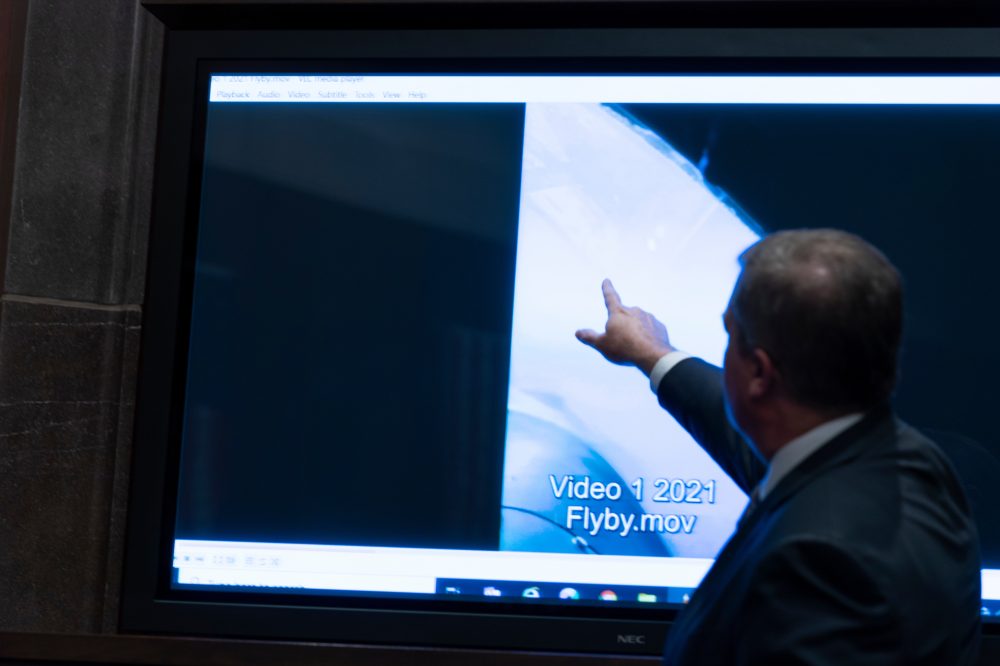
As Christianity loses followers across the United States, fascination with unidentified flying objects is climbing. Director Steven Spielberg has now entered that conversation with a new film titled “Disclosure Day,” which takes on the subject of extraterrestrial life and what it could mean for religion. The movie raises the question of whether God is exclusively the creator of Earth, or whether a divine being might encompass all intelligent life throughout the universe. Across the country, conventions for UFO believers are growing in number, with some attendees claiming that beings from other planets are themselves representations of God. Religious leaders are divided — some consider UFOs to be demonic in nature, while others caution that the nation’s fixation on them is becoming unhealthy.
A newly released report is raising alarms about the treatment of Christians in Nepal. The organization International Christian Concern says the predominantly Hindu country imposes legal restrictions on followers of Christ, subjects them to social pressure, and at times exposes them to violence. ICC stated: “According to Christian leaders in Nepal, increasing Hindu nationalism seeks both to reinforce the country’s identity as a Hindu nation and to suppress Christian growth. Christian converts, especially those who leave Hinduism, often endure severe social consequences.” Current figures show that 81 percent of Nepal’s population practices Hinduism, while Christians make up roughly two percent.
A federal judge has thrown out a lawsuit brought by a former Yosemite National Park ranger who lost her job after displaying a large transgender pride flag on a rock wall at a California park. U.S. District Judge Jennifer Thurston ruled that Shannon Joslin, who identifies as nonbinary, failed to follow the correct legal procedures when filing the case. Because Joslin was still in a probationary period at the time of the termination last year, the proper course of action would have been to file a complaint with the Office of Special Counsel. National Park Service rules prohibit any employee from displaying flags that express personal social or political views within the national parks.
Polyamory — the practice of having multiple romantic partners simultaneously — is emerging as the next major debate for progressive religious denominations. Churches that previously moved to accept homosexuality and transgenderism are now facing calls to extend blessings to group marriages as well. Within the Presbyterian Church USA, a debate is underway over a proposal that would require ordained ministers to practice monogamy. In the Episcopal Church, three priests have given up their ordination vows due to conflicts between their church roles and their personal family arrangements. The Episcopal Church also considered, but ultimately did not move forward with, a 2024 resolution aimed at studying “diverse family structures.” Across the border in Canada, the Lutheran Church is also examining the issue of polyamory.
A new poll from the American Bible Society is shedding light on how Americans feel about artificial intelligence playing a role in their faith lives — and the results suggest attitudes are slowly shifting.
When it comes to clergy using AI to help craft their sermons, opposition has dropped noticeably. Currently, 32% of respondents said they disapprove of the practice, down from 37% just two years ago. However, the single largest group of people surveyed said they were still undecided on the matter.
The poll also found that the share of adults who believe AI could be a useful tool for interpreting and understanding the Bible has grown compared to figures recorded in 2024.
A watchdog group that monitors religious intolerance across Europe is reporting a significant spike in hate crimes directed at Christians during the month of May.
According to the Observatory on Intolerance and Discrimination against Christians in Europe, 37 documented incidents took place last month targeting churches, Christian institutions, religious symbols, and individual believers — averaging more than one attack every single day.
Of those 37 incidents, 13 involved arson, making May the worst month of the year so far for fire-related attacks on churches and Christian sites.
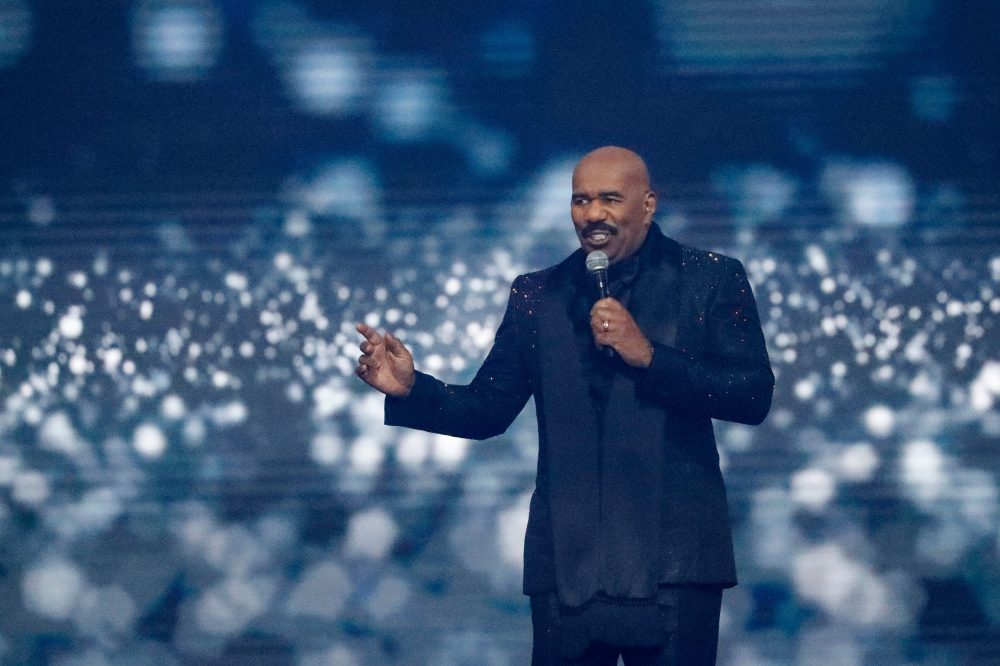
Steve Harvey says the decades he has spent as an entertainer, motivational speaker, and author are blessings from God — and those blessings come with strings attached.
“The more God trusts you, the more he will bless you, but he has to trust you with what he’s going to give,” Harvey said to The Associated Press following a recent appearance at the Social Innovation Summit in Atlanta. “And a part of what he is going to give to you is going to require that you take a portion of it and return the favor.”
Zeev Klein, CEO of Landmark Ventures and founder and curator of the Social Innovation Summit, praised Harvey’s message as especially meaningful given the many pressing challenges society faces today.
“Steve has an extraordinary ability to meet the moment with honesty, empathy, and clarity,” Klein said. “He doesn’t just speak to an audience, he connects people in a way that moves conversations forward.”
Harvey, best known as the longtime host of “Family Feud” and a star of many movies and television programs, takes charitable giving seriously — particularly through The Steve & Marjorie Harvey Foundation, which he co-founded with his wife. He has also made a point of passing that commitment on to his children.
Harvey says his philosophy on giving was shaped by his mother, who taught him that receiving blessings means becoming a blessing to others. He emphasized that when giving to someone in need, it is not the giver’s place to judge how the recipient uses the help.
“You have to give to people without expecting anything in return. It’s your job,” Harvey said. “When you give to somebody you don’t have the right to make the determination what they need it for… If you do it with the intent to help, the reward is given back to you.”
Harvey also spoke about the divide between those who have experienced poverty and those who have not, arguing that a lack of understanding fuels many of today’s social problems.
“People who don’t know what it is like to be without, they come from a different perspective,” he said. “They don’t know what it is to grovel… But when you don’t listen to them, you don’t want to hear their story, then you keep acting as though you’ve been rich the whole time. That’s the problem we have today.”
When it comes to his own children, Harvey said he made sure they grew up with comfort and opportunity — but also with humility. Each of his children had their own room, bathroom, desk, and computer. However, he made certain they understood they had not earned those privileges on their own.
“You don’t have the right to think you are better than anybody else. You just hit the jackpot, I’m your daddy,” Harvey recalled telling them. He also shared a lesson he passed on to all his children: “Justice is when you get what you deserve. Mercy is when you don’t get what you deserve. But grace is when you get what you don’t deserve. My children were born into grace.”
Harvey also reflected on changes he has noticed over the years in the boys who attend his youth camp. He said the messaging has had to shift because today’s campers are different from those in earlier years.
“It’s a softer boy that’s being raised now,” Harvey said. “We used to go right into the tough stuff. Now we gotta ease them off the bus.” Despite the adjustments, Harvey said the core lessons remain intact. “For the five days I got them, we still show them how life really works. You don’t get participation trophies in life.”
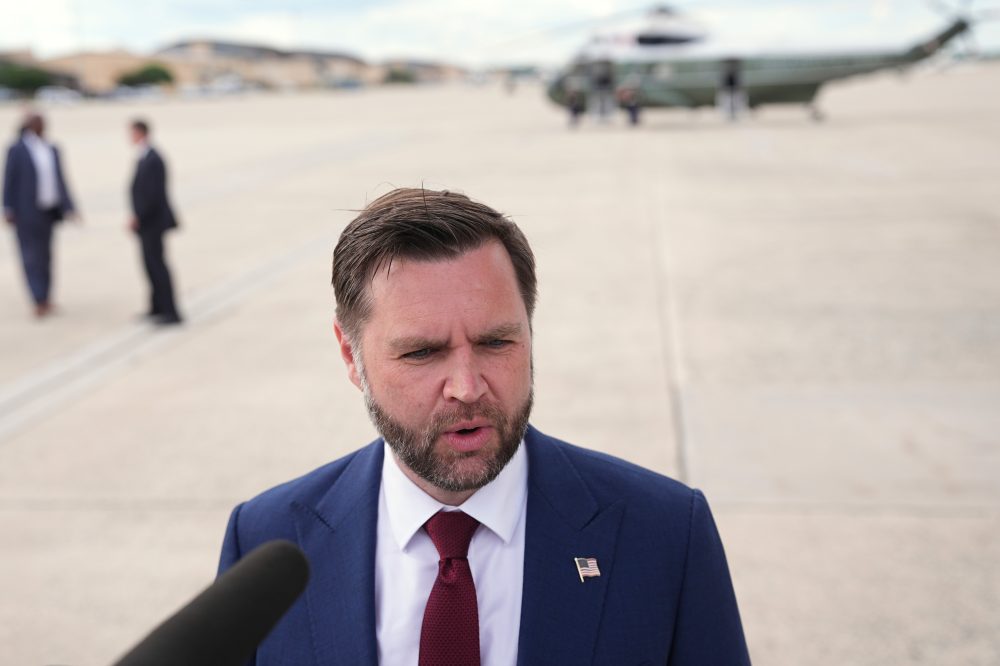
Vice President JD Vance, who converted to Catholicism and has made his faith a cornerstone of his adult life, has released a new book detailing his spiritual journey — one that many observers believe could lay the groundwork for a future run at the presidency.
Titled “Communion: Finding My Way Back to Faith,” the book went on sale Tuesday through Harper, and The Associated Press obtained a copy before its official release. The HarperCollins imprint previously published “Hillbilly Elegy,” Vance’s best-selling 2016 memoir that first brought him to national prominence.
Vance has been working on the new book intermittently ever since, across a decade that saw a Hollywood film adaptation of his life story, a brief term as a U.S. senator from Ohio, and ultimately his election as vice president alongside Donald Trump.
The book contains relatively little about Trump or behind-the-scenes political anecdotes. However, Vance does acknowledge regret over his past criticism of the Democratic Party’s “childless cat ladies” — a remark that resurfaced and created headaches for him during the campaign when he was Trump’s running mate.
At its core, “Communion” functions as a kind of argument for the importance of religion in public life. Vance traces his path from Protestant Christianity to atheism and eventually to Catholicism, saying his faith gave him a sense of purpose that neither his education at Yale University nor his career in finance had provided.
The book arrives less than five months before the midterm elections, which will shape the final two years of Trump’s second term and are widely expected to signal the unofficial start of the next presidential race — one in which Vance is considered a likely contender.
Vance described observing what he called “the fusion between Republican politics and the Christianity of my youth.” During that period, he wrote, “I heard a fair amount about the evils of abortion and homosexuality,” along with then-President Bill Clinton’s “rumored moral failings.”
He also said he felt he was “starting to witness the beginning of a fissure in the Republican Party: between its business elites and its religious rank and file” — a divide that, he wrote, would “eventually lead to my election as vice president.”
His grandmother — whom he refers to as his mamaw — was a defining presence in his life, and her death marked the beginning of his drift away from Christianity. “With her gone, no one really cared about my faith, and soon I stopped caring, too,” he wrote. Religion became “completely irrelevant” to him, even during his time serving in Iraq with the Marine Corps.
By the time his military service ended in 2006, Vance wrote that he “was no longer, in any real sense, a Christian.”
On his way back to base following his grandmother’s funeral, Vance recounted losing control of his vehicle on a wet road, only to stop inexplicably before crashing into a guardrail and potentially plunging off a mountainside. He described it as “the closest I’ve ever come to a supernatural experience,” a feeling that stayed with him even through what he called his “later years as a strident atheist.”
As his military career wound down, a fellow servicemember introduced him to the writings of author Ayn Rand, whose philosophy of selfishness as a virtue stood “in as stark opposition to Christian morality as anything I’d ever read.” Vance said Rand’s ideas “filled a void left by the faith I’d discarded” and that he became a “self-professed atheist and meritocrat.” “I didn’t care about God’s will,” he wrote. “I cared about my own.”
Vance wrote that he was immediately captivated by the woman who would become his wife, Usha Vance, telling a friend while the two were in law school that he thought he was “obsessed” with her. He praised her sharpness, intellect, and curiosity. “I will marry this girl,” he wrote. “Or I will be a lifelong bachelor.”
The couple’s differing views on the afterlife emerged through a conversation sparked by Joan Didion’s “The Year of Magical Thinking.” Vance wrote that his wife, like Didion, didn’t fear the loss of heaven or the pains of hell simply because she didn’t believe they existed. “I came to believe in both, but I still didn’t find either particularly motivating,” he wrote.
Around the same time, Vance attended a lecture by Peter Thiel, a Silicon Valley investor who would later become one of his early political supporters. He was struck by Thiel’s views on intense professional competition paired with what Thiel described as “technological stagnation.” Vance called Thiel “possibly the smartest person I’d ever met” and noted that Thiel openly identified as a Christian, which challenged Vance’s assumption “that dumb people were religious and smart people were atheists.”
Vance said he was initially doubtful his first book would find an audience, but an interview he gave in the summer of 2016 about how working-class Americans felt abandoned by their country’s leaders caught on quickly, aligning with Trump’s campaign message that year. “I became a controversial figure in my own right, and I tasted my first bit of heated public criticism,” he wrote.
In 2018, Vance visited a French cathedral with his wife and their young son, Ewan. Reflecting on the Catholic Church’s centuries of endurance, he felt his resistance to religion beginning to soften. He described feeling “a distinct sense of belonging and presence.” He was baptized the following year, writing that he appreciated the “work” involved in becoming Catholic — including readings and in-depth discussions.
When it came to being selected as Trump’s running mate, Vance wrote that he considered it a “long shot.” “When his staff told me I was on the short list, I almost thought it was a prank call,” he wrote. He described the in-person vetting interview as the most memorable part of the process, including being asked whether he had ever been unfaithful to his wife. “I haven’t, but I assume people who have don’t just admit it to a stranger?” he replied.
The campaign transition was hard on his family, he wrote, especially his oldest child. He shared that struggle with Charlie Kirk, the young conservative activist who founded Turning Point USA and was assassinated last year. Kirk’s advice: “Don’t try to convince your son it’s not a sacrifice.”
The “childless cat ladies” remark, originally made in 2021, came back to haunt Vance during the campaign. He now calls the comment “boneheaded” and “one of the dumbest things I ever said.” “Aside from enraging a great number of people,” Vance added, “it had the added benefit of distracting from the actual point I wanted to make, which was that our society is becoming pathologically hostile to having kids.”
The release of “Communion” is widely seen as fueling speculation about a 2028 presidential bid. Vance has said he is not focused on that possibility at the moment and has suggested he would wait until after the 2026 midterm elections before making any decision. Presidential hopefuls frequently publish books ahead of campaigns as a way to build visibility and sharpen their message. Several potential 2028 Democratic candidates have recently published or are preparing to release books of their own, including Kentucky Gov. Andy Beshear, Pennsylvania Gov. Josh Shapiro, California Gov. Gavin Newsom, and former Vice President Kamala Harris.
In honor of America’s 250th birthday, SRN News has launched a special new series called Faith and Freedom.
The series takes a closer look at the relationship between faith and the founding principles of the United States, marking a major milestone in the nation’s history.
Part 8 of the series is now available in audio format through SRN News.
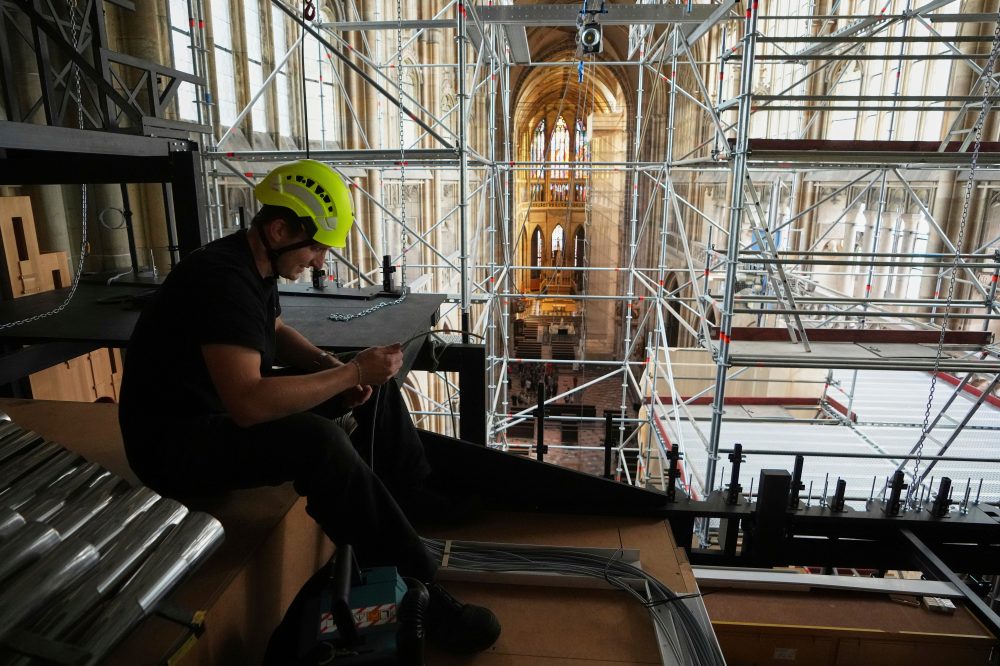
PRAGUE (AP) — One of Europe’s most storied churches now has a new voice. Prague’s St. Vitus Cathedral officially unveiled its new organ on Monday, providing the 700-year-old structure — the largest in the Czech Republic — with an instrument worthy of both its religious services and concert performances.
Prague Archbishop Stanislav Přibyl blessed the organ during a ceremonial mass, accompanied by the Czech Philharmonic. The program included Antonín Dvořák’s “The Lužany Mass” along with compositions by Georg Friedrich Händel, Camille Saint-Saëns, and Joseph Haydn.
“St. Vitus Cathedral has gained a new voice,” Archbishop Přibyl said in a prepared statement. “A voice that will not speak with words but will still speak to the heart.”
Eight concerts are planned in the coming days to showcase the new instrument to the public.
The organ, which features four keyboards, was crafted in the workshop of Gerhard Grenzing, located in El Papiol near Barcelona, Spain. The celebrated German organ builder has constructed nearly 140 organs and restored more than 90 historic instruments across numerous countries.
After being completed in Spain, the organ was taken apart and transported piece by piece to Prague by truck. Workers reassembled it inside the cathedral approximately one year ago, after which craftsmen spent several months carefully voicing and tuning each of its pipes.
In total, the instrument contains around 6,000 pipes, with lengths ranging from just 7 millimeters — about a quarter of an inch — to more than 7 meters, or roughly 23 feet.
The cathedral’s previous organ was finished in the early 1930s, but it was never well-suited to the grand space and repeatedly broke down. During World War II and through more than four decades of communist rule, no one pursued repairs or a replacement.
Discussions about building a new organ began approximately 14 years ago. A crowdfunding effort launched in 2017 ultimately raised more than 135 million Czech crowns — equivalent to about $6.5 million — from thousands of individual contributors.
St. Vitus Cathedral holds deep significance in Czech history. It served as the site of royal coronations and burials for Czech kings, and the Czech crown jewels are kept within its walls. The cathedral was also the setting for the funeral mass of Václav Havel, the Czech Republic’s first president, held on December 23, 2011.
SRN News brings listeners “Global Landscape,” a two-minute feature designed to keep audiences informed on the most important religion-focused news happening around the world.
The segment offers a concise snapshot of significant developments at the crossroads of faith and global affairs, covering cultural shifts, key events, and emerging stories that matter to people of faith everywhere.
For the full audio segment and more religion news from around the world, visit SRN News online.
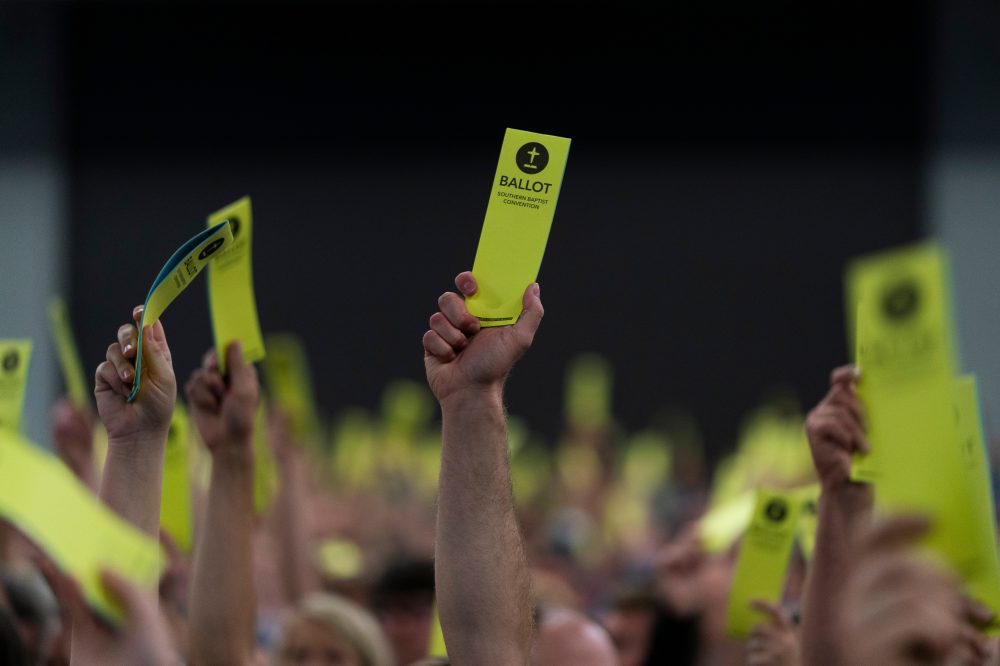
Last week’s Southern Baptist Convention annual summer gathering produced more than just the widely-discussed decision to codify a ban on female pastors. Delegates — known as messengers — also passed a resolution condemning political violence and hateful speech. A separate resolution called for the humane treatment of people in the country illegally, while at the same time affirming that immigration enforcement is legitimate and rejecting rhetoric that dehumanizes or promotes nativism. The delegates additionally backed a resolution speaking out against anti-Semitic violence and conspiracy theories, with particular attention to those that emerged following the Hamas attack on Israel in 2023.
The United Nations is once more raising the alarm over violence targeting Christians in Nigeria. The Office of the U.N. High Commissioner for Human Rights reports being overwhelmed with accounts of Muslim terrorist attacks on believers in that country, with women bearing the heaviest burden. According to the U.N., there has been a sharp rise in kidnappings, sexual violence, forced marriages, and enforced disappearances — particularly in Nigeria’s northern and Middle Belt regions. At least two Muslim extremist organizations, Boko Haram and the Islamic State West Africa Province, are known to be operating in Nigeria. Critics have accused the Nigerian government of responding too weakly to the ongoing crisis.
Evangelical Christians continue to stand as one of President Trump’s most reliable voting blocs. A new AP-NORC poll shows that roughly two out of three white born-again Protestants gave Mr. Trump a thumbs-up on his overall job performance in April. That tracks with his electoral history — Mr. Trump earned the backing of about eight in ten White Evangelical Christian voters in both 2020 and 2024. A number of high-profile religious leaders have been among his most vocal supporters. Robert Jeffress, senior pastor of First Baptist Church in Dallas, said he has been particularly appreciative of Mr. Trump’s creation of the Religious Liberty Commission. Jeffress himself testified before that commission about what he described as unfair scrutiny of his church by the IRS.
A new survey from the Barna Group shows that American teenagers are deeply engaged in questions about faith — and many feel a sense of urgency to find answers.
The poll, which focused on adolescents between the ages of 13 and 18, found that 57% of teens say they feel pressure to determine whether or not God actually exists. That same percentage — 57% — also reported feeling pressure to figure out whether God loves them.
Christian leaders are pointing to these numbers as a sign that the nation’s young people represent one of the most significant opportunities for outreach available to believers today, calling youth one of the most important mission fields in the country.
KYIV, Ukraine — A sweeping Russian assault on Ukraine on Monday claimed the lives of five rescue workers in Kharkiv while injuring at least 20 people in the capital city of Kyiv, as missile and drone strikes set residential buildings on fire and caused major damage to one of the nation’s most revered religious landmarks.
Interior Minister Ihor Klymenko said the five rescuers in Kharkiv were killed when a second Russian strike hit while they were already battling a fire caused by an earlier attack. At least five additional emergency personnel were also wounded in the incident.
In Kyiv, a barrage of powerful explosions shook the city as ballistic missiles were followed by Shahed drones. Residents sought refuge underground as authorities urged everyone to take shelter immediately.
“Kyiv is under the main strike. There is significant destruction of civilian infrastructure,” Klymenko said.
Tymur Tkachenko, head of the Kyiv City Military Administration, reported that 20 people — including at least one child — sought medical attention in the capital following the attack.
Tkachenko said five strikes hit civilian locations in the city’s Shevchenkivskyi district within a span of less than 30 minutes. Among the targets hit were a 25-story apartment building, a market, and a grocery store. A nine-story residential building in the Obolonskyi district also took a direct hit.
Tkachenko placed blame on Russia for intentionally targeting residential areas. “This is their deliberate decision,” he said.
The Kyiv-Pechersk Lavra, a historic monastic complex, also suffered substantial damage, with a serious fire breaking out at the site. Tkachenko accused Russia of deliberately striking “the heart of one of the largest Christian shrines.”
Metropolitan Epiphanius, head of the Orthodox Church of Ukraine, confirmed that the roof of the Dormition Cathedral caught fire during the overnight attack. He condemned the strike as a Russian crime “against humanity, against history, against Christianity” and called on people around the world to pray for the site’s preservation.
The Kyiv-Pechersk Lavra — also called the Monastery of the Caves — is a vast complex of monasteries and churches, some of which are underground, constructed between the 11th and 19th centuries. The UNESCO-listed World Heritage site features a network of caves stretching more than 600 meters, or roughly 2,000 feet. Its cathedrals and churches sit along the right bank of the Dnipro River and have drawn pilgrims for hundreds of years.
Even as Gay Pride Month celebrations continue, LGBT advocates are facing significant headwinds. In recent years, a strong public backlash has emerged — particularly around efforts to promote gender transition to minors. Numerous states have passed laws barring males from competing in women’s sports, and others have prohibited sex-change procedures on children. At least nine states have introduced resolutions aimed at reversing the legal recognition of same-sex marriages, with most calling on the U.S. Supreme Court to reconsider its 2015 ruling on the issue. While these resolutions would not have the force of law, they could lay the groundwork for a new legal challenge before the high court.
America has always been a deeply religious nation. When the thirteen original colonies united and declared independence in 1776, there were already 3,228 houses of worship across the land — and the country was remarkably diverse in its faiths. Congregationalists were the largest group, with roughly 670 congregations making up just over 20 percent of the total. Presbyterians ranked second, followed by Baptists, Episcopalians, and Quakers. Methodists accounted for about two percent, Catholics came in just under that figure, and there were also a small number of synagogues along with more than a dozen Mennonite congregations.
The Vatican has announced that Pope Leo met with six survivors of clergy sexual abuse during his visit to Spain, holding the meeting in Madrid. The pontiff pledged to take their recommendations into consideration as the Catholic Church works to improve how it handles abuse cases. Spain’s Catholic leadership has only recently begun confronting its own history of abuse and cover-up, having long downplayed the severity of the scandal — one that was brought to public attention largely through reporting by the newspaper El País (pronounced pie-EES). Sexual abuse by Catholic clergy remains a worldwide crisis that has pushed many people away from the church and threatens to financially devastate some dioceses.
Violence against Christians in India is intensifying once again. According to International Christian Concern, a mob of Hindu nationalists stormed a church service in the Sukma District, leaving 25 people injured — some of them critically. Local clergy say conditions in the district have deteriorated since local officials enacted an anti-conversion law. The persecution of Christians in India has been growing for more than two decades, dating back to when a Hindu nationalist political party rose to power in the national government. Although India’s constitution guarantees freedom of religion, government officials are accused of failing to uphold that protection.
A researcher examining the Democratic Party’s poor performance in the 2024 elections says party leadership fails to grasp what drove voters away. Nicholas Jacobs, who studies politics at Colby University, has analyzed the election results and believes social issues played a major role in the party’s losses.
“A pattern persists: Working-class voters did not move right in reactionary revolt. Democrats moved to the left,” Jacobs stated. His research points to polling data showing former Democratic voters switching to the Republican Party due to concerns about abortion, the LGBT agenda, religious freedom, family values and immigration. According to Jacobs, Democratic leadership still hasn’t grasped this shift.
In baseball news, the Los Angeles Dodgers recently installed a permanent exhibit celebrating Glenn Burke and Billy Bean, the first two major league players to publicly identify as gay. The dedication took place during the team’s 13th annual Pride Night this month, just before their game against the Los Angeles Angels. While MLB leadership has promoted LGBT initiatives for years, an increasing number of teams are declining to participate. Professional sports leagues nationwide are experiencing pushback from both athletes and fans regarding Gay Pride events.
America’s oldest synagogue is making preparations to mark the nation’s 250th anniversary. Touro Synagogue, which opened its doors in 1763, sits just one-tenth of a mile from the Old Colony House, which served as Rhode Island’s colonial government building. In 1790, one year after George Washington took office as the nation’s first president, the Touro congregation wrote to him praising “a government, which gives to bigotry no sanction, to persecution no assistance.” Washington gained recognition for using those exact words in his written reply to the congregation, promising his dedication to religious freedom.
FBI Director Kash Patel has terminated several analysts involved in creating a controversial 2023 memo that identified potential threats from Catholic “violent extremists.” Five employees lost their jobs, including four intelligence analysts and one supervisory analyst. The intelligence document, produced by the FBI’s Richmond, Virginia, field office in January 2023, sparked significant political controversy after its release. Previous Justice Department reviews of the memo questioned the quality of the analysis. The FBI stated that “investigative activity must not be based solely on the exercise of rights guaranteed by the First Amendment.”
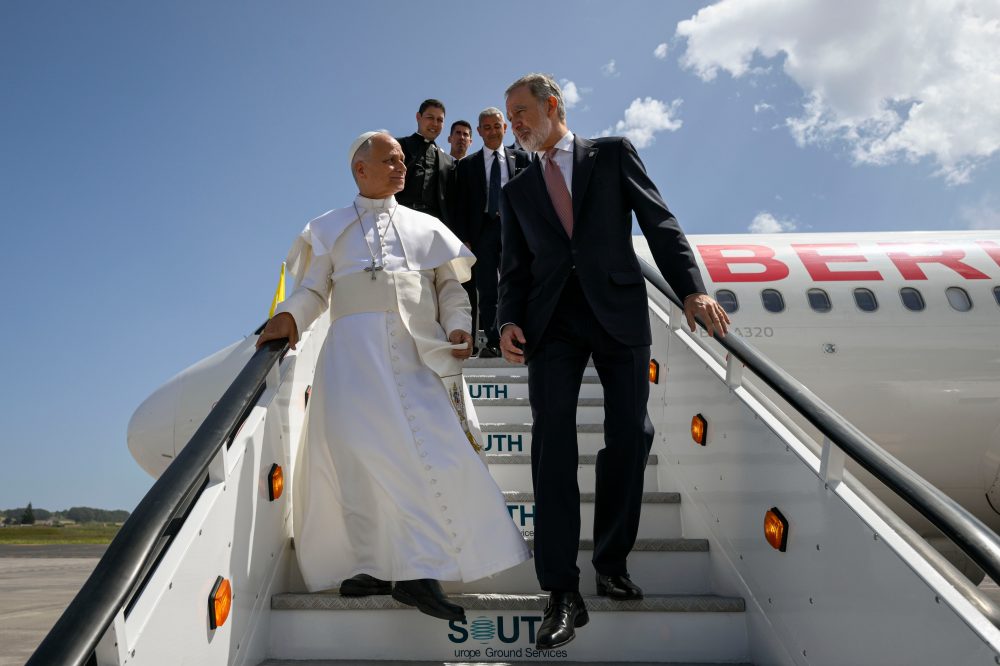
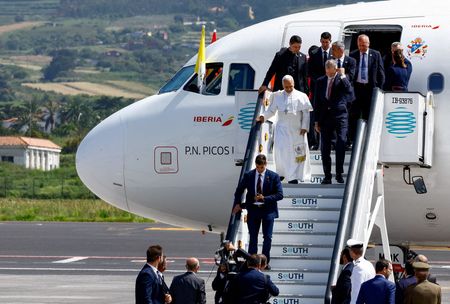
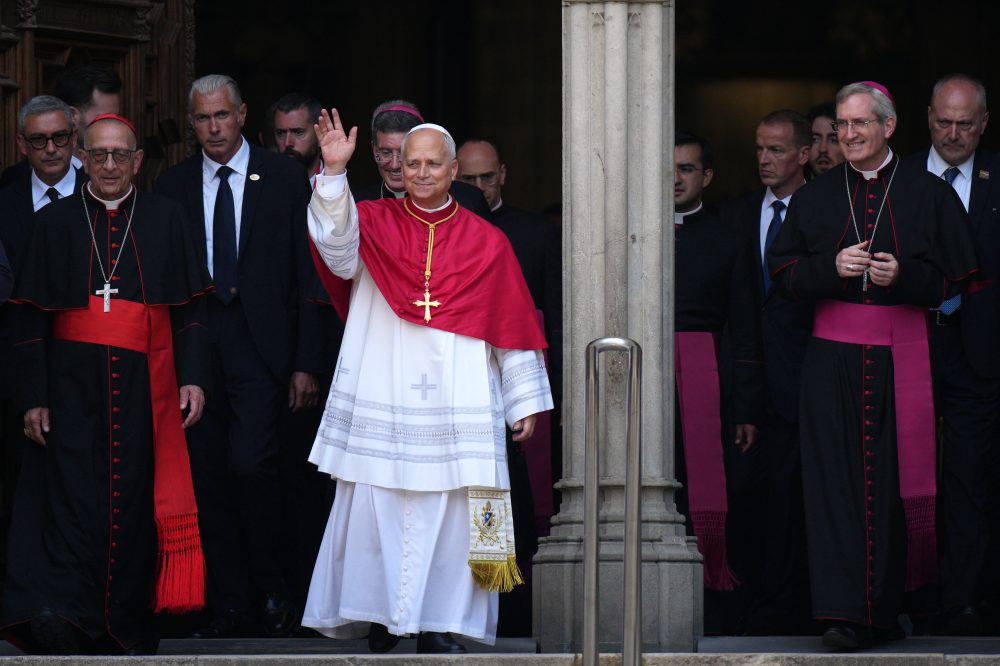
SANTA Cruz DE TENERIFE, Spain — Travel mishaps happen to everyone, including the Pope. When Pope Leo XIV found himself stranded Friday due to aircraft troubles, Spain’s King Felipe VI came to the rescue with his personal plane.
The pontiff’s chartered Iberia flight back to Rome encountered engine problems after his week-long Spanish visit, leaving Leo XIV grounded at the airport in Santa Cruz de Tenerife in the Canary Islands. King Felipe personally accompanied the Pope across the airport tarmac to board the royal Falcon jet, departing more than three hours behind schedule.
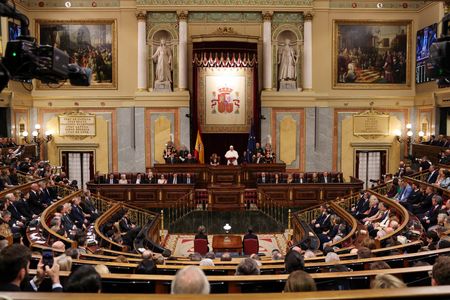
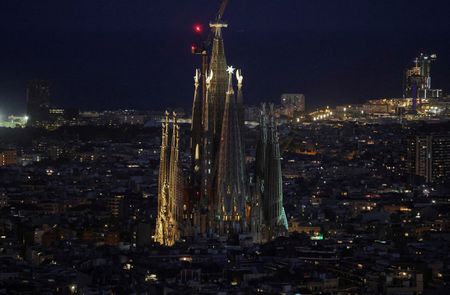
The mechanical failure capped off what had otherwise been a successful papal journey through Madrid, Barcelona and the Canary Islands, where Leo XIV delivered his immigration advocacy message and dedicated the newly completed Sagrada Familia basilica tower.
According to the Iberia captain, the aircraft’s engine wouldn’t turn over after the Pope had already settled aboard. When repair attempts proved unsuccessful, everyone had to exit the plane. The airline dispatched a replacement aircraft from Madrid to transport Vatican staff and media personnel who couldn’t fit on the king’s smaller jet. The Spanish island chain sits closer to the African continent than mainland Spain.
This marked the first occasion in many years that papal air travel encountered such severe difficulties requiring a complete aircraft change.
Seasoned Vatican correspondents, including some aboard the disabled Iberia jet, remembered similar incidents during St. John Paul II’s papacy. A 1986 homebound flight from India was diverted to Naples due to Roman snowstorms, forcing passengers and the Pope to complete their journey by special rail service.
Two years later in 1988, harsh weather conditions forced John Paul’s aircraft bound for Lesotho to make an emergency landing in South Africa — a nation he had deliberately avoided on that African tour due to apartheid policies. He subsequently traveled overland into the kingdom.
Standard papal travel protocol involves Italy’s national airline ITA Airways handling outbound transportation while the destination country’s carrier provides return service, though ITA sometimes manages both legs for extended journeys or destinations lacking adequate service capabilities.
These flights operate as chartered services, with the Pope, Vatican officials and security personnel occupying premium seating while approximately 70 journalists travel in economy class.
Earlier during the Spanish visit, Iberia had showcased footage of Leo XIV in the cockpit, beaming as the aircraft transported him between Madrid and Barcelona, then onward to the Canary Islands. Spanish military jets provided ceremonial aerial escorts on both segments — a traditional honor for distinguished visitors — with video capturing the Pope waving to accompanying pilots.
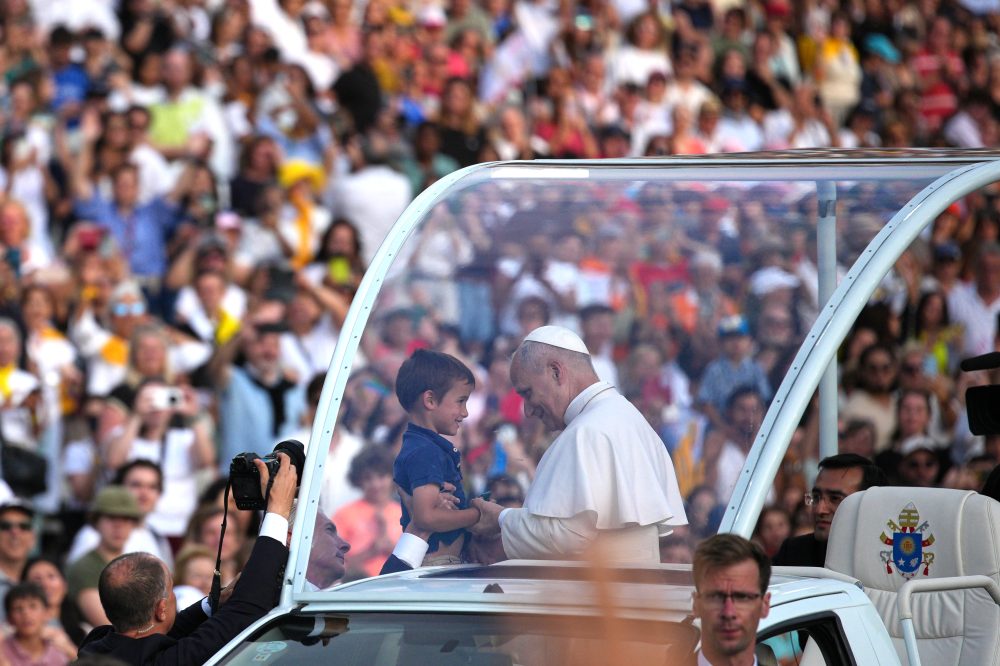
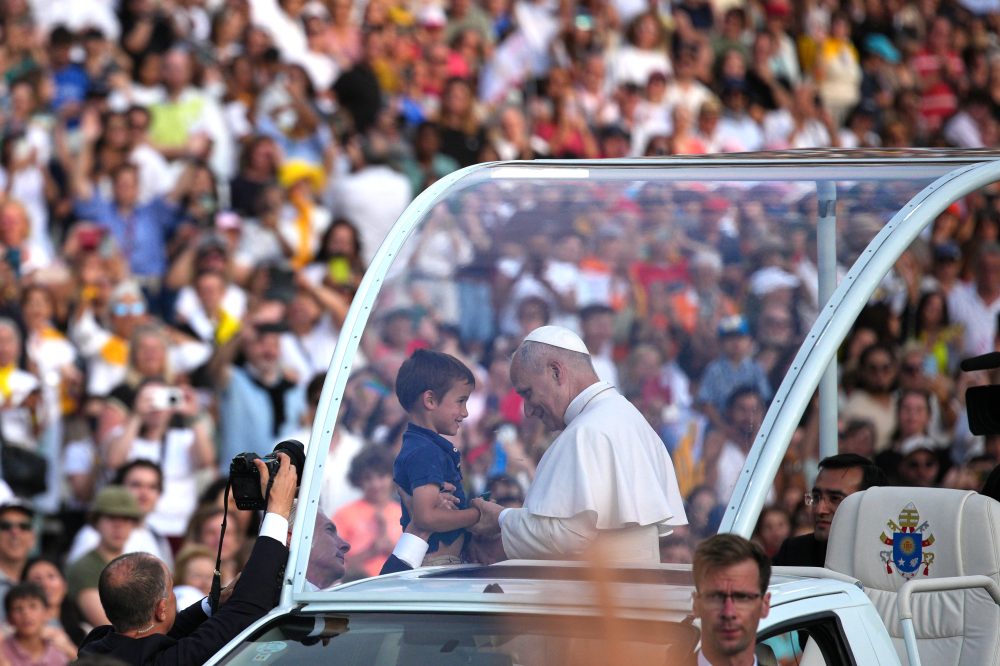
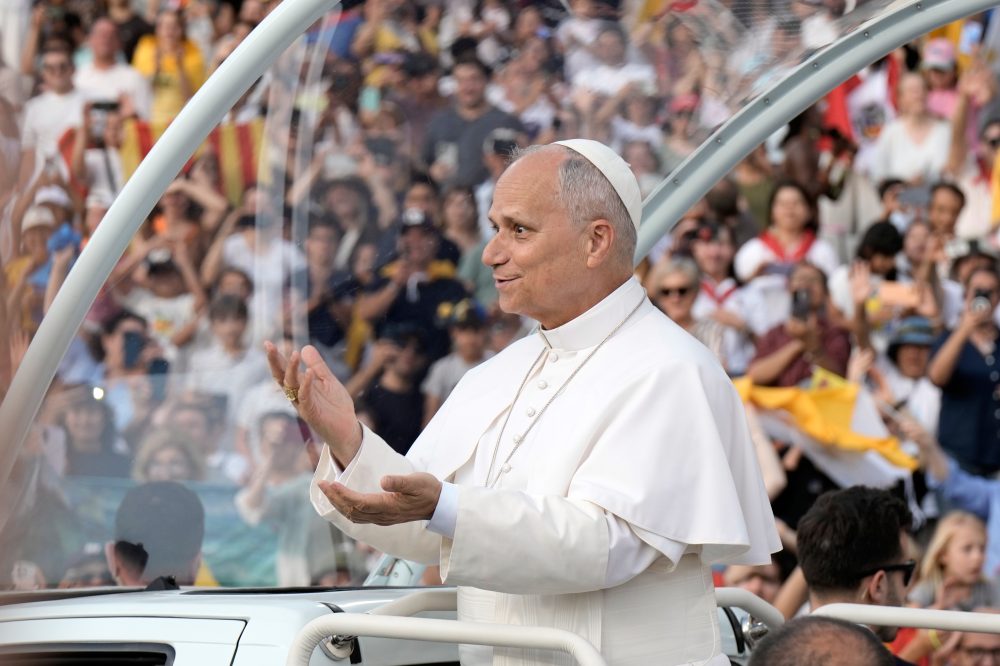
BARCELONA, Spain — A powerful moment between Pope Leo XIV and a young Spanish boy has captured hearts worldwide after a photograph of their encounter sparked an international search to connect a photographer with the child’s family.
The image shows the pontiff gazing into the eyes of 7-year-old Joaquim, grasping both of the boy’s hands while they exchange smiles. Associated Press chief photographer Emilio Morenatti captured this touching scene, which first moved witnesses at the scene before resonating with countless people globally.
While Morenatti’s timing was impeccable, the story that unfolded afterward made the photograph even more compelling. After the image was published and Morenatti shared it on social media platform X, online investigators began hunting for the boy’s family. Meanwhile, the parents, who felt they had experienced a divine intervention, were simultaneously searching for the photographer.
Though the pope regularly interacts with individuals during his travels, this specific encounter possessed something that deeply touched observers. The two-time Pulitzer Prize-winning photographer Morenatti explained his perspective on this remarkable image:
“In photojournalism, a photograph should do more than document an event. It should convey a feeling, evoke an emotion and hold the viewer’s attention long enough to spark a thought, even if only for a brief moment.”
“I have always believed that if a photograph moves me while I am making it, there is a good chance it will move others as well,” he continued. “When that happens, the image transcends the simple recording of a moment and gains a deeper power.”
For 36-year-old Montse Martínez and her spouse, learning about Leo’s planned visit to the Sagrada Familia basilica seemed like divine timing. Their dedication to Antoni Gaudí, the Catalan architect who created the church, runs so deep that they chose to name their newborn son after him. The couple spent nine consecutive days in prayer before Gaudí’s image, seeking his intercession for tickets to witness the papal visit. Gaudí is currently being considered for sainthood.
Their prayers were answered, placing them among 40,000 believers attending Leo’s Tuesday evening prayer service. When a security officer spotted their infant, he brought the baby to the pope for a blessing while the child was crying. The same guard then approached 7-year-old Joaquim.
“He was so moved that he could only smile, he couldn’t speak,” Martínez described her son’s brief encounter with the pope during a Friday interview with The Associated Press.
That exact instant provided Morenatti with his perfect shot.
The photograph only became possible because Morenatti was determined to find an unconventional vantage point.
“Covering a papal visit is often frustrating for photographers. We are usually confined to positions assigned by the organizers, with little freedom to move in search of better angles,” he explained. However, during this event, he succeeded in moving beyond the security barrier to join spectators gathered along the papal route.
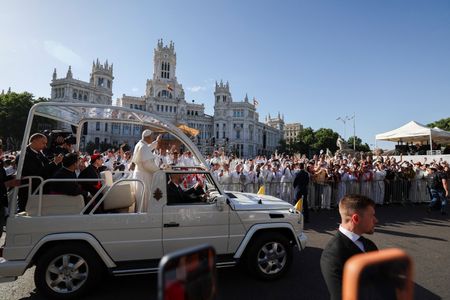
“Standing on a chair among the crowd, I could see the Popemobile approaching through a sea of waving hands and flags. Then I noticed a small gap in front of me — a narrow opening through which a photograph might be possible.”
“My 50–150 mm f/2 lens was already zoomed to its maximum focal length and opened to its widest aperture. I quickly checked that both faces were sharp and that the frame was clean, with everything positioned neatly beneath the windshield of the Popemobile. I pressed the shutter for a few seconds and immediately sensed that I had the photograph I had been searching for,” he continued. “A wave of emotion washed over me, followed by relief. The image I had imagined was finally there, safely stored on my memory card.”
Beyond distributing the photograph through AP’s network, Morenatti also shared the image on X, requesting assistance in locating the boy’s relatives so he could provide them with a physical print.
“They had to see this photo. And I needed to tell them how moved I was by their son,” Morenatti explained.
His social media post became viral content, accumulating over half a million views and hundreds of responses. The Catholic Church in Barcelona joined the effort, posting appeals in Catalan for public assistance. A major regional newspaper also covered the search effort.
Joaquim’s family remained unaware of this online campaign. However, after discovering Morenatti’s photograph on La Vanguardia’s website, a prominent local publication, they began their own effort to locate him. Using ChatGPT to identify his name, they contacted him through Instagram. Morenatti replied, and they connected by telephone, both moved by how quickly they found each other.
The family eagerly anticipates receiving the physical photograph, which will be displayed in their home in a village near Barcelona.
“We haven’t figured out yet where to place it, but it will be in a very special place,” Martínez explained, expressing hope that the image will help nurture faith in her five children. She suggested that her son’s brief private moment with the pope might even become part of Gaudí’s canonization documentation.
“For us, it’s a miracle of Antoni Gaudí. It’s a gift of God, who has these tender gestures of love for his children.”
Pope Leo’s journey back to Rome following a seven-day visit to Spain was postponed Friday after his aircraft encountered mechanical difficulties.
The pontiff’s Iberia flight, which also carried Vatican personnel and media representatives, was getting ready to move toward the runway when the pilot informed passengers of a maintenance concern.
Pope Leo had already taken his seat on the aircraft after Spanish officials, including King Felipe, had bid him farewell. Following the announcement of the technical problem, the king accompanied the pontiff back into the airport terminal.
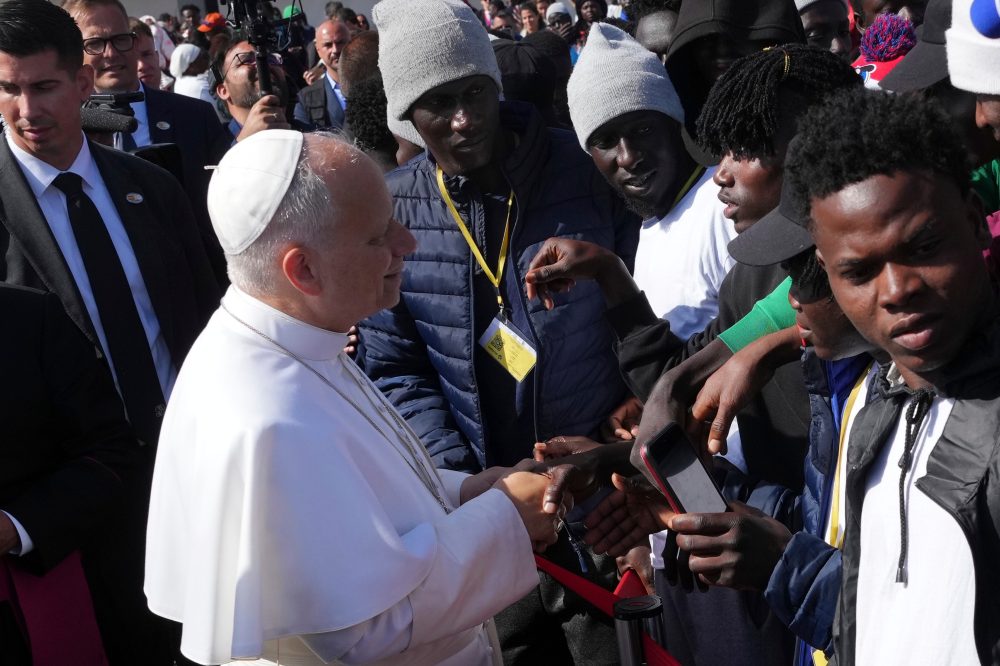
SAN CRISTOBAL DE LA LAGUNA, Spain — During the concluding day of his Spanish visit, Pope Leo XIV issued a forceful condemnation of human smugglers on Friday, warning they would encounter divine judgment for taking advantage of desperate migrants at this crucial hub of the African migration pathway to Europe.
“Break those chains and free those you hold in bondage,” Leo declared while addressing human traffickers during his meeting with humanitarian organizations in the Canary Islands that assist migrants.
The pontiff concluded his week-long Spanish journey in the Canary Islands, a Spanish island chain positioned nearer to Africa than mainland Spain and serving as a critical entry location for migrants undertaking the dangerous Atlantic voyage from West Africa.
Leo’s visit honored Pope Francis’ desire to travel to these islands to remember the thousands who perished at sea. The trip also highlighted the Catholic Church’s scriptural obligation to “welcome the stranger” during a time of growing anti-immigrant feelings across Europe and mass deportation efforts by the Trump administration in his home country of the United States.
While meeting with relief organizations in Tenerife, Leo urged host communities to welcome people escaping conflict, poverty and environmental disasters, protecting them from the “silent shipwreck” of abandonment that leaves them homeless after surviving treacherous sea journeys.
“A human conscience, and even more so a Christian conscience, cannot remain indifferent in the face of these graveyards of the sea, to the victims of shipwrecks and the lack of aid,” Leo stated. “Every life lost on these routes is a failure for the human family.”
The Canary Islands have served as a traditional gateway for migrants attempting to reach Europe from West Africa and Morocco.
Although human smugglers and traffickers control the Atlantic pathway, many boats contain self-organized groups of migrants, including numerous former fishermen from Senegal who lost their livelihoods due to recent overfishing.
Migration arrivals to the Canary Islands reached their highest point in 2024 with nearly 47,000 people. Numbers have dropped significantly, with more than 3,000 individuals arriving during the first five months of 2026.
Due to the ocean’s enormous size and limited rescue vessels or surveillance, some authorities believe the Atlantic passage poses greater dangers than the more publicized central Mediterranean smuggling corridor from Libya and Tunisia to Italy. Starting in 2020, multiple West African vessels have been discovered in the Caribbean and Latin America carrying only deceased passengers after drifting across the Atlantic, carried by trade winds and ocean currents.
Leo focused his Friday comments on criminal networks and individual smugglers who organize these “death routes” to Europe. These traffickers demand thousands of euros per person and frequently force passengers into prostitution or illegal labor by keeping their identification documents to collect debt payments.
“Stop. Repent,” Leo told traffickers in his message. “For every life lost, every family deceived, every body subjugated, every woman threatened, every worker exploited, you will have to appear before divine justice.”
“Repent while there is still time, for God’s mercy can reach even the most hardened sinner, but it enters only through the narrow gate of truth, justice and conversion,” he continued.
Through his two-day Canary Islands visit, Leo has established himself as Francis’ successor in migration advocacy, which remained a central focus throughout Francis’ 12-year leadership and frequently created tensions with American and European authorities.
The first American-born pope has not merely repeated Francis’ messages and actions, but has expanded them during this highly symbolic journey. Upon arriving Thursday, Leo tossed flower petals into the ocean from a harbor called the “Dock of Shame” in 2020, when migrants were forced to endure terrible conditions during an increase in arrivals.
Leo’s action echoed Francis’ 2013 visit to Lampedusa, Sicily, another European migration crisis location, where he criticized the “globalization of indifference” shown toward asylum seekers worldwide.
Demonstrating his personal approach to the papacy, the 70-year-old pope added his own touch: Following a former migrant’s personal story, Leo performed the popular “6-7” hand signal favored by young people while joking with him. This gesture generated cheers and applause from attendees.
During his time in the Canary Islands and earlier remarks on the Spanish mainland, Leo has reinforced migrants’ rights both to flee and to remain in their homelands, calling on their origin countries to provide adequate economic and security conditions. He criticized European nations that ignore migrants’ suffering and emphasized that no Christian can stay indifferent.
On Friday, he observed that for the Catholic Church, helping migrants integrate into communities can create opportunities for sharing faith, “without imposing” it while respecting migrants’ personal beliefs.
Leo began his final day by touring the Las Raíces migrant facility and meeting with migrants. Leo received enthusiastic applause when he departed from his prepared remarks to announce he would speak in French and English.
One woman shared her desperation that led her to abandon her homeland and family, the trauma of dangerous crossings, and her appreciation for finding safety and a fresh start. The woman, named as Bousso Diouf, requested respect and dignity for all migrants.
In the coming month, on July 4, the American pope will observe U.S. Independence Day on Lampedusa island, where Francis first condemned the “globalization of indifference” toward migrants in 2013.
LOS ANGELES (AP) — Steven Spielberg’s latest film “Disclosure Day,” released Friday, once again asks viewers to consider whether extraterrestrial beings exist — and what their presence might mean for religious faith on Earth.
However, Spielberg isn’t alone in generating recent news coverage about UFOs and potential life beyond our planet.
Topics once dismissed as fringe conspiracy theories have recently appeared in discussions from the White House to the Catholic Church, as public interest in unidentified anomalous phenomena — known as UAPs in government terminology — enters mainstream conversation.
In May, the Pentagon released extensive UFO documentation with minimal explanation, allowing interested researchers to draw their own conclusions. This disclosure occurred weeks after former President Barack Obama sparked media attention by stating definitively in an interview that aliens exist, though he subsequently clarified his position.
“Statistically, the universe is so vast that the odds are good there’s life out there,” the former president wrote on social media after making an unexpected appearance on the “Disclosure Day” film set. “I saw no evidence during my presidency that extraterrestrials have made contact with us. Really!”
While some religious followers and non-believers argue that extraterrestrial life might challenge many faiths by questioning human uniqueness, others present opposing viewpoints.
“Belief in UFOs is really one of the best things that’s happened to religion in a long time,” stated Diana Walsh Pasulka, a religion scholar at the University of North Carolina Wilmington. “It’s a blow to the secular, materialist worldview.”
Although widespread UAP interest may support belief in a mystical universe, some Christians view these phenomena with suspicion.
“I don’t think they’re aliens. I think they’re demons,” Vice President JD Vance, a Catholic convert, stated during a recent podcast appearance.
Monsignor Stephen Rossetti, previously an exorcist with the Archdiocese of Washington, shared similar views. The archbishop dismissed him last week, stating that Rossetti’s comments “gravely undermine” Catholic doctrine regarding demons and the devil.
“It’s my personal belief that probably many, if not most, of these UFO sightings are in fact demons,” Rossetti stated in a May 29 video on his Facebook page. “Aliens, if there are aliens, don’t possess people.”
Christopher Baglow, who directs a science and religion program at the University of Notre Dame, expressed surprise at the dismissal since Rossetti clearly indicated he was sharing personal views. Baglow suggested additional factors may have influenced the decision.
“I ask forgiveness for any ways that I have not been faithful to the teachings of the Church’s Magisterium,” Rossetti wrote in an online statement.
Despite claims by Vance and Rossetti regarding demons, Baglow asserts the Catholic Church has historically remained open to extraterrestrial possibilities. “Theologians have been speculating about this for centuries and the church has never ever taught one way or the other,” he explained.
During a meeting with astronomy students at the Vatican last year, Pope Leo XIV discussed the “ancient light of distant galaxies” and the “mysterious joy” inspired by space exploration. Some interpreted his comments as indirect consideration of life on other worlds.
Concepts of otherworldly visitors to Earth have ancient origins.
“People would call it the plurality of worlds. So even back in the time of Socrates and Aristotle, there were Greek philosophers who talked about beings on other planets and other stars,” Walsh Pasulka explained.
Modern UFO concepts emerged after 1945, according to Jeffrey Kripal, a religious historian at Rice University. “The flying saucer and the alien and the UFO — it’s definitely a Cold War invasion narrative,” he noted.
This narrative explains why UAPs often appear threatening to humans. However, it has transformed over time, leading to religious movements — including Scientology, which attracts numerous Hollywood celebrities — that view extraterrestrials positively or as part of divine purpose. Some Nation of Islam followers believe their founder will return to Earth apocalyptically via spaceship.
The International Raëlian Movement, or Raëlism, represents a UFO-based religion established in France during the 1970s. It continues today with significant followings in parts of Asia, Africa and Canada, according to Susan Palmer, a sociologist studying new religious movements at Concordia University in Montreal.
Raël, the movement’s founder, claims direct descent from Yahweh, whom Raël allegedly visited on the planet Elohim in 1975. Raëlism teaches that Buddha, Jesus and Muhammad are human-extraterrestrial hybrids and Raël’s half brothers.
Among groups Palmer has researched, she considers Raëlism most favorable toward UFOs. “They’re not interested in extraterrestrial wars,” she observed.
Some believe this positive attitude may be expanding.
Kripal, who oversees Rice’s archival collection of reported paranormal experiences called the Center for the Impossible, notices growing acceptance of UFO discussions — and possibilities that they aren’t threatening.
“People are reporting these experiences or these encounters with entities and they’re religious through and through,” he said. “My colleagues in the academy, they’re really starting to listen in a different way.”
SRN News produces a daily audio program that focuses on religious news from around the globe. The program, called “Global Landscape,” runs for two minutes and covers the most important faith-related stories each day.
The audio segment offers listeners quick updates on religious developments, cultural changes, and major events that highlight where faith intersects with world events. The program aims to keep audiences informed about significant happenings in the religious community worldwide.
Members of the Southern Baptist Convention have decisively supported moving forward with a constitutional amendment that would formally prohibit churches led by female pastors from remaining in the nation’s largest Protestant denomination.
The decision came during the SBC’s annual gathering in Orlando this week, where the proposal received far more than the required two-thirds majority needed to advance constitutional changes. The amendment reinforces the position that only men should serve as pastors leading congregations.
To become official policy, the proposed ban must receive similar approval when Southern Baptists meet again next year. If passed, the amendment would strengthen current restrictions already in place within the SBC, which maintains a faith statement that opposes women serving as pastors.
In other religious news, an Italian court has made a groundbreaking ruling that recognizes a family structure involving one mother and two fathers caring for a four-year-old child. The case involves two married men from Germany and a woman who acted as their surrogate. While such arrangements are permitted under German law, this Italian decision marks the first time the country has legally acknowledged this type of family configuration, potentially setting a precedent that could influence policy across Europe. Many European Union nations have yet to legalize same-sex marriage, making polyamorous recognition even more complex.
Meanwhile, the Pentagon’s recent updates to its religious classification system have sparked renewed discussion about whether The Church of Jesus Christ of Latter-day Saints qualifies as a Christian denomination. Members of the Mormon faith consider themselves Christian, though some of their fundamental beliefs, especially regarding the Trinity, differ from traditional Christian doctrine. Utah Senators Mike Lee and John Curtis, both Republicans and members of the Mormon faith, are questioning the Pentagon’s decision to exclude their religion from its Christian categories. Military officials say they have removed nearly 200 faith systems from their recognized religions list but emphasize the new criteria are not intended to challenge the validity of any religious belief system.
A conversation took place between Michel Martin and Texas Pastor Billy Echols-Richter regarding the recent conviction of Karmelo Anthony.
The discussion centered on the pastor’s thoughts about Anthony’s conviction and the community tensions that have emerged in the wake of the trial proceedings.
Catholic bishops from across America came together Thursday in Orlando for an unprecedented religious ceremony dedicating the United States to the Sacred Heart of Jesus, marking this historic devotion as part of America’s upcoming 250th anniversary celebration.
The solemn service filled a contemporary Orlando shrine with powerful organ music, brass instruments, and choir voices as bishops conducted this special liturgy during their spring U.S. Conference of Catholic Bishops meeting.
Before the ceremony began, religious leaders and attendees knelt in reverence before sacred relics of 17th century St. Mary Margaret Alacoque, a French religious sister whose reported divine visions of Jesus established the contemporary Sacred Heart devotion representing Christ’s compassionate love. This spiritual practice has since expanded globally, with numerous Catholic institutions and churches adopting the Sacred Heart designation and countless homes and businesses displaying its imagery.
The religious ceremony honored America’s founding principles, referencing the Declaration of Independence’s guarantee of “life, liberty and the pursuit of happiness.” However, it also incorporated prayers recognizing the nation’s moral shortcomings, including its “original sins of slavery and racism.” Oklahoma City Archbishop Paul Coakley, who leads the bishops conference, emphasized the importance of recognizing both achievements and failures.
“To consecrate ourselves to the Sacred Heart is ultimately to accept Jesus’ invitation to remain in his love and to allow that love to shape every aspect of our lives, public and private,” he stated. “If we are honest, we must acknowledge that neither our nation nor the church has always reflected that love.”
This marks the inaugural occasion for such a ceremony on American soil, though comparable services have occurred in multiple nations since the 1800s. These religious dedications, sometimes involving government officials, have occasionally taken on political dimensions and sparked debate when associated with Catholic nationalist causes.
In 1899, Pope Leo XIII, who shares his name with the current pope, dedicated the entire globe to the Sacred Heart.
Prior to the main service, bishops listened to spiritual presentations from fellow members, focusing on Pope Francis’ latest encyclical, or official teaching letter, which emphasized the Sacred Heart as motivation for service and social justice.
The sacred relics of St. Mary Margaret Alacoque were specially transported from their usual home in France and prominently displayed at the front of the church for this occasion. Although historians trace Sacred Heart devotion back to early Christianity, her reported visions are recognized as inspiring the contemporary imagery, prayers, and religious practices associated with it.
The Thursday ceremony occurred at the Basilica of the National Shrine of Mary, Queen of the Universe. Intense Florida afternoon sunlight streamed brilliantly through the colored glass windows surrounding the congregation.
Multiple rows of bishops wearing traditional purple caps and white vestments occupied seats near the altar area, while additional worshippers filled spaces throughout the sanctuary.
During their biannual conference earlier Thursday, the bishops voted to approve modest updates to their sexual abuse response protocols, incorporating additional details about fair treatment procedures for accused clergy while preserving the prohibition against any priest found guilty of child abuse returning to active ministry.
Several bishops requested postponing the adoption of these Charter for the Protection of Children and Young People revisions to allow for more extensive public input, but this proposal was defeated. The final approval vote counted 176 in favor and 22 opposed.
These modifications have been under development for five years. The original charter received approval in 2002 during the height of the Catholic clergy abuse scandal, when investigative reporting by the Boston Globe exposing abuse and institutional cover-ups in the Archdiocese of Boston sparked widespread similar disclosures across the country and internationally. The charter has undergone periodic updates since its initial creation.
The fundamental elements of the document remain unchanged, including the permanent removal of priests from active service for any verified instance of sexual abuse.
Bishop Barry Knestout, who leads the committee responsible for the revisions, explained the updates are “trying to do two things at the same time.”
“One is to retain and also reemphasize the commitment of bishops to address the issue of potential for abuse, safeguarding of our children and young people in a way that’s both transparent and accountable,” he explained. The second goal is to “recognize due process and presumption of innocence” for those facing accusations during investigations.
“We’re trying not to lose any of the commitment to victim survivors yet still recognize that there is in fairness a process that should be undertaken,” he added.
The advocacy organization BishopAccountability.org released a statement describing the approval as a “missed opportunity,” arguing that postponement would have enabled broader public participation in the document’s development and resulted in an improved and more “trauma-informed” charter. The group urged careful examination of the changes at individual diocese levels.
Pope Leo XIV traveled to the Canary Islands Thursday to shine a spotlight on migrants who put their lives at risk annually attempting to reach Europe, carrying out a goal that Pope Francis had hoped to accomplish by visiting this central location in Europe’s migration crisis.
The pontiff is concluding his seven-day Spanish journey with two days in the Canary Islands, a Spanish island chain that sits nearer to Africa than Spain’s mainland and serves as a major entry point for people smuggled from West Africa.
During his visit, he plans to meet with newly arrived migrants along with church officials and aid organizations who provide care and help integrate them into Spanish communities.
In the most significant moment, he will honor the thousands who perished at sea from a harbor that earned the nickname “dock of shame” in 2020 due to the terrible living conditions migrants endured upon arrival during a surge in crossings.
Spain’s Socialist-led administration, which faced criticism during the 2020 emergency, has gone against European and U.S. trends by supporting immigration for both economic and humanitarian reasons. The government initiated a legalization campaign this year targeting hundreds of thousands of undocumented immigrants.
Prime Minister Pedro Sánchez has emphasized the economic advantages given Spain’s aging population and declining birth rates.
Leo has previously advocated for enhanced global cooperation to stop migrant smuggling, establish legal migration routes, and promote development in origin countries so more people can remain home.
During an address to Spain’s Parliament earlier this week, marking the first papal speech to that body, Leo urged acceptance and integration for those who choose to flee, emphasizing their fundamental human worth.
“The moral greatness of a nation is manifested, above all, in its capacity to accompany, protect and love those lives that are most fragile,” Leo stated in remarks that also defended the dignity of the unborn, elderly and ill. His speech concluded with a 7-minute standing ovation.
Migrant arrivals to the Canary Islands reached their highest point in 2024 with nearly 47,000 people, but numbers have dropped significantly, with just over 2,000 arriving in the first four months of 2026.
After landing in Las Palmas, Leo was scheduled to visit Arguineguin, where 2020 arrivals became so overwhelming that migrants were forced into temporary outdoor camps on a dock that became known as the “dock of shame.”
Numerous migrants spent weeks sleeping with only blankets and no washing facilities. Those seeking asylum lacked adequate legal assistance and some remained detained for weeks, far exceeding the legal three-day limit. The emergency embarrassed officials, who were compelled by their ombudsman to close the temporary facility and move the migrants.
After learning about the situation, Francis had intended to visit the Canary Islands to show support, but was unable to make the journey. Francis had made refugee advocacy a central focus of his leadership, following the Gospel instruction to “welcome the stranger.”
Leo has continued this approach, particularly emphasizing migrant dignity in his home country of the United States during the Trump administration’s enforcement and mass deportation efforts.
In July, on July 4, the American pope will mark U.S. Independence Day on Lampedusa island in Sicily, another primary entry point for migrants smuggled from North Africa seeking to reach Europe.
Francis had traveled to Lampedusa in 2013 during his first journey beyond Rome, where he threw a wreath into the Mediterranean to remember the thousands of migrants who died making the dangerous voyage. During that visit, he created a phrase that became central to his leadership, condemning the “globalization of indifference” that the world displayed toward migrants.
Pope Leo departed Barcelona Thursday morning bound for the Canary Islands, where he will encounter migrants who made treacherous voyages across Atlantic waters during the concluding portion of his Spanish visit.
The papal visit to the Spanish island chain located off Africa’s western shores represents a key highlight of Leo’s weeklong Spanish journey, during which he has also cautioned that growing global conflicts have created a deep worldwide crisis.
Juan Carlos Lorenzo, coordinator of the Spanish Commission for Refugees in the Canary Islands, described Leo’s upcoming visit as a “significant milestone” when speaking with Reuters. The pope is scheduled to meet approximately 1,000 migrants on Friday.
“It will serve as a strong affirmation of the defense of human rights, respect, and the dignity that all people deserve, regardless of their origin,” Lorenzo stated.
The pope’s aircraft was scheduled to touch down on Gran Canaria, a primary island in the archipelago, at approximately 10:50 a.m. local time. Upon arrival, Leo will gather with various organizations that assist newly arrived migrants before placing flowers at a monument honoring migrants who perished at sea.
According to NGO Caminando Fronteras, more than 3,000 individuals lost their lives in 2025 attempting to reach the Canary Islands.
Leo, who has voiced strong opposition to current global leadership trends in recent months, addressed the Spanish parliament Monday, declaring that insufficient assistance for worldwide migrants was challenging “the ethical foundation of the international order.”
Unlike much of Europe, Spain has embraced a more welcoming approach toward migrants, implementing a program designed to provide residency for over half a million undocumented individuals.
The program has faced opposition from far-right political figures in Spain and throughout Europe, while the nation grapples with delays in processing legal status for thousands awaiting resolution.
ORLANDO, Fla. — Delegates at the Southern Baptist Convention’s annual gathering delivered a decisive vote Wednesday to move forward with a constitutional amendment that would formally exclude churches employing women pastors, reinforcing the denomination’s position that only men should lead congregations in America’s largest Protestant faith group.
The proposed constitutional change would strengthen current restrictions within the Southern Baptist Convention, which already maintains doctrinal statements rejecting female pastoral leadership.
Wednesday’s tally showed 6,028 delegates supporting the measure compared to 2,026 opposing it — achieving the necessary two-thirds majority with room to spare. The proposal must receive another two-thirds approval at next year’s annual gathering to officially join the denomination’s governing documents.
Albert Mohler, who championed the amendment, described it as tackling a fundamental denominational question.
“This is an opportunity for Southern Baptists to speak in truth, in unity, in conviction,” stated Mohler, who serves as president of the Southern Baptist Theological Seminary in Louisville, Kentucky. “There’s a great line that divides liberal and biblical evangelicalism, and you can see it on this very issue. The trajectory of liberal denominations is clear.”
Floor discussion remained limited, with no speakers defending women’s pastoral roles during the brief debate period.
The single voice of dissent came from South Carolina pastor Doug Mize, who argued the proposal was unnecessary since the denomination already possesses tools to remove churches with female senior pastors and has exercised this authority repeatedly.
“What we have already works,” he stated.
Convention leadership points to scriptural texts they interpret as restricting pastoral duties to men, while supporters of women’s ministry reference biblical verses emphasizing gender equality before God and examples of women called to share the gospel message.
Although the SBC cannot dictate policies to its autonomous member churches, the organization retains authority to remove congregations from convention membership by declaring them outside “friendly cooperation.”
Broad consensus already exists within the denomination that current doctrinal statements reject women serving as senior pastors who head congregations. Ongoing discussions have focused on establishing boundaries regarding churches where women hold assistant pastoral positions or preaching responsibilities.
“We need constitutional clarity on this issue,” Mohler explained. He played a key role in creating the original prohibition, which gained approval in 2000.
The amendment’s text mandates excluding any church that chooses “to affirm, appoint, or endorse a woman serving in the office or function of a pastor/elder/overseer, specifically preaching to the assembled congregation.”
Wednesday’s decision concluded the convention’s two-day annual meeting in Orlando, Florida, which drew more than 11,000 delegates, called messengers.
During the past three annual meetings, delegate majorities supported amending the SBC constitution to prohibit churches with women in pastoral positions. However, only one of those attempts achieved the required two-thirds supermajority, leaving the issue unresolved.
The denomination has previously expelled churches with women in senior pastoral roles, including California’s large Saddleback Church, citing existing constitutional language that bars churches whose “faith and practice” conflicts with denominational standards.
The SBC’s position contrasts sharply with numerous established, more liberal Protestant denominations that ordain women and have elevated them to top leadership positions. Conservative evangelical denominations show varied approaches — especially within Pentecostal and charismatic movements, where notable women pastors include Paula White-Cain, who headed President Donald Trump’s White House Faith Office.
However, other conservative Protestant groups also refuse to ordain women as clergy. The Catholic and Orthodox churches — representing the world’s two largest Christian communities — limit priesthood ordination to men only.
Baptist Women in Ministry, an organization supporting female ministers across various Baptist denominations, released a statement condemning the vote.
“We express our solidarity with the women in ministry who have been harmed by this vote, the hateful rhetoric and propaganda leading up to the vote, and the damaging theology the vote represents,” the statement read. “Women in ministry deserve affirmation, respect, and the opportunity to follow God’s call. We are heartbroken that they have been denied those fundamental freedoms in the process of this vote.”
Later Wednesday, SBC messengers also considered a non-binding resolution containing similar language opposing women pastors, requiring only a simple majority for passage. Additional resolutions addressing topics from immigration to antisemitism were also scheduled for votes.
On Tuesday, delegates selected Florida pastor Willy Rice as their next president, capturing 58% of votes against South Carolina pastor Josh Powell.
Rice endorsed the amendment prohibiting churches with women pastors, as did Powell and the SBC’s outgoing president, Clint Pressley.
Rice, who leads Calvary Church in Clearwater as senior pastor, received backing from advocacy organizations like the Center for Baptist Leadership, which contend SBC leadership has embraced “woke” positions on topics including race, gender, and immigration.
The denomination already maintains strongly conservative stances, from opposing abortion to declaring pastoral offices limited to men through faith statements. Recent internal SBC debates have centered on how far to shift toward the religious and political right.
SRN News has launched a new commemorative series titled Faith and Freedom as the nation approaches its 250th anniversary celebration.
The ongoing series represents SRN’s tribute to America’s quarter-millennium milestone, exploring themes related to religious beliefs and national independence.
Changes to the Pentagon’s military religious classification system this week have brought back into focus a theological debate that has persisted for almost two centuries: Should The Church of Jesus Christ of Latter-day Saints be considered a Christian faith?
While most members of the Latter-day Saints faith consider themselves Christians, many established Christian religious leaders and theological experts dispute this classification, pointing to fundamental differences in beliefs about God, the Trinity, and the use of religious texts beyond the traditional Christian Bible.
Two senators from the state – Mike Lee and John Curtis, both Republicans and members of the Latter-day Saints faith – questioned the Pentagon’s decision to exclude their religion from its Christian categories. This exclusion occurred as the Department of Defense worked to streamline a lengthy roster of over 200 religious options available to service members, also removing classifications for atheists, Unitarian Universalists, pagans and Wiccans.
“Latter-day Saints are among the most patriotic, service-oriented individuals in our country,” Curtis wrote on social media while defending his faith. “They are also unequivocally Christian — just look at who is in the name of the Church.”
Curtis further stated in his message that it is “unacceptable” for government agencies to define a religion in ways that conflict with how that faith describes itself – a viewpoint that gained widespread support in online discussions.
On Monday, the Pentagon addressed the controversy by stripping Christian designations from 20 other religious traditions, including Catholic, Lutheran and Pentecostal faiths, while maintaining its position on not classifying Latter-day Saints as Christian. Military officials released a statement clarifying that the updated system is not meant to “make any claims on the legitimacy of any faith or religion’s belief,” but rather to assist chaplains in their duties and organize resources more effectively.
The Church of Jesus Christ of Latter-day Saints, commonly called the Mormon church, counts nearly 18 million followers globally, with the largest population concentrated in one western state. The organization has an extensive tradition of military participation and promotes both patriotic values and chaplain services.
Lee wrote on social media: “My church membership is inextricably intertwined with my Christianity, as it is for 17 million other Latter-day Saints. Regardless of what the Pentagon thinks.”
According to the church’s official website, the organization identifies as a “Christian Church, but is neither Catholic nor Protestant.”
“Rather, it is a restoration of the Church of Jesus Christ as originally established by the Savior in the New Testament of the Bible,” the website continues. “Jesus Christ is central to the lives of Church members. They seek to follow his example by being baptized, praying in His holy name, partaking of the sacrament, doing good to others and bearing witness of Him through both word and deed. The only way to salvation is through faith in Jesus Christ.”
However, questions surrounding the Christian identity of Latter-day Saints trace back almost two centuries to when the church was first established.
Matthew Bowman, who holds the chair of Mormon studies at Claremont Graduate University in Southern California, explained that the main distinction between established Christian denominations and Latter-day Saints centers on their understanding of God’s nature and their interpretation of the Trinity – the spiritual connection between God, Jesus and the Holy Spirit. Traditional Christian churches teach that God exists as spirit, while Latter-day Saints founders taught that God was once human and attained divine status, he explained.
Members of the Latter-day Saints faith also do not accept the Nicene Creed, which emphasizes Trinity doctrine as one divine entity.
“They believe that while the three have a relationship, they are distinct beings,” Bowman explained.
The Catholic Church has maintained for years that Latter-day Saints do not qualify as Christian. Most recently in 2012, Vatican officials declared that despite Latter-day Saint baptismal ceremonies referencing the Trinity, the church’s understanding of these three figures differs so significantly from Catholic and mainstream Christian theology that such baptisms cannot be recognized as Christian sacraments.
This theological disagreement has influenced American political discourse for decades, creating friction between evangelical Christians and Latter-day Saints who have traditionally aligned themselves with conservative religious movements. Similar to evangelicals, most Latter-day Saints maintain conservative positions on issues like abortion and LGBTQ+ rights.
Bowman noted that questions about Latter-day Saints’ Christian classification became particularly prominent during Mitt Romney’s 2012 presidential race.
“At the time — and often after that — there continues to be a sense of surprise among Latter-day Saints that the evangelicals didn’t consider them Christian and among evangelicals when they learn that the Latter-day Saints in fact consider themselves Christian,” he said.
The political rise of Donald Trump has weakened the historical partnership between Latter-day Saints and evangelical Christians, particularly among younger Latter-day Saints who increasingly view evangelicals as antagonistic, according to Bowman.
“In the past five years or so, there is a growing push among evangelicals to create a muscular, masculine Christianity, more vocal on doctrine, with some calling (Mormons) heretics,” he explained.
Philip McLemore, who worked as a Latter-day Saint chaplain in the Air Force from 1984 to 2005, said he and colleagues experienced discrimination during their service and were denied advancement opportunities due to their religious affiliation.
“That mostly came from other Christian chaplains and supervisors who believed Mormon chaplains were not Christian,” he recalled. “They also felt the same way about Christian Scientists.”
McLemore said some fellow Christian chaplains expressed concerns that Latter-day Saint chaplains might use their military positions for missionary work and religious conversion. However, he acknowledged understanding why other Christians might view Latter-day Saints with suspicion.
“Mormonism doesn’t fit comfortably into most classic Christianity mostly because of the founders’ claims of exclusive truth and authority that can be offensive to some,” he noted. “Joseph Smith’s first vision — a foundational event for the church — was one of Jesus telling him that all the other churches are false and their creeds are abominations.”
Despite these theological debates, McLemore believes denominational differences hold little importance in military settings.
“In my experience, service members would not know what your denomination was, and they didn’t care,” he said. “They didn’t consult chaplains on matters of religion. They needed chaplains for personal problems and issues with work, mental health and marriage.”
SRN News has created a daily audio program called “Global Landscape” that focuses on religious news from across the globe. The two-minute segment offers listeners a brief overview of the most important faith-related stories each day.
According to SRN News, the program covers major developments, cultural changes, and important events where religion intersects with world affairs. The audio feature is designed to keep audiences informed about significant religious news in an accessible format.
Religious institutions worldwide are facing unprecedented government pressure, with Rwanda emerging as the most aggressive in restricting places of worship, according to findings from Global Christian Relief. The African nation has forced the closure of approximately 7,700 churches during a two-year period as officials impose tighter controls on religious freedom.
Mozambique ranks second on the organization’s list, where Muslim extremists are launching hundreds of attacks against churches annually. Even in countries where Christians can practice their faith openly, government officials frequently impose strict limits on the number of permitted churches and create lengthy delays in approving construction permits for new religious buildings.
In domestic news, FBI Director Kash Patel has terminated five agency personnel connected to a controversial 2023 intelligence memo that identified potential threats from Catholic “violent extremists.” The dismissed staff members include four intelligence analysts and one supervisory analyst. The intelligence document, produced by the FBI’s Richmond, Virginia field office in January 2023, sparked significant political controversy upon its release. Previous Justice Department reviews of the memo raised concerns about its analytical methods. The FBI stated that “investigative activity must not be based solely on the exercise of rights guaranteed by the First Amendment.”
Despite ongoing Gay Pride Month events, LGBT advocacy groups are experiencing setbacks due to growing public opposition, particularly regarding transgender issues involving children. Multiple states have implemented bans preventing males from participating in female athletic competitions, while some have prohibited sex-change procedures for minors. At least nine states are considering resolutions that would challenge legal recognition of same-sex marriages. Most proposals would urge the Supreme Court to reconsider its 2015 ruling that recognized such unions. While these measures lack legal authority, they could potentially prompt new challenges before the nation’s highest court.
Historical data shows America’s deep religious roots, with 3,228 houses of worship existing when the 13 colonies united and declared independence in 1776. The young nation already displayed religious diversity, with Congregationalists leading at approximately 670 congregations, representing just over 20 percent of all religious institutions. Presbyterians followed closely, along with Baptists, Episcopalians and Quakers. Methodists comprised two percent of the religious landscape, Catholics accounted for slightly under two percent, and the country included several synagogues plus more than a dozen Mennonite congregations.
Fresh research from the Pew Research Center sheds light on the religious landscape for a faith community that represents almost 25 percent of Americans. The analysis reveals that Catholic membership across the United States is experiencing a downward trend, with more individuals abandoning the Catholic Church in favor of Protestant congregations rather than the reverse pattern. Among Americans who do choose to embrace the Catholic religion, marriage to a Catholic spouse emerges as the primary motivation for their conversion.
Christianity is experiencing remarkable expansion in Iran, even as believers face some of the harshest religious oppression globally, according to a recent study. International Christian Concern has released findings showing that Iran’s Christian population has now surpassed levels seen prior to the 1979 Islamic Revolution, which ushered in severe persecution of religious minorities.
The organization reports that “Some estimates point to a million or more Iranian converts to Christianity.” Along with this population growth, house churches operating in secret are multiplying throughout the country.
This expansion comes despite Iran’s strict laws against Christian evangelism and conversion from Islam, which can result in imprisonment and other harsh penalties for believers.
BARCELONA, Spain — Pope Leo XIV is marking the centennial of renowned architect Antoni Gaudí’s death Wednesday by conducting special ceremonies at two of Barcelona’s most revered religious sites, including prayers at a mountaintop monastery and an evening Mass at the world-famous Sagrada Familia Basilica.
The pontiff began Wednesday by meeting with prisoners at a Barcelona correctional facility, continuing the practice established by Pope Francis of reaching out to marginalized communities during international visits who cannot participate in public papal events.
Leo’s presence in Spain marks part of a seven-day tour that has demonstrated how this nation of 50 million residents, despite experiencing a faith crisis following the end of its 20th-century dictatorship, continues to maintain a substantial Catholic population that has gathered in large numbers to welcome the American pontiff.
The pope will acknowledge their devotion through worship at Montserrat, a mountainous religious site outside Barcelona that holds special significance for many Catalans. This location features an 11th-century Benedictine monastery alongside a 16th-century church, both treasured for housing the Black Madonna sculpture.
Wednesday evening’s Mass at Sagrada Familia represents the pinnacle of Leo’s Barcelona visit. The service marks exactly one century since Gaudí’s passing, who died at 73 years old just three days following injuries sustained when struck by a streetcar.
One hundred years after initial construction commenced under Pope Leo XIII, Leo’s papal predecessor and namesake, the church has evolved into among the globe’s most visited yet incomplete religious structures, welcoming more than 5 million annual visitors.
Gaudí, the celebrated Catalan designer who may achieve sainthood recognition, dedicated four decades to creating and constructing this sacred building as his stone interpretation of Christian beliefs. Key moments from Jesus Christ’s story, including the Nativity and Passion scenes, are carved into the church’s eastern and western exterior walls. A third southern-facing section, called the Glory, will function as the primary entrance upon completion.
The structure stands as both an architectural and mathematical marvel, representing a stone and light tribute to Christianity and divine creation, drawing from Byzantine and Gothic church design traditions.
Eighteen towering spires extend upward from the building’s peak, creating Barcelona’s distinctive skyline: twelve representing Christ’s apostles, four honoring the Gospel writers who documented Jesus’s earthly ministry, one star-crowned spire above the altar area dedicated to the Virgin Mary, and the highest structure devoted to Jesus Christ.
Last year’s completion of the final Christ tower at 172.5 meters (564 feet) established Sagrada Familia as the planet’s tallest church building. Leo will officially bless this tower during Wednesday night’s ceremony.
The cross-designed interior space, centered around the altar, celebrates illumination and the natural world. Column structures resembling trees reach skyward, bathed in ever-shifting colored light streaming through stained glass panels like sunbeams filtering through forest canopy.
“Nature is my teacher,” Gaudí once said. “Everything comes from the great book of nature, always open that we must read.”
Tour guide and historian Mònica Santín, who conducts basilica visits, explained that Gaudí’s Sagrada Familia design drew inspiration from two primary sources: the Gospels and the natural world.
“The way he lets in the natural light is also an invitation to the Christian mystery,” she said, citing the three facades depicting Christ’s birth, death and glory.
“And when you enter inside, it is all light,” Santín said. “What is that the symbol of? We can’t see God, but we perceive his light all around us. I think that is how you can read this message, and it is fascinating.”
BARCELONA, Spain — Barcelona’s renowned Sagrada Familia basilica displays towering spires resembling sandcastles, intricately carved stonework mimicking abundant vegetation, a rainbow-hued interior, and countless hidden gems scattered throughout. Even faithful parishioners who regularly attend services at this world-celebrated monument continue to be amazed by its wonders.
The Catalan rector of the Sagrada Familia, Josep Turull, who oversees parish operations, recently provided The Associated Press with an exclusive behind-the-scenes look at his most cherished discoveries before Pope Leo XIV’s eagerly awaited Mass scheduled for Wednesday evening.
“We say that one of the elements of the Sagrada Familia Basilica is that you never exhaust it,” Turull said. “I have spent the last eight years as its rector, and each day I discover something new.”
Every morning, Turull walks toward the basilica’s ornately adorned exterior walls. These surfaces contain countless religious imagery and symbolic elements, with some readily understood by those familiar with basic Christian teachings, while others remain puzzling and surprisingly bold for a house of worship.
The west-facing Façade of the Passion appears austere, displaying anguished figures with bodies twisted into sharp, geometric positions. This design matched architect Antoni Gaudí’s vision — “harsh and cruel, as if made of bones,” to represent the suffering and agony of Christ’s final days.
Years following Gaudí’s passing, sculptor Josep Subirachs balanced the façade’s somber mood by incorporating whimsical touches. Gaudí’s likeness appears above the main entrance, gazing toward Jesus as he bears his cross toward Calvary. And what about that puzzle-like number grid positioned beside Judas kissing Jesus during his betrayal?
This “magic square” represents the certainty of Christ’s death; combining the numbers from any direction consistently yields 33, representing Jesus’s age when crucified.
Another riddle awaits observant viewers who examine the scene depicting Peter’s denial of Christ: a tiny, square-shaped maze. Turull explained that it represents the importance of maintaining faith in God during times of confusion.
Following Mass, Leo will exit to provide a blessing for the Tower of Jesus Christ, which elevated the Sagrada Familia to become the globe’s tallest church upon its completion in October.
The basilica’s upper reaches overflow with natural elements, including the rooster that crowed during Peter’s denial of Christ, reptilian creatures serving as gargoyles, and clusters of fruit adorning the spire tops.
Living creatures also inhabit the structure; a peregrine falcon family has made their home in the tower honoring St. James, deterring pigeons and their droppings.
Gaudí’s architectural wonder was selected as an optimal location for reestablishing this species, representing one of the final places in the city where these birds had nested before vanishing in the 1970’s. The falcons have successfully reproduced at the basilica for more than twenty years.
Turull noted that these swift predatory birds “recover the cycle of natural life.”
Among the millions of yearly guests who marvel at the rainbow light streaming through the basilica’s colored glass windows, compete for photo opportunities, and gather around tour leaders, many miss what Turull describes as its “spiritual heart.” Accessing this requires entering through a humble side door and walking down steps.
Below ground lies a considerably smaller, more personal chapel where dozens of worshippers quietly participate in Mass while faith successfully keeps tourism away.
Appropriately, this location houses Gaudí’s final resting place in an understated tomb within an alcove. The devout Catholic architect passed away precisely one century ago when struck by a streetcar.
“People come to ask for his intercession,” Turull said, gesturing to the tomb interred in the floor. “That’s why there are so many candles. Because people place their trust in him. Many people have received favors for having prayed at the tomb of Gaudí.”
The Vatican continues a lengthy evaluation process that might ultimately result in Gaudí’s sainthood. Following Pope Francis’s designation of Gaudí as “venerable” in 2025, the Vatican must verify a miracle credited to his intervention for beatification, followed by confirmation of a second miracle for canonization.
The basilica has suggested the pope visit Gaudí’s tomb during his stay, though this remains uncertain.
Before returning upstairs, Turull stops at a massive seashell — an authentic specimen, not stone carving — functioning as a holy water font. He explained that Gaudí had this Philippine seashell mounted in wrought iron and attached to the pillar.
“Gaudí always takes nature as an example,” Turull said, referencing the way the natural world inspired his designs and decorations.
Up a winding stairway, a private chamber filled with sunlight contains two standalone oak storage units decorated with detailed metalwork. Created by Gaudí, they store the basilica’s most valuable relics and significant ceremonial garments. These include Pope Benedict XVI’s chasuble — a vestment worn during Mass — from his 2010 consecration of the Sagrada Familia.
This room will serve as Pope Leo’s preparation area, where he’ll don a specially crafted chasuble being created at a workshop exclusively for this event.
Turull revealed the garment will incorporate symbolic details reflecting the occasion’s significance and design elements connected to the basilica’s newly erected Cross of Jesus Christ. However, he refuses to share additional details; certain aspects must remain confidential.
Catholic bishops from around the nation will gather Thursday to perform a historic religious ceremony dedicating America to the Sacred Heart of Jesus in honor of the country’s 250th anniversary.
The religious ceremony will take place during the bishops’ spring assembly meeting in Orlando, Florida, and is rooted in an ancient Catholic tradition that emphasizes Jesus’ loving sacrifice for all people. Many Catholic families and business owners perform similar dedications for their homes and companies.
However, this religious devotion has sparked political debate and controversy in various locations. In some instances, it has been linked to Catholic nationalism, while others have promoted it as a counter to state worship.
The U.S. Conference of Catholic Bishops plans to use Thursday’s ceremony to encourage devotion to God, nation and those in need, according to Archbishop Alexander Sample of Portland, Oregon, who leads the bishops’ religious liberty committee.
“As we reflect with gratitude on the blessings God has bestowed on our country, our devotion to the Sacred Heart demands that we consider how we might foster truth, justice and charity in American life,” Sample said in a video promoting the service.
This marks the first occasion American Catholic leadership has conducted such a ceremony, though similar events have occurred elsewhere.
Catholic bishops in multiple European and Latin American nations have performed similar dedications of their countries to the Sacred Heart, sometimes with government officials participating. Ecuador initiated this practice in 1874. Most of these ceremonies occurred in predominantly Catholic nations, which differs from the United States.
Pope Leo XIII — who shares a name with the current pope — dedicated the entire world to the Sacred Heart in 1899.
Multiple popes have endorsed devotion to the Sacred Heart. The late Pope Francis emphasized the Sacred Heart as motivation for service and justice. Pope Leo XIV encouraged followers to look “to the Sacred Heart, model of true humanity.”
This devotion has generated political tension in certain nations. It has been used to support a combination of Catholic faith and nationalism.
The famous Basilica of Sacre-Coeur (Sacred Heart) in Paris has historically represented Catholic opposition to secularism during France’s revolutionary period.
Recently, a French movie called “Sacre Coeur” depicts a 17th century French nun’s religious visions that inspired the contemporary devotion.
The film attracted large audiences in France last year despite criticism from secular and Catholic critics. One progressive Catholic group, writing in La Croix, criticized the movie for being used “to further a political agenda obsessed with reaffirming France’s Christian identity.”
The film started showing in American movie theaters Tuesday.
Additionally, a Catholic organization launched a billboard campaign this month highlighting June as the designated month of the Sacred Heart. A Republican candidate for Florida governor, James Fishback, officially consecrated his campaign to the Sacred Heart.
History shows that devotional practices can develop controversial political associations, even when they begin as neutral spiritual expressions.
The declaration “Christ is king” has become more common in American political contexts, sometimes connected with Christian nationalist statements or even anti-Zionist or antisemitic rhetoric.
Catholic researcher Robert Fastiggi, who has studied the extensive history of Sacred Heart devotion, believes the American bishops’ consecration ceremony should be viewed as a unifying action during divisive times.
It opposes any tendency to worship the state — instead promoting Jesus as “a king with a heart,” he explained.
“There’s such polarization or infelicitous language even coming from the president of the United States, threatening violence and annihilation on a whole civilization,” Fastiggi said in an interview. “Pope Leo was correct in saying this is unacceptable.”
Performing a Sacred Heart consecration, Fastiggi explained, means “reminding ourselves we’re answerable to the law of God and of love.”
Sacred Heart devotion has ancient origins, but it developed its contemporary form during the 17th century, Fastiggi documented in the academic journal Religions in 2025.
During that period, a French nun, St. Margaret Mary Alacoque, claimed to have visions of Jesus showing “the marvels of His love and the inexplicable secrets of His Sacred Heart.”
Many religious communities and fraternal groups formed to promote this devotion. Churches and schools adopted the Sacred Heart name.
A 19th century German nun, Blessed Marie of the Divine Heart, encouraged then-Pope Leo XIII to dedicate the world to the Sacred Heart. She predicted he would recover from a serious illness.
Leo XIII agreed, documenting the healing in a papal letter that promoted the devotion.
Currently, many Catholic homes, businesses and churches display images of Jesus with his Sacred Heart visible, typically showing flames, a cross and a crown of thorns representing sacrificial love. This devotion often pairs with honoring the Immaculate Heart of Mary.
VILAFRANCA DEL PENEDES, Spain (AP) — Eight-year-old Bruna Vall Galán delivered an extraordinary greeting to Pope Leo XIV on Tuesday evening in Catalonia — perched atop a towering human formation stretching nearly 10 meters (33 feet) high during the pontiff’s prayer vigil in Barcelona.
These human formations, known as “castells” in Catalan, represent far more than displays of balance, power and cooperation — they embody the deeply-rooted cultural identity of this Spanish region in the northeast.
The Castellers de Vilafranca, among the most renowned groups maintaining this heritage, were selected to showcase their skills for the pope during his week-long Spanish visit. The Associated Press followed their experience from the lengthy bus journey through pre-performance nerves to the triumphant celebrations following Leo’s enthusiastic response.
“A fundamental richness of castells is that anybody can take part, independently of their age, their culture, their weight or height, their beliefs or ideologies,” said Ernest Gallart Pérez, the group’s president. “Every person has their place on the structure.”
Bruna’s mother, Maria Vall Camell, became a member at age 18 and eventually found her spouse within the organization, where participants wear distinctive jade green shirts, white pants, tight black sashes and red bandannas with white dots. These bandannas and sashes serve as essential grip points for members scaling up and down one another as the formation grows.
“The human towers are like the skyline of Catalonia,” Vall told the AP on the bus as more than 130 castellers traveled from their small town, Vilafranca del Penedes, deep in Cava wine country about 30 miles (50 kilometers) from Barcelona. “They are an identity, very important for our culture, and they represent very well our society, that we work together as a team.”
These formations serve as centerpieces of Catalan festivities, from patron saint celebrations to competitions involving hundreds of performers. Yet fundamentally, they constitute family customs handed down across generations.
“It’s union, family, strength,” said Aida Ibañez Sadurní, who participated in Tuesday’s tower with her father, Xavier Ibañez Sanz. “When we get everybody down, we hug each other crying, and it’s the biggest emotion.”
Months of preparation precede these brief construction moments, beginning with a substantial foundation of people packed shoulder to shoulder in compact circles, heads pressed against neighboring shoulders, arms locked together.
During Tuesday’s performance, smaller four-person teams ascended to form an initial standing circle, followed by additional climbers until Bruna — fulfilling her role as the “anxaneta,” the girl positioned at the peak — reached the summit and waved before descending.
Following the castell’s successful completion, Leo beamed widely as roughly 40,000 stadium attendees responded with stadium-level cheering.
“It’s a relief, I’m very happy, very joyful,” said Àngel Grau, the “cap de colla” or coach of the group, as the sweaty, cheerful group made their way back out to their buses and long ride home.
“There were a lot of people watching us from around the world, and whether you believe a lot or believe less, it’s such an occasion for pride for us.”
BARCELONA, Spain — During a Tuesday evening youth gathering in Barcelona, Pope Leo XIV delivered an encouraging message to Spanish young people while addressing difficult topics including mental health struggles and family violence in unusually direct terms.
The American-born pontiff was greeted enthusiastically by crowds at Barcelona’s Olympic stadium during the second day of his week-long Spanish tour, which has attracted large audiences despite the nation’s increasingly secular culture.
Approximately 40,000 attendees cheered loudly as Leo appeared in his popemobile, circling the stadium grounds. The crowd responded with excitement each time he paused to offer blessings to infants or performed his characteristic “6-7” hand signal that has become his trademark.
The gathering included tributes to local Catalan traditions, featuring a performance by the area’s renowned human tower performers called castellers. The pope applauded appreciatively as the acrobats formed an eight-story human structure, with the smallest participant climbing to the summit before descending.
Leo delivered portions of his remarks in Catalan beyond what was originally planned during the prayer service that included a dialogue with young participants. While such interactions are typically prepared beforehand and common during papal visits, Tuesday’s session stood out for its unflinching examination of serious issues.
A young woman shared with Leo her experience with a suicide attempt and the “darkness” she faced during periods of depression. Another participant described her father’s attempt to murder her mother and her own time spent in youth detention facilities, asking how she might find forgiveness for her father.
Leo expressed gratitude to the young people for their openness in sharing their experiences publicly. He attributed their struggles to societal pressures that expect youth to be perfect while suppressing “moments of darkness and suffering.”
The pope drew parallels between what he termed the “silent illness” of youth depression and Christ’s suffering during crucifixion.
“In those dark hours, as he was dying on the cross, Jesus shared our pain and revealed to us the face of a compassionate God, who bears our sorrows, who suffers with us, weeps our tears and remains at our side with his presence full of love and mercy,” Leo said.
However, he also pointed to abusive household environments where domestic violence becomes accepted as a root cause of many challenges facing contemporary youth.
“So many crime reports, even today, reflect a toxic climate in family relationships marked by abuse and oppression and, in particular, by violence against women, which unfortunately often leads to femicide,” Leo said.
Leo encouraged young attendees to seek comfort through their faith. He received applause when he called for improved healthcare services and enhanced support for mental health issues and domestic violence situations.
“We are all called to address this dramatic reality, both personally and as a society, because we are responsible for confronting it in all its dimensions,” he said.
Throughout his Spanish visit, Leo has focused on delivering messages of hope to the country’s youth. Spain was historically a predominantly Catholic nation but experienced a decline in religious observance following the end of its 20th-century dictatorship and transition to democratic governance.
Church leaders and social researchers have recently noted signs suggesting renewed spiritual interest among Spain’s younger generation, with informal reports indicating increased conversion rates among young adults.
Patricia Garzón, a 25-year-old attendee at the prayer gathering with her friend, explained how faith supports her daily life.
“I believe that it is more difficult (for young people) today because before social media didn’t exist, and today we are constantly comparing ourselves with one another (online),” she said. “And we need someone from above to help us, to help us see that he loves us for who we are, not how others want us to see ourselves.”
The most significant moment of Leo’s Spanish tour will occur Wednesday when he dedicates the towering central Tower of Jesus Christ at Barcelona’s iconic Sagrada Familia basilica.
Syria’s foreign minister has accepted the credentials of the Vatican’s newly appointed ambassador, Archbishop Luigi Roberto Cona, signaling the Holy See’s ongoing diplomatic commitment to the war-torn nation.
The credential ceremony with Syrian Foreign Minister Asaad al-Shaibani demonstrates the sustained diplomatic relationship between Damascus and the Vatican, highlighting the Church’s enduring involvement in Syrian affairs during years of warfare.
This appointment underscores the Vatican’s dedication to preserving its diplomatic mission in Syria. While numerous Western nations shuttered their embassies and pulled out during the conflict, the Vatican maintained its Apostolic Nunciature in Damascus throughout the entire war period.
From the beginning of Syria’s civil war in 2011, the Vatican has steadfastly promoted peaceful negotiations while rejecting armed interventions as solutions.
When the conflict intensified in 2013, Pope Francis expressed profound alarm about the killings and extensive human suffering throughout Syria, demanding an immediate end to fighting and promoting peaceful talks instead of military escalation. The Pope also established a worldwide day of prayer and fasting dedicated to peace in Syria and the broader Middle East region.
The Vatican’s strategy has consistently emphasized the humanitarian aspects of the Syrian crisis, making repeated appeals to global leaders to assist refugees and internally displaced populations while contributing to reconstruction efforts following years of destruction.
In addition to humanitarian issues, the Vatican has shown special concern for protecting Syria’s ancient Christian communities and maintaining the nation’s religious and cultural plurality. Through this lens, the Holy See has persistently championed interfaith communication and fostered peaceful coexistence among Syria’s diverse religious groups.
The new Vatican representative’s accreditation occurs during a period of major political and regional changes, potentially expanding the Church’s diplomatic mission to support stability while encouraging reconciliation and dialogue efforts. This appointment also acknowledges the enduring ties between Syria and the Vatican, which began in the 1950s.
Archbishop Cona is anticipated to formally submit his credentials and begin his official responsibilities in the upcoming weeks. Religious and diplomatic observers will closely monitor whether the Vatican can maintain its decade-long role in advancing peace and stability throughout Syria.
Grammy-winning Puerto Rican reggaeton artist Bad Bunny had a short private encounter with Pope Leo at Madrid’s Bernabeu stadium Monday night while both were visiting Spain, Vatican officials confirmed Tuesday. The Vatican indicated it would not be sharing photographs from the meeting.
The Vatican’s official statement revealed that the pontiff greeted the reggaeton star, whose record “Debí Tirar Más Fotos” (I Should Have Taken More Pictures) earned Album of the Year honors at this year’s Grammy Awards, along with his relatives and additional individuals. The pope provided them with a brief welcome before departing the venue, the statement noted.
The pontiff, who faced criticism from U.S. President Donald Trump this year following his condemnation of the Iran war, is currently conducting a seven-day Spanish tour during which he has cautioned that growing global conflicts have placed the world in “profound crisis.”
Interestingly, both the pope and Bad Bunny, born Benito Antonio Martinez Ocasio, share the experience of provoking Trump’s displeasure.
The musical artist has been vocal in condemning Trump’s strict anti-immigration stance and endorsed former Vice President Kamala Harris, a Democrat, during the 2024 presidential campaign.
Bad Bunny served as the main performer for the Super Bowl halftime show in February, introducing Spanish-language music and reggaeton beats to the yearly American football championship event. Trump described the performance as “absolutely terrible” and “an affront to the Greatness of America.”
Denominational officials announce they will convene in Minnesota during the upcoming fall season to commemorate the half-century milestone of a pivotal resolution that effectively determined homosexuality would no longer be considered sinful. The decision ultimately paved the way for the Episcopal Church to ordain gay clergy members, provide blessings for same-sex unions, and triggered a denominational divide that significantly diminished the church’s membership rolls, financial resources, and real estate holdings. Opponents are raising concerns about the appropriateness of such a commemorative event.
The Pentagon has dramatically reduced its roster of officially acknowledged religious beliefs, cutting the number from over 200 down to approximately 30 faiths. Defense Secretary Pete Hegseth announced the changes, explaining that the previous system had become too cumbersome to manage effectively. The updated roster maintains recognition for major world religions including Christianity, Islam, Judaism, and Buddhism, among others. However, several groups have lost their official status under the new policy, including Pagans, Druids, Shamans, Witches, Heathens, Deists, and Wizards.
ORLANDO, Fla. — Delegates from the Southern Baptist Convention are convening Tuesday for their yearly gathering, where representatives from the conservative evangelical denomination will consider a constitutional change that would officially prohibit congregations led by female pastors.
Representatives from America’s biggest Protestant denomination will also select new leadership and consider multiple resolutions addressing topics from immigration policy to antisemitism.
For the fourth consecutive year, messengers — the term used for church delegates — will cast ballots on changes regarding female pastoral leadership. The Southern Baptist Convention’s doctrinal statement, known as the Baptist Faith and Message, already rejects female pastors. However, individual congregations operate independently, and the denomination lacks authority to dictate their practices.
The denomination does possess the power to remove congregations from membership, and has already dismissed several churches that appointed women to senior pastoral positions. Views have been more divided concerning congregations with women serving in associate pastoral capacities. The current proposed change would explicitly prohibit churches where women hold pastoral office or perform pastoral duties, including “preaching to the assembled congregation.”
Implementing such a change requires approval by two-thirds of voters across two consecutive annual meetings, a threshold that has not been reached during the past three years despite receiving majority support.
The newest version of the amendment comes from Albert Mohler, president of Southern Baptist Theological Seminary in Kentucky. He has argued that a constitutional change would bring clarity and eliminate the lengthy and exhausting discussions that this topic has generated in recent years.
Mohler also played a key role in writing the updated Baptist Faith and Message in 2000, which included the rejection of female pastors. That document was approved at the Orange County Convention Center, the identical Orlando venue hosting this week’s gathering.
Southern Baptist leadership references biblical texts they believe clearly restrict pastoral roles to men.
Although this perspective has dominated within the SBC, supporters of women in pastoral positions have pointed to biblical passages where women are authorized to spread the gospel. “God calls women to pastor, preach and minister” reads a billboard located near the convention center. The sign is funded by Baptist Women in Ministry, an advocacy organization active across various Baptist denominations.
The messengers will also vote Wednesday on resolutions that denounce antisemitism and advocate for compassionate treatment of migrants while supporting legitimate immigration enforcement.
BARCELONA, Spain — During his weeklong tour of Spain, Pope Leo XIV has found himself at the center of two contentious cultural debates after arriving in Barcelona on Tuesday, though he attempted to quickly calm one controversy by opening his remarks in Catalan rather than Spanish.
The American-born pope had already upset Barcelona soccer supporters by revealing he actually supports Real Madrid rather than the city’s cherished Barça team.
The language issue was probably inevitable. Numerous Catalans had hoped the pontiff would use more Catalan in public appearances rather than Spanish, which Leo speaks with fluency and plans to use primarily throughout his Barcelona visit before traveling to the Canary Islands.
“The pope is for all teams, but Prevost is for Real Madrid” were the remarks that determined Leo’s athletic allegiance among countless Barça supporters when he answered a reporter’s question aboard the papal aircraft traveling to Spain.
Madrid enthusiastically shared the video clip of that moment, and social media became flooded with posts declaring Madrid as “the team of God.”
Tomás Roncero, a well-known sports analyst for the prominent Spanish sports publication AS, declared in a video that “the pope can’t be for Barça because it is a sinful club … in his heart he is of a pure and clean club like Madrid.”
Among many non-Madrid supporters, particularly those from Spain’s regions with distinct languages and strong regional identities such as Catalonia, Real Madrid represents centralized authority. Many view it as virtually a state institution, alongside the national government and the Catholic Church.
The pontiff demonstrated his connection to Madrid during activities in the capital. He toured Real Madrid’s museum to examine its extensive trophy collection alongside club president Florentino Pérez, who presented him with a Madrid jersey bearing “Robert F. Prevost” on the reverse.
On Monday, thousands of Catholics filled Real Madrid’s home stadium for a gathering with the pope that featured performers juggling soccer balls while wearing the white and yellow colors of the Holy See.
“Today the Church in Madrid has scored a great goal to always be remembered!” Leo declared.
Barcelona residents took notice.
“A figure as important as he is shouldn’t take sides. Now that he has said that he supports Real Madrid, well, I am sorry, he has messed it up,” stated Eduard Modroño, an office worker and Barcelona supporter.
Modroño made his comments outside the Sagrada Familia basilica, where the pope will conduct Mass on Wednesday in the primary event of his visit to Spain’s second-largest city.
Leo opened his sermon at Barcelona’s cathedral with several phrases in Catalan and alternated between that language and Spanish during his initial public speech in the city.
“Beloved brothers and sisters, it is with great pleasure that I start my visit holding the midday prayer at this cathedral,” he stated in Catalan.
Catalan and Spanish coexist peacefully in Catalonia but frequently become political tools.
Catalan, used by approximately 10 million people, faced prohibition during Spain’s 20th-century dictatorship under Francisco Franco. Catalans continue to guard their language, and its preservation was a significant factor in separatist movements during a recent independence campaign that climaxed in an unsuccessful secession attempt in 2017.
Previous popes John Paul II and Benedict XVI incorporated some Catalan during their Barcelona visits in 1982 and 2010, respectively. Spain’s monarch uses Catalan when visiting Catalonia, though Spanish politicians from non-Catalan regions rarely do so.
The pope’s brief use of Catalan may not satisfy many locals.
“Speaking the language of the land that welcomes you is a wonderful act of love and respect. I hope you enjoy your visit to Catalonia, my nation,” Míriam Noqueras’ political party, Junts, reported she communicated to the pontiff — in English — during their brief conversation at Spain’s parliament on Monday.
The archbishop of Barcelona, Juan José Omella, has attempted to minimize the controversy.
“The pope knew beforehand that he is coming to a country (Catalonia) where people speak a very old language that has never been lost through the centuries,” Omella informed reporters. “He knows this and has prepared his speeches and his homily, while keeping in mind that he can only do so much and doesn’t want to end up looking silly in a language he doesn’t speak.”
For Modroño, the soccer supporter, using Catalan carries more significance than any sports-related matters.
“It is a lack of respect not to speak entirely in Catalan,” he said.
Pope Leo’s historic journey to Spain’s Canary Islands is drawing worldwide attention to the humanitarian crisis facing migrants who have flooded the Atlantic archipelago over the last ten years, according to Catholic officials in the region.
Beginning Thursday, the pontiff will make the first papal visit ever to the island chain, including a stop at Gran Canaria’s Arguineguin port. This location faced harsh criticism from a local mayor in 2020 for “subhuman conditions” when 1,000 migrants were left stranded at the dock and thousands more slept outdoors.
The pope’s Friday schedule includes visiting a migrant facility on Tenerife and conducting a gathering with over 1,000 migrants nearby. Among those attending will be survivors of the dangerous ocean crossing from Africa in packed boats, as well as arrivals from Latin America.
Speaking to Canarias7 newspaper, Jose Mazuelos, bishop of the Canary Islands, expressed hope that the papal visit could transform “the ‘port of shame’ can become the ‘port of hope’”.
“Let’s hope this visit helps to put an end to the Atlantic route, ensures a humane and comprehensive approach to migration, and that Europe takes a proactive role in addressing migration,” he said.
During a Madrid stop on Monday, Pope Leo declared that insufficient assistance for global migrants was undermining “the ethical foundation of the international order”.
The seven-island chain, situated over 1,000 kilometers from mainland Spain off northwestern Africa’s Atlantic coast, welcomed a record 46,843 irregular migrants in 2024. This represents a dramatic increase from fewer than 1,000 arrivals in 2015, based on government statistics.
El Hierro, among the smallest and most isolated islands with roughly 11,000 residents, saw 2024 arrivals equivalent to approximately double its entire population.
Migration numbers dropped 60% in 2025 to 17,788 following Spain’s agreements with nations like Mauritania to strengthen border controls. However, vessels continue launching from distant locations including The Gambia and Guinea-Bissau, extending the already dangerous sea voyage.
According to NGO Caminando Fronteras, more than 3,000 people perished in 2025 attempting to reach the Canary Islands.
Lamine Endour, who arrived at the islands from El Aaiún in disputed Western Sahara territory during 2018, hopes to deliver a message through the publicity surrounding Leo’s visit.
“I want to thank him for everything he does, but also to ask for more support for the Canary Islands, so they can continue helping migrants,” he said.
Darwin Rivas, an El Hierro priest who assists emergency response teams helping arriving migrants, believes the papal trip will redirect global focus from border security toward prioritizing human dignity.
“It is already moving hearts and I think it must serve to address the issue of immigration policies,” said Rivas, who relocated to the Canaries from Venezuela and is set to participate in one of the pope’s gatherings.
Unlike much of Europe, Spain has embraced a more welcoming migrant policy, launching an initiative to provide residency for over half a million undocumented individuals.
The program has faced opposition from far-right politicians throughout Spain and Europe, while the nation grapples with delays in processing legal status for thousands awaiting decisions.
Processing and mainland transfers for migrants often require months or years due to missing documentation. Adult migrants can obtain legal authorization to live and work in Spain, while unaccompanied minors typically stay in the Canary Islands receiving education and refugee assistance until age 18.
Ruth Socorro, a 57-year-old Peruvian woman who moved to Gran Canaria with her family, will participate in a papal meeting. Government data shows Latin American migrants comprise nearly half of all foreign residents in Spain.
“He cares because we are human beings just like anyone else; it’s just that we come from other countries and have left so much behind, but in the end we are all the same,” she said.
Pope Leo continued his Spanish tour on Tuesday, departing Madrid for Barcelona as part of a week-long journey where he has cautioned that growing conflicts worldwide have created a serious global crisis.
The pontiff, who has recently taken a stronger stance regarding international leadership, addressed Spain’s parliament on Monday, stating that any nation’s “moral greatness” is measured by its treatment of migrants and other at-risk groups.
During his departure remarks from Madrid on Tuesday, the first U.S. pope encouraged local Catholics to practice selflessness and assist those requiring help.
“In a world that is constantly influenced by a logic of self-interest and profit … it is important to think and live according to a more authentic mentality,” he said.
Following approximately one hour of flight time, Pope Leo was scheduled to arrive in Barcelona, where he planned to meet with the leader of Catalonia’s northeastern region and participate in a prayer vigil with youth at the Lluís Companys Olympic Stadium.
Wednesday marks the highlight of the pope’s Barcelona visit, featuring a trip to a Montserrat abbey and the dedication of the newest tower at the Sagrada Familia, the modernist basilica now recognized as the world’s tallest church.
The basilica visit will also honor architect Antoni Gaudí’s contributions, whose work faced ridicule during his era but now receives widespread acclaim. The devout Catholic, who passed away on June 10, 1926, is currently being considered for Catholic sainthood.
Some abuse survivors have criticized the pope’s planned abbey visit in Montserrat, despite his Monday meeting with six victims of clerical sexual abuse in Spain.
A 2023 report from Spain’s human rights ombudsman, which included the abbey, estimated hundreds of thousands of victims suffered abuse by Spanish clergy across multiple decades. The Montserrat abbot issued a public apology in 2019 to victims of sexual abuse at the abbey’s school.
The papal visit will conclude Friday in the Canary Islands, a Spanish island chain near western Africa, where Pope Leo will meet approximately 1,000 migrants who made perilous Atlantic crossings in small boats to reach Europe.
During Monday’s parliamentary address, the pope declared that insufficient assistance for global migrants threatens “the ethical foundation of the international order.”
BARCELONA, Spain — Pope Leo XIV plans to connect a millennium of religious heritage this Wednesday through visits to two of Catalonia’s most significant spiritual sites: an ancient mountaintop monastery and Barcelona’s world-famous Sagrada Familia Basilica.
The sacred mountain of Montserrat, requiring a lengthy drive from Barcelona followed by a challenging climb, holds special meaning for Catalans in northeastern Spain. Each year, 2 million visitors journey to this complex featuring an 11th-century Benedictine abbey and a 16th-century basilica. The site’s renowned Black Madonna statue, originally white but darkened by centuries of candle smoke and incense before being deliberately painted black, draws widespread devotion.
However, for many Catholics worldwide — particularly non-Catholics — the centerpiece of the Chicago-born pontiff’s week-long Spanish visit will be his evening Mass at the Sagrada Familia, officially known as the Basilica of the Holy Family. This service honors the 100th anniversary of architect Antoni Gaudí’s death. The pope will deliver his remarks primarily in Spanish, with some portions in Catalan.
This dual visit demonstrates his careful approach to maintaining age-old religious customs in a nation experiencing declining faith while connecting with a worldwide audience from a basilica that attracts more sightseers than worshippers. Despite their differences, these two locations share a bond that even many residents don’t recognize.
The Sagrada Familia incorporates nature’s universal elements — trees, birds, reptiles, abundant fruit displays — alongside depictions of Christ’s earthly journey. Beyond its distinctive appearance, the structure fascinates visitors by allowing them to observe a magnificent church still under construction.
This building process started 144 years ago when the initial cornerstone was placed in 1882 during the papacy of Leo XIII, the current pope’s namesake.
Gaudí’s creation stands apart from Europe’s other great cathedrals precisely because of its claim to innovation, which explains its appeal to millions. Leo’s Mass provides a chance to connect him with this remarkable worship space.
“Its stones and stained glass speak of the possibility of conjuring up 2,000 years of Christian history from a modern and even postmodern view,” Ferran Sáez, professor of humanities at Barcelona’s University of Ramón Llull, told The Associated Press. “It is a building that expresses very complex ideas while coming across as comprehensible for anyone who is receptive, whether they are Christian or not.”
The Sagrada Familia has achieved international acclaim, appearing on nearly every serious traveler’s must-see list. International visitors comprise 90% of its guests, whose admission payments support ongoing construction, with more Americans touring the site than Spaniards, basilica records show.
Though visitor age demographics aren’t tracked, the basilica proves extremely popular with teenagers and young adults. This contrasts sharply with the aging congregations found in most Spanish churches as the Catholic Church works to connect with and stay meaningful to younger generations.
The basilica’s newest distinction — becoming the world’s tallest church with its recently completed Tower of Jesus Christ — has enhanced its status as a global landmark.
The Sagrada Familia serves as a worldwide platform, yet it sits in a nation where Christian faith is retreating. Spain experienced a religious transformation during its late 20th-century return to democratic governance. Slightly more than half of Spaniards surveyed by the state polling organization in 2024 identified as Catholics, but only about one in five described themselves as practicing believers.
Catalonia ranks among Spain’s most secular regions, Sáez noted.
Catalan Catholics practice their faith quietly, without the elaborate Easter Week ceremonies seen in Seville and other Spanish cities.
Their spiritual strength comes from sacred locations: the Sagrada Familia, the Poblet monastery, and the Romanesque churches scattered throughout the Pyrenees foothills. Most importantly, it comes from Montserrat, where pilgrims travel by bus, cable car, mountain railway, and demanding hiking paths.
“It is home to our most beloved representation of Mary, the Black Madonna,” Catalan theologian Francesc Torralba told AP. “Many Catalans pray to her and feel close to her in times of need. Montserrat is a key to our culture, as well as our efforts to maintain our language and our traditions.”
While Montserrat serves as the region’s spiritual center, local faith finds expression “culturally expressed in its artistic creations” like the Sagrada Familia, he explained.
This extraordinary and distinctive artistry draws countless visitors. Many Barcelona locals believe the Sagrada Familia’s popularity has contributed to overtourism’s most serious problems. Tour buses overwhelm the neighborhood with cruise ship day visitors, and nearby streets feature numerous fast food establishments and gift shops. Demonstrators who sprayed tourists with water guns last year intended to reach the Sagrada Familia before police intervention.
“Where there are two people (tourists and locals), there can be friction, and that happens in the best marriages,” the Sagrada Familia’s rector, the Rev. Josep Turull, told AP. “So we try, just like with a marriage, for these small crises to be growing pains, and that’s why we try to not just welcome pilgrims and tourists but also make sure that our parishioners feel that this is their basilica.”
Leo’s visit could generate additional tourism. Pope Benedict XVI’s 2010 consecration ceremony that established it as an active basilica increased annual visits from approximately 3 million to nearly 5 million in 2025, according to Xavier Martínez, the CEO of the Sagrada Familia’s construction project.
“I believe that on June 10 we will experience something similar to what we saw in 2010,” Martínez said. “At that time, the world discovered the interior of the Sagrada Familia. Now the world will discover the towers of the Sagrada Familia.”
Tour guide and historian Mònica Santín has witnessed the Sagrada Familia’s remarkable impact on believers and skeptics alike; some visitors even cry when entering the church. While she finds it personally rewarding to help tourists experience these transformative moments, she worries Leo’s Mass might push tourism beyond what the community can handle.
Santín has secured her place to see Leo personally, but not at the basilica. She will instead travel to the Montserrat monastery.
Santín’s grandmother completed the same pilgrimage, walking without shoes to a mountainside cave where legend claims shepherds found the Black Madonna statue and prayed for her husband’s safety during the Spanish Civil War. Today, Santín wears the ring her grandmother passed down to her.
“I don’t know how it doesn’t fall apart,” Santín said, carefully touching her ring, with its profile of the Virgin of Montserrat, the patron saint of Catalonia, barely visible after so many years.
She points out that Montserrat and the Sagrada Familia share a connection that few people know about.
The young Gaudí worked as an apprentice with an architect constructing the mountaintop chapel for the Virgin of Montserrat, according to Santín, who is writing her doctoral dissertation on the architect at Barcelona’s ISCREB theology school. This same architect initially received the commission to build the Sagrada Familia, but material expenses made his neo-Gothic design financially impossible, leading to Gaudí’s selection. In his revolutionary design, he incorporated mountain elements.
The basilica’s castle-like towers even mirror the pointed rock formations that every Catalan recognizes as rising from Montserrat.
“Montserrat is our holy mountain,” Santín said. “The Sagrada Familia is like a Montserrat in the middle of the city.”
The pontiff Pope Leo XIV concluded a seven-day journey through Spain, traveling to a nation where Catholicism once held deep roots but where participation in religious life has significantly diminished over time.
The papal trip included visits to both mainland Spain and the Canary Islands.
This collection of photographs was assembled by AP photo editors to document the visit.
MADRID (AP) — During his weeklong visit to Spain, Pope Leo XIV called on the nation’s Catholic leadership Monday to compensate survivors of clergy sexual abuse and address the crisis with transparency, with an anticipated meeting with survivors on the horizon.
The pontiff urged Spanish bishops that the church community as a whole must maintain an “ever more determined commitment to prevention and a culture of care.” For decades, Spain’s Catholic hierarchy had largely downplayed the extent of abuse within their institution until media outlets started exposing a pattern of abuse and concealment.
“Faced with this scourge, the ecclesial community is called to respond with listening, truth, justice reparation,” Pope Leo XIV stated. “Every wounded person must be able to find sincere listening, welcome, protection and real paths to healing.”
Following public anger over the abuse scandal, Spain established a compensation program this year for clergy abuse cases that are too old for criminal prosecution, requiring cooperation between the Catholic Church and Spanish authorities.
While other nations and religious institutions have created compensation programs to pay survivors and offer therapy, Spain’s approach stands out by giving government officials significant involvement in the procedure and ultimate authority over payment decisions.
The voluntary system, which has received both support and doubt from advocacy organizations and survivors, allows individuals one year to submit applications.
Before the anticipated encounter with Pope Leo XIV, multiple survivor advocacy groups reported being kept uninformed about the meeting details and staged a small demonstration outside the Vatican’s embassy in Madrid.
“Our associations are pleased that a group of victims from the reparation plan can be heard by the pope, but they do not represent all the victims, and deep down they are being used by the church, by the bishops conference, to clean up the image of a Spanish church that has never been able to live up to its victims,” stated Juan Cuatrecasas, a spokesperson for the Robbed Childhood association.
Globally, sexual abuse by clergy and subsequent cover-up scandals have shaken Catholic dioceses, harming the church’s standing more than thirty years since the crisis initially became public in Western nations.
Pope Leo XIV also reinforced the Catholic Church’s position on maintaining confidentiality in the sacrament of confession, despite efforts across Europe and other regions to require Catholic priests to report abuse discovered during private conversations.
Investigations worldwide into clergy abuse have pointed to the seal of confession as a significant barrier to exposing and stopping abuse, with calls for its elimination. These studies have shown how perpetrators exploited the confessional to abuse minors and then depended on confession secrecy to hide their crimes.
Speaking to Spain’s parliament Monday, Pope Leo XIV presented the church’s right to maintain confidential priest-penitent discussions as an issue of religious freedom.
“To protect it legally, as is done in a similar way in some professions, means preserving a sacred space of inner freedom, where the believer can open his or her soul to God without fear of external pressures,” he explained.
Several former members of the influential Catholic organization Opus Dei, which originated in Spain and maintains significant influence there, were denied a meeting with Pope Leo XIV. They had hoped to discuss psychological and other forms of abuse they claim to have experienced within the movement.
“We do not speak out of bitterness, nor do we seek any kind of revenge; rather, we speak out of a sense of responsibility and moral duty as those who have firsthand knowledge of a reality that has caused grave harm to the church and suffering to many people,” eight former members wrote to Pope Leo XIV on May 24 requesting an audience.
While the pontiff’s office received their correspondence, they could not schedule the meeting due to the short notice, according to Gareth Gore, an author who met with the pope at the Vatican in March regarding his 2024 book about alleged abuses in Opus Dei, which the organization firmly rejected as baseless.
By refusing the meeting, Pope Leo XIV may be avoiding any appearance of interfering with church and Argentine investigations into the organization. In 2024, Argentine prosecutors determined there was sufficient evidence to begin a criminal investigation into the movement’s top South American leaders on human trafficking and labor exploitation charges involving 44 women.
Opus Dei’s Argentine branch has rejected these allegations.
SRN News has created a daily audio program called “Global Landscape” that focuses on religion-related news stories from across the globe. The two-minute segment serves as a brief overview of the most important faith-based news happening each day.
The audio feature aims to keep audiences updated on major religious developments, changes in cultural practices, and important events where faith intersects with world events. The program is designed to give listeners quick but meaningful updates on how religion shapes current affairs internationally.
The Southern Baptist Convention will convene its yearly conference in Orlando this week, where delegates plan to tackle multiple controversial topics. For the fourth consecutive year, representatives will discuss whether to officially prohibit congregations that have female pastors. Additional proposed measures include a resolution advocating for compassionate treatment of undocumented immigrants while supporting government immigration enforcement responsibilities. Another resolution condemns anti-Semitic attacks and conspiracy theories.
Over 11,000 church delegates have already registered for the two-day conference. While the SBC’s membership has dropped to levels not seen since 1973, the denomination continues to be America’s largest Protestant group.
In international news, a Nigerian federal court has issued death sentences to four radical Muslim attackers for killing at least 50 worshippers during a 2022 church assault in the country’s southwest region. The attack occurred on June 5th, 2022, as services were concluding at the church in Ondo state, with children among the victims. Many others suffered injuries that overwhelmed local medical facilities. The four defendants were found guilty on terrorism charges, while a fifth suspect was cleared due to insufficient evidence. According to prosecutors, the convicted men belonged to the al-Shabab Islamic terror organization and operated from a base in north-central Nigeria.
In South Carolina, a truck-driving minister who intervened in an alleged kidnapping incident captured on his dashboard camera says he was simply serving God’s purpose. Anthony Moore was traveling his regular route in Aiken County last month when a woman with bound hands ran directly into his truck’s path. A man in a vehicle parked roadside quickly pulled in front of the truck before fleeing the scene. Authorities later apprehended the suspect. Moore reflected on the incident, saying “I just see it as a divine assignment from God, because had I not been there, they probably wouldn’t have caught the man. It was a special assignment from God.”
A religious freedom monitoring organization called Bitter Winter has documented efforts by China’s Communist Party to influence religious teachings across the country. According to the watchdog group, Party officials have conducted gatherings with religious leaders throughout China, instructing them that they must teach their followers that “national law takes precedence over religious norms.”
The organization reports that Catholic bishops selected by the Communist Party have accepted this directive and are now actively spreading this message. Under China’s current system, the Party chooses Catholic bishops and then seeks Vatican approval for these appointments.
The Southern Baptist Convention is preparing to leverage the upcoming World Cup tournament as a major evangelism opportunity, according to church leadership.
The global soccer championship represents the world’s largest single sporting competition and will be hosted primarily in the United States this year, creating what church officials see as unprecedented outreach possibilities. An SBC spokesman Tim Dowdy explained to Baptist Press that “The World Cup presents a unique chance for our family of churches to engage people from all over the world with the Gospel.”
The tournament is scheduled to take place from June 11th through July 19th and is projected to attract up to 25 million attendees from around the globe.
MADRID (AP) — In an unprecedented address to Spain’s parliament Monday, Pope Leo XIV urged lawmakers to embrace renewed respect for migrant rights and international law, marking a historic moment of Catholic Church acceptance in the nation’s overwhelmingly secular political landscape.
The American pontiff became the first pope to address Spain’s legislature, emphasizing the need for “moral renewal” in government and public service to protect the inherent worth of all individuals, particularly migrants, the unborn, and society’s most vulnerable members.
“The moral greatness of a nation is manifested, above all, in its capacity to accompany, protect and love those lives that are most fragile,” Leo stated during his speech.
Papal addresses to foreign legislative bodies remain uncommon due to the implications of religious leader recognition by elected officials. Pope Francis spoke to the U.S. Congress in 2015, while Pope Benedict XVI addressed Germany’s Bundestag in 2011.
Leo’s invitation to speak at Las Cortes Generales demonstrated remarkable acceptance of Catholic Church presence in Spain’s political arena — something that would have seemed impossible just years ago. The Church served as a cornerstone of Gen. Francisco Franco’s dictatorship, wielding extensive control over Spanish society until democracy emerged in the 1970s.
Though many Spaniards maintain Catholic identity, religious participation has declined dramatically due to secularization trends affecting other historically Christian nations.
Despite this backdrop, lawmakers across party lines honored Leo with an extended standing ovation, chanting “Viva el Papa!” — “Long live the pope!”
Leo’s remarks occurred amid escalating tensions between Israel and Iran through retaliatory attacks threatening to plunge the Middle East into comprehensive regional conflict. The American pope reiterated his call for diplomatic dialogue to settle international disputes.
“Peace demands diplomatic courage, ethical responsibility and a vision for the future grounded in respect for the identity of every people and in the obligation of states to resolve their disputes through the peaceful means offered by international law,” he declared.
He expressed concern over growing European defense spending as nations prepare to counter Russian threats following the Ukraine war and potential reduced American financial and military assistance under the Trump administration.
“It is therefore a cause for concern that, in various parts of the world — and in Europe as well — rearmament is once again being presented as an almost inevitable response to the fragility of the international situation,” he observed.
The pope renewed his call for “rigorous ethical oversight” of artificial intelligence-powered automated weapons systems “so that decisions regarding life and death are never left to automated systems nor removed from the moral responsibility of the human person.”
Leo referenced the 16th century Spanish intellectual movement known as the School of Salamanca, which established foundations for international law and inherent human rights following Spain’s colonial expansion in the Americas.
He commended the theologians who “understood that reason could not be invoked to legitimize whatever force or self-interest that seemed convenient” and recognized “moral limits of power.”
“It must be acknowledged that society and the church herself did not always live up to these insights found in their own Christian tradition,” Leo acknowledged.
This statement addressed the Catholic Church’s historical involvement in the trans-Atlantic slave trade and colonial conquest, referencing Leo’s recent apology for the Holy See’s role in legitimizing slavery and Spanish and Portuguese colonial expansion in the Americas.
Regarding contemporary human trafficking, Leo advocated for enhanced international cooperation to combat migrant smuggling while creating conditions allowing people to remain in their homelands.
For those fleeing conflict, poverty, and climate change, he emphasized the importance of welcome and integration. Pope Francis prioritized refugee issues reaching Europe during his papacy, and Leo has continued this focus, particularly defending migrant dignity in his native United States during the Trump administration’s immigration enforcement.
“This gives rise to a twofold demand for social justice: to offer safe and legal pathways, a respectful welcome and real opportunities for integration; and, at the same time, to promote the right to remain in one’s own land, working to ensure that no one has to leave their home due to a lack of peace, security or decent living conditions, including economic inequalities and the effects of the climate crisis,” he explained.
Spain’s Socialist-led government has opposed prevailing European and American immigration trends by supporting immigration for economic and humanitarian reasons, initiating legalization efforts this year for hundreds of thousands of unauthorized immigrants living and working in the country. Sánchez has emphasized legal migration benefits for Spain’s economy, which faces an aging workforce and declining birth rates.
Leo’s visit occurs during a challenging period for Spanish Prime Minister Pedro Sánchez.
Sánchez’s Socialist Party faces multiple corruption scandals, though none directly involve him personally. Investigations opened last month into a former Socialist Spanish prime minister for alleged influence peddling and other crimes connected to a government airline bailout. Additional probes have affected some of Sánchez’s closest advisors, as well as his wife and brother.
These developments unfold as Spain experiences increasing political polarization, with citizens unable to agree on common solutions. Sánchez’s leftist minority government has struggled to pass legislation, including budgets for the past three years.
Leo, apparently referencing Spain’s polarization, cautioned: “political pluralism should not degenerate into the constant disparagement of one’s adversary.”
Beyond migration issues, Spain’s progressive leader, who is an atheist, and the American pontiff align on major global political matters. Last month, following a Vatican meeting with Leo, Sánchez praised Leo as a “moral compass.”
Sánchez has emerged as Europe’s strongest critic of U.S. and Israeli military actions in Iran, Gaza, and Lebanon, while Leo has condemned strikes on Iran as “unjust.”
The Spanish leader has consistently advocated for dialogue and diplomatic negotiation to resolve conflicts, which Leo echoed. “Weapons may impose a temporary silence; but they can never build a genuine and lasting peace,” Leo stated.
This alignment proves significant given the Catholic Church in Spain has traditionally maintained closer ties with the conservative Popular Party rather than leftist parties that have championed social issues including same-sex marriage, abortion rights, and euthanasia.
Pope Leo delivered a historic address to Spain’s parliament on Monday, declaring that rising conflicts, growing polarization, and widespread human rights violations have plunged the world into a severe crisis during one of his most comprehensive political speeches to date.
The pontiff, who has recently taken a stronger stance against current global leadership trends, reiterated his opposition to rising European defense expenditures, calling on political leaders to focus on ending global conflicts and assisting migrants instead.
“The world is undergoing a profound spiritual and cultural crisis, which is manifested in multiple forms of violence, polarization, and mutual distrust,” Pope Leo stated during his address, delivered just hours after Israel and Iran resumed hostilities in the most significant challenge to a two-month ceasefire.
“Weapons can impose a temporary silence; but they can never build an authentic and lasting peace,” he declared.
The papal address, delivered in Spanish and met with a seven-minute standing ovation from legislators, marked an unprecedented moment as the first time a pope has spoken before Spain’s parliament. The speech is part of a week-long tour during which the pontiff has engaged with migrants and homeless individuals while urging national leaders to stop creating divisions among their citizens.
Pope Leo’s visit will conclude with meetings with migrants in the Canary Islands who risked treacherous Atlantic crossings to reach Europe. He told lawmakers that insufficient support for global migrants threatens “the ethical foundation of the international order.”
The pope emphasized that nations must seek solutions beyond “the mere management of flows” and should tackle root causes forcing people to flee their homelands, including warfare, poverty, and climate change.
“The moral greatness of a nation is manifested above all in its capacity to accompany, protect, and love those lives that pass through the greatest fragility,” Pope Leo told parliament.
According to NGO Caminando Fronteras, over 3,000 people perished in 2025 attempting to reach the Canary Islands off Africa’s western coast, often in improvised boats. Prime Minister Pedro Sanchez’s administration has launched a comprehensive amnesty program, enabling approximately 500,000 immigrants to seek legal status.
Pope Leo, who released an urgent manifesto last month calling for governments to regulate AI development, urged “rigorous ethical vigilance” regarding artificial intelligence use in military applications on Monday.
He described increasing European defense spending, which reached its highest levels since the Cold War ended amid pressure from U.S. President Donald Trump, as “troubling.”
Spanish Prime Minister Pedro Sanchez has rejected Trump’s demands for NATO nations to boost defense spending to 5% of GDP, though expenditures have tripled during his tenure since 2018, climbing from approximately 10 billion euros ($11.5 billion) to over 34 billion euros.
Last month, the pope characterized European rearmament as a democratic betrayal.
Pope Leo also provided his most detailed comments to date on Church-state relations, advocating for religious freedom protection and arguing that faith “cannot be relegated to silence as though it were irrelevant to public life.”
The pontiff also defended the confidentiality of Catholic confession, which requires priests to maintain secrecy regarding information shared by penitents.
Multiple nations, including France, have considered requiring priests to report sexual abuse revealed during confessions following scandals that have impacted the Church globally.
Preserving confession confidentiality, Pope Leo argued, maintains “a sacred space of inner freedom, where the believer can open his or her soul before God.”
A 2023 investigation by Spain’s human rights ombudsman estimated hundreds of thousands of clerical abuse victims across decades. The Vatican announced the pope would meet with victim representatives during his visit but has not provided additional details. The pope did not address Catholic clergy abuse in his parliamentary speech.
A century has passed since renowned Catalan architect Antoni Gaudí met his tragic end when a tram struck him down in Barcelona in 1926. Witnesses failed to provide immediate medical assistance because they mistook him for a homeless person.
During that period, Gaudí was residing in simple quarters within the construction site of the Sagrada Familia basilica. His unique, flowing and vibrant architectural designs faced severe criticism from Barcelona’s newspapers throughout his professional life.
Now, marking the 100th anniversary of Gaudí’s passing, Pope Leo XIV is scheduled to travel to Barcelona this Wednesday to officially open the 172.5-meter Tower of Jesus Christ at his renowned masterpiece, the Sagrada Familia (Holy Family).
With this tower’s completion, the Sagrada Familia now holds the distinction of being the tallest church structure globally.
Today, Gaudí’s architectural contributions attract millions of tourists to Barcelona annually, with seven of his creations recognized as UNESCO heritage sites. According to local newspaper La Vanguardia, the primary Gaudí structures in Barcelona collectively bring in approximately 240 million euros ($276 million) each year through admission fees.
This papal visit marks the third such occasion and follows the Vatican’s approval last year of a significant milestone in Gaudí’s path toward sainthood.
“The most remarkable aspect of Pope Leo’s visit is that, in addition to blessing the Tower of Jesus Christ, he is coming to encounter Gaudí as a spiritual companion,” explained Gaudí and architecture scholar Chiara Curti.
“There has been a transformation in how people view Gaudí’s work. Previously, his creations faced criticism — although some people valued them. Today, all focus has turned toward the individual himself.”
‘MAGICAL ARCHITECTURE’
Dutch art historian and Gaudí biographer Gijs van Hensbergen believes this church recognition suits a man driven by deep religious convictions.
“(Gaudí) embodies the 19th century romantic notion of the bohemian artist, someone who lived completely dedicated to a calling, without concern for others’ opinions,” he explained, noting that Gaudí would likely be amazed by his current fame.
The Sagrada Familia’s construction began in 1882 but faced a devastating blow when fire destroyed Gaudí’s workshop in 1936. Because Gaudí’s supporters managed to save numerous sketches and scale models, the project is now expected to reach completion around 2035, featuring three facades and 18 towers.
The basilica welcomed 4.9 million visitors last year, establishing a new attendance record, with entrance fees supporting the continued construction efforts.
Among recent visitors were Czech friends Aneta Ederová, 27, and Adam Bašta, 26, who explored three Gaudí structures during an eight-hour cruise ship layover in Barcelona.
While admiring Gaudí’s Casa Milà, Ederová shared that Barcelona had long been on her “bucket list” and described Gaudí’s buildings as “magical.” “They capture your attention immediately,” she remarked.
Malaysia has become the newest nation attempting to shield minors from online risks by implementing restrictions that bar children under 16 from maintaining social media profiles. The enforcement of these regulations represents Malaysia’s contribution to an international movement focused on strengthening digital safety measures. Young users currently under 16 will receive 30 days to handle their account information before the new limitations take effect. Organizations that don’t follow the requirements will face substantial financial penalties. Specialists note that minors face particular risks from sex-trafficking and pornographic content through social media platforms, prompting an increasing number of nations to implement protective measures. Within the United States, family advocacy groups are pushing for stronger governmental action.
Canadian Prime Minister Mark Carney has stated that his nation is failing its Jewish citizens, who face severe targeting through hate-motivated attacks. Carney indicates that anti-Semitic incidents in Canada have reached unprecedented levels since the conclusion of World War Two. He notes that more than two-thirds of all religiously-motivated hate crimes targeted Jews last year, even though they represent only one percent of the nation’s population. Recent months have witnessed anti-Semitic individuals shooting at Jewish educational institutions, hurling incendiary devices at synagogues, and assaulting community facilities. They have also targeted businesses owned by Jewish people and forced Jewish students away from shared campus areas.
Recent Gallup polling data reveals that American support for same-sex marriage and relationships has plateaued following twenty years of growth. Approximately two-thirds of American adults currently support legal same-sex marriage, representing a decline from 71 percent recorded in 2022 and 2023. Republican voters primarily drive this shift, while Democratic and independent perspectives have remained relatively unchanged. The same Gallup survey indicates that roughly four out of ten Americans view gender transition as morally acceptable, down from nearly half in 2021. These shifting attitudes present challenges for the Democratic Party, which has established LGBT agenda acceptance as a fundamental requirement.
Texas Children’s Hospital in Houston must establish a detransition clinic for individuals who no longer want to live as the opposite gender. This requirement stems from a settlement agreement with the state regarding the hospital’s previous practices of assisting children in living as the opposite sex through hormone therapy and puberty-blocking medications. The new facility will offer multiple services, including endocrinology and psychiatric care. The settlement also requires Texas Children’s to develop a website for the detransition clinic and include a donation page where individuals can contribute financially to support the clinic’s work.
Massive crowds filled the streets of Madrid on Sunday as Pope Leo traveled through the Spanish capital for what organizers expected to be the biggest gathering of his week-long Spanish tour.
Enthusiastic spectators waved flags and called out “Long live the pope” while Leo rode in his popemobile along Paseo de la Castellana, Madrid’s primary boulevard, heading to Cibeles Square for an outdoor Mass celebration. Flower petals were thrown by some attendees as the pontiff reached the square.
The papal visit kicked off Saturday with Leo meeting migrants and homeless individuals, followed by an evening vigil attended by approximately 600,000 young people in Madrid. The June 6-12 tour will also take him to Barcelona and the Canary Islands, where he plans to meet with migrants who made dangerous journeys from West Africa.
During his first visit to a European Union nation beyond Italy, Leo expressed hope that his trip would demonstrate global respect for “every human being” and called on political leaders to avoid creating divisions among voters.
“I am delighted that he is praying for us migrants and for our safety,” said Andrea Margarita, a 72-year-old Peruvian who arrived in Spain six months ago, as she waited in the crowd in a wheelchair with her daughter.
Following the Mass, Leo’s schedule included a private afternoon gathering with fellow Augustinian religious order members, then an evening event with entertainment, sports and cultural personalities at a concert venue in central Madrid.
MADRID — Over one million faithful gathered in a central Madrid plaza Sunday for Pope Leo XIV’s primary Mass and ceremonial procession showcasing traditional Spanish flower carpets, one of the country’s most beloved religious customs.
Crowds cheered and called out “This is the youth of the pope!” when Leo arrived for the service, circling the plaza and nearby streets in his popemobile while enthusiastic attendees stood packed multiple rows behind security barriers.
The Sunday Mass coincided with the Catholic feast of Corpus Domini, traditionally marked by processions led by priests carrying the Eucharist through communities. Spain and other Catholic nations commonly create elaborate floral displays along these ceremonial routes.
Leo, who began his week-long Spanish visit Saturday, has emphasized the nation’s deep-rooted Catholic heritage in hopes of inspiring younger people to embrace their faith.
During Saturday evening’s vigil, approximately 600,000 young Spanish Catholics knelt in silent prayer with Leo, indicating sustained religious interest despite Spain’s increasingly secular culture.
“Let me take the opportunity to tell all of you: Don’t ever be afraid of thinking about a vocation to the priesthood or religious life, or other services in the church!” Leo addressed the assembled crowd.
Young couple Irati Valda and Javier Hormazal displayed a sign announcing their upcoming June 13 wedding and were brought forward to receive Leo’s blessing during the vigil ceremony.
“To see so many young people together, it’s incredible. Half a million people in silence, this is something you will only live once,” Valda commented.
Local coordinators reported 1.2 million attendees at Sunday’s Mass and procession in the central Plaza Cibeles area on a beautiful spring morning, with additional crowds attempting to enter.
The centuries-old practice of creating flower carpets that are ceremonially trampled during processions spans two hundred years and remains popular throughout Latin America, where intricate sand patterns are also crafted. These detailed displays serve as offerings to the Eucharist.
Poland has achieved UNESCO recognition for its Corpus Domini flower carpet tradition, while Spain’s Galicia region seeks similar designation alongside other nations for this intangible cultural heritage.
Spanish organizers reported that 16 flower carpets adorned the half-kilometer procession path, created by a Galician florists association. The artisans utilized over 30,000 flowers, primarily in the Holy See’s yellow and white colors, incorporating designs like papal keys.
Popular religious processions, pilgrimages and celebrations persist across Spanish regions. Holy Week processions during Lent’s final week remain most recognizable, featuring brotherhoods and robed participants parading ornate Christ and Virgin Mary statues through communities alongside musical ensembles. These events attract believers, non-religious observers and tourists alike.
Spanish communities regularly celebrate patron saints through festivals. Religious pilgrimages to local shrines blend devotion with community celebrations and music. Andalusia’s El Rocío pilgrimage draws one million participants making lengthy journeys on horseback and decorated wagons during Pentecost weekend to honor a Virgin Mary icon.
Leo arrived Saturday and encouraged Spaniards to end polarization and pursue unity. Sunday evening includes private meetings with Augustinian order members and addresses to cultural leaders.
America is ready to send $100 million in aid to Cuba, but Secretary of State Marco Rubio announced that religious organizations and humanitarian groups will handle the distribution instead of Cuban government or military officials. Rubio explained that while the U.S. wants to help Cuban citizens, it doesn’t have confidence in the Cuban government to properly distribute the assistance. Analysts believe this approach could be effective since Protestant and evangelical congregations, particularly Baptist and Assemblies of God churches, have established strong networks throughout Cuba.
In Durham, North Carolina, faith communities are assisting refugees in their transition to American life. A church and synagogue have partnered to offer Afghan women a seven-week sewing program. The Trump administration has announced plans to increase refugee admission limits from 7,500 to 17,500 and is considering relocating more than 1,100 Afghan allies who supported U.S. military operations. Afghan women face particular challenges adapting to life in America, as many lack formal education and English language skills, which they’re now learning to help them pass written driving examinations.
President Trump is implementing new measures to give administration officials greater oversight of billions in federal agency grant funding to eliminate waste, fraud and abuse. The Human Rights Campaign, America’s largest gay pressure group, is objecting to the action because it will remove funding from programs supporting abortion, transgenderism or the LGBT lifestyle. Mr. Trump maintains that taxpayers shouldn’t be required to fund such initiatives. The new regulations would mandate that senior appointees review all funding to ensure compliance with federal law and White House priorities.
Ghana’s lawmakers have approved legislation imposing prison sentences of up to 10 years for individuals who promote LGBT activities, reviving a measure long championed by religious organizations in the West African nation. The bill, anticipated to be signed by President John Mahama, would also establish three-year prison terms for those who participate in LGBT acts. Ghana passed similar legislation two years ago, but the president never signed it into law. Since that time, activists and church groups have continued advocating for updated legislation, and Mahama has signaled his support for the new version.
The first American pope is planning to cheer on his home country’s soccer team during the upcoming World Cup competition.
Pope Leo, who left his Chicago roots behind for the Vatican’s papal residence, shared his tournament loyalties with a reporter during his Saturday flight from Rome to Madrid. The pontiff confirmed he’ll be backing the United States when the 48-nation competition kicks off Thursday.
“I would certainly support the U.S.,” the pope stated. “I don’t know how many games I’ll be able to see but I wish them all the best.”
The United States will face Paraguay, Australia and Turkey in Group D competition. The Americans are serving as co-hosts for the tournament alongside Canada and Mexico.
The pope’s allegiance wasn’t always guaranteed for the U.S. squad. Pope Leo, who hails from a south Chicago suburb, spent many years as a missionary and bishop in Peru before ascending to the papacy. During a previous interview last year, he indicated he would favor Peru over the United States in any soccer matchup.
However, with Peru’s failure to earn a spot in this year’s competition, the path cleared for papal support of the American team.
During his current week-long visit to Spain and the Canary Islands, Pope Leo also addressed his preferences regarding Spanish soccer. When questioned Saturday about his allegiance between rival clubs Real Madrid and Barcelona, the pontiff, whose birth name is Robert Prevost, took a moment before responding.
“The pope is for all teams,” he answered. “Prevost is for Real Madrid.”
During his flight to Spain on Saturday, Pope Leo XIV candidly admitted he faces tough competition for attention from an unexpected rival: reggaeton superstar Bad Bunny.
The Puerto Rican music icon is scheduled to perform two concerts in Madrid as part of his 10-show tour across Spain, creating what the pontiff acknowledged as a clash for audiences.
During his conversation with journalists traveling on the papal aircraft, Leo XIV referenced informal accounts of growing spiritual interest among Spain’s younger generation when discussing the entertainment competition.
The American pontiff reflected on how young people today appear to be searching for greater purpose in their lives, suggesting his Spanish visit could help “awaken” something meaningful within them.
“If they are confronted with the question ‘Do you want to go see Bad Bunny or do you want to go to see the pope?’ I think many will see Bad Bunny,” Leo said. “But I think there will also be a few here to see the pope. And that says something, you know.”
The pontiff’s seven-day Spanish journey begins Saturday in Madrid before continuing to Barcelona and concluding in the Canary Islands. His mission focuses on promoting national healing in a nation divided by political turmoil and church-related controversies.
When reporters asked about recent developments regarding his cherished Chicago Bears potentially relocating to Hammond, Indiana, Leo XIV offered a lighthearted response. Team leadership approved advancing plans for a new stadium project in Hammond earlier this week.
Regarding whether he had encouraging words for Illinois residents, the Chicago-native pope joked: “That’s out of my pay (scale).”
On other sports topics, Leo XIV confirmed his support for the United States in the forthcoming World Cup competition. However, when pressed about choosing between Real Madrid and Barcelona during his time in Spain, he revealed his personal preference.
“That’s easy,” he said. “The pope is for all teams, but Prevost is Real Madrid,” he said, referring to his birth name.
Pope Leo XIV is currently conducting a seven-day journey through Spain, visiting a nation where Catholic influence has significantly diminished and political turmoil has recently engulfed the governing Socialist Party.
During his travels, the pontiff is anticipated to emphasize themes of solidarity during times of division, peace while conflicts persist globally, compassion for immigrants, and optimism for Spain’s youth navigating the artificial intelligence age.
Demonstrating that clerical sexual abuse scandals remain a persistent concern during papal visits, Vatican officials announced Friday evening that Leo would conduct meetings with abuse survivors throughout his stay. Spain’s Catholic leadership is finally confronting years of abuse incidents and institutional concealment in this historically Catholic nation.
The papal journey from June 6-12 marks the first such visit to Spain in a decade and a half, featuring three separate segments across Madrid, Barcelona and the Canary Islands, with each location having distinct objectives.
However, Leo won’t be the sole celebrity creating traffic disruptions in Madrid this weekend. Puerto Rican music sensation Bad Bunny is performing two concerts as part of his 10-show series in Spain’s capital during the pope’s presence.
The most significant moment of Leo’s Madrid visit will occur June 8 when he delivers remarks to both legislative chambers of Spain’s parliament. Despite St. John Paul II’s five visits to Spain and Pope Benedict XVI’s three trips, no pontiff has previously spoken before Las Cortes Generales, the parliament’s official designation.
These parliamentary addresses are uncommon occurrences and frequently become defining moments of a pope’s tenure. The most recent instance of a pope speaking to a foreign legislative body occurred in 2015, when Pope Francis addressed the U.S. Congress in joint session.
Leo will encounter a deeply divided legislature, where Prime Minister Pedro Sánchez’s ruling Socialist Party faces intense scrutiny from multiple corruption allegations, while far-right organizations like Vox severely condemn the Socialists’ immigration policies.
The pope will also conduct meetings with Spanish royalty and lead a prayer gathering for young people, echoing the previous papal visit to Spain in 2011, when Madrid served as the host city for World Youth Day under Benedict’s leadership.
Leo’s arrival in Barcelona coincides with the June 10 centennial commemoration of renowned Catalan architect Antoni Gaudí’s death.
The pope will conduct Mass within Gaudí’s incomplete architectural marvel, the Sagrada Familia, and will officially open its main spire, the Tower of Jesus Christ, which has elevated the basilica to become the globe’s tallest church structure.
Although Catalonia’s cherished native son is progressing toward potential sainthood, officials expect no canonization declarations during this visit.
Leo will additionally visit Our Lady of Montserrat abbey, another spiritually significant location for Catalans, situated on the sacred mountain beyond the city.
Through his journey to the Canary Islands, Leo is honoring Pope Francis’s desire to serve the numerous migrants who reach the Spanish island chain after endangering their lives traveling from Africa to Europe.
Leo will remain two days in the Canary Islands, which lie geographically closer to Africa than mainland Spain, touring two of the seven islands and meeting with immigrants and humanitarian groups providing assistance.
Spain’s Socialist-controlled government has defied prevailing European and American trends by declaring plans to provide legal documentation to potentially hundreds of thousands of undocumented immigrants currently living and working within the country. Sánchez has emphasized legal migration’s economic advantages for Spain, citing the nation’s aging population and declining birth rates.
Immigrant arrivals to the Canary Islands reached their highest point in 2024 at approximately 47,000, but have declined significantly, with slightly more than 2,000 individuals arriving during the initial four months of 2026.
The American pontiff Pope Leo XIV has arrived in Spain for what marks a historic week-long journey to a nation where Catholicism once dominated but now faces significant challenges in a increasingly secular society.
The papal visit commenced Saturday in Madrid, where King Felipe VI and Queen Letizia provided an official welcome. Leo’s opening day concluded with a prayer service featuring young attendees, many experiencing their first encounter with a pope visiting Spanish territory.
Vatican officials announced Friday that Leo will conduct meetings with abuse survivors during his stay, highlighting how sexual misconduct scandals within the clergy continue to cast shadows over papal journeys. Spain’s Catholic leadership is now confronting years of abuse cases and institutional cover-ups in what was historically a deeply religious nation.
This marks the first papal visit to Spain in a decade and a half, representing Leo’s renewed focus on European Christianity’s traditional strongholds. His predecessor Pope Francis typically avoided established European Catholic centers, choosing instead to visit smaller faith communities in distant regions.
Leo’s European tour includes the Spain visit alongside planned trips to Monaco in March, San Marino in August, and France in September. These journeys aim to deliver messages about peace, unity and human worth to a continent dealing with Russia’s conflict in Ukraine, consequences from the U.S.-Israeli war in Iran, and concerns about artificial intelligence.
Vatican spokesman Matteo Bruni outlined the trip’s focus, explaining that Leo’s Spanish message would particularly target young people to help them “envisage the future, even in an age of strongmen, where the church seeks to foster holy men.”
Leo’s most significant moment will occur Monday when he becomes the first pope ever to address Las Cortes Generales, Spain’s Parliament. Previous popes St. John Paul II and Pope Benedict XVI visited Spain multiple times but never spoke before the legislative body.
These parliamentary addresses are uncommon events that frequently become defining moments of a papal tenure.
However, Leo will encounter a deeply divided legislature where Prime Minister Pedro Sánchez’s ruling Socialist party faces intense scrutiny over multiple corruption allegations. Opposition groups including the Popular Party and far-right Vox are demanding Sánchez’s resignation ahead of 2027 elections while criticizing his administration’s immigration approach.
Madrid has embraced the papal visit with extensive promotional displays. Leo’s image appears throughout subway systems, on billboards, and in metro station advertisements across Spain’s capital. Souvenir stores feature papal memorabilia including posters and magnets, while bakeries offer special pope-themed cakes and pastries.
The pontiff will share Madrid’s spotlight with Puerto Rican music sensation Bad Bunny, who is performing two concerts as part of his 10-show series during Leo’s visit.
Despite anticipated protests and the visit’s 15 million euro ($17.2 million) price tag, Leo’s parliamentary speech represents a significant achievement for Spain’s Catholic Church. The institution has struggled with credibility issues following decades of clergy abuse revelations and cover-up scandals, while also bearing historical scars from anticlerical violence during the country’s 1936-1939 civil war.
Spain experienced dramatic religious transformation following Gen. Francisco Franco’s death in 1975, which ended his dictatorship that concluded the civil war. Franco, a devout Catholic, considered his rule a religious campaign against Spain’s anticlerical anarchist, leftist and secular movements.
During Spain’s democratic transition, Catholic identification among Spaniards dropped from 90% in the 1970s to 55% in 2025, based on data from Spain’s state opinion agency. Among current Catholics, only 19% report regular Mass attendance.
Nevertheless, sociologist Narciso Michavila Núñez, who leads the GAD3 consulting firm and studies young people’s faith perspectives, observes growing spiritual interest across various traditions, particularly among young Spaniards.
Recent polling indicates renewed faith engagement among Spanish Gen Z individuals, Michavila noted. He and other researchers point to Spanish pop artist Rosalía’s spiritually-themed new album “Lux” as evidence of this trend.
“The truth from a common view is not that God is in fashion. What is new in this moment, in this visit of the pope, is that God in the Spanish society is not a tattoo anymore,” he explained.
Following Madrid, Leo will travel to Barcelona midweek for Mass at the Sagrada Familia basilica, commemorating the centennial of renowned architect Antoni Gaudí’s death. While Catalonia’s beloved figure is being considered for possible sainthood, Bruni indicated no canonization announcements are expected during this trip.
Leo will dedicate the basilica’s towering central spire, the Tower of Jesus Christ, during the June 10 Mass. This addition, installed earlier this year, has made Sagrada Familia the world’s tallest church structure.
The papal visit will conclude with a two-day stop in the Canary Islands, fulfilling a goal of Francis. This Spanish island chain sits closer to Africa than mainland Spain and serves as a primary destination for West African migrants.
Leo plans to meet with migrants and humanitarian groups supporting them. He will place a flower wreath in the ocean to honor migrants who died during dangerous Atlantic crossings, performing this tribute from the Las Palmas port that gained the “Dock of Shame” designation in 2020 when thousands of migrants slept outdoors for weeks during an arrival surge.
Francis prioritized migrant and refugee outreach throughout his papacy, and Leo continues this emphasis by advocating for respectful migrant treatment, especially in his native United States.
“For those of us who are immigrants and find ourselves in this situation of having family far away, someone like the Pope — who is an important figure for the entire world — coming here is truly something that makes me say ‘wow,’” said Constantina Nchama, an immigrant from Equatorial Guinea in Madrid before Leo’s arrival.
“It’s something that happens once in a lifetime,” she continued. “I’m very, very excited about that, truly.”
Spain’s Socialist-led government has diverged from European and U.S. trends by announcing plans to provide legal status to potentially hundreds of thousands of unauthorized immigrants currently living and working in the country. Sánchez emphasizes legal migration’s economic benefits for a nation facing workforce aging and declining birth rates.
An annual religious gathering in Jerusalem proceeded as planned despite concerns it might need postponement due to regional conflicts and travel disruptions.
Israeli lawmaker Ohad Tal had doubts about whether the Jerusalem Prayer Breakfast could take place just two weeks before the scheduled event. Fresh intelligence reports from a Foreign Affairs and Defense Committee session highlighted ongoing regional tensions and severely limited flight availability into Israel.
The yearly religious conference typically attracts Christian delegations and political figures from multiple countries who come to show solidarity with Israel. This year’s gathering faced the same unpredictable circumstances affecting daily life throughout Israel.
Despite the challenging conditions, international visitors managed to reach Jerusalem for the event, which was held in a parliamentary auditorium. The gathering maintained its traditional focus on faith-based support for Israel, though this year’s message carried additional weight given the current regional climate.
Flight restrictions and security concerns had threatened to prevent many international participants from attending, but organizers ultimately succeeded in bringing together the diverse group of Christian leaders and government officials for the prayer event.
Pope Leo departed Saturday for a seven-day journey to Spain, marking his inaugural visit to a European Union nation beyond Italy’s borders. The pontiff will dedicate a new tower at Barcelona’s renowned Sagrada Familia basilica and engage with migrants who endured perilous Atlantic crossings to reach European shores.
The Catholic Church’s first American leader is anticipated to attract substantial crowds during his June 6-12 journey, which encompasses destinations in Madrid, Montserrat Monastery, and the Canary Islands, a Spanish island chain located off Africa’s western coastline.
During his final destination, Leo, who previously drew criticism from U.S. President Donald Trump for condemning his immigration stance, will engage with migrants and organizations committed to assisting them.
According to Matteo Bruni, director of the Vatican’s press office, the migrant situation holds deep significance for the pope. “These are people, and their stories must touch us,” Bruni stated.
Leo, who has recently adopted stronger rhetoric regarding global leadership trends, has scheduled over 20 speeches and will make history as the first pope to speak before the Spanish parliament.
Bruni indicated that during his Spanish visit, Leo will likely condemn ongoing global conflicts and advocate for dialogue to address increasing political and social division.
Before assuming the papacy last May, Leo served for decades as a missionary and bishop in Peru, and plans to deliver most speeches in Spanish during the visit.
However, when meeting migrants on Tenerife island, he intends to communicate in French since many originate from Francophone Africa.
Unlike many prominent Western nations, particularly Trump’s United States, Socialist prime minister Pedro Sanchez’s administration has launched a comprehensive amnesty initiative, enabling approximately 500,000 immigrants to seek legal recognition.
According to the NGO Caminando Fronteras, over 3,000 individuals perished in 2025 attempting to reach the Canary Islands, frequently using improvised boats.
While Sanchez has received international praise for criticizing Trump, he faces domestic pressure from multiple corruption accusations targeting his party.
Following his Saturday morning arrival in Madrid, Leo will meet King Felipe and Queen Letizia at the Royal Palace and speak to diplomats and civic leaders.
On the same day, he will gather with young people in the plaza outside the Santiago Bernabéu Stadium, Real Madrid soccer club’s home venue, and visit a Catholic organization serving homeless individuals.
The Pentagon made a major announcement Friday regarding religious recognition for military personnel, cutting the number of officially acknowledged faith traditions to 31 from a previous total exceeding 200 options.
Among the religious groups no longer appearing on the updated roster are atheists, Unitarian Universalists, pagans and Wiccans, who previously had separate designations available to service members.
Pentagon spokesperson Sean Parnell explained the rationale behind the changes in an official statement. “This decrease in religious affiliation codes is not designed to make any claims on the legitimacy of any faith or religious belief, nor is it intended to provide a list of ‘officially approved’ religions,” Parnell said. “Rather, it is designed to allow chaplains to quickly look at the religious composition of their units and determine how they structure resources to best provide for warfighters of all faith groups.”
Parnell emphasized that the department continues to support religious freedom and that chaplains help service members “ability to freely exercise their religion of choice, or no religion at all.”
The condensed roster groups various Christian denominations into broader categories such as Baptist, Presbyterian, and Methodist, without breaking down specific branches within these traditions that may have vastly different theological perspectives.
Military personnel retain options to select “no religion,” “other religions” or agnostic as their preference. The streamlined list continues to recognize Buddhism, Islam, Judaism, Hinduism, Sikhism, the Baha’i faith and The Church of Jesus Christ of Latter-day Saints.
The Unitarian Universalist Association expressed concerns about being excluded from the revised list. “This may make it more difficult for our uniformed UUs to access the spiritual care that they need,” the organization stated, adding that it’s developing plans to assist UU military members.
Defense Secretary Pete Hegseth has openly incorporated his evangelical Christian beliefs into his Pentagon leadership, organizing worship gatherings for staff and frequently characterizing America as a Christian nation.
Hegseth initially revealed plans for these modifications in December, citing the unwieldy nature of managing such an extensive list of faith categories.
The Rev. Paul Raushenbush, a Baptist minister leading the progressive Interfaith Alliance, criticized the decision. “Secretary Hegseth is not ‘streamlining’ anything. He is elevating one narrow religious worldview from the top of the chain of command,” Raushenbush stated. “The First Amendment does not allow the government to create a hierarchy of faiths, and it certainly does not allow the Pentagon to decide which beliefs are worthy of recognition.”
Military demographics show religious diversity among personnel, with approximately 70% identifying as Christian based on a 2019 congressional analysis. Nearly 25% of service members fell into other, unclassified or unknown categories.
Irene Glasse, who practices paganism and served as a Marine Corps veteran, voiced concerns about the impact on minority faiths. “As a member of a minority religion, I think it’s really important that we be counted,” Glasse said. “It erases us, and so many of us have served so proudly, so well, and so honorably.”
Representatives from the Southern Baptist Convention will convene Tuesday in Florida for their yearly gathering, where they’ll once again consider whether to officially prohibit member churches from having women serve in pastoral capacities beyond just the senior pastor position — marking the fourth consecutive year this issue has dominated discussions.
While debate over women’s roles in ministry will likely take center stage, the political leanings of many Southern Baptists, who form a core component of white conservative evangelical backing for President Donald Trump, are expected to receive less attention.
Leaders of the Southern Baptist Convention, America’s most populous Protestant denomination, report that over 11,000 church delegates have registered in advance for the two-day gathering in Orlando.
During the past three yearly conventions, a majority of delegates supported changing the SBC constitution to prohibit churches from appointing women to any pastoral positions. However, these proposals have consistently fallen short of the required two-thirds supermajority needed across two consecutive years to enact constitutional changes.
The denomination’s doctrinal statement, known as the Baptist Faith and Message, states that pastoral positions are reserved for men. Though this guideline isn’t mandatory for member churches, it has led the SBC to remove some congregations that have women in senior pastoral positions. Current discussions focus on those who deliver sermons or work in lower-level pastoral roles.
This year’s proposed amendment, put forward by Albert Mohler, president of The Southern Baptist Theological Seminary, would ban any church that chooses “to affirm, appoint, or endorse a woman serving in the office or function of a pastor/elder/overseer, specifically preaching to the assembled congregation.”
Mohler observed that the ongoing debate has taken up excessive time and energy. “Clarity in the constitution would settle that,” he said.
The departing SBC president, Clint Pressley, backs the amendment, along with both individuals seeking to replace him.
A separate non-binding resolution containing similar wording will also be reviewed. This measure needs only a simple majority for approval.
As a coalition of autonomous congregations, the SBC cannot dictate their actions. However, it can remove any church considered not to be in “friendly cooperation.” The convention has expelled churches in recent years that named women to senior pastoral roles or claimed the authority to do so. Yet the standing of churches with female assistant pastors remains under discussion.
During his podcast, Mohler recently stated it would be problematic for a church podcast to feature a woman discussing that week’s sermon.
This position sparked online criticism, including from well-known Bible teacher Beth Moore, who departed the SBC after facing backlash for supporting sexual abuse victims and questioning evangelical support for Trump despite issues like his vulgar sexual comments.
“How in heaven’s name a woman discussing a sermon on a podcast could be objectionable to some is beyond me and what I believe to be beyond scripture,” she posted on X.
She later added: “Which has been the greater problem: women trying to become your senior pastors or pastors misusing or abusing women?”
Amy Sims, associate pastor of preschool and children at Sugarland Baptist Church in Sugarland, Texas, highlighted the annual timing conflict between preparing vacation Bible school while Southern Baptists debate women’s ministry roles.
“I preach. I teach. I disciple children and families,” she wrote on the independent site Baptist News Global. “I walk with parents through crises. I visit hospitals. I help lead people to faith in Christ. I perform baptisms. … I serve now at a church that is beautifully supportive of my work and calling as a woman and pastor.”
Each June, Sims noted, “there are those who seem determined to remind me they do not believe God could have called me to do the very work I am doing.”
Despite declining membership, the yearly convention continues to indicate religious and political directions among evangelicals. As usual, the primary focus will be whether the already-conservative SBC chooses to shift even further right.
The approaching meeting comes after internal data revealed continued membership decline spanning nearly twenty years. Numbers have dropped to 12.3 million, the smallest figure since 1973.
Southern Baptists have, nevertheless, experienced increased baptisms. They view this as an important spiritual indicator since it reflects conversions, although the growth isn’t sufficient to reverse the overall membership drop.
Southern Baptists will review additional policy statements. One proposed resolution advocates for compassionate treatment of immigrants and rejecting hostile and dehumanizing language while also supporting government responsibility for immigration enforcement.
Another condemns antisemitic violence and conspiracy theories, particularly those emerging after the Oct. 7, 2023, Hamas attack on Israel. Simultaneously, the resolution affirms Southern Baptists’ desire for Jewish conversion to Christianity.
In 1996, an SBC resolution promoted Jewish evangelization, leading major Jewish leaders to call it harmful to interfaith relationships.
Apart from denominational matters, the predominantly white SBC represents a central element of the broader, mainly white evangelical base that has rallied behind Trump. Leading Southern Baptists indicate they see minimal change in this support.
They favor Trump’s official policy acknowledging only two, biologically determined genders, though they express concern about his administration’s moderate stance on abortion. Baptist leaders have generally endorsed his war against Iran, but quickly distanced themselves from Trump’s April social media post they considered blasphemous.
Trump received backing from approximately 8 in 10 white evangelical Christian voters in 2020 and 2024, according to AP VoteCast, a comprehensive voter survey.
About two-thirds of white born-again Protestants approved of Trump’s overall performance in April, compared to roughly one-third of U.S. adults generally. These findings come from The Associated Press-NORC Center for Public Affairs Research.
Mohler said evangelicals were widely disturbed by the Trump social-media post showing himself as a healing savior.
“You had the vast majority of evangelicals saying this is fundamentally wrong,” Mohler said. But that’s “within the context of the fact that overwhelmingly evangelicals supported President Trump as president.”
Robert Jeffress, senior pastor of the large First Baptist Church in Dallas and a longtime Trump supporter, said he appreciated that the president “had enough sensitivity to remove” the post after the criticism.
Stressing that he spoke personally rather than for his church or the SBC, Jeffress added that he supported Trump’s establishment of a Religious Liberty Commission, where Jeffress testified about what he claimed was unfair scrutiny of his church by the IRS.
Jeffress also backed Trump’s decision to go to war against Iran, saying a president has “not only the right but the God-given duty to protect our nation.”
Mohler concurred, but sought to moderate expectations. He said he supported previous wars in Iraq and Afghanistan but now understands that some of their goals, such as nation-building, were unrealistic. A just war requires “limited and honest aims,” he said.
Dwight McKissic, senior pastor of Cornerstone Baptist Church in Arlington, Texas, has criticized fellow Southern Baptist leaders for both their political direction and their gender emphasis.
The Black pastor posted on X that the SBC and its theologians have been incorrect about issues from slavery and segregation to the mistreatment of sexual-abuse survivors.
“And now they expect us to just blindly trust them on gender theology and women in ministry issues?” McKissic wrote.
Pope Leo XIV plans to address one of Europe’s most contentious issues by traveling to two major migration centers — Spain’s Canary Islands next week and Italy’s Lampedusa island in early July.
These isolated European territories have faced overwhelming challenges as tens of thousands of primarily African migrants arrive via some of the globe’s most dangerous sea routes. Despite declining numbers this year, particularly in the Canaries, migration remains a divisive political issue in these traditionally Catholic nations.
Catholic leaders and migrants anticipate the papal visits will redirect focus toward compassion and assistance rather than polarizing political arguments that divide both conservative and liberal factions.
“Stuck in the middle are the migrants,” said the Most Rev. José Mazuelos, the bishop of Canarias, whose diocese includes several of the islands. “So the church says, ‘Let’s give them a face, because we’re talking about people, not numbers.’”
One such person is Eslim Jallow, 27, who left Gambia with his younger brother seeking better opportunities and reached the Canary Islands in 2023. Initially facing difficulties adjusting, Jallow mastered Spanish, completed training programs, and now works as a programmer and web developer in Las Palmas de Gran Canaria.
“Perhaps the pope will change the way in which people here look at immigrants,” Jallow said. “Immigrants should be treated with dignity and respect, not ignored.”
Though not Catholic himself like most arriving migrants, he believes Leo “speaks for us, he reminds the world we are also human beings.”
Supporting migrants worldwide was central to Pope Francis’s mission. His first pastoral journey outside Rome brought him to Lampedusa in 2013, and three years later he returned from the Greek island of Lesbos with twelve Syrian Muslim refugees.
Pope Leo has maintained the Catholic Church’s commitment to advocating humane treatment of migrants internationally, including condemning mass deportations in his native United States.
“Pope Leo is signaling how important immigration is to him by doing these two trips early in his papacy,” said Michele Pistone, a Villanova University professor who leads its new center on immigration.
Leo’s Canary Islands itinerary includes a June 11 visit to Gran Canaria’s port of Arguineguín to honor thousands of migrants who perished or vanished during their journeys. The following day, he will meet with migrants at a Tenerife camp.
The island chain became the center of a humanitarian emergency in 2024 when nearly 47,000 migrants from North and West Africa arrived, including thousands of unaccompanied children.
Similar to Jallow, half landed on El Hierro island — almost tripling its population, according to the Most Rev. Eloy Santiago, bishop of Tenerife, whose diocese encompasses the smaller island. Resources reached critical limits despite most migrants staying only briefly.
“If a boat arrives, the couple of local doctors have to go out running to take care of them, and then the local residents who had their medical appointments can’t have them,” Santiago said.
Catholic organizations join others in assisting migrants from their first moments stepping off overcrowded, unsafe boats.
While arrivals have dropped significantly this year due partly to enhanced African coastal controls, the greatest challenge persists — supporting those who arrived as minors under state care but face homelessness at 18, typically without employment opportunities or assistance.
Jallow worries about his younger brother’s future when he becomes an adult next year. The brother has been paralyzed from the neck down following an accident shortly after arriving in the Canaries and resides in a Catholic hospital in Las Palmas.
Caya Suárez, secretary general for the Catholic charity Caritas in the Canaries, has witnessed how migrants aging out of care become extremely vulnerable.
“That’s a very bad moment, even though they’d been waiting for it with hope, because they see they are still stuck without alternatives,” she said.
Caritas assists young adults in securing housing and employment, she explained. The organization has also relocated some young migrants to Madrid, a small village in the predominantly rural Galicia region, and other mainland locations with parish support, even as other Spanish regional governments resist accepting underage migrants.
Many Canary Islands residents feel abandoned to handle an impossible situation — extending already strained resources for migrants who expected economic opportunities and European Union travel freedom but instead face homelessness while struggling to send money home and find ways to leave.
Combined with perceptions that national and European institutions view this as solely an “island problem,” the circumstances create growing frustration even among generous islanders historically accustomed to migration connections with Latin America, according to the Canaries’ bishops.
“The pope’s word can help so that in the middle of this fatigue, people can buck up again because they see they are supported,” said Santiago, who was born and ordained a priest on the islands.
Nationally, Spain’s Catholic Church has endorsed new legislation granting temporary residency permits to potentially over half a million undocumented foreigners, many from Latin America.
These individuals frequently work in hospitality, farming, and elderly care, strengthening the economy according to Prime Minister Pedro Sánchez’s socialist government — and the church.
“In the matter of immigration, the church’s position gets into a head-on collision with the position of the right,” said Pablo Simón, a political science professor at University Carlos III in Madrid.
This has created tension between the church and far-right parties like Vox in Spain, which has criticized church immigration positions despite frequently framing anti-migrant messaging in religious language.
The Rev. Fernando Redondo, who leads the migration department of the Spanish bishops’ conference, said the church’s position aligns with Christian teachings to welcome strangers. However, he noted the need for better understanding among faithful who believe migrants take jobs or exploit welfare systems.
“We have a big challenge, which is raising awareness among our faithful … that from the viewpoint of faith, to welcome a migrant person is to welcome Christ himself,” Redondo said. “Then, of course, there needs to be ways, proper social and political ways, so that migration doesn’t become a total mess.”
In the Canaries, ordinary citizens have confronted life-threatening chaos firsthand — fishermen providing water to migrants on makeshift rafts, beachgoers rushing into water to assist landing migrants, volunteers greeting them in over a dozen languages.
Yet they have also witnessed successful integration, such as in a declining mountain village that revitalized after opening a center for three dozen migrant children, creating employment and filling the school — and the local church’s annual feast day procession.
Many therefore anticipate Leo delivering a straightforward but essential message of reconciliation focusing on affected individuals rather than politics.
“The pope doesn’t support this slogan of ‘let’s go, open doors for the whole world here.’ Nobody supports that,” Mazuelos said. “When here comes a gentleman in a wooden boat after five days in the Atlantic, what are we supposed to do, kick him back? We’ve got to find a way to welcome him.”
SRN News has launched a new daily audio program focusing on faith-related developments across the globe. The two-minute segment, called “Global Landscape,” offers audiences a brief overview of the most important religion news happening worldwide each day.
The program aims to keep listeners informed about major religious developments, changes in various faith communities, and important events where religion intersects with international affairs. The feature is designed to provide quick but meaningful updates on how faith continues to influence world events.
An Iraqi citizen facing federal terrorism charges entered a not guilty plea this week in a New York federal courthouse. Mohammad Al-Saadi faces accusations of planning at least 18 attacks throughout Europe, with most targeting Jewish individuals and institutions.
Federal prosecutors allege Al-Saadi coordinated a firebombing incident at an Amsterdam bank and a stabbing attack against Jewish men in London. Authorities also claim he attempted to target a New York City synagogue last month and shared photographs and maps of Jewish community centers in Los Angeles and Scottsdale, Arizona, with an undercover federal agent as potential attack sites. Al-Saadi reportedly backs Iran in its conflict with the U.S. and considers himself a prisoner of war.
In Israel, massive demonstrations by tens of thousands of ultra-Orthodox Jews erupted this week, with protesters blocking transportation routes and igniting vehicles to oppose required military service. While military duty is mandatory for most Jewish men and women in Israel, ultra-Orthodox political groups have secured exemptions allowing their members to avoid service in favor of religious study. However, these exemptions face potential elimination. Israeli government statistics show that while approximately 13,000 ultra-Orthodox men reach military age annually, fewer than 10 percent choose to serve voluntarily.
A recent Gallup survey reveals that American support for same-sex marriage and relationships has plateaued following two decades of growth. Currently, about two-thirds of U.S. adults support legal same-sex marriage, declining from 71 percent in 2022 and 2023. The shift primarily stems from changing Republican viewpoints, while Democratic and independent opinions have remained relatively consistent. The same polling data indicates that roughly four in ten Americans view gender transition as morally acceptable, down from nearly half in 2021. These changing attitudes present challenges for the Democratic Party, which has embraced LGBT acceptance as a key platform issue.
Texas Children’s Hospital in Houston will establish a detransition clinic for individuals seeking to reverse gender transition procedures as part of a state settlement agreement. The settlement addresses the hospital’s previous practices of providing hormone treatments and puberty blockers to help children transition genders. The new facility will offer multiple services including endocrinology and psychiatric care. Under the agreement terms, the hospital must also create a website for the detransition clinic and establish an online donation portal for those wishing to financially support the program.
A major Christian translation ministry has announced reaching a significant achievement with the completion of its 800th biblical scripture translation. According to a representative from Wycliffe Bible Translators, this milestone represents substantial progress in global missionary work.
Organization spokesperson James Poole shared with Christian Today that the current era presents unprecedented opportunities for worldwide ministry efforts. “This is an extraordinary time for world mission. Over recent decades we have seen remarkable progress, with translation work accelerating in many parts of the world. Communities are receiving the Bible far sooner than would have seemed possible only a generation ago,” Poole stated.
The achievement marks a notable advancement in the organization’s mission to make biblical texts accessible to communities worldwide through translation efforts.
A new study from the Pew Research Center reveals that most Americans who regularly attend religious services remain in the dark about their pastor’s political preferences. According to the research, 44% of frequent churchgoers report being unaware of which political party their pastor or other congregation leaders support. The findings show that 19% believe their religious leaders lean Republican, while just 8% identify them as Democrats. Meanwhile, 27% of respondents indicate their pastor, associate pastor, and other spiritual leaders represent a mixture of both major political parties.
The 90-year-old Dalai Lama is scheduled to receive medical care for his left knee in New Delhi this month, his office announced Thursday, as the spiritual leader continues to address ongoing health concerns.
The leader of Tibetan Buddhists plans to depart Friday from his residence in exile in the mountain town of Dharamshala for India’s capital. His devoted supporters, who have grown increasingly worried about his wellbeing in recent years, traditionally conduct extensive prayer ceremonies before any scheduled medical treatments.
“He will undergo medical treatment on his left knee,” his office stated on X, noting that he is anticipated to journey to India’s Ladakh region by late June for a prolonged visit.
The Nobel Peace Prize recipient underwent an operation on the same knee in New York in 2024, although he later informed Reuters it was “nothing serious,” despite moving carefully with assistance from his staff. He currently relies on a golf cart when traveling longer distances around his residence.
The 14th Dalai Lama expressed last year his desire to live past 130 years, expanding upon his previous forecast, and has comforted supporters by promising he will be reborn following his death.
The most enduring leader of Tibetan Buddhism has resided in Dharamshala since escaping Tibet in 1959 after an unsuccessful rebellion against Chinese authority.
China, which aims to strengthen its dominance over Tibet, views the Dalai Lama as a separatist and insists it must authorize his replacement, referencing an ancient ceremony. The Dalai Lama has encouraged his supporters to refuse anyone selected by Beijing.
OUIDAH, Benin (AP) — A remarkable transformation occurred in 1991 when Benin’s longtime military ruler unexpectedly lost an election he had arranged himself, bringing democratic governance to the birthplace of Voodoo traditions.
For years, Mathieu Kérékou had consolidated control by outlawing practitioners he labeled as sorcerers, viewing their influence as a threat to his authority. However, followers of the ancient faith would ultimately prevail.
Nicéphore Soglo, the opposition candidate who unseated Kérékou, restored Vodún (as the religion is called locally) as an integral part of the nation’s cultural identity and promoted the kind of acceptance that Kérékou would later adopt when he won reelection in 1996.
Three decades and multiple presidents later, this West African country stands as a democratic stronghold in an area known as “the coup belt” due to frequent military seizures of power since 2020. President Romuald Wadagni took office on May 24, succeeding Patrice Talon, who completed his two-term limit.
Remarkably, Benin’s commitment to democratic principles mirrors the endurance of Vodún faith, which withstood Kérékou’s authoritarian control until he was forced to become more flexible. Kérékou’s downfall demonstrated that even the most powerful rulers cannot destroy religious conviction in the homeland of Voodoo, according to practitioners and academics.
“The return to democracy recognized the existence of traditional religion,” Vodún supreme leader Daagbo Hounon Houna II told The Associated Press. “Kérékou acknowledged that (African) religions must be respected.”
Kérékou represented an unusual type of leader. Serving as a major in the armed forces of Dahomey, the country’s former name, he seized control through a 1972 military coup and established a Marxist-Leninist regime. However, his government takeover of private businesses contributed to financial ruin as the Cold War ended, creating additional demands for reform from the Catholic Church and other participants in the 1990 National Conference.
This era also witnessed a campaign against Voodoo practices. Kérékou viewed Vodún as primitive, despite maintaining his own spiritual counselors called marabouts. Religious leaders faced imprisonment and sacred sites were destroyed during development projects, infuriating worshippers.
Followers of Vodún are thought to have struck back against Kérékou, who became deeply afraid of being cursed into a zombie-like state. He enlisted a Malian marabout known as the Devil and explored various faiths while seeking spiritual protection, believers report.
Kérékou encountered “the heat, and there were parts of the country he couldn’t go to,” said Léon Bani Bigou, a former lawmaker who once served as Kérékou’s adviser. “This is precisely what led him to reconsider his position regarding Indigenous religions.”
The nation’s leader, originally raised in the Catholic faith, later converted to Islam under the name Ahmed Kérékou before adopting evangelical Christianity, possibly as a survival strategy, according to Gerrie ter Haar, an emeritus professor of religion and development at the International Institute of Social Studies of Erasmus University.
It’s understandable that Kérékou “remained terrified to become a victim of a Vodún curse and had to search for stronger spiritual power” he saw in evangelical Christianity, she said.
Approximately half of Benin’s 14 million citizens consider themselves Christians, based on U.S. State Department data. Nevertheless, Vodún represents “the first religion of all Beninese,” stated Mahougnon Kakpo, a prominent politician and lawmaker in Cotonou, Benin’s commercial capital.
“The rest is hypocrisy,” Kakpo said. “Kérékou himself practiced Voodoo.”
Vodún follows animist principles through its connection to supernatural forces. Practitioners find divine presence and guidance in natural elements, from stones to waterways. Religious rituals include animal offerings, spoken chants and energetic dance movements.
Vodún originated in Ouidah, a coastal city along the Gulf of Guinea that previously served as a significant slave-trading center. This location houses the headquarters of Houna II, the Vodún supreme leader.
During a recent morning visit, Houna II arranged his heavy ceremonial clothing while taking his place in an ornate chair to explain Voodoo’s persistence, his words accompanied by chants from the female priests around him.
Voodoo’s “sworn leaders were not afraid to confront anyone, to leave behind what their ancestors bequeathed them no matter the cost,” he said. “It has been shown that the more you attack their religion, the more you raise their spirits.”
Kérékou joined other post-independence African rulers who attempted to substitute religious leadership with their own authority. However, he was unsuccessful and eventually reversed course. This explains why Kérékou earned the nickname “the chameleon” among his citizens.
Gnassingbé Eyadéma, while leading Togo, effectively promoted worship of his own image, presenting himself as a rescuer figure. Eyadema, who justified certain attacks against his enemies by labeling them as witches, maintained continuous rule from 1967 through 2005.
In Zaïre, now known as Congo, Mobutu Sese Seko seized power through force and portrayed himself as a “god-chief,” widely feared for his supposed connection to supernatural powers. He governed with minimal opposition for thirty years.
Kérékou’s 1991 electoral loss represented the initial instance of a current president being removed through voting in West Africa. Five years afterward, he returned as a civilian democratic leader, abandoning his Marxist-Leninist symbols. He also supported establishing the National Voodoo Board, along with an official celebration held annually on January 10 beginning in 1996.
Kérékou was unable to eliminate Vodún “because he was attacking a centuries-old social practice deeply rooted in the daily lives of Beninese people, a resource to which he and officials in his regime had been able to turn in the exercise of power,” said Narcisse Martial Yedji, a political sociologist at Université d’Abomey-Calavi. “Kérékou could not win over all the guardians of Voodoo traditions. Voodoo is not private property.”
The religion demonstrated remarkable endurance, he explained, and currently “priests claim that most public authorities resort to magical-religious practices and other rituals deeply rooted in the Voodoo collective consciousness.”
By 2001, while pursuing his final term, Kérékou was actively seeking support from Voodoo followers in Ouidah, where spiritual seekers can be observed carrying protective charms near the ocean.
At that location, within a wooded area beside marshland, a Vodún follower named Irène Kpatenon indicated the remains of a tree that served as his shrine where he sometimes left fruit offerings, explaining that he learned “Voodoo spirits like sweet things.” Kpatenon had recently requested divine help in finding well-paid employment.
Visitors to Ouidah often walk the sandy trail leading to the memorial called “the Door of No Return” honoring the unfortunate victims of the trans-Atlantic slave trade. Even within that tragic history lies a tale of defiance that Houna II recalled with pride.
Enslaved Africans brought to Caribbean islands, particularly modern-day Haiti where the faith is called Vodou, organized uprisings against their captors.
During a Vodou ritual called the Bois Caïman pact of 1791 — which involved sacrificing a pig for its blood — certain slaves planned the revolt that established Haiti as the first independent Black nation in 1804.
Haitian Vodou faced persecution and was stigmatized for generations as mere superstition while being influenced by Catholic beliefs. Similar to Benin’s experience, Vodou in Haiti persisted and continues to shape cultural traditions.
“Voodoo is life,” said Dossavi Yovo, a priestess in Houna II’s temple, warning against the faithless practice of combining Christianity with Vodún. “If you want to practice Voodoo, you have got to dedicate yourself to it.”
MADRID (AP) — During the 1970s in Catholic Spain under Francisco Franco’s dictatorship, Paula Alonso-Pimentel attended religious education classes at age 8 at a faith-based school in Valladolid, a northern Spanish city.
At that location, she reports, a Marist priest sexually violated her over the course of a year in the school’s entrance area, positioning her on his lap and raising her clothing while other pupils walked by. More than five decades have passed, and she now seeks compensation.
Spain’s delayed confrontation with sexual misconduct within the Catholic Church moved into a fresh stage this year when officials introduced a compensation system for situations like Alonso-Pimentel’s involving accused religious figures who are deceased and whose alleged offenses are beyond prosecution time limits.
The Spanish bishops conference and Spain’s government endorsed the system months ahead of Pope Leo XIV’s scheduled visit beginning Saturday to the nation of 50 million people that was once predominantly Catholic. Significantly, it grants the government ultimate authority over compensation decisions. Globally, clergy sexual misconduct and concealment scandals have shaken Catholic dioceses, harming the Church’s standing and undermining papal support more than thirty years since the crisis first became public in Western nations.
In Spain, certain victims feel reassured while others maintain doubt, contending that the timeframe for compensation applications is insufficient and questioning whether success is possible without mandatory, clear payments.
The system allows victims twelve months to submit applications. Currently, 420 individuals have applied. This follows years of dispute after El País newspaper exposed the extent of alleged misconduct during the church’s silence, plus criticism of the church’s independent victim compensation efforts.
Alonso-Pimentel maintains some doubt but hopes the abuse she has worked for decades to overcome will finally receive attention.
“It must cost them, the Church,” she said. “It must cost them because this cannot come for free. It cannot be that they can continue doing it without paying a huge price.”
The Associated Press does not identify people who say they have been sexually assaulted unless they come forward publicly, as Alonso-Pimentel has done.
For years, she suppressed the recollections. Eventually, she discussed the abuse with friends, romantic partners, mental health professionals and ultimately with others who also claimed clergy had violated them.
Following Pope Francis organizing a worldwide conference in 2019 on clerical misconduct, Alonso-Pimentel contacted the Marist order in Valladolid, requesting information about the priest she claims violated her. She only received his identity. After a short communication period, she became suspicious and ended contact.
When the Spanish church established its independent extrajudicial system for abuse victims in specific cases, she chose not to participate, discouraged by the institution’s approach. Alonso-Pimentel expects the new church-state framework will be more fair.
“I’m going to submit my report no matter what,” she said, “but I also want to see how they work.”
The updated framework requires Spain’s ombudsman to examine each situation through an independent expert team and suggest compensation, whether symbolic, psychological or financial, that the church will subsequently evaluate.
When no consensus is achieved, the situation moves to a joint panel with delegates from the church, the ombudsman’s office and victim organizations. If that panel cannot reach agreement, the ombudsman makes the final decision.
Through El País’ establishment in 2018 of a clergy sexual abuse case database, Spain started addressing a history of priest abuse and concealment by successive generations of bishops and religious leaders. This occurred later than other Western nations, including the United States, Ireland and Australia.
As the database expanded, public anger increased, with Spain’s ombudsman assigned by Parliament to investigate the issue’s scope. In 2023, the ombudsman released a critical 800-page document estimating hundreds of thousands of potential church sexual abuse victims in Spain across decades — using a survey of 8,000 individuals. The document also analyzed 487 documented cases.
Spain’s bishops disputed the estimate, stating their investigation identified 728 sexual abusers within the church since 1945. Most offenses occurred before 1990, the bishops’ conference reported, and 60% of alleged perpetrators were deceased.
In 2024, the bishops independently established a victim assistance system on an individual basis. This came months after the Spanish government declared its plan to require church victim compensation, accusing the church of downplaying the issue. Officials said the church’s internal system was ineffective partly due to lacking external supervision.
For this reason, many victims, including Alonso-Pimentel, stated they preferred not to directly contact the church.
You can’t be a judge and a jury in your own case, Alonso-Pimentel said. “It’s as simple as that.”
Earlier this year, the bishops conference reported paying approximately 2 million euros ($2.3 million) to victims, but recognized some victims’ unease. It accepted the value of the new state-church framework.
“It’s opening a new door for the process that the church has already been developing for the past two years,” said Josetxo Vera, the conference’s communications director.
The Vatican has become more direct about compensating sexual abuse victims. In Leo’s first encyclical, he stated that listening to sexual abuse victims included “acknowledging the harm done” and “just reparation.”
Nevertheless, Spain’s bishops have consistently rejected that clerical abuse is systematic, noting that more sexual crimes occur outside the church.
“We believe that, indeed, human nature is flawed, that it has a propensity for evil, and that it needs a great deal of reconciliation and forgiveness. But I can’t say that it’s a systemic issue,” said Vera. “We are part of this society. We share some of its virtues, and we also share some of its vices and crimes.”
Other victims and advocates fear that Spain’s new approach still lacks sufficient strength. A primary concern: no compensation scale exists based on abuse severity, with the church and government choosing to assess cases individually. Additionally, it lacks legal enforceability.
“I see this protocol actually as being quite fragile,” said Anne Barrett Doyle, co-director of Bishop Accountability, a Boston-based nonprofit that researches child abuse by priests and the management of those cases by bishops, religious orders and the Vatican. “It has a very short time frame. It has no matrix to establish minimum awards for various categories of injuries. So will it be fair? Will it be consistent?”
Before Leo’s visit, Spanish activist Miguel Hurtado has referenced his personal abuse case to emphasize potential system weaknesses.
More than twenty years ago, Hurtado claims that a monk named Andreu Soler sexually assaulted him when he was a 16-year-old Boy Scout in a group supervised by Soler at the Montserrat Abbey, an 11th-century Benedictine monastery in the mountains near Barcelona.
Initially, the monastery convinced his parents not to report the alleged abuse to authorities, Hurtado stated. He attempted to continue with his life. But as Hurtado witnessed the clerical abuse reckoning occurring years later, he publicly shared his accusations, including to El País.
The Montserrat Abbey, through an independent investigation in 2019, confirmed multiple sexual abuse cases committed by Soler over decades. But Hurtado said it did not accept any obligation to formally compensate victims “because everything is time-barred, both criminally and civilly.”
When questioned by the AP, the monastery refused to comment on Hurtado’s case or whether it will participate with other cases that might arise through the new reparations system.
Hurtado expressed disappointment that Leo will visit the monastery despite the abuse allegations, which he has provided to the Vatican and other church authorities.
He worries the new system could leave many victims uninformed.
“The problem is that it’s built on sand,” Hurtado said.
ST. PAUL, Minn. — Nearly 40 demonstrators facing federal criminal charges for disrupting a Minnesota worship service in January will avoid additional state prosecution, a local prosecutor announced Wednesday.
St. Paul City Attorney Irene Kao declared in a statement that “current evidence is insufficient to meet that standard for criminal charges under Minnesota state statutes,” a decision that drew sharp criticism from the lead pastor at Cities Church, where the demonstration took place.
“This decision should not be interpreted as an endorsement of unlawful behavior or public disorder,” Kao stated. “The right to peacefully protest is protected, as is the right to exercise one’s religious beliefs. Balancing these equally important rights is paramount to our decision today.”
Federal authorities filed civil rights charges against 39 individuals, including former CNN journalist Don Lemon and another independent journalist, following a livestreamed incident on Jan. 18. The group disrupted church services by shouting “ICE out” and “Justice for Renee Good.” Good, a 37-year-old mother of three, died after being shot by a U.S. Immigration and Customs Enforcement agent in Minneapolis during heightened federal immigration enforcement activities.
The demonstrators had discovered that one of the church pastors also served as an ICE official supervising the intensive operation in Minnesota.
“According to the St. Paul City Attorney’s logic, it is perfectly fine for agitators to invade a mosque, a cathedral, or a temple, intimidate the families and children inside, and shut down their religious gathering. Just call it a ‘protest,’” Cities Church lead pastor Jonathan Parnell wrote in a statement.
While violence, property damage and public safety threats remain serious issues, Kao noted that none of these occurred during the demonstration.
Church attorneys argued that the absence of broken windows or damaged property doesn’t mean laws weren’t violated.
This year, at least four states — Idaho, Louisiana, Oklahoma and Kansas — passed legislation criminalizing disruptions of worship services.
Cardinal Robert McElroy, the Catholic archbishop serving Washington, D.C., announced Wednesday his decision to dismiss a prominent priest from exorcist duties following controversial public statements connecting UFO encounters to demonic forces.
The archbishop also announced the archdiocese would end its relationship with the St. Michael Center for Spiritual Renewal, a Washington nonprofit organization led by Monsignor Stephen Rossetti.
According to McElroy, Rossetti’s public remarks “linking UFOs to demonic presence and the Center’s recent use of social media gravely undermine the Church’s very precise teaching on the devil, demons and exorcism.”
In a Facebook video posted May 29 discussing UFO encounters and potential extraterrestrial life, Rossetti warned of spiritual dangers. “There’s a danger here,” Rossetti stated in the video. “As an exorcist I wanted to raise that danger. And that is that demons like to hide. … They don’t want us to know what they’re doing because they’re more effective when we don’t realize it.”
“They can kind of get into your head, you know, and manipulate things in the world to influence us to do evil,” he continued.
“It’s my personal belief that probably many if not most of these UFO sightings are in fact demons,” Rossetti added.
The priest did acknowledge that Catholics could maintain their faith while believing in extraterrestrial life, though he personally doubts life exists beyond Earth.
Responding through a statement on his center’s website, Rossetti expressed disappointment with the archdiocese’s decision.
“I ask forgiveness for any ways that I have not been faithful to the teachings of the Church’s Magisterium, particularly in the cited video on ‘aliens and the demonic,’” he stated. “I believe it is of the utmost importance to be obedient to the Church and I will continue to endeavor to subject all that I do and the Center to be thus obedient.”
The dismissed priest, who maintains more than 148,000 Instagram followers, works as both a psychologist and exorcist. His organization focuses on providing spiritual support to clergy facing personal challenges.
Last year, Rossetti spoke with The Associated Press about growing public interest in demonic possession and exorcism practices.