
ORLANDO, Fla. — Delegates at the Southern Baptist Convention’s annual gathering delivered a decisive vote Wednesday to move forward with a constitutional amendment that would formally exclude churches employing women pastors, reinforcing the denomination’s position that only men should lead congregations in America’s largest Protestant faith group.
The proposed constitutional change would strengthen current restrictions within the Southern Baptist Convention, which already maintains doctrinal statements rejecting female pastoral leadership.
Wednesday’s tally showed 6,028 delegates supporting the measure compared to 2,026 opposing it — achieving the necessary two-thirds majority with room to spare. The proposal must receive another two-thirds approval at next year’s annual gathering to officially join the denomination’s governing documents.
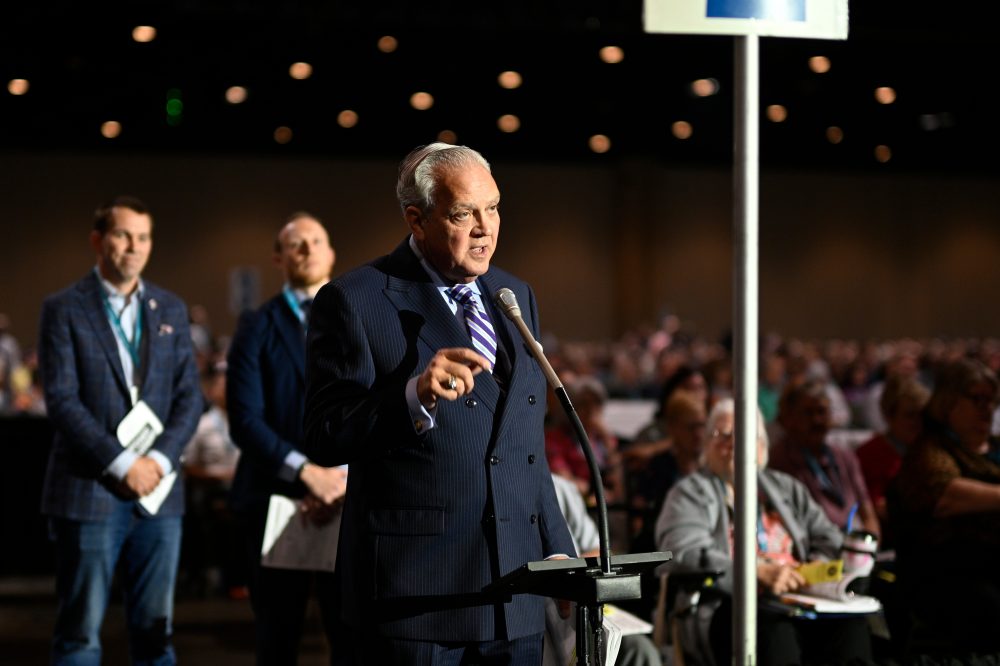
Albert Mohler, who championed the amendment, described it as tackling a fundamental denominational question.
“This is an opportunity for Southern Baptists to speak in truth, in unity, in conviction,” stated Mohler, who serves as president of the Southern Baptist Theological Seminary in Louisville, Kentucky. “There’s a great line that divides liberal and biblical evangelicalism, and you can see it on this very issue. The trajectory of liberal denominations is clear.”
Floor discussion remained limited, with no speakers defending women’s pastoral roles during the brief debate period.
The single voice of dissent came from South Carolina pastor Doug Mize, who argued the proposal was unnecessary since the denomination already possesses tools to remove churches with female senior pastors and has exercised this authority repeatedly.
“What we have already works,” he stated.
Convention leadership points to scriptural texts they interpret as restricting pastoral duties to men, while supporters of women’s ministry reference biblical verses emphasizing gender equality before God and examples of women called to share the gospel message.
Although the SBC cannot dictate policies to its autonomous member churches, the organization retains authority to remove congregations from convention membership by declaring them outside “friendly cooperation.”
Broad consensus already exists within the denomination that current doctrinal statements reject women serving as senior pastors who head congregations. Ongoing discussions have focused on establishing boundaries regarding churches where women hold assistant pastoral positions or preaching responsibilities.
“We need constitutional clarity on this issue,” Mohler explained. He played a key role in creating the original prohibition, which gained approval in 2000.
The amendment’s text mandates excluding any church that chooses “to affirm, appoint, or endorse a woman serving in the office or function of a pastor/elder/overseer, specifically preaching to the assembled congregation.”
Wednesday’s decision concluded the convention’s two-day annual meeting in Orlando, Florida, which drew more than 11,000 delegates, called messengers.
During the past three annual meetings, delegate majorities supported amending the SBC constitution to prohibit churches with women in pastoral positions. However, only one of those attempts achieved the required two-thirds supermajority, leaving the issue unresolved.
The denomination has previously expelled churches with women in senior pastoral roles, including California’s large Saddleback Church, citing existing constitutional language that bars churches whose “faith and practice” conflicts with denominational standards.
The SBC’s position contrasts sharply with numerous established, more liberal Protestant denominations that ordain women and have elevated them to top leadership positions. Conservative evangelical denominations show varied approaches — especially within Pentecostal and charismatic movements, where notable women pastors include Paula White-Cain, who headed President Donald Trump’s White House Faith Office.
However, other conservative Protestant groups also refuse to ordain women as clergy. The Catholic and Orthodox churches — representing the world’s two largest Christian communities — limit priesthood ordination to men only.
Baptist Women in Ministry, an organization supporting female ministers across various Baptist denominations, released a statement condemning the vote.
“We express our solidarity with the women in ministry who have been harmed by this vote, the hateful rhetoric and propaganda leading up to the vote, and the damaging theology the vote represents,” the statement read. “Women in ministry deserve affirmation, respect, and the opportunity to follow God’s call. We are heartbroken that they have been denied those fundamental freedoms in the process of this vote.”
Later Wednesday, SBC messengers also considered a non-binding resolution containing similar language opposing women pastors, requiring only a simple majority for passage. Additional resolutions addressing topics from immigration to antisemitism were also scheduled for votes.
On Tuesday, delegates selected Florida pastor Willy Rice as their next president, capturing 58% of votes against South Carolina pastor Josh Powell.
Rice endorsed the amendment prohibiting churches with women pastors, as did Powell and the SBC’s outgoing president, Clint Pressley.
Rice, who leads Calvary Church in Clearwater as senior pastor, received backing from advocacy organizations like the Center for Baptist Leadership, which contend SBC leadership has embraced “woke” positions on topics including race, gender, and immigration.
The denomination already maintains strongly conservative stances, from opposing abortion to declaring pastoral offices limited to men through faith statements. Recent internal SBC debates have centered on how far to shift toward the religious and political right.