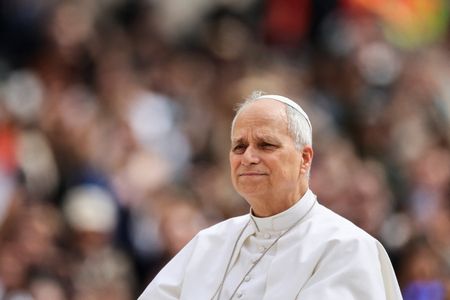
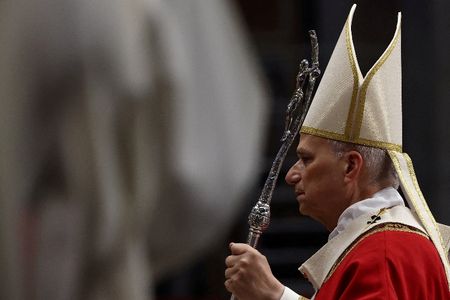
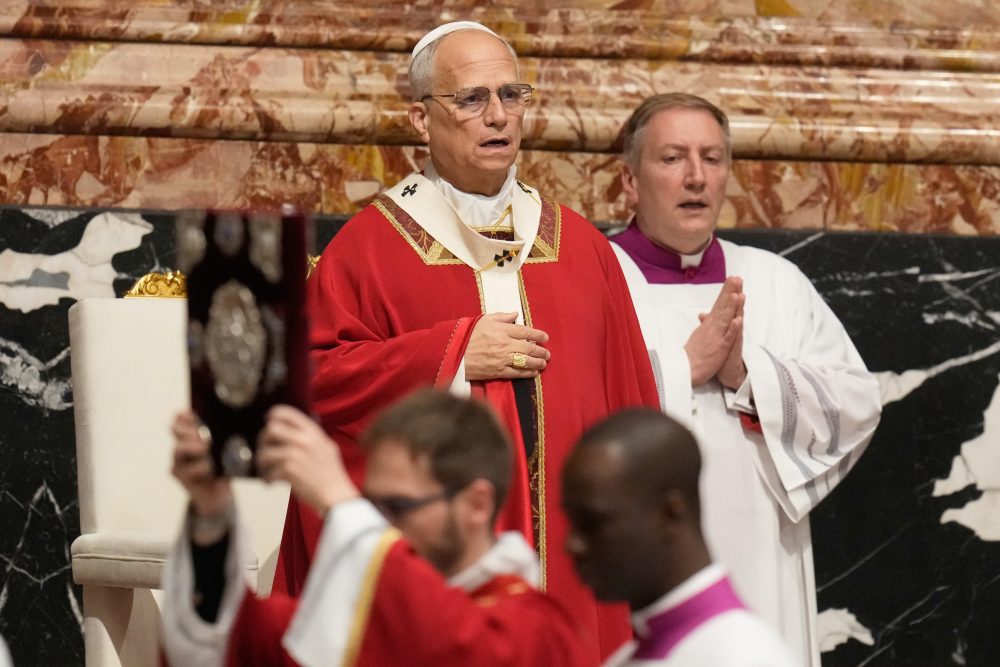
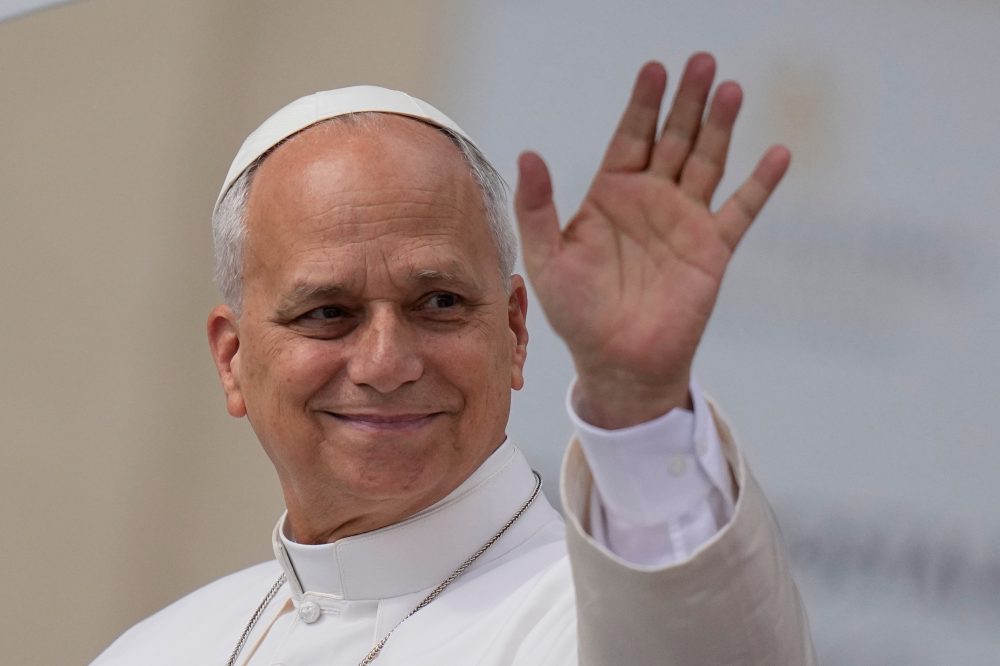
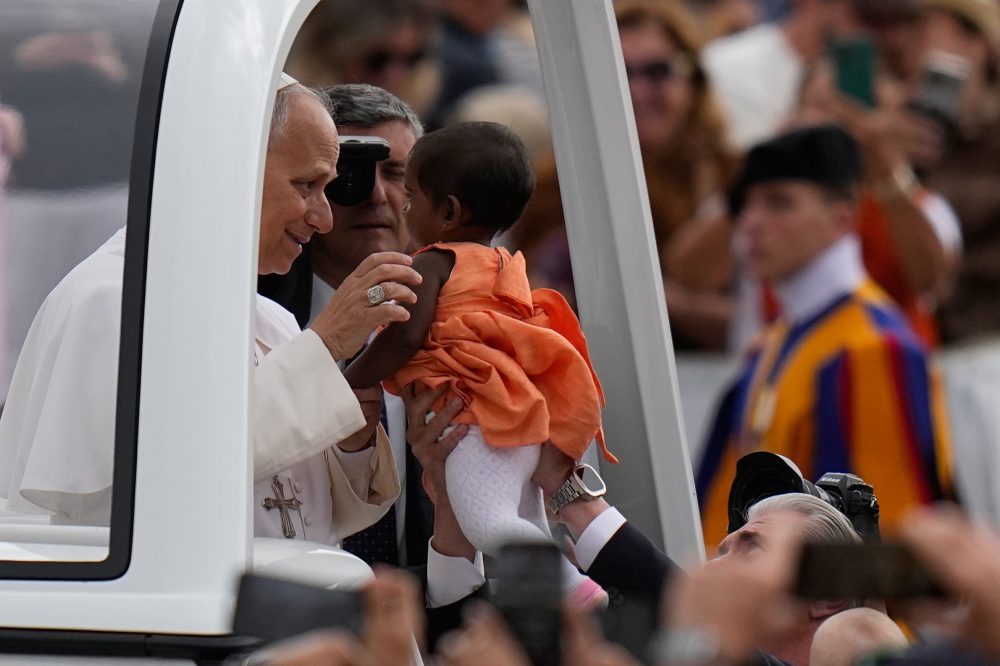
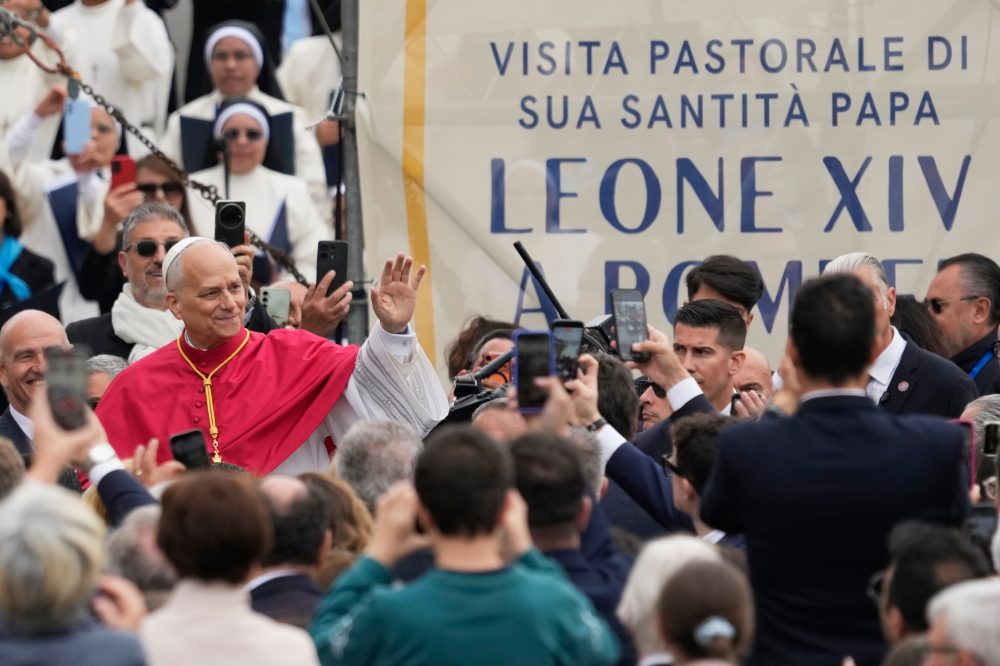
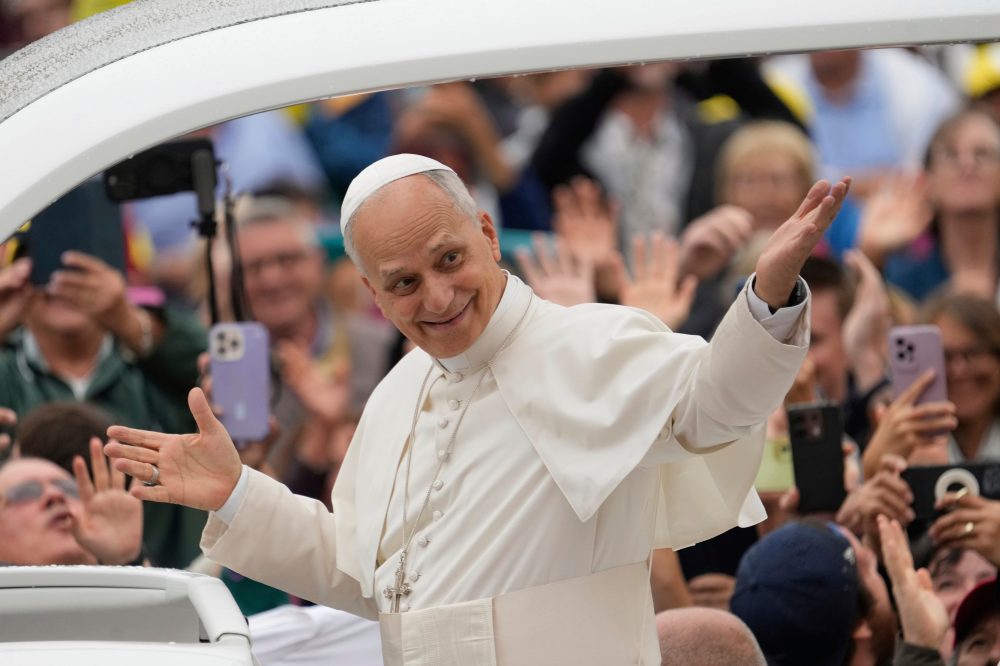
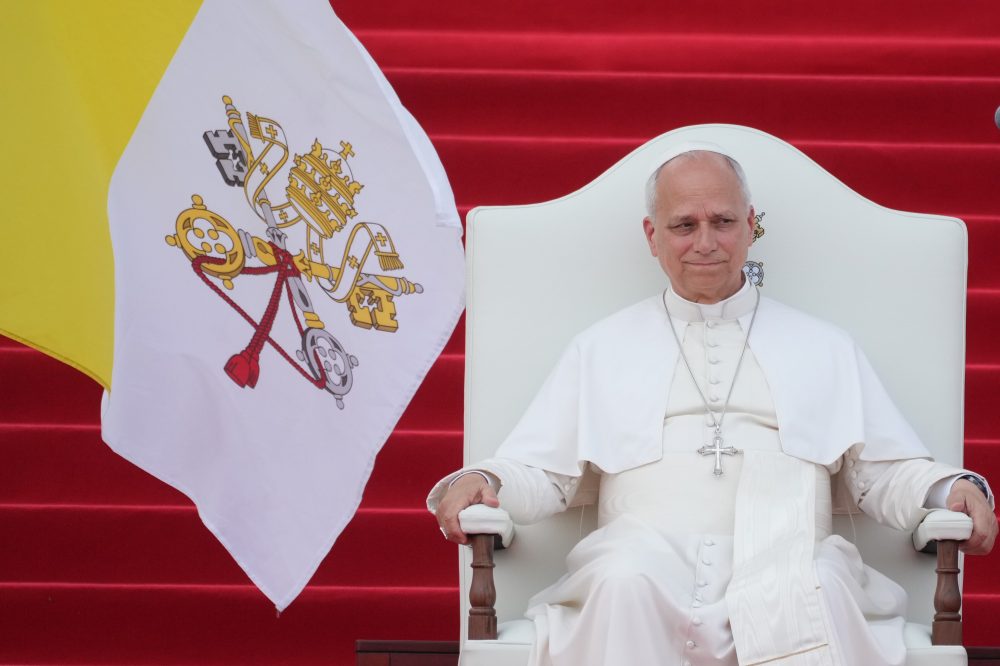
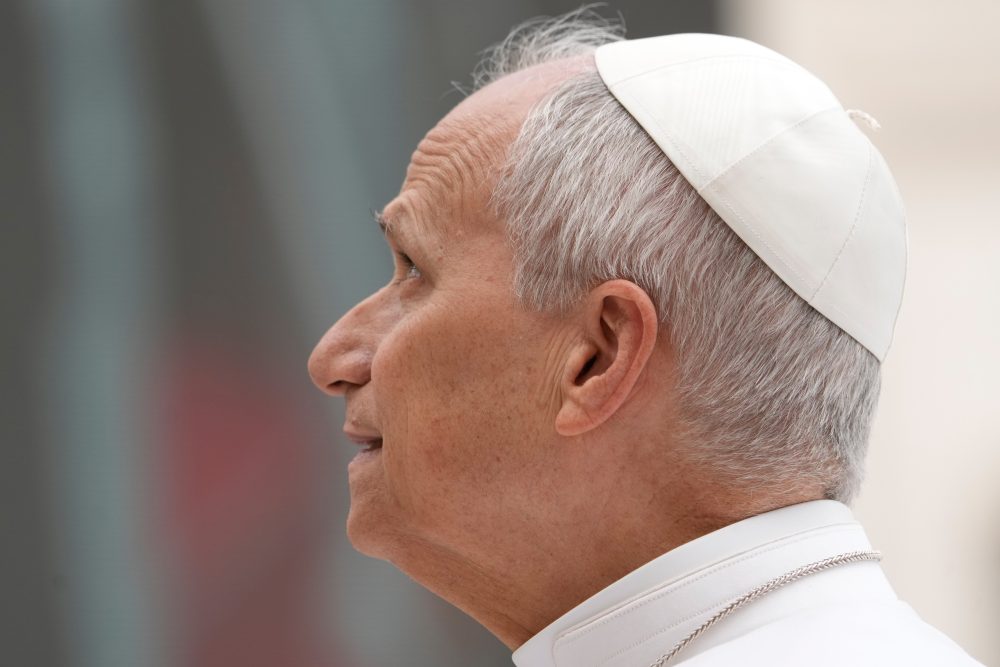
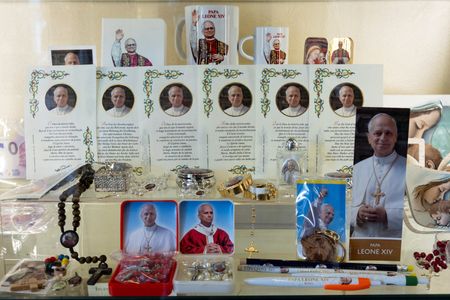
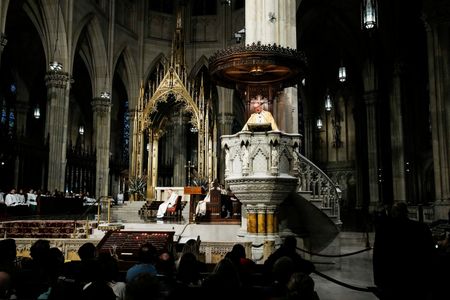
VATICAN CITY, May 18 — The Vatican announced Monday that Pope Leo will publish his inaugural comprehensive document on May 25, which is anticipated to focus on artificial intelligence developments and threats to workers’ rights.
The document, called an encyclical, is also expected to condemn ongoing global conflicts. The work will carry the title “Magnifica Humanitas” (Magnificent Humanity) and received the pope’s formal signature on Friday before its scheduled release, according to a Vatican statement.
In an uncommon step for a Catholic pontiff, Leo, who is the first U.S. pope, plans to participate in a Vatican presentation of the document on its publication date.
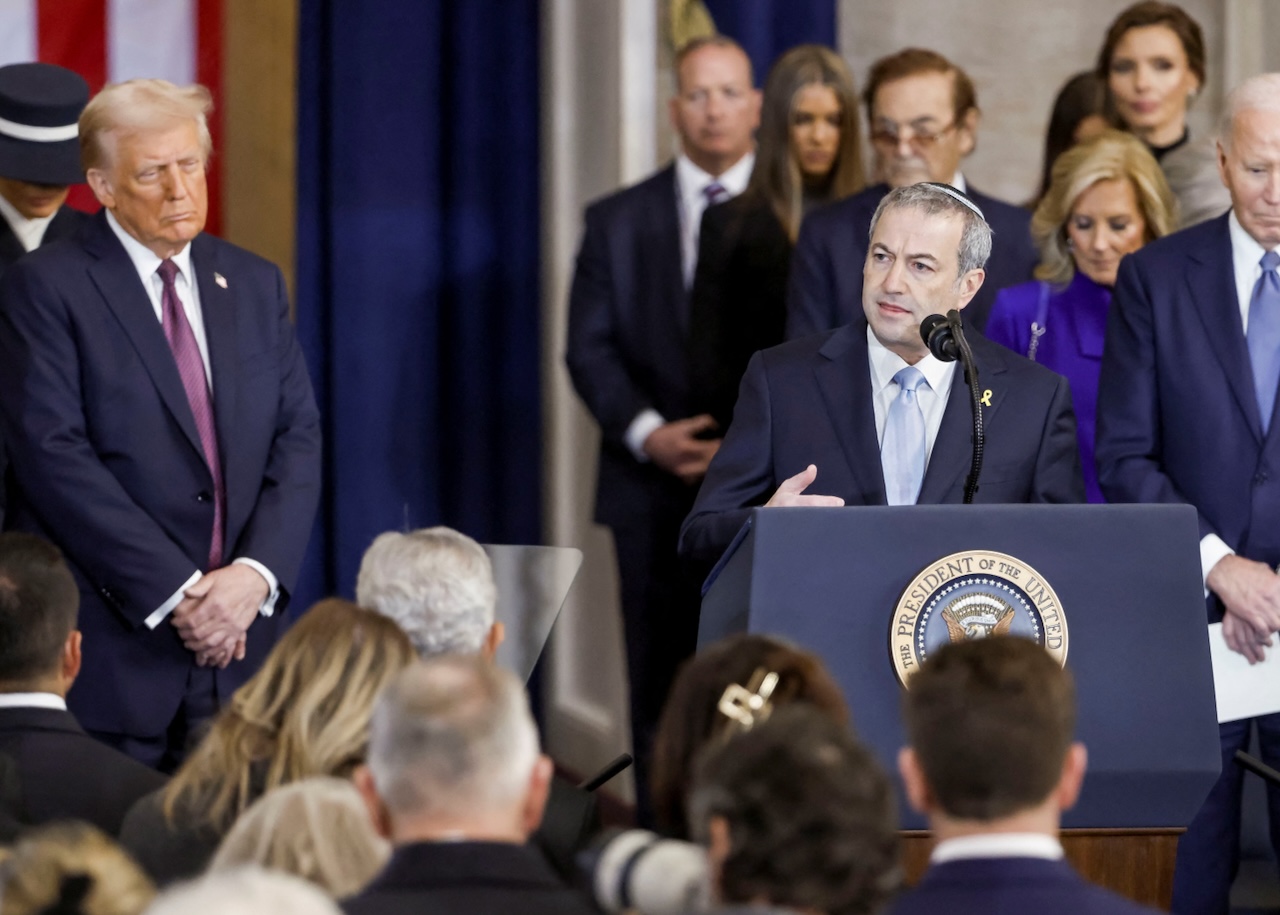
A Sunday gathering on the National Mall organized with White House assistance centered on the goal of rededicating the United States to God. The event brought together current administration officials and Christian religious leaders, though other faith traditions had minimal representation in the proceedings.
The president and several administration officials spoke at a conservative Christian prayer gathering held on the National Mall over the weekend.
The religious event was put together by Freedom 250, a public-private organization that is working alongside the White House to coordinate celebrations for America’s upcoming 250th birthday celebration this summer.
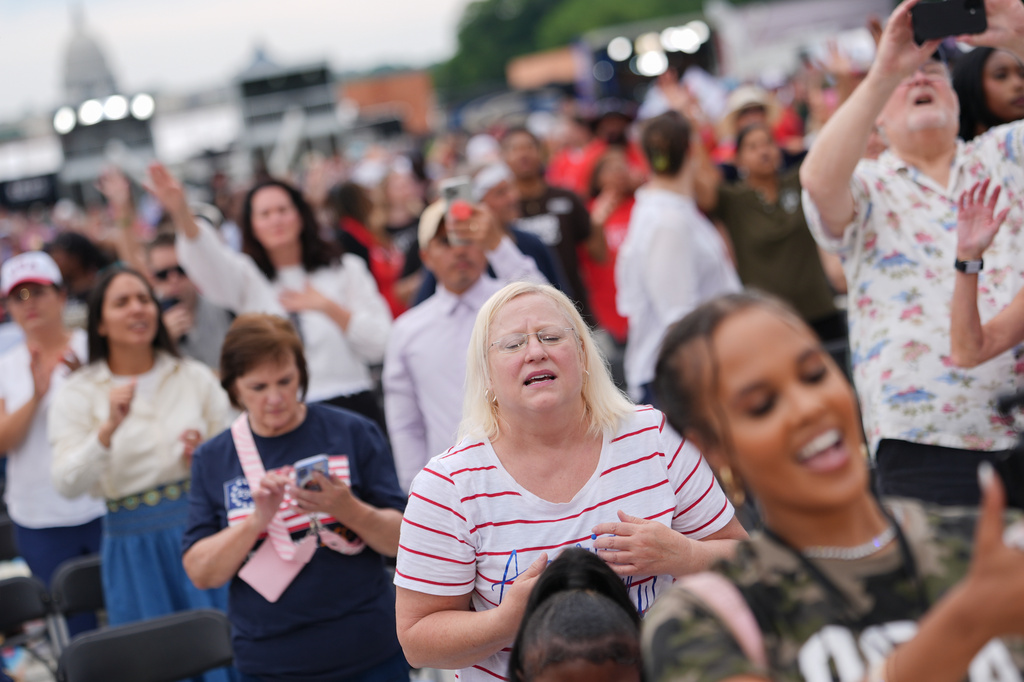
The gathering drew worshippers who participated in Christian music and prayer as part of what organizers called a dedication ceremony in honor of the nation’s milestone anniversary.
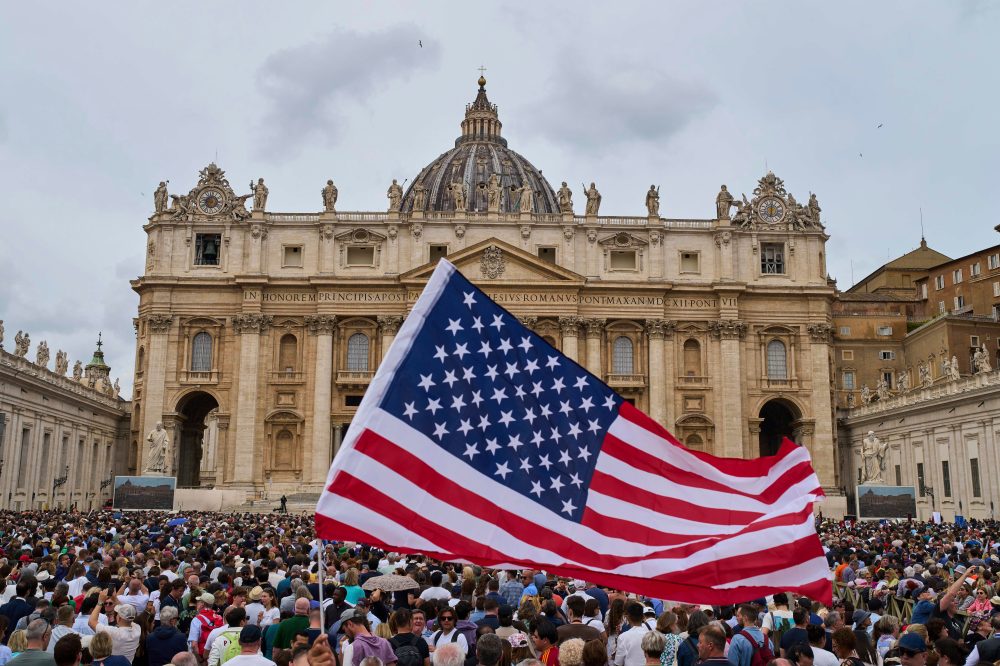
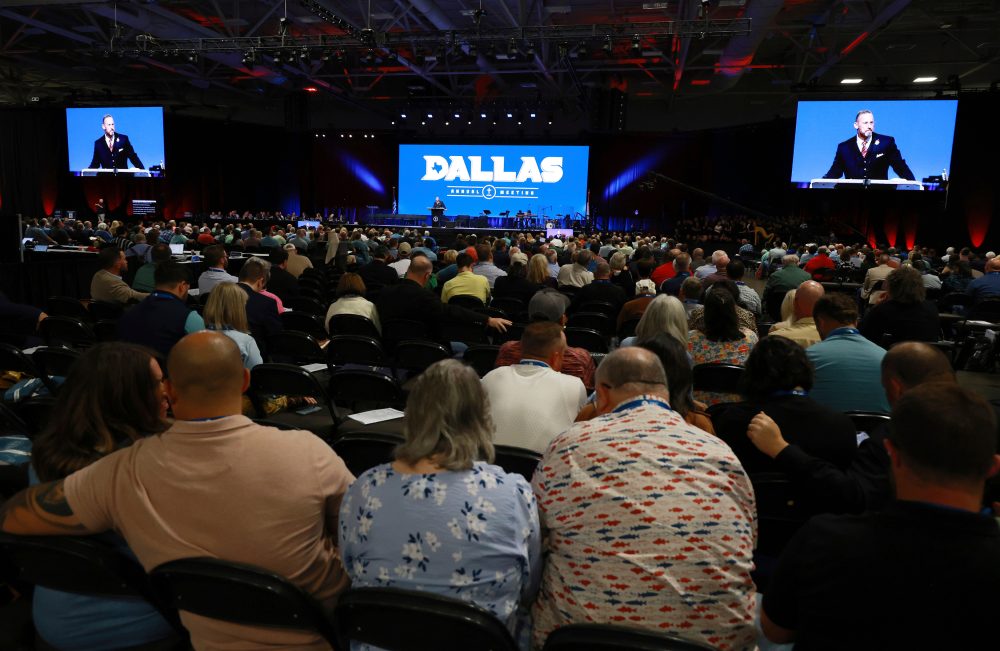
WASHINGTON — Large crowds gathered at the National Mall on Sunday for an all-day Christian prayer event described as a “rededication of our country as One Nation under God.”
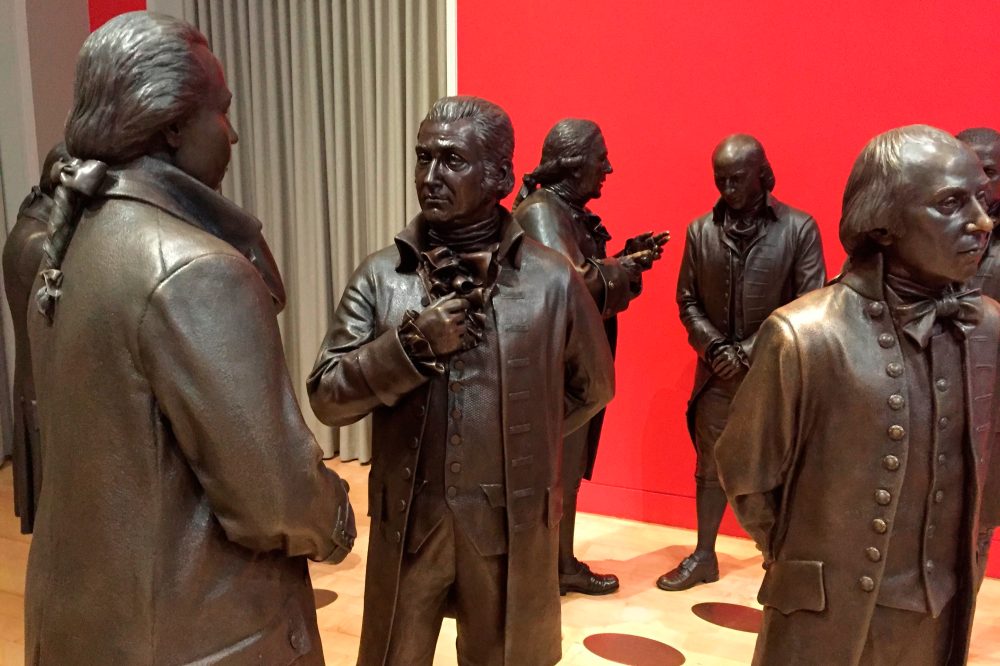
With the Washington Monument serving as a backdrop, Christian worship music filled the air from a stage designed with clear religious symbolism. The setup featured arched stained-glass windows beneath towering columns that resembled government architecture, displaying images of the nation’s founding fathers next to a white cross.
Multiple speakers highlighted the connections between Christianity and America’s founding, a combination of themes that opponents had previously criticized as promoting Christian nationalism.
Speaking from the platform, the Rev. Robert Jeffress openly welcomed the Christian nationalist label, which many consider a negative term. “If being a Christian nationalist means loving Jesus Christ and loving America, count me in,” stated the well-known Southern Baptist pastor.
President Donald Trump was scheduled to speak to attendees through a recorded video presentation. Additional high-ranking Republicans, including Defense Secretary Pete Hegseth, Secretary of State Marco Rubio and House Speaker Mike Johnson, R-La., were also listed as participants in this year’s commemorations of America’s 250th anniversary.
Hegseth, who has incorporated Christian language and worship into his role leading the Pentagon, delivered a video message asking attendees to pray to “our Lord and Savior Jesus Christ.” Drawing on George Washington’s religious beliefs, he stated, “Let us pray without ceasing. Let us pray for our nation on bended knee.”
The gathering was coordinated by Freedom 250, a public-private partnership with White House support.
WASHINGTON — Crowds numbering in the thousands gathered on the National Mall Sunday for an all-day prayer event described as a “rededication of our country as One Nation under God.”
The gathering took place with the Washington Monument serving as a dramatic background, while Christian worship music played from a main stage. The staging featured ornate stained-glass windows positioned beneath towering columns that resembled government architecture, showing images of the nation’s founding fathers next to a white cross.
President Donald Trump was scheduled to speak to attendees via video message as the event began under light rainfall. Several high-ranking Republicans were also slated to participate, including Defense Secretary Pete Hegseth, Secretary of State Marco Rubio and House Speaker Mike Johnson, R-La., as part of this year’s commemorations of America’s 250th anniversary.
The Rededicate 250 program included almost exclusively Christian speakers. Many were long-time evangelical allies of Trump, such as Paula White-Cain from the White House Faith Office and evangelist Franklin Graham from Samaritan’s Purse.
“We are deeply concerned that what is really being rededicated is a nation to a very narrow and ideological part of the Christian faith that betrays our nation’s fundamental commitment to religious freedom,” said the Rev. Adam Russell Taylor, a Baptist minister who leads the progressive Christian organization Sojourners.
The conservative Christian speaker list included participants who frequently contend that America was established as a Christian nation, a claim challenged by numerous historians and other faith communities.
Rabbi Jonah Dov Pesner, director of the Religious Action Center of Reform Judaism, highlighted the religious variety present in early America, including Jews, Muslims and Indigenous people. “I want to shine a light on America’s history as a nation that welcomes, celebrates, and protects people of all faiths and those of no faith,” Pesner said.
Hegseth has incorporated Christian language and worship into his Pentagon leadership role.
“Our founders knew two simple truths,” Hegseth said in a promotional video for the event. “Our rights don’t come from government; they come from God. And a nation is only as strong as its faith.”
Orthodox Jewish Rabbi Meir Soloveichik was the sole non-Christian faith leader included in the program. He participates in the Trump administration’s Religious Liberty Commission alongside White-Cain, Graham and Cardinal Timothy Dolan and Bishop Robert Barron, Catholic clergy members also appearing at the event.
Freedom 250, a public-private partnership supported by the White House, organized the rally. Congressional Democrats have raised questions about the nonprofit’s organization and funding, viewing it as a Trump-directed way to bypass a separate commission established by Congress ten years ago to coordinate semiquincentennial activities.
Progressive organizations arranged alternative events in response. These included the Freedom From Religion Foundation, which promotes strict church-state separation, and the Christian group Faithful America.
Thursday evening saw the Interfaith Alliance display protest messages on an outside wall of the National Gallery of Art. “Democracy not theocracy,” read one projection. Another stated: “The separation of church and state is good for both.”
A government-sponsored religious gathering in Washington D.C. is drawing fire from church-state separation advocates who argue the event inappropriately mixes faith and federal authority.
The lengthy nine-hour celebration, titled “Rededicate 250: National Jubilee of Prayer, Praise & Thanksgiving,” primarily showcases speakers from evangelical Protestant and conservative Catholic backgrounds.
President Donald Trump plans to deliver remarks via video, while top Republican officials including Defense Secretary Pete Hegseth will address crowds gathered on the National Mall. Event organizers describe their mission as efforts to “prepare for the nation’s 250th birthday with Scripture, testimony, prayer, and rededication of our country as One Nation to God.”
Freedom 250, a collaborative effort between the White House and federal agencies established to coordinate America’s 250th anniversary commemorations, is behind the event’s organization.
Church-state separation advocates are raising constitutional concerns about the government’s involvement.
“This government-sponsored prayer fest is the epitome of exactly what our secular Constitution forbids our government from doing,” said Annie Laurie Gaylor, co-president of the Freedom From Religion Foundation, in a statement.
“It is a fusion not only of church and state, but also of our federal government with Christian nationalism,” said Gaylor, whose organization advocates for the separation of church and state.
Critics note the notable absence of various religious communities, including mainline Protestant denominations like Lutherans, Methodists and Episcopalians. The Church of Jesus Christ of Latter-day Saints, Orthodox Christianity, Islam, Hinduism and Buddhism also lack representation.
Pew Research Center data shows more than a quarter of American adults consider themselves religiously unaffiliated. Evangelical Protestants make up about 23% of the population, Catholics represent 19%, and mainline Protestants account for roughly 11%.
The Council on American-Islamic Relations, a Muslim civil rights and advocacy organization, urged the organizers to include speakers from other religious groups. Muslims arrived in North America before U.S. independence, said Corey Saylor, research and advocacy director at the organization.
“The reality is that the religious landscape in the United States was more diverse than many people think of, and it certainly means today we have a religious landscape that deserves to be looked at and respected,” Saylor told Reuters.
‘SCREENSHOT’ OF EARLY AMERICA
Religious leaders scheduled to participate include Bishop Robert Barron, from the Catholic Diocese of Winona-Rochester; Jonathan Falwell, chancellor of Liberty University, a school established by Christian evangelicals; and Rabbi Meir Soloveichik, senior rabbi of Congregation Shearith Israel in New York City.
Political participants include Republican House Speaker Mike Johnson and Republican Senator Tim Scott. No high-profile Democrats are scheduled to participate.
National Hispanic Christian Leadership Conference leader Samuel Rodriguez, one of the scheduled speakers, defended the predominantly Christian lineup during an interview, arguing it mirrors the religious makeup of American colonies following the 18th century Great Awakening religious revival.
“It’s pretty much a depiction, a screenshot of our foundation,” Rodriguez told Reuters.
This gathering represents the first of 16 events the administration has scheduled for America’s 250th anniversary celebration in 2026. The event’s website states its purpose is to offer “praise to God for 250 years of His Providence for the United States, in praying that God Bless and Protect America for the next 250 years, and in solemnly rededicating our country as One Nation under God.”
Critics argue the Freedom 250 events minimize or overlook darker chapters of American history, including slavery and violence against Indigenous populations.
Trump and Vice President JD Vance, who is Catholic, have criticized Pope Leo and other faith leaders who disagree with the administration’s policies. After feuding with the pope, Trump briefly posted an AI-generated image of himself as a Christ-like figure before deleting it following criticism from some administration supporters.
Technology companies are turning to religious communities for help in developing ethical artificial intelligence systems. A first-of-its-kind roundtable called the “Faith-AI Covenant” was held in New York last month, brought together by the Interfaith Alliance for Safer Communities. The initiative aims to establish ethical standards drawing from diverse religious perspectives.
Companies such as Anthropic are actively participating in discussions with religious leaders. However, critics raise concerns that these efforts might serve as a distraction from more comprehensive AI challenges. Questions remain about whether these conversations are genuine attempts at reform and how effectively they address core AI ethics concerns. It remains uncertain how much companies are actually implementing the recommendations they receive from faith communities.
A political scientist specializing in religious demographics is raising concerns about America’s largest Protestant denomination. Ryan Burge warns that the Southern Baptist Convention could face ongoing membership losses despite recent increases in baptisms and church attendance. The denomination experienced a three percent membership decline last year, losing nearly 400,000 members – equivalent to the entire membership of smaller denominations.
Burge, who teaches at Washington University, explained the underlying challenge: “The SBC has a baby boomer problem. Structurally speaking, it’s hard to outrun that demographic cliff.”
Traditional Catholics are expressing worry about potential changes in Vatican policy regarding homosexual members during the Pope Leo papacy. A Vatican committee has published a document that includes statements from two married gay Catholics who criticized the church’s established positions on sexuality. During a recent in-flight press conference, Pope Leo indicated that the church’s social justice, equality and freedom teachings hold greater significance than its sexual morality doctrines. Religious observers believe the pontiff may choose to avoid addressing sexuality topics.
The Trump administration is examining Smith College in Northampton, Massachusetts for potential Title IX violations related to its admission policies. Over the last ten years, most women’s colleges across the country have modified their enrollment criteria to include men who identify as women. The Education Department released a statement declaring: “An all-women’s college loses all meaning if it is admitting biological males.” Graduates from women’s colleges have voiced worries that accepting male students could damage these institutions’ distinctive character and standing.
New statistics from Toronto law enforcement reveal a disturbing pattern of religious hate crimes, with Jewish residents bearing the brunt of targeted attacks throughout 2025.
According to the Toronto Police Service 2025 Annual Hate Crime Statistical Report released this week, anti-Jewish incidents made up 82% of all religiously motivated hate crimes documented in the Canadian city. Anti-Muslim incidents comprised 14% of such crimes.
The Abraham Global Peace Initiative responded Thursday with concern about the findings, particularly noting that overall hate crimes have jumped 40% in 2026 when compared to the corresponding timeframe in the previous year.
Despite acknowledging some improvement in overall hate crime numbers during 2025, the organization emphasized that the recent uptick demonstrates ongoing dangers from antisemitism and radical messaging.
“The sharp increase underscores that antisemitism and extremist hate remain a serious and growing threat to public safety and social cohesion,” the organization said.
Toronto authorities documented over 375 protests and rallies connected to Middle Eastern conflicts during 2025, according to the police data.
Avi Abraham Benlolo, who founded and leads the organization, emphasized that the statistics reveal the magnitude of dangers confronting Jewish residents and highlighted the need for robust law enforcement responses to hate-motivated crimes and inflammatory speech.
“AGPI has consistently advocated for the strong enforcement of the law against antisemitism, hate crimes, extremism, and incitement,” Benlolo said. “These statistics confirm both the seriousness of the threat facing the Jewish community and the importance of proactive policing, arrests, and meaningful criminal consequences.”
The data also showed improved police response rates, with arrests occurring in roughly 32% of hate crime cases in 2025, up from 25% the year before. Officials noted this arrest rate has doubled since 2023.
Law enforcement took 73 people into custody for hate-motivated crimes, resulting in 217 criminal charges filed.
The organization praised the Toronto Police Service Hate Crime Unit, Counter-Terrorism Security Unit, and Chief Myron Demkiw for enhancing investigative procedures and reporting mechanisms, but cautioned that synagogue shootings, threats against Jewish facilities, and extremist language demand nationwide focus.
“Antisemitism is not simply a Jewish problem — it is a threat to democracy, public safety, and the stability of our society,” Benlolo said.
The Vatican announced Saturday that Pope Leo will journey to France from September 25 through 28, with plans to visit UNESCO’s Paris headquarters as the organization grapples with financial challenges following America’s withdrawal from the agency in the previous year.
The pontiff, who became the first American pope and recently completed his first year guiding the 1.4-billion-member Church on May 8, has been increasing his travel schedule and speaking with greater boldness, drawing criticism from U.S. President Donald Trump after the pope condemned the Iran war.
The president’s choice to pull America out of the United Nations Educational, Scientific and Cultural Organization (UNESCO) after returning to office caused the agency to lose 8% of its overall funding, according to UNESCO officials.
Earlier this month, French church leaders had indicated the pope would likely make the September journey to their nation, including stops in Paris and Lourdes, home to a renowned Catholic pilgrimage site. However, they had not mentioned UNESCO as part of the planned visit.
The papal trip will also likely include celebrating mass at the famous Notre-Dame Cathedral in Paris, which reopened in 2024 following a five-year closure after a catastrophic fire nearly caused the structure to collapse. UNESCO named the cathedral a distinguished World Heritage site in 1991.
This French journey will mark Leo’s fourth international trip this year, coming after a four-country African tour, a Monaco visit, and a scheduled June trip to Spain, where the pope plans to advocate for improved treatment of migrants entering Europe.
Vatican officials said they will release more specific details about the French visit at a later date.
Leo is anticipated to hold meetings with French President Emmanuel Macron during his stay and may potentially speak before the French parliament.
Benedict XVI was the most recent pope to conduct an official French visit in 2008. The late Pope Francis, who passed away in April 2025 following 12 years of church leadership, made three trips to French territories but never completed a formal state visit to France.
Francis conducted a single-day journey to Strasbourg in 2014 to speak before the European Parliament and Council of Europe, spent two days in Marseille in 2023 for a conference, and made a brief 2024 visit to Corsica to meet with Catholics on the Mediterranean island.
Leo, previously known as Cardinal Robert Prevost, has French immigrants to America among his family lineage.
Pope Leo XIV has announced plans for a September journey to France, adding another international destination to his packed 2026 travel calendar. The four-day visit, scheduled for September 25-28, will include a stop at the U.N. culture agency.
Vatican officials confirmed the trip on Saturday, marking what will be Leo’s fourth international journey this year. The Pope previously made a one-day visit to Monaco in March, traveled to four African countries in April, and has plans to visit Spain and the Canary Islands in June.
This French visit represents a shift from the approach taken by the late Pope Francis, who during his 12-year tenure avoided major European Christian centers and instead focused on visiting smaller Catholic communities distant from Rome. Leo’s decision to visit France suggests he is placing greater emphasis on European Catholic experiences, particularly as reports emerge of growing faith interest among young adults.
The UNESCO headquarters visit will provide Leo with a platform to address an international audience during a year when he chose not to travel to his native United States, where he could have spoken to the U.N. General Assembly as previous popes have done.
While Francis did visit France twice during his papacy, neither trip was an official state visit to Paris. His French visits included a 2014 day trip to Strasbourg where he addressed the European Parliament and Council of Europe, and a 2023 visit to the port city of Marseille for a migration conference.
Vatican sources indicate that a potential trip to Latin America, including Peru which Leo considers his beloved second home, remains under consideration for later this year but has not been confirmed.
VATICAN CITY — Church officials are preparing for the publication of Pope Leo XIV’s inaugural encyclical, a major document anticipated to focus on artificial intelligence while demanding an ethics-centered approach to technology that puts human dignity, social connections and peace first.
Church leaders revealed that Leo signed the document on Friday, marking exactly 135 years since his predecessor, Pope Leo XIII, signed his groundbreaking encyclical “Rerum Novarum,” which means “Of New Things.” That historic document tackled worker rights, capitalism’s boundaries and the duties that governments and employers had toward workers during the Industrial Revolution.
That earlier encyclical established the foundation for contemporary Catholic social doctrine, and the current pope has already referenced it regarding the AI transformation, which he views as presenting the same fundamental challenges that the Industrial Revolution created more than a century ago. The upcoming encyclical is anticipated to frame the AI issue within the church’s social teachings, which encompass topics like employment, justice and peace.
“I think that the Catholic Church in many ways is going to be the adult in the room on some of these debates about how we are going to integrate AI into the rest of our society,” said Meghan Sullivan, a philosophy professor at the University of Notre Dame who directs its ethics institute. “For sure, the pope is going to be one of the most forceful advocates for human dignity in these discussions.”
Within days of his 2025 election, Leo informed the cardinals who elected him that the Catholic Church had an obligation to provide the world with the “treasury of her social teaching” to address AI’s challenges to “human dignity, justice and labor.”
The American pope, who studied mathematics and is known for spending time on his phone, will probably address the topic this weekend, as the Vatican observes its social communications day on Sunday with a message focused on the human costs of the AI competition. In that message, published earlier this year, Leo cautioned about maintaining genuine human connections despite chatbot “friends,” protecting human creativity against AI-generated music and videos, and preserving human authenticity in the face of generative AI deepfakes.
The public unveiling of the encyclical, anticipated in the coming weeks, will probably create new tensions between the Chicago-born Leo and the Trump administration, which has prioritized rapid AI advancement as crucial to national economic and security interests. The United States has firmly opposed international regulatory attempts to control AI development, and domestically, the Trump administration has eliminated bureaucratic barriers that were slowing progress.
The document received the pope’s signature as President Donald Trump concluded a China visit that involved AI business matters. Among those traveling with Trump on Air Force One were Elon Musk, whose social media platform X includes his AI chatbot Grok, and Nvidia CEO Jensen Huang, who recently obtained federal permission to sell H200 AI chips to Chinese customers.
Following the AI surge that began with ChatGPT’s launch, the technology’s remarkable abilities have fascinated the globe. Technology corporations have competed to create superior AI systems while experts caution about risks, ranging from distant existential dangers like uncontrolled rogue AIs to immediate issues like bias in automated hiring processes.
The United Nations adopted new governance structures last year to control AI after earlier international efforts, including AI conferences hosted by Britain, South Korea and France, produced only voluntary commitments. The European Union implemented its own Artificial Intelligence Act in 2024, using a risk-based framework for AI regulations.
The Vatican has attempted to contribute to the discussion, providing ethical guidance for AI implementation in areas from military operations to education and healthcare. The central message has been that technology should serve as a tool to enhance, rather than substitute for, human intelligence.
The Vatican has additionally cautioned about AI development’s environmental consequences, highlighting the “vast amounts of energy and water” required for AI data centers and computing power.
“There are almost a billion and a half Catholics in the world, so that alone is reason to pay attention,” said Thomas Harmon, theology professor at the University of St. Thomas in Houston. “But beyond the numbers, the Catholic Church has a deep and sophisticated tradition of thinking through what it means to be human.”
In 2020, the Vatican persuaded technology companies to endorse an AI commitment called the Rome Call for AI Ethics, which established fundamental principles for AI oversight, including inclusiveness, accountability, impartiality and privacy. Microsoft, IBM and Cisco were among the private companies that participated.
During his later years, Pope Francis advocated for an international agreement to govern AI, arguing that the dangers of technology without human values like compassion, mercy, morality and forgiveness were too significant to rely solely on the ethics of AI researchers and developers.
He also used his influence within the Group of Seven, speaking at a special session about AI’s dangers and potential in 2024. There, Francis stated that political leaders must ensure AI stays human-centered, so that choices about weapon use or other tools always remain with humans. He ultimately advocated for prohibiting lethal autonomous weapons, commonly called “killer robots.”
Internally, Leo has cautioned priests against using AI for sermon writing, but he has also spoken out about AI’s broader effects on global peace, employment and the fundamental nature of reality.
For the Augustinian pope, generative AI’s capacity to mislead and deceive through deepfake images is especially concerning, since truth-seeking is a core component of his religious order’s spirituality.
During a June 2025 address to an AI conference, Leo recognized generative AI’s contributions to medical care and scientific research. However, he questioned “its possible repercussions on humanity’s openness to truth and beauty, on our distinctive ability to grasp reality.”
Leo, who has consistently advocated for peace, has also demanded oversight of AI use and development in Middle Eastern and Ukrainian conflicts, where automated weapon systems employ aerial drones and maritime and ground platforms.
“What is happening in Ukraine, in Gaza and the Palestinian territories, in Lebanon and in Iran illustrates the inhuman evolution of the relationship between war and new technologies in a spiral of annihilation,” he stated this past week at La Sapienza, Europe’s largest university.
A religious prayer gathering is being organized by the current administration to take place on the National Mall in Washington, with the speaker lineup consisting almost entirely of Christian faith leaders.
According to reports, only one individual among the scheduled speakers represents a non-Christian religious tradition, while all others come from various Christian denominations and organizations.
The planned religious event is taking place at a time when polling data indicates significant numbers of Americans express discomfort with the intersection of religious practices and political activities.
Preparation work for the event, called Rededicate 250, is currently underway on the National Mall, with crews setting up staging and other infrastructure for the celebration.
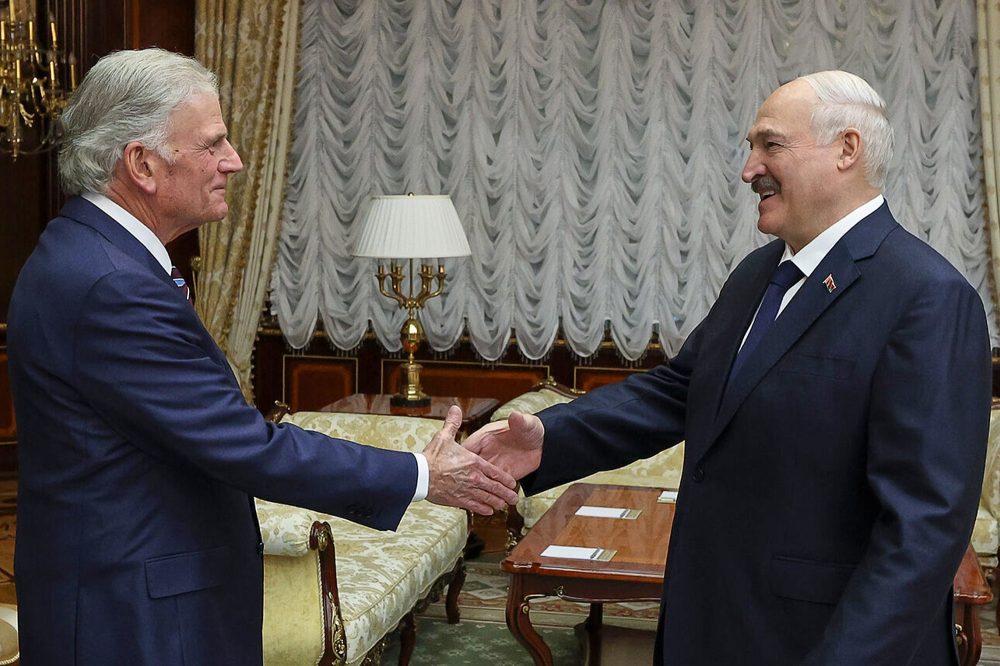
An American evangelical minister has arrived in Belarus to conduct what organizers say will be the nation’s biggest Christian gathering ever, meeting Friday with the country’s long-time authoritarian ruler.
Alexander Lukashenko, Belarus’ president, asked Rev. Franklin Graham to deliver warm regards to President Donald Trump and inform him that he has “reliable friends and supporters in Belarus.”
Following Trump’s return to office, Lukashenko has freed hundreds of political detainees through agreements facilitated by the United States that resulted in the removal of certain American sanctions, as the isolated leader works to strengthen relationships with Western nations.
“Without the U.S. president, it might have been more difficult for us to establish our relations,” Lukashenko said to Graham, who heads Samaritan’s Purse and the Billy Graham Evangelistic Association. Graham traveled with Greta Van Susteren, a Newsmax TV host whose husband is Trump’s special envoy for Belarus, John Coale.
For over thirty years, Lukashenko has maintained strict control over the country of 9.5 million people, and Belarus has faced repeated Western sanctions due to its suppression of human rights and its role in allowing Moscow to launch operations from its soil during the 2022 full-scale invasion of Ukraine.
Graham plans to conduct what organizers are calling the Festival of Hope at a covered sports facility in the capital city of Minsk, with thousands anticipated to participate in this unprecedented evangelical event in Belarus’ history.
Mass protests erupted following Belarus’ 2020 presidential contest, with hundreds of thousands demonstrating against what they considered fraudulent results. The government’s harsh response led to tens of thousands of arrests, with many protesters suffering police violence. Key opposition leaders either left the country or faced imprisonment.
Five years following those widespread protests, Lukashenko secured a seventh term in last year’s election, which opposition groups dismissed as illegitimate.
Through a March agreement that Washington helped facilitate, Lukashenko authorized the freedom of 250 political detainees, while America lifted restrictions on two state-owned Belarusian banks and the nation’s Finance Ministry, and removed leading Belarusian potash companies from sanctions lists.
A subsequent April arrangement freed well-known journalist Andrzej Poczobut through an exchange with Poland involving ten individuals total.
Despite these releases, the Viasna human rights organization reports that 845 political prisoners remain incarcerated in Belarus, including 22 media professionals.
Exiled opposition figure Sviatlana Tsikhanouskaya expressed optimism that Graham’s presence might contribute to freeing all political detainees. “We continue to push for a complete end to the harsh political repressions in Belarus,” Tsikhanouskaya stated to The Associated Press.
The government’s approval of this large evangelical assembly represents a notable change after years of targeting religious leaders across Catholic, Orthodox and Protestant denominations, resulting in dozens being jailed, silenced or forced to flee following their opposition to the 2020 election. Among the nation’s 9.5 million residents, approximately 80% practice Orthodox Christianity, nearly 14% are Catholic and concentrated in western, northern and central regions, while roughly 2% belong to Protestant denominations.
New legislation passed in 2024 mandated that all faith-based organizations register again with government officials or risk being banned if their allegiance to the state appears questionable.
Belarus appears on the U.S. Commission on International Religious Freedom’s list of nations with religious liberty violations, with particular emphasis on its restrictive laws.
Natallia Vasilevich, who coordinates the Christian Vision monitoring organization, observed that while Graham’s Belarus visit represents a “mega-important event” for the country’s evangelicals, they still operate under oppressive conditions.
“Some believers view Graham’s visit as a miracle and a window of opportunity, while others see a risk that they will have to turn a blind eye to repression and take part in something that makes the regime looks nice,” Vasilevich explained.
Universities nationwide are expanding their recognition of LGBT students through special graduation ceremonies that celebrate their achievements. These celebrations, which first began in 1995, have gained momentum across college campuses throughout the country, including at institutions that may come as a surprise to many observers.
This spring season, 19 Catholic universities are expected to hold these special ceremonies honoring LGBT graduates, along with several schools tied to Protestant denominations, including Eastern Mennonite University. Across the United States, more than 500 colleges and universities now participate in these recognition events.
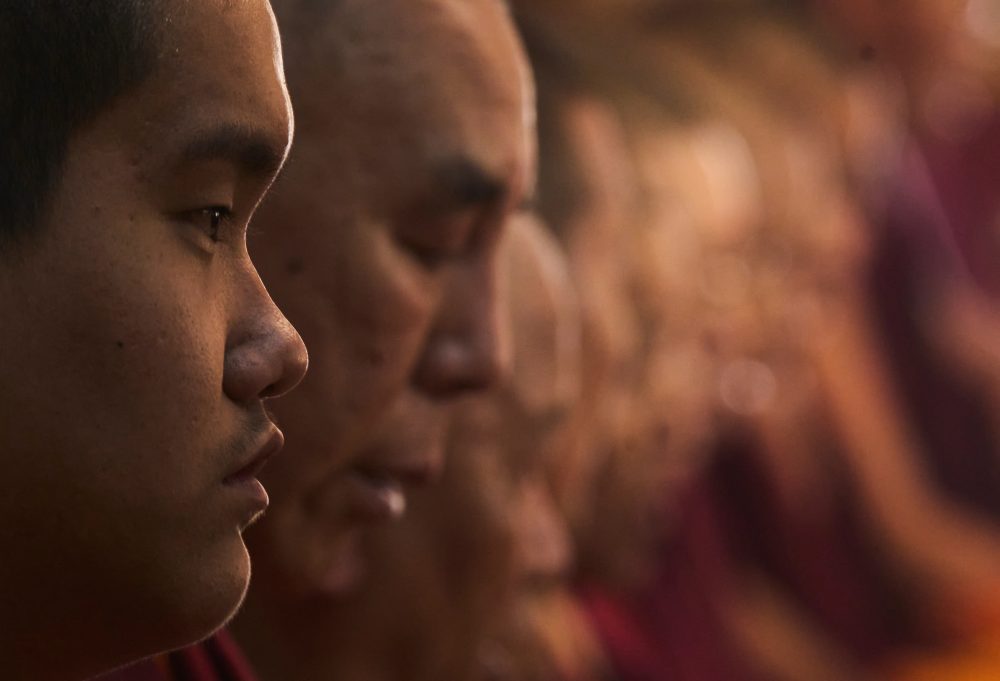
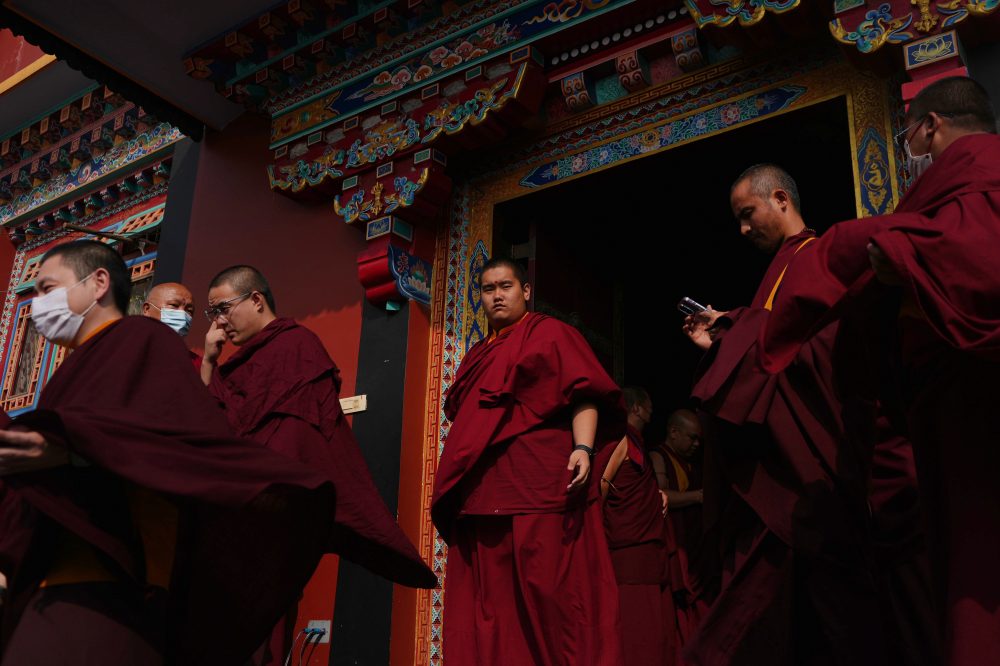
A young man from a Minneapolis suburb who grew up enjoying rap music, video games and football is now thousands of miles from home, pursuing his destiny as a Buddhist monk in the mountains of northern India.
Jalue Dorje has dedicated much of his life to monastic preparation, studying sacred texts, practicing calligraphy and absorbing Buddhist teachings, after being identified as a reincarnated lama by the Dalai Lama and other prominent Tibetan Buddhist figures.
Following his high school graduation last year, Dorje relocated to a monastery situated in the Himalayan foothills, far from his Minnesota home.
After completing what would be equivalent to a college’s first semester, he traveled to Nepal for a reunion with his parents and participated in religious ceremonies and instruction at monasteries throughout the Kathmandu Valley.
The 12-day period of ceremonies and prayers concluded with Dorje and his parents making a spiritual journey to the historic Maratika or Halesi Mahadev Caves in eastern Nepal.
These caves hold religious significance for both Hindu and Buddhist faiths, with visitors traditionally decorating the cave walls using vibrant powders and presenting offerings of fruit and flowers.
After completing several years of meditation and spiritual discipline, Dorje plans to return to the United States to serve Minnesota’s Buddhist community as a teacher. He aspires to become a peaceful leader, drawing inspiration from figures like Nelson Mandela, Gandhi and the Dalai Lama.
A young Buddhist spiritual leader recently conducted blessings for thousands of followers at a monastery nestled in the Himalayan foothills.
Half a year before that ceremony and thousands of miles away, the same teenager was staying up all night playing Madden NFL video games on his Xbox in a Minneapolis-area home.
These contrasting worlds both belong to Jalue Dorje.
Dorje experienced a typical American adolescence, embracing rap music, gaming, and football. Yet he’s also a future spiritual guide — identified by the Dalai Lama from a young age as a reincarnated lama.
The Associated Press started documenting his journey several years back when he turned 14.
Today at 19, he completed high school last year and relocated to northern India to enter the Mindrolling Monastery, situated roughly 7,200 miles from his Columbia Heights residence.
During a recent visit to Nepal, he reunited with his parents who traveled from Minneapolis to witness sacred ceremonies and teachings led by the abbot of Shechen Monastery. This monastery sits near the ancient 1,500-year-old Boudhanath stupa, among Tibetan Buddhism’s holiest locations.
Gone were his typical hoodies and sweatpants — replaced entirely by maroon and golden monastic robes. However, underneath his traditional garments, he sported white Crocs adorned with “The Simpsons” Jibbitz charms.
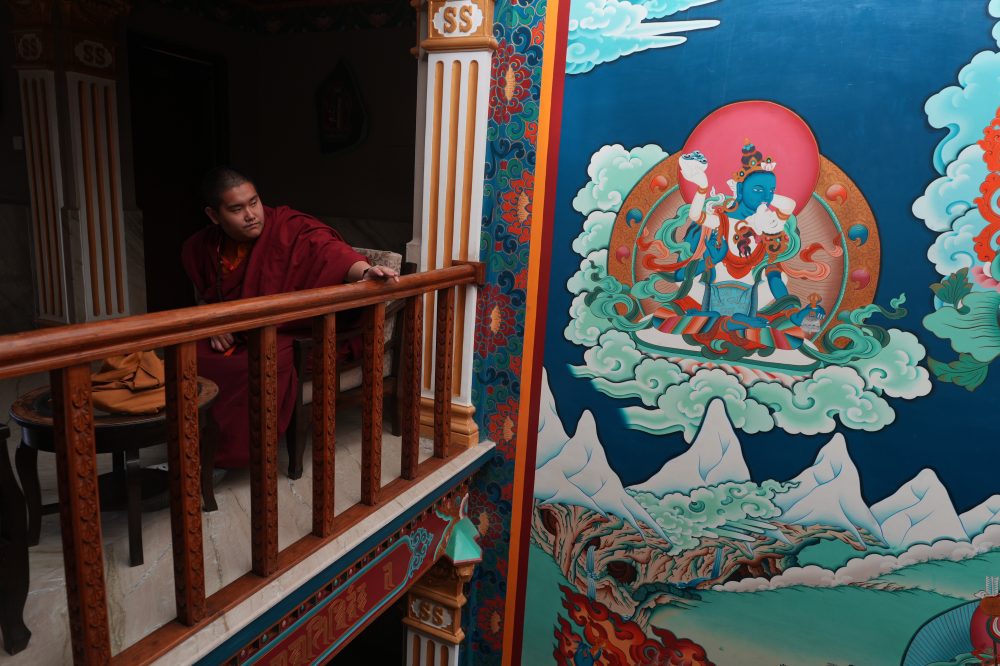
Daily routines began at sunrise. Following prayer sessions, he would walk from his lodging through bustling Kathmandu streets near the towering white dome and spire of Boudhanath — surrounded by vibrant Tibetan prayer flags and the painted, watchful eyes of the Buddha.
After the Dalai Lama’s recognition when he was 2 years old, Dorje dedicated much of his childhood to monastic preparation. He committed sacred scriptures to memory, studied calligraphy, and absorbed Buddhist teachings.
Identifying a lama relies on spiritual signs and visions.
Dorje received identification at 4 months old from Kyabje Trulshik Rinpoche, a respected Tibetan Buddhism master. Multiple lamas later verified him as the eighth Terchen Taksham Rinpoche — the lineage’s first incarnation dates to 1655.
Dorje’s parents brought him before the Dalai Lama during a 2010 Wisconsin visit by Tibetan Buddhism’s spiritual leader. The Dalai Lama performed a ceremony cutting a lock of Dorje’s hair. He recommended the parents allow their son to remain in America to master English before monastery enrollment.
During childhood, he frequently questioned why he couldn’t sleep in on weekends and watch cartoons like his peers. His father would explain that eventually it would benefit him, “like planting a seed that one day would sprout.”
Speaking both English and Tibetan fluently, Dorje thrived in public education. Despite his 2019 lama enthronement ceremony in India, his parents permitted him to complete his American education.
Throughout his upbringing, he displayed a Dalai Lama photograph in his bedroom above DVD collections of “The Simpsons,” “South Park,” and “Family Guy,” alongside the manga graphic novel series “Buddha.”
He struck an agreement with his father, receiving Pokémon cards for memorizing Buddhist scriptures. He amassed hundreds of cards, occasionally hiding them in his robes during ceremonies.
Each morning began with sacred text recitation. School followed, then football practice. He returned for tutoring sessions on Tibetan history and Buddhism. Evenings involved calligraphy practice or listening to rap artists. After receiving his driver’s license, he drove around enjoying Taylor Swift music.
As a passionate sports enthusiast, he supports the Atlanta Hawks in basketball, Real Madrid in soccer, and the Atlanta Falcons in football.
During football games, teammates appreciated his upbeat attitude; he encouraged them to enjoy themselves and maintain perspective after defeats. However, during his final senior season game, he wept, understanding it would probably be his last time playing.
He also pursues writing and journalism interests. During high school, he created an award-winning Tibet story for the student publication.
He frequently assisted with local Tibetan community events.
For his 18th birthday celebration, the AP documented when over 1,000 attendees gathered at the Tibetan American Foundation of Minnesota for his farewell party before departing for the Indian monastery.
He traveled light to his new environment: headphones, laptop, a Fantasy Football magazine, and a book about the Indian Buddhist master who introduced Tantric Buddhism to Tibet.
His parents accompanied him to New Delhi, then drove north to Dehradun near the Himalayan foothills, resembling a college send-off. They purchased him a larger bed, more suitable for a football player than a monk. They painted his monastic quarters and installed a shrine for prayer.
He studied Buddhist philosophy and practiced calligraphy and chanting in India while his friends attended history, science, and literature courses at American colleges.
Despite the 10-hour time difference, he maintained friendships back home through texts and WhatsApp.
During breaks from chanting and prayers, he assembled Legos, visited an arcade for FIFA soccer games, and watched Marvel superhero movies plus NBA and NFL games on his laptop. He expressed particular excitement about the Super Bowl halftime show and praised what he called an incredible performance by Bad Bunny.
This marked his first experience with ascetic living. He consumed daily portions of rice and lentils and hand-washed his clothing.
However, he adapted well, easily connecting with monks from across Asia while discussing spirituality, popular culture, and sports.
After several years of reflection and ascetic practice, Dorje plans to return to America for teaching within Minnesota’s Buddhist community.
His aspiration involves becoming “a leader of peace,” modeling himself after Nelson Mandela, Gandhi, and the Dalai Lama. It represents a lengthy journey that started shortly after birth. Yet he feels prepared, stating that this “is just the beginning.”
KATHMANDU, Nepal — In a monastery nestled within the Himalayan foothills, a 19-year-old Buddhist monk provides blessings to countless devotees. Using a ceremonial vessel and peacock feather, he touches each bowed head while sprinkling blessed water for spiritual protection, cleansing, and enlightenment. He pauses to acknowledge children who watch him with wonder, respect, and amazement. He works to match the rhythm of fellow spiritual leaders who, like himself, are selected few offering these final benedictions.
Half a year before this moment, thousands of miles distant, this young man was staying up all night playing Madden NFL on his Xbox near Minneapolis. During breaks, he would grab pizza rolls and Diet Coke, or check messages about upcoming visits to TopGolf or Buffalo Wild Wings.
These contrasting environments both represent home for Jalue Dorje.
Living as an ordinary American teenager, he developed a passion for rap music, gaming, and football. He also serves as an emerging spiritual guide who was identified by the Dalai Lama and additional Tibetan Buddhist authorities as a reincarnated lama from childhood.
At 19 years old, he completed high school last year and relocated to northern India to enter the Mindrolling Monastery, approximately 7,200 miles from his Columbia Heights residence. He recently visited Nepal to reunite with his parents, who traveled from Minneapolis, and participated in holy ceremonies and lessons led by the abbot of Shechen Monastery.
Traditional burgundy and gold monastery garments had taken the place of his typical hoodies and sweatpants. Yet he continued referencing both Drake and Shantideva, the 8th-century Indian monk. Under his robes, he sported white Crocs adorned with “The Simpsons” Jibbitz charms. He frequently wore these at Shechen Monastery, located near the 1,500-year-old Boudhanath stupa, among Tibetan Buddhism’s holiest locations.
Every morning brought dawn awakening. Following prayers, he walked from his lodging through busy Kathmandu streets filled with fruit vendors, incense, and spices, avoiding mopeds near the towering white dome and spire of Boudhanath with its vibrant Tibetan prayer flags and painted, watchful Buddha eyes.
On one particular day, he approached the monastery and removed his Crocs before entering a prayer hall designated for doctorate-holding monks and lamas. Incense filled the air. Ancient instruments — cymbals, bells, and drums — accompanied the monastic chanting.
Standing before three massive golden Buddha statues, Dorje bowed to Shechen Rabjam Rinpoche, the monastery’s spiritual leader, and offered him a golden plate representing the entire universe, plus a “khata” — a white Tibetan ceremonial scarf.
This marked Dorje’s first mandala, or offering, since beginning his destined spiritual journey. He describes this as a moment of recognition regarding his progress.
“This is the real one, you know? We’re here and this is really happening,” he says. “I’m doing what the prophecy fulfilled.”
Following the Dalai Lama’s recognition at age 2, Dorje dedicated much of his childhood to monastic preparation, memorizing holy texts, practicing calligraphy, and studying Buddha’s teachings.
Lama identification relies on spiritual indicators and visions. Dorje was four months old when Kyabje Trulshik Rinpoche, a respected Tibetan Buddhism master, identified him. Multiple lamas later confirmed him as the eighth Terchen Taksham Rinpoche — the original was born in 1655.
Jalue Dorje’s parents brought him to meet the Dalai Lama in 2010 during Tibetan Buddhism’s spiritual leader’s Wisconsin visit. The Dalai Lama performed a hair-cutting ceremony and recommended the parents allow their son to remain in America to master English before monastery enrollment.
“From my parents’ end, educating me was a really big one,” Dorje says. “They followed the words of his holiness; he laid the foundation, and they took that gamble.”
During childhood, he questioned why he couldn’t sleep late on weekends and watch cartoons like other children. His father assured him this would eventually benefit him, “like planting a seed that one day would sprout.”
He recalled early morning recitation and memorization sessions. He remembered online critics questioning his status as a reincarnated lama, which upset his parents. He also remembered both parents working diligently cleaning hotel rooms and hospital laundry while raising him.
“It wasn’t all rainbows and unicorns every day,” Dorje says. “We overcame a lot.”
Speaking both English and Tibetan fluently, Dorje succeeded in public school. Despite his official lama enthronement during a 2019 India ceremony, his parents allowed him to remain in America until graduation.
During his upbringing, he displayed a Dalai Lama photograph in his bedroom above DVD collections of “The Simpsons,” “South Park,” and “Family Guy,” alongside the “Buddha” manga series.
His bedside table held a journal containing football play diagrams he hoped to execute as left guard for his school team. His living room wall featured a poster showing his senior photo in sunglasses and football uniform, making a meditation gesture with his fingers.
He maintained an arrangement with his father, receiving Pokémon cards for memorizing Buddhist scriptures. He accumulated hundreds, occasionally hiding them in his ceremony robes. “I remember,” he says, “when I first learned my Tibetan ABCs, when I was able to recite it all by memory, my dad was so happy.”
His days were extensive. Each morning began with sacred text recitation. School followed, then football practice. He returned home for Tibetan history and Buddhism tutoring. Evenings involved calligraphy practice or listening to rap music. After getting his license, he drove around enjoying Taylor Swift.
What alternative career might he have pursued? “Sports journalist would have been cool,” he says. He enjoys writing. As an enthusiastic fan, he supports the Atlanta Hawks in basketball, Real Madrid in soccer, and the Atlanta Falcons in football.
His preferred athlete is U.S. figure skater Alysa Liu: “She brings so much swagger, but it doesn’t overshadow the sports.” During high school, he wrote an award-winning Tibet story for the student newspaper.
On the football field, teammates appreciated his optimism; he encouraged them to enjoy themselves and maintain perspective during defeats. However, during his final senior season game, he cried, understanding it would likely be his last game ever.
He frequently assisted with local Tibetan community events. For his 18th birthday, over 1,000 people gathered at the Tibetan American Foundation of Minnesota for his final celebration before joining the India monastery.
During the lengthy flight, his thoughts wandered.
“I was like, ‘Dang! I’m missing the first week of NFL!’” He packed minimally: headphones, laptop, a fantasy football magazine, and a book about Guru Rinpoche, the Indian Buddhist master who introduced Tantric Buddhism to Tibet.
His parents accompanied him to New Delhi, then drove north to Dehradun, near the Himalayan foothills, in a college drop-off equivalent. They purchased him a larger bed. They painted his monastic room and built a shrine for dawn and dusk prayers.
As an only child, his departure brought tears from his parents. His longest previous solo journey from home was a three-day northern Minnesota camping trip.
“Everything leading up to this point in the history of all your lifetimes — the billions and billions of lifetimes you accumulated — leads to your family,” Dorje says. “To have such great parents is a result of a great past life’s merit. But not only past life merit, but the connection of karma — and love.”
Initially, his mother, Dechen Wangmo, worried about her toddler son during extended prayer sessions.
“Would he be hungry? What if he fell asleep?” she recalled thinking. She continued worrying about him as a teenager: “He’s a tulku,” she says, using the Tibetan term for a reincarnated lama, “but he’s my son.”
To her relief, he flourished. While his friends attended history, science, and literature classes at U.S. colleges, he studied Buddhist philosophy and practiced calligraphy and chanting in India.
“He’s kind of found his groove at the monastery,” says Kate Thomas, one of his Minneapolis tutors.
Despite the 10-hour time difference, he maintained contact with home friends through texts and WhatsApp. During free time, he assembled Legos, visited an arcade for FIFA soccer video games, and watched Marvel superhero films plus NBA and NFL games on his laptop. He was particularly excited about the Super Bowl halftime show: “That was an incredible performance by Bad Bunny — I can’t lie!”
This marked his first experience with ascetic living, consuming daily rice and lentil rations and hand-washing his clothing. However, he adapted well, befriending monks from across Asia while discussing spirituality, popular culture, and sports.
“Dudes are dudes!” he says.
This was his first opportunity socializing with other “tulkus” — reincarnated spiritual masters near his age. Among them was Trulshik Yangsi Rinpoche, 13. He’s considered the reincarnation of Kyabje Trulshik Rinpoche — the Tibetan Buddhist master who originally recognized Dorje as a tulku at four months old.
At the monastery, they connected over their shared love of Tintin comics. Dorje became his English instructor.
“I think of him as my spiritual teacher,” Dorje said after sharing a meal with the younger lama. “I’m profoundly grateful that I get to repay my debt to the one who found me and improving his English.”
Yangsi Rinpoche smiled, then reflected: “He’s my best friend.”
Hours after Dorje blessed thousands — including his parents — on the final day of the 12-day ceremonies, the family rose before dawn to visit the ancient Maratika or Halesi Mahadev Caves, 100 miles southwest of Mount Everest. They traveled eight hours on dirt roads, crossing mountains and valleys, for a pilgrimage to caves sacred to both Hindus and Buddhists.
After exploring the caves with wonder, Dorje sat cross-legged on rocky ground beside his father, Dorje Tsegyal. They prayed together, as they had done nearly daily since his childhood.
After several years of contemplation and ascetic practice, Dorje plans to return to the United States to teach Minnesota’s Buddhist community at the Nyingmapa Taksham Buddhist Center. His objective: becoming “a leader of peace,” following examples set by the Dalai Lama, Nelson Mandela, and Gandhi.
This represents a lengthy path that started shortly after his birth. He feels prepared. “This,” he says, “is just the beginning.”
Authorities in the Czech Republic have arrested a 35-year-old suspect in connection with the theft of an ancient religious relic from a church in the northern part of the country, officials announced Thursday.
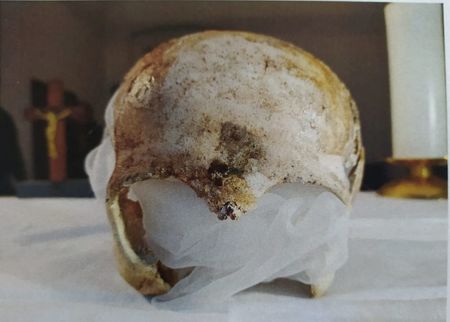
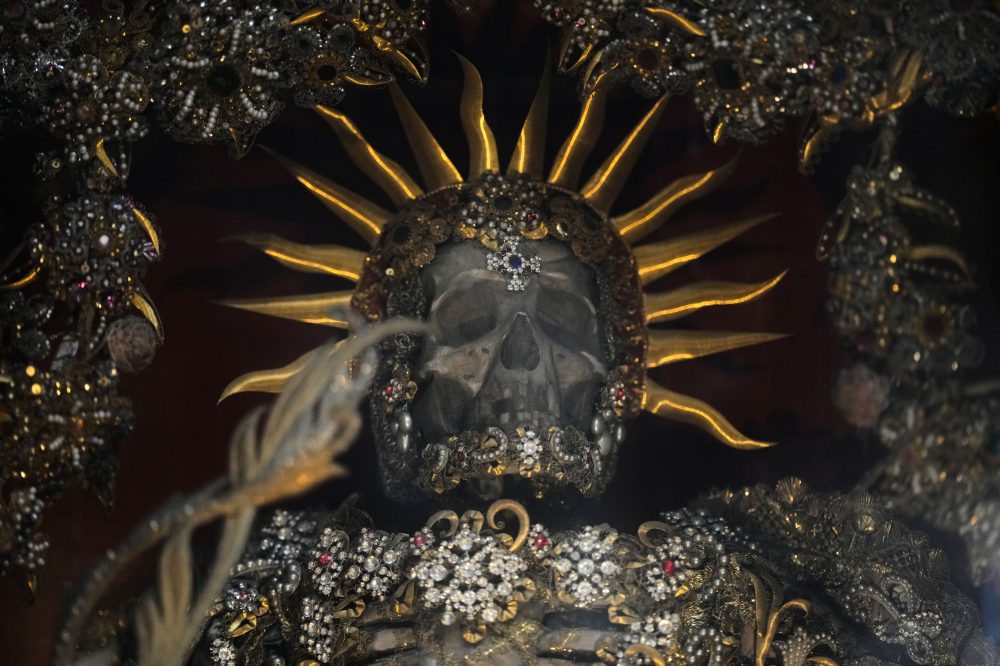
The stolen item was an 800-year-old skull believed to belong to Saint Zdislava of Lemberk, who lived between 1220 and 1252. The saint was recognized for her charitable work and dedication to helping the poor, and received canonization from Pope John Paul II in 1995.
Security footage captured a figure wearing black clothing carrying the relic while moving through the pews of the Saint Lawrence and Saint Zdislava basilica in Jablonne v Podjestedi, located approximately 110 kilometers north of Prague, according to police reports.
Law enforcement officials announced on X Thursday evening that investigators “managed to obtain information about the location of the rare relic.”
Following the theft, Prague Archbishop Stanislav Pribyl described the incident as “devastating news,” noting that the skull holds special significance for religious pilgrims who come to venerate it.
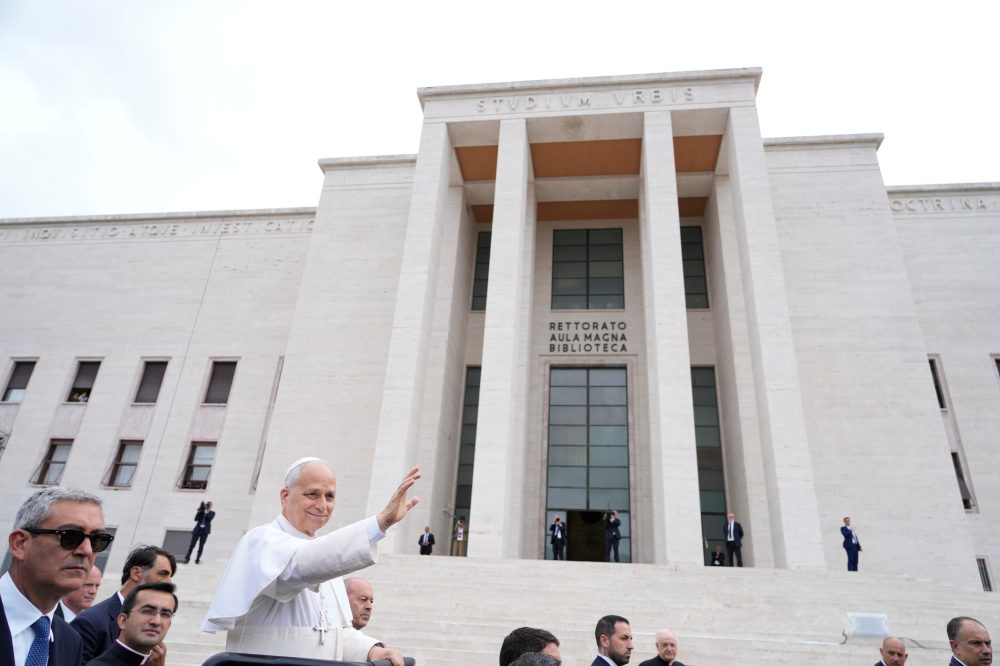
ROME — During a groundbreaking visit to Rome’s La Sapienza University on Thursday, Pope Leo XIV delivered strong criticism against the growing use of artificial intelligence in warfare, warning that such technology is pushing humanity toward a “spiral of annihilation.”
The papal address marked a historic moment as it was the first time a pope had spoken at the campus since Pope Benedict XVI canceled a planned appearance in 2008 due to faculty and student opposition.
The American pontiff received an enthusiastic reception, particularly from a group of Palestinian students who had just arrived in Italy this week through a “humanitarian corridor” from Gaza to pursue their education. Since the Israeli war against Hamas in Gaza started in 2023, the Italian government has collaborated with Catholic organizations to bring hundreds of Palestinians to Italy for educational opportunities and medical treatment.
Pope Leo XIV had the opportunity to meet with some of these Gaza students both at the campus chapel during an initial greeting and following his main address in the university’s primary lecture hall. The institution itself dates back to 1303 when it was established by Pope Boniface VIII.
During his remarks, the pope criticized the sharp rise in military expenditures this year, particularly across Europe, arguing that such spending comes at the cost of educational and healthcare funding while “enriching elites who care nothing for the common good.”
He advocated for enhanced oversight of artificial intelligence development and implementation in both military and civilian applications “so that it does not absolve humans of responsibility for their choices and does not exacerbate the tragedy of conflicts.”
“What is happening in Ukraine, in Gaza and the Palestinian territories, in Lebanon, and in Iran illustrates the inhuman evolution of the relationship between war and new technologies in a spiral of annihilation,” he said.
The pontiff emphasized that educational institutions and research efforts should pursue the opposite path, one that prioritizes human life “the lives of peoples who cry out for peace and justice!”
Pope Leo XIV has made artificial intelligence a central focus of his papacy, particularly its role in warfare and daily life. These topics are anticipated to feature prominently in his upcoming first encyclical, scheduled for publication in the coming weeks.
Among the Gaza students who met the pope was Nada Rahim Jouda, 19, who had arrived in Italy just two days earlier. She expressed amazement at her new circumstances studying business science in Rome, describing the city as “like heaven for me.”
“Everything here is green and it’s not gray and troubles everywhere and miserable people in the streets,” she said.
However, Jouda continues to worry about her family members still in Gaza: her mother, who is recovering from leukemia, and her younger sisters, ages 17 and 13. Throughout the Gaza conflict, her family was displaced four times, and her mother was unable to access cancer treatment or medical monitoring.
“They all rely on me. I’m the only hope that they have,” she said.
SRN News has unveiled a new daily audio program called ‘Global Landscape,’ which focuses on religion-related news stories from across the globe.
The brief two-minute broadcast offers audiences a daily roundup of the most important faith-based news, covering significant developments, cultural changes, and major events that highlight how religion intersects with world affairs.
The program aims to keep listeners informed about timely religious developments happening internationally, providing a quick but comprehensive overview of how faith communities and religious issues are making headlines around the world.
A group of six transgender individuals from Idaho have filed a federal lawsuit challenging a controversial new state law targeting bathroom usage. The legislation, set to take effect this July, establishes criminal penalties for men who enter women’s restrooms, changing rooms, or locker facilities in both government and private properties. First-time violations would result in misdemeanor charges carrying up to one year of imprisonment, while repeat offenses escalate to felony charges with potential five-year prison sentences. Legal representation for the challengers comes from the American Civil Liberties Union and Lambda Legal. Advocates for the Idaho legislation argue it serves to safeguard women.
Well-known evangelist Greg Laurie has announced plans for another Harvest Crusade event at Angel Stadium in Anaheim, California this July. The single-evening gathering will feature performances from notable Contemporary Christian artists including Phil Wickham, Michael W. Smith and Cody Carnes. Laurie commented, “We’ve been doing Harvest Crusades for 37 years now, but there’s nothing like the spiritual hunger we’ve seen recently in our nation, especially among young people. The heart of the event remains the same — to proclaim the gospel and invite people to experience the hope only Jesus can give.” The event will be available for viewing through multiple streaming services.
Dr. Marty Makary, who leads the Food and Drug Administration, has announced his departure following a turbulent period marked by sustained criticism from pro-life organizations. These advocacy groups have criticized Makary for allegedly delaying an internal assessment of the abortion medication mifepristone. Their goal involves reversing current FDA policies that permit mail delivery of the drug. Marjorie Dannenfelser, president of Susan B. Anthony Pro-Life America, stated “We look forward to a new FDA commissioner who will put an end to the mail-order abortion drug regime.” Kyle Diamantas, who currently oversees the agency’s food division, is anticipated to serve as interim commissioner.
A major New York healthcare network has disclosed receiving a federal grand jury subpoena from Texas authorities requesting information about minors who received gender transition surgeries and their medical providers. NYU Langone Health represents the first hospital system to publicly confirm receipt of such a subpoena as part of an ongoing federal criminal probe. The legal document requests patient information for individuals under 18 who underwent these procedures between 2020 and 2026, along with provider identification. The Justice Department has previously issued over 20 civil requests to medical professionals and facilities nationwide.
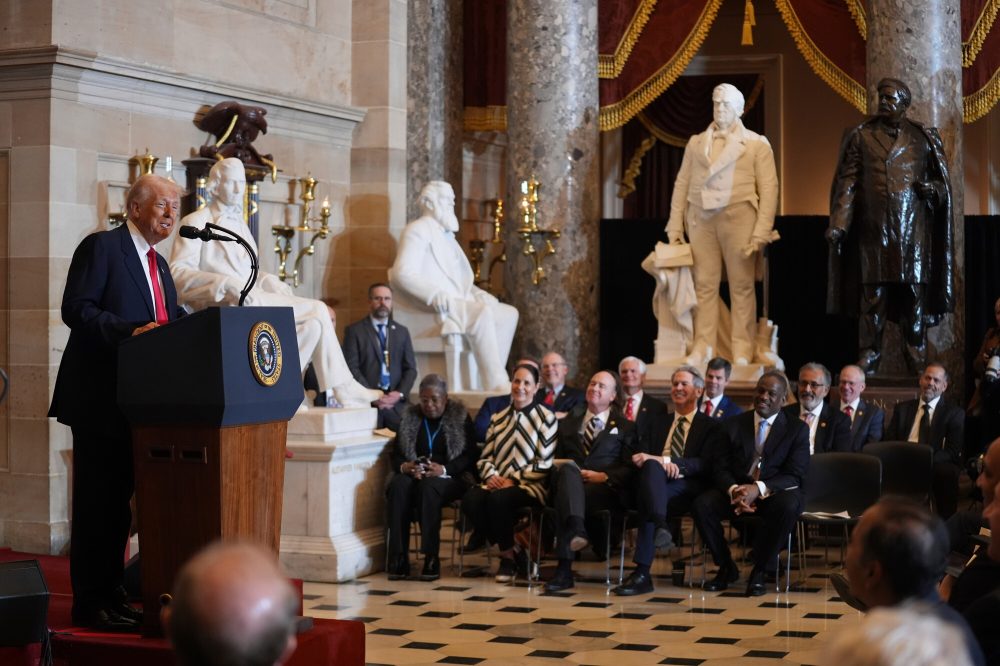
WASHINGTON – This Sunday, President Donald Trump and key administration officials will participate in a prayer event at the National Mall in Washington alongside predominantly conservative Christian religious leaders. The gathering, titled Rededicate 250, aims to serve as a “rededication of our country as One Nation Under God” in celebration of America’s 250th birthday.
The all-day event is coordinated by Freedom 250, a nonprofit organization. According to their website, the group operates as a public-private partnership “leading the presidential programming for America’s 250th anniversary,” building toward the Declaration of Independence anniversary on July 4.
Event planners anticipate thousands will attend Rededicate 250, which features worship music, prayers and addresses from Cabinet members and other Republican leaders, alongside religious figures and additional speakers. Mr. Trump and some participants will deliver remarks via video, while others will appear in person. Among the confirmed speakers are Secretary of State Marco Rubio, Secretary of Defense Pete Hegseth and House Speaker Mike Johnson of Louisiana.
“Our founders knew two simple truths,” Hegseth stated in a promotional video for the gathering that showcases various Cabinet secretaries.
“Our rights don’t come from government, they come from God. And a nation is only as strong as its faith,” Hegseth continued, whose incorporation of Christian language to support U.S. and Israeli military actions against Iran and in other official capacities has faced criticism.
A second promotional video for Rededicate 250 combines Christian and American symbols — images of a cross placed on an American flag, a choir in robes, worshippers with raised hands — alongside a brief shot of a man in prayer wearing a Jewish skullcap. The voices of well-known preachers can be heard, with one declaring, “Faith in God is the value that most shaped America.”
The religious speakers at Rededicate 250 include multiple longtime Christian allies of Trump, such as evangelist Franklin Graham and pastors Paula White-Cain, who leads the White House Faith Office; Robert Jeffress; and Samuel Rodriguez. The lineup also features Catholic Cardinal Timothy Dolan and Bishop Robert Barron and Orthodox Jewish Rabbi Meir Soloveichik, the sole faith leader representing a non-Christian religion.
The musical performers include Grammy-winning contemporary Christian artist Chris Tomlin.
Several key participants describe Rededicate 250 as a Christian event.
“I believe it’s a moment when the Body of Christ, the church, comes together and will boldly declare that America still needs God,” Georgia pastor Jentezen Franklin said in a social media video shared on X. “This is an opportunity for believers to stand together as one nation under God. … I’m honored that they’ve asked me to speak and share the Gospel.”
Johnson highlighted that the gathering coincides with the 250th anniversary of Congress designating May 17, 1776, as a “day of Humiliation, Fasting and Prayer” for the Revolutionary cause.
The Rededicate 250 gathering runs parallel to other White House efforts targeting President Trump’s devoted base of conservative Christians, especially white evangelical Protestants.
Multiple participants — including Graham, White-Cain, Dolan, Barron and Soloveichik — also sit on the Religious Liberty Commission. This group is developing a report based on its findings following a year of hearings.
Various Rededicate 250 participants also joined Mr. Trump in a Bible-reading marathon.
Additionally, a distinct Trump administration task force recently claimed discrimination against Christians during Democratic President Joe Biden’s tenure.
The report cited such bias in substantial penalties levied against two Christian institutions — Grand Canyon University for allegedly misleading thousands of students about program expenses, a ruling later overturned, and Liberty University regarding its management of crime data and sexual assault incidents. Choirs from both universities are performing at Rededicate 250.
According to a 2022 Pew Research Center study, six out of 10 U.S. adults, and eight out of 10 white evangelical Christians, believed the nation’s founders originally envisioned America as a Christian nation.
A group of Black divers recently completed an emotional journey to Key West, Florida, where they visited an underwater memorial commemorating victims of the slave trade from more than three centuries ago.
Ruthie Browning descended into the clear waters expecting to find “a big, old rock with stuff growing all over it.” Instead, she discovered something far more profound at the site where the British slave vessel Henrietta Marie met its fate 326 years ago.
The ship had transported 200 enslaved individuals from West Africa to Jamaica before beginning its return voyage to Britain in 1700, during the height of the trans-Atlantic slave trade. The vessel was lost in the turbulent waters of New Ground Reef, where the Atlantic Ocean and Gulf of Mexico converge.
A concrete memorial now marks the location of the tragedy.
When Browning and her fellow pilgrims prepared for their dive in early May, conditions were ideal. The memorial, positioned 20 feet beneath the surface, could be seen clearly through the still water. “I thought I’d look at it, pay my respects and that’ll be that,” she explained.
However, the experience proved far more moving than anticipated. Tears welled in her eyes as she quietly waited, hoping her ancestors might communicate with her.
While observing the memorial, which has transformed into a living reef adorned with corals and sponges, she sensed her ancestors speaking: “My daughter, we’re so glad you’re here.”
Deeply moved, Browning remained near the memorial, which bears the inscription: “Henrietta Marie. In memory and recognition of the courage, pain and suffering on enslaved African people. Speak her name and gently touch the souls of our ancestors.”
She experienced overwhelming thankfulness.
“Without their stamina, their spirit and survival, I wouldn’t be here today. None of us would be here today,” she reflected.
For these Key West visitors, the journey represented an act of reverence, a search for ancestral connections, and spiritual nourishment for future generations. They had attempted to reach the memorial the previous summer, but rough seas prevented the dive.
“The ancestors were not smiling down on us then,” explained Jay Haigler, master diving instructor with Underwater Adventure Seekers, the world’s oldest Black scuba diving club. “This year was different.”
Michael Cottman, who authored two books about the Henrietta Marie and participated with the National Association of Black Scuba Divers when they installed the memorial in 1992, noted that such journeys were never intended to be simple.
Cottman describes the location as containing “spiritual turbulence.”
“Even if it wasn’t carrying enslaved people, it embodies the oppression of our people,” he stated.
The organization conducted annual pilgrimages during the 1990s, though these eventually ceased. The recent expedition was initiated by an underwater interview project suggested by Stanford University anthropologist Ayana Omilade Flewellen, who sits on the board of Diving With a Purpose, a Black scuba diving organization focused on documenting slave shipwrecks.
The underwater interviews also provided Flewellen with a personal connection as a pilgrim. “I felt a kind of tenderness in my heart.”
The spiritual encounter helped her process traumatic history rooted in death and suffering.
“It’s hard to attach your life with this history,” she said. “The only way I could do that was turn toward what the divers were experiencing on this pilgrimage. That’s where it all bloomed and blossomed.”
The pilgrims also gathered on shore. At Higgs Beach on Key West’s southern side, they visited a memorial and burial site for 297 African refugees who perished in 1860 after the U.S. Navy rescued them from three slave vessels — Wildfire, William and Bogota. More than 1,400 refugees were housed by the government in a facility and given food and medical treatment, according to Corey Malcom, the Florida Keys History Center’s lead historian.
Though many were returned to Africa, hundreds died from the terrible conditions aboard the ships, he explained.
The burial site remained largely unknown for decades until historians and geologists located it using ground-penetrating radar. In 2010, a large pit containing 100 additional bodies was found at a community dog park across the street. The area is now enclosed, Malcom noted.
On Saturday, pilgrims gathered at the cemetery for an emotional libation ceremony, a sacred, ancient ritual from Afro-Caribbean spiritual traditions. Group members tearfully honored their ancestors one by one, pouring white rum onto the beach. The clear alcohol is thought to serve as a messenger, inviting ancestral spirits for their blessings.
“To honor your ancestors and the road they’ve traveled is very, very important because we’re all connected,” said Addeliar Guy, one of the group’s elders and an experienced diver.
Joel Johnson spent weeks preparing for his first open-water dive at the Henrietta Marie location. Johnson, who serves as president and CEO of the National Marine Sanctuary Foundation, said he was surprised by the vibrant life surrounding the monument as he approached. Fish swam among corals that moved with the currents, while shells lay scattered on the sandy floor.
Conservation efforts and habitat protection also preserve the history beneath the waves, Johnson observed.
“This was not a place of death, but a place of life,” he said. “I didn’t feel like I was grieving for my ancestors. I felt like I was in the stream of history, recognizing that I’m a part of that. It made me happy.”
While submerged, Michael Philip Davenport, president of Underwater Adventure Seekers, felt inspired to create artwork depicting ancestors rising from the monument.
“Their spirituality is still in that space,” he said. “I was feeling their lives and their tragedy.”
Dr. Melody Garrett, an anesthesiologist, began training with Diving With a Purpose in 2011 and has participated in missions to locate the Guerrero, a Spanish pirate vessel that sank in 1827 while carrying 561 enslaved Africans.
“A pilgrimage like this is so important now more than ever because there is an effort to cover up, rewrite and change history,” she said. She referenced the Trump administration’s actions to eliminate references to slavery and Black history at National Park Service locations and federal museums, calling it divisive “anti-American propaganda.”
For Garrett, witnessing these historical remnants provides her with a strong sense of American identity as the nation approaches its 250th anniversary.
“Black people have been here since before this country’s inception, longer than many other people have,” she said. “This is our country.”
Pieces of the Henrietta Marie’s wooden hull remain buried beneath sand layers at the site. The wreckage was found in 1972 by treasure hunter Mel Fisher, but hundreds of intact artifacts weren’t recovered until 1983. Only a handful of slave ships have been discovered among the 35,000 vessels used to transport over 12 million enslaved Africans; most ships were deliberately destroyed to conceal the illegal trade.
The recovered items, which fill an entire floor of the Mel Fisher Maritime Museum in Key West, include more than 80 sets of iron shackles, many sized for children.
When Kory Lamberts first walked across wooden planks in the exhibit, they creaked unexpectedly.
“It was visceral,” he said. “It took me to a place. It also tells me that these were young people — children. These are baby shackles. There’s no sugarcoating it. The truth really hits you.”
During his Key West visit, Lamberts — who operates a nonprofit promoting aquatic equity — said he brought back fish from the Henrietta Marie site, which he imagined had absorbed the ancestors’ DNA. The group consumed the fish for dinner the evening after their dives — like a religious sacrament.
“I don’t practice a faith, but isn’t this what people are doing every Sunday at church?” he asked. “I wasn’t just bonded with this site through the experience of being there, but at this molecular level with a full circle moment of connection with myself and my history.”
The Southern Baptist Convention has reached a significant achievement in its pro-life advocacy efforts, providing its 100th ultrasound machine to pregnancy centers across the country. The milestone was accomplished through the work of the denomination’s Ethics and Religious Liberty Commission.
According to Rachel Wiles, a spokesperson for the ERLC, the initiative strategically targets specific areas of the country. “By funding ultrasound machines in pro-choice states where few, if any, protections exist for the vulnerable preborn and where many travel to receive abortions, we strengthen pro-life centers engaged in life-saving work,” Wiles explained to the Christian Post.
The program represents the denomination’s ongoing commitment to supporting pregnancy resource centers that provide alternatives to abortion services.
Montgomery County officials in Ohio have reached a settlement in their legal dispute with Gracehaven, a Christian ministry focused on foster care services. The disagreement arose when county officials demanded that the organization hire individuals who did not share their Christian faith as a condition for maintaining their business relationship. Alliance Defending Freedom, which provided legal representation for the ministry, stated that “The government can’t deny public benefits to a ministry that is caring for young survivors of sex trafficking solely because of its religious character.” The organization specifically works with young people who have survived sex trafficking.
A prominent atheist organization is raising objections to a proposed national monument that would feature the phrase “In God We Trust.” The structure, designed to mirror Paris’s famous Arc de Triomphe, has drawn criticism from the Freedom From Religion Foundation, described as one of the nation’s largest atheist organizations. According to reports, the Foundation regularly works to remove Christian symbols and references from public spaces. The planned archway would commemorate the United States’ upcoming 250th anniversary and function as an entrance point to Washington DC.
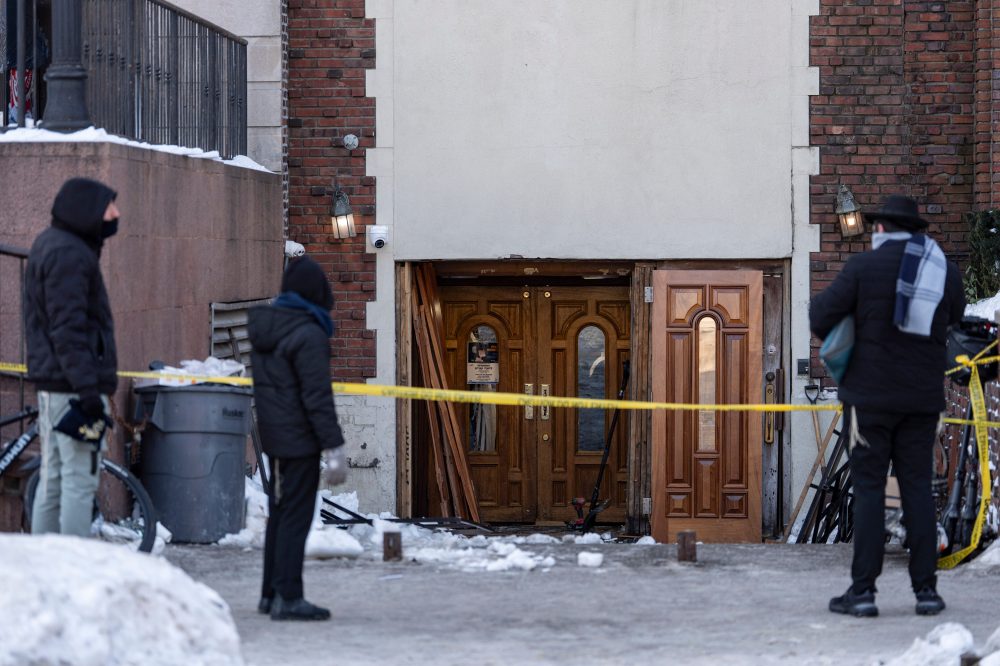
A New Jersey man admitted in federal court Wednesday that he deliberately crashed his vehicle into a major Jewish religious headquarters in Brooklyn, acknowledging to the judge that his intention was to harm the sacred site.
Dan Sohail, 36, drove his car into an entryway of the crowded Brooklyn synagogue five times in a row this past January, first removing barriers and warning bystanders to get out of his path, according to federal authorities. The attack resulted in approximately $19,000 in property damage that he is required to reimburse.
The Carteret, New Jersey resident settled his case without facing hate crime charges, instead entering a guilty plea to deliberately destroying religious property. While the maximum penalty could reach three years imprisonment, federal guidelines suggest a sentence of up to six months, according to both prosecutors and Sohail’s attorney, Mia Eisner-Grynberg.
Judge Eric N. Vitaliano has not scheduled sentencing yet. Sohail has remained in custody since his arrest and has already spent more than three months incarcerated.
Present in the courtroom during the guilty plea, Chabad Rabbi Yaacov Behrman expressed frustration about the potential for what he viewed as insufficient punishment.
“The message needs to be sent loud and clear that attacking a synagogue will be met with serious consequences,” Behrman, a Chabad spokesperson, told reporters afterward. “That message was not heard in court today.”
Initially, Sohail told law enforcement that he had lost control of his car and accidentally pressed the accelerator with his heavy footwear. However, during Wednesday’s federal court proceeding in Brooklyn, he admitted he traveled from New Jersey “and intentionally damaged the building” because it serves as the Chabad headquarters.
Dressed in a tan jail uniform, the bearded defendant with unkempt hair calmly informed Judge Eric N. Vitaliano that he executed his attack “by driving into the door.”
The facility located at 770 Eastern Parkway in Brooklyn houses both a synagogue and administrative offices, and contained roughly 2,000 people during the incident, Behrman reported. Nobody sustained injuries, and authorities found no weapons in Sohail’s vehicle.
Sohail’s “dangerous conduct was a targeted attack on the religious liberty and peace of worship to which every American is entitled,” the Justice Department’s civil rights division chief, Harmeet Dhillon, said in a statement.
Dhillon added that Sohail’s guilty plea sends a clear message that the Justice Department “will not tolerate acts of hatred and violence against religious institutions.”
Deliberately damaging religious property does not qualify as a hate crime under federal statutes. Sohail had been facing state-level hate crime accusations, but those charges were dismissed earlier as the federal case moved forward.
During a previous court appearance in March, Eisner-Grynberg revealed that Sohail was undergoing conversion to Judaism and had previously visited the Chabad Lubavitch location. Several weeks prior to the attack, authorities said, he had participated in a social event at the Chabad headquarters, where surveillance footage captured him dancing alongside Orthodox men.
Individuals familiar with Sohail, including relatives and Chabad rabbis, have indicated he showed no signs of antisemitic sentiment but struggled with psychological problems. At the March proceeding, prosecutor Eric Silverberg recognized “very significant mental health concerns” regarding Sohail.
The incident happened on the 75th anniversary of Rabbi Menachem Mendel Schneerson assuming leadership of the Lubavitch movement and sparked immediate alarm throughout the city. Schneerson passed away in 1994 but continues to be honored worldwide. Law enforcement has maintained an almost continuous presence around the Chabad Lubavitch world headquarters for many years.
The location was central to the Crown Heights riots in 1991, when Black neighborhood residents attacked Jews following a child’s death caused by a vehicle in Schneerson’s convoy. In 2014, a mentally unstable individual entered the synagogue and stabbed a rabbinical student, injuring him, before being fatally shot by police.
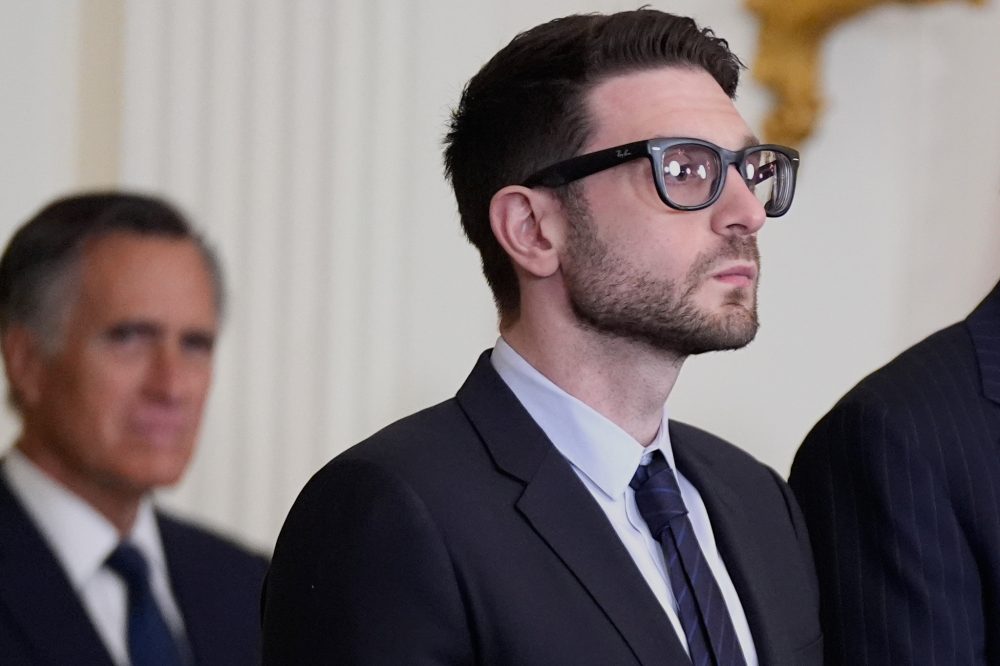
NEW YORK — The Open Society Foundations, established by billionaire philanthropist George Soros, announced Wednesday a $30 million initiative to combat religious hatred targeting Jewish and Muslim communities over the next three years.
The human rights organization made the commitment to build stronger interfaith alliances and safeguard vulnerable communities as religious violence escalates globally, particularly amid tensions surrounding the Israel-Hamas conflict and recent ceasefire developments.
Data from Tel Aviv University’s latest annual report shows that violence against Jewish people reached unprecedented levels last year — the worst in more than 30 years — including incidents like the December shooting during Hanukkah festivities in Australia. Simultaneously, anti-Muslim sentiment has surged, with some congressional Republicans making inflammatory statements suggesting Muslims “don’t belong in American society.”
Open Society Foundations President Binaifer Nowrojee addressed the crisis in a statement, saying: “The deep injustices occurring in the Middle East are fueling indiscriminate prejudice, dehumanization, and violence directed against both Muslims and Jews. Entire communities cannot be targeted simply because of their religion. Bigotry and intolerance in any form must be called out and confronted.”
This represents the organization’s most prominent public initiative since reports emerged last fall that federal prosecutors were exploring potential charges against the foundations. Former President Donald Trump specifically mentioned Soros while directing law enforcement to investigate what he termed “left-wing terrorism” — allegations the organization has consistently refuted while emphasizing their democratic mission.
Alex Soros, who assumed control of the family foundations in late 2022, brings personal perspective to the cause as both the child of a Holocaust survivor and spouse of a Muslim American. The organization noted that George Soros, despite his prominent role as a progressive political donor, frequently becomes the target of conspiracy theories that transform his influence into antisemitic narratives about shadowy control.
“At a moment like this we need to stand together and act,” Alex Soros stated in a social media video. “This investment is about keeping people safe and pushing back against hate.”
The funding will support educational programs addressing discrimination, empower community leaders who foster trust between groups, and defend free speech protections. Several organizations have already received grants, while others can apply for support. Beneficiaries include the Jewish Social Justice Roundtable, the Jewish Council for Public Affairs, and the Nexus Project. Shoulder to Shoulder, an interfaith coalition training religious leaders to combat Islamophobia, leads anti-Muslim discrimination efforts.
Amy Spitalnick, who heads the Jewish Council for Public Affairs, praised the comprehensive approach addressing both issues simultaneously. The funding will expand JCPA’s collaborative work with Muslim and Arab American organizations, relationships that have grown stronger since the Israel-Hamas war began. She highlighted joint programs including a fellowship and Capitol Hill event on Jewish-Muslim cooperation developed with the Muslim Public Affairs Council.
Spitalnick stressed the interconnected nature of hatred, explaining that normalizing Islamophobia, racism, and broader extremism creates conditions where antisemitism thrives.
“We need funders and others to recognize that treating any of these issues in silos doesn’t get at the root cause, doesn’t get at the broader resiliency we need right now,” Spitalnick explained. “The fact that Jewish safety requires Muslim safety, that Muslim safety requires Jewish safety.”
The foundations did not specify their definition of antisemitism — a contentious topic on college campuses and in state governments where debates continue over whether Israeli criticism constitutes anti-Jewish hatred. The selected grant recipients suggest a more flexible interpretation than organizations like the Anti-Defamation League, which publishes yearly antisemitic incident reports and considers anti-Zionist views as antisemitic.
The Nexus Project, by contrast, advocates for antisemitism definitions that exclude criticism of Israeli government policies. When the National Education Association considered restricting ADL educational materials, Spitalnick emphasized that “one does not need to align with the ADL on every issue.”
Andrés Spokoiny, who leads the Jewish Funders Network, estimates philanthropic organizations have invested hundreds of thousands of dollars in antisemitism prevention efforts, regardless of definitional differences. Other major initiatives include New England Patriots owner Robert Kraft’s $25 million “Stand Up to Jewish Hate” advertising campaign launched in March 2023 through his Foundation to Combat Antisemitism.
However, continued antisemitism has prompted some funders in Spokoiny’s network to question their strategies.
“There’s a lot of perplexity around what actually works,” he observed. “So many funders are very frustrated.”
ROME (AP) — Catholic Church leaders delivered an ultimatum Wednesday to a traditionalist organization, cautioning that their upcoming bishop consecrations without Vatican approval would constitute a schismatic action resulting in immediate excommunication.
Cardinal Víctor Manuel Fernández, the Vatican’s chief doctrine official, released a statement saying Pope Leo XIV is seeking divine guidance in hopes that Society of St. Pius X leadership “may reconsider the extremely grave decision they have made.”
The warning represents what appears to be a final attempt to prevent the organization’s scheduled July 1 consecration of four new bishops. Should they proceed, it would mark the most serious challenge to Leo’s papal authority as he works to mend relationships with traditionalist Catholics that deteriorated during Pope Francis’s tenure.
Known as SSPX, the organization was established in Écône, Switzerland in 1970 as a response against the progressive changes of the 1960s Second Vatican Council, which permitted Mass to be conducted in local languages instead of exclusively in Latin.
The organization, which maintains the pre-Vatican II Latin Mass tradition, initially separated from Rome in 1988 when founder Archbishop Marcel Lefebvre consecrated four bishops without Vatican permission. Church officials immediately excommunicated Lefebvre and the four bishops, leaving the group without official recognition within the Catholic Church.
Despite this break, the organization has expanded significantly over the following decades, establishing educational institutions, seminaries and parishes worldwide, along with communities of priests, nuns and laypeople devoted to traditional Latin Mass practices.
This expansion presents a genuine concern for Vatican officials as it essentially creates a competing Catholic church structure. Current SSPX data shows the group includes two bishops, 733 priests, 264 seminarians, 145 religious brothers, 88 oblates and 250 religious sisters from 50 different countries.
Rev. Davide Pagliarani, the present SSPX leader, revealed plans earlier this year for the July 1 bishop consecrations to serve their growing membership, explaining that the organization’s two elderly bishops can no longer adequately serve their worldwide community.
Vatican officials extended an invitation to Pagliarini for discussions, but the same doctrinal and logistical issues that have blocked reconciliation for five decades appear to have left both parties at a standstill.
In recent statements on the SSPX website, Pagliarani reinforced the necessity for additional bishops. He expressed approval that his announcement sparked discussions about what the SSPX views as a crisis within the church, including religious pluralism and doctrinal uncertainty.
“Now, what is at stake today is not an opinion, nor a sensibility, nor a preferential option, nor a particular nuance in the interpretation of a text, but the faith and morals that a Catholic must know, profess, and practise in order to save his soul and reach paradise,” he said.
The approaching consecrations, which would trigger automatic excommunications, represent the first concrete crisis for Leo, who has worked to improve relationships with Catholic traditionalists that deteriorated under Pope Francis after the Argentine pontiff restricted the use of the traditional Latin Mass.
Although the SSPX remains separated from the Holy See, many Catholic traditionalists who maintain loyalty to Rome while preferring the old Mass sympathize with the SSPX situation and are observing Leo’s response to this challenge.
SRN News has launched a new daily audio program that focuses on religious developments worldwide. The two-minute broadcast, called “Global Landscape,” offers listeners a quick overview of the most important faith-related stories happening across the globe each day.
The program aims to keep audiences informed about major religious events, cultural changes, and significant developments where faith intersects with world events. The brief format allows busy listeners to stay updated on these important stories in just a few minutes.
SRN News designed this feature to fill a gap in daily news coverage by specifically highlighting religious and faith-based stories that shape communities and cultures around the world.
Two members of Israel’s military will serve time behind bars following their involvement in vandalizing a Christian religious statue in southern Lebanon. The incident gained international attention when images of the desecration circulated widely online, generating significant public backlash.
Military officials announced that the service member who participated in the act will receive a 21-day prison sentence, while the individual who captured the photographs will serve 14 days. Israeli Defense Forces leadership issued a public statement emphasizing that it “views the incident with great severity and respects freedom of religion and worship, as well as holy sites and religious symbols of all religions and communities.” The vandalism occurred after Israeli military units gained control of southern Lebanese territory during the current conflict with Hezbollah that started in March.
Meanwhile, discussions about religious freedom are intensifying in the United States, particularly around the concept of church-state separation. While the actual phrase “separation of church and state” cannot be found within the Constitution itself, it originates from correspondence by Thomas Jefferson, who characterized the First Amendment as establishing “a wall of separation between church and state.” Legal systems continue to navigate the delicate balance between protecting religious expression and preventing government endorsement of faith. Dan Patrick, who leads President Trump’s Religious Liberty Commission, has publicly stated his belief that true separation between religious institutions and government does not exist.
Additional religious debates are emerging as federal authorities work to expand access to in vitro fertilization treatments. Many individuals who oppose abortion find IVF problematic due to potential harm to developing embryos during the process. Certain Christian denominations maintain that procreation should remain within traditional marriage relationships, making artificial reproductive technologies unacceptable. The Catholic Church has maintained its opposition to these procedures for decades, while evangelical Protestant groups are increasingly examining their positions. During 2024, the Southern Baptist Convention adopted measures calling for IVF limitations when the process results in embryo destruction.
In Supreme Court developments, Justice Clarence Thomas has achieved the milestone of becoming the second-longest serving justice in the court’s history, completing 34 years of service. Only Justice William O. Douglas served longer, and Thomas could surpass that record by 2028 if he continues in his role. Throughout his tenure, Justice Thomas has consistently supported religious freedom cases and opposed abortion rights. While he initially represented a small conservative faction, the court’s ideological balance has shifted significantly following President Trump’s appointment of three additional justices. At 77 years old, Thomas has not indicated any plans for retirement in the near future.
A European monitoring group has documented a troubling pattern of incidents targeting Christian communities across the continent during the month of April. The Observatory on Intolerance and Discrimination against Christians in Europe recorded 38 separate cases involving violence against religious leaders and congregation members, property fires, vandalism, and the desecration of sacred sites.
The organization published these findings to highlight the growing severity of anti-Christian sentiment throughout European nations. France led with the most documented cases at 10 incidents, while both Germany and Italy each reported seven separate occurrences during the same timeframe.
Churches across the nation are grappling with a growing shortage of pastors as fewer men choose to pursue careers in ministry. Recent data reveals that enrollment in Master of Divinity programs has dropped by 14 percent over the last five years, with Black Protestant denominations experiencing an even steeper decline of 31 percent.
While surveys suggest that religious leaders have mostly bounced back from the challenges brought on by the coronavirus pandemic, a significant portion of current pastors continue to contemplate leaving their calling altogether. The shortage has become so pronounced that some congregations have been forced to shut their doors or merge with other churches due to the inability to find pastoral leadership.
The devastating impact of Russia’s invasion has sparked an unexpected spiritual awakening throughout Ukraine, according to new reports from religious organizations. The Slavic Gospel Association indicates that the hardships and suffering brought by warfare have led countless Ukrainians to seek comfort and meaning through Christian faith.
Since the conflict began, more than 100 new Evangelical congregations have established themselves across the war-torn nation, representing a remarkable growth in religious communities during one of the country’s darkest periods.
Igor Bandura from the Ukrainian Baptist Union highlighted the dramatic increase in religious conversions, stating that “Over 13,000 people have been baptized — significantly more than before the war.”
These religious communities have become essential pillars of support for a nation under siege, providing both spiritual guidance and practical assistance to those affected by the ongoing conflict.
SRN News has launched a daily audio program that focuses on religious developments worldwide. The program, called “Global Landscape,” runs for two minutes each day and covers major faith-related news stories from across the globe.
The audio feature is designed to give audiences quick updates on important religious developments, changes in various faith communities, and major events where religion intersects with world affairs. The program aims to keep listeners current on how faith issues are impacting communities internationally.
SRN News produces the segment as part of its regular programming lineup, offering audiences a focused look at religious news that might not receive extensive coverage in mainstream media outlets.
Traditional Catholic leaders are expressing alarm over what they view as changing Vatican positions regarding LGBTQ Catholics during Pope Leo’s papacy. A Vatican task force recently published findings that included perspectives from two homosexual married Catholics who criticized the church’s longstanding positions on human sexuality. During a recent in-flight press briefing, Pope Leo indicated that the church’s focus on social justice, equality and freedom should take precedence over sexual morality teachings. Religious watchers suggest the pontiff may sideline sexuality-related matters going forward.
Following more than twelve months of testimony, President Trump’s Religious Liberty Commission is finalizing its policy suggestions. Commission members have outlined their priorities for the final document, including expanding opportunities for faith expression in educational institutions and government facilities. Additional proposals involve increasing government funding access for faith-based organizations and creating religious exemptions from various regulations and educational curricula. The commission’s leader has consistently maintained that “there is no separation of church and state.”
Following a decade of legal and cultural wins, LGBTQ rights groups are facing significant pushback. Recent years have brought considerable opposition, particularly regarding transgender issues affecting minors. Multiple states have prohibited biological males from participating in women’s athletics, while others have restricted gender transition procedures for children. Nine states are considering measures that would challenge legal same-sex marriage recognition, with most urging the Supreme Court to reconsider its 2015 marriage equality ruling. While these proposals lack legal authority, they could prompt fresh constitutional challenges.
Abraham Foxman, the influential longtime leader of the Anti-Defamation League who championed Jewish-American interests for nearly thirty years, has passed away at 86. During his 28-year tenure leading the ADL until his 2015 retirement, Foxman advised presidents, diplomats, business executives and public figures. He frequently confronted prominent individuals over antisemitic comments or portrayals while accepting subsequent apologies on behalf of the Jewish community. The organization issued a statement expressing that it “deeply mourns the loss of our longtime national director.”
Following a recent two-day gospel festival in Japan, Will Graham, the grandson of renowned evangelist Billy Graham, is preparing to address a massive crowd of 50,000 people at a stadium event in South Korea this weekend. The large-scale gathering is scheduled to occur in Uijeongbu (wee-jong-boo), and represents the culmination of extensive preparation work conducted by area churches over several months. Graham has expressed his belief that Asia is on the verge of experiencing a significant spiritual revival, which has led him to increase his ministry presence in the region recently.
A contentious legislative proposal in Israel has reignited a long-standing national debate over a fundamental question: Who has the authority to determine which religious conversions qualify someone for Israeli citizenship?
The bill, championed by religious coalition members in the Israeli parliament, seeks to limit Law of Return citizenship recognition exclusively to conversions meeting Orthodox or halachic requirements. If passed, this change could potentially disqualify Reform and Conservative conversions that have previously gained acceptance through court decisions and government practice.
Supporters of the legislation deny targeting liberal Jewish denominations internationally. Instead, they characterize their effort as correcting what they view as a system that has strayed from its original intent and now permits conversion to serve as an improper pathway around standard immigration procedures.
Israeli lawmaker Simcha Rothman explained the rationale, stating: “The Law of Return was meant to help the Jewish people and Jewish communities in the diaspora.”
In a detailed interview with The Media Line, Rothman highlighted concerns about what he termed “conversion hopping” – situations where people allegedly seek out obscure religious communities overseas to complete simplified conversion processes before seeking Israeli citizenship.
“You have a person who cannot immigrate under normal Israeli immigration laws,” Rothman explained. “Then he goes to some community nobody has heard of, converts under an ‘everything goes’ process, comes back with a paper saying he’s Jewish, and the courts start recognizing it.”
While Rothman acknowledged the proposal might upset some American Jewish communities, he dismissed claims that it specifically targets liberal movements. He emphasized that only a small fraction of immigrants arrive through non-Orthodox conversions, limiting the practical impact.
“It’s clear to me there are communities abroad, especially in the United States, that will feel hurt by this,” Rothman admitted. “But in practice, it affects a very, very small percentage of immigrants.”
The conversion legislation emerges alongside a recent Supreme Court ruling addressing Law of Return issues. That decision determined that non-Jewish children of immigrants cannot receive automatic citizenship and must instead pursue standard naturalization procedures. Though unrelated to conversion questions, the ruling contributes to broader discussions about how extensively Israel’s immigration framework should reach beyond those deemed Jewish by religious authorities.
This tension between immigration and religious status has existed for decades in Israel. Many immigrants legally enter under the Law of Return and obtain citizenship, only to later discover the Rabbinate doesn’t recognize them as Jewish for marriage purposes. This issue became particularly prominent during the 1990s Soviet immigration wave, which brought many individuals with Jewish ancestry who didn’t satisfy Orthodox definitions of Jewish identity.
Bill supporters like Rothman argue this gap has evolved beyond a technical inconvenience into a source of legal confusion and potential system abuse.
Their position draws support from historical documentation. A January 1960 Interior Ministry document examined by The Media Line defines Jewish identity for registration as either “someone born to a Jewish mother” or “someone converted according to halacha.” Coalition lawmakers view this as evidence of Israel’s original administrative approach before subsequent court rulings expanded recognition to include non-Orthodox conversions.
Rothman contends that legislators shouldn’t determine religious doctrine, arguing instead that the state should defer to the Chief Rabbinate as the designated authority for establishing conversion standards.
“The legislator does not determine halacha,” Rothman stated. “The body authorized to determine halacha in the State of Israel is the Chief Rabbinate.”
To illustrate this principle, Rothman drew a parallel to Israel’s kosher certification system.
“The state does not decide what kosher is,” he said. “The Rabbinate decides. The law simply says you cannot call non-kosher food kosher.”
Opposition politicians and liberal Jewish organizations view the proposal quite differently.
“The attempt to paint the change to the Law of Return as ‘preventing abuse’ is nothing more than a smokescreen,” opposition lawmaker Efrat Rayten of The Democrats party told The Media Line. “The real goal here is strengthening the power, money, and control of the most hardline religious establishment.”
Rayten contends the legislation represents part of a broader political and ideological shift within the current coalition rather than an isolated legal modification.
“This proposal does not stand on its own,” she explained. “It is part of a much broader effort to change the face of the state.” She connected the initiative to controversies involving rabbinical courts, gender separation policies, and expanding religious influence in public institutions and military settings. “It is a coordinated effort to turn Israel into a de facto halachic state,” she warned.
Critics worry the implications extend beyond conversion procedures themselves, noting that citizenship policies directly impact Israel’s relationships with Jewish communities globally, including millions who affiliate with Reform and Conservative movements.
American Jewish responses will likely receive close attention. In the United States, where most Jews don’t identify as Orthodox, this issue highlights a recurring source of tension with Israel: decisions made by Israel’s religious establishment can affect Jews abroad who don’t live under that authority. Pew Research Center data shows Orthodox identification among American Jews at approximately 9%, a small portion compared to Reform, Conservative and unaffiliated populations.
This demographic difference explains why debates that may seem technical within Israel often generate very different reactions internationally.
The discussion carries particular significance across the Americas, where many organized Jewish communities identify as traditional or Masorti (Conservative) rather than strictly Orthodox. When asked about Masorti communities, Rothman maintained that many conversions associated with those groups already follow Orthodox standards to ensure broader recognition throughout the Jewish world.
“Most conversions done for traditional communities, both in Israel and abroad, are carried out according to halacha,” Rothman said. “Even many rabbis serving traditional communities are themselves Orthodox.”
Rayten cautioned that the proposal threatens to deepen divisions between Israel and significant portions of diaspora Jewry during a period when relationships already face strain.
“When you control the exclusive gate into the Jewish people, you also control enormous budgets, jobs, and the national identity of the state,” she said. “This turns Judaism from a broad national home into a closed club for whoever they believe belongs there.”
The legislation won’t advance immediately. Prime Minister Benjamin Netanyahu has asked the Ministerial Committee for Legislative Affairs to postpone consideration of Rothman’s proposal, along with a separate mortgage subsidy bill.
This delay doesn’t eliminate the proposal from consideration. It provides the coalition additional time to examine one of the most sensitive religion-and-state measures currently under review, while avoiding an immediate vote on legislation that has already generated concern from opposition lawmakers and Jewish communities internationally.
What started as a disagreement over conversion standards has rapidly evolved into a test of authority: determining whether Israel’s elected officials, courts, or religious establishment will define the legal meaning of Jewish identity, and what that decision will communicate to Jewish communities worldwide about their relationship to the state established in their name.
Abraham H. Foxman, a Holocaust survivor who rose to become one of America’s most prominent advocates for Jewish rights, passed away Sunday at the age of 86, according to an announcement from the Anti-Defamation League. The organization has not yet released details about the circumstances or location of his death.
During his leadership of the ADL from 1987 through 2015, Foxman transformed the century-old civil rights group into a major force for Jewish advocacy, monitoring hate crimes, educating about the Holocaust, and leading public efforts to combat prejudice. His career with the organization spanned almost five decades, beginning in 1965 when he started as a legal assistant and eventually becoming one of the most recognizable Jewish leaders in America.
Current ADL CEO Jonathan Greenblatt honored Foxman’s legacy in a public statement, saying: “Abe’s voice was heard—and listened to—by popes, presidents, and prime ministers, a voice he used wherever Jews were at risk. Abe Foxman spoke on the global stage with moral authority and clarity and was relentlessly dedicated to his pursuit of a world without hate.”
Foxman’s life story began in 1940 when he was born to Polish Jewish parents in what is today Belarus. During the Holocaust, his parents made the difficult decision to leave him with a Polish Catholic caregiver, who had him baptized and raised him as a Christian to hide his identity from Nazi forces. Though he reunited with his parents following World War II, 14 family members perished in the genocide. The family came to America in 1950.
This traumatic early experience shaped his entire career in advocacy. Rather than viewing antisemitism as a theoretical concept, Foxman understood it as a deadly reality he had personally survived. This background lent extraordinary credibility to his work addressing Holocaust remembrance, Jewish safety, support for Israel, and combating hatred in free societies.
Following his graduation from Yeshiva of Flatbush, Foxman completed undergraduate studies in political science at City College of New York and obtained his law degree from New York University School of Law. He also pursued additional studies in Jewish scholarship and international economics, as noted in his ADL biographical information.
Throughout his ADL tenure, Foxman became known as an unwavering and occasionally polarizing public advocate. He consistently challenged antisemitic language across politics, media, universities, entertainment, and international relations, often stepping in when public personalities made statements he considered harmful to Jews or Israel. While some critics argued he was overly quick to condemn perceived insults and too ready to accept apologies from influential figures, Foxman defended his methods by emphasizing the importance of allowing redemption. “If you don’t let them change, then you become the bigot,” he explained.
During Foxman’s leadership, the ADL expanded its focus beyond antisemitism to encompass monitoring white supremacist groups and other extremist movements, advocating for immigrant and LGBTQ rights, providing diversity training to police departments, and creating educational programs about the Holocaust, civil rights, and bullying prevention. While this broader approach sometimes drew criticism from those who preferred a narrower focus on specifically Jewish issues, Foxman viewed the battle against antisemitism as interconnected with the larger fight against all forms of hatred.
He also served as a strong advocate for Israel and maintained dialogue with leaders across the globe. According to his ADL biography, his diplomatic efforts included meetings with officials from Europe, Russia, Israel, Egypt, Saudi Arabia, Jordan, China, Japan, South Africa, and Argentina, as well as Palestinian leadership, and he held several private audiences with Pope John Paul II and Pope Benedict XVI.
Israeli President Isaac Herzog paid tribute to Foxman as someone who connected Israel with Jewish communities worldwide. Herzog stated: “Coming into a world at war, the Holocaust shaped Abe’s character and defined his mission: Combating antisemitism and hypocrisy, calling out racism and bias, speaking up for the Jewish people and the Jewish democratic Israel. His story, of rising from the ashes, is our story, the story of our people.”
Throughout his career, Foxman earned significant recognition, including France’s Legion of Honor and Italy’s Order of Merit. Three U.S. presidents—Ronald Reagan, George H.W. Bush, and Bill Clinton—appointed him to serve on the President’s United States Holocaust Memorial Council.
Even after stepping down, Foxman continued his advocacy work as national director emeritus of the ADL and remained a vocal commentator on antisemitism, Israel, and extremism. He was particularly prescient about the internet’s potential to amplify hatred, warning The Associated Press during his retirement that online platforms enabled bigotry to spread “not only anonymously but at the speed of light.”
Funeral services for Foxman are planned for Tuesday at Park Avenue Synagogue in New York City.
Foxman’s impact represents a complex but significant legacy: a Holocaust survivor who became a powerful advocate for American Jewish communities, a staunch defender of Israel, a fierce opponent of antisemites and extremists, and someone who believed that fighting hatred required both unwavering moral principles and, when genuinely earned, the capacity for forgiveness.
Orthodox bishops in the nation of Georgia have selected a new spiritual leader during a critical period for the South Caucasus country, where religious institutions wield significant influence over society and politics.
The 57-year-old cleric, originally named Elizbar Mujiri, received the title Shio III after securing 22 votes from Georgia’s Holy Synod, which consists of 39 senior religious leaders, during Monday’s election.
Before the voting took place at Tbilisi’s Holy Trinity Cathedral, Shio III told those gathered that Georgian citizens were witnessing a “historic event” in selecting their patriarch.
“…with the Lord’s help, the Georgian Orthodox Church, which has always been a unifier of the nation, a defender of the true faith, the Georgian language, traditions and historical memory will continue on this path,” he was cited by the Interpress news agency as saying.
The new patriarch will officially assume his role during Tuesday’s enthronement ceremony in Mtskheta, Georgia’s former capital and the center of its Orthodox faith.
Christianity became Georgia’s official religion in the early 300s, and faith remains central to Georgian identity today. Research from the Pew Research Center in 2017 showed that 89% of Georgians consider themselves Orthodox Christians.
The previous patriarch, Ilia II, passed away in March at age 93 after leading the religious institution for nearly five decades. During his tenure, he guided the Church’s evolution from a suppressed organization under Soviet Communist control to become Georgia’s most influential non-governmental institution.
However, Ilia II faced criticism for allegedly allowing the Church to fall under Moscow’s Orthodox Church influence. Russian President Vladimir Putin has utilized the Russian Orthodox Church to build support for his military campaign in Ukraine. Given Georgia’s 2008 military conflict with Russia, which Georgia lost, Moscow’s influence remains a contentious political topic.
Shio III assumes leadership while ongoing demonstrations target the ruling Georgian Dream party. Opposition groups accuse the party of abandoning Western alignment in favor of pro-Russian and authoritarian policies. Ten protest organizers recently received lengthy prison terms.
While the Orthodox Church typically avoids direct political commentary, analysts note its historical impact on social policies including abortion and LGBT rights, both of which Ilia II publicly opposed.
The new patriarch, a Tbilisi native, originally pursued music as a cellist before entering monastic life. Similar to his predecessor, he completed religious education at Moscow’s Theological Academy. In 2017, Ilia II designated him as “locum tenens,” positioning him to serve as interim patriarch following the incumbent’s death.
SRN News has unveiled a new daily audio program designed to keep audiences informed about religious developments worldwide. The feature, known as “Global Landscape,” offers a brief two-minute overview of faith-related headlines and stories each day.
The audio segment focuses on delivering quick updates about religious news, cultural changes, and major events that highlight how faith intersects with current affairs across the globe. The program aims to provide audiences with essential information about significant developments in the religious community in an easily digestible format.
This new offering represents SRN News’ effort to create specialized content that addresses the growing interest in how religious matters impact world events and cultural movements.
Major technology corporations are turning to religious communities for guidance as they navigate the ethical challenges of artificial intelligence development.
Last month marked the first-ever Faith-AI Covenant roundtable held in New York, an event coordinated by the Interfaith Alliance for Safer Communities. The initiative aims to establish ethical standards for AI development drawing from diverse religious traditions.
Companies such as Anthropic have begun actively consulting with religious leaders on AI matters. However, skeptics raise questions about whether these corporate efforts are genuine and whether they will effectively address ethical concerns surrounding artificial intelligence. Questions remain about how extensively these companies will implement recommendations from faith communities into their actual practices.
In other religious news, a political scientist specializing in religious demographics is raising concerns about the future of America’s largest Protestant denomination. Ryan Burge warns that the Southern Baptist Convention may continue experiencing significant membership losses despite recent increases in baptisms and church attendance.
The denomination saw membership decline by three percent last year, representing nearly 400,000 departing members – equivalent to the total membership of smaller denominations. Burge, who teaches at Washington University, explained the challenge: “The SBC has a baby boomer problem. Structurally speaking, it’s hard to outrun that demographic cliff.”
Recent judicial decisions regarding abortion medication access have renewed political tensions during this election year. While it remains premature to predict how these rulings might influence upcoming races, advocacy organizations on both sides anticipate the decisions could motivate their respective voter bases.
Organizations supporting abortion rights are developing strategies to mobilize voters who might be more inclined to support Democratic candidates. Conversely, anti-abortion groups expressing frustration with federal inaction on restricting these medications warn that traditionally Republican voters might abstain from future elections. One activist characterized the situation as a “five-alarm crisis” for the Republican Party.
The Trump administration has launched an investigation into Smith College in Northampton, Massachusetts, examining potential Title IX violations. The inquiry focuses on the institution’s admissions policies regarding transgender students.
Over the past ten years, most women’s colleges across the United States have modified their enrollment policies to include transgender women. The Education Department stated: “An all-women’s college loses all meaning if it is admitting biological males.” Numerous graduates of women’s colleges have voiced concerns that admitting transgender students could undermine these institutions’ fundamental mission and identity.
Writer G.K. Chesterton once observed that “When men choose not to believe in God, they do not thereafter believe in nothing, they then become capable of believing in anything.” This observation appears increasingly relevant as spiritual trends shift across the United States.
As traditional religious affiliation continues to decline nationwide, Americans are exploring alternative spiritual practices at unprecedented rates. Ancient pagan traditions and occult practices are experiencing a notable revival among those seeking spiritual meaning outside conventional faiths.
This trend was recently showcased in Minnesota, where Twin Cities Pagan Pride organized a festival celebrating these alternative spiritual paths. Such gatherings represent a broader movement of individuals reconnecting with pre-Christian spiritual traditions and nature-based belief systems.
The spiritual exploration extends beyond traditional paganism, with some Americans developing what could be described as technological spirituality. This modern interpretation involves viewing artificial intelligence as a divine or god-like entity, representing a unique fusion of ancient spiritual concepts with cutting-edge technology.
Iraqi Christians continue to endure violent persecution and oppression throughout much of the country, despite the defeat of ISIS forces years ago, according to a recent report from Britain’s All-Party Parliamentary Group for International Freedom of Religion or Belief.
The analysis reveals that while Christian communities in Iraq’s Kurdistan region experience relatively better conditions, believers in other areas of the nation continue to face victimization from Muslim neighbors. Christians represent approximately three percent of Iraq’s total population.
Religious leaders across the United States are experiencing less emotional stress than they have in a decade, according to recent research from the Barna Group. The survey shows that ministers are reporting reduced feelings of burnout and inadequacy while experiencing higher energy levels compared to previous years.
The study indicates that confidence among pastors has been recovering following significant declines during the COVID-19 pandemic, now measuring at 58 percent. This represents a notable improvement from the challenging period when many religious institutions faced unprecedented disruptions.
Despite these positive mental health trends, the research reveals a concerning development in career satisfaction. The percentage of religious leaders who report being “very satisfied” with their calling has dropped significantly, falling from 72 percent down to 52 percent according to the Barna findings.
A fertility specialist who struggled with the ethical implications of traditional in vitro fertilization practices has established a faith-based clinic that operates according to Christian principles.
Dr. John Gordon, who previously served as co-director of a major fertility center, experienced growing concerns about standard IVF procedures that often result in excess embryos being stored indefinitely or destroyed. He also questioned the increasing use of genetic screening that allows parents to select their baby’s gender or eliminate various conditions, ranging from serious genetic disorders to minor impairments such as hearing difficulties.
“What are children?” he asked recently. “I mean, are they a gift from the Lord or are they just a product where you’re trying to manufacture the best product you can?”
Gordon left his position in the Washington, D.C. suburbs in 2019 to establish Rejoice Fertility in Knoxville, Tennessee. The clinic operates under principles that prohibit destroying viable embryos, conducting genetic testing, or providing embryos for research purposes. Instead, the facility promotes embryo adoption programs and works to minimize the total number of embryos produced during treatment.
In vitro fertilization involves combining sperm and eggs in laboratory conditions to form embryos, which can be preserved through freezing before being implanted in a patient’s uterus to achieve pregnancy.
Recent data from the American Society of Reproductive Medicine shows that over 100,000 American babies were conceived through IVF in 2024, representing the highest annual total on record. Healthcare professionals estimate approximately 1.5 million frozen embryos remain in storage facilities across the United States, though advocacy groups suggest the actual figure may be significantly higher.
Many Christians and opponents of abortion view embryonic life as beginning at fertilization, creating moral dilemmas around standard IVF practices that may endanger embryos. Additionally, some Christian denominations maintain that procreation should occur exclusively within marital intimacy, making assisted reproductive technologies problematic from a theological perspective.
The Roman Catholic Church has historically rejected IVF procedures, while evangelical Protestant communities are increasingly examining these issues. The Southern Baptist Convention, representing the nation’s largest Protestant group, passed a resolution in 2024 advocating for IVF limitations when procedures result in the destruction of what they term “embryonic human life.”
Gordon practices within the Presbyterian Church in America, an evangelical Reformed tradition, and reports that his local congregation supports Rejoice’s mission and approach.
Contemporary court rulings have intensified discussions surrounding IVF, including the Supreme Court’s decision eliminating constitutional abortion protections and an Alabama Supreme Court ruling that classified embryos as children. Despite these controversies, public opinion surveys continue to show widespread support for IVF access, and President Donald Trump has pursued policies to expand treatment availability.
Gordon maintains that his clinic’s approach resolves many ethical concerns surrounding fertility treatment. “I need to practice in a way that I can I live with the decisions I’m making,” he explained.
Rejoice implements strategies to reduce surplus embryo creation by discussing patients’ family planning goals and designing treatment protocols accordingly.
Many patients select minimal stimulation IVF, sometimes called “mini-IVF,” which employs reduced medication doses and typically produces fewer eggs. Patients may then choose to fertilize only a portion of retrieved eggs, creating fewer embryos overall. The clinic also offers natural cycle IVF, which collects a single egg during a woman’s normal monthly ovulation. While other facilities provide these alternatives, Rejoice distinguishes itself by emphasizing these approaches as primary options.
The trade-off involves potentially requiring additional treatment cycles if patients exhaust their limited embryos, with each cycle costing between $8,000 and $10,000 at Rejoice. Despite these expenses, Gordon reports that patients generally prefer creating fewer embryos due to their religious convictions.
When patients occasionally have remaining embryos, Gordon encourages placement through adoption programs. Within conservative Christian communities, these transfers are termed “embryo adoptions,” reflecting the belief that embryos represent children awaiting families rather than medical property.
The facility recently introduced Rejoice Embryo Rescue, which Gordon describes as an “orphanage” for donated embryos. This program stores contributed embryos and collaborates with specialized agencies, predominantly Christian organizations, to coordinate adoption placements.
KNOXVILLE, Tenn. — Dr. John Gordon spent three decades helping couples struggling with infertility, but his faith eventually led him to question the very methods he used to help them.
The reproductive endocrinologist found himself increasingly uncomfortable with standard fertility treatment practices that created excess embryos destined for storage or disposal. Modern genetic screening allowed parents to select their baby’s gender or eliminate certain conditions, raising ethical questions that troubled the Christian physician.
“It’s too morally problematic,” Gordon reflected. “I don’t know where you draw the line.”
His wife Allison pushed for change in 2018, viewing their comfortable lifestyle as potentially built on what she called “ill-gotten gains.” Both believed their Christian faith required viewing embryos as sacred life.
Gordon purchased a Knoxville practice and transformed it into Rejoice Fertility, implementing strict policies against discarding viable embryos, genetic testing, or donating embryos to research. The clinic also minimizes the number of embryos created during treatment.
This transformation occurred amid growing national controversy over in vitro fertilization. Recent court decisions, including the Alabama Supreme Court ruling that designated embryos as children, have intensified debates about IVF practices. While polling shows continued public support for fertility treatments, President Trump’s conservative Christian supporters remain divided on the issue.
The Southern Baptist Convention, America’s largest Protestant denomination, called for IVF restrictions in 2024 when procedures destroy what they term “embryonic human life.” The Catholic Church has long opposed IVF entirely.
Gordon acknowledged the difficulty of his career change at age 55, saying “I don’t like changing toothpaste brands.”
However, he explained, “I need to practice in a way that I can I live with the decisions I’m making.”
Rejoice attracts patients from across the country seeking faith-based fertility care. The waiting room displays evangelical literature and a wooden cross, while a Bible verse near the recovery area reads: “Do not be afraid or discouraged, for the Lord your God will be with you wherever you go.”
Knoxville residents Maggie and Cade Lichfield, members of the Latter-day Saints church, recently celebrated a successful pregnancy after three failed embryo transfers. They appreciate Rejoice’s approach to embryo handling.
“You’re still letting God be God,” Maggie Lichfield observed. “He is in control.”
Tennessee couple Domenic and Olivia D’Agostino drive nearly two hours to reach Rejoice, having initially planned to avoid IVF for religious reasons until discovering Gordon’s practice.
“That was the biggest one for me because in my eyes there’s not much difference between discarding an embryo and abortion,” Domenic D’Agostino explained. “We just weren’t really willing to do that.”
He particularly values Gordon’s practice of praying with patients before transfers, saying the doctor “focused in on the sovereignty of God in it and submitting to God’s will in this process.”
Gordon’s path to this practice began with his Jewish upbringing outside Boston in a family of physicians. After attending Princeton and Duke medical school, he completed his residency at Stanford.
He married Allison, a Duke engineering doctorate recipient from a small North Carolina Christian community. Their interfaith marriage continued for years until their oldest son’s life-threatening illness prompted Gordon’s conversion experience.
“I got down on my knees, and I said, ‘OK, you’ve got my attention, Lord,’” Gordon recalled.
Following their son’s recovery, the family joined a Presbyterian church where Gordon was baptized in 2000. They now belong to the conservative Presbyterian Church in America, with church elders supporting Rejoice’s mission.
The clinic welcomes employees and patients regardless of religious beliefs. Senior embryologist Sarah Coe Atkinson said, “I don’t necessarily believe in everything he believes in, but I believe in what we’re doing in terms of helping these embryos become lives.”
Atkinson oversees a laboratory that accepts embryos regardless of condition, often saying “Sometimes the ugliest embryos make the prettiest babies.”
Rejoice recently handled care for a couple using an embryo frozen for nearly 31 years, resulting in a 2025 birth that broke records for the longest-frozen embryo to produce a baby.
Atkinson has created a reference library of outdated embryo storage devices, complete with opening instructions. One entry for glass ampules warns to wear face shields because they “Might explode.”
Medical experts estimate 1.5 million frozen embryos exist in U.S. storage, though advocates suggest the number could be higher.
Gordon works to avoid adding to that total by customizing treatments based on patients’ desired family size. He specializes in lower-medication IVF cycles that cost less and typically produce fewer eggs, allowing patients to fertilize fewer eggs overall.
While other clinics offer similar options, Rejoice uniquely prioritizes these approaches. The downside involves potentially needing additional $8,000 to $10,000 cycles if initial embryos don’t succeed, though Gordon notes his patients generally prefer creating fewer embryos due to their beliefs.
Knoxville resident Emily Martin struggles with embryos she has in storage from treatment at another clinic, saying “I would wake up in the middle of the night just like, ‘Oh, what have we done?’ And just this heaviness.”
As an anti-abortion Christian, she wishes she had discovered Rejoice before creating more embryos than she planned to use. “That portion is something that’s not being talked about enough,” she noted.
When Rejoice patients have unused embryos, Gordon encourages embryo adoption. Conservative Christian communities call these donations “embryo adoptions,” viewing embryos as children rather than property.
The clinic recently launched Rejoice Embryo Rescue, which Gordon describes as an “orphanage” for donated embryos. The program works with primarily Christian agencies specializing in embryo adoption coordination.
Augusta, Georgia couple Adrienne and Colby McKnight learned about embryo adoption through their homeschooling community before traditional adoption. They adopted an 11-year-frozen embryo they named Gloria.
Though the transfer didn’t result in pregnancy, they found peace in their decision.
“Really it’s just giving her a chance at life and just freeing her from being frozen,” Adrienne McKnight explained. “Either way she gets to continue on. She gets to be with the Lord.”
The couple has since adopted two additional embryos through Rejoice.
“It’s hard to be torn between your faith and your work,” Gordon reflected, referencing biblical teachings about showing “faith through our works.”
While Rejoice has allowed him to reconcile these conflicts, the journey has presented challenges. His relationship with the physician who sold him the practice deteriorated into legal disputes.
Gordon also faces criticism from Christians and anti-abortion activists who consider all IVF forms unethical.
“He’s moving in the right trajectory,” said Matthew Lee Anderson, a Christian ethicist at Baylor who opposes IVF. “It’s impressive that he’s taken the steps that he has to change how he is doing business, and I hope for more.”
Gordon expresses no regret about his career restart and plans to hire additional physicians.
During a recent Sunday clinic visit, Atkinson prepared a North Carolina couple’s frozen embryo for afternoon transfer. As the embryo thawed and expanded in its culture dish, its cells rehydrated and plumped with renewed potential.
The laboratory scene represented hope combined with prayer—hallmarks of Rejoice’s approach.
Four weeks later, welcome news arrived: the patient was pregnant.
Two months have passed since a violent attack shattered the peace at Temple Israel in West Bloomfield, Michigan, yet the wounds remain fresh for the state’s largest Jewish congregation.
In March, an armed assailant drove a vehicle packed with fireworks and gasoline directly through the doors of the synagogue’s preschool facility. Miraculously, every child and educator present during the incident escaped without physical injury.
“I think people don’t understand how close this was to a massacre,” said Rabbi Jen Lader, reflecting on the terrifying event that could have claimed numerous innocent lives.
The congregation continues to operate from temporary locations while working toward returning to their permanent home. Beyond the physical damage to their building, the community faces the ongoing challenge of healing from the psychological trauma inflicted by the attack.
The incident serves as a stark reminder of the security concerns facing religious institutions across the country, particularly Jewish communities that have experienced increased threats in recent years.
A high-ranking Catholic Church official made an uncommon journey to Taiwan this week to mark six decades since the establishment of a prominent Buddhist humanitarian organization, occurring during a period when Vatican leadership seeks to strengthen relations with China.
Among just 12 nations worldwide that recognize Taiwan diplomatically, the Vatican stands as the sole European country to maintain these official ties with the island that China considers its territory, although no Vatican ambassador is permanently based in Taipei.
According to announcements from both the Tzu Chi Foundation and Taiwan’s foreign affairs department, Cardinal Peter Turkson, who leads the Pontifical Academy of Social Sciences, arrived in Taipei to participate in the charitable organization’s diamond anniversary festivities.
“Taiwan and the Vatican share universal values including religious freedom, human rights, peace, and fraternity,” the foreign ministry said in a statement, adding it welcomes and supports international religious exchanges and cooperation.
The Buddhist charity confirmed that Turkson participated in anniversary ceremonies held Sunday morning in Hualien County on Taiwan’s eastern coast, where the foundation maintains its main headquarters.
Vatican representatives did not provide comments when contacted about the visit.
This marks the second recent Vatican delegation to Taiwan, following last year’s visit by Paulin Batairwa Kubuya, who serves as under-secretary of the Dicastery for Interreligious Dialogue and attended an interfaith conference on the island.
Despite maintaining official diplomatic relations, Taiwan’s President Lai Ching-te was notably absent from both Pope Francis’ funeral and Pope Leo’s Vatican inauguration ceremony last year.
Sunday evening saw thousands of Tzu Chi volunteers and employees gathering at Liberty Square in Taipei for the primary anniversary celebration, with both President Lai and Raymond Greene, the unofficial U.S. representative to Taiwan, in attendance.
The Tzu Chi Foundation operates globally with particular focus on disaster relief efforts, and while rooted in Buddhist traditions, the organization collaborates across different religious communities.
NEW YORK — Abraham H. Foxman, who served as the national director of the Anti-Defamation League for nearly 30 years and became one of America’s most recognized advocates against antisemitism, has passed away at age 86, the organization announced Sunday.
The ADL released a statement expressing that it “deeply mourns the loss of our longtime national director,” though specific details regarding the time and location of Foxman’s death were not disclosed.
During his 28-year tenure leading the ADL until his 2015 retirement, Foxman advised presidents and diplomats while also engaging with business leaders and public figures. He regularly confronted high-profile individuals who made antisemitic statements and would accept their apologies on behalf of the Jewish community.
“Abe’s voice was heard –- and listened to -– by popes, presidents, and prime ministers, a voice he used wherever Jews were at risk,” stated Jonathan Greenblatt, the ADL’s current director. “Abe Foxman spoke on the global stage with moral authority and clarity and was relentlessly dedicated to his pursuit of a world without hate.”
Foxman’s life began in 1940 when he was born to Polish Jewish parents in present-day Belarus. He became a Holocaust survivor after his nanny baptized him as a Catholic to hide his Jewish heritage. Following the war’s end, he was reunited with his family, who then relocated to New York.
Following his legal education, Foxman began working at the ADL as a staff attorney. His entire five-decade career was devoted to the organization, where he emerged as a prominent national figure in the fight against antisemitism and hatred. The organization appointed him as national director in 1987.
When he stepped down from his role, Foxman expressed concerns to The Associated Press about how the internet was enabling bigots to disseminate their ideologies “not only anonymously but at the speed of light.”
The ADL was established in 1913 with the mission to combat antisemitism and all forms of prejudice. However, the organization’s focus has shifted over the years based on leadership and contemporary challenges.
Some critics argued that under Foxman’s leadership, the ADL allocated excessive resources to issues beyond Jewish concerns. During his tenure, the organization developed an extensive research division focused on white supremacists and other extremist groups, championed immigrant and LGBTQ rights, provided diversity training for police departments, and created educational programs covering topics from Holocaust education to civil rights legislation and anti-bullying initiatives.
Throughout his career, Foxman endured criticism from those who believed he was overly sensitive to perceived anti-Jewish sentiments and too hasty in his condemnations. Conversely, others criticized him for being too willing to forgive individuals who expressed regret for their anti-Jewish comments.
Foxman maintained that accepting apologies was crucial, particularly from influential figures who could become valuable allies for the Jewish community.
“If you don’t let them change, then you become the bigot.”
Recent polling data from the Pew Research Center shows that voters across Central and South America strongly favor presidential candidates who will champion their religious values as multiple nations prepare for elections this year. Approximately two-thirds of respondents in these countries expressed desire for leaders who would protect their faith traditions, with similar numbers believing biblical principles should guide national legislation. Remarkably, even half of those who don’t practice religion agreed with this sentiment. Separate research suggests religious faith remains more influential in Latin America compared to declining trends elsewhere globally.
The Public Religion Research Institute has published new findings about America’s LGBT community, showing that individuals identifying as Lesbian, Gay, Bisexual or Transgender now represent roughly ten percent of the nation’s population. This marks the highest recorded percentage since researchers began tracking this demographic. Young adults between 18 and 29 years old show the greatest likelihood of identifying as LGBT. The survey reveals this population tends to support Democratic candidates and hold liberal political views, while 51 percent report having no religious affiliation.
International Christian Concern reports remarkable expansion of Iran’s underground Christian movement, with current believer numbers exceeding those before the 1979 Islamic Revolution that triggered severe religious persecution. The organization states: “Some estimates point to a million or more Iranian converts to Christianity. These converts come from all sectors of society — from street vendors and taxi drivers to intellectuals, artists, and public servants.” House church networks have emerged throughout Iran, spanning major urban centers to remote rural communities.
Australia launched a comprehensive investigation into antisemitism this week, with the Royal Commission hearing initial testimony from Jewish citizens describing increasing hatred that has made them feel unsafe and exposed. The inquiry was established following a December shooting at a Bondi Beach Hanukkah gathering that claimed 15 lives when two gunmen attacked the celebration. The Royal Commission on Anti-Semitism and Social Cohesion, representing Australia’s most serious form of investigation, will conduct hearings for two weeks examining how antisemitism manifests within Australian institutions and society, with additional sessions planned throughout the year before releasing final recommendations.
VATICAN CITY — The Holy See is demonstrating both acceptance and boundaries in its approach to ministering to LGBTQ+ Catholics during Pope Leo XIV’s leadership, showing welcoming gestures while maintaining traditional restrictions that began under Pope Francis’s 12-year tenure.
LGBTQ+ Catholic supporters celebrated this week after a Vatican working group published a document that included testimonials from two married gay Catholics who discussed their sexuality, religious beliefs, and the pain caused by the Catholic Church’s negative stance on homosexuality.
Furthermore, during a recent in-flight press conference, Leo emphasized that the church’s social justice, equality, and freedom teachings hold greater significance than its sexual morality doctrines, indicating he won’t make this issue a top priority.
However, during that same press briefing, Leo suggested he won’t extend beyond Francis’s position regarding the controversial topic of same-sex blessings. The Vatican has recently reaffirmed its opposition to local initiatives that deviate from the Holy See’s official position.
Rev. James Martin, an American Jesuit who has led the church’s LGBTQ+ community outreach efforts in the United States, views these developments as maintaining strong consistency with Francis’s approach.
“If the Catholic Church has begun to listen to LGBTQ Catholics as part of its methodology, the church has already moved forward in a significant way,” he recently stated.
However, these developments have drawn criticism from conservative voices, who emphasize official Catholic doctrine — which remained unchanged even during Francis’s leadership — declaring homosexual activity as “intrinsically disordered.”
The Vatican working group document summarized expert analysis of controversial issues that arose following Francis’s extensive reform initiative. The document carries no official authority and serves only as a summary of discussions. Leo’s intended actions regarding this report remain unclear.
The gay men’s testimonials, published in appendices on the Vatican’s synod website, included emotional stories of how one Portuguese man accepted his homosexuality and wed his partner. He also described faith struggles stemming from insensitive comments from a Catholic spiritual advisor and forced “conversion therapy,” the scientifically debunked practice of attempting to change LGBTQ+ individuals’ sexual orientation or gender identity through therapy.
The second testimony, from an American, criticized therapy sessions and counseling received from Courage, a Catholic pastoral organization that assists people with same-sex attraction in living celibately.
“My sexuality isn’t a perversion, disorder, or cross; it’s a gift from God,” the individual stated.
Courage issued a Friday statement condemning the negative portrayal of their work, asserting they have never participated in “reparative therapy.”
“Courage has suffered calumny and detraction before, but usually from secular outlets,” the organization stated. “It is a great sadness and an additional wound to our members to have this false and unjust depiction in a Vatican document.”
Martin noted the publication represented the first instance of an official Vatican document including “such detailed stories from LGBTQ Catholics. As such, it marks a significant step forward in the church’s relationship with the LGBTQ community.”
Bishop Joseph Strickland, whom Francis dismissed as Tyler, Texas bishop, called the report “deeply alarming” and claimed it contradicted church teachings about sexuality, sin, marriage, and morality. In a personal website post titled “An Emergency in the Church,” Strickland argued the church’s homosexuality teachings stem from God, not prejudice.
“To suggest that the sin does not consist in the same-sex relationship itself is not merely confusing language. It is a direct assault upon Catholic moral doctrine and upon the words of Scripture itself,” he stated.
The LGBTQ+ outreach issue is reaching a critical point in Germany, where Catholic bishops have established guidelines for priests conducting same-sex blessings that appear to exceed what Francis’s Vatican authorized in 2023.
That year, the Vatican’s doctrine office released a declaration called “Fiducia Supplicans” that permitted priests to offer spontaneous, non-liturgical blessings to same-sex couples, provided these blessings aren’t mistaken for wedding ceremonies. Church doctrine maintains that marriage represents a lifelong bond between one man and one woman.
The declaration triggered unprecedented, continent-wide opposition from African bishops and other conservatives, forcing the Vatican to clarify that such blessings must be brief, lasting “10 or 15 seconds,” and don’t bless the union itself but rather the individuals involved.
In April 2025, German bishops and a prominent lay organization released implementation guidelines for the declaration.
While emphasizing the spontaneous, non-liturgical character of the blessing, the guidelines specify they apply to relationships rather than individuals, and establish criteria for proper celebrations. The guidelines recommend, for instance, appropriate liturgical readings, “care in the preparation” of the event, and that attendees should provide “acclamation, prayer and song.”
Leo disclosed last month, while returning from Africa, that the Vatican had informed the Germans of its disagreement with their proposals. This week, the 2024 letter containing the Holy See’s position was published online.
The letter, signed by doctrine chief Cardinal Victor Manuel Fernández, stated the guidelines’ reference to acclamation resembled marriage ceremonies and “in this sense effectively legitimizes the status of these couples, contrary to what is stated” in the Vatican’s 2023 declaration.
Fernández’s letter objected that the German guidelines’ mention of location, aesthetics, and music in blessings suggested a liturgical ceremony that “contradicts” Vatican permissions.
The letter didn’t completely reject the German guidelines but provided Fernández’s “observations.”
Leo met Thursday with German Cardinal Reinhard Marx, who — despite Fernández’s letter — recently advised priests in his archdiocese to use the German guidelines as foundation for their pastoral ministry.
Cardinal Pietro Parolin stated Wednesday that discussions of sanctions against German priests using the guidelines were “premature” and confirmed ongoing dialogue with German bishops.
The goal is “never to have to resort to sanctions, that problems can be resolved peacefully, as should be the case in the church,” Parolin explained.
Martin emphasized that the Vatican had clearly stated its 2023 declaration restricted same-sex couple blessings to specific circumstances only.
“But the synod has also made it clear that it is inviting the church to listen, in a new way, to the experiences of LGBTQ Catholics. So, to me, there is no contradiction,” he told The Associated Press. “Both ‘Fiducia’ and the synod report are steps forward in the church’s ministry to LGBTQ people.”
Francis DeBernardo, executive director of New Ways Ministry, which advocates for LGBTQ+ Catholics, commended Leo’s remarks about church teachings on sexual morality.
Returning from Africa, Leo was questioned about Marx’s adoption of the German guidelines and his plans to maintain church unity over the divisive same-sex blessing issue.
“It is very important to understand that the unity or division of the Church should not revolve around sexual matters,” Leo stated. “I believe there are much greater, more important issues, such as justice, equality, freedom of men and women, freedom of religion, that would all take priority before that particular issue.”
DeBernardo said it was “good to hear from the pope that he is making a decisive turn away from the church’s obsession with sexual matters.”
He also welcomed Leo’s “measured” remarks about the German same-sex guidelines.
“He did not condemn or even criticize German church leaders. He simply said there is disagreement, and that this is not a cause for disunity,” DeBernardo stated. “Both the new moral emphasis on social issues instead of sexuality, and the fostering of a more collegial church are good news for LGBTQ+ Catholics.”
Joni Lamb, co-founder of the Daystar Television Network who helped build the Christian broadcasting empire into a global ministry reaching billions, passed away Thursday at age 65.
The network president had been battling significant health problems that worsened following a back injury, according to a statement from the organization. Officials did not disclose the specific cause of death.
“Joni’s love for the Lord and for the people we serve shaped this ministry from the beginning,” the network’s board of directors said in the statement.
Network officials confirmed that the ministry will move forward and that Lamb had ensured proper leadership succession was established.
Joni and Marcus Lamb launched their broadcasting venture in the Dallas region with a single station in 1993. By 1998, Joni had started hosting her popular daily women’s program that became her trademark show.
Operating from Bedford, Texas, Daystar expanded its reach to over 200 nations and features programming from prominent evangelical leaders such as Joel Osteen and T.D. Jakes.
The organization reports reaching 2.3 billion households across the globe.
The ministry embraced Pentecostal beliefs, emphasizing spirit-filled worship practices and teachings about contemporary miracles and spiritual warfare against dark forces.
Beyond her executive role as network president and behind-the-scenes work, Joni Lamb appeared regularly on-air hosting “Joni Table Talk,” where she addressed current topics and issues.
She supported her late husband during a difficult 2010 public admission when he confessed on television to having an extramarital relationship years earlier. Marcus Lamb also claimed three individuals attempted to blackmail him over the matter.
At that time, Joni Lamb revealed that discovering his unfaithfulness left her heartbroken, but she sought guidance through prayer to the Holy Spirit, who responded, “He’s worth fighting for.”
The pair stated they had rebuilt their marriage and wished to handle the situation privately.
“All you can do is tell the truth and take your pain and use it to try to help someone else,” Joni Lamb said.
After Marcus Lamb’s death at 64, she remarried Doug Weiss two years later. The couple co-hosted the program “Ministry Now” together.
Grammy-winning musician Amy Grant is sharing how a life-changing bicycle crash helped shape her newest musical project. The 65-year-old artist, who has spent nearly five decades in the music industry, suffered a traumatic brain injury in 2022 that led to extensive recovery work.
Grant’s latest album, “The Me That Remains,” released Friday, emerged from her healing process following the serious accident. The crossover Christian-pop star, whose cultural impact peaked in the late 1980s and early 1990s, has faced both acceptance and criticism from Christian audiences throughout her career over personal decisions including her divorce, transition to mainstream music, and choice to host her niece’s same-sex wedding.
During a recent interview with The Associated Press, Grant explained how songwriting became therapeutic during her recovery journey. “Two summers ago, I just started writing. It felt so good to write. I used to write as really a therapy process, and I had kind of lost touch with that a little bit, just because I was in other kinds of therapy — like physical recovery,” she shared.
The musician described reconnecting with her creative side as “magical” and noted significant changes in herself post-accident. “I think that the entrance into my creative self to go, ‘You’re not who you used to be, but you are somebody’ — everybody is — and that was the first lyric,” Grant explained.
When asked about how the injury affected her, Grant mentioned that even family members noticed differences. “I have a niece that said, ‘God, I think I like you better now,’” she revealed, adding that her processing abilities have changed but her physical health continues improving. She recently returned to bicycling in a controlled environment, describing the experience as deeply emotional.
The album explores themes Grant describes as sometimes going to dark places, which she views as authentic expression. “To me, the superpower of music is that it connects you, first and foremost, to yourself, and then to others, to God. Why pretend?” she stated. “I go dark sometimes. But I think everybody does.”
One track on the record, written by longtime songwriter Sandy Lawrence, took 15 years to complete but found its direction following the January 6th Capitol events. Grant noted the song addresses unrest, a theme she sees as universally relevant.
Addressing current global tensions, Grant emphasized individual responsibility for positive change. “There’s a lot going on, which, by the way, as a global community, there’s always a lot going on,” she observed. “I try every day to remind myself of the amazing power that every one of us has to affect the world by the daily choices we make.”
Throughout her career, Grant has worked to avoid being confined by others’ expectations or labels. She believes curiosity draws people together more effectively than predetermined categories. “Sometimes the way I’m introduced, I’m on the side of the stage waiting to go out and just the verbiage, I’d go, ‘Whew, I wouldn’t stay for that show,’” she admitted.
Regarding her faith journey, Grant maintains that spiritual seeking involves questioning and uncertainty. “I have stood outside under stormy skies, under a full moon at different times in my life and said, ‘Am I just talking to the ceiling? Are you really there?’” she shared. “I don’t know where else to turn. But that’s my journey.”
SRN News has launched a daily audio program called “Global Landscape” that focuses on faith-related news stories from across the globe. The brief two-minute segment serves as a daily roundup of religious developments, offering listeners a quick overview of how faith intersects with current events worldwide.
The program covers significant religious developments, cultural changes, and major events that impact faith communities around the world. Listeners can access this daily feature to stay informed about how religion shapes global affairs and influences communities across different regions.
The audio segment is designed to provide busy listeners with essential information about faith-based news in a condensed, accessible format that fits into daily routines.
Major mental health organizations across the United States are highlighting the significant benefits that religious involvement can provide for psychological wellness and reducing mental health risks.
According to the National Alliance on Mental Illness, “Religion gives people something to believe in, provides a sense of structure and typically offers a group of people to connect with. It also reduces suicide rates, alcoholism and drug use.” Both the American Psychological Association and Mental Health America have also given their support to religious practices. Recent research from the Wheatley Institute confirms that faith-based beliefs and activities show strong connections to improved mental health outcomes.
In Southern California, religious leaders continue serving their communities in expanded capacities following last year’s catastrophic wildfires. Sixteen months following the disaster, these faith leaders remain active in helping residents rebuild their lives. They’ve taken on new responsibilities including understanding insurance policies and zoning laws while fundraising for basic necessities and reconstructing their own damaged worship facilities. The crisis has strengthened cooperation between different faith groups as leaders seek mutual assistance, and congregations that have been gathering in temporary locations are gradually returning to their permanent homes.
New research from the Hartford Institute of Religion Research reveals that the typical American congregation expanded from 60 attendees to 70 attendees in 2025, marking the first increase in worship attendance figures in several years. Institute representative Alison Norton describes this as showing “cautious optimism,” explaining that the information demonstrates both resilience and adaptation. Though this attendance boost isn’t sufficient to completely offset years of declining numbers, it represents the first positive movement in quite some time. The research indicates that evangelical Protestant congregations average 75 worshippers, while Mainline churches typically see 50 attendees.
As the nation marks its 250th anniversary, one historian is examining whether America’s origins were fundamentally Christian. Mark David Hall contends that Christian principles significantly influenced the nation’s establishment. Although some Founding Fathers held non-traditional Christian views, Hall argues that many others maintained strong faith that guided their approach to creating the new government. He points to the founders’ emphasis on human worth as reflecting biblical teachings about people being made in God’s image, while the system of governmental checks and balances demonstrates awareness of human moral failings.
Religious organizations are coordinating a large-scale evangelism initiative targeting the upcoming World Cup soccer tournament. Faith-based groups from various ministries plan to position themselves at World Cup locations across the United States, Mexico, and Canada to share their Christian message with the massive crowds of soccer enthusiasts expected to attend.
The international soccer tournament is scheduled to begin on June 11th and conclude with the championship match on July 19th. Religious groups in other nations are similarly organizing local outreach campaigns to coincide with the global sporting event.
The coordinated effort represents a strategic approach by Christian organizations to reach millions of soccer fans who will gather for the quadrennial tournament across North America.
A major Christian humanitarian organization is providing critical relief supplies to Pacific islands devastated by this year’s most destructive storm. Samaritan’s Purse has been conducting airlift operations to deliver emergency aid to residents of Saipan and Tinian following the powerful cyclone that devastated the region.
The relief organization reports significant distribution efforts across both islands. “We’ve distributed over 6,500 tarps, nearly 6,000 solar lights, 500 mosquito nets, and nearly 15,000 jerry cans on the islands. To help restore electricity for the most vulnerable, we’ve provided 203 generators for those with chronic illnesses,” according to Samaritan’s Purse.
The emergency supplies are aimed at helping residents rebuild and maintain basic living conditions while recovering from the storm’s widespread damage to infrastructure and homes.
Pope Leo commemorated his first year leading the Catholic Church by calling on world leaders to ease international tensions and reject violence during a Friday address, coming just one day after meeting with U.S. Secretary of State Marco Rubio at the Vatican.
The pontiff, who has faced criticism from President Donald Trump over his opposition to the Iran war, encouraged followers to pray for governments worldwide to abandon violent approaches.
During his visit to the modern city of Pompei, located approximately 152 miles south of Rome near the famous ancient volcanic ruins, Leo said he would join in prayers for God to begin “touching hearts, calming rancour and fratricidal hatreds, and enlightening those who have special responsibilities of government.”
Leo, who became the first American pope, conducted discussions with Rubio on Thursday amid ongoing diplomatic strain with Washington, as Trump has frequently criticized the religious leader through social media posts.
Vatican officials reported afterward that both parties committed to strengthening their diplomatic relationship, which sources described as an uncommon acknowledgment of extraordinary tensions between the two entities.
Following the meeting, the U.S. embassy to the Holy See posted on X that Leo and Rubio had explored “topics of mutual interest in the Western Hemisphere.”
Leo, previously known as Cardinal Robert Prevost, was chosen by cardinals worldwide to replace the late Pope Francis as leader of the Church’s 1.4 billion members on May 8, 2025.
Prevost, who dedicated decades to missionary work and served as a bishop in Peru before his papal election, maintained a modest public presence during his initial 10 months but has recently become more vocal against warfare and authoritarian rule.
Speaking to thousands gathered in Pompei’s central square on Friday, the pope expressed concern that global peace faces threats from “international tensions and by an economy that prefers the arms trade to respect for human life.”
He encouraged the crowd to resist becoming desensitized to conflict.
“We cannot resign ourselves to the images of death that the news shows us every day,” Leo stated.
VATICAN CITY – Diplomatic experts are reading between the lines of a Vatican statement following Pope Leo’s Thursday meeting with U.S. Secretary of State Marco Rubio, suggesting the carefully chosen words reveal unusual strain in U.S.-Vatican relations.
The 45-minute discussion between the American-born pontiff and Rubio marked the first encounter between Pope Leo and a Trump administration official in nearly a year, coming amid ongoing public disputes between President Trump and the Vatican over the Iran conflict.
Following their meeting, Vatican officials released a statement noting that both leaders had “renewed the shared commitment to fostering good bilateral relations” – language that diplomatic observers say signals underlying problems.
“(The) statement makes it clear that, at present, there is work to do,” explained Peter Martin, who previously served as a diplomat at the U.S. Embassy to the Holy See under both Democratic and Republican presidents.
Vatican expert Austen Ivereigh, who collaborated on a book with the late Pope Francis, interpreted the emphasis on building bilateral ties as an indication “that they are at the moment not good.”
The diplomatic messaging stood in stark contrast to other Vatican encounters that day. When Pope Leo met with Polish Prime Minister Donald Tusk, Vatican officials specifically “expressed satisfaction for the good relations” between Poland and the Holy See – notably different phrasing.
Following the papal audience, the U.S. embassy posted on social media that Leo and Rubio had discussed “topics of mutual interest in the Western Hemisphere.” Rubio later wrote on X: “The United States and Holy See partnership in advancing religious freedom is strong,” referring to his additional meetings with senior Vatican officials.
However, the official Vatican statement covering both the papal meeting and Rubio’s other Vatican discussions made no mention of either Western Hemisphere issues or religious freedom concerns.
The Vatican’s release only acknowledged an “exchange of views” on global matters without identifying any areas of mutual understanding beyond the commitment to strengthen diplomatic ties.
Kenneth Hackett, who directed the U.S. Catholic Church’s international relief operations for 18 years before becoming Ambassador to the Holy See during the Obama presidency, interpreted the Vatican’s language as indicating “there were no substantive agreements.”
Martin, who witnessed Trump’s 2017 Vatican visit with the late Pope Francis while serving at the U.S. embassy, noted that the statement from that encounter had “expressed satisfaction for the good relations” between America and the Vatican – using identical language to Thursday’s Polish statement.
“In the world of diplomacy – especially Vatican diplomacy – every word matters,” emphasized Martin, who currently teaches at Boston College.
The current tensions stem from Pope Leo’s criticism of the U.S.-Israeli military actions against Iran and the Trump administration’s strict immigration enforcement policies. Trump has maintained an unusual pattern of public criticism directed at the pontiff in recent weeks, drawing condemnation from Christian leaders across political lines.
Pope Leo, who assumed the papacy one year ago, and President Trump have not met in person.
The Vatican’s decision to reveal specific discussion details from the papal meeting also broke with standard protocol. Typically, such statements only disclose topics addressed during a visiting official’s meetings with Vatican diplomats, not content from papal audiences.
Ivereigh suggested the Vatican felt compelled to issue a detailed statement due to significant media attention and “in anticipation of any White House spin.”
The last instance of the Vatican disclosing such papal meeting specifics occurred in September following Pope Leo’s encounter with Israeli President Isaac Herzog, when officials revealed the pontiff had discussed the “tragic situation in Gaza” during their conversation.
POMPEII, Italy — Pope Leo XIV marked exactly one year since his election to the papacy by making a spiritual pilgrimage to the ancient Italian city of Pompeii on Friday, where he participated in prayers at a revered Catholic shrine.
The pontiff arrived by helicopter in the city near Naples to observe the May 8 feast of Our Lady of Pompeii, an important religious celebration that began in 1876 when construction started on a shrine honoring the Virgin Mary in the historic location.
The religious sanctuary sits close to the famous archaeological ruins of the city destroyed in 79 A.D. when Mount Vesuvius unleashed devastating volcanic ash and gases across the surrounding area. Unlike the ancient ruins that attract countless tourists annually, the shrine serves as a destination for Catholic faithful who hold special devotion to rosary prayers.
Speaking to crowds of worshippers gathered inside the sanctuary before celebrating Mass, Leo expressed his joy at the occasion. “What a beautiful day, how many blessings the Lord wanted to give to all of us,” he said. “I feel I am the first blessed to be able to come here to the sanctuary of the Madonna on the day of her feast and on this anniversary.”
This journey represents the beginning of several planned excursions throughout Italy that Leo will undertake in coming weeks, allowing him to become more familiar with the Italian Catholic community he leads as Rome’s bishop.
The anniversary date recalls when Cardinal Robert Prevost became the first pope from the United States in church history. During his initial appearance to the world from St. Peter’s Basilica following his election, Leo had specifically mentioned the Pompeii feast day and guided those gathered in the square below in prayers for his new role.
During that memorable evening, he emphasized Mary’s constant presence, saying she “always wants to walk at our side, to remain close to us, to help us with her intercession and her love.”
“Let us pray together for this new mission, for the whole church, for peace in the world, and let us ask Mary, our Mother, for this special grace,” Leo had declared that night.
The Pompeii sanctuary holds deep connections to St. Bartolo Longo, who established the basilica and gained recognition throughout Italy for his charitable efforts supporting orphaned children, incarcerated individuals, and other vulnerable populations. Pope Francis had given final approval for Longo’s sainthood from his hospital bed shortly before his death, and Leo formally canonized him last October.
Leo began his Pompeii visit by spending time with ill and disabled individuals receiving care at a charitable facility connected to the sanctuary, which Pope Leo XIII designated as a pontifical basilica in 1901.
During his opening address, Leo reflected on Longo’s early work in the area, noting that when the saint first came to the Pompeii region, “he found a land plagued by great poverty, inhabited by a few very poor farmers, and ravaged by malaria and bandits.”
“He was able to see, however, the face of Christ in everyone: in the great and the small, and especially in the orphans and the children of prisoners, to whom he made the beating of God’s heart felt through his tenderness,” the pope explained.
Enthusiastic Italian crowds welcomed Leo, with some supporters having waited since midnight to see him. Many attendees expressed approval of his recent diplomatic tensions with U.S. President Donald Trump regarding the Iran conflict.
Rita Borriello, a resident of nearby Torre del Greco, praised the pope’s steadfast approach. “He doesn’t let anyone intimidate him. Look at the recent issues with Trump,” she observed. While Trump offered criticism, Leo “simply answered, ‘I preach the Gospel’. I see him as a very humble pope, very close to us, a pope who entered in our hearts.”
Pope Leo XIV has completed his inaugural twelve months as the Catholic Church’s first American leader, dedicating his efforts to pastoral guidance centered on bringing together a divided religious community and world. Drawing from his Augustinian religious foundation, the pontiff has prioritized reconciliation and mending rifts throughout Vatican leadership while establishing his unique position as America’s first pope.
The Associated Press photo desk has compiled a visual collection documenting this historic first year.
VATICAN CITY — As Pope Leo XIV completes his first year in office, his leadership style stands in stark contrast to Pope Francis, who immediately launched sweeping changes through rapid reforms and new appointments. Instead, Leo XIV has adopted a more measured approach, taking time to establish his bearings while developing a long-term vision for his papacy.
While Leo has implemented some notable changes during his initial year, he confronts several major challenges on the horizon.
Multiple upcoming appointments both in the United States and within Vatican leadership will provide Leo with opportunities to reshape the church’s power structure according to his vision and priorities.
Cardinal Blase Cupich of Chicago reached age 77 this past March, placing him two years beyond the standard retirement age for bishops. This means Leo may soon select a new archbishop for his home city.
Come December, Los Angeles Archbishop José Gomez will turn 75, opening the door for Leo to appoint new leadership for America’s largest archdiocese.
Leo has already selected Archbishop Ronald Hicks to succeed retiring Cardinal Timothy Dolan in New York. However, according to Michael Moreland, a professor of law and religion at Villanova University (Leo’s former school), this appointment “didn’t ideologically code dramatically one way or the other … in keeping with Leo’s overall kind of approach to a lot of these decisions.”
Within Vatican walls, British Cardinal Arthur Roche recently turned 76. He currently oversees the liturgy office, which implemented Francis’ disputed restrictions on the traditional Latin Mass. Close attention will be paid to Roche’s eventual replacement as an indicator of how Leo might handle this contentious matter.
American Cardinal Kevin Farrell represents another significant Vatican figure. At 78, he has exceeded retirement age but continues leading the family and laity office. Additionally, he serves as camerlengo (the official who supervised the conclave that elected Leo) and sits on the most crucial Holy See committees overseeing financial investments and the city state’s supreme appeals court.
Canadian Cardinal Michael Czerny will celebrate his 80th birthday in July, making him not only the oldest Vatican prefect — he leads the office handling migrants, environment and development — but also removing him from eligibility to vote in future conclaves.
This change will drop the number of voting-eligible cardinals to 117, falling short of the typical 120-member limit for cardinals under 80 who retain voting rights. This situation suggests Leo might announce his first group of new cardinals within the coming year to help select his eventual successor.
When Francis began his papacy, he encouraged young people to create upheaval in their dioceses and “make a mess.” Leo has already begun addressing some of these disruptions.
This past April, the Vatican terminated a Francis initiative called the World Day of Children, which had generated confusion about its goals and purpose. The cancellation followed Leo’s official elimination of the temporary pontifical commission Francis had established for this event in 2024.
In December, Leo disbanded a Holy See fundraising commission established under questionable conditions in 2025 while Francis was hospitalized during his final weeks. The commission consisted exclusively of Italians lacking professional fundraising backgrounds. Its leader was the assessor of the Secretariat of State, the same Vatican department Francis had previously prohibited from managing assets after losing tens of millions of euros in a controversial London real estate transaction.
Leo subsequently announced the formation of a new committee to create fundraising proposals and frameworks.
“The Holy Father was clearly paying attention,” stated Ward Fitzgerald, president of The Papal Foundation, an organization of affluent U.S. donors funding papal charitable projects in developing nations. “He realized that it was not going to be highly functional.”
Leo also reversed a 2022 regulation issued by Francis that centralized financial authority within the Vatican bank. Leo created his own legislation permitting the Holy See’s investment committee to utilize banks beyond the Vatican when financially advantageous.
Leo has also conducted meetings with activist survivors of clergy sexual abuse, who report he pledged to engage in ongoing dialogue as they urge the Vatican to establish a global zero-tolerance policy for abuse. While Francis regularly met with individual abuse survivors, he maintained distance from advocacy and activist organizations.
Leo’s private meetings have offered insights into his areas of focus and concern, indicating his willingness to hear diverse perspectives while revealing little about his personal views.
This pattern was evident when he met on March 16 with Gareth Gore, author of “Opus: The Cult of Dark Money, Human Trafficking and Right-Wing Conspiracy Inside the Catholic Church,” discussing alleged misconduct within the influential Opus Dei movement.
On February 6, Leo held a private meeting with representatives from Courage International, a church-affiliated organization claiming to help individuals with same-sex attraction live celibately. Critics have labeled Courage as anti-gay and accused it of promoting conversion therapy, allegations the organization disputes.
On March 5, Leo met with Stephen Bullivant and Stephen Cranney, authors of “Trads. Latin Mass Catholics in the United States.” They had conducted research surveying Catholics who participate in traditional Latin Mass services.
Leo recognizes the controversy surrounding Francis’ restrictions on the Latin Mass and has shown interest in consulting with traditionalists to comprehend their perspectives as he considers how to bridge divisions over the ancient liturgy.
The Latin Mass controversy may reach a critical point on July 1 when four new traditionalist Catholic bishops are scheduled for consecration in a ceremony without Leo’s approval. These bishops belong to the breakaway traditionalist Society of St. Pius X, and their consecration will present the most significant challenge to Leo’s authority thus far. If conducted, it would constitute a schismatic action virtually guaranteeing their automatic excommunication.
While the SSPX represents a fringe element within the broader traditionalist Catholic community, traditionalist Catholics maintaining full communion with the Holy See are monitoring Leo’s response.
On the other end of the theological spectrum, the Vatican confronts potential major conflict with the German Catholic Church regarding its extended reform initiative called the Synodal Path. This has resulted in proposals for creating a permanent joint body of German bishops and lay Catholics making shared decisions, representing a significant departure from Catholic ecclesiology that places governing authority exclusively with bishops.
The Vatican has already expressed opposition to such joint governance and has disagreed with German proposals to formalize blessings for same-sex couples, which Francis permitted only on an informal, spontaneous basis.
A confrontation may occur when German proposals are submitted to Rome for final authorization.
While some might argue Leo’s primary challenge involves his relationship with President Donald Trump and a potential U.S. visit — none is currently planned this year — Leo would likely emphasize his eagerly anticipated first encyclical. Expected within the coming weeks, it addresses artificial intelligence and other peace and justice concerns.
Leo has already stated he views the AI revolution as having existential significance comparable to worker rights concerns at the turn of the century that confronted the previous Pope Leo XIII in his groundbreaking encyclical “Rerum Novarum” (“Of New Things”).
“Like his namesake Leo XIII with the Industrial Revolution, Leo clearly sees the church as having something important to offer in an era of what may turn out to be epochal technological change,” explained Dan Rober, associate professor of Catholic studies at Sacred Heart University.
VATICAN CITY — During his inaugural year as pontiff, Pope Leo XIV attempted to emphasize his fundamental mission as a shepherd guiding his congregation. However, ongoing public disputes with President Donald Trump and Leo’s increasingly direct responses have complicated this effort and cast a shadow over Friday’s one-year anniversary of his papal election.
The pope commemorated the eve of this milestone by hosting U.S. Secretary of State Marco Rubio, who traveled to the Vatican for diplomatic discussions aimed at repairing relations. Trump’s continuous public attacks against the first American pope in history have created an extraordinary exchange of criticisms regarding Iran war policies and peace initiatives, putting strain on diplomatic ties between the United States and the Holy See.
Following the diplomatic meeting, both Vatican officials and the State Department emphasized their robust bilateral relationship. However, this ongoing conflict has forced Leo beyond his preferred role and into the international spotlight, prompting sharp responses such as his recent statement following Trump’s latest mischaracterization of his positions. “If someone wants to criticize me for announcing the Gospel, let him do it with the truth,” Leo declared.
This confrontational approach contrasts sharply with Leo’s natural temperament — during this first year, the world has discovered he is fundamentally a gentle, 70-year-old missionary priest from the Midwest with a quiet disposition. He enjoys solitary tennis matches, can recite 5th century philosopher St. Augustine from memory, and maintains he is simply citing Scripture when advocating for peace.
Beyond the Trump-Leo conflict, the former Robert Prevost appears motivated not by dramatic actions or attention-seeking controversies that often characterized his predecessor, Pope Francis. Instead, Leo draws inspiration from quiet, steady dedication to Gospel preaching and — influenced by his Augustinian theological background — focuses on community building and reconciliation.
Leo launched his unlikely papal tenure with promises to pursue unity in a divided world and church, and at this one-year milestone, he appears to be fulfilling that commitment.
Following Francis’ transformative and occasionally controversial 12-year leadership, Leo has provided a soothing influence to both the Vatican and the broader church community. He appears determined to bridge divides, even as new threats of separation continue to surface.
This approach has been evident as he addresses some of the most challenging issues confronting the Catholic Church: conflicts between traditional and progressive factions, financial difficulties at the Holy See, and the international crises central to the Trump-Leo disagreements.
“I think the challenge that the Holy Father has is to strengthen the unity of the church,” explained Cardinal Wilton Gregory, a Chicago native like Leo and former Washington archbishop. While divisions have always existed, Gregory noted that social media has magnified them, and Leo appears committed to reducing these tensions.
“Social communication makes it possible for people to take sides, and sometimes taking sides adds to the divisiveness that we have to deal with and that the Holy Father, as the Bishop of Rome, has to respond to,” Gregory explained during an interview.
“He has to call us to our better angels,” he continued.
This appeared to be Leo’s approach when, during his recent African journey, he temporarily reduced Trump’s public attacks by essentially stating he was above the president’s social media commentary. While affirming he would continue delivering the Gospel message of peace, Leo said it “is not in my interest at all” to engage in debates with Trump.
“I primarily come to Africa as a pastor, as the head of the Catholic Church to be with, to celebrate with, to encourage and accompany all the Catholics throughout Africa,” he explained.
He reinforced this message at the trip’s end, stating that the political responsibilities accompanying the papal role, as head of state and global moral leader, were not his main focus.
For many observers, the surprise of an American pope, who challenged the traditional prohibition against a Rome-based moral opposition to the White House, remains striking.
“It’s been the first year of an American pope who has been critical of what America is doing for the most part,” noted Anthea Butler, senior fellow at the Koch Institute, Oxford University.
She emphasized that Leo approaches criticism “not coming full-on like Francis would,” but addressing issues indirectly. He avoids naming specific individuals, instead focusing on Gospel teachings.
This strategy has benefited some American Catholic organizations, particularly after the American church developed a notably strained relationship with Francis. His critiques of American-style capitalism were amplified by conservative Catholic media outlets in the United States during his leadership.
Many Vatican observers felt the Argentine pope simply didn’t understand America, and the feeling was mutual. Some American Catholics eventually reduced their donations to the Holy See under Francis, following persistent reports of mismanagement, corruption and scandal.
However, with a Chicago mathematics graduate now serving as pope, “he can’t be dismissed as being ignorant of the realities in the United States,” said Kerry Alys Robinson, chief executive of Catholic Charities USA, a national network of Catholic organizations.
Robinson reported unprecedented unity among American Catholic bishops, particularly when discussing the dignity of immigrants and impoverished individuals. She attributes this to various factors, including the Trump administration’s immigration enforcement and budget reductions that have created shared purpose. However, she acknowledges the unifying influence of Leo’s message delivered in English.
“It’s very different when you are hearing the message without it being mediated through translation,” she observed.
Ward Fitzgerald, president of The Papal Foundation, which supports the pope’s charitable initiatives in developing nations, said an English-speaking pope has particularly benefited the United States and Europe, where anecdotal evidence suggests a “Leo effect” encouraging new conversions.
“I think there’s lots of reasons for it, but I certainly think that having a pope who speaks English helps young people understand the messages of the Holy Father,” Fitzgerald explained during an interview. This also impacts church donors, especially from America.
“When you tell a donor, ‘I really appreciate what you do’ in English — and they’re English — I think it resonates,” Fitzgerald said. “And so they give a little more.”
The Papal Foundation recently revealed that 25 new families have joined since Leo’s election, a significant number considering membership requires a minimum $1.25 million commitment.
Fitzgerald and foundation members met with Leo recently and gathered at St. Peter’s Basilica for Mass celebrated by Cardinal Timothy Dolan, the influential figure in American Catholic leadership and a key player in the 2025 conclave that elected Leo.
Dolan also maintains a friendly relationship with Trump and serves on his Religious Liberty Commission.
During his homily, Dolan praised the qualities of St. Joseph, Christ’s father and a figure so cherished in the church that he serves as patron saint for more causes than any other saint. Dolan also shared his thoughts about Leo, whom he witnessed in the Sistine Chapel become the 267th pope one year ago Friday.
St. Joseph was characterized by silence, Dolan explained, calm and confident in his role.
“A man who exuded a sense of depth and substance. A man who is shy, all right, a man who is focused on his mission,” he continued. “A man, always attentive to God’s plan.”
Dolan then asked the Americans in attendance if they could identify anyone else matching St. Joseph’s characteristics.
“I can,” Dolan responded. “Pope Leo reminds me of Joseph.”
BAD STAFFELSTEIN, Germany — A startling display awaits visitors to the Benedictine monastery church of Banz in southern Germany: four complete human skeletons dressed in luxurious silk and brocade fabrics, decorated with jewels, delicate gold work, silver ornaments and intricate lace that have been exhibited for hundreds of years.
These skeletal remains — called Vincenzius, Valerius, Benedictus and Felix Benedictus — are examples of what historians call catacomb saints, transported to this Benedictine religious site near Bad Staffelstein from Rome during the 1600s and 1700s.
“It’s actually a little creepy,” whispered church custodian Anita Gottschlich as she looked at one of the skeletons. It seemed to be staring right back at her through its hollow eye sockets.
“I notice that when older people come here who visited as children, they always look for the Holy Bodies, because they can still remember them,” she added, noting the enduring fascination the skeletons hold for people of all ages.
Though these displays might appear strange or even unsettling to contemporary visitors, catacomb saints — also called Holy Bodies — remain common features in numerous Baroque Catholic churches and religious houses throughout Bavaria.
These skeletal displays, typically housed in glass containers resembling coffins, are also regularly seen in churches across Austria, Switzerland, Czech Republic, and Italy.
According to tradition, these sacred remains belonged to early Christian martyrs in Rome who were unearthed during the 1500s from anonymous burial sites within the city’s underground catacombs.
“At the time, the church simply designated them all as saints,” said Catholic priest Walter Ries. “And, of course, in many countries, including Germany, people wanted to have such holy remains, such relics, simply because this enhanced the status of their own church or monastery and perhaps turned it into a place of pilgrimage.”
Ries serves a congregation of 211 members connected to the monastery church. This represents a dramatic decline from the institution’s peak years, as the monastery was established by Benedictine monks in 1070 and thrived for centuries before being disbanded in 1803. Today, only the church remains operational for religious services; the former monastery buildings now house a political foundation.
“A great deal has changed over the course of the centuries,” the priest said. “Back then, these relics were very important, but today they really aren’t anymore.”
The worship of catacomb saints during the late 1600s and 1700s occurred while much of Europe, including Bavaria, was still recovering from the devastating Thirty Years’ War. This conflict started as a religious conflict between Catholic and Protestant forces and resulted in an estimated 4 to 8 million deaths from warfare, starvation, and disease.
“That was a terrible time,” said Ries. “And so people tried to open the gates of heaven through the Baroque. That’s why everything was designed so beautifully. It was an escape from the present, which was often so terrible. That’s also why these eerie skeletons were so beautifully draped and depicted as lifelike as possible.”
The monastery leaders at Banz, along with their ornately decorated church featuring abundant gold, angels, and Baroque artwork, dispatched representatives to Rome in 1680 and once more in 1745. These missions successfully secured the four skeletal remains, which were then ornately dressed by religious sisters in the nearby city of Bamberg.
To maintain the special nature of viewing the Holy Bodies, they remain hidden throughout most of the year behind wooden panels showing painted images of the respective skeletons attached to their display cases. During significant religious occasions, including All Saints’ Day, these covers are removed to reveal the Holy Bodies to worshippers.
Overall, the ornate decorations “is not meant to show the dead body of a saint, but rather to show his glorified body,” said Günter Dippold, a historian who has been researching the catacomb saints and the Banz monastery.
“It is therefore intended to show the faithful who view it what we will look like after the resurrection, after being raised from the dead, when we no longer have our earthly bodies but rather glorified ones.”
More than half of people in Britain express concern that their nation’s diminishing connection to Christian faith could harm coming generations, according to new research from Whitestone Insight.
The polling data shows 52 percent of British citizens believe their country’s continuing movement away from Christianity will create negative consequences for future generations.
In contrast, just one-fifth of those surveyed indicated they view the religious decline as beneficial for Britain’s future.
Additional findings from the research show that almost 60 percent of Britons recognize Christianity’s potential value to their nation, whether through ethical direction or everyday practical influence.
A newly released international study identifies China as the world’s leading nation for detaining individuals due to their religious practices, according to Global Christian Relief’s yearly Red List report.
While Christians face the most severe persecution in the populous nation, the report notes that Muslims and practitioners of Falun Gong also face imprisonment for their beliefs.
The study places Russia in the second position, with authorities there focusing enforcement actions against religious groups outside the Russian Orthodox faith. Completing the top five countries where believers face the highest arrest risk are Iran, Vietnam, and Nicaragua.
A comprehensive new survey conducted by the Becket Fund, a Christian legal organization, shows that three-quarters of American adults approve of allowing parents to use government-funded vouchers for private school tuition, including enrollment at faith-based institutions.
The research found that 77% of respondents support parents having access to state vouchers for private education and using those funds at religious schools, while 23% are opposed to such policies.
The survey results mirror recent trends in the judicial system, where courts have consistently upheld the legality of applying school voucher programs to religious educational institutions, reinforcing the practice through multiple favorable rulings.
New research from Arizona Christian University’s Cultural Research Institute reveals that America’s youngest generation is showing increased interest in biblical texts and Christian identity, though their theological perspectives often differ significantly from traditional teachings.
The study found that while more members of Generation Z are engaging with scripture and adopting Christian labels, many of their core beliefs diverge from conventional doctrine. Notably, these young adults tend to view traditional biblical marriage as just one acceptable relationship model rather than a divine requirement.
According to the Cultural Research Institute, this generation demonstrates spiritual curiosity and openness, but their interpretations frequently stray from established religious orthodoxy.
The nation’s biggest Protestant church organization is preparing for its yearly summer assembly in Orlando this June.
Representatives from the Southern Baptist Convention will converge at the Orange County Convention Center from June 7th through June 10th for their annual meeting.
Convention planners anticipate hosting approximately 200 different sessions and gatherings throughout the four-day event.
While the denomination faces ongoing challenges with declining membership numbers, officials report encouraging growth in baptism rates.
Recent survey data from the Public Religion Research Institute reveals a significant correlation between religious engagement and views on abortion across the United States.
The research shows that seven out of ten Americans who favor abortion access seldom or never engage with religious texts. Additionally, approximately two-thirds of this group do not participate in worship services, while roughly half report never engaging in prayer.
Conversely, individuals who identify as pro-life demonstrate higher levels of religious participation, including regular Bible reading, church attendance, and prayer practices.
The survey identified White Evangelical Protestants and Hispanic Protestants as the religious communities with the most pronounced pro-life positions.
Congressional leaders kicked off America’s 75th National Day of Prayer Thursday with a ceremony at the U.S. Capitol, marking both the milestone anniversary and the nation’s 250 years of history.
House Speaker Mike Johnson and Housing and Urban Development Secretary Scott Turner led the event in Statuary Hall, where Johnson addressed attendees about America’s founding principles.
“Our founders did their best to set up our nation in accordance with his guidelines and principles. And my friends, that is why God has blessed America for 250 years. He is the one that has endowed us with our inalienable rights, among those of the rights of life, liberty and pursuit of happiness,” Johnson said to the assembled crowd.
This year’s observance follows the tradition established in 1952 when Congress passed a joint resolution creating the annual event, which President Harry S. Truman signed into law. The commemoration takes place each year on the first Thursday in May, welcoming Americans of all faith backgrounds to join in prayer for the country.
The 2026 celebration centers around the theme “Glorify God Among the Nations – Seeking Him in All Generations,” drawn from 1 Chronicles 16:24 in the New American Standard Bible.
An evening broadcast from the Capitol’s Statuary Hall was scheduled for 8 p.m. Eastern Time, featuring NDP Task Force leader Kathy Branzell alongside guests including Will Graham, Dr. Rob Pacienza, Os Guinness, Rosemary Siemens, and Eli Bennett.
Branzell authored this year’s official National Prayer, which begins: “Almighty God, King of Glory, we confess our sins and repent of our pride that sought our own glory and comfort, allowing evil to take root instead of Your fruit in our hearts, homes, culture, and country. Please forgive us.”
The prayer continues with themes of renewal and dedication: “Now, with this declaration of rededication, we humble ourselves, pray, and seek Your face, turning from our wicked ways, that You would heal our lives and our land. Please purify and renew our hearts with holy attributes, affections, attitudes, and actions-to love You with all our heart, soul, mind, and strength.”
The text acknowledges America’s history while looking forward: “For 250 years You have guarded and guided America in wisdom, grace, mercy, and love. We praise and thank You for our Founding Fathers, for all who sought You in fervent prayer throughout history and answered Your call to defend justice and freedom.”
The prayer concludes with a commitment to the year’s theme: “We prayerfully commit to ‘Glorify God Among the Nations, Seeking Him in All Generations.’ In Jesus’ name, Amen!”
Government ministers in Israel are preparing to cast votes this Sunday on controversial legislation that would limit citizenship eligibility to those who undergo Orthodox Jewish conversions only, effectively overturning a significant 2021 Supreme Court decision that had acknowledged Reform and Conservative conversions under the nation’s Law of Return statute.
The legislation comes from Simcha Rothman, who serves as chairman of the Knesset Constitution, Law and Justice Committee and represents the Religious Zionism party.
Under Rothman’s proposal, Jewish conversion would be narrowly defined as procedures carried out “in accordance with halakha,” which refers to traditional Jewish religious law.
Should the bill become law, it would nullify Reform and Conservative conversion ceremonies conducted within Israel when it comes to immigration and citizenship matters.
Rothman defended the legislation by stating it aims to restore “the principles established by the founders of the state” while preserving “the unity of the Jewish people” both within Israel and internationally.
The new proposal stands in direct opposition to the groundbreaking 2021 Supreme Court ruling, which determined that individuals who underwent non-Orthodox conversions within Israel should be acknowledged as Jewish under the Law of Return and thus qualify for Israeli citizenship.
Currently, Israel’s immigration policy accepts non-Orthodox conversions for Law of Return purposes, though the Orthodox-dominated Chief Rabbinate does not recognize these conversions for marriage and divorce proceedings.
The proposed changes are anticipated to strain relationships with Jewish communities beyond Israel’s borders, especially in North America, where Reform and Conservative movements hold significant influence in Jewish community affairs.
This legislative push follows a previous unsuccessful attempt last year by Avi Maoz from the Noam party, who tried to eliminate automatic immigration privileges for people with Jewish grandparents who don’t meet religious law criteria for Jewish identity.
Should the Ministerial Committee on Legislation give its approval to Rothman’s proposal, the bill would gain official government support as it moves forward through the Knesset’s legislative procedures.
Rabbi Dr. Ari Berman carries himself with quiet confidence despite leading a university during turbulent times. As president of Yeshiva University for nearly nine years, he has navigated rising antisemitism, campus unrest, and the rapid emergence of artificial intelligence with what he describes as an opportunity-focused mindset.
“We were made for this moment,” Berman states, reflecting on challenges ranging from COVID-19 to the aftermath of October 7th attacks.
While acknowledging he couldn’t have foreseen many recent crises, Berman maintains his approach remains consistent. “My approach to all of the changes and challenges of these past years is where can you find the opportunity?” he explains.
The university leader takes firm positions on controversial topics, particularly regarding anti-Israel sentiment on campuses. “Anti-Zionism is definitely antisemitism,” he declares, arguing that singling out Israel’s right to exist while accepting other religious states represents clear discrimination.
Following October 7th, Berman organized university leaders nationwide, creating what he calls “a coalition of universities united against terrorism.” More than 100 institutions joined the effort, which he views as crucial when some universities remained silent during the crisis.
The campus climate has significantly impacted student enrollment patterns. Berman reports “a sharp increase in transfer students” and notes that early decision applications have surged “over 70% over the past two years.” These represent top-tier students who previously would have chosen Ivy League institutions.
Faculty recruitment has also shifted dramatically. “It’s a story that’s not yet being told,” Berman observes, describing how professors are leaving prestigious institutions for Yeshiva University. Recent additions include the former mathematics department chair from Rutgers, a former electrical engineering chair from Cooper Union, and a computer science professor from MIT.
These faculty moves coincide with YU’s aggressive expansion into technology fields. The university recently launched an engineering program supported by major donations and is positioning itself at the forefront of AI research, particularly in healthcare applications.
For Berman, artificial intelligence represents both opportunity and moral challenge. Students must learn to utilize AI “positively and ethically with values,” he emphasizes. “AI itself is obviously morally neutral. The question is how it’s deployed, and what are the policies, and what are the innovations that we’re going to afford.”
He expresses particular concern about AI’s role in spreading misinformation. “This is going to be the key issue of the age,” he warns, describing the challenge as learning to distinguish truth from falsehood while ensuring ethical values shape AI development. “The good AI must learn to beat the bad AI.”
Berman’s commitment to ethical AI development led him to Hiroshima, where he signed the Rome Call of AI and Ethics alongside religious leaders from multiple faiths. A memorable exchange with a Buddhist monk about whether there’s “a Buddha in AI” highlighted the complexity of these discussions.
“You have to be in the leadership. You have to have a seat at the table in terms of how it’s unfolding right now,” Berman insists. YU now participates in a consortium with Brigham Young University and Notre Dame focused on faith perspectives in AI development.
Beyond technology, Berman emphasizes building positive narratives about Jewish communities. He argues that media focus on antisemitism overshadows what he terms “pro-semitism” – widespread support for Jewish traditions and Israel from diverse religious communities.
This philosophy has expanded YU’s international reach, including partnerships with Christian universities in South Korea where Jewish texts are taught in Korean. Berman sees AI as enabling broader educational access across language barriers.
The university president views tradition as providing stability rather than hindering progress. Using a rabbinic metaphor, he explains: “a tree without roots easily breaks in torrential winds. But a tree with roots can withstand times of great turmoil and instability.”
This balance between tradition and innovation extends to addressing parental concerns about digital-age child-rearing. Citing conversations with researcher Jonathan Haidt, Berman argues that faith communities create protective “bubbles” that filter harmful influences while embracing beneficial technological advances.
Looking ahead, Berman anticipates expanded international partnerships, particularly following the Abraham Accords, and continued growth in research capabilities. His vision extends beyond institutional success to broader societal impact.
“We’re looking to build a better world for all,” he concludes, positioning Yeshiva University not merely as an educational institution but as a model for combining ancient wisdom with future-focused innovation.
TEL AVIV, Israel (AP) — Israeli prosecutors have formally charged a 36-year-old man with assault following his attack on a Catholic nun near Jerusalem’s Old City, marking another incident in what religious leaders describe as escalating harassment against Christians in the region.
Court documents name the defendant as Yona Schreiber, a resident of Peduel, an Israeli settlement in the occupied West Bank. The charges stem from an assault that was recorded on video and subsequently drew sharp criticism from international and religious authorities.
Following his arrest last week, Israel’s attorney general has requested that Schreiber remain in custody throughout the legal proceedings. When approached by Associated Press reporters at the courthouse, the defendant’s legal representative declined to provide comment.
Prosecutors allege that Schreiber targeted the woman specifically because her religious clothing marked her as a Catholic nun. The attack occurred just beyond the ancient walls of Jerusalem’s Old City, where he allegedly shoved the victim to the ground before kicking her while she lay defenseless, court papers state. The indictment also accuses him of assaulting a bystander who tried to intervene.
The formal charges include simple assault as well as assault driven by religious animosity.
Olivier Poquillon, who heads the French School of Biblical and Archaeological Research, confirmed that the victim works as a researcher at the institution. In a social media post, he characterized the incident as “an act of sectarian violence.”
Documentation by religious organizations shows an uptick in harassment and violent acts directed at Christian visitors, clergy, and Palestinian Christian locals, frequently involving spitting and physical assaults perpetrated by extremist ultra-Orthodox individuals.
This prosecution occurs amid heightened examination of Israel’s policies toward religious minorities, particularly following recent police restrictions on holiday worship access at Jerusalem’s most sacred locations due to security considerations during regional conflict with Iran.
In an unprecedented move, Latin Patriarch Cardinal Pierbattista Pizzaballa was barred from conducting a private Palm Sunday service at the Church of the Holy Sepulchre — the first such prohibition in hundreds of years. Following significant backlash, Jerusalem authorities eventually negotiated an arrangement allowing a restricted Easter celebration at the historic site.
Israel faced additional international censure after a soldier was photographed using an axe to destroy a fallen crucifix statue in southern Lebanon. Israeli officials later condemned the action, announced disciplinary measures for the soldier, and helped local communities restore the damaged religious monument.
Military investigators are also examining another incident involving a soldier who was photographed placing a cigarette in the mouth of a Virgin Mary statue, an image apparently taken several weeks earlier. Military spokespeople described their response to the incident as treating it with “utmost severity.” Additional concerns have emerged regarding Israeli forces bulldozing portions of a Catholic convent in southern Lebanon.
In response to these various incidents, Israel’s Foreign Ministry last month named former Ambassador George Deek as special envoy to Christian communities worldwide. Deek, who previously represented Israel in Azerbaijan and holds the distinction of being the country’s first Arab Christian ambassador, has publicly denounced the soldier’s actions with the Virgin Mary statue.
Deek emphasized that Israel “is committed to preserving religious freedom and the dignity of all religions.”
Israel’s founding charter explicitly guarantees religious freedom protection and the sanctity of all holy sites, with the nation promoting itself as a beacon of religious tolerance within a turbulent region.
However, church officials and watchdog organizations have expressed concern about increasing anti-Christian attitudes and harassment. These tensions are especially evident within Jerusalem’s Old City, where ancient stone pathways wind through densely packed neighborhoods containing sacred sites for Judaism, Christianity, and Islam.
Wadie Abunassar, who coordinates the Holy Land Christian Forum, recently described attacks on Christians as an emerging trend. He suggested the swift response to the nun’s assault resulted primarily from the existence of video evidence.
“I feel great anger on the system and great sadness, because I feel that this will not end anytime soon,” he stated. He identified inadequate deterrence as a fundamental issue contributing to such violence.
“Many times in such cases there are no arrests and if there are arrests, sometimes after one or two days, (suspects) are released,” he explained. “In some cases, the police do not recommend the prosecution to file charges or to indict them. And in some cases, when there is indictment, the indictment is mild.”
LOS ANGELES (AP) — When devastating fires swept through Southern California in January 2025, destroying homes and damaging places of worship, religious leaders found themselves united in ways they never expected.
Rabbi Amy Bernstein, whose Pacific Palisades home was destroyed and synagogue damaged, describes how the disaster “blew everything open” for area faith communities.
“If our hearts must break, let them break open,” Bernstein explained. She leads Kehillat Israel, where 300 of 900 member families lost their homes. “This tragedy has really pushed us closer to one another. We’re working to change the things we need changed.”
Religious leaders across the fire-ravaged areas of Pacific Palisades, Altadena and Pasadena have formed unprecedented interfaith partnerships to help their communities rebuild 16 months after the catastrophe.
These spiritual leaders have had to quickly master complex topics like insurance policies and zoning laws while keeping their displaced congregations connected and raising funds for essential needs. In Altadena, pastors are fighting to protect longtime Black residents who gained homeownership despite historical redlining but now face pressure from developers seeking investment opportunities.
Throughout this challenging period, clergy members have addressed both the emotional and spiritual wounds of their communities while planning how to reconstruct damaged or destroyed sanctuaries. The fires claimed or damaged more than a dozen religious buildings.
The Rev. Grace Park, associate pastor at Pacific Palisades Presbyterian Church, which was completely destroyed, credits strengthened interfaith relationships for helping leaders navigate these unprecedented challenges.
Religious leaders from Methodist, Presbyterian, Catholic, Jewish and yoga communities have discovered shared experiences in loss and learned to support each other during crisis, Park noted.
“It’s a sense of mutual affection and respect, learning from each other and leaning on one another,” Park said. “We’re sharing the joys and the deep valleys of what it means to lead through a time of tragedy.”
Brother Satyananda, a senior monk at the Self Realization Fellowship, lost his residence and personal belongings in the blaze. Most of the campus, established by Paramahamsa Yogananda who introduced ancient Indian spiritual practices to Western audiences, survived the fire.
Satyananda remembers when Bernstein noticed his distress and provided “motherly compassion.”
“We share the same profession where we’re tuned to people in need,” he explained. “Now, our relationship has changed because we’re tuning into each other. There’s a greater level of trust.”
Pastor BJ King of LoveLand LifeCenter previously collaborated with the late Rev. Cecil B. Murray on interfaith healing efforts following the 1992 Los Angeles riots.
“Back then, there was a choice whether or not to get involved,” King said. “But with these fires, there is no choice. It has affected everybody.”
King’s congregation now holds virtual services after their rented Altadena church building sustained smoke damage. Twelve member families lost their residences. Beyond addressing basic needs, King established a program connecting mental health professionals with community members.
“Many people didn’t even know they needed that,” he observed.
Pastor Jonathan DeCuir of Victory Bible Church in Pasadena emphasizes how faith leaders have maintained crucial communication with officials, including meetings with Gov. Gavin Newsom to advocate for their communities.
DeCuir chairs the Legacy Land Project, a nonprofit providing financial assistance, legal help, contractor guidance and medical services to fire victims.
The crisis has created unprecedented cooperation among area clergy, DeCuir says.
“Denominational lines have been crossed,” he noted. “Even if we have different theological stances or approaches to ministry, we are all now looking at how to care for our people and community. If we don’t come together, Altadena will never ever be the same. The people won’t be there anymore. That, to me, is terrifying.”
Pastor Mayra Macedo-Nolan, executive director of Clergy Community Coalition in Pasadena, argues that while congregations extend beyond physical buildings, churches serve as “beacons of hope” in traumatized neighborhoods. Her organization advocates for prioritizing houses of worship equally with businesses in reconstruction planning.
“When people start seeing churches rebuilding in Altadena, they’re going to feel like it’s going to be OK because the churches are coming back,” she said.
On April 26, Altadena Fountain of Life Church held a groundbreaking ceremony for a new sanctuary to replace their building that stood for over 30 years before the fire destroyed it. Pastor Jonathan Lewis, who serves approximately 75 congregants, hopes to complete construction by next Easter.
“It’ll be a Resurrection Sunday for our church, too,” Lewis said.
Alexis Duncan, an Altadena native who attended that church growing up, brought her 6-year-old daughter to the groundbreaking. She lost both her residence and church building in the fire.
“It means everything to me that they’re rebuilding because I want the church to be there for my daughter as she grows up,” Duncan said. “This new beginning gives me and my family hope and the encouragement to come back.”
Some congregations, including Altadena Community Church, a United Church of Christ parish, are taking time to reconsider their future mission. The Rev. Michael Lewis, who began leading in February after his predecessor’s retirement, said the congregation is exploring multiple options for their one-acre property, including affordable housing development.
“We know that a church is not intended to be a landlord and the pastor is no property manager,” Lewis explained. “But, we’re also thinking about who is able to return to Altadena? How will this rich, economically diverse community that was scattered by the fire come back?”
The church has operated since the 1940s as a gathering place for actors, poets and musicians, with the former sanctuary doubling as a performance venue. Lewis said they plan to include a stage in the new facility.
“It’ll look different from what we had before,” he said. “Once we figure out how to build community, we can decide what physical structures will help us support that community.”
Kehillat Israel plans to carry their Torah scrolls back to their sanctuary on May 15, becoming one of the first houses of worship to return to the Palisades since the disaster.
Bernstein notes that Judaism has “a long history of starting over.”
“It’s encoded in our cultural approach to the world, that there are things that can always be taken away from you,” she said. “But what you become can never get taken away.”
VATICAN CITY (AP) — Fresh members have been inducted into the Vatican’s Pontifical Swiss Guard during a ceremonial oath-taking overseen by Pope Leo XIV. The historic military unit, recognized as the globe’s most ancient continuously operating army, welcomed its newest members in traditional fashion.
The newly sworn guardsmen donned their iconic tri-colored uniforms featuring yellow, blue and red stripes before taking their solemn vows to protect and serve the pontiff.
The ceremony featured a curated collection of photographs assembled by Associated Press photo editors.
More than 500 religious leaders from over 35 states descended on the nation’s capital this week for a coordinated advocacy effort supporting Israel and addressing growing concerns about antisemitism.
The interfaith delegation, comprised of rabbis, pastors, and other faith community leaders, conducted 115 separate meetings with lawmakers and senior congressional staff from both sides of the political aisle during Israel Advocacy Day.
Four organizations collaborated to coordinate the effort: Eagles’ Wings, American Christian Leaders for Israel, the International Christian Embassy Jerusalem USA, and the Israel Allies Foundation. Event organizers emphasized the unique approach of pairing Jewish and Christian leaders together for their Capitol Hill visits.
The religious coalition concentrated their advocacy efforts around three main priorities: bolstering bipartisan congressional support for Israel, tackling the rise of antisemitic incidents both domestically and internationally, and securing enhanced safety measures for houses of worship and religious institutions facing security concerns.
The day’s activities wrapped up with addresses from Rep. Don Bacon, Israeli Ambassador to the United States Yechiel Leiter, and senior staff representatives from both House Republican and Democratic offices.
Robert Stearns, who founded and leads Eagles’ Wings, emphasized the importance of moving beyond symbolic gestures. “This moment calls on faith leaders and elected officials to transform words into meaningful action,” Stearns stated. “For years, many have stood with Israel in sentiment. This initiative is about translating that support into tangible engagement- meeting with policymakers, building relationships, and advancing solutions that can be seen, measured, and felt.”
The advocacy day also featured an evening gala that brought together Jewish and Christian leaders from across the United States. The event included presentations by Eric Fingerhut, who serves as president and CEO of the Jewish Federations of North America, and Rabbi Pini Dunner from the Beverly Hills Synagogue.
During the gala ceremony, Dr. Susan Michael and Bishop Robert Stearns were honored with the White Rose Society Award, a recognition given to non-Jewish individuals who have demonstrated exceptional support for Jewish communities during times of increasing antisemitism.
Dr. Susan Michael, who leads ICEJ USA, highlighted the power of interfaith cooperation in their advocacy efforts. “Our advocacy has much greater impact when we speak with one voice and stand in unity for truth, justice, and goodness,” Michael explained. “We demonstrate that support for Israel is not just a Jewish issue – it is important to Christians and to tens of millions of Americans.”
Tensions erupted Tuesday evening outside a Manhattan synagogue when approximately 100 protesters confronted New York City police during a demonstration against an Israeli real estate event taking place inside Park East Synagogue on the Upper East Side.
Video footage captured demonstrators waving Palestinian flags and using drums while positioned about half a block from the synagogue. The crowd voiced chants including “Palestine will never die” and “Stop the sale of stolen land.”
Other slogans heard throughout the evening included: “We don’t want no two states, we want all of it,” “End the settler Zionist state,” “Death to the IDF,” and “There is only one solution, intifada revolution.” Participants also called out in Arabic “From the water to the water, Palestine is Arab” as they marched to drum rhythms.
Recorded footage revealed physical altercations between demonstrators and NYPD officers when protesters tried to break through police barriers that had been set up around the area.
During the demonstration, one participant was observed hitting a photograph of Rabbi Menachem Mendel Schneerson, the deceased spiritual leader of the Chabad Hasidic movement, while other protesters made triangle hand gestures linked to Hamas imagery.
A smaller opposing group assembled in the vicinity, displaying placards that read “Antizionism is a hate movement” and “Antizionism gets Jews killed.” Several counter-demonstrators performed “Hatikva,” Israel’s national anthem.
The anti-Zionist protesters directed hostile language toward the counter-demonstrators, calling them “Nazis,” “pedophiles,” and “baby killers,” and telling them “Go kill yourself.”
The activist organization Pal-Awda NY/NJ coordinated Tuesday’s demonstration. This same group previously organized a protest at the identical synagogue location in November during an event sponsored by Nefesh B’Nefesh, which helps facilitate Jewish relocation from America to Israel.
Reports indicate that the November demonstration drew approximately 200 participants who harassed attendees as they entered the synagogue for that event.
Mayor Zohran Mamdani, who has been characterized as critical of Israel, had not issued any public statements regarding Tuesday evening’s protest.
BEIRUT — In an unexpected gesture of support, Pope Leo XIV made a surprise appearance during a virtual meeting with 13 Catholic and Maronite priests from Lebanon’s volatile southern border region on Wednesday, offering them prayers and words of encouragement.
The clergy members had been invited to participate in an online morning session with Archbishop Paolo Borgia, the Vatican’s diplomatic representative to Lebanon. During the call, Borgia revealed that the Pope was also participating and wished to address them directly.
The priests, who serve communities in southern villages and towns such as Rmeich, Ain Ebel, Debel, and Marjayoun, were caught off guard by the papal appearance.
Father Najib al-Amil, who leads the parish in Rmeich and participated in the virtual gathering, shared his reaction with The Associated Press. “(The pope) gave us peace and his blessings,” al-Amil explained. “His words were reassuring, particularly as we live in constant worry over here.”
While Christian communities near the Israeli border have largely avoided the heavy bombardment that has devastated other areas of southern Lebanon, where Shiite populations predominate, tensions persist despite a ceasefire implemented on April 17. Both Israeli forces and Hezbollah militants have continued hostile actions even after the truce took effect.
According to al-Amil, the Pope addressed the group in French during the brief exchange, which lasted approximately one minute, and encouraged the priests to remain in their communities.
“Pray with me so that peace prevails. God willing, peace is near,” al-Amil recalled the Pope saying.
Vatican officials did not immediately provide confirmation or additional details about the call when contacted. While the Holy See confirmed that Pope Leo XIV had scheduled a meeting with Lebanon’s ambassador on Wednesday, the Vatican typically does not release specifics about such encounters.
This approach mirrors the Vatican’s handling of Pope Francis’s regular evening calls to Gaza’s parish priest during Israeli military operations against the Palestinian territory. Officials consistently declined to elaborate on those conversations, characterizing them as personal pastoral outreach by the pontiff.
The papal outreach occurred just days after Israeli forces destroyed a Catholic convent in the border community of Yaroun, according to local authorities.
Israeli military officials maintain they do not deliberately target religious facilities. In a Saturday statement, they acknowledged damaging a structure without religious markings while eliminating Hezbollah infrastructure in Yaroun, claiming they were unaware the building served religious purposes.
The Israeli military described the Yaroun structure as part of a facility previously used by Hezbollah fighters to launch rocket attacks against Israel, and provided photographs showing an undamaged building at the location.
However, two Yaroun officials and a nun familiar with the convent disputed this account, telling the AP that the Israeli photographs depicted a separate structure housing a clinic and archbishopric, while the actual convent had been bulldozed by Israeli forces.
Lebanon’s official news service also confirmed the convent’s destruction.
The demolition followed closely after images surfaced showing an Israeli soldier using an ax against a fallen crucifix statue in Debel village, prompting widespread criticism.
Christians comprise approximately one-third of Lebanon’s 5 million residents, making the small Mediterranean nation home to the Middle East’s highest concentration of Christians.
Pope Leo XIV visited Lebanon in November during his inaugural international trip since his election in May of the previous year, traveling there from Turkey. The pontiff recently disclosed that he keeps a photograph of a young Lebanese Muslim boy who had displayed a welcome sign during the papal visit. The child was later killed during the recent conflict between Israel and Hezbollah.
Maronite Catholics represent Lebanon’s largest Christian denomination, and the nation’s power-sharing arrangement ensures the presidency is always held by a Maronite.
The current conflict between Israel and Hezbollah erupted on March 2, when the militant group launched rockets into northern Israel, occurring two days after the United States and Israel initiated military action against Hezbollah’s primary supporter, Iran.
Since then, Israel has conducted numerous aerial bombardments and begun a ground offensive in southern Lebanon, seizing control of multiple border towns and villages.
ROME — The Vatican announced Wednesday that Pope Leo XIV will dedicate the massive central spire of Barcelona’s renowned Sagrada Familia cathedral during a seven-day journey to Spain next month that will also include meetings with migrants at reception facilities in the Canary Islands.
The papal visit from June 6-12 will begin in Madrid, where Leo will conduct official meetings with government leaders, Parliament members, and Spanish monarchs King Felipe VI and Queen Letizia. The pope will also lead a prayer service with youth, marking the first papal visit to Spain since Pope Benedict XVI attended World Youth Day in Madrid in 2011.
During his time in Barcelona, Leo will commemorate the centennial of Catalan architect Antoni Gaudí’s death on June 10. Gaudí created the design for Sagrada Familia, which now stands as the world’s tallest religious structure. The pope will conduct an evening worship service inside the cathedral and officially dedicate the Tower of Jesus Christ, the towering centerpiece that workers positioned in February.
This new tower has brought Sagrada Familia to its full planned height of 172.5 meters (566 feet) overlooking Barcelona, though construction work continues on other portions of the building. While Benedict consecrated the cathedral during his 2010 visit, and Gaudí remains under consideration for possible sainthood, Spanish bishops confirmed Wednesday that the architect will not receive canonization during Leo’s upcoming trip.
The papal journey fulfills intentions previously expressed by Pope Francis, Leo’s immediate predecessor, particularly regarding the Canary Islands visit. These Spanish islands off northwest Africa serve as the primary entry point for African migrants seeking to reach Spain.
Francis made migrant and refugee advocacy a central focus of his leadership, and Leo has continued this emphasis by calling for humane treatment of migrants, particularly in his home country of the United States during recent immigration enforcement efforts.
Spain’s current government, led by Socialist Prime Minister Pedro Sánchez, has promoted legal immigration policies while many other European nations work to reduce migrant arrivals and increase deportations.
Spanish officials are currently implementing a migrant legalization program designed to provide legal status to approximately 500,000 individuals whom the government estimates are currently residing in Spain without proper documentation.
Opposition political parties have voiced criticism of this approach, particularly the far-right Vox party, which has characterized the legalization effort as an “attack on our identity.”
However, Spain’s left-leaning administration states that the policy enjoys backing from a diverse alliance including the Catholic Church and numerous Spanish business organizations. With Spain’s aging population, Sánchez has consistently argued that the country requires additional workers to sustain economic growth and support social security systems.
Foreign-born residents now comprise approximately 10 million of Spain’s population — representing one in every five inhabitants. Many originate from Latin American and African countries.
In Las Palmas, Canary Islands, Leo will conduct meetings with organizations that assist migrants. The subsequent day will include encounters with migrants at a Tenerife reception facility and separate meetings with Spanish groups providing migrant services.
The Canary Islands sit roughly 65 miles (105 kilometers) from Africa’s nearest coastline, but many migrants undertake much longer sea journeys lasting days or weeks to evade security patrols.
For decades, these islands have served as a transit point for migrants traveling from West Africa and Morocco toward Europe. Migration arrivals reached their highest level in 2024 with nearly 47,000 people according to Spain’s Interior Ministry data. Following diplomatic pressure and agreements between the European Union, Spain, and the governments of Morocco, Mauritania, Senegal and Gambia, arrivals have dropped significantly with just over 2,000 migrants reaching the Canaries during the first four months of 2026.
Several weeks following Leo’s Canary Islands visit, the first American-born pope in history will journey to Lampedusa, Sicily — Europe’s main migrant entry point — on July 4 to meet with migrants there. This date coincides with the United States’ celebration of its 250th independence anniversary.
NEW YORK — Antisemitic incidents across the United States experienced their first significant decline in five years during 2025, according to new data released Wednesday by the Anti-Defamation League, with much of the reduction stemming from fewer occurrences on university campuses.
College campuses saw a dramatic 66% reduction in antisemitic incidents, dropping from 1,694 cases in 2024 to 583 in 2025. The 2024 surge had been largely fueled by pro-Palestinian and anti-Zionist demonstrations that spread across universities following the Israel-Hamas conflict in Gaza. Many higher education institutions implemented measures to limit such protests under pressure from the Trump administration.
The campus reduction contributed significantly to an overall 33% decrease in antisemitic incidents nationwide, with the ADL documenting 6,274 total cases of assault, harassment and vandalism in 2025, compared to a record 9,354 incidents the previous year.
New York led the nation with 1,160 reported incidents, followed by California with 817 and New Jersey with 687, according to the organization’s annual assessment.
The ADL’s counting methods have sparked ongoing controversy within Jewish communities and beyond, with debates centering on whether harsh criticism of Israeli government actions and Zionist ideology should be classified as antisemitic behavior. Some observers argue the organization’s standards are overly inclusive.
Jonathan Greenblatt, the ADL’s national director and CEO, emphasized that despite fewer total incidents, 2025 represented “one of the most violent years for American Jews,” with physical assaults reaching an unprecedented 203 cases.
“Numbers that would have shocked us five years ago are now our floor,” Greenblatt stated. “People are being murdered because of antisemitism on American soil, and thousands more are threatened.”
Greenblatt referenced the May 21 fatal shooting of two Jewish individuals outside Washington D.C.’s Capital Jewish Museum, along with the death of an 82-year-old Jewish woman from injuries suffered in a June 1 firebombing during a Boulder, Colorado event focused on Israeli hostages in Gaza.
The 2024 report marked a historic milestone, with Israel or Zionism-related antisemitic incidents comprising 58% of all cases for the first time since tracking began in 1979. This shift reflected widespread opposition to Israel’s extensive Gaza military campaign following the October 7, 2023 Hamas-led assault on southern Israel.
In 2025, incidents connected to Israel or Zionism decreased to 45% of the total. Anti-Israel demonstrations featuring “extreme anti-Israel rhetoric that crossed the line into antisemitism” declined by 67% overall and 83% on university campuses, the ADL reported.
Beginning in 2024, the organization introduced a Campus Antisemitism Report Card system, evaluating how colleges handle antisemitic incidents and whether they implement ADL-endorsed policies. The organization has filed multiple lawsuits and, working with two other Jewish groups, secured a settlement in a complaint against Pomona College to increase pressure on institutions.
“We welcome any decrease in antisemitic incidents on college campuses or in other settings. It is indisputably a good thing, and we hope this is just the beginning of a downward trend,” Greenblatt told The Associated Press via email.
“Yet, let me be very clear: this is not a moment for relief or complacency. Yes, ADL recorded a 66% decline of antisemitic incidents on college campuses in 2025. But here is the critical context: campus incidents in 2025 are still nearly four times higher than they were in 2021.”
The ADL maintains it is “careful to not conflate general criticism of Israel or anti-Israel activism with antisemitism,” though gray areas remain. The organization considers attacks on Zionism — the movement supporting a Jewish state in Israel — as antisemitic, despite some Jews being among Zionism’s critics, including critics of the ADL itself.
Antisemitism expert Aryeh Tuchman explained that the ADL’s methodology “emerges from their genuine concern that anti-Zionism is a genuine threat to the safety and security of American Jews.” He added, “There are a lot of people who would disagree with that. … It’s important that there be room for multiple approaches.”
Tuchman previously headed the ADL’s Center on Extremism, which produces the annual assessment, and currently directs the Nexus Center for Antisemitism at the Nexus Project, an organization promoting more nuanced antisemitism definitions than those used by the ADL.
In response to pressure from the ADL and Trump administration on universities, the Council on American-Islamic Relations initiated an “Unhostile Campus Campaign” designed to protect free speech and academic freedom for pro-Palestinian students, faculty and staff while preventing penalties for their political positions.
CAIR’s most recent evaluation labeled Columbia University, the City University of New York, and the University of Michigan as the “most hostile” institutions.
The ADL findings emerge as antisemitism concerns intensify globally.
British Prime Minister Keir Starmer called for stronger action against individuals chanting specific phrases at pro-Palestinian demonstrations, following growing safety concerns for British Jews after two Jewish men were stabbed in London.
These stabbings followed other incidents, including recent arson attacks targeting synagogues and Jewish facilities in London. Britain’s top police official stated that British Jews face their greatest threat ever, attributing social media for making antisemitism more widespread.
In Australia, a comprehensive inquiry examining antisemitism following a Hanukkah celebration massacre heard testimony this week from Jewish community members describing how escalating hatred has created fear and vulnerability. Two gunmen killed 15 people during the December celebration on Bondi Beach. The Commission reports a sharp increase in nationwide antisemitic incidents since the October 7, 2023 start of the Israel-Hamas war.
A recent Tel Aviv University study found that 20 deaths across Australia, Britain and the United States made 2025 the deadliest year for antisemitic attacks since 1994, when a Jewish community center bombing in Argentina claimed 85 lives.
DJERBA, Tunisia — International worshippers cautiously returned to one of Africa’s most ancient Jewish pilgrimages this spring, gathering at Tunisia’s historic El-Ghriba Synagogue despite heightened security following last year’s fatal shooting.
Approximately 500 participants traveled to the Mediterranean island of Djerba between April 30 and May 6 for the Lag B’Omer celebration at the 2,600-year-old sacred site. The group included pilgrims from France, China, Ivory Coast and Italy, with France’s ambassador to Tunisia making a symbolic appearance after two French nationals were killed in the 2023 incident.
The previous year’s festival was marred when a national guardsman opened fire at the synagogue, killing five people and creating widespread fear among Tunisia’s Jewish community and international visitors.
Within the synagogue walls, worshippers maintained traditional rituals, lighting candles, studying religious texts and inscribing wishes on eggs before placing them in a sacred cave believed to grant blessings. The atmosphere combined reverence with social connection as participants engaged in conversations and spiritual practices.
Redj Cahen, a Tunisian-Italian worshipper who had skipped the previous year’s gathering, expressed his joy at returning. “We are back, and we are proud to be Tunisian Jews,” Cahen stated. “It is a feeling you cannot explain. Only those who come here understand.”
The pilgrimage has historically served as a bridge between communities, welcoming both Jewish visitors and Muslim observers as a demonstration of religious tolerance. Tunisia’s Jewish population traces back to Roman times, making this annual gathering a cornerstone of the nation’s small but enduring Jewish heritage.
Security forces maintained a careful but noticeable presence around the synagogue, with more intensive measures at island entry points. Authorities established police checkpoints and barriers, conducting vehicle searches and thorough identification checks. Extra protection was concentrated in Hara Seghira and Hara Kebira, the island’s primary Jewish neighborhoods.
For the first time since the 2023 attack, organizers proceeded with the traditional “Minara” ceremony, suggesting a gradual return to normalcy. This ritual centers around a pyramid-shaped golden and silver tower placed within the synagogue, which women adorn with vibrant scarves symbolizing prosperity, fertility and matrimonial blessings.
The ceremony includes a customary auction featuring paintings and Jewish religious artifacts to raise funds for synagogue upkeep. Following the auction, the decorated Minara is loaded onto a cart and paraded outside accompanied by traditional darbuka drumming, singing and candy distribution before returning to the synagogue to complete the ritual.
This pilgrimage represents one of Africa’s oldest religious journeys, historically attracting thousands of international visitors. Attendance plummeted after the 2023 shooting, which also recalled the 2002 al-Qaida truck bombing that claimed approximately 20 lives at the same location.
Former Tourism Minister René Trabelsi characterized this year’s event as progress toward recovery. “This year’s Ghriba pilgrimage marks a gradual return,” Trabelsi commented. “We are returning little by little.”
Trabelsi noted that Tunisian officials worked to preserve the pilgrimage despite ongoing security concerns, recognizing its significance for the regional economy.
Khedir Hnaia, who has served at the synagogue for over thirty years, expressed satisfaction at seeing familiar faces return. “We would like to reflect a good image to the world, to bring back the glory of Ghriba and make it even better than how it used to be,” Hnaia said.
Haim Haddad, a member of the pilgrimage organizing committee from Zarzis, emphasized the community’s dedication to their homeland. “We need to stand up for our country, we love Tunisia very much and in the same way our country stood up for us we will always stand up for it,” Haddad declared.
VATICAN CITY – Pope Leo concludes his inaugural year as head of the Catholic Church on Friday, having evolved from a relatively unknown figure into a bold advocate on the international stage, despite facing criticism from President Donald Trump.
The pontiff, who became the first American to hold the papal office, has significantly increased his public appearances and travel schedule while becoming more vocal about global conflicts and human rights issues, particularly following his recent tour of four African nations where he condemned warfare and authoritarian rule.
Leo is scheduled to publish his inaugural major teaching document this month and has plans for a week-long visit to Spain in June, marking a dramatic shift from his quieter approach during his initial 10 months in office before drawing Trump’s attacks over his criticism of the U.S.-Israeli conflict with Iran.
The Vatican has also announced five domestic trips within Italy extending through July, reflecting the pope’s increasingly active schedule as church officials express growing concerns about global leadership trends.
Washington Cardinal Robert McElroy, a close ally of the pope, described Leo’s transformation to Reuters: “Pope Leo has become the singular clarion voice in our global community about the need for peace and safeguarding human dignity.”
McElroy added that the pontiff “has shown an ever-growing willingness to apply the Gospel with specificity to the glaring violations of human rights that surround us,” referencing the biblical accounts of Jesus’s teachings.
This Thursday, Leo is scheduled to meet with U.S. Secretary of State Marco Rubio, marking his first face-to-face encounter with a Trump administration official in nearly 12 months.
According to the U.S. ambassador to the Holy See, Rubio anticipates a “frank conversation” regarding Trump administration policies, as the president continued his criticism of the pope during an appearance on Hugh Hewitt’s conservative radio program this week.
FROM UNKNOWN TO GLOBAL FIGURE
The current pope, formerly Cardinal Robert Prevost, was chosen by the College of Cardinals on May 8, 2025, to guide the 1.4 billion-member church following a two-day closed-door election in the Vatican’s Sistine Chapel.
He took over from Pope Francis, who spent 12 years working to modernize the traditionally conservative institution and make it more accessible to contemporary society.
Prevost had served for many years as a missionary and bishop in Peru before joining the Vatican’s senior leadership in 2023. While he quietly supported Francis’s papacy, he remained largely unknown internationally and, though mentioned on some papal candidate lists, wasn’t considered a leading contender.
During his early months as pope, Leo avoided controversial topics. However, he began speaking out against Trump’s strict immigration measures in September, prompting pushback from conservative American Catholics.
Following his criticism of the Iranian war, Trump launched a series of social media attacks against the pope, labeling him “weak” and “terrible.”
During his 10-day African journey in April, the pope cautioned that the desires of the world’s wealthiest individuals pose threats to global peace, condemned international law violations by “neocolonial” powers, and declared that the world was “being ravaged by a handful of tyrants.”
Leo subsequently explained to journalists that his African tour speeches were prepared weeks in advance and weren’t specifically targeting Trump.
ITALIAN VISITS PLANNED, NOT AMERICAN
For his first anniversary, Leo will travel to the Italian cities of Pompei and Naples, located approximately 250 kilometers south of Rome, where he will honor a Catholic shrine and participate in multiple events.
This marks the beginning of five Italian trips scheduled through July, concluding on July 4 with a visit to Lampedusa, an island south of Sicily that has become the primary arrival point for migrants making dangerous journeys from North Africa to Europe.
The decision to visit this island on America’s 250th independence anniversary has attracted significant attention, particularly as the Trump administration claims Europe faces “civilisational erasure” due to immigration policies. The Vatican announced this visit in February, shortly after confirming that Leo would not visit the United States this year.
Chicago Cardinal Blase Cupich told CBS News in April that the pope’s island visit demonstrates he is “sending a message that his top priority right now is to be with those who are downcast and marginalised.”
While the Vatican hasn’t revealed the publication date for Leo’s first comprehensive teaching document, called an encyclical, experts widely expect its release before May ends.
The document is anticipated to tackle various ethical challenges confronting the world, including artificial intelligence development. The pope will likely also address ongoing global conflicts and leadership issues.
David Gibson, a Vatican scholar at Fordham University, noted that Leo will focus on universal principles rather than targeting Trump or any specific leader.
“If a particular leader feels attacked by Leo’s words, maybe that is their problem and not the pope’s,” Gibson stated.
The Southern Baptist Convention has hit a milestone it would rather avoid, with membership numbers dropping to their lowest point in five decades, according to new data released this week.
Lifeway Research, which tracks statistics for the denomination, published findings on Tuesday showing membership decreased by 3% in 2025, bringing the total to 12.3 million members nationwide. This marks the continuation of a downward trend spanning nearly twenty years.
However, the denomination found reasons for optimism in other areas. Weekly church attendance climbed almost 4% to reach 4.5 million people, while baptisms rose 5% to 263,075 individuals.
The baptism figures represent the second year running that numbers have surpassed pre-pandemic levels. For Southern Baptists, baptisms serve as a crucial indicator of spiritual health and growth, measuring how effectively they’re bringing new believers into their faith community.
“We are grateful Southern Baptists continue to show growth in key metrics like baptisms, worship attendance and Bible study participation,” stated Jeff Iorg, who leads the SBC Executive Committee.
Scott McConnell, who directs Lifeway Research, explained that the membership decline stems partly from church closures and congregations updating their member lists to reflect accurate numbers.
The statistics come from voluntary reports submitted by individual churches. The denomination maintains its strongest presence in Southern states, where it originated from a pro-slavery split before the Civil War, though it has since expanded across North America.
Religious scholars pay close attention to these figures because the Southern Baptist Convention represents the largest evangelical Christian group in America and maintains detailed statistical records.
While the SBC continues to hold the title as America’s biggest Protestant denomination, this is partly due to other major denominations experiencing even steeper declines. Meanwhile, nondenominational churches with similar evangelical beliefs and independent structures have been expanding. The category of religiously unaffiliated Americans, known as “nones,” had grown for decades but has recently plateaued, according to Pew Research Center data from last year.
President Donald Trump has declared a nationwide ‘Shabbat 250’ observance as part of his proclamation for Jewish American Heritage Month, urging Americans to participate in a National Shabbat weekend from Friday evening, May 15, through Saturday night, May 16, 2026. The announcement marks an unprecedented presidential call for national Shabbat recognition tied to America’s 250th anniversary celebration.
This groundbreaking initiative represents the first instance of a sitting U.S. president formally requesting nationwide participation in Shabbat observance. Trump positioned the weekend as a time to celebrate faith, freedom, and the quarter-millennium milestone of American independence.
The proclamation aims to shine a spotlight on Jewish American contributions while encouraging nationwide participation in traditional practices of rest and reflection. Trump connected the observance directly to the upcoming commemoration of the United States’ 250th birthday.
“From sundown on May 15 to nightfall on May 16, friends, families, and communities of all backgrounds may come together in gratitude for our great Nation. This day will recognize the sacred Jewish tradition of setting aside time for rest, reflection, and gratitude to the Almighty,” Trump stated in the proclamation.
The president drew connections to America’s founding era, citing President George Washington’s correspondence with the Hebrew Congregation in Newport, Rhode Island, and highlighting Revolutionary War financier Haym Salomon’s role in early American history.
Trump elaborated on the significance of Jewish American contributions in his official statement: “This month, we celebrate the contributions that Jewish Americans have made to our way of life, we honor their role in shaping the story of our Nation, and we remember that religious devotion, learning, and service to others are enduring pillars of a thriving culture. Through every trial and triumph, the contributions of Jewish Americans have shaped our past, have strengthened our communities, and will continue to inspire American greatness for generations to come.”
Iran’s secret Christian community is experiencing remarkable expansion even while facing some of the globe’s harshest religious persecution, according to a fresh study from International Christian Concern. The organization reports that Christian believers in Iran now outnumber those present before the 1979 Islamic Revolution, which ushered in an era of intense religious crackdowns.
The ICC estimates reveal striking growth, stating “Some estimates point to a million or more Iranian converts to Christianity. These converts come from all sectors of society — from street vendors and taxi drivers to intellectuals, artists, and public servants.” Underground worship gatherings have emerged throughout Iran, spanning from major urban centers to rural communities.
Meanwhile, Americans will observe the National Day of Prayer this Thursday, May 7th, featuring an evangelism-focused theme built around First Chronicles 16:24: “Tell of His glory among the nations, His wonderful deeds among all the peoples.” Task Force President Kathy Branzell explained that “In 2026, our theme is inspired by a passionate prayer of Thanksgiving, prayed by King David after bringing the Ark of the Covenant to Jerusalem after being separated 70 years earlier.” Prayer gatherings will occur nationwide, including a ceremonial event in Washington D.C.
Research from Pew indicates Latin American voters strongly favor religious involvement in governance as multiple presidential races unfold across Central and South America. Approximately two-thirds of citizens in these nations prefer presidential candidates who will champion their faith traditions. Similar numbers believe biblical principles should guide lawmaking, with even half of non-religious respondents sharing this perspective.
New data from the Public Religion Research Institute shows America’s LGBT population has reached ten percent of the total population, marking the highest recorded percentage since tracking began. Young adults between 18 and 29 represent the largest identifying group. The survey found LGBT Americans predominantly support Democratic candidates and hold liberal political views, with 51 percent claiming no religious affiliation.
A recent study by Global Christian Relief has identified Rwanda as the world’s leading nation in terms of church closures, with approximately 7,700 religious facilities shut down within a two-year period. The report indicates that Rwanda’s government has implemented increasingly strict limitations on religious freedom practices.
Following Rwanda in the rankings is Mozambique, where the report documents that Islamic extremist groups are carrying out numerous attacks against Christian churches annually, numbering in the hundreds according to the Global Christian Relief findings.
New research from the Pew Research Center shows that faith-based radio programming reaches the vast majority of Americans across most regions of the country. The findings reveal striking regional differences in Christian broadcasting coverage nationwide.
The Southeast leads the nation in religious radio availability, with Christian stations reaching 87% of the region’s geographic territory. The Northeast follows closely behind at 78% coverage, despite that area experiencing declining religious participation trends. Meanwhile, the Midwest sees 76% of its land area served by at least one Christian radio broadcaster.
The West Coast tells a different story entirely, with only 38% of the region having access to local Christian radio programming, making it significantly underserved compared to the rest of the nation.
New research from the Pew Research Center reveals how Catholic and Protestant Christianity are distributed around the globe, showing distinct regional patterns in religious affiliation. According to the study’s findings, Latin American countries maintain the strongest Catholic presence, while the African continent shows a predominantly Protestant population. The European landscape presents a more balanced split between the two Christian denominations, with Catholic communities concentrated in eastern regions and Protestant churches holding stronger influence in western areas. In Asia, Catholic populations tend to be more prevalent, contrasting with North America where Protestant denominations claim majority status in both the United States and Canada. The research also identifies a significant trend showing individuals departing from Catholic congregations to join Protestant churches worldwide.
A recent study from the Pew Research Center reveals that Contemporary Christian music dominates the airwaves of religious radio stations throughout the United States. The research organization examined programming patterns and found this genre represents the overwhelming choice among faith-based broadcasters nationwide.
According to the findings, listeners can also expect to hear worship music and Gospel songs during their listening experience. The study shows that Christian radio stations follow similar programming strategies as mainstream secular stations when it comes to playlist selection.
Perhaps most notably, the Pew Research data demonstrates that religious radio heavily favors established artists, with 87% of all songs broadcast coming from the top 10% of well-known Christian musicians. This programming approach mirrors the tendency of commercial radio to focus on chart-topping performers and proven hits.
JERUSALEM (AP) — Communities throughout Israel came together to observe Lag BaOmer, a joyous occasion in Jewish tradition that unites people in celebration and cultural customs. The holiday occurs on the 33rd day during a seven-week span connecting Passover to Shavuot, offering a celebratory break within what is typically a time of mourning.
Throughout Israel, the most recognizable feature of this holiday involves bonfires that illuminate the darkness as families and friends come together in outdoor gatherings to enjoy music, share meals, and celebrate community bonds.
The celebration was captured in a collection of photographs assembled by Associated Press photo editors.
Mental health professionals are examining the complex relationship between religious participation and psychological well-being, with new research suggesting regular worship attendance may offer significant benefits while acknowledging potential drawbacks.
The global religious environment faces numerous challenges today, from internal denominational conflicts to violence against believers in various regions, plus widespread scandals involving corrupt or abusive religious leaders.
Despite these issues, several major U.S. mental health organizations, including the National Alliance on Mental Illness and Mental Health America, recognize positive connections between faith and psychological wellness.
According to NAMI, “Religion gives people something to believe in, provides a sense of structure and typically offers a group of people to connect with” those with similar beliefs. The organization notes that “Research suggests that religiosity reduces suicide rates, alcoholism and drug use.”
The American Psychological Association maintains a more complex perspective, which aligns with expert opinions shared recently. The APA states its Handbook of Psychology, Religion and Spirituality “sheds light on the many purposes religion serves, the rich variety of religious and spiritual beliefs and practices, and the capacity of religion and spirituality to do both good and harm.”
Timothy Powers, a visiting psychology instructor at St. John Fisher University in Rochester, New York, observes this complexity firsthand in his counseling work.
“While faith community participation can confer real and well documented protective benefits, those same communities can also be sources of shame, spiritual bypass, trauma, and significant barriers to seeking help,” Powers explained in an email. “Clinically, both realities show up in the counseling room, sometimes in the same person.”
Powers emphasized the importance of therapeutic neutrality: “The task for therapists is to approach the subject without assuming that religion/spirituality is a resource or that it is a wound, to be open to ambiguity, and to ask rather than presume.”
Charles Camosy, who teaches moral theology and bioethics at The Catholic University of America, also offered balanced insights.
“We expect on the one hand that being faithful will bring with it good things in this life,” Camosy wrote in an email.
However, he cautioned that “living out the Gospel doesn’t lead to healthy, flourishing lives for everyone. People still get sick, including mentally ill. Christians, and especially faithful Christians who are salt and light in a world full of violence and injustice, are not promised mental health as a reward for faithfulness in this life.”
A new study released Monday by researchers at Brigham Young University’s Wheatley Institute adds fresh data to this ongoing conversation. The institute focuses on “Research-supported work that fortifies the core institutions of the family, religion, and constitutional government.”
After analyzing hundreds of previous studies, the research team found that dedicated religious participation — defined as attending worship services at least weekly — correlated with decreased suicide risk, improved stress coping mechanisms, less substance abuse, and greater feelings of hope.
“Although harmful or coercive forms of religion do exist, the overall pattern across the best available studies is clear: religious belief and practice are overwhelmingly associated with better mental and emotional well-being,” the study concluded.
Fish Stark, executive director of the American Humanist Association, acknowledged that religious involvement may provide psychological advantages but emphasized that secular alternatives can be equally effective.
“If you have a strong secular, atheist identity, and actively participate in a nonreligious community, you get the same benefits,” Stark stated.
He identified the crucial factors: “The key is whether you have core convictions and participate in social groups. Those with strong religious identities and strong secular identities are equally happy.”
Ellen Idler, a sociology professor who directs Emory University’s Religion and Public Health Collaborative, warned against drawing conclusions based solely on regular churchgoers.
“Those who have been, or perceived that they have been, harmed by religion will stay away, leaving those less troubled in the pews,” she observed, pointing to individuals who experienced childhood sexual abuse by clergy or faced discrimination from their congregations due to LGBTQ+ identity.
History professor Gregg Frazer often finds himself addressing audiences who don’t want to hear his message about religion’s role in America’s founding.
“Neither side really wants to hear what I say,” explains Frazer, who teaches history and political studies at The Master’s University, a Christian institution in Santa Clarita, California.
According to Frazer, America’s founding fathers didn’t establish a Christian republic. Multiple prominent founders either dismissed fundamental Christian teachings or held beliefs ambiguous enough to spark ongoing scholarly discussion. This perspective frequently disappoints his fellow Christian listeners.
However, Frazer emphasizes that the founders weren’t simply rationalist deists—those who view God as setting the universe in motion like a clockmaker before stepping away—or anti-religious skeptics, as some portray them. This stance disappoints those favoring strict separation between church and state. The majority of founders practiced some form of religious faith.
This enduring discussion about the founders’ religious intentions has intensified as the 250th anniversary of the Declaration of Independence approaches on July 4. During America 250 celebrations, certain Christian activists and writers are strengthening their arguments that the United States had Christian origins.
They find support in the current administration.
President Donald Trump is championing “America Prays,” which will culminate in a May 17 gathering on Washington’s National Mall. Official participants include numerous Christian organizations and individuals, some advocating for the Christian founding concept. Cabinet members are delivering Christian messages in their official roles. Defense Secretary Pete Hegseth declared that “America was founded as a Christian nation … in our DNA.”
Simply put: This longstanding discussion—balancing secular governance with faith—continues to rage and remains significant.
Opposition groups and critics are responding forcefully.
“Most — nearly all — serious historians agree that America was not founded as a Christian nation in any meaningful legal, philosophical, or constitutional sense,” states Americans United for Separation of Church and State. The organization condemns attempts “to redefine America according to the Christian Nationalist disinformation and then reshape our law accordingly.”
According to a 2022 Pew Research Center study, six out of ten American adults believe the founders initially intended America to become a Christian nation.
What makes the founders’ beliefs and intentions significant?
“Everyone’s looking for what we historians call a usable past,” explains John Fea, author of “Was America Founded as a Christian Nation?”
“We go into the past looking for what we want in order to advance a particular political or cultural agenda,” notes Fea, a fellow at the Lumen Center, a Christian research institute and study center in Madison, Wisconsin.
Supporters frequently overlook historical complexities. For instance, public officials and others certainly offered prayers for the new republic during significant historical moments.
“But are those prayers the central part of the story of what happened when we, in the United States, declared independence?” Fea questions. “Last time I checked, it was about taxation and representation and shutting down the port of Boston and all these more economic and political things.”
Historian Mark David Hall maintains that Christianity significantly influenced the founding. While key founders didn’t embrace traditional Christian beliefs, he argues many other founders did, and this shaped their approach to forming the new republic.
“There’s plenty of evidence Christianity had an influence,” states Hall, author of “Did America Have a Christian Founding?”
Hall points out that founders’ focus on human dignity aligns with Biblical teachings about humanity being created in God’s image. The checks and balances system—designed to prevent power concentration—reflects teachings about human sin that would have permeated the largely Protestant culture, he argues.
He also observes that some early presidents and Congresses issued prayer and thanksgiving proclamations, though these sometimes faced opposition and controversy. Some states supported churches for decades after the Constitution’s ratification, suggesting founders didn’t believe religion should be completely removed from public life.
They believed faith was crucial in developing moral, responsible citizens of the new republic. They promoted “toleration without eliminating the importance of real religious commitment on the part of differing adherents,” Frazer wrote in his book, “The Religious Beliefs of America’s Founders.”
The Constitution contains no reference to any specific religion except for the date—”in the year of our Lord” 1787. It prohibits religious tests for officeholders. The First Amendment guarantees religious freedom and forbids establishing a national religion.
Twentieth-century Supreme Court decisions applied the First Amendment to states based on the Fourteenth Amendment, which prevents states from denying citizens’ rights. The court referenced founder Thomas Jefferson’s metaphor of a “wall of separation between church and state.” Courts have since struggled with applying this principle in areas like school prayer, healthcare, labor law and crosses on public property.
Frazer contends that the Bible isn’t cited as a source for governing principles in documented Constitutional Convention proceedings or in the influential Federalist Papers, which supported the Constitution. He says founders drew from influences like Enlightenment thinking on concepts such as human equality, accountable government and religious freedom. Early Constitution critics criticized it for lacking religious content.
The Declaration of Independence does contain religious language, stating that rights come from the “Creator.” It appeals to “divine Providence” and to the “Laws of Nature and of Nature’s God.”
Thomas Jefferson and other founders—skillfully, Frazer notes—used terminology acceptable to Christians as well as followers of other religious and philosophical movements.
Even the seemingly simple question, “Did the founders intend America to be a Christian nation?” raises issues: Who were the founders? When was the actual “founding”?
Some view the founding as the original colonial settlements—a century and a half before 1776. Colonial charters for Massachusetts Bay and Virginia declared Gospel spreading as a fundamental purpose. Puritan Boston sought to be a Christian “city upon a hill.”
In reality, colonies’ religious character varied. They had economic and territorial goals alongside spiritual ones. State religious persecution of religious minorities in Virginia and Massachusetts faced resistance.
The religious values of a colonial system that devastated Native communities and imported enslaved Africans has also faced continuing examination.
Decades before the American Revolution, an evangelical revival called the Great Awakening reached many colonists. Church membership and attendance declined consistently throughout the 18th century, according to studies, even as colonies remained predominantly Protestant.
The Protestant designation also encompassed various beliefs, as some churches moved toward Unitarian views that respected Jesus as a prophet or sage, not divine.
By the Revolution, rationalistic religious approaches strongly influenced many college-educated and wealthy elite men, such as those who created the Declaration of Independence and Constitution, Frazer wrote. Freemasonry also influenced them—a fraternal order based on beliefs in a universal God and morals.
Some founders were devout Christians like John Jay, Samuel Adams and Patrick Henry. Others believed in God but not Jesus’ divinity, including key founders like Jefferson, John Adams and Benjamin Franklin. The mysterious Washington remained active in his Episcopal church but avoided sacraments and was also an active Freemason. He spoke about God in terms most people of that time could accept, such as “Providence” or “Supreme Ruler.”
However, contrary to popular belief, most founders weren’t deists.
Frazer instead describes many founders as “theistic rationalists.” George Washington believed that divine “Providence” saved his life in battle and intervened on America’s behalf. He wasn’t alone in this belief.
“They did believe in an active God,” Frazer says. “Therefore, prayer matters, because there’s someone listening.”
Even skeptics considered religion important in forming virtuous citizens. Franklin contributed toward building projects for various churches and a synagogue in Philadelphia. Many scholars believe the First Amendment created a religious free market in which Christianity and other faiths have thrived to this day.
At speaking events, Frazer distributes a flyer with 12 points explaining why the Christian America view is dangerous for both church and state.
“It’s mostly dangerous for Christianity,” Frazer argues. By claiming people or ideas as Christian when they aren’t, it “muddies the waters in terms of what Christianity is all about.”
VATICAN CITY – During his Sunday address at Saint Peter’s Square, Pope Francis observed World Press Freedom Day by speaking out against continuing attacks on media independence globally and honoring journalists who have been killed while covering wars.
The pontiff delivered his remarks following his weekly Sunday prayer service in the sunlit Vatican square, emphasizing both the vital role of independent journalism and the increasing dangers reporters face worldwide.
“Today we celebrate World Press Freedom Day … unfortunately, this right is often violated, sometimes in blatant ways, sometimes in more hidden forms,” he said.
Francis called on worshippers to keep in their thoughts journalists and media workers who have died in pursuit of truth, especially those reporting from war-torn regions.
“We remember the many journalists and reporters who have been victims of war and violence,” the pope said.
The annual observance on May 3, backed by UNESCO, serves to support news organizations facing pressure or censorship while honoring media professionals who have died while doing their jobs.
The Catholic Church leader has previously characterized journalism as fundamental to society and democratic governance, describing information as a public resource that requires protection from distortion.
Francis has repeatedly expressed gratitude to reporters for their commitment to truth-telling, asserting that journalistic work should never be criminalized and regularly advocating for the freedom of media professionals who have been wrongfully imprisoned or charged.
Religious institutions nationwide are confronting significant demographic shifts as marriage rates plummet to unprecedented levels. According to new data, 42 percent of American adults are currently unmarried and not cohabiting—marking the highest percentage in the nation’s recorded history.
This transformation poses particular challenges for faith communities, which have traditionally relied on married couples and families as the foundation of congregational participation. Research shows that couples sharing religious beliefs typically demonstrate stronger observance and are more likely to pass their faith traditions to children. However, current trends suggest this pattern may be shifting permanently, with 25 percent of 40-year-olds having never married and projections indicating one-third of Generation Z may remain single throughout their lives. Birth rates have simultaneously declined consistently over recent decades.
In other religious news, Nassau Presbyterian Church in Princeton, New Jersey, is preparing to launch the Samuel Adams Herr Series—a five-part lecture program commemorating the upcoming 250th anniversary of American independence. Church officials indicate the presentations will examine how Presbyterian communities transformed New Jersey’s stance from neutrality to active support for revolution. Historical records show that King George III labeled the independence movement “the Presbyterian Rebellion,” while British loyalists attributed the uprising’s origins to Presbyterian influence. The Princeton congregation notably counted two Declaration of Independence signers and five Continental Congress members among its membership.
Turning to political developments, voters in Missouri, Nevada, and Virginia will decide abortion-related ballot measures this November. Missouri legislators are seeking to overturn reproductive freedom protections added to the state constitution in 2024. Nevada requires a second voter approval for a constitutional amendment permitting abortion through 24 weeks of pregnancy, having passed the measure once in 2024. Virginia’s proposed ballot language would constitutionally protect reproductive choices, including contraception access and abortion decisions during the first two pregnancy trimesters. Advocacy groups are investing substantial resources in campaigns across all three states.
Finally, the Trump administration has initiated a federal investigation into New York City’s Department of Education following allegations of antisemitic practices. Federal education officials report receiving complaints about teacher and staff seminars titled “Palestine, Zionism, and Resistance” that allegedly encouraged educators to promote pro-Palestinian viewpoints to students as young as five years old. The Department of Education stated, “No child should be taught by his or her teachers to hate their peers. Neither should Jewish children be taught that being Jewish somehow makes them inherently guilty.”
ROME — During a Saturday meeting at the Vatican’s Apostolic Palace, Pope Leo XIV urged affluent American Catholics to maintain their financial support for his charitable initiatives, demonstrating how the selection of America’s first pope has energized Catholic donors nationwide.
The pontiff, originally from Chicago, addressed members of The Papal Foundation during their yearly Rome pilgrimage. This organization serves as a significant source of funding for papal development initiatives across developing nations.
Speaking to the foundation’s leaders, Leo expressed gratitude for their financial contributions, stating they have enabled “countless people to experience in a concrete fashion the goodness and kindness of God in their own communities.”
The pope specifically highlighted clergy from impoverished nations who receive educational opportunities at Rome’s pontifical universities through foundation-sponsored scholarships. Over four decades, the organization’s combined grants have exceeded $270 million.
Although The Papal Foundation maintained consistent contributions throughout Pope Francis’ twelve-year leadership, other Vatican donations declined significantly during economic downturns, the pandemic, and various challenges. Additionally, some American Catholics became reluctant to support the Holy See after ongoing reports of financial mismanagement, corruption, and scandals, compounded by Francis’ public criticism of American capitalism.
Leo’s appointment appears to have revitalized the American Catholic community, particularly among major donors. The Papal Foundation revealed Saturday that members had authorized over $15 million in grants for 2026, establishing a new record in the organization’s 38-year existence.
Furthermore, the foundation reported that 25 additional families had become members since Leo’s election one year ago, providing the clearest indication that selecting an American, English-speaking pope with mathematical training and financial acumen has benefited church fundraising efforts.
“The growth we’re seeing is incredibly encouraging, as it reflects a shared commitment to serve, to give, and to bring the church’s mission to life in meaningful ways across the globe,” stated David Savage, the foundation’s executive director.
The late Cardinal John Krol of Philadelphia established the foundation in 1988 to provide wealthy American Catholics a direct avenue for supporting papal charitable programs.
Membership requires a $1 million contribution to a fund supporting papal projects, including constructing orphanages and monasteries. Among the 2026 approved initiatives are building a secure school for marginalized tribal children in India and providing professional technical education for vulnerable women in the Philippines.
The foundation’s membership includes all American cardinals and operates under a board of trustees comprising Catholic laypeople and bishops.
CHARLESTON, W.Va. — Pope Leo XIV has selected an immigrant advocate who has spoken out against President Trump’s border enforcement efforts to lead West Virginia’s Catholic community.
The Vatican announced Friday that Most Rev. Evelio Menjivar-Ayala, currently serving as an auxiliary bishop in Washington D.C., will become the new bishop of the Wheeling-Charleston Diocese, overseeing all Catholic parishes across West Virginia.
The 55-year-old religious leader was born in El Salvador and escaped that country’s civil conflict as a teenager during the late 1980s. He crossed into America without documentation in 1990, according to his previous interview with The Associated Press, but received humanitarian protection within weeks and eventually obtained religious worker status before becoming a U.S. citizen twenty years ago.
His personal immigration experience has shaped his ministry, particularly his empathy for those facing deportation raids. Speaking about recent federal enforcement actions in Washington, he noted that situation “could have been me.”
The Catholic Church has maintained its position supporting compassionate treatment of migrants globally, and Menjivar-Ayala has joined other church officials in criticizing the current administration’s mass deportation efforts while recognizing nations’ sovereignty over border security.
During Friday’s announcement, Menjivar-Ayala avoided discussing immigration matters or the president, instead emphasizing his commitment to serving West Virginians and learning from the community. Speaking partly in Spanish, he expressed his priorities.
“I have much to learn, but my heart is ready and wide-open,” he said. “Above all, I want to listen to the poor. Those in the margins of the church and society. To workers, to the immigrants, because as Matthew 25 says, the way we treat the least is the way we treat Jesus.”
The demographic contrast between his current and future assignments is significant. More than 40% of parishioners in the Washington archdiocese are Latino, while West Virginia’s population is 92.6% white with only 2.4% Latino residents among its 1.77 million people, Census data shows.
Menjivar-Ayala will succeed Most Rev. Mark Brennan, 79, who has led the diocese since 2019. Brennan assumed leadership following a controversy involving his predecessor’s inappropriate conduct with adults and misuse of church funds. During Friday’s joint announcement in Wheeling, Brennan assured residents about the incoming bishop’s inclusive approach.
“But he loves all the people here. He’s not going to be bishop just for one group within the diocese. He’ll be bishop for all the people. I can assure you of that.”
The incoming bishop, whose ministry has centered in the nation’s capital region, will transition to leading a more rural, less Catholic area with 61,000 Catholics across 92 parishes throughout West Virginia.
While recognizing West Virginia’s scenic mountains and natural wealth, he acknowledged that residents of one of America’s economically struggling states “continue to endure hardship, marginalization and inequality.”
Cardinal Robert McElroy of Washington commended Menjivar-Ayala’s immigrant advocacy work, stating that “his passion for justice and sensitive care for the Hispanic and immigrant communities of our Archdiocese have planted seeds of grace that will yield a harvest here for decades to come.”
In a piece published last year in the Catholic Standard, the Washington archdiocese’s official publication, Menjivar-Ayala criticized the Trump administration’s immigration enforcement approach.
“Each day this situation is getting worse and more ominous,” Menjivar-Ayala wrote. “For weeks now, the federal government has pursued a ‘shock and awe’ campaign of aggressive threats and highly visible operations of questionable legality that go far beyond mere immigration ‘enforcement.’”
The appointment occurs weeks after Pope Leo disagreed with Trump regarding the U.S. conflict with Iran. Menjivar-Ayala’s installation ceremony is scheduled for July 2. The White House has not responded to requests for comment about the appointment.
Friday also brought another Latin American-born priest’s elevation to bishop. Rev. John Gomez, originally from Colombia who arrived on a student visa in 2002 and gained citizenship in 2021, will begin leading the Laredo, Texas diocese on June 30. His current bishop in Tyler, Texas praised his “commitment to Hispanic Ministry.”
Pope Leo’s initial American episcopal appointment following his May 2025 election was also a former refugee: Michael Pham, born in Vietnam, who became San Diego’s bishop.
Declining ordination numbers in America have made foreign-born clergy increasingly vital for parishes nationwide.
The Catholic Archdiocese of New York has reached an $800 million agreement with 1,300 survivors of sexual abuse, representing one of the most significant financial settlements in the nationwide clergy abuse crisis.
This massive payout ranks as the second-largest of its kind, trailing only behind the $880 million agreement reached by the Los Angeles Archdiocese in 2024. Catholic institutions nationwide have distributed billions in settlement funds over recent years following legislative changes in New York and other states that temporarily allowed victims to pursue legal action for historical child sexual abuse cases.
Attorney Jeff Anderson, who represents the abuse survivors, described the settlement as a victory that concludes almost six years of litigation against the archdiocese and its insurance companies. Anderson noted that the proposed agreement requires final documentation and complete survivor approval before becoming official.
Beyond the financial compensation, the Archdiocese has committed to releasing documents related to sexual offenders within the Church.
“It is far from full accountability, but it is a measure of responsibility,” Anderson said in a Friday statement.
The agreement enables abuse survivors to pursue additional litigation against the Church’s insurance providers for further compensation.
Notably, this settlement prevents the archdiocese from filing for bankruptcy protection. New York’s Child Victims Act, enacted in 2019, along with comparable legislation in other states, has prompted numerous large Catholic organizations nationwide to seek bankruptcy protection.
Within New York state, all dioceses have filed for bankruptcy to resolve similar abuse lawsuit settlements, with the exception of the New York archdiocese and the Brooklyn Diocese.
The church and survivors entered mediation proceedings in December under the guidance of retired Los Angeles County Superior Court Judge Daniel Buckley, who also facilitated the Los Angeles settlement. During that time, Cardinal Timothy Dolan issued a statement recognizing that the sexual abuse of minors represented a shameful period in the Church’s history.
MCCOYSVILLE, Pa. — Conrad Fisher’s path through music has led him from his Amish heritage in Pennsylvania to Nashville’s music scene and back home again. Now the singer-songwriter creates videos and recordings featuring artists from Amish and Mennonite backgrounds, reaching audiences far beyond their traditional religious circles.
This past weekend, Fisher performed at a former Presbyterian church he purchased at a bargain price and transformed into a performance venue and recording facility called Ragamuffin Hall, located in rural McCoysville, Pennsylvania.
Fisher shared the stage with Ben and Rose Stoltzfus, a husband-and-wife duo whose Amish heritage and harmonious vocals have attracted millions of YouTube viewers. The sold-out performances served as preparation for upcoming shows at significantly larger venues across Pennsylvania and Indiana.
“Ragamuffin Hall is supposed to be a place where those weird things that’ll get you ostracized everywhere else, we’re like, ‘Oh, no, that’s a gift. And here’s how you use it,’” Fisher explained.
Fisher’s parents both came from Amish families, though his father later joined a Mennonite church as a young man. The Mennonite congregations Fisher attended during childhood rarely incorporated musical instruments into their services.
Despite this, his father enjoyed Johnny Cash and didn’t monitor Fisher’s MP3 player too closely. Fisher’s musical awakening came when his brother returned from a camping trip with a compilation CD featuring Chuck Berry, Buddy Holly, the Everly Brothers and the Beach Boys.
“It blew my mind, right?” recalled Fisher, who is now 31. He began studying keyboards before expanding to guitar, bass and drums, eventually learning music production “mostly because I was dead set on making a living with music.”
“My buddies would be like, ‘Hey, I wrote a song for my girlfriend. Can you do a track?’ And I’m like, sure,” he said.
As a young adult, Fisher relocated to Tennessee and spent three years working within the songwriting industry — the Oak Ridge Boys even recorded one of his compositions. However, the touring lifestyle didn’t appeal to him, especially performing at bars.
“There’s drinking and carrying on,” Fisher noted. “It’s just not me. I’m not a prude, but I just don’t enjoy that scene.”
Fisher prioritizes his wife and three children while remaining committed to his Mennonite faith — his pastor once questioned why he didn’t simply start a woodworking business and launch a prison ministry. His music production work eventually became successful enough that he could leave carpentry behind three years ago.
In 2022, Fisher discovered an old brick church several miles from his residence was available for purchase. After presenting his concept for converting it into a music incubator, the sellers agreed to a below-market price.
Musicians now regularly visit Ragamuffin Hall, primarily to record “clean country music” and traditional bluegrass with strong gospel influences. Fisher has worked with various acts including an Amish steel guitarist who performed with his son’s group, a musician who traveled hours from Missouri, and an Amish band from Ohio.
During last Saturday’s performance, Fisher mixed his original compositions with songs popularized by Waylon Jennings, Alison Krauss and Don Williams. Following his five-piece band’s opening set, they remained on stage to accompany Ben and Rose. Fisher performed using an electric guitar crafted from a beam salvaged during his church renovation project.
The predominantly white afternoon audience consisted mainly of older attendees, including several musicians’ relatives. The venue’s lower level offered Ragamuffin Hall merchandise alongside $3 homemade whoopie pies, a popular Pennsylvania Dutch treat.
While the isolated culture and simple lifestyle of conservative Anabaptist communities aren’t typically linked with music, Amish sacred music spans five centuries. Their 900-page hymnal — the “Ausbund” — was partially written by imprisoned Anabaptists in 16th-century Germany and remains in use today.
Fisher’s Amish background and fluency in Pennsylvania Dutch, the dialect spoken by Old Order Amish, helps him connect with similar musicians.
However, Amish church music traditionally involves only group singing without instruments or individual performers. The community typically discourages public performances and other displays considered prideful.
“There’s a lot of great talent in that community that goes undeveloped because,” Fisher explained, using a Pennsylvania German expression, “that’s just, ‘we don’t do that,’ you know.”
This type of criticism emerged in February after Fisher posted an energetic live performance of “Swing Low, Sweet Chariot” on YouTube. Fisher felt compelled to address the backlash.
“I’m a believer, I’m a man of faith, and I’m not ashamed of that,” he responded in a video message. “But I do play a lot of different kinds of music, just like, you know, if you’re a shed builder you build sheds for all kinds of people, not just churches and schools.”
Elam Stoltzfus, who directs the Nicholas Stoltzfus Homestead in Wyomissing, Pennsylvania, described attending a charity fundraiser where Ben and Rose performed as “one of the shocks of my life.” (Stoltzfus is a widespread surname among the Amish.) The event featured bright lighting, a video display, barbecued chicken and vendors selling merchandise, CDs and books.
Stoltzfus, whose family departed the Old Order in the mid-1960s when he was 10, noted the gathering was filled with Mennonite and Amish attendees. While they didn’t dance, they did applaud.
“I was thrilled to see this happen, because I knew this was a paradigm shift,” he said. “When I was a teenager, it would never have happened.”
Amos Raber from Goshen, Indiana, also grew up in a traditional “horse and buggy” Amish household and identified as Amish until age 22. Today, he supports his family through concert performances and income from what he reports are millions of monthly clicks across YouTube, Spotify, Apple Music and Facebook.
Raber has observed Amish youth increasingly gathering with guitars to sing in recent decades. Yet they still face restrictions on public performances.
“Most times, if you see someone who’s really Amish doing that kind of thing, they’re probably not going to be Amish long,” Raber explained. Since beginning their recording and performing career, Ben and Rose have departed their Amish church and joined a different Christian denomination. They declined to comment for this story.
LeRoy Stoltzfus, a singer-songwriter living near Lancaster, was 13 when his family left the Amish church. He said recent changes in the Lancaster Amish settlement have made it easier for people to leave without losing family and friend connections, avoiding the traditional practice of “shunning” that has long intrigued outsiders.
After years playing guitar as a church worship leader and completing four years at a Colorado Bible college, he now earns his living as a musician, combining concerts with online advertising revenue and recordings for a fan base that includes many current and former Amish people.
“Ever since I can remember I wanted to be a star,” LeRoy Stoltzfus said. “But the older I got, I realized it wasn’t about me — it was about putting out music and helping people.”
Justin Hiltner, a Nashville banjo player and songwriter who serves as managing editor of the roots music blog “The Bluegrass Situation,” said he was impressed with the music’s quality after investigating it. He also sensed that Ben and Rose, Conrad Fisher and others are creating a musical community.
“This is clearly not just insular music that’s just facing other Amish folks or other Mennonite folks,” Hiltner observed. “Clearly it’s ‘broken containment’ here.”
Hiltner described the music — and Fisher’s videos — as “really compelling.”
“To kind of an outsider, this is the performance of American essentialism, the rural American ideal, right?” Hiltner said. “I did hear a level of talent that’s very clearly pushing and pulling these folks towards bringing their music to a wider audience.”
Religiously conservative musicians can distribute their recordings through a network of bookstores throughout the United States and Canada. At Ken’s Educational Joys in Ephrata, Pennsylvania, CD collections are displayed alongside floor-to-ceiling Bible selections.
Owner Lydell Zimmerman said his top music sellers are a cappella recordings, but he’s observed that Ben and Rose have developed a strong following.
“I think their presence as an Amish couple singing online is what brought people’s attention to them,” Zimmerman noted.
Ben and Rose came to Fisher’s studio when Ben’s brother, a Lancaster friend of Fisher’s, scheduled a recording session there.
Fisher immediately recognized Ben and Rose’s talent. Using Fisher’s production expertise, they’ve accumulated over 30 million YouTube video views. Eventually, Fisher suggested live performances and the couple agreed.
“I started recording when I was 14,” Fisher said. “If you would have told me two years ago that what’s going to put me on the map or boost my business in a big way, it’s going to be an Old Order Amish couple, I would have laughed at you.”