
The Pentagon made a major announcement Friday regarding religious recognition for military personnel, cutting the number of officially acknowledged faith traditions to 31 from a previous total exceeding 200 options.
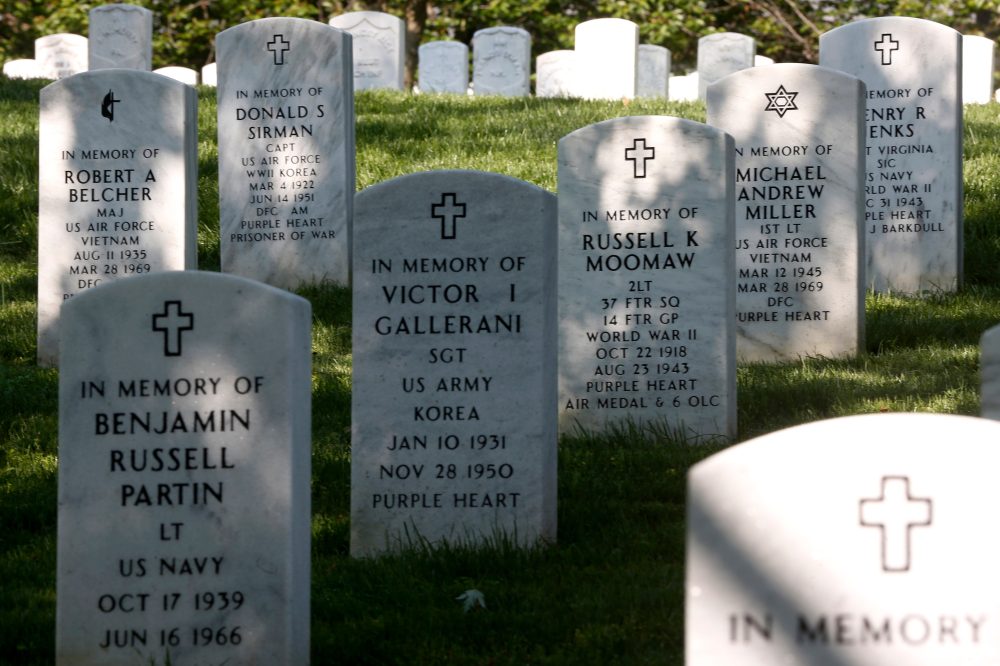
Among the religious groups no longer appearing on the updated roster are atheists, Unitarian Universalists, pagans and Wiccans, who previously had separate designations available to service members.
Pentagon spokesperson Sean Parnell explained the rationale behind the changes in an official statement. “This decrease in religious affiliation codes is not designed to make any claims on the legitimacy of any faith or religious belief, nor is it intended to provide a list of ‘officially approved’ religions,” Parnell said. “Rather, it is designed to allow chaplains to quickly look at the religious composition of their units and determine how they structure resources to best provide for warfighters of all faith groups.”
Parnell emphasized that the department continues to support religious freedom and that chaplains help service members “ability to freely exercise their religion of choice, or no religion at all.”
The condensed roster groups various Christian denominations into broader categories such as Baptist, Presbyterian, and Methodist, without breaking down specific branches within these traditions that may have vastly different theological perspectives.
Military personnel retain options to select “no religion,” “other religions” or agnostic as their preference. The streamlined list continues to recognize Buddhism, Islam, Judaism, Hinduism, Sikhism, the Baha’i faith and The Church of Jesus Christ of Latter-day Saints.
The Unitarian Universalist Association expressed concerns about being excluded from the revised list. “This may make it more difficult for our uniformed UUs to access the spiritual care that they need,” the organization stated, adding that it’s developing plans to assist UU military members.
Defense Secretary Pete Hegseth has openly incorporated his evangelical Christian beliefs into his Pentagon leadership, organizing worship gatherings for staff and frequently characterizing America as a Christian nation.
Hegseth initially revealed plans for these modifications in December, citing the unwieldy nature of managing such an extensive list of faith categories.
The Rev. Paul Raushenbush, a Baptist minister leading the progressive Interfaith Alliance, criticized the decision. “Secretary Hegseth is not ‘streamlining’ anything. He is elevating one narrow religious worldview from the top of the chain of command,” Raushenbush stated. “The First Amendment does not allow the government to create a hierarchy of faiths, and it certainly does not allow the Pentagon to decide which beliefs are worthy of recognition.”
Military demographics show religious diversity among personnel, with approximately 70% identifying as Christian based on a 2019 congressional analysis. Nearly 25% of service members fell into other, unclassified or unknown categories.
Irene Glasse, who practices paganism and served as a Marine Corps veteran, voiced concerns about the impact on minority faiths. “As a member of a minority religion, I think it’s really important that we be counted,” Glasse said. “It erases us, and so many of us have served so proudly, so well, and so honorably.”