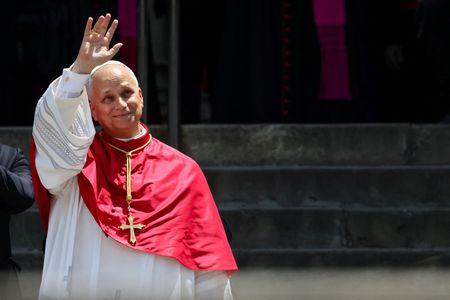

Pope Leo’s historic journey to Spain’s Canary Islands is drawing worldwide attention to the humanitarian crisis facing migrants who have flooded the Atlantic archipelago over the last ten years, according to Catholic officials in the region.
Beginning Thursday, the pontiff will make the first papal visit ever to the island chain, including a stop at Gran Canaria’s Arguineguin port. This location faced harsh criticism from a local mayor in 2020 for “subhuman conditions” when 1,000 migrants were left stranded at the dock and thousands more slept outdoors.
The pope’s Friday schedule includes visiting a migrant facility on Tenerife and conducting a gathering with over 1,000 migrants nearby. Among those attending will be survivors of the dangerous ocean crossing from Africa in packed boats, as well as arrivals from Latin America.
Speaking to Canarias7 newspaper, Jose Mazuelos, bishop of the Canary Islands, expressed hope that the papal visit could transform “the ‘port of shame’ can become the ‘port of hope’”.
“Let’s hope this visit helps to put an end to the Atlantic route, ensures a humane and comprehensive approach to migration, and that Europe takes a proactive role in addressing migration,” he said.
During a Madrid stop on Monday, Pope Leo declared that insufficient assistance for global migrants was undermining “the ethical foundation of the international order”.
The seven-island chain, situated over 1,000 kilometers from mainland Spain off northwestern Africa’s Atlantic coast, welcomed a record 46,843 irregular migrants in 2024. This represents a dramatic increase from fewer than 1,000 arrivals in 2015, based on government statistics.
El Hierro, among the smallest and most isolated islands with roughly 11,000 residents, saw 2024 arrivals equivalent to approximately double its entire population.
Migration numbers dropped 60% in 2025 to 17,788 following Spain’s agreements with nations like Mauritania to strengthen border controls. However, vessels continue launching from distant locations including The Gambia and Guinea-Bissau, extending the already dangerous sea voyage.
According to NGO Caminando Fronteras, more than 3,000 people perished in 2025 attempting to reach the Canary Islands.
Lamine Endour, who arrived at the islands from El Aaiún in disputed Western Sahara territory during 2018, hopes to deliver a message through the publicity surrounding Leo’s visit.
“I want to thank him for everything he does, but also to ask for more support for the Canary Islands, so they can continue helping migrants,” he said.
Darwin Rivas, an El Hierro priest who assists emergency response teams helping arriving migrants, believes the papal trip will redirect global focus from border security toward prioritizing human dignity.
“It is already moving hearts and I think it must serve to address the issue of immigration policies,” said Rivas, who relocated to the Canaries from Venezuela and is set to participate in one of the pope’s gatherings.
Unlike much of Europe, Spain has embraced a more welcoming migrant policy, launching an initiative to provide residency for over half a million undocumented individuals.
The program has faced opposition from far-right politicians throughout Spain and Europe, while the nation grapples with delays in processing legal status for thousands awaiting decisions.
Processing and mainland transfers for migrants often require months or years due to missing documentation. Adult migrants can obtain legal authorization to live and work in Spain, while unaccompanied minors typically stay in the Canary Islands receiving education and refugee assistance until age 18.
Ruth Socorro, a 57-year-old Peruvian woman who moved to Gran Canaria with her family, will participate in a papal meeting. Government data shows Latin American migrants comprise nearly half of all foreign residents in Spain.
“He cares because we are human beings just like anyone else; it’s just that we come from other countries and have left so much behind, but in the end we are all the same,” she said.