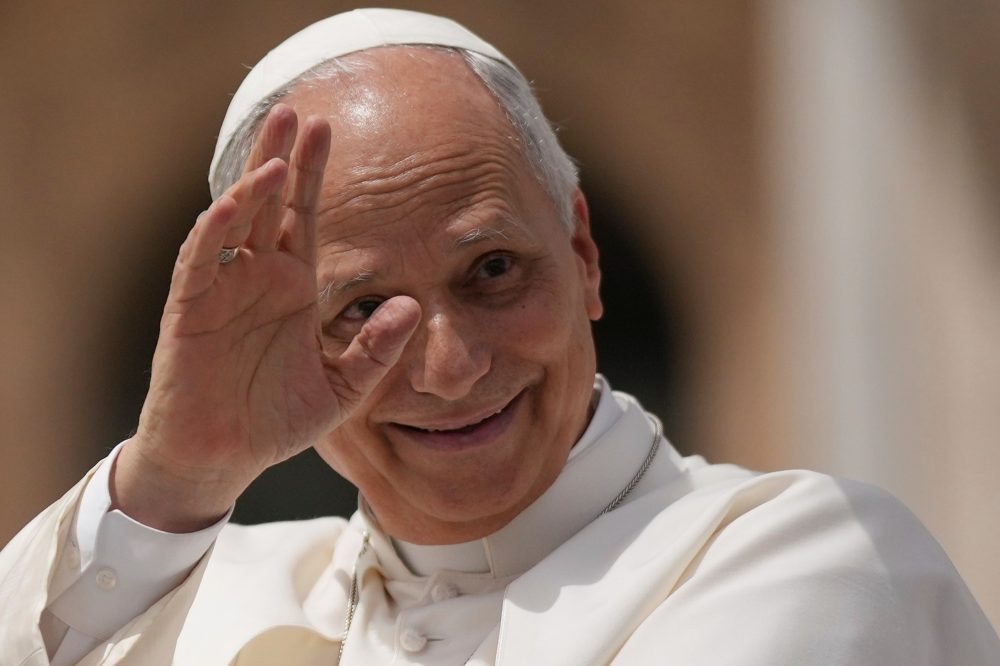

The American pontiff Pope Leo XIV has arrived in Spain for what marks a historic week-long journey to a nation where Catholicism once dominated but now faces significant challenges in a increasingly secular society.
The papal visit commenced Saturday in Madrid, where King Felipe VI and Queen Letizia provided an official welcome. Leo’s opening day concluded with a prayer service featuring young attendees, many experiencing their first encounter with a pope visiting Spanish territory.
Vatican officials announced Friday that Leo will conduct meetings with abuse survivors during his stay, highlighting how sexual misconduct scandals within the clergy continue to cast shadows over papal journeys. Spain’s Catholic leadership is now confronting years of abuse cases and institutional cover-ups in what was historically a deeply religious nation.
This marks the first papal visit to Spain in a decade and a half, representing Leo’s renewed focus on European Christianity’s traditional strongholds. His predecessor Pope Francis typically avoided established European Catholic centers, choosing instead to visit smaller faith communities in distant regions.
Leo’s European tour includes the Spain visit alongside planned trips to Monaco in March, San Marino in August, and France in September. These journeys aim to deliver messages about peace, unity and human worth to a continent dealing with Russia’s conflict in Ukraine, consequences from the U.S.-Israeli war in Iran, and concerns about artificial intelligence.
Vatican spokesman Matteo Bruni outlined the trip’s focus, explaining that Leo’s Spanish message would particularly target young people to help them “envisage the future, even in an age of strongmen, where the church seeks to foster holy men.”
Leo’s most significant moment will occur Monday when he becomes the first pope ever to address Las Cortes Generales, Spain’s Parliament. Previous popes St. John Paul II and Pope Benedict XVI visited Spain multiple times but never spoke before the legislative body.
These parliamentary addresses are uncommon events that frequently become defining moments of a papal tenure.
However, Leo will encounter a deeply divided legislature where Prime Minister Pedro Sánchez’s ruling Socialist party faces intense scrutiny over multiple corruption allegations. Opposition groups including the Popular Party and far-right Vox are demanding Sánchez’s resignation ahead of 2027 elections while criticizing his administration’s immigration approach.
Madrid has embraced the papal visit with extensive promotional displays. Leo’s image appears throughout subway systems, on billboards, and in metro station advertisements across Spain’s capital. Souvenir stores feature papal memorabilia including posters and magnets, while bakeries offer special pope-themed cakes and pastries.
The pontiff will share Madrid’s spotlight with Puerto Rican music sensation Bad Bunny, who is performing two concerts as part of his 10-show series during Leo’s visit.
Despite anticipated protests and the visit’s 15 million euro ($17.2 million) price tag, Leo’s parliamentary speech represents a significant achievement for Spain’s Catholic Church. The institution has struggled with credibility issues following decades of clergy abuse revelations and cover-up scandals, while also bearing historical scars from anticlerical violence during the country’s 1936-1939 civil war.
Spain experienced dramatic religious transformation following Gen. Francisco Franco’s death in 1975, which ended his dictatorship that concluded the civil war. Franco, a devout Catholic, considered his rule a religious campaign against Spain’s anticlerical anarchist, leftist and secular movements.
During Spain’s democratic transition, Catholic identification among Spaniards dropped from 90% in the 1970s to 55% in 2025, based on data from Spain’s state opinion agency. Among current Catholics, only 19% report regular Mass attendance.
Nevertheless, sociologist Narciso Michavila Núñez, who leads the GAD3 consulting firm and studies young people’s faith perspectives, observes growing spiritual interest across various traditions, particularly among young Spaniards.
Recent polling indicates renewed faith engagement among Spanish Gen Z individuals, Michavila noted. He and other researchers point to Spanish pop artist Rosalía’s spiritually-themed new album “Lux” as evidence of this trend.
“The truth from a common view is not that God is in fashion. What is new in this moment, in this visit of the pope, is that God in the Spanish society is not a tattoo anymore,” he explained.
Following Madrid, Leo will travel to Barcelona midweek for Mass at the Sagrada Familia basilica, commemorating the centennial of renowned architect Antoni Gaudí’s death. While Catalonia’s beloved figure is being considered for possible sainthood, Bruni indicated no canonization announcements are expected during this trip.
Leo will dedicate the basilica’s towering central spire, the Tower of Jesus Christ, during the June 10 Mass. This addition, installed earlier this year, has made Sagrada Familia the world’s tallest church structure.
The papal visit will conclude with a two-day stop in the Canary Islands, fulfilling a goal of Francis. This Spanish island chain sits closer to Africa than mainland Spain and serves as a primary destination for West African migrants.
Leo plans to meet with migrants and humanitarian groups supporting them. He will place a flower wreath in the ocean to honor migrants who died during dangerous Atlantic crossings, performing this tribute from the Las Palmas port that gained the “Dock of Shame” designation in 2020 when thousands of migrants slept outdoors for weeks during an arrival surge.
Francis prioritized migrant and refugee outreach throughout his papacy, and Leo continues this emphasis by advocating for respectful migrant treatment, especially in his native United States.
“For those of us who are immigrants and find ourselves in this situation of having family far away, someone like the Pope — who is an important figure for the entire world — coming here is truly something that makes me say ‘wow,’” said Constantina Nchama, an immigrant from Equatorial Guinea in Madrid before Leo’s arrival.
“It’s something that happens once in a lifetime,” she continued. “I’m very, very excited about that, truly.”
Spain’s Socialist-led government has diverged from European and U.S. trends by announcing plans to provide legal status to potentially hundreds of thousands of unauthorized immigrants currently living and working in the country. Sánchez emphasizes legal migration’s economic benefits for a nation facing workforce aging and declining birth rates.