SRN News brings listeners a daily feature called “Global Landscape” — a compact, two-minute audio segment designed to keep audiences informed on the most important religion-focused news stories happening across the globe.
The feature offers a timely overview of significant events, cultural developments, and major moments where faith and international affairs come together. Each edition is crafted to give listeners a clear and concise snapshot of how religion continues to shape the world around us.
For more information and to access the full audio segment, visit SRN News online.
Legal experts are predicting that transgender-related cases will return to the U.S. Supreme Court. The justices recently ruled in favor of state laws prohibiting boys from competing on girls’ sports teams, but the decision was deliberately narrow. The court made clear it was addressing athletics specifically and was not weighing in on broader transgender questions. The justices also sidestepped the question of what constitutional standard should apply when transgender individuals allege discrimination. Experts say future challenges — such as laws restricting males from female bathrooms — will likely force the high court to revisit the issue.
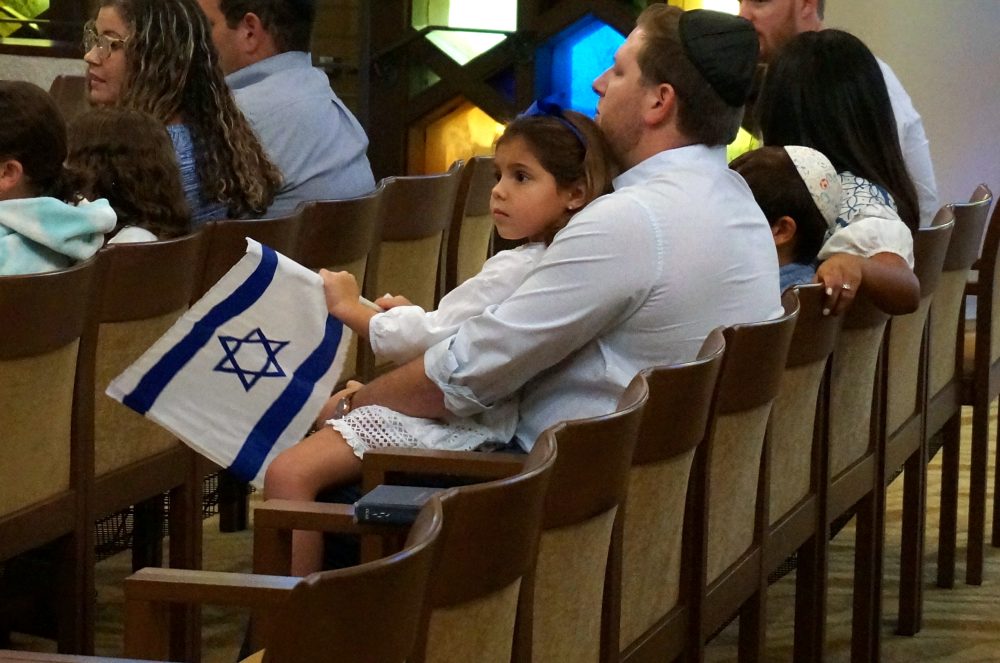
A newly released AP-NORC poll shows that a significant number of Jewish Americans are feeling unsafe in the United States. A majority of those surveyed say they feel less secure now than they did before Hamas carried out its October 7th, 2023, attack on Israel. The poll highlights growing anxiety among Jewish adults as bipartisan backing for Israel weakens and disagreements arise within the Jewish community over what qualifies as anti-Semitism. Roughly three in ten respondents reported that they or someone in their household experienced a physical attack, verbal assault, online harassment, or property damage in the past year because of their Jewish identity.
The advocacy organization International Christian Concern is raising alarms about Christians living in Syria. The Muslim insurgent group that forced dictator Bashar Assad out of power is continuing to tighten its control over the country. ICC released a statement warning: “Concerns about religious restrictions have increased as the government has introduced policies influenced by conservative Islamic norms. Many Syrian Christians view these measures as warning signs of a broader shift toward religious conservatism and fear that increased identification of Christian communities with Western or religious minorities could make them targets for extremists.”
A political scientist at Colby University named Nicholas Jacobs has been analyzing why the Democratic Party struggled in the 2024 elections, and his conclusion is that party leadership has lost touch with ordinary voters. Jacobs argues that on social issues in particular, “A pattern persists: Working-class voters did not move right in reactionary revolt. Democrats moved to the left.” He points to polling data showing that former Democratic voters have shifted to the Republican Party over issues including abortion, the LGBT agenda, religious freedom, family values, and immigration. Jacobs notes that Democratic leadership has yet to show signs of recognizing this shift.
A national survey conducted by the Public Religion Research Institute posed a thought-provoking question to Americans: Has God given the United States a unique role in human history?
When looking at the general public, the results were closely divided — 44% responded that yes, God has granted this country a special responsibility in the world, while a majority, 52%, said no.
The survey also took a closer look at how people of faith answered the question. Among religious groups, only White Evangelicals, Hispanic Protestants, and Black Protestants expressed belief in the idea that the U.S. holds a God-given special role on the world stage.
Perhaps most striking is how much attitudes have shifted over time. Back in 2012, every faith group surveyed agreed that the United States carried that special divine responsibility — a consensus that has clearly eroded in the years since.
A new survey from the Pew Research Center reveals that Americans are almost perfectly divided on the question of whether the Ten Commandments — also known as the Decalogue — should be displayed in public school classrooms.
According to the poll, exactly half of Americans, 50%, said they support posting the Commandments in schools, while 48% said they are against it.
The survey also broke down opinions by religious affiliation. White Evangelical Protestants showed the strongest support for the idea, with 83% in favor. Black Protestants came in second at 64%, followed by Catholics at 56%, and White Mainline Protestants at 52%.
A new national poll shows that while supporting Israel is a cornerstone of Jewish identity for many older American Jews, younger Jewish adults are more inclined to express their faith through other means — like observing Jewish holidays — pointing to a generational divide that goes beyond politics and into questions of religious identity.
The AP-NORC Center for Public Affairs Research surveyed 1,022 Jewish adults and found that the gap over Israel’s actions since the Hamas-led attack on October 7, 2023 — which sparked the ongoing war in Gaza — reflects deeper differences in how generations define what it means to be Jewish.
Cameron Bernstein, a 27-year-old medical student in New Orleans, grew up with deep ties to Israel, even celebrating her bat mitzvah there. But her feelings have shifted. “I pray for people in the land of Israel. I don’t need to pray for the state,” she said, noting that today Israel “doesn’t play a role in my life, more than another country with people I love.”
The survey found that religiously affiliated Jewish adults make up about 68% of all Jewish adults. Among that group, roughly 6 in 10 say being Jewish is “extremely” or “very” important in their lives, regardless of age.
However, the similarities largely end there when it comes to Israel. About half of older religious Jewish adults — those 45 and up — say that supporting Israel is “extremely” or “very” important to their Jewish identity, roughly the same share who say that about celebrating Jewish holidays. Among younger religious Jewish adults, only about 4 in 10 place that same level of importance on supporting Israel, while about 7 in 10 say celebrating Jewish holidays is highly significant to them.
Susan Boyer, a 72-year-old retiree from Southern California, sees backing Israel as inseparable from supporting the Jewish people’s right to a homeland. With antisemitism on the rise, she views Israel as a vital safeguard against history repeating itself.
“I’ve been defending myself as a Jew since I was a child … getting mugged by girls in my classes for being a Jew,” Boyer said. “It’s invasive into your daily living that you have to constantly, constantly be defending yourself as a Jew, constantly making sure that nobody is redefining you or nobody is like insulting your land.”
Ari Pollack, a 30-year-old arts fundraiser in Wisconsin, sees things very differently. He argues that Israel’s military operations have actually fueled antisemitism and made the world less safe for Jewish people.
“I’m personally pretty opposed to basically everything Israel’s doing these days,” said Pollack, who attended religious school growing up. “A source of a lot of frustration that I have for the Jewish establishment is that sort of dogmatic teaching of pro-Israel ideas that I’ve had to unlearn as an adult. And it’s part of what’s kept me away from, you know, attending regular synagogue services.”
Like roughly 3 in 10 religious Jewish adults under 45, Pollack believes Israel has committed genocide during the Gaza war — an accusation Israel has strongly denied. That compares to about 2 in 10 Jewish adults aged 45 and older who hold that view.
The poll also found that younger religiously Jewish Americans are more likely than their older counterparts to say that observing Shabbat or following dietary restrictions — such as avoiding pork or shellfish — are highly important parts of their Jewish identity.
Phoebe Wapnitsky, a 32-year-old in Connecticut, strongly opposes Israel’s military actions, which she sees as inconsistent with Jewish values. “Standing against oppression, promoting social justice — those are the roles that Judaism plays in my life,” she said, adding that she felt disconnected from Israel even before the October 7 attack.
Brian Ebarb, a 47-year-old attorney in Louisiana, also defines his Jewish identity around “action and community” — but for him, that includes standing with Israel. “When the government makes mistakes, it should be criticized,” he said, while cautioning that criticism of Israel can slide into something more dangerous. “The existence of the state of Israel is so precarious that we have to be careful and not allow criticism of Israel to become criticism of Jews worldwide.”
The AP-NORC poll of 3,040 adults was conducted June 11–17 using a sample from NORC’s probability-based AmeriSpeak Panel, designed to represent the U.S. population. The 1,022 Jewish adults surveyed carry a margin of sampling error of plus or minus 5 percentage points.
Peyvand Naimi has been sitting in an Iranian prison for more than six months, accused of killing government security agents during nationwide protests. His family says no formal charges have been filed and no evidence has been presented against him. According to the family, when they pressed for his release, a prosecutor bluntly told them it would never happen — referring to Naimi only by his religion. “The Baha’is will not be released,” the family says it was told.
The Baha’i faith traces its roots to 19th-century Persia — the land that is now Iran — and its followers there have faced persecution throughout history, with the crackdowns typically growing harsher during times of national crisis.
This year has proven to be no exception. With massive anti-government protests sweeping the country and war with the United States and Israel underway, the Islamic Republic has launched one of its most aggressive campaigns yet against Iran’s largest non-Muslim religious minority, according to human rights organizations.
Since January, dozens of Baha’is have been locked up solely because of their faith, rights groups say. During raids on Baha’i family homes, authorities have desecrated holy books and religious symbols — actions that rights organizations say reveal the sectarian nature of the crackdown. Those taken into custody have reportedly endured abuse ranging from electric shocks to mock hangings, and some have been forced to confess to crimes that carry the death penalty.
The intensified targeting of Baha’is is part of a broader wave of repression across Iran. Nationwide protests that erupted in late December triggered the deadliest response by Iranian security forces since the Islamic Republic came to power in 1979, with thousands killed and tens of thousands reportedly arrested.
Iran’s Foreign Ministry and its United Nations spokesperson did not reply to multiple requests for comment on the treatment of Baha’is.
The government’s targeting of Baha’is — who account for less than 1% of Iran’s population — is carried out openly. State television and government-linked social media accounts routinely accuse Baha’is of being foreign spies and blame them for Iran’s economic problems.
“Every time there is a crisis — social, economic, or political — shift the blame to the Baha’is,” said Simin Fahandej, who represents the international Baha’i community at the United Nations. “And this (year’s) protest and the war have also been no different.”
Although many Baha’is practice their faith in secret, the Iranian government actively encourages citizens to report neighbors who are known or suspected to follow the religion, which Iran’s ruling clerics consider immoral.
“Much of this portrayal stems from theological hostility,” said Omid Ghaemmaghami, an associate professor of Middle East Studies at the State University of New York at Binghamton. He and other experts noted that using Baha’is as scapegoats also serves a broader purpose — instilling fear and compliance among the wider Iranian population.
Naimi was taken into custody at his workplace on the afternoon of January 8 by agents from Iran’s intelligence ministry, his family says. The family insists he had no involvement in the anti-government protests. Amnesty International says the killings of three Basij agents — the crimes Naimi is accused of — occurred during January 8 protests in Kerman after he had already been arrested. The government has not released any details about the alleged killings.
On February 1, Iranian state television aired a clip of Naimi appearing to admit involvement in the protests. His family says the confession was obtained under duress.
Authorities also accused Naimi of “celebrating” from his prison cell the killing of Supreme Leader Ayatollah Ali Khamenei during the early stages of the Iran war, according to the Baha’i International Community. The organization said Naimi had no access to any communications at that time and “no knowledge” of Khamenei’s death.
Naimi told his family by phone that he was held in solitary confinement at Kerman Central Prison for more than two months, according to Fahandej.
His cousin, Emilia Nazari, said a judge ordered Naimi’s release on March 7, but he was never let go. In the days that followed, family members went to the prosecutor’s office every day for over a week demanding his freedom. That is when the prosecutor reportedly told them it would never happen — and identified Naimi only by his religion.
When his parents visited him in late March, he told them he had been subjected to ten days of harsh treatment, including being denied food, Nazari said. In mid-May, the family learned he had been moved out of solitary confinement and into the general prison population at Kerman, Nazari added.
The Baha’i faith was established in the 1860s by a Persian nobleman known as Baha’u’llah, whom followers regard as a prophet. His teachings held that all world religions represent successive stages in the unfolding of God’s will, ultimately pointing toward the unity of all people and faiths.
There are more than 5 million Baha’is around the world, according to Harvard University’s The Pluralism Project. The majority live in Asia, with the largest single community located in India.
Baha’is also face persecution in Egypt, Qatar, and Yemen, but the worst treatment occurs in Iran, where Shiite Muslim clerics have viewed the faith as heretical since its earliest days.
Following the 1979 Islamic Revolution, large numbers of Baha’is fled Iran amid arrests, executions, property confiscations, and bans on education and employment. Some remained, and others returned in the decades that followed. An estimated 300,000 Baha’is currently live in Iran, a country with a population exceeding 90 million.
Many Baha’is feel a sense of calling to remain in Iran, said Sheyda Kamran, a professor at the Baha’i Institute for Higher Education. Even while living in fear, her students often ask how they can support fellow Iranians who are grieving losses from the protests and war. “They have a goal,” she said. “That is the only way they can survive.”
The crackdown on Baha’is — and on Iranians broadly — grew even more severe after the United States and Israel launched the war in late February.
As of June 11, the Baha’i International Community says at least 63 Baha’is were being held in Iranian prisons, though the organization acknowledges the number is likely an undercount, as some families are afraid to speak out.
Most of those detained are being held without any known charges, while others face accusations of spreading “propaganda against the regime” or engaging in acts deemed “contrary to Islamic law,” according to the Human Rights Activists News Agency.
Iranian television outlets and social media accounts have amplified anti-Baha’i messaging in recent months, accusing followers of working with Israel to destabilize the Islamic Republic.
In May, a public exhibition in the northern Mazandaran province depicted Baha’is as enemies of the state, according to IRNA, Iran’s state-run news agency. A representative of Iran’s supreme leader who attended the exhibition, Mohammad Baqer Mohammadi Laini, called Baha’is “spies” and said they should be prohibited from owning property, according to the semiofficial news agency Tasnim.
The very public nature of the harassment suggests the real goal is to spread fear throughout Iranian society, said Mahmood Amiry-Moghaddam, founder of Iran Human Rights, an Oslo-based organization. “I think it’s part of the general intensification of the repression in Iran,” he said.
In April, Behzad Basiri was arrested by Revolutionary Guard agents at his home in Shiraz with no charges given, according to his family, which said Baha’i holy books were torn apart during the raid. His wife, Mandana Sotoudeh, was arrested the same day at her parents’ home, and her sister, Mahsa Sotoudeh, had been detained three days earlier.
Basiri was released on bail on May 6. His wife and sister-in-law were released on bail on July 1, the family said.
Basiri’s sister, Roya, who lives in Canada, said some family members chose to remain in Iran out of love for their country and hope for a better future. “They’re paying the heavy price for that choice,” she said.
The release of a jailed pastor by Chinese authorities this month has brought renewed attention to how Beijing treats Christians. The pastor leads one of China’s largest unregistered, or underground, house churches — congregations that refuse to comply with the government’s requirement that Christians worship only in officially approved, state-registered churches. China’s ruling Communist Party, which holds atheism as its official position, considers organized religion a potential challenge to its authority. Under President Xi Jinping, the government has pushed a campaign to “Sinicize” religion, demanding that faith communities demonstrate loyalty to the party. Despite ongoing crackdowns, underground churches continue to grow rapidly.
Egypt’s government has announced a major archaeological find — a well-preserved city from the Byzantine era, discovered in the country’s western desert. The Tourism and Antiquities Ministry says the settlement contains numerous buildings and inscriptions that reflect the strong presence of Christianity in the region during the fourth and fifth centuries A.D. A basilica church dating to the 300s stands at the entrance of the site, overlooking the main streets, with the ruins of two watchtowers that once guarded the city’s edges. Researchers have identified one home as belonging to a man named Tisous (pronounced TISS-oos), who served as a church deacon during that period.
A new survey from AP-NORC is shedding light on the divisions within American Jewish communities when it comes to Israel. The poll found that Jews who are religiously affiliated tend to view support for Israel as a core part of their identity, while those who are not religiously affiliated are more likely to be critical of Israel’s actions. The wide-ranging survey covered topics including views on Israel, anti-Semitism, and tensions in personal relationships. While supporting Israel remains important to many Jewish adults, how central it is compared to other aspects of Jewish identity varies widely — and disagreements over Israel are clearly creating rifts within Jewish communities across the country.
Christian missionaries from the evangelical organization Cru — which rhymes with “true” — are now spreading their message in VRChat, a widely used social platform where millions of people worldwide connect through digital avatars. As virtual spaces become an increasingly significant part of people’s social lives, Cru’s missionaries are adapting traditional outreach methods to meet people where they spend their time. Through VRChat, users can visit thousands of virtual worlds to talk, play games, and — in the missionaries’ case — hear about the Christian faith. Cru was founded in 1951 under the name Campus Crusade for Christ and has long focused on evangelism and faith development among younger generations.
Planned Parenthood and two smaller regional abortion providers are once again able to bill Medicaid for non-abortion services, following nearly a year of being cut off from federal funding. The defunding had been put in place through President Trump’s 2025 tax policy, but that provision has since expired and Congress has not yet acted to renew it. Pro-life advocates are urging lawmakers to reinstate the funding ban as quickly as possible. Kelsey Pritchard of Susan B. Anthony Pro-Life America stated that lawmakers “should do everything in their power to do it again.”
A new Gallup survey reveals that LGBT identification in the United States has more than doubled since 2012, with young women leading the trend. Among Gen Z women — those between the ages of 18 and 29 — 29 percent identified as gay, lesbian, bisexual, or transgender in 2023, compared to just 11 percent of Gen Z men in the same age group. Researchers point to Hollywood’s promotion of LGBT themes, the legalization of same-sex marriage, and elements of the Me Too movement as possible factors driving the shift among younger women.
The recent release of a jailed pastor by Chinese authorities has drawn renewed attention to the ongoing persecution of Christians in China. The pastor leads one of the country’s largest unregistered, or underground, house churches — congregations that refuse to comply with a government requirement that Christians worship only in state-approved churches. China’s ruling Communist Party, which officially holds an atheist position, considers organized religion a potential challenge to its authority. Under President Xi Jinping, officials have pushed a campaign to “Sinicize” religion, demanding that faith communities pledge loyalty to the party. Despite these pressures, underground churches continue to grow rapidly.
Egyptian officials have announced the unearthing of a remarkably well-preserved city from the Byzantine era, found in the country’s western desert. The Tourism and Antiquities Ministry reports that the site contains numerous structures and inscriptions that reflect the deep influence Christianity held over the region during the fourth and fifth centuries A.D. A basilica church from the 300s sits at the top of the settlement, looking out over its main thoroughfares, with the ruins of two watchtowers standing nearby to guard the city’s edges. Archaeologists have also identified a home belonging to a man named Tisous, who served as a church deacon during that period.
Delegates at the Presbyterian Church USA’s general assembly have cast an overwhelming vote in favor of a statement endorsing sex-change operations for children, while also condemning states that have enacted bans on those procedures.
The PCUSA holds the distinction of being the largest Presbyterian denomination in the United States. However, the church has experienced a prolonged decline in both membership and the number of congregations it represents. That trend has coincided with the denomination’s leadership adopting a series of LGBT-affirming positions over the years, including allowing the ordination of homosexual clergy and performing same-sex marriages.
Nearly three billion of the world’s more than eight billion people live in just two countries — China and India — and according to a sweeping new survey from the Pew Research Center, people of faith in both nations face severe and ongoing persecution.
The research found that religious freedom is largely absent in China and India alike, with Christians bearing the brunt of the hostility in both cases. In China, it is the government itself that is actively working to eliminate Christianity within its borders. In India, the threat comes from radical Hindu groups who are reportedly attempting to kill Christian believers or force them to flee the country.
A new study from the Barna Group sheds light on what pastors across the country say they need most when they’re struggling with burnout. Topping the list is more time devoted to their own personal spiritual practices — a telling sign that the demands of ministry can pull clergy away from the very faith they preach.
Coming in second, many pastors simply want a break. Whether that means a full vacation or even just a long weekend away, time off is something a significant number of clergy say they’re desperately missing.
Some pastors also expressed a desire for members of their congregations to step up and take on more responsibilities, easing the burden that often falls solely on their shoulders.
The Barna Group’s research also found that a large number of American clergymen are genuinely concerned about both their mental and physical health — raising broader questions about how faith communities support the leaders who serve them.
Christianity is rare across much of Asia, where believers account for fewer than 10% of the overall population. However, the Philippines stands apart from its neighbors in a significant way.
The Pew Research Center’s most recent worldwide survey on religious belief reveals that 92% of people in the Philippines identify themselves as Christian. The survey also found that 99% of Filipino adults say they believe in God, and 80% report that they pray on a daily basis.
When it comes to countries with the highest number of Christians, the Philippines ranks seventh on the global list, making it one of the most devoutly Christian nations anywhere in the world.
Nearly three years into the ongoing war in Gaza, a new national poll is shedding light on deep divisions within America’s Jewish community — and the biggest gaps appear between those who practice Judaism as a religion and those who identify as Jewish through culture, ethnicity, or family background.
The survey, conducted by The Associated Press-NORC Center for Public Affairs Research, found that for many American Jews, standing with Israel is inseparable from their religious identity, rooted in the belief that Israel represents Jewish safety and self-determination. But others — especially those who don’t identify religiously — feel far less connected to Israel and view its conduct in the war much more critically.
Roughly 7 in 10 Jewish adults identify as Jewish when asked about their religion. The remaining 3 in 10 describe themselves as atheist, agnostic, or without a specific religious affiliation, yet still consider themselves Jewish in a cultural or personal sense.
The conflict traces back to the October 7, 2023 Hamas-led attack on Israel, which killed approximately 1,200 people. In response, Israel launched military operations in Gaza that have since resulted in more than 73,000 Palestinian deaths, according to the Hamas-run Gaza Health Ministry, which does not separate civilian from militant casualties. The war has become a divisive issue across the United States, fueling protests, heightening fears of antisemitism, and prompting debate over the U.S.-Israel relationship.
Among religiously affiliated Jews, views on Israel’s military campaign are mixed. Only about half consider Israel’s operations in Gaza to be justified. Roughly one-quarter believe Israel has committed genocide against Palestinians in Gaza — a charge leveled by some human rights organizations but firmly rejected by both Israel and the U.S. government.
Secular Jews hold even more critical views. About 4 in 10 religiously unaffiliated Jewish adults believe Israel has committed genocide, while only about 2 in 10 see its military operations as justified. A striking 74% of secular Jews say they feel little or no emotional attachment to Israel — a stark contrast to their religiously affiliated counterparts.
Anna Constant, 56, of Seattle, who identifies as culturally Jewish, says she doesn’t feel a strong bond with Israel. “I kind of think of myself as an American version of a Jew. I do have a homeland,” she said, referring to the United States. At the same time, she expressed empathy for those caught in the conflict: “My heart is broken for everything everyone is navigating over there. … We have bad governments happening not just in Israel but in the United States. I’m trying to hold on to the reality that the people are not the governments.”
The survey also found that Jews who regularly attend religious services are more likely to feel connected to Israel and to view its military actions as justified. About 3 in 10 Jewish adults never attend services, though that figure climbs to roughly two-thirds among religiously unaffiliated Jews. About half of all Jewish adults attend services a few times a year or less. Roughly 2 in 10 attend at least once a month, including about 1 in 10 who go weekly.
Politically, Jewish adults lean Democratic, with about 3 in 10 identifying as Republicans. Religiously unaffiliated Jews are somewhat more likely to identify as Democrats and less likely to call themselves Republicans compared to Jewish adults overall.
Jacqueline Rothstein, 35, who divides her time between a Long Island suburb and Brooklyn, is Modern Orthodox and attends worship services about once a month. A political independent, she views Republican President Donald Trump favorably and holds an unfavorable view of New York City Mayor Zohran Mamdani, a Muslim Democrat who supports Palestinian rights. Rothstein says her Jewish identity and her support for Israel are “extremely important” to her.
She points to family history as a key factor shaping how Jews view Israel. Two of her grandparents were Sephardic Jews expelled from Egypt in the 1960s; the other two were Holocaust survivors. “There are plenty of American Jews whose grandparents didn’t have that trauma,” she said. “If you have no connection to Israel, if your grandparents were safe in America, … then you don’t know the struggle.”
The term “Zionist” also divides Jewish Americans along religious lines. About 3 in 10 religiously affiliated Jews say the label describes them “extremely” or “very” well, compared to just 6% of religiously unaffiliated Jews. Nearly half of secular Jews — 45% — say the word does not describe them well at all.
While supporting Israel remains fundamental to many Jewish adults’ sense of identity, its relative importance varies. About half of religiously affiliated Jews say it is “extremely” or “very” important to their Jewish identity, compared to roughly 1 in 10 secular Jews.
Rabbi Seth Adelson, who leads Congregation Beth Shalom in Pittsburgh — a Conservative synagogue with close ties to the three congregations targeted in the 2018 massacre at the nearby Tree of Life synagogue, where 11 worshippers were killed in the deadliest antisemitic attack in U.S. history — noted that Israel was originally founded largely by secular Jews. He suggested that today, religiously observant American Jews tend to feel a stronger pull toward Israel. “In recent years, perhaps due to the complexity of that region, due to the challenges faced by modern states, religious Jews have been more likely to hold on to our ancient stories, and Jews of no religion have been less likely to hold on to those stories,” he said.
A generational divide also exists. Younger Jewish adults, regardless of religious affiliation, are less likely to view Israel as central to their Jewish identity. Still, there are shared values across age groups — majorities of both younger and older Jewish adults say that remembering the Holocaust is important to their Jewish identity.
Bonnie Brody, 78, grew up in Queens, New York, surrounded by Holocaust survivors. Now a Florida resident, she sees Israel as an essential refuge for Jewish people, even when she disagrees with its government’s decisions. “I heard the stories of the concentration camps and how even (the U.S.) turned back a ship full of Jews,” she said, referencing the ocean liner St. Louis, which left Germany in 1939 carrying hundreds of Jewish refugees and was denied entry to the United States. “Many of them had nowhere to go.”
The survey also captured the personal toll the conflict has taken. More than half of Jewish adults — 55% — say they have been offended by someone else’s comments about Israel since the October 7 attack. About 4 in 10 say they’ve had disagreements with family members over Israel-related issues, and roughly 3 in 10 say they have cut off contact with someone entirely because of what that person said about Israel.
Shainah Horowitz, 45, a Democrat from Portland, Oregon, says her city’s Jewish community is fractured. She described tension between politically conservative Orthodox Jews and more left-leaning congregations, including her own Conservative synagogue, which is openly LGBTQ+-inclusive. She also noted that secular, anti-Zionist Jews in Portland are often sharply critical of Jews like herself who identify as Zionists and support Israel’s existence as a Jewish state. “I cannot have conversations with certain friends — non-Jews and some very secular Jews who buy into the anti-Israel slant,” she said.
The AP-NORC poll surveyed 3,040 adults between June 11 and 17, using a sample drawn from NORC’s probability-based AmeriSpeak Panel, which is designed to represent the broader U.S. population. The poll included interviews with 1,022 Jewish adults. The margin of sampling error is plus or minus 2.8 percentage points for adults overall and plus or minus 5.0 percentage points for Jewish adults.
A massive global prayer event is set to draw more than 70 million Christians from 175 countries on October 4, as the 24th Annual Day of Prayer for the Peace of Jerusalem gets underway. The Christian organization Eagles’ Wings, which organizes the event each year, made the announcement Sunday.
The gathering will be broadcast live from the Tower of David Jerusalem Museum in Jerusalem and hosted by Eagles’ Wings President and Founder Bishop Robert Stearns. The organization describes it as the largest yearly Christian prayer event held in support of Israel.
More than 500 senior Christian leaders representing churches and denominations from 50 countries are expected to be present in Jerusalem for the occasion. Official delegations from Nigeria, Kenya, and Togo are also anticipated, with attendees including senior government officials, the first ladies of Nigeria and Kenya, and the king and queen of Togo.
The event will also feature 175 Christian leaders from Latin America, headed by Reverend José Wellington Costa Jr., who serves as general superintendent of the Brazilian Assemblies of God. That denomination claims more than 33 million members in Brazil and is part of the broader Assemblies of God movement, which organizers say encompasses more than 90 million believers across 212 countries. Eagles’ Wings said the Latin American delegations collectively represent more than 51 million Christians throughout the region.
Israeli leaders have been invited to speak at the event, which organizers say is designed to highlight Christian solidarity with Israel and the Jewish people at a time of growing antisemitism worldwide and ongoing security concerns facing the country.
Stearns spoke to the significance of the occasion, saying: “This is far more than a prayer event. It is a global declaration that Israel is not alone. At a time when the Jewish people face extraordinary challenges, tens of millions of Christians are choosing to stand publicly with Israel, pray for her peace, and reaffirm the unbreakable bond between our people.”
The Day of Prayer for the Peace of Jerusalem has been observed annually for 24 years, growing steadily into a worldwide Christian initiative centered on Jerusalem. Eagles’ Wings said this year’s event is on track to be the biggest in its history, connecting faith communities through a live broadcast from the holy city.
Eagles’ Wings describes itself as an international Christian organization that works to strengthen ties between Christians, Israel, and the Jewish people through education, advocacy, and public engagement. The group says it has spent more than three decades mobilizing Christian support for Israel and working against antisemitism.
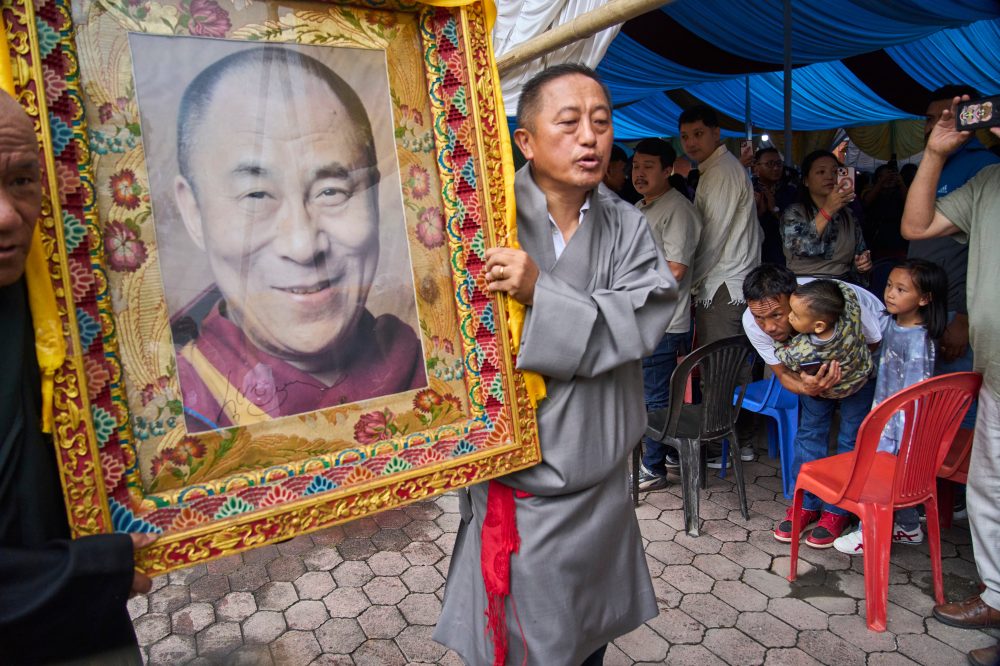
LEH, India — The Dalai Lama took part in ceremonies Monday honoring his 91st birthday in Leh, India, while devotees across India and Nepal came together for prayers and festivities in his honor.
Regarded by millions of Tibetan Buddhists as a sacred and divine figure, the Dalai Lama has dedicated much of his life to advocating for peace, nonviolence, and compassion. He has also been a consistent voice calling for greater autonomy for the Tibetan people.
After escaping Tibet in 1959, he set up the Tibetan government-in-exile in the northern Indian town of Dharamshala, which remains his home today. China views him as a separatist.
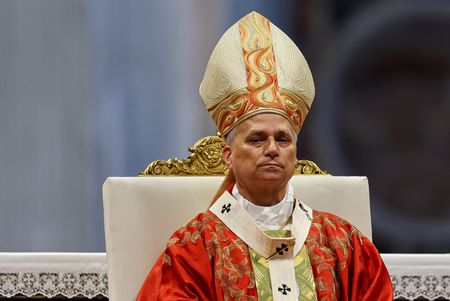
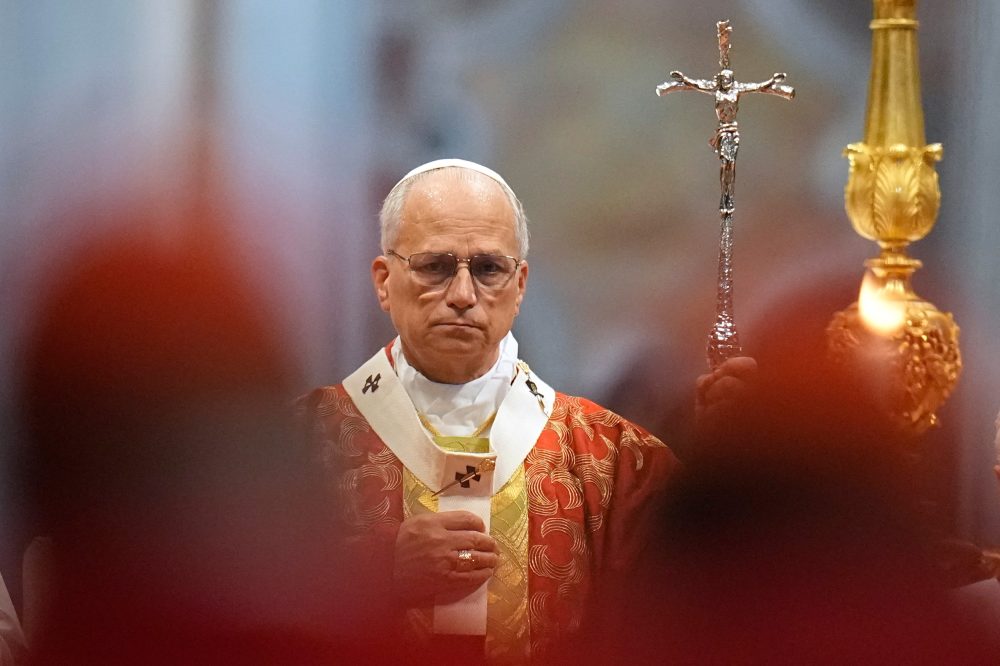
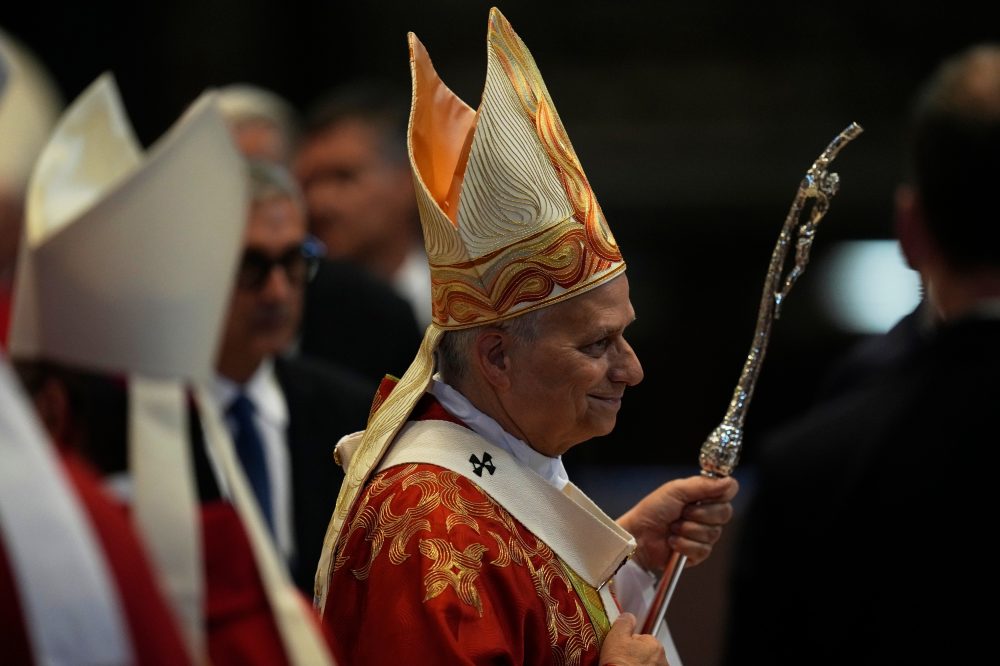
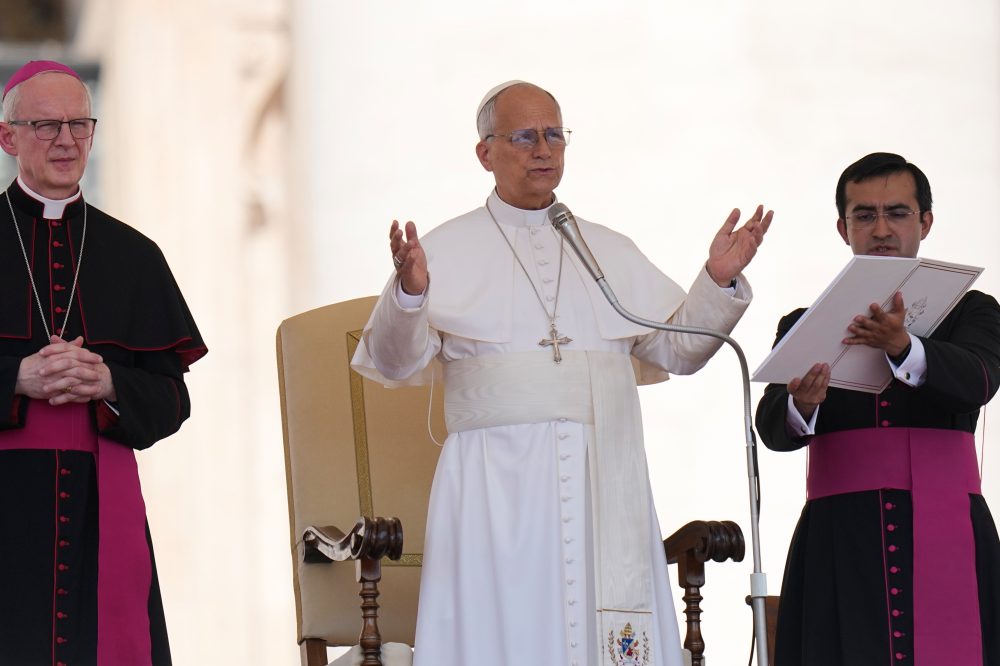
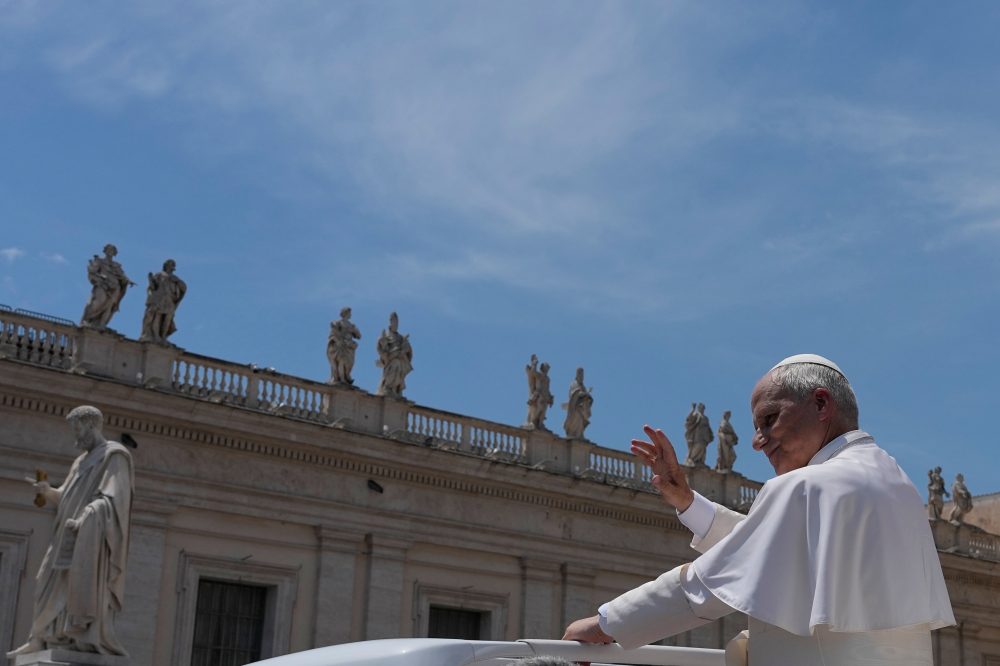
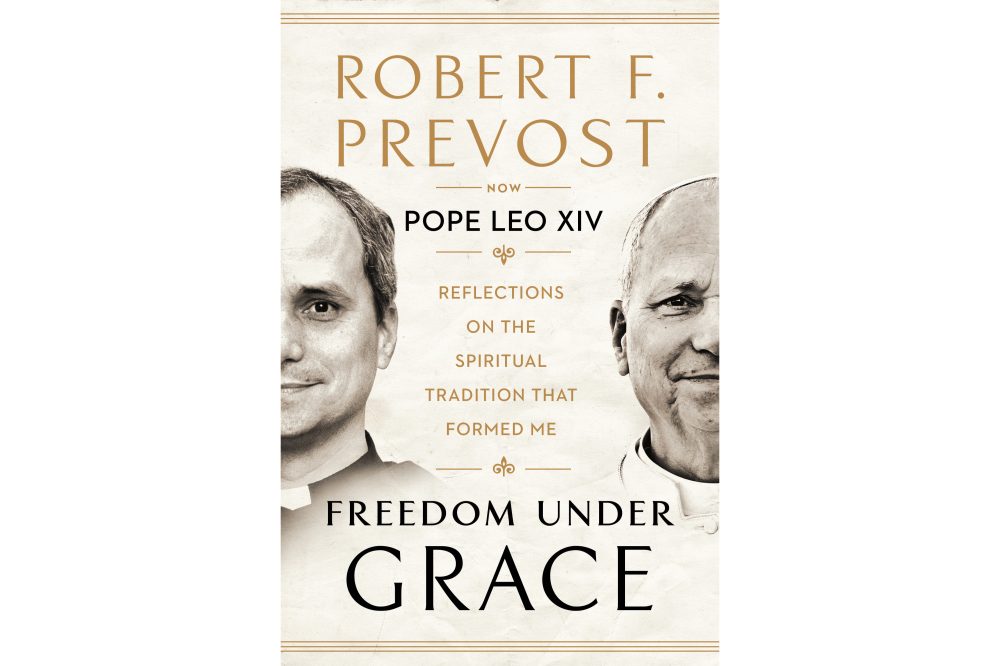
ROME (AP) — Pope Leo XIV departed Sunday for his summer vacation, wrapping up a whirlwind first half of 2026 in which he established himself as a formidable global voice on topics ranging from artificial intelligence to armed conflict — while also taking firm action on difficult matters within the Catholic Church.
Leo will spend the remainder of July at Castel Gandolfo, the Vatican’s historic hilltop summer residence located south of Rome. The American pope has made the estate a regular weekend destination for tennis and swimming.
Vatican officials announced Leo will stay through July 27, with all scheduled audiences on hold. They also confirmed that he will be housed in the Apostolic Palace overlooking Lake Alban — a more substantial residence than the smaller villa where he had previously spent his days off.
His predecessor, Pope Francis, had avoided Castel Gandolfo throughout his 12-year papacy and had converted the Apostolic Palace on the main piazza into a public museum. With Leo now spending extended time at the estate, Vatican officials appear to have concluded that the larger palace is better suited for security purposes and would allow the necessary staff and infrastructure to operate alongside him.
Leo visited the estate for a few weeks last summer as well, using that time to settle into his new role following his election by fellow cardinals on May 8, 2025.
At that time, the then-reserved former Cardinal Robert Prevost expressed his hope to “restore the body and spirit” during a brief period of rest.
One year on, Leo is departing Rome after a period of papal decision-making that has left close Vatican observers astonished. After acknowledging in the summer of 2025 that he had much to learn about serving as a head of state, recent weeks have revealed a confident governing style in which Leo has set the agenda himself rather than simply following the path laid out by his predecessor.
“Many people last year would have predicted a quiet papacy on the world stage and a focus on internal reform and governance,” said Austen Ivereigh, the biographer of Pope Francis. “But the first half of 2026 has shown the opposite: ironically, the one area where Leo had least confidence, as international statesman, is where his pontificate has really taken off.”
On July 4th — the 250th anniversary of American independence — Leo traveled to the Sicilian island of Lampedusa, where he prayed at a cemetery for migrants to honor the thousands who lost their lives attempting to reach Europe in search of freedom and a better life.
That visit followed a similar gesture at the end of a trip to Spain, when Leo spoke from a dock in the Spanish Canary Islands once referred to as the “dock of shame” because of the terrible conditions migrants experienced during a surge in arrivals.
At both locations, Leo urged Europe to uphold the dignity of migrants. On Saturday, he also reminded the United States that it was built by immigrants and that Christians bear a responsibility to welcome, protect, and help integrate those seeking refuge from hardship.
For the Chicago-born pope, who has been at odds with the Trump administration over its immigration crackdown, choosing to spend Independence Day at the heart of Europe’s migration debate carried deep symbolic weight.
That symbolism was amplified by Leo’s opposition to the U.S.-Israel war in Iran and the very public back-and-forth between President Donald Trump and Leo in April — with Trump posting on Truth Social and Leo responding with in-flight remarks while traveling through Africa — which thrust the American pope into the role of a leading anti-war figure on the global stage.
Ivereigh noted that the Trump administration first took notice of Leo’s peace-oriented message during his January address to the Vatican’s diplomatic corps, when Leo condemned the use of military force by nations to assert dominance worldwide, saying it was “completely undermining” peace and the post-World War II international legal order.
“The January speech to diplomats that alarmed the Trump administration turned out to be the launchpad,” Ivereigh said. “The Iran war and Trump’s reaction to his remarks in Africa propelled Leo overnight to guardian of the global conscience, which was cemented by the encyclical.”
That encyclical — Leo’s first, titled “Magnifica Humanitas” (Magnificent Humanity) — was released to widespread attention in late May. In it, Leo called for strong oversight of artificial intelligence, particularly as the technology industry develops increasingly advanced tools for remote warfare.
The document declared that entrusting irreversible, life-or-death decisions to AI systems was “not permissible” — putting Leo in direct conflict with the Trump administration, which had been pushing aggressively to roll back AI regulations.
But the encyclical went beyond AI policy. Embedded within it was a historic acknowledgment of the Holy See’s own participation in facilitating slavery — a particularly striking moment given that Leo’s own family history includes both enslaved people and slave owners.
While previous popes have apologized for Christians’ involvement in the trans-Atlantic slave trade, no pope had ever publicly admitted — let alone apologized for — the role that 15th-century popes played in granting European rulers explicit authority to subjugate and enslave “infidels.”
Leo described the Vatican’s record as a “wound in Christian memory” and asked “in the name of the church” for forgiveness — an apology that now raises questions about reparations owed to the descendants of enslaved people.
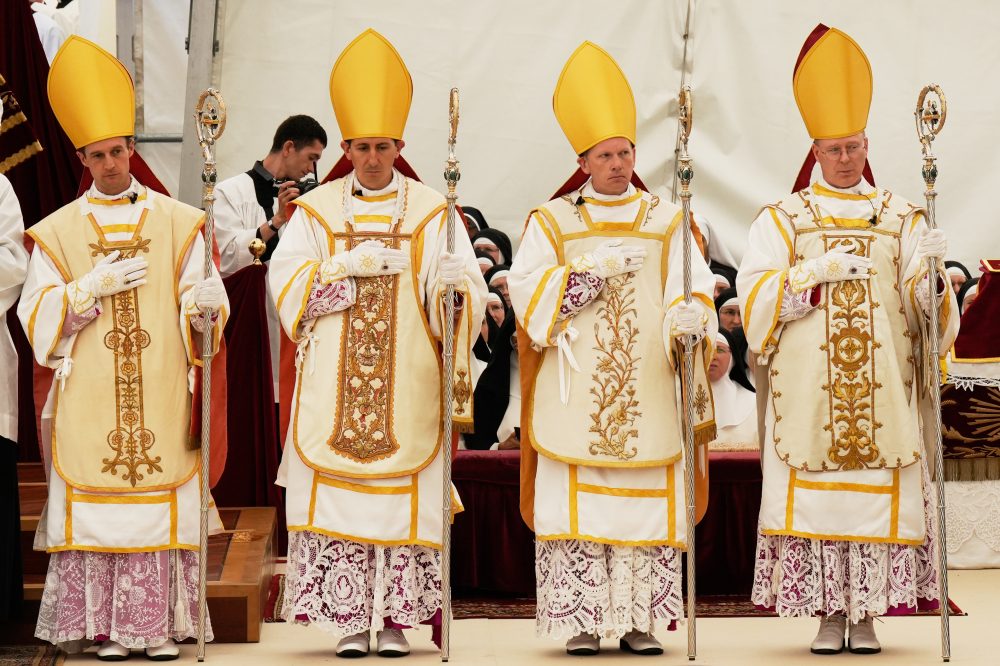
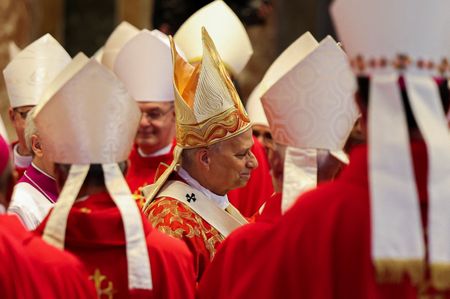
Leo also demonstrated bold leadership in recent days by approving a decision that no pope has made in roughly 50 years. On Thursday, the Vatican formally declared a traditionalist Catholic group to be in schism — meaning in official rupture from the Catholic Church — after the group consecrated four bishops without the pope’s consent.
The Vatican excommunicated the bishops and priests of the Society of St. Pius X, known as the SSPX, which follows the ancient Latin Mass and rejects the modern reforms of the Catholic Church.
Following five decades of attempts to bring the society back into full communion with Rome, the Vatican also warned the group’s lay members — estimated by the SSPX itself at around half a million worldwide — that they too risk excommunication for participating in the schism.
“Pope Leo has demonstrated that his emphasis on dialogue does not come at the expense of decisive governance,” said Andrew Chesnut, a professor of religious studies at Virginia Commonwealth University.
“While the decision undoubtedly deepens the divide with the SSPX, it may ultimately strengthen cohesion among Catholics who accept Vatican authority, even when they disagree about liturgy or pastoral priorities,” he added.
The Rev. Robert Gahl, an ethics scholar at the Catholic University of America, said the SSPX situation highlighted how the pope remains the central figure and symbol of unity within the Church — a role that has come into sharper focus for Leo in recent weeks.
“With this decree he’s shown that he has the clarity and also the courage to inflict clear penalties on those who violate this communion,” Gahl said. “So we not only see Leo who is kind and level-headed, but he’s also an enforcer with clarity.”
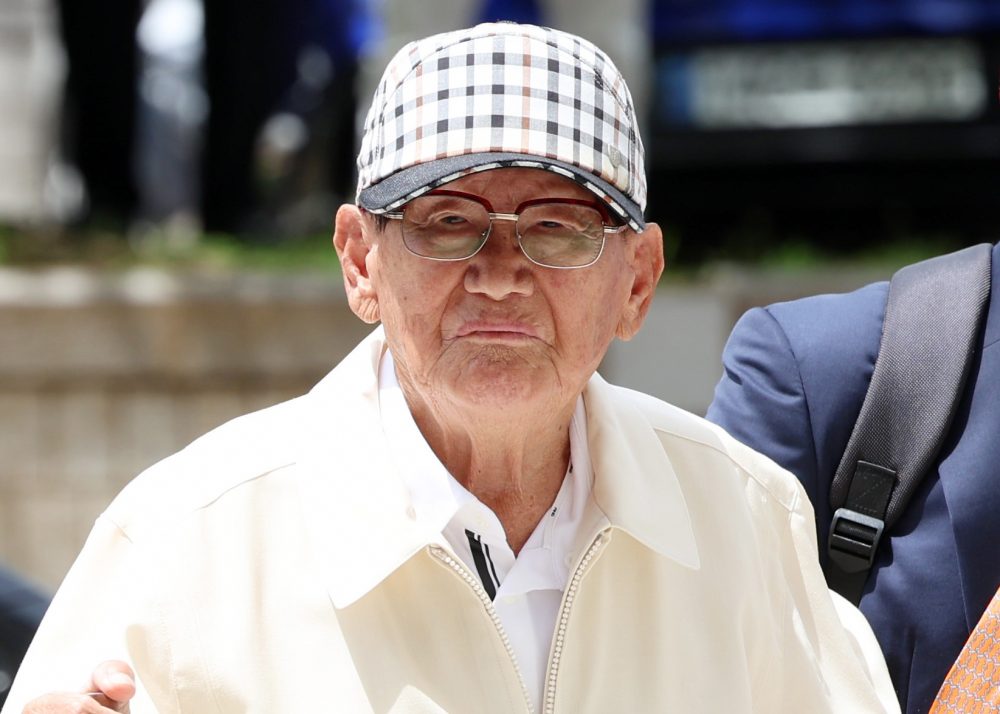
ChinaAid, a Christian nonprofit organization, announced Sunday that it is celebrating the release of Pastor Jin Mingri, who had been confined in detention facilities in the southern Chinese city of Beihai since last October.
According to a statement from ChinaAid, Jin has arrived safely in the United States. His daughter, Grace, confirmed that her father has been freed.
The release comes after U.S. President Donald Trump personally appealed to Chinese leader Xi Jinping on the pastor’s behalf during Trump’s visit to Beijing in May.
A prominent underground church pastor who was imprisoned in China has been freed and has arrived back in the United States, according to human rights advocates — a development that comes less than two months after President Donald Trump personally raised the issue with Chinese leader Xi Jinping.
Pastor Ezra Jin Mingri, leader of the underground Zion Church, touched down in Los Angeles on Saturday. Frances Hui of the Committee for Freedom in Hong Kong Foundation announced the news on X, writing that the pastor “is finally reunited with his family.”
The Inter-Parliamentary Alliance on China, an organization made up of Western lawmakers, also confirmed his release and posted a photograph showing the pastor alongside his daughter, Grace Jin Drexel, with both of them smiling.
The case drew widespread attention after Trump, at the conclusion of his state visit to Beijing in May, revealed that he had brought up Jin’s situation directly with Xi. Trump said the Chinese leader indicated he would take the matter seriously.
Jin had been among 18 church leaders detained back in October, in what advocates described as one of the most significant crackdowns on a single church in China in decades. The mass arrests sparked deep concern about Beijing’s intensifying efforts to restrict religious freedom.
A prominent underground church pastor who was locked up in China last October has been freed, arriving on American soil just weeks after President Donald Trump brought up his case directly with Chinese President Xi Jinping, according to human rights advocates.
Pastor Ezra Jin Mingri, who leads the underground Zion Church, touched down in Los Angeles on Saturday and is now back with his loved ones. Frances Hui of the Committee for Freedom in Hong Kong Foundation announced the news on X, writing that he “is finally reunited with his family.”
The Inter-Parliamentary Alliance on China, an organization made up of Western lawmakers, also confirmed the pastor’s release and shared a photograph showing Jin alongside his daughter, Grace Jin Drexel, with both of them smiling.
Jin’s situation drew widespread attention after Trump, while concluding his state visit to Beijing in May, publicly stated that he had raised the matter of the pastor’s release with Xi. Trump said the Chinese leader indicated he would give the request serious consideration.
Jin had been taken into custody along with 17 other church leaders in October, in what rights groups described as one of the most sweeping crackdowns on a single church China has seen in decades. The mass detention sparked alarm among advocates who warned it signaled a growing effort by Beijing to restrict religious freedom within its borders.
The U.S. Supreme Court’s refusal to allow a Rastafarian prisoner to pursue a lawsuit against prison officials who cut his hair is being viewed by many as an uncommon loss for religious freedom at the nation’s highest court. Legal experts say the case highlights just how complicated and wide-ranging religious liberty laws in America have become, especially as the country’s faith landscape continues to shift. Christians now make up 62 percent of the U.S. population — a notable drop from 78 percent two decades ago. Roughly 30 percent of American adults identify with no religion at all, while the remainder belong to various other faith traditions. Despite those divides, the Rastafarian inmate’s case drew backing from a broad coalition of religious groups.
The Trump administration is taking steps to restore a specialized option for LGBT youth who call the 988 mental health crisis hotline. The hotline currently offers dedicated options for specific groups, including veterans and Spanish-speaking callers. About a year ago, the administration eliminated the so-called “press 3” option for LGBT youth, citing a lack of funding. Now, officials say they plan to bring it back before the end of the year, after Congress directed that $33 million be set aside specifically for LGBT-focused interventions for young people. Democratic lawmakers were the driving force behind that funding mandate.
A newly released survey from Talker Research finds that Americans are sharply divided on the subject of Gay Pride Month. Seventeen percent of those polled said they don’t believe it should be observed at all, while another eight percent said it has become “too much” and should be scaled back. On the other side, 28 percent said Pride Month is meaningful and deserves support, and 21 percent said they support the concept but admit it doesn’t hold much personal significance for them. Researchers noted that these divisions closely mirror political party lines — support for the importance of Pride Month is more than twice as high among Democrats, while roughly one in three Republicans say the observance should be eliminated.
A gay rights activist has filed a federal lawsuit in New York City against the Department of Defense, demanding to know whether Scouting America secretly agreed to prohibit transgender boys from participating as part of a deal with the Pentagon. The plaintiff, James Dale, says both parties have given contradictory answers on the matter. The Defense Department announced an agreement with Scouting America back in February, which Secretary Pete Hegseth described as a move to steer the organization away from diversity programs and what he called “woke” policies. Hegseth also warned that the military would cut off its long-standing support for the organization if it did not comply within six months — a deadline that falls in late August.
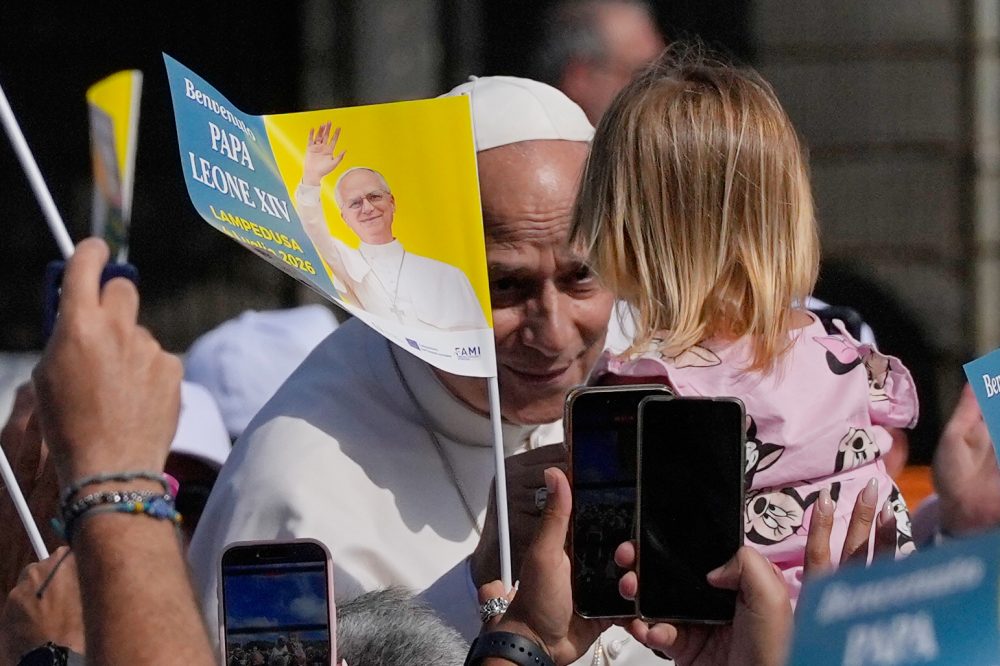
LAMPEDUSA, Sicily — While Americans celebrated the 250th anniversary of the Declaration of Independence with parties and fireworks back home, Pope Leo XIV chose the Fourth of July to make a deeply symbolic journey to one of Europe’s most contested migration flashpoints.
The first pope born in the United States — who has clashed with the Trump administration over its immigration enforcement policies — flew to the Sicilian island of Lampedusa on Saturday to honor the tens of thousands of migrants who have lost their lives trying to reach Europe in search of freedom and a better life.
On the occasion of the July 4th anniversary, Leo sent a letter to Americans arguing that protecting human life — including the unborn — also means “welcoming protecting and assisting immigrants, whose hopes, sacrifices and contribution have formed part of the history of this country from its very beginning.”
“To receive them with compassion and generosity is not only an act of charity, but also a recognition of the dignity that belongs to every human person,” Leo wrote.
Lampedusa is a small, treeless strip of rock measuring about 9 kilometers — roughly 5.6 miles — long. Sitting closer to the African coast than to the Italian mainland, it serves as the primary entry point into Europe for hundreds of thousands of migrants smuggled by boat from Libya and Tunisia.
The island has become the symbolic center of Europe’s heated migration debate, as the continent wrestles with enforcing its borders while meeting its legal obligations to shelter refugees escaping conflict, poverty, and climate change.
The International Organization of Migration has documented more than 35,000 migrants who have gone missing in the Mediterranean Sea since 2014. Experts believe the true death toll is considerably higher, as countless shipwrecks go unrecorded.
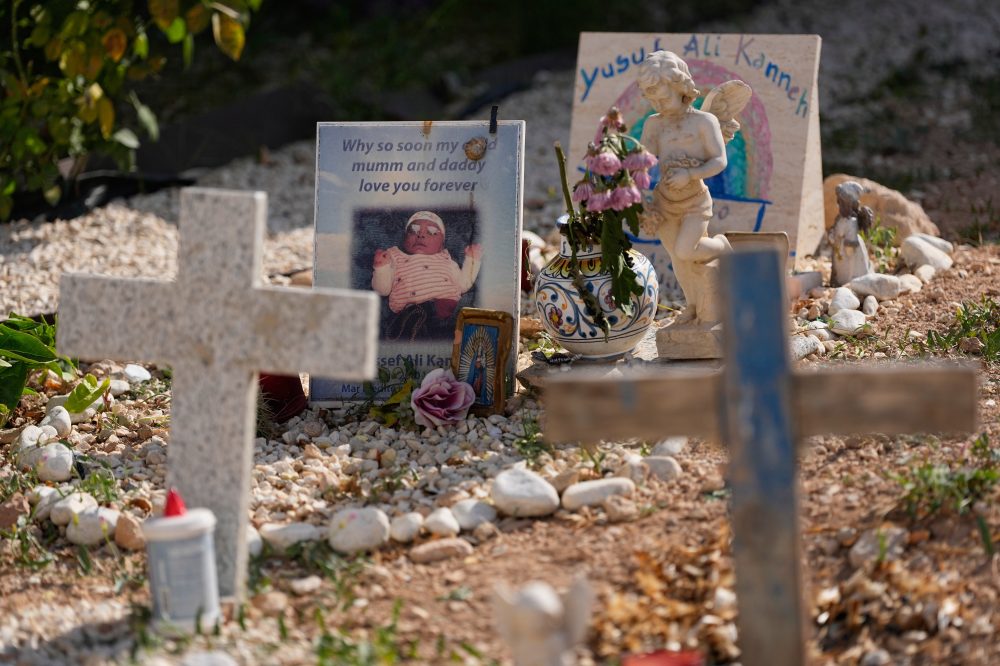
After landing on the island, Leo visited the local migrant cemetery to pay tribute to those who died and unveiled a plaque dedicated to Pope Francis at the main dock. He then celebrated Mass in the main town square.
Tareke Brhane, a migrant from Eritrea who serves as president of the October 3rd Committee — a nonprofit created by relatives of victims of a deadly 2013 shipwreck off Lampedusa that killed 368 people — called the pope’s gestures a “strong message” of solidarity.
“It is a strong sign for our battle with Italy and with Europe in order to register the deaths, because as of today we still do not have a registry (of those deceased),” Brhane told The Associated Press.
He added that Leo’s visit honors the dead and “gives a message to the relatives, so many of them still waiting and suffering.”
Leo’s trip echoes the legacy of Pope Francis, who made the welfare of migrants and refugees a central theme of his papacy. Francis himself visited Lampedusa in July 2013 — his first trip outside Rome after becoming pope — where he threw a wreath into the sea in memory of those who had drowned and condemned what he called the “globalization of indifference” toward migrants.
Leo has also recently visited another European migration hotspot in Spain’s Canary Islands, where he criticized leaders who turn migrants away without compassion and warned people smugglers of divine consequences for exploiting desperate individuals.
Salvatore Sortino, the head of mission for Italy and Malta with the International Organization of Migration, noted that while the number of migrants crossing the central Mediterranean has dropped this year, the proportion of deaths has actually risen.
“That speaks about the vulnerability that remains,” Sortino said. “So the visit of the pope here, where all this happens, I think is a very important reminder of that element.”
The International Rescue Committee estimates that 118 million people worldwide have been forcibly displaced in 2025 alone.
The papal visit comes roughly two weeks after the European Union began enforcing a new framework determining how each of its 27 member states handles irregular migration and asylum requests. Under the updated rules, migrants will be screened at EU borders for up to seven days before being admitted. Those considered a security risk or from designated “safe” countries will face an expedited review process, and rejected asylum seekers will automatically receive return orders.
Human rights organizations have pushed back against the new regulations, arguing they compromise the fundamental right to seek asylum by rushing the evaluation process. Critics say the accelerated procedures risk racial profiling and could deny protection to people with legitimate claims, while also warning of a likely surge in extended border detentions.
Italy’s Interior Ministry reported 14,464 migrant arrivals as of Friday this year — a sharp decline compared to 30,598 during the same period last year and 26,202 in 2024. Meanwhile, the number of both voluntary and forced deportations has increased under the current Italian government’s push to crack down on migration and the criminal networks behind it.
ROME — A traditionalist Catholic organization that broke from the authority of Pope Leo XIV is pushing back against the Vatican’s swift and severe punishment, arguing its members were acting in the best interest of the faithful and are now being treated unjustly.
The leader of the Society of St. Pius X sent a letter to Pope Leo XIV just one day after the Vatican excommunicated the group’s bishops and priests and issued a warning that ordinary members who continue participating in the schism could also face excommunication — a formal break from the church.
The group, widely known as the SSPX, is dedicated to celebrating the traditional Latin Mass and stands firmly against the modernizing changes the Catholic Church has made over the decades. On Wednesday, the organization consecrated four new bishops at its seminary in Econe, Switzerland — a ceremony that took place without the pope’s approval and is considered one of the most serious violations of church law.
Pope Leo XIV had personally urged the SSPX not to go through with the ceremony, but the group proceeded anyway. Within a single day, the Vatican issued an extraordinarily strict response that caught even the SSPX’s harshest critics off guard.
In the letter addressed to the pope, SSPX superior the Rev. Davide Pagliarani framed the group as a bold defender of Catholic tradition and a target of an unfair ruling from Rome.
“What the Society of Saint Pius X has done, and will continue to do, is nothing other than an extraordinary initiative for the salvation of souls, amidst the doctrinal and moral confusion into which the church is plunged,” Pagliarani wrote.
Despite what he called “unjust and invalid” penalties, Pagliarani wrote that the SSPX will continue to love the church and “offers up the suffering caused by these new sanctions for the good of the universal church and of Your Holiness.”
The SSPX was founded in 1970 by French Archbishop Marcel Lefebvre in opposition to the reforms of the Second Vatican Council, which transformed the church’s relationships with other Christians, Jewish communities, and people of other faiths, and permitted Mass to be held in local languages rather than Latin.
Though now considered a fringe movement on the far right of Catholicism, the SSPX has been a persistent challenge for the Vatican for five decades, largely because it positions itself as more authentically Catholic than the Holy See itself. The severity of the Vatican’s reaction suggested that after attempting to work things out with the SSPX across three different papacies, Pope Leo XIV’s Vatican had finally reached its limit.
The Rev. Robert Gahl, an ethics expert at The Catholic University of America, said the speed and firmness of the Vatican’s reaction was meaningful because it clearly signaled to SSPX followers that they were taking part in a schism. He said this exposed the group’s false claim to be “more Catholic than the pope.”
Gahl noted that the SSPX argued it was compelled to move forward with the consecrations out of necessity — claiming its members needed access to sacraments and that those sacraments were somehow superior to what the broader church provides. The Vatican’s strong response, he said, “calls them out and says, ‘If you want the salvation that the church offers, you have to belong to the church, and you stepped out of full communion by disobeying the pope’s explicit command.’”
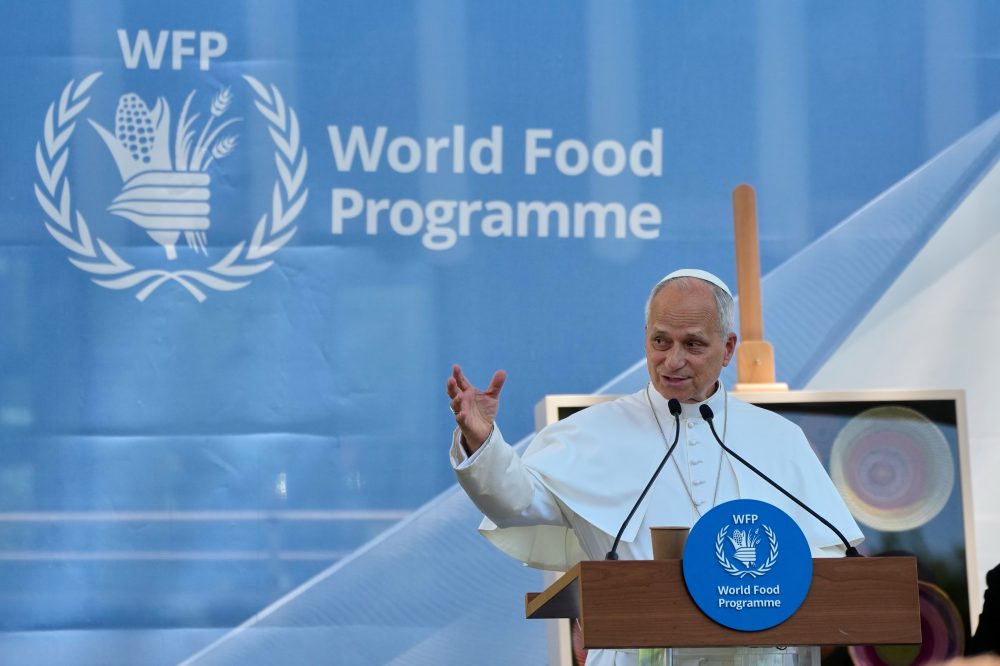
ROME — Pope Leo XIV joined a special event remotely on Friday, calling on the United States to renew its dedication to the founding principles of protecting life and human dignity — just one day before the nation marks the 250th anniversary of the Declaration of Independence.
Speaking via live video from Rome to an audience at the National Constitution Center, the first U.S.-born pope in history reflected on America’s long tradition of welcoming immigrants and upholding religious freedom. The Philadelphia-based center serves as a nonpartisan hub for constitutional education and debate.
As part of the event, the center presented Leo with its prestigious annual Liberty Medal — an honor given each year to a person “of courage and conviction” who works to advance liberty across the globe. The center recognized Leo this year for his “lifelong work promoting religious liberty and freedom of conscience and expression around the world — ideals enshrined by America’s founders in the First Amendment.”
With the medal draped around his neck, Leo addressed the gathering from Rome on the anniversary’s eve. He was set to spend July 4th itself at a location carrying deep symbolic weight given the current administration’s immigration crackdown: the Sicilian island of Lampedusa, a destination for hundreds of thousands of migrants escaping conflict, hardship, and poverty.
Leo and President Trump have been at odds over the pope’s position that migrants deserve to be treated with dignity, welcomed, and supported — a stance rooted in the Gospel’s call to “welcome the stranger.”
In his remarks, Leo pointed to America’s origins, describing the country as built by “courageous men and women who dreamed of liberty and of a better life for themselves and for their children,” who declared that all people are created equal and possess certain unalienable rights, including life, liberty, and the pursuit of happiness.
He also invoked the “noble vision” of the nation’s Founding Fathers, crediting it with making America “a byword for freedom, as the country opened its doors to successive waves of immigrants, enabling them and their children to play their part in shaping the future of the nation.”
Leo further drew on the Declaration’s affirmation of the right to life, stating that every person holds inherent human dignity and must be protected from conception through natural death — language consistent with the Vatican’s opposition to abortion and euthanasia.
“The moral greatness of a nation is manifested, above all, in its capacity to support, protect and cherish the lives of all, especially the most vulnerable and those whose worth is questioned,” he said.
The Chicago-born pontiff closed with a prayer that the founding ideals of shared human dignity, equality, and fundamental rights would serve as a “guiding light” both today and in the years ahead.
He expressed hope that the 250th anniversary would “be the occasion of a solemn recommitment to these ideals that have made America a country that values peace and prosperity, a country characterized by generosity and nobility of heart.”
Previous recipients of the Liberty Medal include Ukrainian President Volodymyr Zelenskyy, Supreme Court Justice Ruth Bader Ginsburg, and the late civil rights leader and U.S. Rep. John Lewis.
VATICAN CITY — Pope Leo marked America’s 250th birthday with a powerful message Friday, celebrating the United States’ long tradition of opening its doors to immigrants and calling on the nation to honor the principles laid out by its Founding Fathers.
Appearing live via video from the Vatican to an audience at the National Constitution Center in Philadelphia, Leo accepted the Center’s Liberty Medal and delivered what amounted to his first significant public address directed at his home country.
The pope, who holds the distinction of being the first American to lead the Catholic Church, has previously labeled President Donald Trump’s strict immigration policies as “inhuman.” On Friday, he expanded on that theme, saying the very name “America” had come to represent freedom around the world largely because of the country’s history of embracing those who came from other lands.
Leo expressed hope that the values championed by the nation’s founders — “unity, justice and peace” — would continue to steer the United States forward as it marks this major milestone.
“This historic anniversary presents us with the opportunity to reflect once again on the nation’s founding principles in the hope that America will remain ever true to the dream that has earned it the title of land of the free and home of the brave,” the pope said.
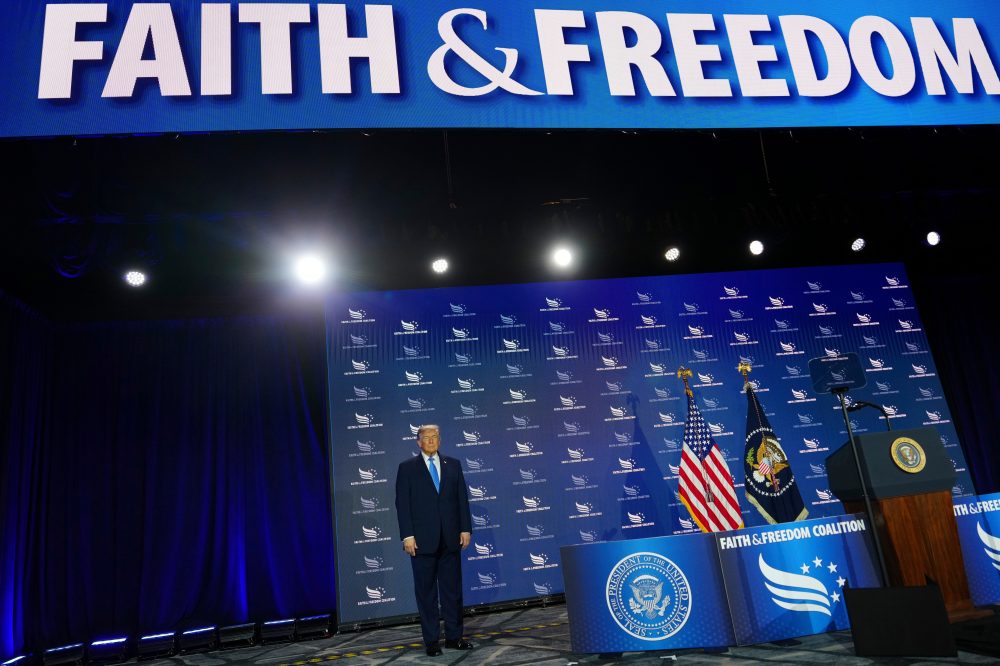
In honor of America’s 250th birthday, SRN News has launched a special new series titled Faith and Freedom.
The series, now in its 17th installment, is presented in audio format and focuses on the relationship between faith and freedom throughout the nation’s history.
The Faith and Freedom series continues to mark this milestone anniversary of the United States.
SRN News produces a regular audio feature called Global Landscape, a compact two-minute segment designed to keep listeners informed about the most significant religion-focused news stories happening around the world.
The feature covers a wide range of topics, from cultural shifts to major events that reflect how faith continues to influence global affairs. Each edition offers a timely overview of developments at the intersection of religion and world news.
Listeners can find Global Landscape and other news features at srnnews.com.
A newly released report from the California government shows that Jewish residents were the victims of nearly 300 hate crimes in the state last year. That figure represents roughly 75 percent of the approximately 400 total hate crimes recorded in California — a striking statistic given that Jewish people make up only about three percent of the state’s population.
Daniel Mariaschin of B’nai B’rith International spoke to the Jewish News Service about the troubling trend. “Whether in California or elsewhere, elected officials, law enforcement, the media, educators and community leaders all have an obligation to address this spiral — now,” he said. Anti-Semitism has been climbing across the globe in recent years, and the United States has not escaped that trend.
On a separate note, a new survey from the Barna Group, a Christian research organization, finds that prayer remains a widespread practice even as traditional church membership and attendance continue to fall. According to the poll, 73 percent of American adults say they pray at least once a week, with Christians reporting even higher rates of prayer.
The Barna report summarizes the finding this way: “Spiritual longing remains active even when institutional participation wavers.” The survey also found that older Americans across all backgrounds are more likely to pray regularly than younger people, and that women tend to pray more frequently than men.
The entertainment industry appears to have found a new source of inspiration — the Bible. The BBC is the latest network to jump on board, announcing it is developing a documentary series centered on the life of Jesus Christ.
The British broadcaster’s announcement comes at a time when faith-based programming is thriving across the entertainment landscape. The long-running series “The Chosen” has drawn loyal viewers for years, helping pave the way for a wave of similar projects.
Streaming giant Amazon Prime has renewed its series “House of David,” while Netflix made a splash last year with “Ruth and Boaz” alongside several other projects rooted in Biblical stories. Fox also entered the space with its production “The Faithful: Women of the Bible.”
Together, these projects signal a growing appetite among audiences for content drawn from scripture, and major players in the entertainment world are clearly taking notice.
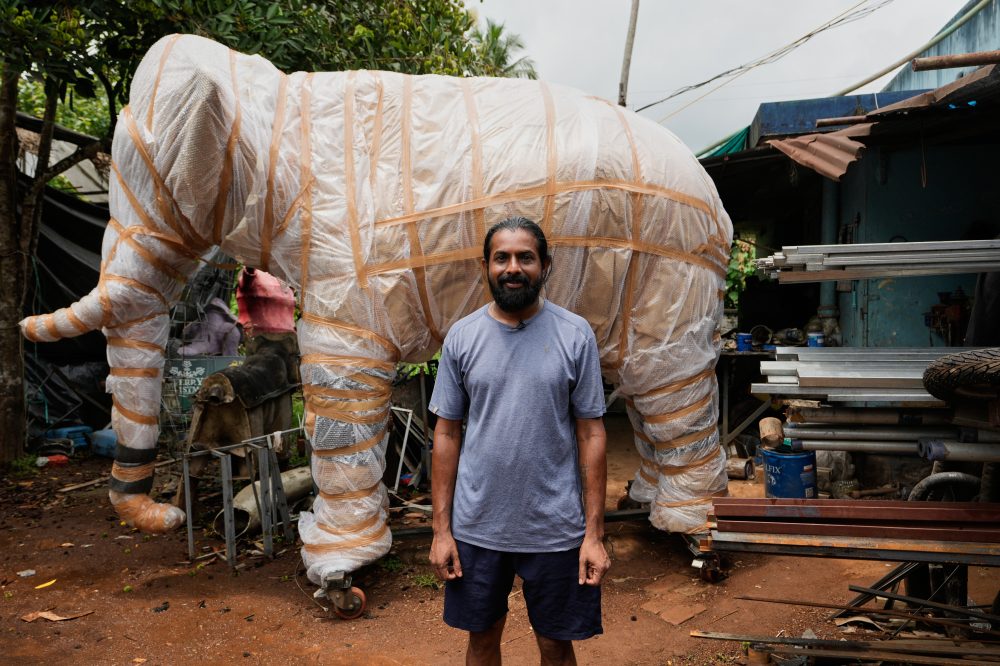
Inside a backyard workshop in Chalakudy, India, mechanical engineer Prasanth Prakashan has built life-size robotic elephants capable of flapping their ears, swishing their tails and spraying water from their trunks.
Beyond those features, however, the fiberglass, iron and rubber animatrons have little in common with the living animals that hold deep spiritual significance across India. These machines are designed to serve as stand-ins for real elephants at Hindu temples — a development that has sparked both enthusiasm and fierce opposition.
Animal welfare advocates are applauding the shift, while many devoted temple-goers insist that living elephants are an essential, irreplaceable part of religious tradition and festival culture.
The animal welfare organization PETA and several other nonprofits have donated roughly 40 robotic elephants to Indian temples, each one costing approximately $6,000, with the goal of replacing live animals used in religious ceremonies.
The robotic versions are considerably lighter than real elephants and lack the natural, flowing movements of the real thing. Electric motors control the head and eye movements, and the body parts are made to flex in an effort to appear more lifelike.
Prakashan is candid about the limitations of his creations.
“You can’t create an original elephant just as you cannot duplicate a human,” he said. “But we try to capture the majestic animal’s essence as much as we can.”
One capability still missing from his robots is the ability to walk — though Prakashan says that won’t last long.
“But they will,” he said with a smile. “I’m working on it.”
The reverence for elephants extends beyond Hinduism. Buddhists view elephants as symbols of patience, wisdom and enlightenment, drawing comparisons to the Buddha himself. In Kandy, Sri Lanka, 100 decorated elephants march through the streets each year, with the largest carrying the Buddha’s tooth relic inside a golden casket.
In the Kerala region of India, festivals featuring live elephants draw enormous crowds. The annual Pooram parade at the Thrissur Vadakkunnathan temple showcases around 100 elephants dressed in golden headgear and vibrant silk coverings, accompanied by handlers waving peacock feathers and yak-hair whisks.
About 40 miles away, the Guruvayur Sree Krishna Temple is home to nearly 50 elephants and hosts an annual elephant race along with a ceremonial feeding ritual in which the animals receive rice, ghee, jaggery, fruits and vegetables after prayers.
Elephant parades also appear at other religious institutions in Kerala, including St. George Orthodox Syrian Church in Kunnamkulam and the Pattambi Mosque in Palakkad district.
Some temple elephants have achieved celebrity status. One elephant, Thechikkottukavu Ramachandran, has nearly 150,000 followers on Facebook. Another, Guruvayur Keshavan — widely considered the most famous temple elephant before his death in 1976 — has been honored with a life-size statue near the temple he served, and his life story inspired both a film and a television series.
Andrea Gutierrez, a professor at the University of Texas who has studied captive elephants in South Asia, noted that Kerala’s temple elephants are exclusively male, which creates a significant safety concern. Adult male elephants periodically experience musth, a condition that dramatically increases aggression due to a testosterone surge that can reach up to 60 times normal levels.
“But people want these huge impressive tusks, which almost feels like a military presence,” Gutierrez said.
Despite stricter regulations around elephant ownership, nearly 400 elephants remain in captivity in Kerala, out of roughly 2,500 throughout India — a figure that has dropped by about half since 2010.
Khushboo Gupta, vice president of policy at PETA India, said the visual appeal of live elephants does not excuse the mistreatment they endure, including being shackled, beaten and separated from their families. The danger is real: nine people were killed in 2024 during elephant rampages at Kerala temple festivals.
“These elephants are forced to stand there for hours in the heat, with large crowds, drums and fireworks,” Gupta said. “Any trigger could cause them to go on a rampage.”
Prakashan, who normally builds animatronics for malls, amusement parks and carnivals, first caught PETA’s attention in 2023 when a video of his robotic elephants at a Dubai festival went viral. Gupta then reached out to him and Sooraj Nambiat, a Kochi-based artist who creates elephant sculptures, about developing a robotic elephant suitable for temple use. Demand for Prakashan’s creations quickly took off.
His earliest model used a rubber exterior, but he has since transitioned to more long-lasting fiberglass molds. Artists carefully craft the flexible rubber sections, replicating fine details like the animal’s wrinkled skin and the veins visible in its ears. From start to finish, Prakashan and his team can now complete a robotic elephant in about 15 days.
“It was something we had to figure out on our own,” Prakashan said of the pioneering process.
His first robotic elephant, named Irinjadapilly Raman, was installed at the Irinjadapilly Sree Krishna Temple in 2023. On a recent visit, two children were seen laughing and wrapping their arms around the robot’s trunk — something that would never be safe with a real elephant, according to the temple’s head priest, Rajkumar Namboothiri.
Namboothiri added that the ancient tantric texts governing Kerala temple rituals do not actually mandate the use of live elephants. He believes the tradition began centuries ago when elephants were part of royal cavalries and palace life.
“They had trees and forests before,” Namboothiri said. “Now, we have concrete jungles, heat and noise. … Elephants are tortured and abused. It’s not right.”
He also noted that while elephants were historically chosen for religious processions because of their impressive height, the same effect could be achieved using portable palanquins or chariots.
Temple devotee P.C. Subhash said he supports keeping live elephants at larger temples as a matter of tradition, but sees robotic alternatives as a practical solution for smaller temples that struggle with the high costs and liability insurance requirements.
“I really hope more people come to accept them,” Subhash said.
K.I. Purushottaman, president of the Cheekamundi Sri Mahavishnu Temple in Thrissur, said switching to a robotic elephant has brought him significant relief, as temple administrators had long worried about the risk of a deadly attack.
“With a robotic elephant, we don’t have that fear,” he said. “That’s a big relief.”
Not everyone shares that sentiment. K. Mahesh, who rents out his real elephant for festival appearances about 45 days each year, firmly believes elephants are holy beings that cannot be replaced by machines.
“If you don’t believe elephants are sacred, what’s the point of a robotic elephant in a temple?” he asked.
Mahesh said he has owned his elephant for 25 years and describes the animal as being “like a family member or a pet” that brings happiness to those around it, as long as it is handled with appropriate care.
A number of temple administrators have formally rejected the use of robotic elephants in rituals and festivals. Artist Nambiat said the backlash has become so intense that he no longer feels comfortable attending temple events.
“This is my trade. … I’m not out to ruin their tradition,” he said. “But, if we don’t stop treating elephants like commodities, future generations won’t have them.”
P.S. Easa, a wildlife biologist and elephant expert based in Kerala who helped write the state’s captive elephant regulations, acknowledged that while enforcement remains difficult, the rules have offered some protection for the animals.
“Sadly, there’s a lot of money to be made with elephants,” he said. “It’s not about spirituality or even tradition. It’s religious tourism.”
Easa expressed doubt that robotic elephants will gain widespread acceptance within his lifetime.
“You cannot change centuries-old tradition anytime soon,” he said. “But who knows? Maybe if these robotic elephants can start walking.”
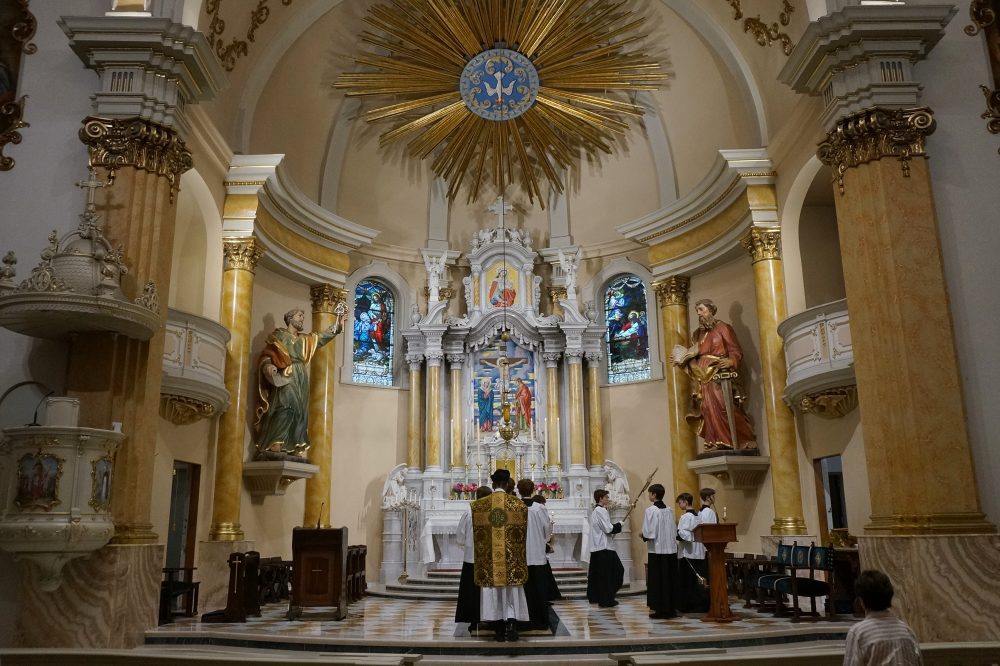
ST. PAUL, Minn. — While incense filled the air and 13 altar boys stood in attendance, a priest at the Church of Saint Agnes delivered a message this week about blending centuries-old Catholic traditions with loyalty to the Vatican — just as Pope Leo XIV was confronting a serious challenge from a breakaway traditionalist faction.
“Our Catholic faith is a living tradition, and there is a difference between being rooted and being stuck,” said the Rev. John Ubel, who delivered that message during both English-language and Latin Masses on Sunday.
Ever since the Second Vatican Council overhauled Catholic worship more than six decades ago, celebrating Mass in the traditional Latin Rite — the form that existed before those changes — has become a flashpoint for deep theological, cultural, and increasingly political tensions within the Catholic Church.
The conflict grabbed international attention when Pope Leo XIV announced Thursday that the Society of St. Pius X — a traditionalist organization founded specifically to reject the Council’s reforms and celebrate only the old Latin Mass — had formally separated from the Catholic Church. The Vatican excommunicated the society’s bishops and priests and issued a warning to its many followers after the group consecrated four men as bishops in direct defiance of Leo.
Although the Latin Rite itself was not the root cause of the split, the bitterness surrounding it — and the lingering assumption that anyone who prefers it must be an ultraconservative dissident — remains a sore point at Saint Agnes. The parish has no connection to the Society of St. Pius X and holds official church permission to celebrate Mass in Latin.
“For all who are attached to Tradition, I pray that they seek to maintain full ecclesial communion with our Holy Father, Pope Leo XIV,” Ubel said in a statement Thursday.
Saint Agnes is a historic parish originally established for German-speaking immigrants, now located in a diverse, centrally situated neighborhood in Minnesota’s capital. The church offers one traditional Latin Mass per weekend with the archbishop’s approval, along with a modern Latin Mass and four English-language services.
“I believe that Saint Agnes is an example where the different forms of Latin Mass, and English, peacefully coexist, and, in many ways, I think it’s a model for how the church can respect various liturgical traditions and do so in full charity,” Ubel said during Sunday’s homilies.
Peter Draganowski, a 15-year-old who will be a sophomore at Saint Agnes’ school this fall, has served as an altar boy at both English and Latin services for years. He prefers the Latin Mass, even with its additional steps and rituals.
“It’s really not hard, it just has a lot more moving parts,” he said in the parish hall while hot dogs and doughnuts were being served after Sunday’s first English Mass. “The sacred mysteries deserve that beauty.”
The archbishop of St. Paul and Minneapolis, Bernard Hebda, expressed hope that local Catholics who had been attending Society of St. Pius X chapels would now seek out approved services instead.
“We are blessed that the same traditional Eucharistic liturgy beloved by those who have worshiped with the SSPX in the past continues to be celebrated in six locations throughout the Archdiocese,” Hebda said in a statement. “I am confident that those who prefer the Traditional Latin Mass could find a home here.”
Beyond being conducted in Latin, the old rite Mass differs from standard Catholic services in several other ways: its prayers are longer and different, the priest faces the altar with his back to the congregation, Communion is placed only on the recipient’s tongue while kneeling at the altar rail rather than placed in the hand, and priests wear shorter Roman-style vestments along with a black biretta hat.
Very few American Catholics regularly attend Sunday Mass in this pre-Vatican II format, known as the “extraordinary form,” according to Stephen Cranney, a lecturer at Catholic University of America in Washington and co-author of a forthcoming book on the Latin Mass in the United States. He estimates approximately 510 such Masses are held on Sundays across the country, out of more than 16,000 active parishes. The U.S. Conference of Catholic Bishops and Georgetown University’s Center for Applied Research in the Apostolate both indicated they do not track this data.
In surveys Cranney conducted, most American Catholics who prefer this form of Mass cite its elaborate aesthetic quality, a stronger sense of reverence, and its connection to centuries of tradition. Only a small fraction said they oppose the Vatican II reforms, and even fewer expressed support for defying the pope.
Still, popes have long grappled with the concern that a preference for a more solemn liturgy could mask a deeper desire to break from the church.
“How do you … try to be accommodating to the people who might prefer the traditional Latin Mass while not giving fuel to the fire of people that want to split off?” Cranney said.
Leo’s two predecessors took notably different approaches. In 2007, Pope Benedict XVI affirmed the validity of the Latin Rite and encouraged priests to offer it when parishioners asked. Pope Francis, however, tightened restrictions between 2021 and 2023, requiring individual bishops to approve the celebration of the traditional Mass and to verify that those requesting it had accepted the Vatican II reforms. He also limited the use of parish churches for these services. Francis said his concern was that the old Mass had become a source of division — though Vatican documents that surfaced after his death suggested most bishops had actually expressed general satisfaction with how the practice was being handled.
Last fall, Leo permitted a U.S. cardinal to celebrate the old Latin Mass at St. Peter’s Basilica in Vatican City, a move many traditionalists viewed as a positive signal. In the year since taking office, Leo has repeatedly emphasized the importance of unity within the Church. Just this past Tuesday, before the Society of St. Pius X went ahead with the consecrations, he again urged the group not to proceed. Once they did, the Vatican warned the faithful to stop attending the society’s Masses, stating that those who formally align with the group are considered schismatic and excommunicated.
Members of Saint Agnes said they were grieved by the schism and pledged to keep praying for a unified church.
Nell O’Leary Alt, who was raised in the parish, said her family attends both Latin Masses as well as English services. As a mother of five children ranging in age from 5 to 16, she admitted with a laugh that she once found the quiet stretches of the traditional Latin Mass nerve-wracking, with nothing to mask the fidgeting and giggling of her kids in the pews. But her family has come to love Latin worship: “It’s the same the saints knew all through the ages.”
Tom Graff, another lifelong Catholic at the church who sings in the choir, said he is drawn to the solemnity of the rite. But this week’s events have reinforced what he tries to teach his four children — not to fall into the trap of thinking one form of worship is better than another.
“I can appreciate both the ordinary and the extraordinary forms of Latin Mass, and Schubert’s Tantum Ergo as well as On Eagle’s Wings,” Graff said, referencing a centuries-old and a contemporary Christian hymn. “It’s about the holy sacrifice of Mass, regardless of the parish or the type of liturgy.”
For Ubel, offering multiple Mass options is fundamentally about welcoming people in, not pushing them apart.
“It’s not a competition to see who’s more Catholic,” he said.
The Iranian government and the Islamic Revolutionary Guard Corps (IRGC) are taking steps to seize St. Peter Evangelical Church in Tehran — the oldest Protestant church in Iran — while demanding that families living on the historic property vacate at once. Church leaders say this is part of a broader crackdown against Iran’s evangelical Christian community.
According to church officials, armed intelligence agents and regime representatives showed up and threatened church leaders with jail time, ordering the 20 low-income Christian families residing on the compound to leave immediately.
Church leaders say the property is being taken through EIKO — the Execution of Imam Khomeini’s Order — and re-registered through the Islamic Revolutionary Court in a process designed to strip the church of its legal standing.
St. Peter Evangelical Church was founded in 1872 by American Presbyterian missionaries and has served Tehran’s Protestant community for nearly 150 years. Known locally as the Qavam church due to its location on Si-e-Tir Street — formerly called Qavam-ol-Saltaneh Street — the church sits on a city-block-sized compound in the heart of downtown Tehran.
In a formal letter signed by the Executive Secretary of the Synod of the Evangelical Church of Iran in Diaspora, church leaders described their “severe distress” over the situation and accused Iranian authorities of growing bolder since negotiations toward a possible US-Iran agreement got underway.
“The regime is no longer afraid of the international community,” the letter states.
Officials say authorities have already taken a 10,000-square-meter garden belonging to the church, which is now occupied by four IRGC officials. A new property deed has reportedly been issued in the IRGC’s name, leaving church employees and members legally classified as trespassers on land the church has historically owned.
Iranian authorities have countered that the church had improperly rented portions of the property to its members.
Church leaders connected this latest action to the destruction of the Evangelical Church of Mashhad on June 4, describing both incidents as part of a growing pattern of pressure on Iran’s Protestant community.
“It is clear that without a swift response to this crisis, we may be deprived of our last remaining church centres in the country,” the synod’s letter warned. The letter called on the international community to step in and stop “the ongoing process of expelling Christians from their places of worship and the occupation and destruction of these properties.”
Human rights advocates and the Anti-Defamation League’s Task Force on Middle East Minorities said they are documenting the property seizures as illegal evictions and serious violations of religious freedom.
ECONE, Switzerland — A rebel Catholic organization that was excommunicated after ordaining four bishops without Church approval is showing no signs of remorse, with members accusing the Catholic Church of abandoning the true faith and claiming Pope Leo never gave their concerns a proper hearing.
Gathered at their seminary in the small Swiss village of Econe in the country’s southwest, members of the Society of St. Pius X — including both clergy and laypeople — said they intend to continue operating as they always have, with a focus on upholding traditional Catholic practices.
“We are at peace with what has happened as you can see from all the faces,” said a Mexican deacon, gesturing toward a small group of people kneeling to receive blessings from one of the newly ordained bishops in a parking area following an outdoor Mass. The deacon asked to remain anonymous, saying he did not hold a senior enough position to speak on behalf of the group.
The Vatican’s chief doctrinal authority, the Dicastery for the Doctrine of the Faith, declared the Swiss-based society to be in schism with the broader Catholic Church and issued a warning to Catholics that the group’s sacraments are now performed unlawfully.
Under the warm sun, group members gathered — some with beers in hand — while a nun played songs on a recorder in the vineyard-lined Alpine hamlet where the controversial ordinations took place the day before.
One society priest described the Vatican’s ruling as both unjust and without merit.
“We do respect the pope. We will keep praying for him,” said Father Benedict, who chose not to share his full name. “It hurts to be punished by your dad,” he continued, using the term to refer to the pope, “because you know you didn’t do anything wrong.”
Father Benedict said the Society had been attempting to arrange a meeting with Pope Leo for over a year to present its position, and expressed disappointment that the pope only responded at the “very last minute.”
“This sanction shows that, I mean, we did not close the door to the Holy Father, to the Holy See,” Benedict said. “They shut it in our face.”
The Vatican countered that opportunities for dialogue had been extended to the society, even if not through a face-to-face meeting with the pope himself.
“The Holy Father did not excommunicate the Lefebvrists. They excommunicated themselves,” said Nicholas Cafardi, dean emeritus of Duquesne University School of Law in Pittsburgh. The term “Lefebvrists” refers to followers of Marcel Lefebvre, who founded the group.
The ultra-traditionalist organization, established in 1970, rejects several core Church teachings. The Vatican stated the group cannot lawfully perform marriages or hear confessions. Church officials noted that ordaining bishops without papal approval is considered so serious an offense that excommunication occurs automatically.
The society’s roots lie in opposition to the sweeping changes introduced by the Second Vatican Council, which ran from 1962 to 1965. Those reforms included replacing the traditional Latin Mass and opening the door to dialogue with non-Catholics. Traditionalists within the group hold the modernizing Council responsible for what they view as a decline in the Church, pointing to the drop in the number of men and women choosing religious life.
Jean-Yves Cottard, a visiting French priest and society member, pushed back on the label being applied to the group.
“The pope is kind with everyone and why not also with us?” he said, rejecting the characterization of members as “schismatics.”
A new audio series titled Faith and Freedom has been launched in honor of the United States’ 250th birthday.
The series, which is now in its 16th installment, is dedicated to exploring the relationship between faith and the freedoms that have shaped American history.
Each segment in the series marks a milestone in the nation’s quarter-millennium of history, offering listeners a closer look at how faith has played a role in the American story.
VATICAN CITY — The Vatican launched a forceful response Thursday against a traditionalist Catholic society that ordained new bishops without the pope’s blessing, formally declaring the Society of St. Pius X in schism, excommunicating its bishops and priests, and putting its own members on notice that they too could face the church’s most severe penalties.
The Vatican’s doctrine office went further than what the church’s canon law strictly required in responding to the Wednesday consecrations of four new bishops at the society’s seminary in Econe, Switzerland.
The society, widely referred to by its initials SSPX, is devoted to the ancient Latin Mass and stands in opposition to the modernizing changes of the Catholic Church, which it has condemned as riddled with heresies and errors and accused of abandoning the true Catholic faith.
The ordination ceremony Wednesday was a lengthy, ritual-heavy five-hour Mass attended by roughly 15,500 people and their families. The SSPX carried out the consecrations in open defiance of Pope Leo XIV, who had personally called on the group to hold off in the interest of preserving church unity.
Through a formal decree, the Vatican excommunicated all four newly ordained bishops along with the two bishops who participated in the ceremony. The consecrations were labeled a “schismatic act,” and the society itself was declared to have created a schism — a deliberate split from the Catholic Church.
The Vatican also put the society’s followers on notice, stating that those who formally align themselves with the SSPX are to be considered schismatic and therefore excommunicated. SSPX priests were likewise declared schismatic and excommunicated, and the sacraments of confession and marriage they perform were ruled invalid.
The breadth of the penalties — particularly those aimed at priests, laypeople, and the sacraments themselves — represented a sharp reversal of accommodations the Vatican had extended to the SSPX in recent years as part of efforts to bring the group back into full communion with Rome.
The SSPX was established in 1970 by French Archbishop Marcel Lefebvre, who created the organization to resist the modernizing reforms of the Second Vatican Council. Those 1960s meetings, commonly known as Vatican II, transformed the church’s relationships with other Christians, Jews, and people of other faiths, and permitted Mass to be conducted in local languages rather than Latin.
Lefebvre himself consecrated four bishops without papal authorization in 1988. The Vatican at that time excommunicated Lefebvre and all four bishops and similarly declared those consecrations a “schismatic act.”
Pope Benedict XVI lifted those excommunications in 2009 as part of a broader effort to reconcile with the group. Despite that gesture, the SSPX still holds no official standing within the church, and Thursday’s decree now places it formally in schism.
The situation created a significant challenge for Pope Leo XIV, who has made church unity a central theme of his papacy and has made particular efforts to reach out to the conservative and traditionalist segments of the church that felt sidelined during the pontificate of Pope Francis.
Nevertheless, the severity of Thursday’s sanctions signals that after nearly five decades of negotiations with the society, the Holy See has reached its limit.
Part of the Vatican’s forceful reaction stems from the threat the SSPX represents — a growing, parallel ultra-traditional Catholic structure that has expanded considerably since its original break with Rome. According to the society’s own figures, it now counts six bishops, 751 priests, 264 seminarians spread across five seminaries, 145 religious brothers, 88 oblates, and 250 religious sisters drawn from 50 different countries.
The SSPX has long accused the broader Catholic Church of embracing errors such as modernism and liberalism, and has maintained that it alone is preserving the authentic faith of Christ. The group justified the latest consecrations by invoking what it called a “state of necessity” to serve its faithful.
During Wednesday’s ceremony, SSPX superior the Rev. Davide Pagliarani delivered a homily defending the actions and framing them as an act of loyalty to the pope himself.
“We are accused of not respecting the pope,” Pagliarani said. “But it is precisely because we love the pope as the vicar of Christ, as the head of the church, that we don’t want to see the pope humiliated anymore, on the side of false shepherds representing false religions.”
VATICAN CITY — The Vatican issued a sweeping declaration Thursday, announcing that members of a breakaway right-wing Catholic organization are officially in schism and excommunicated after the group ordained new bishops without the blessing of Pope Leo.
The Dicastery for the Doctrine of the Faith — the highest doctrinal watchdog for the 1.4-billion-member Catholic Church — issued the stern decree, warning Catholics around the world that the Switzerland-based Society of St. Pius X is now performing sacraments unlawfully.
According to the decree, the ultra-traditionalist organization, which rejects core Church teachings, does not have the authority to perform valid marriages or hear confessions.
Catholic Church doctrine holds that only the pope can authorize the consecration of new bishops, a requirement rooted in the Church’s belief in maintaining an unbroken line back to Jesus’ 12 apostles, who are regarded as the original priests and bishops.
When bishops are ordained without papal approval, Church law considers it so grave an offense that all participants are automatically excommunicated — meaning they are cut off from the broader Church community and barred from receiving sacraments unless they repent and seek forgiveness.
Thursday’s decree confirmed that the two bishops who led the unauthorized ordination ceremony, which took place in Switzerland on Wednesday, were excommunicated, as were the four priests who were elevated to bishop — an outcome that had been widely anticipated.
But the Vatican’s response went further than many observers expected. The decree stated that every priest within the Society of St. Pius X, as well as any Catholic who “adhere formally” to the group, is now considered to be in schism and excommunicated.
A schism refers to a serious and formal break within the Catholic community.
The Society of St. Pius X has long rejected the central conclusions of the Second Vatican Council, a major gathering of bishops held in the 1960s that introduced sweeping reforms to the global Church, including efforts to improve the Church’s relationship with Jewish people and other Christian denominations.
That Council also permitted Mass to be celebrated in local languages rather than exclusively in Latin. The Society rejected that shift, arguing that the Latin rite carries a unique sense of reverence and tradition.
The group — whose members are sometimes called Lefebvrists, after founder Archbishop Marcel Lefebvre — reports having 733 priests worldwide. Its leadership, which has long been at odds with the Vatican, argued that ordaining new bishops was necessary to ensure enough church leaders to guide the organization.
Four new bishops were ordained Wednesday by a traditionalist Catholic splinter group in a small Alpine village in southwestern Switzerland, directly defying a personal appeal from Pope Leo to halt the unauthorized ceremony.
Cardinal Pietro Parolin, one of the Vatican’s most senior officials, condemned the event, saying it had “deeply wounded” the unity of the Catholic Church’s 1.4 billion members worldwide.
“This is in itself a schismatic act,” Parolin told reporters in Rome, using language that signals a serious break within the Catholic community.
Thousands of supporters gathered in the tiny hamlet of Écône to witness the ordination of bishops from the ultra-traditionalist Society of St. Pius X — just two days after Pope Leo had personally urged the group to stand down.
In a letter written Monday to the society’s leader, Rev. Davide Pagliarani, the pope wrote: “I plead with you and ask you with all my heart: please turn back!”
Under Catholic Church law, only the pope holds the authority to approve the consecration of new bishops, a tradition rooted in maintaining the Church’s spiritual lineage back to Jesus’ 12 apostles, who are considered the original priests and bishops.
The Church treats unauthorized bishop ordinations as one of the gravest possible offenses. Anyone who takes part in such a ceremony is automatically excommunicated — meaning they are cut off from the broader Church and barred from receiving sacraments unless they repent and seek forgiveness.
The Society of St. Pius X rejects the core teachings of the Second Vatican Council, a major gathering of Catholic bishops held in the 1960s that brought sweeping reforms to the global Church, including efforts to improve relations with Jewish communities and other Christian denominations.
Among those reforms was a change allowing Mass to be celebrated in local languages rather than exclusively in Latin. The society rejected that shift, arguing that the Latin rite preserves an important sense of mystery and formality in worship.
The group, which claims 733 priests around the world, has long maintained a strained relationship with the Vatican. Society leadership argued that ordaining new bishops was necessary to ensure enough church leaders to guide the organization.
The Vatican had put the society on notice back in May, warning that proceeding with unauthorized ordinations would result in excommunication.
In honor of America’s 250th birthday, a special series titled Faith and Freedom is underway, taking a closer look at the deep ties between religious faith and the founding principles of the United States.
This installment marks Part 15 of the ongoing audio series, which continues to explore how faith has shaped the American story across two and a half centuries.
VATICAN CITY — A far-right traditionalist Catholic organization is on a collision course with Pope Leo XIV, announcing plans to consecrate four new bishops without the pope’s approval. Under Catholic Church law, doing so results in automatic excommunication for all bishops involved and is considered a deliberate break from church unity — what’s known as a schismatic act.
The upcoming ceremony represents the first significant crisis to confront Leo since he became pope. Church unity has been a central priority for him, and he has been working to ease tensions with traditionalist factions that grew worse during the previous pontificate.
The organization behind the move is called the Society of St. Pius X, commonly referred to by the acronym SSPX. It was established in direct opposition to the sweeping modernization efforts of the Second Vatican Council — a series of church meetings held in the 1960s that transformed how the Catholic Church related to other Christians, Jewish communities, and people of other faiths. Those meetings also opened the door to celebrating Mass in everyday spoken languages rather than Latin.
The SSPX’s founder, Archbishop Marcel Lefebvre, was suspended and the organization was formally suppressed by the Vatican in 1975. Then in 1988, Lefebvre took the dramatic step of consecrating four bishops without the pope’s blessing. The Vatican responded swiftly, excommunicating Lefebvre and all four bishops. To this day, the SSPX holds no recognized legal standing within the Catholic Church.
Despite that original break with Rome, the group has continued to expand. Today it operates as a kind of parallel, ultra-conservative Catholic structure rooted in pre-Vatican II traditions. According to the SSPX’s own figures, the organization includes two bishops, 751 priests, 264 seminarians studying at five seminaries, 145 religious brothers, 88 oblates, and 250 religious sisters drawn from 50 different countries.
Under the church’s internal legal code, known as canon law, consecrating a bishop without papal approval automatically excommunicates both those performing the ceremony and those receiving the consecration. No formal declaration from the Vatican is required — the penalty takes effect on its own. However, some church law experts believe the Holy See will likely want to make some kind of public statement given how openly the SSPX is conducting the consecrations.
Excommunication is the most severe punishment available under canon law. The Rev. Robert Gahl of the Catholic University of America explained that it is considered a “medicinal” penalty — one intended to signal wrongdoing and prompt repentance. “The medicine may be bitter tasting, meaning that there’s a harsh feature of it because it’s a penalty, but it’s meant to bring about a change in the one who receives it,” he said.
Importantly, the excommunication does not cancel out the validity of the consecrations themselves. SSPX bishops and priests are considered validly ordained — just not lawfully so.
Leo has the authority to extend excommunications to lay Catholics who attend the ceremony, but most observers do not expect him to go that far.
Interestingly, despite his general wariness of traditionalist movements and a broader effort to limit the spread of the old Latin Mass, Pope Francis had gone out of his way to extend certain concessions to the SSPX. In 2015, he issued a decree allowing Catholics to make a valid confession with SSPX priests, effectively recognizing the legitimacy of those absolutions. What began as a one-year gesture tied to his Jubilee of Mercy was later extended with no end date. Francis also made arrangements for SSPX priests to perform valid marriages.
Experts now say Leo could potentially pull back some of those concessions as part of the Vatican’s response to the new round of unauthorized consecrations.
Pope Benedict XVI had previously made significant efforts to bring the SSPX back into full communion with Rome. In 2007, he eased restrictions on celebrating the traditional Latin Mass across the broader Catholic Church. Then in 2009, he lifted the excommunications that had been imposed on the four SSPX bishops back in 1988.
That latter decision quickly turned into a serious embarrassment. One of the four bishops whose excommunication was lifted, Bishop Richard Williamson, was publicly known as a Holocaust denier. In a television interview broadcast on Swiss television shortly before the Vatican’s announcement became public, Williamson stated that he did not believe Jews were killed in gas chambers during World War II. The revelation sparked outrage among Jewish leaders. Benedict later acknowledged that a basic internet search would have surfaced Williamson’s views before the decision was made.
Williamson’s troubles didn’t end there. The SSPX itself expelled him in 2012 for insubordination, saying he had missed a deadline to formally acknowledge the group’s authority and had called for its superior to step down. Williamson, who was ordained a priest by Lefebvre in 1976 and had taught at SSPX seminaries in Europe, the United States, and Argentina, died in 2025.
While Francis extended concessions to the SSPX, he simultaneously angered many Catholic traditionalists by reversing Benedict’s broader relaxation of the Latin Mass, arguing it had become a source of division within the church.
It’s worth noting that the SSPX is one fringe group operating outside of Rome’s authority. Many other traditionalist Catholics remain in full communion with the Holy See. As part of his unity efforts, Leo permitted a prominent American cardinal to celebrate a traditional Latin Mass at St. Peter’s Basilica last year.
VATICAN CITY — Despite facing the gravest penalties the Catholic Church can impose, a breakaway traditionalist Catholic organization has moved forward with consecrating four new bishops without the blessing of Pope Leo XIV.
The Society of St. Pius X held a major ceremony at its seminary in Econe, Switzerland — located in a mountain valley in the country’s southwestern region — drawing thousands of attendees who favor the ancient Latin Mass over the contemporary worship practices used in most Catholic parishes today.
The group, commonly referred to by the initials SSPX, pressed ahead with the consecrations even after the pope made a final plea for them to stand down. In a letter released Tuesday, the American pope described the act of consecrating bishops without his approval as a “sin of extreme gravity” that would ultimately hurt the very people the society seeks to serve.
Under Catholic Church law, performing a bishop consecration without papal authorization automatically triggers the most severe punishment available: immediate excommunication for the four newly consecrated bishops and the bishop performing the ceremony. The act is also considered schismatic — meaning it represents a deliberate break in the unity of the Catholic Church.
Despite the gravity of the situation, the event carried all the hallmarks of a joyous occasion. The SSPX’s website featured a countdown clock in the days leading up to the ceremony. Video footage showed seminarians cheerfully unloading boxes of supplies. Attendees received commemorative baseball caps bearing the “Econe2026” logo.
In perhaps the most festive touch, registered participants could purchase a souvenir wine collection to mark the “historic” occasion. The gift set, priced at 75 Swiss francs ($92.50) and called the “Cuvee des Sacres,” included pinot noir, Syrah, Petit Arvine and Fendant wines, each bottle featuring a bishop-themed label depicting items such as a miter hat, ring, cross, or crozier staff.
For the SSPX, the threat of excommunication or a formal declaration of schism holds little sway. The organization believes it alone is faithfully preserving authentic Catholic tradition.
“We don’t fear it. It pains us immensely, but we believe that the good we seek is greater than the pain that will be inflicted upon us,” said Marc-André Mabillard, the society’s media manager.
In a late reply to the pope’s letter, the SSPX’s superior, the Rev. Davide Pagliarani, asked Leo to hold off before imposing any formal penalties.
The ceremony took place exactly 38 years after the Vatican last declared SSPX bishop consecrations a “schismatic act” that resulted in automatic excommunication.
The SSPX was founded by French Archbishop Marcel Lefebvre in opposition to the modernizing changes brought about by the Second Vatican Council. Those 1960s church gatherings transformed the Catholic Church’s relationships with other Christians, Jews, and people of other faiths, and permitted Mass to be celebrated in local languages rather than Latin.
The SSPX continues to celebrate the traditional Latin Mass and has accused the broader modern church of harboring heresies and errors, including what it describes as modernism, liberalism, and ecumenism. The society claims only it upholds the true faith and has justified the new consecrations by citing a “state of necessity” to care for its members.
Not everyone shares that view. Many Catholics — including those with conservative and traditional leanings — have opposed the consecrations, seeing them as a serious act of defiance against the pope that damages the church as a whole.
“You can’t serve tradition while disobeying the church and her authority,” said the Rev. Robert Gahl, an ethics expert at the Catholic University of America.
Biographer George Weigel, who has written about St. John Paul II, recently argued that the rift between the SSPX and the Vatican goes far deeper than a preference for Latin over English at Mass.
According to Weigel, writing in First Things magazine, the dispute involves “a rejection of the Second Vatican Council’s teaching on the church, salvation, religious freedom, church–state relations, and the church’s relationship to other religions.”
Weigel also noted that Lefebvre had been a supporter of the collaborationist Vichy regime in France during World War II, and that one of the SSPX’s original bishops denied the Holocaust.
The society has pointed to a practical need for the new bishops: only two of its original four bishops remain alive, and the group says it needs additional bishops to serve a faith community with 800 places of worship spread across 77 countries.
The SSPX insists the consecrations are not a rejection of Pope Leo’s authority, but rather a practical step to allow the ordination of new priests and the administration of confirmation ceremonies according to the ancient rite.
The four men being consecrated as bishops are Pascal Schreiber of Switzerland, Michael Goldade of the United States, Michel Poinsinet de Sivry of France, and Marc Hanappier, also of France.
Responding to the pope’s letter, Mabillard expressed “great sadness to not be understood by our leader,” but made clear: “We are changing absolutely nothing in our plans.”
For another year, the Texas Rangers stood apart from every other Major League Baseball franchise by choosing not to participate in LGBT Pride Month festivities that the league’s other 29 teams took part in during June.
Rather than joining in the widespread Pride celebrations, the Rangers organization held what they called a “Faith and Family Night” at Globe Life Field in Arlington, Texas. During the event, several players took the opportunity to share their personal faith testimonies with fans in attendance.
Republican Governor Greg Abbott voiced his support for the team’s decision on the social media platform X, writing: “In Texas, we don’t punish people for living out their faith. We protect that right.”
A newly released survey from the Pew Research Center offers a detailed look at how Americans feel about prayer in public schools — and the results show broad, but nuanced, support.
According to the poll, 78% of American adults believe public schools should permit students to pray voluntarily in student-led groups. Support is somewhat lower when it comes to authority figures leading the prayers: 57% of respondents said coaches should be allowed to lead their teams in prayer, while 46% said teachers should be permitted to lead their classes in prayer.
Despite that support, those who favor coaches and teachers leading prayer largely draw the line at forcing anyone to take part. A strong majority of that group said no student should ever be required to participate in school prayer.
The survey reflects the ongoing national conversation about the role of religion in public education and where Americans believe the boundaries should be drawn.
In honor of America’s 250th birthday, a new series called “Faith and Freedom” has been produced to explore the deep ties between religious faith and the freedoms that define the United States.
This installment marks Part 14 of the ongoing audio series, which continues to highlight the role that faith has played throughout American history and its enduring connection to the nation’s founding ideals.
ROME — In his first major move to place a woman in a high-ranking position within the Vatican, Pope Leo XIV has appointed Italian Sister Alessandra Smerilli to lead the Holy See office that oversees issues related to migrants, the environment, and global development.
Smerilli, who holds a background in economics, has been serving as the second-in-command at the Dicastery for Promoting Integral Human Development. In her new role as prefect, she takes over from Canadian Cardinal Michael Czerny, who is retiring and turns 80 this month.
The appointment signals that Leo intends to continue a pattern established by his predecessor, Pope Francis, who made advancing women into top management roles within the Vatican a deliberate priority in response to growing calls for women to have greater decision-making authority in the Catholic Church.
At the same time, Leo is also following Francis’ approach by naming Cardinal Fabio Baggio as a “pro-prefect” of the same office, where Baggio currently serves as undersecretary. The dual appointments reflect the reality that some leadership functions within Vatican departments require an ordained priest and cardinal.
Baggio was additionally given responsibility for overseeing the Vatican’s Borgo Laudato Si environmental education center, located at Castel Gandolfo near Rome.
The Catholic Church limits ordination to men, and women within the church have long expressed frustration over what many describe as a secondary status — despite the fact that women carry out a significant portion of the church’s day-to-day work, including running schools and hospitals and passing the faith on to younger generations.
ROME — Pope Leo XIV is making a direct, heartfelt appeal to a breakaway traditionalist Catholic organization, urging the group to abandon its plans to ordain new bishops without his approval — a move the pope described as a schismatic act and a “sin of extreme gravity.”
In a letter addressed to the Rev. Davide Pagliarani, the leader of the Society of St. Pius X, the pope wrote: “I plead with you and ask you with all my heart: please turn back!”
The letter was released just one day before the society had scheduled the consecration of four new bishops at its seminary located in Econe, Switzerland. According to Catholic Church law, proceeding with such consecrations without papal consent constitutes a schismatic act and automatically results in excommunication for the four new bishops as well as the bishop who performs the ceremony.
The Society of St. Pius X — commonly referred to as the SSPX — was established in opposition to the sweeping reforms introduced during the Second Vatican Council in the 1960s. That council transformed the Catholic Church in significant ways, including changing its relationship with other faiths and allowing Mass to be held in local languages rather than Latin.
This situation echoes a similar crisis from 1988, when SSPX founder Archbishop Marcel Lefebvre consecrated four bishops without the pope’s permission — a serious violation of church law. The Vatican responded by excommunicating Lefebvre and all four bishops. Despite that action, the group has never been granted official standing within the church.
Vatican officials have made clear that those involved in the upcoming ceremony face the same consequences.
In his letter, Leo also reiterated the Vatican’s willingness to engage in dialogue with the group and warned that moving forward with the consecrations would ultimately harm the SSPX’s own followers.
“I urge you to consider carefully the spiritual good of the faithful, because the schismatic act you are about to undertake would deprive them of the licit, and in some cases, even valid reception of the sacraments,” the pope wrote.
Even with its complicated legal standing in the church, the SSPX has continued to expand over the decades and now represents a significant challenge to the Vatican as an alternative, ultra-traditional Catholic institution operating outside of official church structures. According to the group’s own figures, the SSPX currently has two bishops, 751 priests, 264 seminarians, 145 religious brothers, 88 oblates, and 250 religious sisters drawn from 50 different countries.
KARANGASEM, Indonesia — Fourteen-year-old Ketut Alit Widiantari joined more than 30 of her fellow village girls as they made their way barefoot into a temple courtyard, each carefully maintaining their balance while dressed in traditional garments and headdresses crafted from vibrant leaves and flowers.
The group of young women from Tista village performed the sacred Rejang Kuningan dance this past Saturday in honor of the Kuningan holiday at Bali’s Puseh temple, which stands as the spiritual heart of the local Balinese Hindu community.
For followers of Balinese Hinduism, Kuningan represents the conclusion of the 10-day Galungan festival — a celebration of the victory of good over evil. According to tradition, this is the day when gods and the spirits of ancestors, who descended to earth to offer blessings to their families and communities, make their journey back to the heavens.
The Rejang dance is a sacred ritual performed by young women in traditional dress, moving in slow, deliberate patterns around a temple. It serves as an offering not for a visible audience, but for God and the ancestral spirits of those who call the village home.
Before the performance begins, a temple priest blesses each of the dancers, and their costumes and headdresses are carefully inspected.
Across Bali, the Rejang dance takes on many different forms, each one shaped by the specific occasion, the ritual being observed, and the community responsible for keeping the tradition alive.
In the Karangasem district, where individual villages maintain their own distinct customs — even reflected in the architecture of their temples — the dance holds meaning beyond its role as a spiritual offering.
Through their attire, music, and choreography, Widiantari and her fellow Rejang Kuningan dancers embody the unique character of their village, bringing this year’s Galungan and Kuningan observances to a close not only through prayer, but through the enduring traditions their community continues to pass down.
The San Francisco Catholic Archdiocese has reached a $395 million agreement to resolve over 500 lawsuits alleging child sexual abuse committed by church officials, according to attorneys representing the victims, who announced the deal Monday.
As part of the terms, San Francisco Archbishop Salvatore Cordileone is required to personally write an apology letter to every survivor involved in the settlement.
Attorney Jeff Anderson, who represents dozens of the abuse victims, said the agreement also obligates the archdiocese to carry out a series of reforms aimed at child protection and greater transparency — including the creation of a publicly available list of clergy members who have faced abuse allegations.
The settlement arrives three years after the archdiocese sought bankruptcy protection and will provide compensation to roughly 530 survivors of childhood sexual abuse, Anderson said. It is the latest in a string of major settlements involving clergy abuse claims. In 2024, the Archdiocese of Los Angeles reached a record-breaking $880 million settlement.
Archbishop Cordileone released a statement saying he believes the agreement offers “a path toward fair compensation for survivors who have borne the weight of this abuse for a lifetime.” He added, “The hope is that this proposal will allow us collectively to move forward by continuing the important ministries to the faithful and community members that rely on our services and charity.”
Survivor Margie O’Driscoll filed suit against the archdiocese, alleging she was sexually abused nearly five decades ago by a priest at Marin Catholic High School in Kentfield, a community located north of the Golden Gate Bridge. O’Driscoll described the settlement as hard-won and said it places accountability squarely on church leadership rather than on the survivors themselves.
“I, like every survivor, have carried this pain and shame along like a ball and chain for a very, very long time,” O’Driscoll said at a news conference. “Ashamed and confused about what happened, scorned by the archdiocese, and sometimes not even believed by family and friends, and I think today shame is gonna change sides.”
Anderson explained that a survivor committee — which spent thousands of hours over the past three years negotiating directly with the archbishop — will have authority over how the settlement funds are distributed. Each survivor will have the opportunity to share their personal account of abuse with an independent allocator chosen by the committee, who will then determine what Anderson called “an equitable distribution based on the unique circumstances of that survival.”
Beyond the financial payout, the archdiocese must comply with 14 specific child protection and transparency requirements. These include maintaining and publicly publishing a comprehensive, current list of all clergy accused of abuse, along with details about the allegations and investigation outcomes. The archdiocese will also be prohibited from using confidentiality agreements to silence survivors.
“I’ve never heard of anything quite as significant, as rigorous, as robust as what is being required of the Archdiocese of San Francisco,” Anderson said.
The Roman Catholic Archdiocese of San Francisco announced Monday that it has reached a $395 million settlement with approximately 530 individuals who say they were sexually abused as children by priests. The agreement, if finalized, would bring the archdiocese’s bankruptcy case to a close.
The deal stands as the largest settlement of its kind ever reached through bankruptcy proceedings by a Catholic diocese in the country. However, it still requires approval from U.S. Bankruptcy Judge Dennis Montali in San Francisco before it can take effect.
The archdiocese serves close to 450,000 Catholics across San Francisco, San Mateo, and Marin counties in California. As part of the settlement terms, church leaders also agreed to publicly release the names of priests who have been credibly accused of sexually abusing minors, along with implementing new measures designed to prevent future misconduct.
San Francisco Archbishop Salvatore Cordileone released a statement addressing the agreement. “We remain committed to the healing and care of survivors who have suffered because of past sins of Church ministers,” he said. “We pray for all survivors of sexual abuse, for our Archdiocese, parish communities and schools, and for the eradication of this shameful crime from our midst and from society as a whole.”
The archdiocese sought bankruptcy protection in 2023. It is among more than two dozen Catholic dioceses across the country that have taken similar steps in recent years, following the passage of laws in California, New York, and other states that temporarily allowed victims of childhood sexual abuse to pursue legal action over crimes that occurred decades ago.
The $395 million figure eclipses the previous record held by the diocese of Rockville Centre on Long Island, New York, which had settled for $323 million through bankruptcy. Notably, the archdioceses of Los Angeles and New York reached even larger sex abuse settlements in recent years, though neither filed for bankruptcy to do so.
Steve Moreno, who served on a court-appointed committee representing abuse survivors during the bankruptcy process, called the settlement a meaningful step forward following years of legal battles. “No amount of money can erase the pain and shame associated with carrying the burden of my child abuse in silence for over 50 years,” Moreno said in a statement.
A Catholic nun who was stopped by federal immigration agents while walking to Sunday Mass in her religious habit has been freed from custody, according to officials with the Diocese of Brownsville.
Sister Leticia Ugboaja was on her way to Our Lady of Sorrows Church in McAllen, Texas — located just a few miles from the U.S.-Mexico border — when U.S. Immigration and Customs Enforcement officers detained her. She was dressed in her habit at the time of the arrest.
The Department of Homeland Security and ICE had not responded to requests for comment as of the time of reporting.
Church officials quickly posted about the arrest on social media, and the story spread widely, drawing attention from members of Congress. U.S. Rep. Monica de la Cruz was among the congressional representatives who stepped in to advocate for Ugboaja’s release.
According to Brenda Riojas, a spokesperson for the Diocese of Brownsville, Sister Ugboaja belongs to the Daughters of Mary Mother of Mercy religious order and had been serving as an Extraordinary Minister of Holy Communion at Our Lady of Sorrows Church. Riojas also confirmed that Ugboaja works as a registered nurse at South Texas Health System and previously spent 10 years as a certified nursing assistant at DHR Health in Edinburg.
By Monday, Ugboaja had returned home after South Texas congressional members reached out to federal authorities on her behalf.
“We are grateful for the quick response of local representatives who reached out to the Department of Homeland Security to get her released from custody,” Riojas said in a statement.
The incident comes amid a broader immigration enforcement push under President Donald Trump, which has included operations at sensitive locations such as houses of worship. The crackdown has caused concern among faith communities nationwide, with some church leaders encouraging members to attend services online and offering to help with everyday tasks like grocery shopping for those too fearful to leave their homes.
In honor of America’s 250th birthday, a special series titled Faith and Freedom is underway, exploring the deep ties between religious faith and the freedoms that have defined the United States since its founding.
This installment marks Part 13 of the series, which continues to examine how faith has shaped the American experience across generations.
SRN News brings listeners a compelling daily feature called Global Landscape — a fast-paced, two-minute audio segment designed to keep audiences informed on the most important religion-focused news stories happening around the world.
Each edition of the feature covers a range of topics, from significant faith-based developments to cultural shifts and major events where religion and global affairs come together. The segment is crafted to give busy listeners a meaningful snapshot of the day’s top stories in just a couple of minutes.
For the full audio segment and more details, visit www.srnnews.com.
The U.S. Supreme Court has chosen not to allow a Rastafarian prisoner to pursue a lawsuit against prison officials who cut his hair, and legal experts are calling it an unusual blow to religious freedom at the nation’s highest court. Specialists in the field say the case highlights just how complicated religious freedom protections have become in the United States, particularly as the country’s faith landscape grows more diverse. Christians now make up 62 percent of the American population, a significant drop from 78 percent two decades ago. Roughly 30 percent of adults now identify with no religion at all, while the remaining population follows a variety of other faith traditions. Despite the outcome, the Rastafarian prisoner’s case attracted backing from a wide range of religious communities across the country.
The Trump administration is taking steps to bring back a dedicated LGBT option on the 988 mental health crisis hotline for young callers. The hotline currently provides specialized routing for specific groups, including military veterans and Spanish-speaking callers. About a year ago, the administration discontinued the “press 3” option for LGBT youth, citing a lack of funding. Now, officials are working toward restoring the service before the end of the year, following a congressional directive requiring that $33 million be directed toward LGBT-focused mental health programs for youth. Democratic lawmakers were the driving force behind that funding requirement.
A newly released survey from Talker Research shows that Americans remain sharply divided on the subject of Gay Pride Month. According to the poll, 17 percent of respondents believe Pride Month should not be observed at all, while another eight percent feel it has grown excessive and should be reduced in scope. On the other side, 28 percent of those surveyed said Pride Month is meaningful and deserves public support, and 21 percent said they support the concept in principle but acknowledge little personal investment in it. Researchers noted that these views closely mirror political party lines — support for the importance of Gay Pride Month is more than double among Democrats compared to Republicans, and roughly one in three Republicans said the observance should be eliminated entirely.
Venezuela is in recovery mode following two devastating earthquakes that rocked the South American nation last week, and Christian humanitarian organizations are already on the ground working to help.
Operation Blessing has dispatched its disaster response team to the affected region, while Samaritan’s Purse is airlifting an emergency field hospital along with tons of critical supplies to assist those impacted.
The two earthquakes, each registering above a magnitude of 7.0 on the Richter Scale, struck just minutes apart near the capital city of Caracas. The back-to-back tremors left widespread damage in their wake.
Scientists note that Venezuela’s geographic position near the meeting point of two enormous tectonic plates puts the country at heightened risk for powerful earthquakes like those that struck last week.
Two of Canada’s most prominent Christian churches are moving to embrace physician-assisted suicide, raising significant questions about the intersection of faith and end-of-life decisions.
The United Church, the largest Protestant denomination in Canada, has a congregation in British Columbia that is actively advertising a seminar designed to guide people on how to access physician-assisted suicide.
Meanwhile, the Anglican Church of Canada is developing a formal religious liturgy specifically for individuals who choose to end their lives with a doctor’s assistance. The liturgy under development includes, in the church’s own words, “prayers to be read immediately before the fatal drugs are administered, as well as prayers after the patient’s death.”
The moves by both denominations signal a broader shift in how some mainline Canadian churches are responding to the country’s legal framework around medically assisted dying.
A new survey from LifeWay Research posed a straightforward but thought-provoking question to Protestant churchgoers: do the people around you know that you are a Christian?
The results show a divided picture. Only 53% of respondents said that most people in their lives are aware of their faith in Christ, while 30% said that most people in their circle do not know they are believers.
Despite that gap, the survey found that the majority of Christians feel ready and willing to speak up about their beliefs. A full 65% of those surveyed said they would have no hesitation in letting a non-Christian know that they follow the Christian faith.
The Nation of Islam has confirmed the passing of Khadijah Farrakhan, the longtime wife of movement leader Louis Farrakhan, who died Saturday at the age of 90.
Known affectionately as “Mother Khadijah,” she spent decades working alongside her husband — a charismatic and often controversial figure — as they together helped shape the Nation of Islam, a movement rooted in Black self-reliance. The couple made their home at Mosque Maryam on Chicago’s south side, which also served as the movement’s headquarters.
The Shura Executive Council released an official statement on behalf of Louis Farrakhan, saying: “The Honorable Minister @LouisFarrakhan with deep sadness yet with profound gratitude to Allah informs you that his beloved wife of 72 years, the first lady of the Nation of Islam, Mother Khadijah has returned to Allah (may Allah be pleased).”
Her death came just seven months after supporters celebrated her 90th birthday. The statement noted that details about funeral services will be shared at a later time.
Mosque Maryam honored her memory, describing her as “a devoted follower” with “a precious soul, a sweet heart.”
R&B artist ZaRio Son Rise also paid tribute on Facebook, writing that she was “a true queen, a righteous woman, and one of the greatest examples of dignity, faith, loyalty, and grace our generation has ever witnessed.”
Born Betsy Ross, Khadijah Farrakhan wed her husband — who went by Louis Walcott at the time — on September 12, 1953, in Boston. Together they raised nine children. Tragedy struck the family twice in recent years: their eldest son, Louis Farrakhan Jr., died in 2018, and another son, Joshua Farrakhan, passed away in 2023.
Khadijah embraced Islam in 1955, the same year her husband joined the Chicago-based organization after being deeply inspired by his Boston friend Malcolm X. Both husband and wife took on new names around that time.
Louis Farrakhan rose to lead the Nation of Islam in the wake of Malcolm X’s assassination in 1965. One of his most celebrated achievements was organizing the Million Man March in Washington in 1995.
Two years after that historic gathering, Khadijah Farrakhan addressed a major assembly of Black women in Philadelphia known as the Million Woman March.
“A nation can rise no higher than its women,” she told the crowd. “We focus on women but cannot lose sight that we must rise as a family — men, women and children.”
VATICAN CITY — Pope Leo on Sunday called for support and expressed his heartfelt solidarity with the people of Venezuela as the country continues to reel from two powerful earthquakes that struck earlier this week.
Speaking in Spanish to worshippers gathered in Rome for the Sunday Angelus prayer, the pontiff said, “I wish to express my closeness to the Venezuelan sisters and brothers affected by the recent earthquakes that caused numerous victims and injuries.”
Prior to his papacy, Leo spent many years serving as a missionary and bishop in Peru, a Spanish-speaking nation in South America. He is also planning an extensive trip to southern Latin America in November, with stops expected in Peru, Argentina, and Uruguay.
The pope also took a moment to thank rescue workers and volunteers who have been working to help Venezuelans in the wake of the disaster.
On the international front, EU foreign policy chief Kaja Kallas announced via a post on X that the European Union has committed 5 million euros — roughly $5.9 million — in emergency relief funding for communities impacted by the earthquakes.
Kallas also shared that she personally spoke with Venezuela’s interim president, Delcy Rodriguez, to convey Europe’s support for the Venezuelan people during this difficult time.
“We have activated the European Civil Protection Mechanism, with several member states rapidly deploying search-and-rescue teams, firefighters and medical personnel,” Kallas stated.
She further noted that the EU’s Copernicus satellite system is being used to assess the extent of the damage and help direct aid to the areas in greatest need.
Pakistan’s media watchdog has yanked the broadcast license of television channel Geo News for a 15-day period, citing content that aired during a program tied to Muharram — one of the most sensitive observances on the Islamic calendar.
The regulator determined that “religious visualisations” shown during the June 26 broadcast had the potential to offend religious sensibilities, damage interfaith harmony, and threaten public order.
In response, Geo News issued an apology on Sunday, stating that the material was broadcast unintentionally and does not represent the channel’s editorial stance or beliefs.
The issue of depicting the Prophet Mohammed or other revered Islamic figures carries enormous weight in Pakistan. The country has seen large-scale protests in the past triggered by cartoons published in Western nations, and religious disputes can rapidly inflame public anger across the Muslim-majority nation. During Muharram observances, Pakistani authorities routinely increase security measures.
Geo News, regarded as one of Pakistan’s biggest private broadcasters, confirmed that the footage in question has been pulled from all of its platforms. The channel explained that the video showed rituals observed by some communities in Iraq and the Middle East, and was meant to document local customs — not to promote any particular religious viewpoint.
The media regulator found that Geo News had failed to exercise proper editorial judgment and ordered the channel to launch an internal investigation. The case has also been forwarded to the regulator’s Council of Complaints for further review.
Pakistan has long faced scrutiny over the state of press freedom within its borders. Television broadcasters there have repeatedly encountered regulatory crackdowns, suspensions, and restrictions on their transmissions. Reporters Without Borders placed Pakistan at 153rd out of 180 countries in its 2026 World Press Freedom Index.
Students attending public schools in Texas will be required to read passages from the Bible and study how Christianity shaped the state’s history, under newly developed reading lists and social studies curriculum set for approval on Friday.
The updated educational standards represent a notable change in the approach Texas takes toward religion in its public school classrooms, weaving biblical texts and Christian history directly into required coursework.
NOGALES, Arizona — More than 100 Catholic bishops, nuns, priests, and churchgoers took part in a border procession Friday evening, calling on the U.S. government to treat migrants with dignity and respect.
The march began in Nogales, Arizona, and crossed into its sister city in the Mexican state of Sonora. Organizers timed the event to coincide with celebrations marking the 250th anniversary of American independence.
Tucson Bishop James Misko led a Mass at Sacred Heart Church in Nogales, which sits overlooking the U.S.-Mexico border fence. “We want to be well together. This is what the Church is all about,” he said during the service.
After Mass concluded, clergy and parishioners formed a line and prayed the rosary together as they walked across the border, where they were met by their Mexican counterparts.
Sister Eileen McKenzie, a Franciscan nun who works with migrants in the Ambos Nogales area, described the extreme conditions. “The heat is terrible, the heat is actually deadly,” she said, as temperatures climbed to 96 degrees Fahrenheit.
She called the procession a powerful moment of solidarity, adding: “We realized, there are people crossing the desert right now, and they don’t have any (respite). It puts perspective on it. There are more and more people who are going farther and farther out. They are more desperate and they are still crossing.”
Catholic leaders across the United States, along with Pope Leo, have spoken out against Trump-era immigration policies, specifically criticizing mass deportations, conditions inside detention facilities, and enforcement raids — actions they say are causing fear and suffering among migrant communities.
The criticism comes as the Supreme Court issued two rulings Thursday allowing the Trump administration to turn away asylum seekers at the border and remove deportation protections from hundreds of thousands of Haitian and Syrian immigrants.
In November, the United States Conference of Catholic Bishops released a statement expressing sadness over what it called “the vilification of immigrants,” while also raising concerns about conditions in detention centers and limited access to pastoral care.
Bishop Mark Seitz, who leads the Diocese of El Paso, Texas, said he has been closely monitoring the situation at the Camp East Montana detention center at nearby Fort Bliss. He said religious chaplains have sometimes been turned away from visiting detainees there.
“Most of these people that are being detained right now, they’re not elderly people. They’re not generally sick people. And yet they’re dying. And, there are many emergency calls from there to people who are suffering mightily,” Seitz said.
He added that Catholic priests have only been permitted to celebrate one Mass per week — on Sundays — with space for roughly 100 worshippers, a small fraction of the more than 1,000 people being held at the facility.
“These are people, 80% of which are probably Catholic and, and many of which, because of their circumstances, are even more needing God in their lives. It’s so unfortunate that we can’t serve them,” Seitz said.
A spokesperson for the U.S. Department of Homeland Security previously told Reuters that “ICE is always looking at ways to improve (its) detention facilities,” pointing to a change in how the facility’s contract is managed following three deaths there between December and January.
Federal officials waved the bishops and faithful across the border into Mexico, where they continued praying the rosary and followed a banner of the Virgin of Guadalupe. Bystanders smiled as the procession made its way to the Church of the Immaculate Conception, where the local Nogales bishop welcomed the group.
Dylan Corbett, executive director of the HOPE Border Institute in El Paso and a member of a Vatican group that advocates for migrant rights, said Friday’s Mass was part of a broader, ongoing effort by Catholics worldwide.
“In Central America, the exodus that we’ve seen from Venezuela, and (in) Haiti, the Church is there providing humanitarian support, standing up structures to be able to reintegrate those who have been deported, providing witness and also advocacy to advance policies that are more humane and will result in a more human and compassionate treatment of migrants,” he said.
On July 4th — the 250th anniversary of U.S. independence — Pope Leo is scheduled to celebrate Mass in Lampedusa, an Italian island where hundreds of thousands of migrants have arrived over the years after fleeing war and poverty in parts of Africa and the Middle East.
This year’s observance of Ashoura — one of the most significant holy days in Shiite Islam — was profoundly shaped by ongoing conflict and grief in both Lebanon and Iran. The day commemorates the death of Hussein, a grandson of the Prophet Muhammad, who was killed in a battle in 680 A.D.
In Dahiyeh, a southern suburb of the Lebanese capital Beirut, tens of thousands of people came together in coordinated processions, striking their chests in mourning — not only for Hussein, but also for family members and friends lost during the recent fighting between the Hezbollah militant group and Israel.
In the southern Lebanese city of Nabatiyeh, smaller ceremonies took place amid visible destruction left behind by Israeli airstrikes. The fragility of the current ceasefire was made clear when smoke rose from a fresh airstrike on the city’s outskirts. Some participants observed a traditional ritual that involves making ceremonial cuts to their heads as an act of mourning.
Meanwhile, in Tehran, the capital of Iran, large crowds gathered for processions and religious ceremonies. Many participants beat their heads and chests in mourning, while others carrying torches set fire to tents in a dramatic reenactment of the ancient battle in which Hussein was slain.
The images presented here were curated by Associated Press photo editors.
The Texas Board of Education voted Friday to approve mandatory reading lists for public school students that include passages from the Bible, continuing a push by state leaders to bring conservative and religious values into the public education system.
The Republican-controlled board passed the measure 9-5, with one member absent and not casting a vote. The required reading lists will apply to more than 5 million public school students and are set to go into effect in 2030.
This is not the first time Texas has moved to incorporate religious content into its schools. The state previously required the Ten Commandments to be posted in all public school classrooms — a mandate that was upheld by a federal appeals court earlier this year. Texas joins a number of other Republican-led states that have taken similar steps to bring Christian teachings into public education.
The move has sparked debate on both sides. Opponents argue that such decisions conflict with the Constitution’s “establishment clause,” which courts have long interpreted as maintaining a separation between government and religion. Supporters, however, contend that the measures bring back foundational Judeo-Christian teachings that they consider historically important.
The reading lists themselves cover a broad range of material, with much of it being non-religious or classical in nature. Included texts range from Aesop’s fables and Native American stories to a children’s version of Don Quixote. However, critics have pointed out that a large portion of the list consists of works written by white male authors — a concern in a state where Latino and Black students make up the majority of the student population.
Rachel Laser, who leads the advocacy organization Americans United for Separation of Church and State, released a written statement condemning the board’s action. She said the decision sought to “misuse public schools to impose one narrow set of religious beliefs and indoctrinate a new generation of Americans in the lie that America is a Christian country.”
A Trump administration advisory panel is recommending that the United States move away from the concept of separating church and state — and toward building what the commission calls “bridges” between them.
The proposal, which challenges a deeply rooted principle in American law, is among dozens of recommendations contained in a 224-page draft report released Friday by the Religious Liberty Commission.
President Donald Trump established the commission last year, and its membership consists almost entirely of conservative Christians. The document functions both as a policy proposal and a philosophical argument, reflecting members’ belief that religion and religious expression should play a stronger role in government, schools, and public life.
The report praises recent Supreme Court rulings that have expanded religious expression in public settings — including decisions that allow parents to opt their children out of school lessons based on religious objections.
Among its specific recommendations, the report calls for eliminating the “Johnson Amendment,” which currently prohibits tax-exempt religious organizations from engaging in political activities. Removing that restriction has been a long-held goal of Trump. The report also recommends that military service members who were discharged for refusing COVID-19 vaccines receive financial compensation.
More broadly, the commission is calling for greater religious expression in public spaces, expanded access to public funding for faith-based organizations, and wider exemptions for people who cite conscientious objections to policies — including vaccine requirements, pronoun usage, and certain classroom content.
The report also recommends that federal agencies post “Know Your Rights” materials in various settings and set up hotlines where people can report violations of religious liberty.
Additional proposals include creating new honors — a Presidential Medal of Religious Liberty and First Freedom Hero Awards — as well as exhibits and historical markers at significant sites highlighting religion’s role in American history.
The draft is now open for public comment over the next 15 days and is widely expected to draw strong opposition.
A coalition of organizations — including one that has filed a lawsuit over the commission’s alleged lack of ideological diversity, as required of federal advisory panels — released a preemptive report earlier in June defending church-state separation.
“Religious liberty belongs to all people, not to any single tradition, political party, or administration,” stated that report, published by the Center for American Progress and other groups.
Critics argue the commission’s viewpoint is skewed toward perspectives favored by Trump and his supporters, and that it heard almost exclusively from scholars and activists who share those views. They also say the commission gave inadequate attention to issues such as anti-Muslim efforts in Texas and other states, as well as the rise of antisemitism on the political right, not just the left.
The report arrives as several conservative-led states, including Texas, have moved to bring more religion into public institutions like classrooms — through measures such as Bible lessons and displays of the Ten Commandments.
Speaking Friday to supporters at a Faith & Freedom Coalition event in Washington, Trump promoted the newly released document.
“We saved religion, it was going down,” he told the crowd.
Trump also claimed that his predecessor, Democrat Joe Biden, had carried out a “reign of persecution” against religious Americans.
While the commission’s report steps back from the idea of church-state separation, it stopped short of calling that concept a “lie” — a characterization the commission’s chairman, Texas Lt. Gov. Dan Patrick, made in April. Instead, the report largely argues that the idea has been misapplied over time.
“To be clear, this does not involve or require advocating ‘theocracy’ or even the total elimination of any separation between church and state,” the report states. It instead calls for respecting a “tension between the relevant clauses of the First Amendment” — clauses that both protect religious freedom and prohibit the government from establishing an official church.
The phrase “a wall of separation between church and state” does not appear in the U.S. Constitution, though it has been embedded in Supreme Court precedent. Thomas Jefferson coined the expression in a letter to a Baptist congregation, expressing support for their opposition to government-sponsored churches — a practice that soon disappeared from American life.
During the 20th century, the Supreme Court used the “separation” concept to apply the First Amendment’s restrictions on establishing a national church to state and local governments as well, drawing on the 14th Amendment’s protections of citizens’ rights. That legal framework led to rulings banning official prayers and Ten Commandments displays in public schools. In recent years, however, the Court has shifted direction — allowing things like a public school coach praying on the field after games and permitting parents to remove their children from a lesson on transgender issues for religious reasons.
The draft report argues that even Jefferson did not intend to completely remove religion from public life, but rather sought a kind of balance between church and state.
“In reality, the church and state strengthen and support one another,” the report asserts.
The document highlights religion’s contributions to society, including humanitarian work, family stability, and serving as a moral check on government.
“In many cases the law protects the religious expression of Americans, but government officials and employers often use fear tactics to silence individuals into believing that they don’t have the right to publicly express their faith,” the report argues.
The report also draws on the views of one of its own members — a Catholic media figure and bishop — to argue that the idea of strict church-state separation can be traced to a European “God is dead” ideology that viewed traditional religion as a threat to individual freedom. “This way of thinking made its way … into the American culture and courtroom,” the report states.
Notably, the report gives little attention to the significant portion of Americans who have no religious affiliation. Many atheists and secular humanists argue that people can live ethically without religious belief, and that religion does not hold exclusive claim to virtue.
A lawsuit filed against the commission by the Interfaith Alliance and other religious organizations contends that the panel lacks ideological balance, pointing to the fact that commissioners have described the United States as specifically a Judeo-Christian or Christian nation, and that most of the commission’s meetings were held at the Museum of the Bible in Washington — an institution with Christian leadership.
The Trump administration is seeking to have the lawsuit dismissed, arguing on legal grounds that the law does not specify how a commission must be balanced or which viewpoints must be represented.
This latest draft report follows another document released two months ago by the Task Force to Eradicate Anti-Christian Bias — a separate body also created by Trump. That report claimed Christians faced discrimination under the Biden administration in areas including education, tax law, and the prosecution of anti-abortion demonstrators. Progressive critics argued that report failed to substantiate its claims and read more like advocacy than a genuine investigation.
In celebration of America’s 250th birthday, SRN News has launched a special series titled Faith and Freedom.
The series, which has now reached its 12th installment, takes an in-depth look at the role that faith has played throughout the history of the United States.
The Faith and Freedom series is available in audio format through SRN News.
It turns out the youngest generation of adults may be more religiously active than many people assume. A new survey from LifeWay Research found that Americans between the ages of 18 and 28 — known as Generation Z — attend worship services an average of six times each month.
That figure outpaces every other age group. Millennials and Generation X both average five worship service visits per month, while Baby Boomers come in at 4.5 times per month.
The research also shows that young adults are more likely than any other generation to take part in small group activities through their church.
NABATIYEH, Lebanon — Shiite Muslims around the globe came together Friday in large numbers to observe Ashoura, one of the most significant days in their faith, with major gatherings taking place in Iran, Iraq, Lebanon, and other nations. The occasion honors the memory of Hussein, grandson of the Prophet Muhammad, who was killed in the seventh century.
Ashoura falls on the 10th day of the Islamic month of Muharram and serves as the final day of a 10-day mourning period. It commemorates the day Hussein was slain along with family members and companions while fighting against the forces of Caliph Yazid, a ruler to whom Hussein refused to submit.
Hussein’s death deepened the historic divide between Sunni and Shiite Islam and has long stood as a symbol of standing against tyranny and injustice.
This year’s observance took place in the aftermath of a war involving predominantly Shiite Iran and both the United States and Israel, which launched military strikes against the country on February 28. Those strikes resulted in the deaths of senior Iranian officials, including Supreme Leader Ayatollah Ali Khamenei. The 86-year-old Khamenei served not only as Iran’s highest political authority but also as the final voice on all religious matters, and was deeply venerated by Shiite communities worldwide. A funeral procession for Khamenei is set to be held in early July.
In the Iraqi Shiite holy city of Karbala, enormous crowds assembled Friday to mark the occasion. Hussein was buried there following the battle in 680 AD, and his shrine draws millions of Shiite pilgrims each year. In Baghdad, thousands took to the streets in procession, with some participants cutting their heads with razors and performing other acts of self-mortification as expressions of mourning — practices that are controversial and widely criticized within the broader Shiite community.
In Lebanon, where a fragile ceasefire between Israel and the Iran-backed Hezbollah group remains in effect, thousands of mourners dressed in black gathered in Beirut’s southern suburbs at a shrine dedicated to Hezbollah’s longtime former leader, Hassan Nasrallah, who was killed during a series of large-scale Israeli strikes in 2024.
Among those gathered, women held photographs of sons and brothers who had died in the war, many of them fighters for Hezbollah. Others carried images of Nasrallah or Iran’s Khamenei, who was killed in February in the U.S. and Israeli attack. Many wept openly. While expressions of grief for Imam Hussein are a traditional part of Ashoura, many in attendance were also mourning deeply personal losses.
One mourner, Nagham Jaber, said her fiance was killed in the war. “This war was truly harsh on all of us, and now we are feeling the meaning of Ashoura more than usual,” she said.
In the southern Lebanese city of Nabatiyeh — typically a central location for Ashoura observances — dozens gathered near the city’s main square, much of which has been left in ruins by Israeli airstrikes in recent weeks. Some participants inflicted head wounds on themselves as a form of mourning, a practice that is widely opposed within Shiite Islam, including by Hezbollah itself.
Earlier Friday, state media and journalists from The Associated Press on the ground reported two Israeli airstrikes on the nearby village of Nabatiyeh al-Fawqa. It was not immediately known whether the strikes caused any casualties.
“Despite all the hardships, everything happening to the Shiite Muslim community, and the wars we are facing, we came to reaffirm our loyalty, our love and our unwavering passion for Imam Hussein,” said Khader Kamal, one of those gathered at the event.
For Shiite Muslims, who represent the second-largest branch of Islam after the Sunni majority, the death of Hussein carries profound religious and historical weight and plays a central role in shaping community identity.
Hezbollah’s leader, Naim Kassem, addressed followers in a speech Friday, drawing a parallel between the historical events of Ashoura and what he described as current attacks by the U.S. and Israel. He said his movement and its supporters had been subjected to what he called a “war of elimination.”
“America and Israel also wanted to eliminate Iran by removing the regime and controlling the country,” Kassem said. He also commented on a recent agreement reached between Washington and Tehran, saying, “The memorandum of understanding is a declaration of defeat for America and Israel.”
VATICAN CITY (AP) — Pope Leo XIV launched a two-day gathering of the world’s cardinals on Friday with a firm declaration that war stands in opposition to God’s will, framing the Catholic Church as a voice of peace in a world torn apart by ongoing conflicts.
Leo called the cardinals together for the meeting partly in response to their calls to be consulted more regularly — a contrast to the 12-year papacy of Pope Francis, who tended to lead without frequent input from the church’s top advisors.
Cardinals, who wear distinctive red caps and are often referred to as the “princes of the church,” serve two primary roles: offering counsel to a sitting pope and, upon his death, gathering to choose his successor.
Following an initial gathering in January — formally called a consistory — the American pope brought the cardinals back together for a second round this weekend. The agenda for the private sessions includes a review of the current global situation, discussion of his recent encyclical addressing artificial intelligence, and the church’s ongoing efforts to better hear the concerns of everyday Catholics.
The original agenda had also included the contentious issue of the traditional Latin Mass, a long-standing source of division within the church. However, that topic was removed from the schedule, as the matter is expected to reach a critical point next week when a breakaway group of traditionalist Catholics plans to consecrate four new bishops against Leo’s wishes.
As he opened the session, Leo made a direct appeal for solidarity from the assembled cardinals.
“I need your strong, explicit and public support,” he told them. “I need to feel myself supported by you as brothers.”
Cardinals attending the Rome meetings have been instructed to refrain from speaking with reporters, and only the pope’s opening and closing remarks are being released publicly.
At a Mass that kicked off Friday’s proceedings, Leo spoke about what he described as God’s commitment to upholding human dignity, justice, and the rule of law.
“Therefore, war is never worthy of humanity, and it is never blessed by God,” Leo declared. “Because, even if we are equipped with high-tech weapons, the Creator has endowed us with intelligence and free will to resolve conflicts as human beings and not as beasts.”
Throughout Russia’s war in Ukraine and the U.S.-Israel war in Iran, Leo has maintained a steady call for peace — a stance that has at times put him at odds with U.S. President Donald Trump.
AUSTIN, Texas — The Texas State Board of Education is scheduled to vote Friday on a sweeping mandatory reading list for more than 5 million public school students — one that includes passages from the Bible alongside classic works of literature, marking what education experts say is an unprecedented move in American public education.
The proposal would require students to read literary works such as Charles Dickens’ “Great Expectations” as well as parables drawn from the New Testament. Education watchers across the country have been closely monitoring the situation, noting it appears to be the first mandatory reading list of its kind anywhere in the nation.
Should the Republican-controlled board give it the green light, the new reading requirements would not take effect until 2030.
Texas, which accounts for roughly one out of every ten public school students in the entire country, has increasingly moved to bring religion into its classrooms. The state already permits public schools to bring on chaplains to counsel students, requires the Ten Commandments to be posted in classrooms, and has approved an optional curriculum with strong ties to the Bible.
The proposal has drawn sharp criticism for months, with opponents taking issue both with the inclusion of religious texts and with the idea of the state dictating what books students must read — a decision traditionally left to individual teachers. Under the plan, teachers would still be free to assign additional reading beyond the required list.
Opponents argue the list fails to represent a diversity of voices, undermines the constitutional separation of church and state, and strips teachers and students of meaningful choice in their reading.
“Kids of all faith backgrounds and no faith are served by Texas schools and they should all feel welcome in Texas schools,” said Elva Mendoza, legislative communications associate for the progressive Texas Freedom Network. “But this is sending the message to children that one and only one religious text — a Christian one — is worthy of making this required reading list.”
On the other side, some community members have welcomed the prospect of mandated religious reading in public schools. Brooke Mazel, a retiree from Lubbock, urged the board to adopt the biblical materials, pointing to her own family’s upbringing with “strong faith and family values.”
“America should celebrate our 250 years that started as a nation of unwavering Christian values,” Mazel said.
The board is also expected to vote Friday on a social studies curriculum that connects Bible stories to American history.
A state law enacted in 2023 required that at least one literary work be mandated per grade level. The proposed reading list goes far beyond that minimum, containing roughly 200 texts — including Bible passages, essays, and books.
Antero Garcia, president of the National Council of Teachers of English and a professor at Stanford University, said he is unaware of any other state with a required reading list that incorporates religious texts. Garcia noted that educators at the district and school level typically make those selections themselves.
Kasey Meehan, director of PEN America’s Freedom to Read program, also described the move as “unique” to Texas.
The list starts early: elementary school students would be required to read picture-book stories including “David and Goliath” and “Daniel and the Lion’s Den.” By fourth grade, students would begin encountering passages about Jesus from the New Testament.
Middle school students would be expected to read multiple passages about Jesus, including portions of his most well-known sermon and a passage in which he urges people to let go of worldly worries and pursue the kingdom of God.
At the high school level, specific Bible passages are listed as supplementary materials tied to works such as Dickens and Jane Austen’s “Pride and Prejudice.”
Meehan compared the strict requirements to book bans, calling them “almost de facto censorship.”
“It certainly leans ideologically more conservative,” she said. “It excludes a lot of diverse voices from the reading list.”
The list also requires that students reading Shakespeare’s “The Tragedy of Julius Caesar” read a eulogy for President Ronald Reagan written by former British Prime Minister Margaret Thatcher, described as a staunch conservative.
Frank Strong, an English and journalism teacher and co-founder of the student advocacy group Texas Freedom to Read, emphasized that diversity in reading materials matters not only so students can see themselves reflected in the texts, but also as a way to expose them to different cultures.
While many titles on the list are not considered controversial, Mendoza questioned why certain books need to be mandated at all — pointing to titles like “Chicka Chicka Boom Boom” as an example.
“Can’t our kindergarten teachers be trusted to choose board books?” Mendoza asked.
Each year, Muslims around the world observe Muharram, the opening month of the Islamic calendar — also known as the Hijri calendar. It holds a special place in the faith as one of only four months considered sacred, during which Islam prohibits warfare and calls upon believers to deepen their devotion through prayer, charitable giving, and quiet reflection.
The most significant day of the month is Ashoura, a solemn occasion that marks the martyrdom of Hussein, the grandson of the Prophet Muhammad. Hussein was killed in a battle fought in 680 in the region that makes up present-day Iraq, and his death remains a deeply meaningful event in Islamic history.
Unlike many new year celebrations in other cultures, the Islamic new year tends to be a time of solemnity and inward contemplation rather than festivity. How individual Muslims choose to observe the occasion can vary widely based on their particular school of Islamic thought.
The following is a photo gallery assembled by AP photo editors capturing moments of Muharram observance around the world.
A pro-life organization called Created Equal is planning a series of public demonstrations in Washington D.C. running from June 30th through the Fourth of July, with the goal of drawing attention to what the group describes as the unprotected status of unborn children in America.
Created Equal spokesman Mark Harrington spoke to the purpose behind the timing of the events. “Our Founder’s vision is not complete. And it will remain incomplete until preborn children are protected and abortion is outlawed in America,” Harrington said.
The demonstrations are set to be held at several high-profile locations in the capital, including Capitol Hill, the Supreme Court, and the National Mall.
SRN News brings listeners a compelling two-minute audio feature called “Global Landscape,” designed to keep audiences informed about the most important religion-focused news stories happening around the world.
The daily segment packs a wide range of faith-related developments into a brief but informative format, touching on cultural changes, significant events, and the growing role of religion in shaping global affairs.
For those looking to stay current on how faith intersects with world events, “Global Landscape” offers a quick and accessible way to catch up on the day’s most noteworthy religious news stories.
Americans opened their wallets wider last year, with total charitable giving climbing three percent to reach $617 billion — the first time the figure has ever topped $600 billion. While that total ranks as the second-highest ever when adjusted for inflation, it still fell short of the all-time record set in 2021. The growth rate slightly outpaced the long-term annual average of 2.7 percent, a trend analysts credit to a relatively strong national economy. One notable trend within the data: charitable bequests — donations made through a person’s estate after death — accounted for roughly 10 percent of all giving in 2025.
The U.S. Supreme Court has ruled that a former Louisiana prison inmate cannot pursue a lawsuit against corrections officials who cut off his dreadlocks, a practice he argued violated his religious beliefs. The justices sided against Damon Landor, a Rastafarian, determining that a federal law meant to safeguard the religious rights of incarcerated individuals does not allow inmates to seek monetary damages. The high court upheld earlier lower court rulings finding that the Religious Land Use and Institutionalized Persons Act cannot be used to hold violators financially liable. The justices also declined to extend the reasoning from a 2020 ruling that had allowed Muslim men to file suit under a related federal statute.
An Egyptian court has handed down a five-year hard labor sentence to a Christian man for posting videos on YouTube that drew comparisons between Christianity and Islam. Augustinos Saman was convicted on charges of contempt of religion and misuse of social media. The case highlights the difficult circumstances faced by Christians in Egypt, where they represent only about 10 percent of the population. Although Egypt rarely appears at the top of international lists tracking religious persecution, the government still imposes limits on religious freedom and free speech for non-Muslims, and dozens of members of minority faith communities have been imprisoned.
The Trump administration has opened a federal anti-Semitism investigation targeting the National Education Association, the country’s largest teachers union. Some Jewish members of the NEA allege they were harassed and physically intimidated by fellow union members during the organization’s annual convention last year. Among the specific accusations: other NEA members allegedly cheered when a 2025 attack on Jews in Colorado was mentioned. Additional concerns involve a union handbook for Indigenous People’s Day that featured a map of the Middle East labeling Israel as “Palestine,” as well as a separate handbook that referenced the Holocaust without identifying Jews as its primary victims.
The Episcopal Church is putting its New York headquarters building up for sale, marking the latest sign of downsizing among Mainline Protestant denominations as their membership numbers continue to fall.
The losses across several major denominations have been dramatic. The Episcopal Church has shed more than 55% of its membership in recent decades. The United Methodist Church has seen an even steeper drop, losing 65% of its members, while the Presbyterian Church USA has experienced the most severe decline — down 75%.
In each of these cases, the membership slide followed decisions by church leadership to move in a more progressive direction, including embracing same-sex marriage and broader LGBT-related positions.
Four years ago, a landmark report shook the Southern Baptist Convention — the largest Protestant denomination in the United States — by revealing that top leaders had long brushed aside reports of sexual abuse by clergy, intimidated survivors who came forward, and blocked efforts at reform.
At the denomination’s 2022 annual meeting, delegates passed a resolution offering an apology to abuse survivors, naming several of them directly. The gathering also authorized a series of reforms, including the establishment of a database tracking church workers who had been credibly accused of abuse.
The moment seemed to signal a genuine turning point within the SBC, coinciding with the broader #MeToo and #ChurchToo movements, and an acknowledgment that clergy sexual abuse was not limited to the well-known scandal within the Catholic Church.
However, many prominent survivors and advocates say they have essentially given up on pushing for change within the SBC, citing what they describe as a steady retreat from the reform commitments made just a few years ago.
A competing narrative has now taken hold at the highest levels of SBC leadership. Influential voices within the denomination are advancing the position that while some sexual abuse has occurred, it never constituted a true “crisis.”
The SBC’s newly elected president, Florida pastor Willy Rice, has dismissed the 2022 report produced by consultant Guidepost Solutions as a “snipe hunt.” Rice contended that individuals with political motivations “weaponized” the issue against the large, conservative denomination.
Texas megachurch pastor Jack Graham, a former SBC president, also rejected the notion that the denomination ever faced a “systemic sexual abuse crisis.”
“The whole thing was a reckless hoax which has cost us not only millions of dollars but immeasurable damage to our witness,” Graham wrote in a recent post on the social media platform X, referencing costly lawsuits and reputational harm to the SBC.
For those who survived abuse, such statements are both painful and unsurprising.
“For all those who watched us lead the reform, they also watched us get verbally attacked, maligned, bullied & in the end dropped,” survivor Tiffany Thigpen wrote on X. Thigpen attended the 2022 annual meeting to push for reform but has stayed away from more recent gatherings.
Rice said he believes churches should offer abuse prevention training, report “any hint of illegal activity to the appropriate authorities,” and provide care for victims.
He also argued that the sexual abuse reform effort “absolutely was weaponized, just like the #MeToo movement in the secular culture was weaponized.” Rice drew a parallel to sexual assault allegations made against Supreme Court Justice Brett Kavanaugh, who denied those allegations and called them politically driven.
Rice maintained that churches, like other organizations that serve young people, have learned a great deal about handling these issues over time.
“To the degree that there have ever been times that Baptist churches or Baptist institutions did not handle abuse correctly, that has damaged our witness,” Rice said at a news conference at the close of the SBC’s annual meeting earlier this month in Orlando, Florida. “We have tried very hard over the last several years to correct that.”
The view that sexual abuse within the SBC never amounted to a crisis — once a fringe position — is becoming increasingly common. Rice’s only challenger for the SBC presidency, Josh Powell, expressed a similar stance. Delegates at the same annual meeting also moved forward with a constitutional ban on SBC churches having women pastors, a measure that will require ratification next year.
Christa Brown, a survivor of sexual abuse by an SBC pastor who has spent years advocating for reforms, said that if anyone was politicizing the abuse issue, it was those caught up in SBC internal power struggles — not the victims.
“For clergy sex abuse survivors, there has never been anything to gain in speaking out. To the contrary, it almost always comes with a heavy personal cost,” she said in an email. “There’s no political agenda.”
Brown also noted: “There is no place within the SBC where someone who was sexually abused by a pastor or church worker can safely report it and get a proper response. I’ve been working within this arena for over two decades, and this reality has not changed.”
The 2022 annual meeting had authorized both a database of credibly accused church workers and a task force to oversee reform efforts. That task force was later shut down before the database was ever created, partly because of concerns about legal liability. Responsibility was handed to the denomination’s Executive Committee, which has instead directed churches to existing sex offender registries while concentrating on prevention and education.
Brown emphasized that abuse carried out by clergy is uniquely harmful, noting that abusive faith leaders often exploit religious language around spiritual authority and forgiveness to manipulate the trust of minors.
“Sexual abuse committed by clergy carries unique dynamics (and this is something that most SBC leaders just don’t seem to understand… or don’t want to understand),” she wrote.
Survivor Jules Woodson, who had previously advocated for SBC abuse reforms at past annual meetings, wrote on X that she has had to “step far away as it became apparent the #SBC has never been, & will never be, a safe place for me…A woman.”
Those within the SBC who doubt the existence of a systemic crisis frequently point to the numbers. A 2019 investigative report titled “Abuse of Faith,” published by the Houston Chronicle and San Antonio Express-News, identified roughly 380 Southern Baptist church leaders and volunteers who had faced sexual abuse allegations over the previous two decades, with more than 700 victims identified. That investigation drew from publicly available records, including arrests, lawsuits, and confessions.
Skeptics have argued that for a denomination with more than 40,000 churches and millions of members, those figures — while troubling — do not indicate a widespread crisis.
Advocates counter that abuse is frequently never reported, especially when the person responsible holds a position of authority and is often shielded by other church leaders.
For context, a landmark study on the Catholic Church conducted by the John Jay College of Criminal Justice — which had access to internal church records on cases that had never become public — found that more than 4,000 priests were accused of abuse between 1950 and 2002, representing approximately 4% of those serving during that period.
“Given that publicly reported cases (which are based largely on criminal convictions) are the tip of the iceberg, people should be horrified at what the size of that tip reveals about how huge the whole of the SBC’s clergy sex abuse iceberg almost certainly is,” Brown wrote.
The Guidepost report concluded that survivors had repeatedly encountered “resistance, stonewalling and even outright hostility from some” within the denomination’s Executive Committee. It also found that leaders of major churches had failed to report abusers to law enforcement or their own congregations. Two individuals named in the report have filed defamation lawsuits against the SBC; those cases remain pending.
Critics have also challenged how the report characterized certain cases involving women, arguing some involved consensual affairs that were sinful but not abusive. The women involved described the incidents as assaults or abuse in their own court depositions.
Advocates for survivors point to other high-profile failures beyond the Guidepost report’s findings, including the 2018 dismissal of an influential seminary president over his handling of rape allegations, and multiple abuse accusations against a once-powerful figure in SBC politics who has since died.
North Carolina pastor Bruce Frank, who led the Sexual Abuse Task Force created following the “Abuse of Faith” report, acknowledged that survivors have understandable reasons for walking away from the push for denominational reform.
“We made some difference. It fell short of what a lot of people who suffered through that could reasonably expect,” said Frank, pastor of Biltmore Church in Arden, North Carolina.
Frank said he supported creating a database of credibly accused pastors as a way to stop predators from moving on to unsuspecting congregations.
“The bottom line is, how do you protect the most people in a loosely bonded, decentralized body, in a place that heavily relies on volunteers?” he said.
Shiite Muslims across the globe are in the midst of a solemn period of collective mourning centered on Ashoura, a day that marks the killing of Hussein — a revered leader and grandson of the Prophet Muhammad — in the seventh century.
Ashoura falls on the 10th day of Muharram, a month in the lunar-based Islamic calendar. For Shiite communities, the occasion is seen as a powerful symbol of standing up against injustice and tyranny.
This year’s observance comes in the wake of war in Iran, a country whose population is predominantly Shiite, and an interim agreement to end that conflict. In Lebanon, many Shiites are marking Muharram following the widespread destruction caused by the war between Israel and the Lebanese militant group Hezbollah.
Noor Zehra Zaidi, an assistant professor of history at the University of Maryland, Baltimore County who specializes in Shiite Islam, explained the enduring power of the annual gathering. “The gathering every year and the reaffirming of collective memory and collective grief allows every year for the story and the message to adapt to its current context,” she said.
The commemorations center on the death of Imam Hussein, who was slain at the Battle of Karbala in what is now Iraq. Hussein had refused to pledge loyalty to the then-ruling Caliph Yazid and was killed in the ensuing battle.
His death is widely regarded as having deepened the divide between Sunni and Shiite Muslims — a split rooted in early Islam’s debates over who should succeed Muhammad as caliph, or leader. Shiites believed leadership should pass through Ali, Muhammad’s cousin, son-in-law, and Hussein’s father.
For Shiites, who represent the second-largest branch of Islam after the Sunni majority, the events surrounding Hussein’s death hold profound religious and historical meaning and are central to their identity.
In the United States, Shiites from a wide range of racial and ethnic backgrounds come together for gatherings that typically include Quranic recitations, elegies, lamentations, and educational lectures.
Zaidi noted that emotional expression plays a key spiritual role in these observances. “In many communities, emotional lamentation and weeping are considered acts of devotion because they express solidarity with the suffering (of) the Prophet’s household,” she said.
She added that American Shiite communities reflect much of the ritual diversity seen throughout the broader Shiite world.
Adam Almaleky, based in Michigan, described the communal spirit of the season. “Our community comes to life. It pulsates with a beautiful group unity, where everybody comes together,” he said. “It’s a program of self-development, self-purification, gaining closeness to God through Hussein.”
In Texas, 23-year-old Sakina Ali attends the gatherings — which are held in many parts of the world — alongside four generations of her family. “We learn and we mourn,” she said, noting that the atmosphere gives her goose bumps.
Mourning rituals observed around the world during Muharram and Ashoura can include rhythmic chest-beating in unison and public processions. Some Shiites practice self-flagellation and draw their own blood as a form of public mourning — practices that are controversial, with some Shiites embracing them fervently while others reject or oppose them.
In Iraq, large numbers of pilgrims travel to the holy city of Karbala, the site of the historic battle and home to a shrine dedicated to Hussein. Zaidi noted that volunteer stations there provide food to pilgrims, and that distributing food and drink is among the most universally practiced Ashoura traditions.
“One of the remarkable enduring features of Ashoura commemorations is the way that rituals and communities reflect local cultures, traditions and languages while still remaining centered on Karbala,” she said.
Ali is part of the Texas team of Who is Hussain, a London-based charity with teams in dozens of cities worldwide. This year, she has been helping coordinate a blood drive as part of the Muharram commemorations.
“It’s to save lives. It’s to do good in the name of Hussein,” Ali said. “Since this is such an emotional time and the community is coming out from everywhere … the impact is much bigger.”
She described Hussein as someone who “sacrificed his life … for morality and for justice,” adding, “If he did all of that, I can do good in my community as well, following his example.”
Similar blood drives are taking place in other parts of the U.S. and beyond. Mustafa Jafri’s mosque in New Jersey has been organizing them for many years.
“We do it really to honor Imam Hussein and his companions and his family,” said Jafri, a physician and board director at Masjid-e-Ali. “He gave his blood to stand against injustice and so we resonate and want to give our blood to save lives.”
Jafri described the drives as a meaningful way to put Hussein’s values into practice and give back to the broader community. He noted that the events often draw non-Muslim community members who come out to donate blood as well.
Zaidi characterized blood drives as a more recent development within Shiite Ashoura traditions.
Jafri said the season is also a time for personal reflection and for thinking about “tackling injustices that are all throughout the world.”
Almaleky, who serves as a team leader with Who is Hussain in Michigan, said Hussein’s example teaches him “altruism,” “principle,” and “dedication.”
Even in the face of hardship, he said, “we continue to draw energy as a community, and no matter how difficult this world becomes, it doesn’t compare in the difficulty that the family of Hussein ibn Ali faced and Hussein and his companions faced.”
KARACHI, Pakistan — For Raju Rathore, his Hindu faith and his deep reverence for Imam Hussein come together each year in the Pakistani port city of Karachi during the sacred Islamic month of Muharram.
While Muharram observances are primarily a Shiite Muslim tradition, Rathore is among a number of Hindus in his city who also take part in commemorating the martyrdom of the Prophet Muhammad’s grandson, Imam Hussein.
“Muharram is very important to me and I want to keep participating in it for as long as I live,” said Rathore, whose parents relocated from India’s Gujarat state following the Partition of India in 1947. “I go there in devotion to Imam Hussein.”
Hussein died alongside family members at the Battle of Karbala, in what is now Iraq, during the seventh century. That event became a pivotal moment in the historical divide between Sunni and Shiite Islam.
The period of mourning for Hussein and his companions reaches its highest point on Ashoura — the 10th day of Muharram — which is observed by millions of people around the world.
Rathore’s connection to Hussein traces back to his parents. He explained that his mother was unable to conceive until she made a personal vow at the shrine of Masoom Shah Bukhari. She pledged that if she became pregnant, her child would honor Hussein’s martyrdom by constructing tazias — temporary replicas of his mausoleum that are carried through the streets during Muharram processions.
“This is our passion,” said Rathore, who has been crafting these structures for decades in honor of his mother’s vow. “Our devotion to Imam Hussein is such that even giving our lives would feel insufficient.”
The participation of non-Shiite communities in Muharram rituals has a long-documented history throughout South Asia, including among groups known as Hussaini Brahmins, whose customs have blended elements of both Hinduism and Shiite Islam.
“There are many reasons for this, but one is that, historically, many ruling dynasties in South Asia were Shi’a,” said Justin Jones, a professor of religious studies at the University of Oxford.
Jones explained that Shiite rulers across various South Asian kingdoms sponsored processions and other events honoring Hussein’s martyrdom, gradually transforming them into public occasions that attracted broader participation.
Over generations, Muharram observances became embedded in the civic and cultural fabric of parts of the region, with some Hindus serving as musicians in processions and others building tazias.
Jones noted that while such traditions continue across the region, they have become increasingly rare over the past century as religious communities have moved toward observing Muharram separately.
Pakistan’s 2023 census recorded nearly 3.9 million Hindus living in the country, making them its largest religious minority group.
Organizations such as Minority Rights Group have highlighted cases where Pakistani Hindus have faced violations of their religious freedoms. Even so, Rathore said he has been able to practice his beliefs without interference.
“Yes, I am Hindu, but this is not about religion,” Rathore said. “Many of my fellow Hindus also hold Imam Hussein in great respect.”
Rathore said he attends Shiite congregation halls during Muharram alongside other members of Karachi’s Hindu community, where they offer prayers and take part in rituals tied to the holy month — including chest beating — before joining the processions.
“Our religion has never taught us that because we are Hindus we should not participate in or respect others’ traditions,” said Bharat Kumar, another Pakistani Hindu who holds Imam Hussein in high regard. “We celebrate our own festivals with great enthusiasm and grandeur and we approach this in the same way.”
Both Kumar and Rathore build tazias in the days leading up to Ashoura. Rathore constructs his from paper, glass, cardboard, and other materials at his own cost, with family members collecting supplies over time for use in the structures.
The tradition is now being passed on to his son, who has also begun taking part in honoring Hussein’s martyrdom through the creation of the mausoleum replicas.
“I have been doing this not just for a few years but for about 45,” Rathore said. “I am now 52 years old, and as long as I have the strength to continue, I will keep making them.”
BEIRUT — Shiite Muslims across the globe gathered Thursday to observe Ashoura, a sacred day representing sacrifice and martyrdom that carries particularly deep meaning this year following months of devastating conflict in Iran and Lebanon.
Ashoura marks the death of Imam Hussein, grandson of the Prophet Muhammad, who was slain along with his family and companions at the Battle of Karbala in 680 A.D. after refusing to swear loyalty to the Umayyad caliphate. That event deepened the historic divide between Sunni and Shiite Islam and endures as a powerful emblem of resistance against oppression and injustice.
The timing of this year’s observance is especially significant. Iran and Lebanon — home to two of the world’s largest Shiite populations — have both been caught up in months of war. Iran and the United States launched talks this week aimed at solidifying a fragile ceasefire agreement.
On the first day of the conflict, February 28, Iran’s supreme leader Ayatollah Ali Khamenei was killed in an Israeli airstrike. The 86-year-old was not only Iran’s highest political authority but also held final say over all religious matters and was deeply revered by Shiites worldwide. Ashoura falls just days before his scheduled funeral procession.
The fighting also extended into Lebanon, where Iran’s close ally, the Hezbollah militant group, has been engaged in combat with Israeli forces for months. Hezbollah began launching rockets into northern Israel early in the war in a show of solidarity with Tehran, which triggered a sweeping Israeli aerial campaign and ground invasion that devastated large portions of predominantly Shiite communities in southern Lebanon and Beirut’s southern suburbs.
As Ashoura arrived, more than one million displaced Lebanese citizens were attempting to return to their villages in southern Lebanon — many of which now lie in ruins. Religious ceremonies and sermons in the days leading up to the holy day took place amid the wreckage of destroyed buildings.
Ashoura, observed on the 10th day of the Islamic month of Muharram, is the most sacred day on the Shiite calendar. Traditional rituals include chest-beating, mourning songs, and public lamentations.
In the Lebanese coastal city of Tyre, families who lost loved ones — whether fighters with Hezbollah or paramedics — wept during a sermon held on the third day of Muharram. A cleric seated between portraits of current Iranian Supreme Leader Mojtaba Khamenei and Hezbollah Secretary-General Naim Kassem drew parallels between the modern-day leaders’ wartime struggles and the historical suffering of Hussein and his companions at Karbala. Red and black banners bearing Hussein’s name were displayed on every street throughout the city.
In Beirut’s southern suburbs, crowds gathered at the grave of former Hezbollah leader Hassan Nasrallah, who died in an Israeli strike in September 2024.
In Pakistan, authorities deployed thousands of police and paramilitary personnel nationwide after intelligence reports warned of potential militant attacks targeting Shiite Muslims, who make up a minority in the predominantly Sunni nation. Militant groups have carried out repeated attacks on Shiite communities, mosques, and religious gatherings over the years, claiming hundreds of lives. Mobile phone service in certain areas was expected to be cut temporarily during mourning processions as a precautionary measure.
At a congregation hall in the eastern Pakistani city of Lahore, Saadia Shah, 33, arrived with her two children and reflected on the day’s meaning. “Imam Hussein is a symbol of the highest struggle and sacrifice,” she said. “His name gives us the courage to stand up to tyranny, to say what is right and oppose what is wrong.”
A visit by American Rabbi David Saperstein to the Syrian capital of Damascus has brought renewed attention to efforts aimed at preserving the country’s Jewish heritage sites and restoring connections with members of the Syrian Jewish diaspora after decades of emigration, conflict, and government restrictions.
Saperstein, who served as the United States ambassador-at-large for international religious freedom during the Obama administration, led an American delegation that toured significant Jewish historical sites and held meetings with religious and civic figures in Damascus. The trip comes as some Jews of Syrian descent living outside the country have started making short return visits, looking into property matters, and working to document and protect communal landmarks since the fall of the Assad government.
The group visited several of Damascus’ most notable Jewish sites, including the Jobar Synagogue — regarded as one of the oldest synagogues in the entire region — along with the Al-Franj Synagogue and the city’s Jewish cemetery. Delegates were given briefings on the current state of these sites, including damage caused during years of war, and received presentations on the history of Jewish life in Syria and the community’s contributions to the country’s economic, social, and cultural development.
Syrian-Australian journalist Johnny Abo told The Media Line that the visit held special meaning because of who was involved and the meetings that took place with Syrian officials and religious leaders.
“The meetings were positive, productive, and focused on Syria’s rich religious and cultural diversity,” Abo said. “The delegation received a warm welcome from religious authorities, including Christian patriarchs and clergy, who engaged in open discussions with the rabbi and other members of the group.”
Abo said participants highlighted the historical presence of the Jewish community within Syria’s broader social fabric and discussed the importance of protecting Jewish religious and cultural landmarks, including historic synagogues and communal properties.
“Syria has historically been a land of civilizations, diversity, and coexistence,” he said. “The Jewish community was once an active part of public life, including parliamentary representation and a prominent role in commerce and trade.”
While characterizing the visit as primarily religious and cultural in nature, Abo noted it also carried wider symbolic meaning. He said the involvement of a rabbi with prior diplomatic experience signaled an effort to encourage dialogue among Syrians, members of the Syrian Jewish diaspora, and American groups with an interest in Syria’s future.
“The visit ultimately conveys a message of coexistence and peace,” Abo said. “For centuries, the peoples of this region lived side by side despite their differences, and that legacy remains an important foundation for building a more stable future.”
Joseph Jajati, a Syrian American Jewish activist originally from Damascus, was a central figure in organizing the visit. Jajati has been involved in multiple efforts to strengthen ties between Syrians living inside the country and those in the diaspora.
“The delegation received full cooperation throughout its visit to Damascus,” Jajati told The Media Line. “Members were able to access Jewish religious and historical sites, observe their condition firsthand, and meet with individuals from different backgrounds.”
Jajati said the trip gave participants a direct look at current conditions in Damascus and the changes taking place across Syria. He said the level of support the delegation received reflected what he viewed as a genuine commitment to safeguarding the country’s religious and cultural heritage.
“The most important message of this visit,” he said, “is that Syria is more than a geographic space or political borders. It is a long history of coexistence and diversity among the communities that have lived here and contributed to its civilization.”
Jajati also noted that many members of the Syrian Jewish diaspora in the United States and other countries maintain deep emotional and cultural ties to their homeland, and that visits like this one can help reconnect younger generations with their Syrian roots.
Syria’s Jewish community was once concentrated primarily in Damascus, Aleppo, and Qamishli. Unofficial estimates put the Jewish population in Syria during the 1950s at between 30,000 and 35,000 people. That number dropped sharply over the following decades as waves of emigration were driven by rising Arab nationalism, growing insecurity, and underground networks that helped Syrian Jews relocate to the United States, Latin America, and Israel.
Jajati was born in Damascus and is the grandson of Yusuf Jajati, who led Syria’s Jewish community during the presidency of Hafez Assad. He and his family left Syria for the United States after restrictions on Jewish travel were lifted in April 1992, following the start of the Madrid Peace Conference. Around 4,000 Jews departed Syria during that period, leaving only a small community behind. After the Syrian uprising began and violence escalated, most of the remaining community also left. Today, only a small number of elderly Jews are believed to still be living in Damascus.
Since the fall of the Assad government, Jajati has organized several visits by American delegations — including Jewish groups — to Syria. He has also worked to obtain licensing for the Syrian Mosaic Foundation, an organization that promotes Syria’s multicultural history, interfaith engagement, and cultural diplomacy. He additionally coordinated with the management of Damascus’ Semiramis Hotel to establish what is currently the country’s only kosher restaurant.
Under Syria’s new authorities, some Jews of Syrian origin living abroad have been able to return to former neighborhoods, homes, and places of worship. Some have started pursuing claims to reclaim property or launch investment projects, particularly in the textile and garment industries. Others continue to encounter legal and administrative obstacles related to properties belonging to Syrian Jews who emigrated, including cases handled through Syria’s Office of Absentee Jewish Property.
Susan Al-Akhras, one of the visit’s organizers, said the trip demonstrated openness and cooperation on the part of Syrian authorities toward efforts to preserve Syrian Jewish heritage and strengthen communication with community members living abroad. She described the visit as official and well-organized, with the delegation given access to multiple Jewish religious and historical sites in Damascus and the opportunity to evaluate their condition directly.
Al-Akhras noted that the delegation’s tour of the Jobar Synagogue, the Franj Synagogue, and the Jewish cemetery in Damascus made clear that these sites are an important part of Syria’s historical memory, though many still require restoration, maintenance, and protection following years of war and neglect. Participants stressed that preserving these landmarks goes beyond being a Jewish concern — it is part of a broader effort to protect Syria’s national heritage across all its religious and cultural dimensions.
Bikhor Shemtov, a representative of the Jewish community in Syria, told The Media Line that the visit reflected a positive atmosphere of welcome among many Syrians, who saw it as a step that honors Syria’s tradition of diversity and coexistence. Those involved affirmed that the country’s future should be grounded in respect for religious and cultural pluralism and in the preservation of the heritage of all communities that have contributed to Syrian civilization throughout the centuries.
Researchers and community activists say the work of preserving Jewish sites in Syria is part of the country’s broader historical memory — one that was nearly erased by years of war, authoritarian rule, official restrictions, and the near-complete emigration of one of the Middle East’s oldest Jewish communities.
AUSTIN, Texas — A proposal that could require more than 5.5 million Texas public school students to read Bible stories is heading toward a final vote, reigniting a national conversation about how much religion belongs in America’s classrooms.
The Republican-controlled Texas State Board of Education is scheduled to cast its deciding vote on the plan Friday. The move comes after Texas already made history last year as the largest state to mandate the display of the Ten Commandments in every public school classroom — a requirement that was recently upheld by a federal appeals court.
Opponents of the new proposal argue it crosses the constitutional line separating church and state, overstates Christianity’s role in U.S. history, and gives preferential treatment to one faith over others. Those in favor contend that Judeo-Christian values were central to the founding of the country and deserve a place in public school curricula.
President Donald Trump has made expanding religious expression in public schools a national priority, and Texas — home to roughly one out of every ten public school students in the country — frequently leads the way on education policy.
The state has been steadily integrating religion into its schools in recent years. In 2023, Texas became the first state to permit the hiring of chaplains to provide student counseling. The following year, the board narrowly passed an optional Bible-based curriculum for elementary grades.
If Friday’s vote goes in favor of the proposal, the required reading list would go into effect in 2030.
Susan Perez, founder of Citizens for Education Reform, spoke in support of the plan during public testimony before the board. “We need to focus on what our nation was founded on and not apologize for that,” she said. “It is the truth and we should not be afraid.”
The proposed reading list spans all grade levels. Younger elementary students would encounter picture-book retellings of stories like “Noah’s Ark,” “David and Goliath,” and “Daniel and the Lion’s Den.” By fourth grade, students would begin reading New Testament passages referencing Jesus.
At the middle school level, students would be assigned multiple passages about Jesus, including excerpts from his most well-known sermon and one in which he urges people to set aside worldly worry and pursue the kingdom of God. A separate assignment would link a reading from the Book of Lamentations — focused on the fall of Jerusalem — with texts about the Holocaust.
High schoolers would be expected to read the parable of the prodigal son, portions of the Book of Job, and the story of Adam and Eve.
Education experts say Texas may be the first state to establish a mandatory reading list that includes required religious texts. Antero Garcia, president of the National Council of Teachers of English and a professor at Stanford University, said he is unaware of any other state with a comparable requirement. Garcia noted that decisions about what students read are typically left to educators at the school or district level.
Kasey Meehan, director of PEN America’s Freedom to Read program, described such a mandated list as “unique” to Texas. “I think there’s lots of state lists that exist that are like advised readings, suggested readings,” she said.
The proposed texts draw heavily from the King James Bible, one of the most widely used translations, along with more recent evangelical versions. Critics say those newer translations tilt too far toward Christian interpretations of the scripture.
Others raise broader concerns about requiring religious readings in schools that serve thousands of students from Muslim, Buddhist, Hindu, and other faith backgrounds, as well as those who identify as atheist or agnostic.
“I do think that it’s disturbing that there are no texts from other religious traditions that are included,” said Frank Strong, an English and journalism teacher and co-founder of the student advocacy group Texas Freedom to Read.
SEOUL, South Korea — The founder of a secretive South Korean religious organization was taken into custody Wednesday as investigators expanded their probe into claims that he illegally steered thousands of church members into a conservative political party to sway election outcomes.
The Shincheonji Church has pushed back against the allegations targeting Lee Man-hee, 95, who established the congregation in the 1980s and describes himself as a messenger of Jesus. The church claims a membership of roughly 200,000 followers.
A special team of prosecutors and police has been working since January to examine alleged connections between religious organizations — including Shincheonji and the Unification Church — and political figures. The investigation falls under a wider government effort by South Korea’s current liberal administration to scrutinize the tenure of former conservative leader Yoon Suk Yeol, who was removed from office and found guilty of rebellion after briefly imposing martial law in December 2024.
Lee arrived at Seoul Central District Court on Wednesday afternoon walking with a cane and supported by a church official. He did not answer reporters’ questions as he appeared before the court for a hearing on whether prosecutors’ arrest request would be granted.
That same evening, the court issued the arrest warrant, citing concerns that Lee posed a risk of destroying evidence. The church, which had previously raised worries about Lee’s age and physical condition, had not yet released a statement in response to his arrest.
Authorities suspect Lee directed the church’s regional chapters to pressure more than 50,000 members into joining the People Power Party, or PPP, between 2021 and 2024. The alleged goal was to shape the party’s presidential and legislative primary contests. Investigators believe the effort, which reportedly included backing for Yoon’s presidential campaign, was intended to gain favorable treatment for the church — such as permits to expand its buildings and facilities.
The arrest of Lee follows the earlier arrest and indictment of Unification Church leader Hak Ja Han. She faces allegations that she directed church officials to bribe Yoon’s wife and a conservative lawmaker with close ties to him, in exchange for business favors. Han, who is the widow of the church’s founder Sun Myung Moon, has denied those claims.
In April, an appeals court sentenced Yoon’s wife, Kim Keon Hee, to four years in prison after convicting her on several charges, among them accepting luxury gifts from a Unification Church official.
Yoon himself was formally removed from office in April 2025 following his impeachment over the martial law episode in December 2024, which came after a standoff with the liberal-controlled legislature. He was arrested in July 2025 and is now facing multiple trials. He has appealed both a life sentence for rebellion and a separate 30-year prison term stemming from allegations that he ordered drone flights over North Korea’s capital to heighten tensions and provide justification for imposing martial law.
Liberal President Lee Jae Myung, who won a special presidential election following Yoon’s removal, has authorized numerous investigations into Yoon’s martial law declaration and other allegations tied to his administration and wife.
Lee Man-hee founded Shincheonji in 1984, choosing a name that translates to “new heaven and new earth.” He has drawn criticism from other Christian groups who have labeled him a false prophet or cult leader. The church refers to Lee as “the Promised Pastor,” describing him as an attendant of Jesus sent to bear witness to what he claims are fulfilled prophecies from the Book of Revelation.
Han leads the Unification Church — officially known as the Family Federation for World Peace and Unification — which her late husband Moon established in 1954. Moon, who proclaimed himself a messiah and preached conservative family values alongside new interpretations of the Bible, grew the organization into a global movement with millions of members and wide-ranging business interests. The church is perhaps best known for its mass weddings, in which thousands of couples — often from different countries — are paired together.
In honor of America’s 250th birthday, SRN News has launched a new series titled Faith and Freedom.
The series, now in its eleventh installment, takes a closer look at the relationship between faith and the freedoms that have shaped the United States since its founding.
A book featuring early public writings by the man who would become Pope Leo XIV is set to reach English-speaking readers for the first time this autumn.
The volume, titled “Freedom Under Grace: Reflections on the Spiritual Tradition That Formed Me,” is slated for release on September 15, according to Image Books, which operates as an imprint of the Penguin Random House Christian Publishing Group.
The book was originally published in Italian by the Vatican Publishing House earlier this year under the title “Freedom from Grace.” It brings together homilies, addresses, and other writings authored by Robert Prevost during his time as prior general of the Order of Saint Augustine, a role he held from 2001 to 2013.
Campbell Wharton, senior vice president and publisher of Penguin Random House Christian, described the book’s significance in a statement released Wednesday. “Each chapter is a window into the spiritual depth and vision of the man who would eventually become Pope Leo, with an urgent message of love and service to address the challenges of the world today,” Wharton said. “It’s a book for any Catholic, but also any Christian or spiritual seeker looking for guidance and hope for living a life that transforms the world.”
VATICAN CITY (AP) — A breathtaking Renaissance corridor inside the Vatican’s Apostolic Palace — a passageway that popes and world leaders have walked for centuries — is about to receive its first significant restoration in more than 500 years.
The Vatican Museums officially announced Wednesday the launch of a five-year, $5.5 million effort to clean and restore the Raphael Loggia, a corridor stretching 65 meters long and 4 meters wide that stands as one of the finest examples of Renaissance figurative art in existence.
The windowed second-floor passageway overlooks the palace’s San Damaso courtyard and is not accessible to the general public. However, select visitors granted audiences with the pope or the Secretariat of State pass through it and are treated to a stunning display of biblical scenes from both the Old and New Testaments, along with botanical designs rendered in paint and stucco.
Pope Leo XIV, who returned to live in the Apostolic Palace after his predecessor famously chose not to reside there, has his private quarters on the floor above and regularly walks through the corridor on his way to audiences.
The loggia’s decoration was conceived by Renaissance master Raphael between 1517 and 1519, serving as one of his final commissions for Pope Leo X. It stands alongside his more widely known works — including the recently restored Raphael Rooms and his tapestries — which are centerpieces of any visit to the Vatican Museums.
Tucked deep within the heart of the Holy See, the corridor’s 13 arched bays have long been celebrated as a masterpiece of figurative painting. Their fame inspired numerous copies, including a full-scale replica housed at the Hermitage Museum in St. Petersburg, Russia.
Paolo Violini, who oversees painting restoration at the Vatican Museums, explained that the loggia was exposed to the open air until 1813, leaving it vulnerable to rain and weather damage. Even after windows were added, the enclosed space trapped heat and humidity, pushing the artwork into an especially fragile condition that demands careful handling.
To address this, restorers will employ handheld lasers to clean and treat both the stucco and painted surfaces. Violini noted that a “dry” cleaning approach is essential because the paints are water soluble and could be further damaged by traditional cleaning methods or chemical solvents.
The restoration is being carried out in collaboration with the World Monuments Fund and is financed by the Stephen A. Schwarzman Foundation, a philanthropy based in New York. At Wednesday’s press conference, Schwarzman revealed that the foundation’s total contribution to the broader project exceeds $14 million — with $5.5 million directed toward the restoration itself, and the remainder funding efforts to digitize images of the loggia for public access, produce a documentary about the renovation, and establish a training program for art restorers at a Swiss university.
In addition to the restoration work, the Vatican also plans to replace the corridor’s arched windows with specially designed glass capable of filtering out the sun’s harmful ultraviolet rays.
SRN News brings listeners a daily feature called Global Landscape, a two-minute audio segment designed to keep audiences informed about the most important religion-related stories happening around the world.
The feature offers a fast-paced yet thorough overview of major developments at the crossroads of faith and international affairs, covering everything from cultural shifts to significant events influencing religious communities globally.
For the full audio segment, visit www.srnnews.com.
Several athletes competing in this year’s World Cup have been openly sharing their Christian faith. Marc Guehi (pronounced GAY-ee), a defender on England’s national team and son of a London pastor, is playing his first season with Manchester City. While serving as captain at his former club Crystal Palace, Guehi broke English Football Association rules by writing religious messages on his uniform during a Premier League Gay Pride Game. Despite the violation, he faced no punishment and received widespread public support. A number of Muslim players have also joined Guehi in speaking out against being required to participate in Gay Pride celebrations during matches.
The national battle over abortion pills is still very much alive in the courts. Louisiana filed a lawsuit against the FDA last year, challenging the agency’s 2023 decision to eliminate a requirement that abortion drugs be dispensed in person. The 5th Circuit Court of Appeals is expected to take up Louisiana’s appeal this summer after a lower court refused to grant the state a preliminary injunction against the FDA. Meanwhile, pro-life organizations and Supreme Court Justice Clarence Thomas are calling on the Justice Department to enforce the Comstock Act, which would effectively ban the mailing of abortion pills. If the DOJ moves forward with that position, sending abortion pills through the mail could become a federal crime.
Starting this month, Texas Tech University is requiring its faculty to teach in accordance with a 2025 Texas state law declaring that only two genders exist. The law mirrors language from a Trump administration executive order issued in January of last year, which stated, “It is the policy of the United States to recognize two sexes, male and female.” Under the new policy, Texas Tech instructors will largely be barred from teaching concepts such as “gender fluidity” or the idea of gender as a spectrum. Limited exceptions do exist — for example, discussions about intersex traits are permitted — but faculty may not “advocate for or validate sociological frameworks” around gender.
Major League Baseball Commissioner Rob Manfred has acknowledged that the San Francisco Giants did not adequately inform players that they had the right to opt out of wearing special Gay Pride caps during the team’s annual Pride Night event earlier this month. Several Giants players chose to write Bible verses on the themed caps, which prompted a warning from the league stating that writing on caps violates league rules. Manfred addressed the situation in a letter to Missouri Republican Senator Josh Hawley, who has raised the possibility of a congressional investigation into whether the players’ religious freedoms were infringed upon by the league’s policies.
A new study from LifeWay Research is offering a closer look at how Generation Z relates to organized religion — and the findings are a mixed bag.
On the positive side, researchers found that members of Gen Z are attending church more frequently than they once did. But the study also raises a significant concern: young people are not doing a strong job of letting their faith shape how they actually live day to day.
LifeWay spokesman Chuck Peters put it plainly, saying the issue is not one of attendance or connection. “My biggest concern for Gen Z is not that they are disconnected from the church; our research shows that Gen Z is deeply involved. The greater concern is that they are not being deeply formed,” Peters said.
The findings suggest that while the pews may be filling up with younger faces, faith leaders may need to focus more on how to help that generation move beyond simply showing up — and toward truly living out what they believe.
The country’s biggest food delivery company has decided to stop relying on the Southern Poverty Law Center’s standards when determining how to allocate its charitable contributions.
Alliance Defending Freedom, a legal organization rooted in Christian values, successfully negotiated the shift in policy with DoorDash.
The Southern Poverty Law Center has drawn criticism for regularly classifying Christian ministries and charitable groups as hate organizations when those groups decline to adopt positions supporting the LGBT agenda.
DoorDash’s decision stands out because many large corporations have routinely turned to the SPLC as a guide for their charitable giving decisions without much scrutiny.
In the small Philippine village of Bibiclat, devoted Catholics marked a centuries-old tradition on Wednesday by covering their bodies in mud and draping themselves with banana leaves as part of the annual Taong Putik festival.
The name Taong Putik translates to “Mud People,” and the festival has been handed down through generations as a way for community members to express their devotion to St. John the Baptist, the village’s patron saint. Participants gather to give thanks for miracles they believe the saint has granted or to fulfill promises they made during prayer.
According to local church leaders, the tradition stretches back to the 1800s, when farmers would cover themselves in mud as a sign of humility and use banana leaves to hide their identities.
The observance begins before sunrise in the muddy fields surrounding the village and concludes at the Church of St. John the Baptist.
BIBICLAT, Philippines — In the Philippine village of Bibiclat, hundreds of Catholic faithful marked their devotion to St. John the Baptist on Wednesday by smearing their bodies with mud and wrapping themselves in dried banana leaves — a striking annual display of religious commitment in Asia’s largest Catholic country.
The event is known as the Taong Putik festival, which translates to “Mud People.” Each year, participants gather to give thanks to their local patron saint for miracles received and to fulfill promises made during prayer.
For 39-year-old construction worker Melencio Nenuda, the tradition carries deeply personal meaning. As a child, the sight of mud-covered worshippers terrified him, and he would hide whenever they passed. That fear gave way to devotion after he became seriously ill in sixth grade. His mother prayed to St. John the Baptist, vowing that her son would join the festival if he recovered — and he did.
“I will continue to go back to this tradition because it gives me a good future,” Nenuda said, noting that his wife and son now take part alongside him.
Preparations for the festival begin well before sunrise. Around 4 a.m., devotees head out to nearby fields to gather soft mud, spreading it across their bodies before draping themselves in dried banana leaves. They then walk barefoot to St. John the Baptist Church, carrying only cellphones and lit candles. While waiting for Mass to begin, they sing hymns near a small fire made from the gathered candle offerings.
According to local church leaders, the tradition dates back to the 1800s, when farmers originally covered themselves in mud as a sign of humility. The banana leaves served a different purpose at the time — concealing their identities to avoid discrimination against the poor.
The Rev. Elmer Villamayor, who led the parish from 2014 to 2021, said devotion to St. John the Baptist grew significantly after a group of local men narrowly escaped execution during the Japanese occupation in World War II. According to residents, a sudden rainstorm halted the proceedings at a critical moment — an event widely regarded by the community as divine intervention.
While official attendance figures are not tracked, Villamayor estimates that as many as 3,000 people now take part in the festival.
Rickmar Castilio, 43, has been a participant for the past two decades. This year, his 11-year-old son Nathan joined him for the very first time.
“There are a lot more devotees now,” Castilio said. “Maybe they have experienced miracles or they have seen good things and that is why there is an increasing number of people who believe in St. John.”
Castilio’s own participation stems from personal tragedy and answered prayer. After losing his first child, he vowed to continue honoring St. John the Baptist through the annual ritual if a future child survived. His prayers were answered, and he has returned to the festival every year since.
“(I bring my child so) that he will get closer to St. John,” Castilio said. “The youth now are starting that path.”
VATICAN CITY — A renegade faction of traditionalist Catholics is preparing to directly challenge Pope Leo XIV’s authority next week by ordaining four new bishops without his blessing. Far from backing down from the conflict, the Society of St. Pius X appears to be doubling down on its outsider identity.
The organization, which holds Mass in traditional Latin and rejects the modernizing changes made to the Catholic Church decades ago, has planned an elaborate four-day celebration at its seminary in Switzerland. The event will be livestreamed and is expected to draw thousands of attendees, with souvenir wine sets available for purchase as a keepsake.
The July 1 ceremony — coming nearly 40 years after the group first clashed with the Vatican — signals that the organization, commonly referred to as the SSPX, is doubling down on its appeal to a younger generation of Catholics who favor the Latin Mass and have no issue with bishops who operate outside of Rome’s authority.
Massimo Faggioli, a theology professor at Villanova University — which is also Pope Leo XIV’s alma mater — described the group’s approach as a new chapter in traditionalist Catholicism. “To me, they look really like Traditionalism 2.0,” he said, noting that the SSPX has embraced modern technology and digital branding despite its anti-modernist philosophy.
“Their game is not about getting back into the fold, but getting back into the monopoly of that ultra-traditionalist identity,” Faggioli added.
The SSPX was established in Écône, Switzerland, in 1970 as a direct response to reforms introduced during the Second Vatican Council in the 1960s — changes that, among other things, permitted Mass to be conducted in everyday languages rather than Latin.
The group’s first major break with Rome came in 1988, when its founder, Archbishop Marcel Lefebvre, ordained four bishops without papal approval. The Vatican responded by excommunicating Lefebvre and all four bishops. To this day, the SSPX holds no official standing within the Catholic Church.
Despite that, the group has expanded steadily over the following decades, building schools, seminaries, and parishes across the globe. According to SSPX’s own figures, the organization currently includes two bishops, 733 priests, 264 seminarians, 145 religious brothers, 88 oblates, and 250 religious sisters from 50 different countries.
Next week’s event will add to those numbers with the ordination of several new priests and four new bishops: Pascal Schreiber of Switzerland, Michael Goldade of the United States, Michel Poinsinet de Sivry of France, and Marc Hanappier, also of France.
The Vatican has already issued a warning, stating that these consecrations represent a “schismatic act” and a “grave offense to God” that will result in automatic excommunication for the four incoming bishops and those who perform the ceremony.
The SSPX’s leader, the Rev. Davide Pagliarani, has defended the decision by arguing that the group’s two remaining bishops from the 1988 consecrations are aging and no longer capable of serving such a widespread global community. He has cited what he calls a “state of necessity” in order to preserve the administration of sacraments.
Following Pagliarani’s announcement, the Vatican extended an invitation for talks, but deep theological disagreements that have blocked any reconciliation for the past five decades left both sides at a standstill.
When the SSPX revealed the names of the four new bishops last month, the organization maintained that it is not attempting to seize authority from Pope Leo XIV or “establish a parallel authority within the church.”
“The ceremony of July 1st will have no other purpose than to ensure the continued administration of the sacraments of Holy Orders and Confirmation, together with those sacramentals reserved to bishops, according to the traditional rite of the Holy Roman Church and the immemorial Faith,” the group said in a statement.
The event’s website reveals months of detailed planning for a large crowd: attendees can reserve rooms at more than a dozen nearby hotels and private homes, arrange carpooling from over 100 locations, and prepay for daily meals using festival-style wristbands.
A limited-edition wine package is also being offered as a commemorative item. The 75 Swiss franc ($92.50) “Cuvee des Sacres” gift set includes four bottles — a Pinot noir, Syrah, Petit Arvine, and Fendant — each featuring a label with a bishop-themed image such as a miter hat, ring, cross, or crozier staff. The set can be picked up on-site.
That scale of preparation suggests the group “never had any idea of walking back” its plans, according to Faggioli.
Pope Leo XIV, for his part, appears to have accepted that the ceremony will proceed and that all parties will face the resulting consequences. He said last week that he was weighing a fresh appeal to the SSPX to stand down and seek a path back into communion with Rome. “But it is their choice. We need to realize what this means for them and for the church,” Leo told reporters.
He acknowledged that divisions among Christians are always painful, but added: “However, they refuse to accept certain fundamental elements of the church, starting with various points of the Second Vatican Council. And while I regret that choice, we must move forward.”
Since taking office, Leo has tried to ease tensions with Catholic traditionalists that grew particularly strained under his predecessor, Pope Francis. While Francis had offered some concessions to the SSPX, he also restricted the broader use of the old Latin Mass among traditionalists who remain in communion with Rome.
Some of those traditionalists, while sympathetic to SSPX concerns about a “crisis” in the church, have stopped short of joining the group and firmly oppose the upcoming consecrations as an unlawful act of defiance.
Joseph Shaw, who leads the Latin Mass Society of England and Wales, noted that the planned consecrations are deliberately high-profile, unlike unauthorized ordinations by other fringe groups that happen quietly in private settings. “There’s a general principle that Catholics have a right to know that their sacraments are valid,” he said. “And they (the SSPX) have the resources to do it nicely.”
Luigi Casalini, who writes for the Messa in Latino (Latin Mass) blog, called the consecrations “grievously unlawful” and rejected the SSPX’s “state of necessity” argument as baseless. However, he also accused the Vatican of applying a double standard — threatening SSPX bishops with excommunication for their ultra-orthodox stance while simultaneously negotiating with German bishops over progressive reforms that also conflict with Catholic doctrine.
Casalini noted that Leo refused to meet with Pagliarani, yet “such severity is not shown toward the doctrinal statements — which are indeed on the verge of schism” coming from within the German church.
In what appeared to be a move to counter such criticism, the Vatican on Tuesday formally rejected a German request to allow laypeople to deliver homilies during Mass, reaffirming that only priests and deacons are permitted to do so under church rules.
A special series dedicated to exploring the relationship between faith and freedom in America is underway, marking the nation’s 250th birthday celebration.
The series, titled “Faith and Freedom,” is being produced to honor the milestone anniversary of the United States. This installment marks the tenth part of the ongoing audio series.
The series examines the role that religious faith has played throughout American history as the country reflects on two and a half centuries since its founding.
An Oregon counselor has emerged victorious after the state’s Board of Licensed Professional Counselors and Therapists agreed to drop a fine of nearly $90,000 that had been levied against him.
The board had originally imposed the fine on counselor Frank Canepa after he declined to personally affirm a client’s homosexual relationship. The Alliance Defending Freedom, a Christian legal organization, took up his case and fought on his behalf.
Following the legal group’s involvement, the board agreed to rescind the fine entirely. ADF spokesman Jonathan Scruggs weighed in on the outcome, stating, “The government can’t force people to say things that go against their core convictions.”
A new national survey is shedding light on how Americans think about God — and the results may surprise many people of faith.
The Cultural Research Center at Arizona Christian University found that only 50% of American adults describe God as “the all-powerful, all knowing, perfect, and just Creator of the universe who rules that universe today.”
CRC Director Dr. George Barna commented on the significance of the findings, saying, “The idea that the God of the Bible is the sole, omnipotent, Creator deity is no longer the dominant theological view of Americans, as it was until shortly after the start of the new millennium.”
The results point to a notable change in religious belief across the country over the past two decades, with the traditional Christian understanding of God now held by only about half the population.
ROME (AP) — Pope Leo XIV delivered a stark message Monday, telling world governments that it has become far easier to sustain wars than to feed the people caught in them. The pope urged nations to free up resources and cut through the red tape blocking food aid from reaching those who desperately need it.
Speaking before the governing council of the U.N. World Food Program in Rome, Leo pushed for the elimination of political and administrative hurdles that slow the delivery of humanitarian assistance while military operations continue without such obstacles.
His message echoed a similar warning delivered by the late Pope Francis during a WFP visit roughly ten years ago. Leo took direct aim at the bureaucratic and ideological forces that he said stand between hungry people and the help meant for them.
“Whereas forms of aid and development projects are obstructed by involved and incomprehensible political decisions, skewed ideological visions and impenetrable customs barriers, weaponry is not,” he said. “In effect, conflicts are ‘fed’ more readily than people are nourished.”
The timing of his appeal is significant. According to a recent WFP report, funding for food assistance has plummeted by roughly 59% since 2022, even as the number of people in need has climbed dramatically.
There was some encouraging news on the funding front last week. The United States announced a pledge of $800 million to the WFP — a contribution the agency says will provide assistance to more than 38 million people across at least 37 countries during a period of unprecedented global need.
Despite that pledge, the WFP’s funding appeal for 2026, which exceeds $10 billion, remains far from fully covered.
For many years, the U.S. Agency for International Development served as the primary engine of humanitarian aid around the world. However, the Trump administration dismantled the agency last year, eliminating $60 billion in overall assistance. Following a policy reset in December, the U.S. has since restored some WFP funding and announced $218 million in support for UNICEF.
Leo described today’s global crises — spanning armed conflict, climate pressures, and economic hardship — as “persistent realities” that have become embedded in the world’s systems. He argued that the international order is not merely failing to address hunger, but is actually perpetuating the conditions that cause it.
The pope painted a picture of a fractured global community where nations increasingly put their own interests ahead of international cooperation, even as hunger continues to drive instability, displacement, and conflict.
He closed with a call for human dignity to be placed at the heart of every major decision made by world leaders.
“Every human person possesses an inherent and inalienable dignity that remains intact regardless of circumstance, condition or social status,” he said.
ROME — Pope Leo is calling out world leaders for pouring resources into wars while millions of people go without food, delivering a sharp message Monday at the headquarters of a major international food aid organization.
Speaking at the Rome offices of the World Food Programme (WFP), Leo said global priorities have become dangerously out of balance. The first American-born pope has grown increasingly vocal on political matters in recent months.
“Conflicts are ‘fed’ more readily than people are nourished,” Leo told the agency. “This reality reflects not only operational shortcomings but also a fundamental imbalance in political and moral priorities.”
Leo urged nations to boost their contributions to fighting hunger and warned against tying food assistance to geopolitical conditions or agendas.
The WFP stands as the world’s largest distributor of food aid. Its top financial backer is the United States, which announced a new $800 million contribution last week. That announcement came after earlier reductions by President Donald Trump that cut planned U.S. funding by more than half.
Leo, who drew Trump’s anger earlier this year following his criticism of the Iran war, stopped short of naming any specific leaders during Monday’s visit.
The pope expressed concern that the world’s humanitarian emergencies were being pushed to a “secondary place among international priorities.” He said nations “have increasingly allocated their resources towards national security, economic growth and domestic stability, disregarding the close link between these issues and multilateral cooperation.”
Leo was greeted at the WFP by Cindy McCain, who stepped down as the agency’s director earlier this year due to health issues.
The WFP, which received the Nobel Peace Prize in 2020, delivered 15.6 billion daily rations to 121 million people in 2025, supported by $6.5 billion in private donations.
The pope declared that access to food is “a fundamental human right grounded in the dignity of every person,” and argued that tackling hunger goes beyond charity — it also helps address the root causes of global instability.
“Food security is an essential component of global and integral security,” Leo said.
ANKARA — Turkish President Tayyip Erdogan directed government officials on Sunday to restart negotiations over the potential reopening of an Orthodox Christian theological school located near Istanbul — an issue that U.S. President Donald Trump has personally pushed for, ahead of his expected visit to Ankara next month for a NATO summit.
The institution in question, the Halki seminary, was established in 1844 and served as the primary theological training ground for the Eastern Orthodox Church through the Ecumenical Patriarchate. It educated generations of Orthodox clergy, among them the current patriarch Bartholomew, who is headquartered in Istanbul. The Turkish government shut the seminary down in 1971.
Trump brought up the seminary’s closure during discussions with Erdogan in Washington last year. Turkey, a nation with both Muslim and secular traditions, has faced longstanding pressure from Greece, the United States, and the European Union to restore operations at the school, which sits on Heybeliada island near Istanbul.
Metropolitan Emmanuel of Chalcedon, whose diocese encompasses Istanbul, described the situation as entering a “new phase” following Erdogan’s directive to Turkey’s higher education authority to continue dialogue with a committee representing the Patriarchate.
While no specific timeline has been established for the school’s reopening, Metropolitan Emmanuel offered an encouraging assessment: “For the Patriarchate, after decades of inaction, the water has entered the trough” — indicating that formal institutional work is now underway.
Emmanuel also noted that both parties still have work ahead, including completing renovations to the building complex and reaching agreement on the legal and educational framework that would govern the seminary’s operations.
The seminary’s 1971 closure stemmed from a Constitutional Court ruling requiring private higher education institutions to be affiliated with state universities — a condition the Patriarchate declined to accept.
The United Nations is raising fresh concerns about anti-Christian violence in Nigeria. The Office of the U.N. High Commissioner for Human Rights reports being overwhelmed with accounts of attacks carried out by Muslim terrorist groups against Christian believers in the country. According to the U.N., women are bearing the brunt of the violence, with a notable increase in abductions, sexual violence, forced marriages, and enforced disappearances — particularly in Nigeria’s northern and Middle Belt regions. Two Muslim terror organizations, Boko Haram and the Islamic State West Africa Province, have been identified as active in the country. Critics have accused the Nigerian government of responding too weakly to the ongoing crisis.
White evangelical Christians remain one of President Trump’s most reliable voting blocs, according to a new AP-NORC poll. The survey found that roughly two-thirds of white born-again Protestants approved of the president’s overall job performance in April. Mr. Trump captured the backing of approximately eight out of ten white evangelical voters in both the 2020 and 2024 elections. Several high-profile religious leaders have been among his most vocal supporters. Robert Jeffress, senior pastor of First Baptist Church in Dallas, said he was particularly grateful for Mr. Trump’s creation of the Religious Liberty Commission — a body before which Jeffress himself testified, describing what he called unfair scrutiny of his church by the IRS.
As Christianity sees declining participation among Americans, interest in unidentified flying objects is climbing. Director Steven Spielberg has now released a new film titled “Disclosure Day,” which examines the concept of extraterrestrial life and what it could mean for religion. The movie directly poses the question of whether God is exclusively the God of Earth, or whether a divine creator extends across all civilizations and intelligent life throughout the universe. UFO conventions are multiplying across the United States, drawing enthusiasts — some of whom claim that beings from other planets represent God. Religious leaders are divided on the trend, with some describing UFOs as demonic and others cautioning that the national fascination with them is becoming unhealthy.
A newly released report is sounding the alarm about growing persecution of Christians in Nepal. The organization International Christian Concern says followers of Christ in the predominantly Hindu nation face legal barriers, social pressure, and sporadic violence. In the group’s own words: “According to Christian leaders in Nepal, increasing Hindu nationalism seeks both to reinforce the country’s identity as a Hindu nation and to suppress Christian growth. Christian converts, especially those who leave Hinduism, often endure severe social consequences.” Current data shows that 81 percent of Nepal’s population identifies as Hindu, while Christians make up only about two percent.
ROME — The leader of Latin America’s foremost development bank sat down with Pope Leo XIV this week to make a case for responsible rare earth mining, pushing back against the Vatican’s growing campaign to pull investment from the mining sector.
Ilan Goldfajn, who heads the Inter-American Development Bank, held a private meeting with the pope on Friday. He argued that extracting rare earth minerals could bring significant economic benefits to Latin America — as long as proper protections are in place and the wealth generated stays in local communities.
It’s a tough argument to make. For years, the Vatican has stood firmly against large multinational mining operations, particularly in Latin America, siding with Indigenous communities whose lands and ways of life are frequently devastated when mining companies move in.
Goldfajn’s visit came on the heels of a similar meeting earlier this year involving mining industry executives, signaling that he understands how much influence the pope’s voice carries in a region that is overwhelmingly Catholic. His goal appears to be convincing Leo that a cleaner, fairer approach to mining is achievable. Whether that message will land is unclear, given Leo’s personal history in the region and his vocal criticism of the backroom deals mining companies often strike with governments in the developing world.
Governments around the world have flagged dozens of minerals — among them copper, cobalt, lithium, and nickel — as critical to modern technology. The 17 rare earth elements fall within that group and are found in everything from smartphones and semiconductors to electric vehicles and jet engines.
“It’s a unique opportunity for the region, but you need to do it in the right way with the standards, the labor conditions, with the environmental conditions, the governance,” Goldfajn said in a Rome interview on June 18, the day before his papal meeting.
He went on to say, “We have exactly the tools to do that,” pointing out that the Inter-American Development Bank has roughly $4 billion worth of critical mineral projects in the pipeline across the region — primarily in Chile, Argentina, and Brazil — with about three-quarters of that funding tied to private companies. He had just wrapped up a presentation on rare earth minerals at a finance conference aimed at attracting European investors.
Mining carries a long and troubled history across Latin America, stretching back centuries to forced labor, the displacement of Indigenous peoples, widespread deforestation, contaminated waterways, and catastrophic dam failures. Foreign corporations drained enormous wealth from the earth while leaving local populations with little to show for it. During the colonial era, silver and gold were shipped across the Atlantic to decorate Catholic churches in Europe.
Pope Leo spent roughly twenty years working as a missionary in Peru, giving him a firsthand look at what mining does to Indigenous communities and the surrounding environment. He served in Chulucanas, within the archdiocese of Piura — an area with major copper mining operations — and in Trujillo, a region known for its gold deposits. His last assignment in Peru was in Chiclayo, which serves as a major logistics center for the extraction industries of northern Peru.
“He must have seen both sides: the promise, the future, but also the challenges,” Goldfajn said, reflecting on Leo’s years in Peru. He also noted that Leo had welcomed a group of senior mining executives for a private audience in January, and that he had been told by those executives the meeting was “very constructive.”
Just two months after that meeting, however, the Vatican launched a formal campaign urging divestment from mining companies. At a Vatican press conference, senior officials spotlighted an ecumenical Christian network called the Church and Mining Network, which is particularly active in Latin America. The campaign calls on local churches to examine their investment portfolios and divest where necessary, while also helping Indigenous communities understand what kinds of extraction are happening on their lands.
Leo is expected to travel to Peru in November, including to areas where he once served as a missionary. During his April visit to Africa — where he stopped in Cameroon, Angola, and Equatorial Guinea — he sharply condemned what he described as the “colonization” of Africa’s mineral wealth by mining corporations.
Even so, engaging the pope directly makes strategic sense, according to Bryan Harris, managing partner at Sabio, a strategic advisory firm focused on Latin America, who shared his thoughts via email. Harris, who advises international mining companies operating in the region, noted that while the pope alone won’t dictate investment decisions, his influence is significant.
“The decades he spent in Peru give him personal credibility and his messaging on mining sets the tone for how dioceses and parishes across the continent will engage with mining companies and projects,” Harris wrote. “These groups are often the basis of local opposition movements to mining, so the Pope has considerable sway on whether relations are confrontational or conciliatory.”
Harris also cautioned that processing rare earth minerals can be an extremely dirty process, relying heavily on chemicals that can contaminate water supplies if companies’ environmental commitments aren’t closely tracked and enforced by regulators.
Leo’s predecessor, Pope Francis — who was born in Argentina — addressed the damage caused by mining in his landmark 2015 environmental encyclical titled “Praised Be.” Francis highlighted the pollution of underground water from runoff, mercury contamination from gold mining, and sulfur dioxide emissions from copper extraction. He called it “essential” that Indigenous communities serve as the primary voices in any conversation about major projects affecting their territories.
The Vatican released no details about what was discussed in Leo’s private session with Goldfajn. In a separate meeting held the same Friday, Leo addressed participants at a conference held at the Vatican’s environmental education center — named after Francis’ 2015 encyclical. There, he condemned the mentality of prioritizing profit above all else, calling out those who seek to strip the earth of its resources “at the expense of the most vulnerable” in ways that risk the loss of human dignity.
According to the most recent estimates from the U.S. Geological Survey, the world holds approximately 75 million metric tons — or 82.7 million U.S. tons — of rare earth oxides. More than half of those reserves are located in China, while Brazil holds the second-largest supply.
ROME — Pope Leo XIV is making a Saturday journey to northern Italy to honor two towering figures of Christian faith: St. Augustine, the foundational inspiration for his religious order, and Mother Frances Cabrini, a champion of migrants who became the first American-born saint.
The visit falls at the halfway mark of what Leo has planned as a summer 2026 grand tour of Italy — a series of Saturday excursions across the Italian peninsula and its islands designed to help the American pope connect with his new flock.
His first destination Saturday is the Lombardy city of Pavia, where he will pray at the tomb of St. Augustine. Augustine, a fifth-century giant of early Christianity, later became the guiding inspiration for the formation of Leo’s Augustinian religious order.
On the night of his election as pope, Leo declared himself a “son of St. Augustine,” and throughout his first year in the role, he has drawn heavily on Augustine’s writings and teachings, signaling that the ancient saint is central to his papacy.
Augustine was born in the year 354 in what is now Algeria. He spent five years in and around Milan, where he converted to Christianity, before going on to become a bishop. He authored some of the most influential works in Western intellectual history, including “Confessions” and “The City of God,” and developed a rule for monastic life. This past April, Leo traveled to Annaba, Algeria — the modern-day location of ancient Hippo — where Augustine lived, preached, and ultimately died.
Later in the day, Leo is scheduled to visit Sant’Angelo Lodigiano, the birthplace of Mother Cabrini. Cabrini is widely recognized for her tireless work caring for Italian immigrants in the United States around the turn of the 20th century. She died in 1917 as a naturalized U.S. citizen in Leo’s hometown of Chicago. She was later beatified and then declared a saint in 1946 by Pope Pius XII, who described her in a radio address that year as a “heroine of modern times.”
Just last year, Leo’s alma mater, Villanova University, located outside Philadelphia, opened a new campus named in Cabrini’s honor, along with a special Institute on Immigration inspired by her legacy of service to migrants.
Like his predecessor, the late Pope Francis, Leo has embraced the Catholic Church’s Gospel-based call to “welcome the stranger” in his outreach to migrants. Just last week, he spent two days in Spain’s Canary Islands — a key arrival point for migrants crossing from West Africa — where he urged welcoming and integrating those fleeing violence and hardship.
His next planned day trip falls on July 4, when he will travel to Lampedusa, a Sicilian island that serves as a major entry point for migrants crossing from North Africa into Italy.
As the first U.S.-born pope in history, Leo has found himself at odds with the Trump administration over its aggressive crackdown on immigration and mass deportation efforts. That backdrop gives added symbolic weight to his choice to spend U.S. Independence Day on an island synonymous with the migrant crisis.
In the battered southern Lebanese city of Tyre, a grieving mother clutched a yellow scarf bearing the image of her son — a fighter killed serving Hezbollah — as she wept through a religious sermon on Friday. Iman Dilbani was among hundreds who gathered to observe Muharram, one of the holiest months in the Islamic calendar.
Tyre, Lebanon’s fourth largest city, has been left in ruins by the war between Israel and Hezbollah. Damaged buildings and piles of rubble line nearly every street following intense Israeli airstrikes.
Muharram holds deep significance for Shiite Muslims, commemorating the martyrdom of Imam Hussein — the Prophet Muhammad’s grandson — and his 72 companions who fell in the seventh-century Battle of Karbala, in what is now Iraq.
The ceremony took place in an open lot in the coastal city, with attendees dressed in black as if attending a funeral. Many wore scarves or held photographs of relatives who had died. Portraits of Hezbollah leader Sheikh Naim Kassem and Iranian Supreme Leader Ayatollah Mojtaba Khamenei were displayed above the podium. Red and black banners bearing Hussein’s name surrounded the gathering. A young girl held up a portrait of Khamenei as she stood beside her weeping father.
For Shiite Muslims in Lebanon, the ongoing destruction has made the meaning of Muharram even more profound. Some residents have placed banners with Hussein’s name on the wreckage of their homes. The mourning period reaches its highest point on Ashoura, the tenth day of Muharram, which is observed by millions of people around the world.
The conflict began escalating after Hezbollah launched rockets toward northern Israel on March 2 in a show of solidarity with Iran. Israel responded with sweeping aerial bombardments that repeatedly struck Beirut and leveled large portions of southern and eastern Lebanon. According to Lebanon’s Health Ministry, nearly 4,000 people have been killed in Israeli strikes. More than one million Lebanese citizens remain displaced, and Israeli ground troops have pushed into the country, holding significant portions of southern Lebanon. Hezbollah, in turn, fired rockets and sent drone attacks into northern Israel.
One of the event’s organizers, Sheikh Abdulkareem al-Rahi, reflected on the weight of the moment. “Given what has been happening in our world today, and seeing the martyrs and the destruction, no human mind can bear all of that unless they are a believer in the teachings of Imam Hussein,” he said.
Shiite Muslims draw from Hussein’s example a message of endurance and resistance against oppression, regardless of the odds.
Dilbani echoed that sentiment, speaking about the sacrifice she has already made and what she is prepared to give. “We learned from Imam Hussein’s teachings the struggle and martyrdom, and to stay on his path and to offer our youth,” she said. “I have three more sons, and I am willing to offer more of them if there is a need.”
Lebanon has been urgently seeking a ceasefire, and a U.S.-brokered agreement with Iran includes provisions to end the fighting in the country. However, hostilities had not fully stopped at the time of the ceremony. Hezbollah has said it will keep fighting for as long as Israel continues to strike and occupy parts of southern Lebanon.
Israel and Hezbollah did agree to halt fighting on Friday, though the memory of previous failed ceasefires has made many Lebanese deeply cautious about whether this one will hold.
A cleric speaking at the ceremony pushed back against critics who claim Hezbollah lost the war, despite the enormous toll it has taken. He drew a parallel between their current struggle and Imam Hussein’s stand at Karbala.
Sheikh Ibrahim Qassir, the imam of the town of Deir Qanoun En Nahr near Tyre — a community that suffered widespread damage during the conflict — offered a defiant message rooted in faith. Imam Hussein’s teachings “are an institution, in every way, in their values and their pride,” he said. “And that is why we are still here, and we will be victorious, and victorious, and victorious.”
In honor of America’s 250th birthday, a special series called “Faith and Freedom” has been produced to explore the relationship between faith and the freedoms that define the United States.
This installment marks Part 9 of the ongoing audio series, which continues to examine themes of religion and liberty as the nation reflects on two and a half centuries of history.