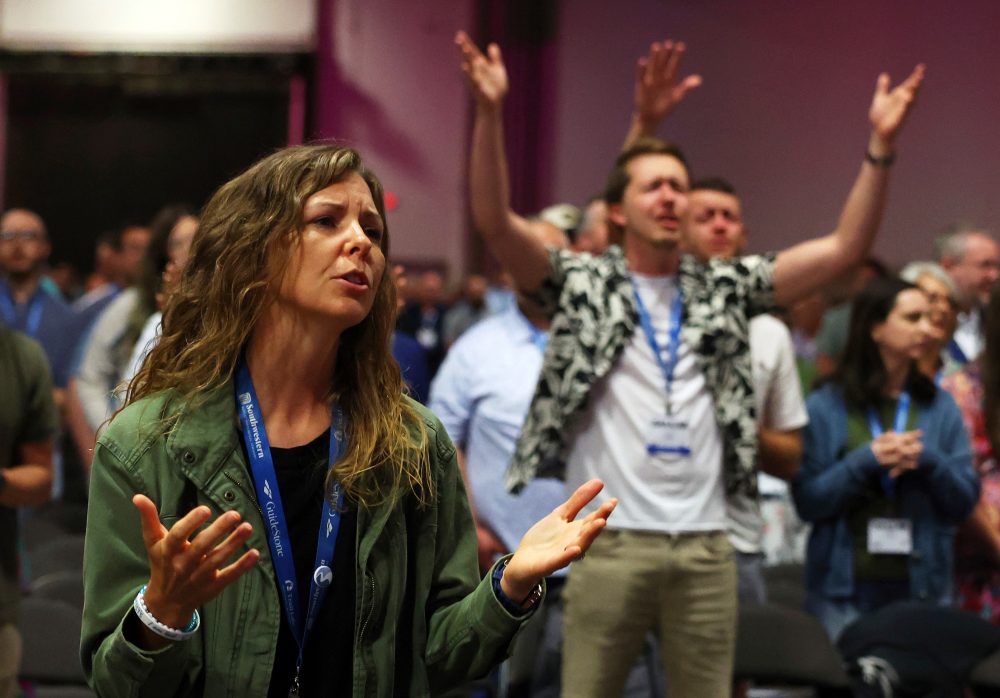

Representatives from the Southern Baptist Convention will convene Tuesday in Florida for their yearly gathering, where they’ll once again consider whether to officially prohibit member churches from having women serve in pastoral capacities beyond just the senior pastor position — marking the fourth consecutive year this issue has dominated discussions.
While debate over women’s roles in ministry will likely take center stage, the political leanings of many Southern Baptists, who form a core component of white conservative evangelical backing for President Donald Trump, are expected to receive less attention.
Leaders of the Southern Baptist Convention, America’s most populous Protestant denomination, report that over 11,000 church delegates have registered in advance for the two-day gathering in Orlando.
During the past three yearly conventions, a majority of delegates supported changing the SBC constitution to prohibit churches from appointing women to any pastoral positions. However, these proposals have consistently fallen short of the required two-thirds supermajority needed across two consecutive years to enact constitutional changes.
The denomination’s doctrinal statement, known as the Baptist Faith and Message, states that pastoral positions are reserved for men. Though this guideline isn’t mandatory for member churches, it has led the SBC to remove some congregations that have women in senior pastoral positions. Current discussions focus on those who deliver sermons or work in lower-level pastoral roles.
This year’s proposed amendment, put forward by Albert Mohler, president of The Southern Baptist Theological Seminary, would ban any church that chooses “to affirm, appoint, or endorse a woman serving in the office or function of a pastor/elder/overseer, specifically preaching to the assembled congregation.”
Mohler observed that the ongoing debate has taken up excessive time and energy. “Clarity in the constitution would settle that,” he said.
The departing SBC president, Clint Pressley, backs the amendment, along with both individuals seeking to replace him.
A separate non-binding resolution containing similar wording will also be reviewed. This measure needs only a simple majority for approval.
As a coalition of autonomous congregations, the SBC cannot dictate their actions. However, it can remove any church considered not to be in “friendly cooperation.” The convention has expelled churches in recent years that named women to senior pastoral roles or claimed the authority to do so. Yet the standing of churches with female assistant pastors remains under discussion.
During his podcast, Mohler recently stated it would be problematic for a church podcast to feature a woman discussing that week’s sermon.
This position sparked online criticism, including from well-known Bible teacher Beth Moore, who departed the SBC after facing backlash for supporting sexual abuse victims and questioning evangelical support for Trump despite issues like his vulgar sexual comments.
“How in heaven’s name a woman discussing a sermon on a podcast could be objectionable to some is beyond me and what I believe to be beyond scripture,” she posted on X.
She later added: “Which has been the greater problem: women trying to become your senior pastors or pastors misusing or abusing women?”
Amy Sims, associate pastor of preschool and children at Sugarland Baptist Church in Sugarland, Texas, highlighted the annual timing conflict between preparing vacation Bible school while Southern Baptists debate women’s ministry roles.
“I preach. I teach. I disciple children and families,” she wrote on the independent site Baptist News Global. “I walk with parents through crises. I visit hospitals. I help lead people to faith in Christ. I perform baptisms. … I serve now at a church that is beautifully supportive of my work and calling as a woman and pastor.”
Each June, Sims noted, “there are those who seem determined to remind me they do not believe God could have called me to do the very work I am doing.”
Despite declining membership, the yearly convention continues to indicate religious and political directions among evangelicals. As usual, the primary focus will be whether the already-conservative SBC chooses to shift even further right.
The approaching meeting comes after internal data revealed continued membership decline spanning nearly twenty years. Numbers have dropped to 12.3 million, the smallest figure since 1973.
Southern Baptists have, nevertheless, experienced increased baptisms. They view this as an important spiritual indicator since it reflects conversions, although the growth isn’t sufficient to reverse the overall membership drop.
Southern Baptists will review additional policy statements. One proposed resolution advocates for compassionate treatment of immigrants and rejecting hostile and dehumanizing language while also supporting government responsibility for immigration enforcement.
Another condemns antisemitic violence and conspiracy theories, particularly those emerging after the Oct. 7, 2023, Hamas attack on Israel. Simultaneously, the resolution affirms Southern Baptists’ desire for Jewish conversion to Christianity.
In 1996, an SBC resolution promoted Jewish evangelization, leading major Jewish leaders to call it harmful to interfaith relationships.
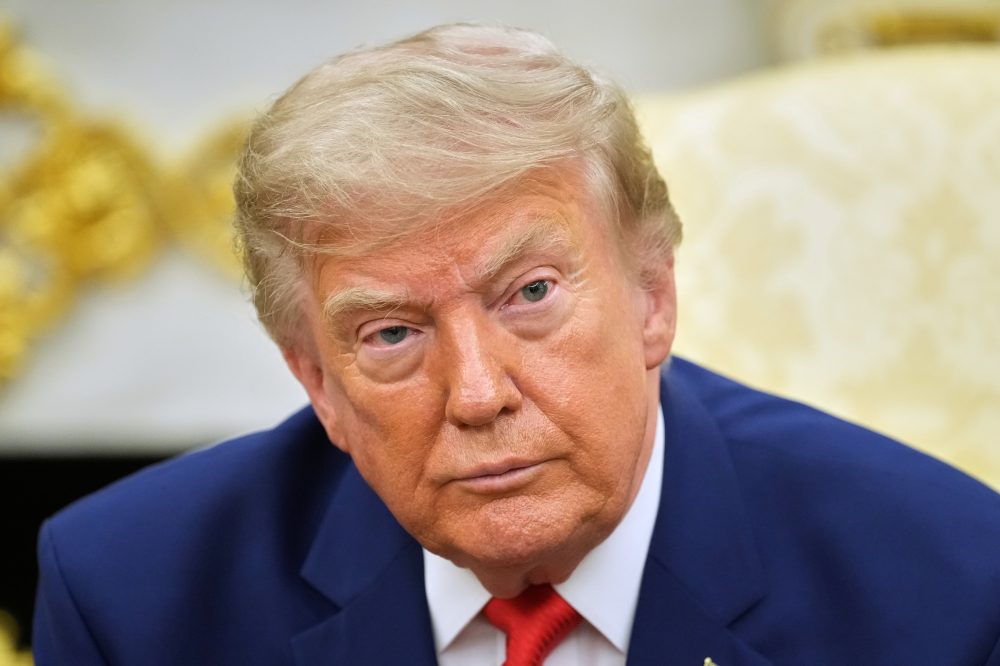
Apart from denominational matters, the predominantly white SBC represents a central element of the broader, mainly white evangelical base that has rallied behind Trump. Leading Southern Baptists indicate they see minimal change in this support.
They favor Trump’s official policy acknowledging only two, biologically determined genders, though they express concern about his administration’s moderate stance on abortion. Baptist leaders have generally endorsed his war against Iran, but quickly distanced themselves from Trump’s April social media post they considered blasphemous.
Trump received backing from approximately 8 in 10 white evangelical Christian voters in 2020 and 2024, according to AP VoteCast, a comprehensive voter survey.
About two-thirds of white born-again Protestants approved of Trump’s overall performance in April, compared to roughly one-third of U.S. adults generally. These findings come from The Associated Press-NORC Center for Public Affairs Research.
Mohler said evangelicals were widely disturbed by the Trump social-media post showing himself as a healing savior.
“You had the vast majority of evangelicals saying this is fundamentally wrong,” Mohler said. But that’s “within the context of the fact that overwhelmingly evangelicals supported President Trump as president.”
Robert Jeffress, senior pastor of the large First Baptist Church in Dallas and a longtime Trump supporter, said he appreciated that the president “had enough sensitivity to remove” the post after the criticism.
Stressing that he spoke personally rather than for his church or the SBC, Jeffress added that he supported Trump’s establishment of a Religious Liberty Commission, where Jeffress testified about what he claimed was unfair scrutiny of his church by the IRS.
Jeffress also backed Trump’s decision to go to war against Iran, saying a president has “not only the right but the God-given duty to protect our nation.”
Mohler concurred, but sought to moderate expectations. He said he supported previous wars in Iraq and Afghanistan but now understands that some of their goals, such as nation-building, were unrealistic. A just war requires “limited and honest aims,” he said.
Dwight McKissic, senior pastor of Cornerstone Baptist Church in Arlington, Texas, has criticized fellow Southern Baptist leaders for both their political direction and their gender emphasis.
The Black pastor posted on X that the SBC and its theologians have been incorrect about issues from slavery and segregation to the mistreatment of sexual-abuse survivors.
“And now they expect us to just blindly trust them on gender theology and women in ministry issues?” McKissic wrote.