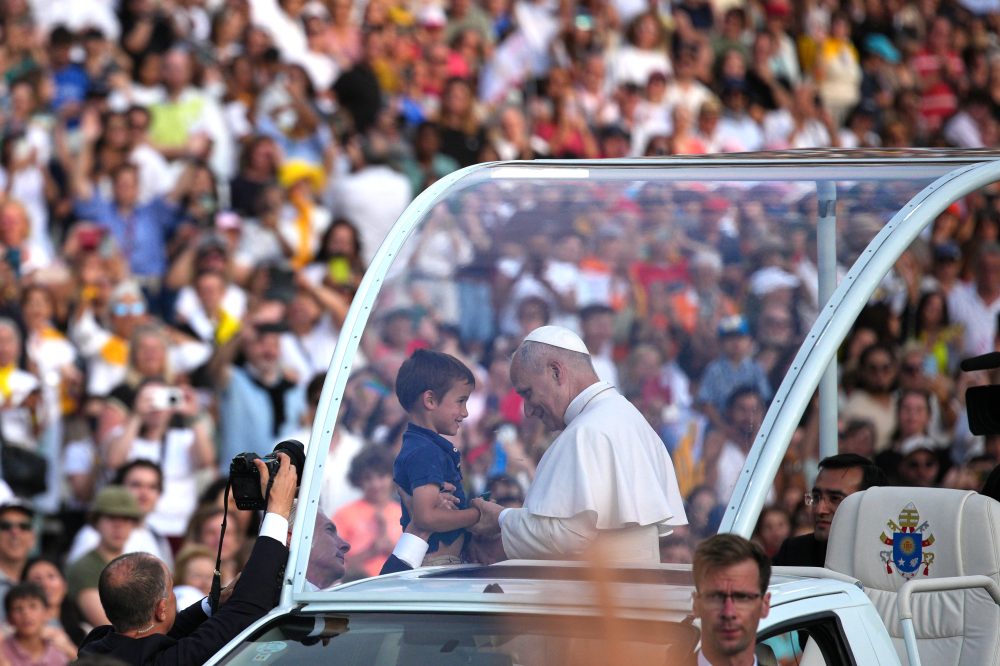

BARCELONA, Spain — Pope Leo XIV is marking the centennial of renowned architect Antoni Gaudí’s death Wednesday by conducting special ceremonies at two of Barcelona’s most revered religious sites, including prayers at a mountaintop monastery and an evening Mass at the world-famous Sagrada Familia Basilica.
The pontiff began Wednesday by meeting with prisoners at a Barcelona correctional facility, continuing the practice established by Pope Francis of reaching out to marginalized communities during international visits who cannot participate in public papal events.
Leo’s presence in Spain marks part of a seven-day tour that has demonstrated how this nation of 50 million residents, despite experiencing a faith crisis following the end of its 20th-century dictatorship, continues to maintain a substantial Catholic population that has gathered in large numbers to welcome the American pontiff.
The pope will acknowledge their devotion through worship at Montserrat, a mountainous religious site outside Barcelona that holds special significance for many Catalans. This location features an 11th-century Benedictine monastery alongside a 16th-century church, both treasured for housing the Black Madonna sculpture.
Wednesday evening’s Mass at Sagrada Familia represents the pinnacle of Leo’s Barcelona visit. The service marks exactly one century since Gaudí’s passing, who died at 73 years old just three days following injuries sustained when struck by a streetcar.
One hundred years after initial construction commenced under Pope Leo XIII, Leo’s papal predecessor and namesake, the church has evolved into among the globe’s most visited yet incomplete religious structures, welcoming more than 5 million annual visitors.
Gaudí, the celebrated Catalan designer who may achieve sainthood recognition, dedicated four decades to creating and constructing this sacred building as his stone interpretation of Christian beliefs. Key moments from Jesus Christ’s story, including the Nativity and Passion scenes, are carved into the church’s eastern and western exterior walls. A third southern-facing section, called the Glory, will function as the primary entrance upon completion.
The structure stands as both an architectural and mathematical marvel, representing a stone and light tribute to Christianity and divine creation, drawing from Byzantine and Gothic church design traditions.
Eighteen towering spires extend upward from the building’s peak, creating Barcelona’s distinctive skyline: twelve representing Christ’s apostles, four honoring the Gospel writers who documented Jesus’s earthly ministry, one star-crowned spire above the altar area dedicated to the Virgin Mary, and the highest structure devoted to Jesus Christ.
Last year’s completion of the final Christ tower at 172.5 meters (564 feet) established Sagrada Familia as the planet’s tallest church building. Leo will officially bless this tower during Wednesday night’s ceremony.
The cross-designed interior space, centered around the altar, celebrates illumination and the natural world. Column structures resembling trees reach skyward, bathed in ever-shifting colored light streaming through stained glass panels like sunbeams filtering through forest canopy.
“Nature is my teacher,” Gaudí once said. “Everything comes from the great book of nature, always open that we must read.”
Tour guide and historian Mònica Santín, who conducts basilica visits, explained that Gaudí’s Sagrada Familia design drew inspiration from two primary sources: the Gospels and the natural world.
“The way he lets in the natural light is also an invitation to the Christian mystery,” she said, citing the three facades depicting Christ’s birth, death and glory.
“And when you enter inside, it is all light,” Santín said. “What is that the symbol of? We can’t see God, but we perceive his light all around us. I think that is how you can read this message, and it is fascinating.”