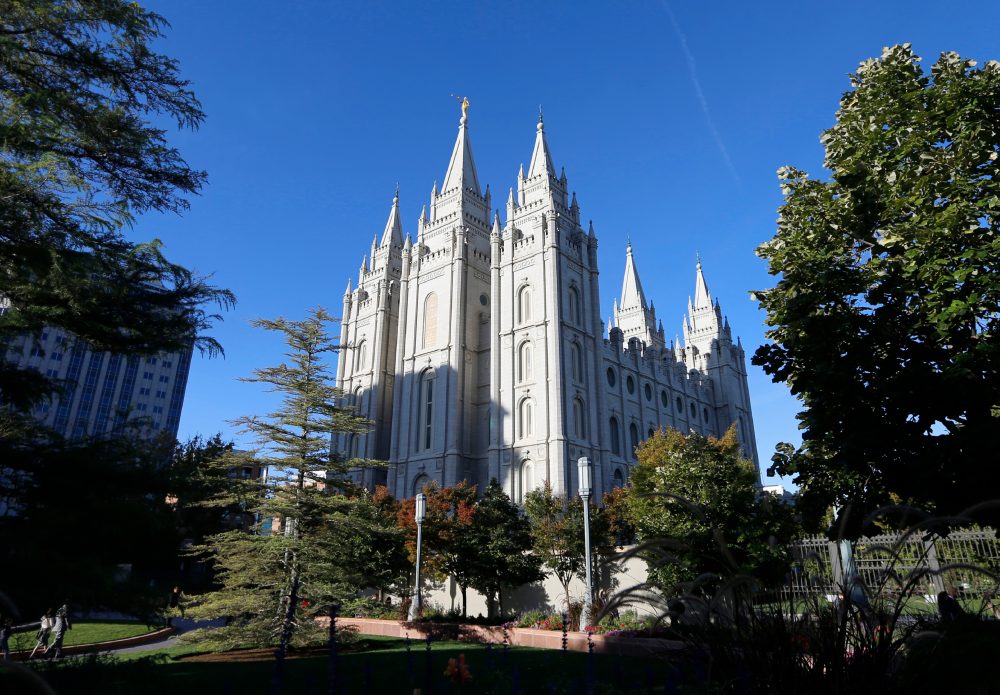

Changes to the Pentagon’s military religious classification system this week have brought back into focus a theological debate that has persisted for almost two centuries: Should The Church of Jesus Christ of Latter-day Saints be considered a Christian faith?
While most members of the Latter-day Saints faith consider themselves Christians, many established Christian religious leaders and theological experts dispute this classification, pointing to fundamental differences in beliefs about God, the Trinity, and the use of religious texts beyond the traditional Christian Bible.
Two senators from the state – Mike Lee and John Curtis, both Republicans and members of the Latter-day Saints faith – questioned the Pentagon’s decision to exclude their religion from its Christian categories. This exclusion occurred as the Department of Defense worked to streamline a lengthy roster of over 200 religious options available to service members, also removing classifications for atheists, Unitarian Universalists, pagans and Wiccans.
“Latter-day Saints are among the most patriotic, service-oriented individuals in our country,” Curtis wrote on social media while defending his faith. “They are also unequivocally Christian — just look at who is in the name of the Church.”
Curtis further stated in his message that it is “unacceptable” for government agencies to define a religion in ways that conflict with how that faith describes itself – a viewpoint that gained widespread support in online discussions.
On Monday, the Pentagon addressed the controversy by stripping Christian designations from 20 other religious traditions, including Catholic, Lutheran and Pentecostal faiths, while maintaining its position on not classifying Latter-day Saints as Christian. Military officials released a statement clarifying that the updated system is not meant to “make any claims on the legitimacy of any faith or religion’s belief,” but rather to assist chaplains in their duties and organize resources more effectively.
The Church of Jesus Christ of Latter-day Saints, commonly called the Mormon church, counts nearly 18 million followers globally, with the largest population concentrated in one western state. The organization has an extensive tradition of military participation and promotes both patriotic values and chaplain services.
Lee wrote on social media: “My church membership is inextricably intertwined with my Christianity, as it is for 17 million other Latter-day Saints. Regardless of what the Pentagon thinks.”
According to the church’s official website, the organization identifies as a “Christian Church, but is neither Catholic nor Protestant.”
“Rather, it is a restoration of the Church of Jesus Christ as originally established by the Savior in the New Testament of the Bible,” the website continues. “Jesus Christ is central to the lives of Church members. They seek to follow his example by being baptized, praying in His holy name, partaking of the sacrament, doing good to others and bearing witness of Him through both word and deed. The only way to salvation is through faith in Jesus Christ.”
However, questions surrounding the Christian identity of Latter-day Saints trace back almost two centuries to when the church was first established.
Matthew Bowman, who holds the chair of Mormon studies at Claremont Graduate University in Southern California, explained that the main distinction between established Christian denominations and Latter-day Saints centers on their understanding of God’s nature and their interpretation of the Trinity – the spiritual connection between God, Jesus and the Holy Spirit. Traditional Christian churches teach that God exists as spirit, while Latter-day Saints founders taught that God was once human and attained divine status, he explained.
Members of the Latter-day Saints faith also do not accept the Nicene Creed, which emphasizes Trinity doctrine as one divine entity.
“They believe that while the three have a relationship, they are distinct beings,” Bowman explained.
The Catholic Church has maintained for years that Latter-day Saints do not qualify as Christian. Most recently in 2012, Vatican officials declared that despite Latter-day Saint baptismal ceremonies referencing the Trinity, the church’s understanding of these three figures differs so significantly from Catholic and mainstream Christian theology that such baptisms cannot be recognized as Christian sacraments.
This theological disagreement has influenced American political discourse for decades, creating friction between evangelical Christians and Latter-day Saints who have traditionally aligned themselves with conservative religious movements. Similar to evangelicals, most Latter-day Saints maintain conservative positions on issues like abortion and LGBTQ+ rights.
Bowman noted that questions about Latter-day Saints’ Christian classification became particularly prominent during Mitt Romney’s 2012 presidential race.
“At the time — and often after that — there continues to be a sense of surprise among Latter-day Saints that the evangelicals didn’t consider them Christian and among evangelicals when they learn that the Latter-day Saints in fact consider themselves Christian,” he said.
The political rise of Donald Trump has weakened the historical partnership between Latter-day Saints and evangelical Christians, particularly among younger Latter-day Saints who increasingly view evangelicals as antagonistic, according to Bowman.
“In the past five years or so, there is a growing push among evangelicals to create a muscular, masculine Christianity, more vocal on doctrine, with some calling (Mormons) heretics,” he explained.
Philip McLemore, who worked as a Latter-day Saint chaplain in the Air Force from 1984 to 2005, said he and colleagues experienced discrimination during their service and were denied advancement opportunities due to their religious affiliation.
“That mostly came from other Christian chaplains and supervisors who believed Mormon chaplains were not Christian,” he recalled. “They also felt the same way about Christian Scientists.”
McLemore said some fellow Christian chaplains expressed concerns that Latter-day Saint chaplains might use their military positions for missionary work and religious conversion. However, he acknowledged understanding why other Christians might view Latter-day Saints with suspicion.
“Mormonism doesn’t fit comfortably into most classic Christianity mostly because of the founders’ claims of exclusive truth and authority that can be offensive to some,” he noted. “Joseph Smith’s first vision — a foundational event for the church — was one of Jesus telling him that all the other churches are false and their creeds are abominations.”
Despite these theological debates, McLemore believes denominational differences hold little importance in military settings.
“In my experience, service members would not know what your denomination was, and they didn’t care,” he said. “They didn’t consult chaplains on matters of religion. They needed chaplains for personal problems and issues with work, mental health and marriage.”