
A century has passed since renowned Catalan architect Antoni Gaudí met his tragic end when a tram struck him down in Barcelona in 1926. Witnesses failed to provide immediate medical assistance because they mistook him for a homeless person.
During that period, Gaudí was residing in simple quarters within the construction site of the Sagrada Familia basilica. His unique, flowing and vibrant architectural designs faced severe criticism from Barcelona’s newspapers throughout his professional life.
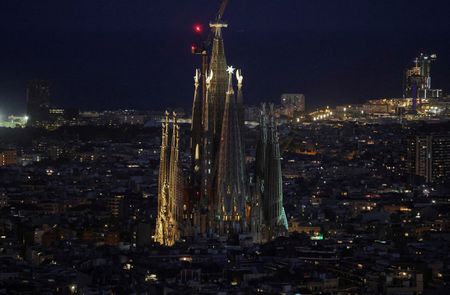
Now, marking the 100th anniversary of Gaudí’s passing, Pope Leo XIV is scheduled to travel to Barcelona this Wednesday to officially open the 172.5-meter Tower of Jesus Christ at his renowned masterpiece, the Sagrada Familia (Holy Family).
With this tower’s completion, the Sagrada Familia now holds the distinction of being the tallest church structure globally.
Today, Gaudí’s architectural contributions attract millions of tourists to Barcelona annually, with seven of his creations recognized as UNESCO heritage sites. According to local newspaper La Vanguardia, the primary Gaudí structures in Barcelona collectively bring in approximately 240 million euros ($276 million) each year through admission fees.
This papal visit marks the third such occasion and follows the Vatican’s approval last year of a significant milestone in Gaudí’s path toward sainthood.
“The most remarkable aspect of Pope Leo’s visit is that, in addition to blessing the Tower of Jesus Christ, he is coming to encounter Gaudí as a spiritual companion,” explained Gaudí and architecture scholar Chiara Curti.
“There has been a transformation in how people view Gaudí’s work. Previously, his creations faced criticism — although some people valued them. Today, all focus has turned toward the individual himself.”
‘MAGICAL ARCHITECTURE’
Dutch art historian and Gaudí biographer Gijs van Hensbergen believes this church recognition suits a man driven by deep religious convictions.
“(Gaudí) embodies the 19th century romantic notion of the bohemian artist, someone who lived completely dedicated to a calling, without concern for others’ opinions,” he explained, noting that Gaudí would likely be amazed by his current fame.
The Sagrada Familia’s construction began in 1882 but faced a devastating blow when fire destroyed Gaudí’s workshop in 1936. Because Gaudí’s supporters managed to save numerous sketches and scale models, the project is now expected to reach completion around 2035, featuring three facades and 18 towers.
The basilica welcomed 4.9 million visitors last year, establishing a new attendance record, with entrance fees supporting the continued construction efforts.
Among recent visitors were Czech friends Aneta Ederová, 27, and Adam Bašta, 26, who explored three Gaudí structures during an eight-hour cruise ship layover in Barcelona.
While admiring Gaudí’s Casa Milà, Ederová shared that Barcelona had long been on her “bucket list” and described Gaudí’s buildings as “magical.” “They capture your attention immediately,” she remarked.