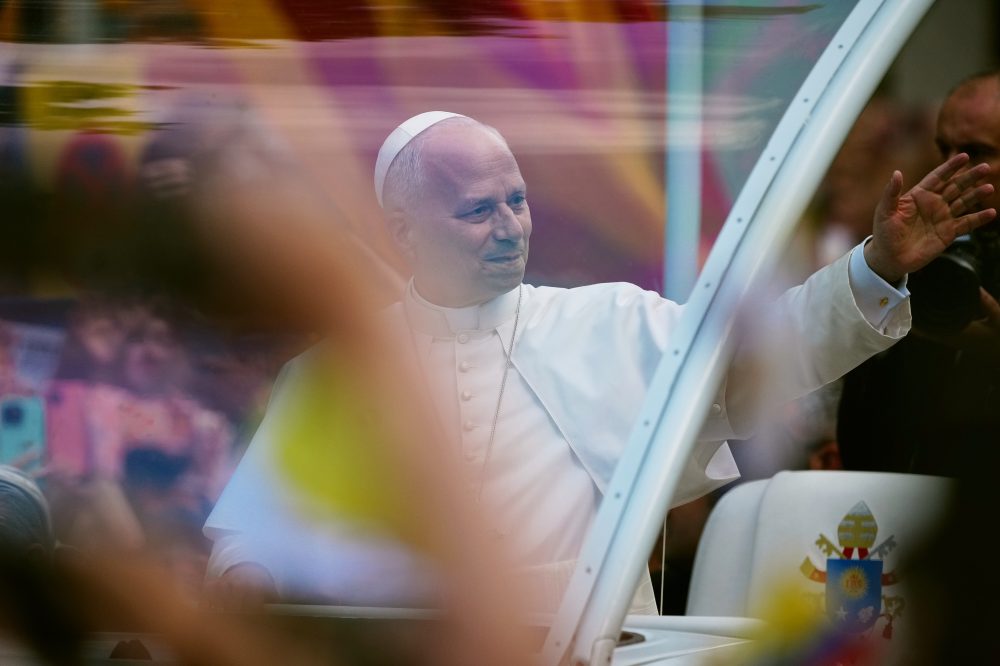

Pope Leo XIV traveled to the Canary Islands Thursday to shine a spotlight on migrants who put their lives at risk annually attempting to reach Europe, carrying out a goal that Pope Francis had hoped to accomplish by visiting this central location in Europe’s migration crisis.
The pontiff is concluding his seven-day Spanish journey with two days in the Canary Islands, a Spanish island chain that sits nearer to Africa than Spain’s mainland and serves as a major entry point for people smuggled from West Africa.
During his visit, he plans to meet with newly arrived migrants along with church officials and aid organizations who provide care and help integrate them into Spanish communities.
In the most significant moment, he will honor the thousands who perished at sea from a harbor that earned the nickname “dock of shame” in 2020 due to the terrible living conditions migrants endured upon arrival during a surge in crossings.
Spain’s Socialist-led administration, which faced criticism during the 2020 emergency, has gone against European and U.S. trends by supporting immigration for both economic and humanitarian reasons. The government initiated a legalization campaign this year targeting hundreds of thousands of undocumented immigrants.
Prime Minister Pedro Sánchez has emphasized the economic advantages given Spain’s aging population and declining birth rates.
Leo has previously advocated for enhanced global cooperation to stop migrant smuggling, establish legal migration routes, and promote development in origin countries so more people can remain home.
During an address to Spain’s Parliament earlier this week, marking the first papal speech to that body, Leo urged acceptance and integration for those who choose to flee, emphasizing their fundamental human worth.
“The moral greatness of a nation is manifested, above all, in its capacity to accompany, protect and love those lives that are most fragile,” Leo stated in remarks that also defended the dignity of the unborn, elderly and ill. His speech concluded with a 7-minute standing ovation.
Migrant arrivals to the Canary Islands reached their highest point in 2024 with nearly 47,000 people, but numbers have dropped significantly, with just over 2,000 arriving in the first four months of 2026.
After landing in Las Palmas, Leo was scheduled to visit Arguineguin, where 2020 arrivals became so overwhelming that migrants were forced into temporary outdoor camps on a dock that became known as the “dock of shame.”
Numerous migrants spent weeks sleeping with only blankets and no washing facilities. Those seeking asylum lacked adequate legal assistance and some remained detained for weeks, far exceeding the legal three-day limit. The emergency embarrassed officials, who were compelled by their ombudsman to close the temporary facility and move the migrants.
After learning about the situation, Francis had intended to visit the Canary Islands to show support, but was unable to make the journey. Francis had made refugee advocacy a central focus of his leadership, following the Gospel instruction to “welcome the stranger.”
Leo has continued this approach, particularly emphasizing migrant dignity in his home country of the United States during the Trump administration’s enforcement and mass deportation efforts.
In July, on July 4, the American pope will mark U.S. Independence Day on Lampedusa island in Sicily, another primary entry point for migrants smuggled from North Africa seeking to reach Europe.
Francis had traveled to Lampedusa in 2013 during his first journey beyond Rome, where he threw a wreath into the Mediterranean to remember the thousands of migrants who died making the dangerous voyage. During that visit, he created a phrase that became central to his leadership, condemning the “globalization of indifference” that the world displayed toward migrants.