A federal appeals court has determined that the Trump administration’s restrictions on transgender military personnel violated the law, according to a split decision from three judges on the U.S. Court of Appeals for the District of Columbia circuit. The ruling partially supports a March 2025 decision from a lower court.
Under the appeals court’s latest decision, current service members involved in the legal challenge would be protected from dismissal, though the military would still be prohibited from accepting new transgender enlistees. The judges have temporarily suspended their ruling to allow the administration time to pursue additional review. Defense Secretary Pete Hegseth has signaled plans to appeal the decision.
As June arrives, gay rights advocates have designated the month for Pride celebrations, with LGBT events planned nationwide. Major metropolitan areas will host most activities, though many celebrations are expected to be scaled back due to departing corporate sponsors. Jordan Braxton, co-president of USA Prides, reports that large corporations started reducing their involvement last year, with additional companies following suit in 2026.
According to Braxton, several investment companies have stepped back from sponsorship, joining firms like Anheuser-Busch and Walmart in reducing support. The election of President Trump has led many corporate backers of Gay Pride activities to reassess their participation.
In international news, Malaysia has become the newest nation attempting to shield minors from online risks by implementing regulations that bar children under 16 from creating social media profiles. This move represents part of a worldwide push to strengthen digital safety measures. Current users below the age limit will receive one month to handle their account information before the new restrictions take effect. Organizations that don’t follow the rules will face substantial financial penalties. Child safety experts note that minors face particular risks from sex-trafficking and explicit content on social platforms, prompting action from an increasing number of nations. Within the United States, family advocacy groups are calling for stronger government intervention.
Canadian Prime Minister Mark Carney has stated that his nation is failing its Jewish citizens, describing the community as facing severe targeting through hate-motivated actions. Carney reports that anti-Semitic incidents in Canada have reached heights not witnessed since the post-World War Two period. He noted that more than two-thirds of all religiously-motivated hate crimes last year were aimed at Jewish people, even though they represent only one percent of Canada’s population. Recent months have seen anti-Semitic actors shoot at Jewish educational institutions, hurl explosive devices at synagogues, assault community facilities, target Jewish-owned enterprises, and force Jewish students from shared campus areas.
A recent study from Christian Solidarity Worldwide has documented significant threats to religious liberty in Mexico, identifying drug cartels and indigenous community leaders as the main perpetrators of persecution. According to the research, Protestant Christians face the highest risk of becoming targets of religious persecution in the country.
The organization emphasized the need for accountability and protection for victims, stating: “Perpetrators must be brought to justice, and victims must be given confidence that reporting their experience will result in protection from further violations.”
The findings highlight ongoing challenges to religious freedom in Mexico, where faith-based communities continue to face intimidation and violence from various sources.
Tiffany Doolan has resigned from her position as principal of Wylie East High School following intense backlash from the community. The controversy erupted when parents discovered that a Muslim organization had been permitted to distribute Korans and hijabs to students inside the school building during regular school hours. The incident sparked significant anger among families in the district. Following the public outcry, the Wylie Independent School District issued a formal apology to the community. Officials acknowledged the severity of the situation in their statement, declaring that “the situation should never have happened and mistakes were made.” Doolan has now submitted her resignation in the wake of the controversy.
Egyptian authorities have officially recognized almost 200 churches and related religious buildings following years of bureaucratic delays. Advocates for religious freedom have raised concerns for decades about the nation’s exceptionally lengthy approval process for Christian communities seeking to legally establish worship facilities. Christians represent approximately 10% of Egypt’s population, and although they typically maintain positive relationships with government officials, the lengthy legal recognition process has remained a persistent source of tension.
A major Christian humanitarian organization has deployed medical resources to the Democratic Republic of Congo as health officials work to contain a spreading Ebola outbreak. Samaritan’s Purse has transported a treatment facility by air to the African nation and plans to deploy up to 60 American medical volunteers to operate the unit. Ministry leader Franklin Graham acknowledged the serious nature of the mission in comments to Religion News Service, stating “Our people know the risk, and they know how to protect themselves, and they’re ready for the task, but it’s dangerous.” The deadly virus is currently spreading through both the DRC and neighboring Uganda.
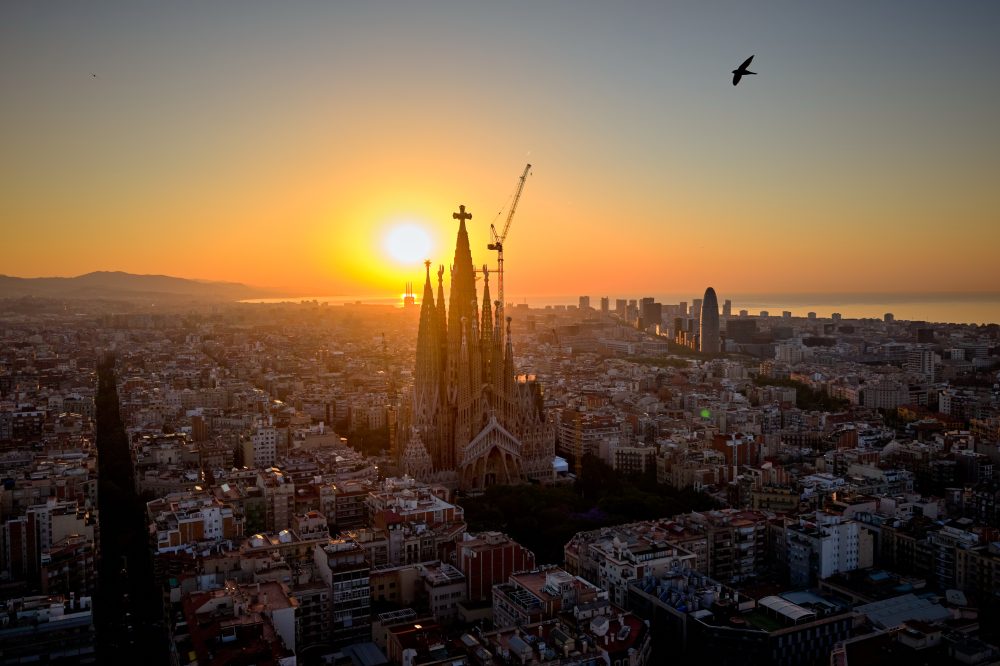
BARCELONA, Spain — Pope Leo XIV’s planned trip to Spain carries the theme “Lift up your eyes,” words that perfectly capture what countless visitors experience when they encounter Barcelona’s magnificent Sagrada Familia as the incomplete basilica continues its upward climb more than 100 years following the passing of Catalan designer Antoni Gaudí.
The pontiff will consecrate the newly finished main tower of Gaudí’s architectural wonder on June 10, a structure crowned with a white cross that has elevated the building to become the planet’s tallest church.
Thirteen additional cream-hued towers and spires reach toward the azure heavens, their height challenged only by the peaks that encircle this coastal Mediterranean metropolis.
Within the structure, natural light streaming through massive colored glass windows envelops visitors and faithful worshippers in an ever-changing spectrum of hues.
The architect’s deep Catholic devotion permeated each element with spiritual significance, yet the impact reaches beyond religious and cultural boundaries. Church records show that almost 5 million individuals made the journey to visit during 2025, with visitors from America, Spain, and China representing the three most numerous nationalities.
Certain guests examine the underground crypt where routine worship services take place, while others participate in weekend Mass celebrations conducted in multiple languages within the primary sanctuary.
However, the majority of first-time visitors to this enormous interior space find themselves mesmerized, tilting their heads back and gazing upward at the illumination, taking in the supernatural atmosphere crafted by the man known as “God’s architect.”
Pope Leo embarks on a groundbreaking seven-day journey to Spain this Saturday, marking his inaugural visit to a European Union nation outside of Italy. The historic trip will conclude with the pontiff encountering migrants in the Canary Islands who risked treacherous Atlantic crossings to reach European shores.
The first American pontiff, who previously drew criticism from U.S. President Donald Trump for condemning anti-immigration policies, is anticipated to draw massive crowds during his June 6-12 visit. He will also become the first pope to deliver an address to Spain’s parliament.
Leo’s travel schedule encompasses visits to Madrid, Montserrat and Barcelona, where he will officially open the newest tower of the Sagrada Familia, the renowned modernist basilica that now stands as the world’s tallest church.
PERILOUS JOURNEY ACROSS THE ATLANTIC
During the final two days of his trip, the pope will journey to the Spanish islands of Tenerife and Gran Canaria, located off Africa’s western coast, where he will encounter migrants and organizations committed to assisting them.
The island visit will demonstrate that the pope stands “shoulder to shoulder” with migrants, according to Caya Suárez Ortega, who leads the Church’s primary NGO in the Canary Islands.
“The first thing the migrants said to me when they were invited (to the papal meetings) … was their enormous gratitude that he would stand alongside them,” said Suárez, director of Caritas Canarias.
According to NGO Caminando Fronteras, more than 3,000 individuals perished in 2025 attempting to reach the Canary Islands, frequently in improvised dinghies.
The papal visit occurs as Socialist Prime Minister Pedro Sanchez’s administration has launched a comprehensive amnesty program, enabling approximately 500,000 immigrants to seek legal status.
Sanchez, who has received international praise after sharply criticizing Trump, currently trails in polling and faces scrutiny over multiple corruption allegations involving his party.
The pope will deliver two speeches in Madrid to Spain’s political leadership: Saturday at the Royal Palace following his meeting with King Felipe and Queen Letizia, and Monday at parliament.
VISITOR INTEREST REACHES ‘REMARKABLE’ LEVELS
In recent months, the pope has adopted a more assertive stance and released an impassioned manifesto last week calling on world governments to decelerate AI system development.
Leo, who served for decades as a missionary and bishop in Peru before assuming the papacy last May, is expected to communicate in Spanish throughout his visit.
Trip organizers report overwhelming interest in the papal visit, with over 500,000 individuals requesting attendance at various events.
The most significant gathering will likely be an outdoor Mass on Sunday at Madrid’s iconic Plaza de Cibeles, according to Rafael Rubio, the national coordinator for the visit. “The numbers are astonishing,” he stated.
Benedict XVI was the last pope to visit Spain, in 2011.
Narciso Michavila Nuñez, a sociologist with Spanish consulting firm GAD3, noted that young Spaniards have demonstrated exceptional interest in the visit. “This is the first time they are going to see a pope,” he explained.
Following three days in Madrid, Leo will travel to Catalonia, the autonomous region in northeastern Spain.
In Montserrat, located 60 km (37 miles) northwest of Barcelona, he will visit and dine with Benedictine monks residing at an 11th century abbey built into mountain cliffs.
Sister Teresa Forcades, from a nearby separate community of Benedictine nuns, revealed her group was not invited to participate in the papal events there.
“No nun … has been invited to greet the pope or to the lunch,” she stated. “Maybe if Pope Leo knew about it, he would like to change it.”
A Vatican spokesman did not respond to inquiries about why the nuns were excluded from the events.
POTENTIAL MEETING WITH ABUSE SURVIVORS
While not included on the public schedule, Leo will likely meet privately with Spanish survivors of sexual abuse by Catholic clergy, according to informed sources.
A 2023 report by Spain’s human rights ombudsman estimated hundreds of thousands of clergy abuse victims there spanning decades, reflecting similar scandals that have impacted the Church worldwide.
The Vatican typically does not announce pope-survivor meetings beforehand to safeguard survivors’ privacy.
Leo, who has completed three previous international trips since becoming pope, has not previously met with abuse survivors during a visit.
Anti-Israel messages including “Zionism is a death cult” and “Glory for Gaza” have appeared as graffiti and signage at universities nationwide, reflecting a surge in campus tensions following the conflict in Gaza that began with attacks on Israeli civilians by Hamas.
Recent Rutgers University graduate Lillian Russ witnessed this hostile graffiti being removed and reappearing repeatedly on campus. “Yes, there is security, but I don’t think there’s enough security,” she stated, explaining her concerns about safety at Jewish organizations like Hillel and Chabad, and her nervousness about displaying Jewish symbols due to campus harassment.
Faculty members have also become targets. “There has been a professor who got doxxed, and he had to flee the country, even though that’s in regards to academic freedom,” Russ noted. “For a Jewish student, it doesn’t feel like there’s enough, and I don’t know if there will ever be enough. But it’s just important that every day I keep going outside and saying to myself, okay, I’ll be fine, I’ll be fine.”
Following months of vandalism, disruptive demonstrations, and what she characterized as a threatening atmosphere for Jewish students, Russ pursued federal civil rights action. She collaborated with Hillel to file a Title VI complaint against the university after witnessing repeated incidents, including what she called a “fake encampment” serving as a daily protest location, and demonstrators invading academic buildings and dining facilities. “Enough was enough, and I felt very unsafe,” she explained, remembering how narrowly a BDS resolution missed approval.
With help from a Hillel rabbi, Russ connected with lawyers at Arnold & Porter and started gathering student accounts and documentation. “Something needs to be done,” she told them. “It’s not acceptable having to live in fear and having to walk around and see graffiti everywhere.”
Her efforts to challenge campus antisemitism showed results: “The reaction, I feel the university has taken a step forward in addressing things.”
Russ credited recent administrative changes with moving the institution toward what she considers a more positive approach. “Our former president resigned, and we have a new one, President Tate, and I feel that he has addressed things in a very appropriate way.”
Government intervention proved significant in influencing the university’s actions. “The resolution from the government, the Office of Civil Rights, they clearly stated that there’s a poll outline that needed to be followed,” she explained, adding that she is “very happy that this outline has been implemented.”
At UC Santa Barbara, a sign reading “No Zionists allowed” was displayed and shared on a university social media account. After removing the sign, administrators issued a statement declaring that neither antisemitism nor Islamophobia would be permitted on campus.
Alan Levine, who leads the campus advocacy organization Hasbara Fellowships, criticized this response as downplaying antisemitism and weakening the message. He told The Media Line that administrators “had to condemn Islamophobia in the same sentence. Not on the same page, same sentence. … They couldn’t possibly say, ‘We condemn antisemitism,’ period. It had to be, ‘We condemn all forms of antisemitism and Islamophobia and all forms of hate.’”
The critique wasn’t merely about word choice in an official statement; Levine remembered that harsh criticism was directed at those who responded “All Lives Matter” to “Black Lives Matter” because they were diminishing racial issues. Yet, generalizing when confronting antisemitism and deflecting attention appears to be standard practice in some administrations.
As antisemitic incidents have reached crisis levels on campuses, Levine observes that many administrations have “not demonstrated any ability or desire to really help their students and clamp down on antisemitism.” Students meanwhile report harassment, intimidation, belittling, and even death threats. One approach is to empower students to advocate for Israel and address antisemitism on their campuses. This is where Levine’s Hasbara Fellowships serves an essential function.
Hasbara Fellowships operates as a North American nonprofit that prepares university students for Israel-focused advocacy. Working on more than 95 campuses, it conducts summer and winter educational trips to Israel featuring briefings, location visits, and workshops covering history, media literacy, and public engagement.
Program participants receive ongoing support, materials, and guidance when they return to their campuses. The organization’s declared goal is to provide students with knowledge and communication abilities to take on leadership positions and engage in pro-Israel advocacy during the academic year.
The Media Line interviewed multiple Hasbara fellows about difficulties they encountered on campus and before joining the Hasbara Fellowship.
A first-year student at Brandeis University says she anticipated finding sanctuary from antisemitism on a campus established with strong Jewish connections, but instead faced hostility, intimidation, and what she calls academic prejudice.
Ella Friedman, who is half-Israeli, states, “I’ve faced a lot of antisemitism, like the majority of the people on this trip. I faced death threats, lost friends, even had my own professors, who I thought I could trust, turn on me.”
A communications and Near Eastern and Judaic studies major from the Boston area, Friedman said she came to Brandeis hoping to “breathe and feel free of this and just study,” after experiencing harassment in high school, but she said the campus situation has also been disturbing.
“I wasn’t expecting to have this much at Brandeis,” she said. She described a student organization calling itself the “Jewish Bund,” a name she linked to Nazism, that she said organizes disruptive protests in libraries and once displayed a casket wrapped in a keffiyeh.
Friedman also reported experiencing pressure in academic settings. She claimed that some professors, including Jewish and Israeli faculty, incorporate anti-Israel perspectives into coursework. One Israeli professor, she said, “would get upset or take points out of your grade if you did not agree with his political ideas of Israel.” Consequently, she said, students feel “scared to speak up and say something because you know that your professor will take points off your grade.”
Gabriela Rubin, 21, from Bergen County, New Jersey, said conditions at Rutgers University in New Brunswick have improved somewhat but remain concerning. “No matter where we are, we just feel like we’re in constant danger on campus,” she said, describing protesters as “very violent” and “aggressive.”
Sara Weinstein, a senior at the University of Maryland studying international relations and global terrorism, said serving in student government has positioned her at the center of repeated anti-Israel initiatives that she believes have transformed the campus climate for Jewish students.
Multiple Jewish student representatives, she noted, withdrew from student government because the environment felt too hostile. Weinstein observes divisions within the Jewish student community. “There’s pro-Palestinian Jews, there’s indifferent Jews, and then there’s the advocates for Israel,” she said, arguing many students lack deeper understanding of why Israel matters beyond religious connection. As a result, she said, many withdraw into Hillel rather than confronting what she calls misinformation.
On some campuses, antisemitism may appear more subdued, but the silence can be overwhelming.
Tehila Bendaat, a 19-year-old sophomore at Lafayette College in Pennsylvania, said there are no large protests and relatively little open antisemitism. Instead, she sees what she views as a different problem: silence. “I think silence is worse,” she said. “Jews being silent, people being silent.” She noted that an October 7 memorial on campus attracted only one student.
While she describes the general atmosphere as positive, Bendaat said students often feel uncomfortable discussing Israel—even within Hillel. “I have a friend who feels uncomfortable talking about the fact that she’s Israeli at our Hillel,” she said, adding, “If we’re going to keep on being silent, then something God forbid can happen.”
Michael Eglash, co-founder of Israelambassadors.com and a longtime campus activist, said the surge of antisemitism after October 7 pushed student advocacy into what he called “an unbearable situation” across North American universities, but also motivated pro-Israel students to respond more forcefully.
“I’ve always been involved in Israel activism,” Eglash said, recalling his own days as a student activist in Milwaukee, a city he associates with Golda Meir through family connections. After October 7, long-standing campus hostility toward Jewish students intensified everywhere. “Even if there aren’t Jews on campus, you’re going to find antisemitism,” he said. “On October 7th, everything was elevated and amplified.”
He described the post-attack encampments as the most troubling development. Students who denied the events of October 7, set up protest camps, creating a climate that was “very intimidating” for Jewish and pro-Israel students. Still, he said, “the pro-Israel students did fight back, and now we’re at an advantage on many of those campuses.”
Eglash said the Hasbara Fellowship, in partnership with his organization, equips student leaders with “the tools, the techniques, the knowledge, and the content” to return to campus prepared. During a 10-day program in Israel, students visit sites such as Kibbutz Be’eri and the Nova festival grounds, meet survivors, hear from soldiers, and travel north to understand the security threats from Lebanon and the Golan Heights. “They can tell what they’ve seen,” he said, rather than rely on secondhand narratives.
The challenge, he noted, is countering what he called misinformation. “A refuted lie is a difficult thing,” he said, describing how students struggle to answer claims they see as distorted or false.
Over decades of work, Eglash said he remains in contact with alumni who now serve as community and business leaders. “That seed was planted within them,” he said. “It’s never going to get out of their system.”
He also advises students facing campus dilemmas, from swastikas on dorm doors to BDS votes and professors making anti-Israel claims in class. Strategies range from filing complaints to mobilizing alumni and community pressure.
Levine said his group focuses on bringing student leaders to Israel to counter what he called widespread misinformation online. “We have 80 students here now meeting with October 7th survivors, meeting with hostage families, released hostages,” he said. “We live in a world of lies. … You just step on the ground here, and it empowers you so much.”
For example, Levine cited the 2021 campaign surrounding Sheikh Jarrah. Social media portrayed the neighborhood as “an occupied Palestinian village,” amplified by celebrities and activists. But when students visited, the reality was different. “You get off the bus, and in one second you realize, wait a second … there’s an ancient Jewish holy site here,” he said, referring to the tomb of Shimon HaTzaddik, where Jews have prayed for centuries. “It’s five minutes from the Old City of Jerusalem. It is Jerusalem, it is Israel, it is Jewish.” While Arab families live there, he argued, describing the area as a Palestinian village from which residents were being expelled “is a lie.”
Levine said the program, which has brought more than 3,000 students from the US and Canada since 2001, trains leaders to counter BDS efforts, build alliances, and respond to campus hostility.
“The core issue really goes beyond campus,” Levine said. “There’s a propaganda war against Israel. … I think it’s time for really all Western societies to wake up.”
After attending the fellowship, Bendaat reported that she recently helped start a Students Supporting Israel chapter and, as the incoming vice president of social action at Hillel, plans to apply what she learned on the trip.
Friedman said that participating in a Hasbara Fellowship trip to Israel helped her develop knowledge and communication skills to address what she observes on campus. Visiting locations discussed in class, she said, allowed her to “see for myself” what she had previously learned through opinion-driven lectures. “I definitely think skill-wise, it taught me how to be a better advocate, better with social media, better with talking communication.”
Simone Schwartz, a 20-year-old student at Washington and Lee University, said the trip helped her understand places often portrayed differently in the media. “I came here to learn the truth about the land of Israel,” she said. Meeting families in Judea and Samaria, visiting Hebron, and speaking with journalists, soldiers, and survivors from Kibbutz Be’eri, she said, provided a perspective she could not gain from afar. “These are just regular people trying to raise a family in their homeland.”
The experience, she said, strengthened her resolve to be “an Israel advocate on campus and … in my life.”
SRN News has created a daily audio program called “Global Landscape” that focuses on religious news from around the world. The two-minute segment offers listeners a quick overview of the day’s most important faith-related stories and developments.
The program covers significant happenings, cultural changes, and major events where religion intersects with world affairs. According to SRN News, this brief audio feature serves as an efficient way for audiences to stay informed about religious developments occurring globally.
A new leader has taken control of the Chaldean Church, a major religious institution in the Middle East, beginning his role in Baghdad. Polis the Third formerly held the position of Archbishop in Mosul, a city in northern Iraq. His installation occurs during a period when Iraq’s Christian community has experienced severe population decline following the 2003 American-led military action that removed Saddam Hussein from power, and the subsequent emergence of ISIS. The extremist organization established a caliphate across significant portions of Iraq, causing immense suffering for Christians. Current estimates place Iraq’s Christian population at 150,000, a dramatic decrease from the 1.5 million believers present in 2003.
In Washington, President Trump is implementing changes to increase administrative oversight of the billions in federal grant funding distributed by government agencies, aiming to eliminate wasteful spending and fraudulent activities. The Human Rights Campaign, the nation’s largest advocacy organization for gay rights, has criticized the president’s initiative because it will eliminate funding for programs supporting abortion, transgender issues, or LGBT causes. Mr. Trump maintains that taxpayers should not be compelled to fund such initiatives. His planned regulatory changes would mandate that senior political appointees examine grant funding to ensure compliance with legal requirements and administration objectives.
Legislators in Ghana have approved legislation imposing prison sentences up to 10 years for individuals who advocate for LGBT activities, reviving a measure long championed by religious organizations in the West African nation. The law, anticipated to receive approval from President John Mahama, would also establish three-year prison terms for those participating in LGBT behavior. Ghana enacted similar legislation two years prior, but the president never signed it into law. Following that, advocacy groups and religious organizations continued promoting a revised version of the bill, and Mahama has signaled his intention to support it.
Jewish community leaders throughout New York City and the nation are voicing disappointment that Mayor Zohran Mamdani skipped the annual celebration honoring Israel this past weekend. He departed from a longstanding political tradition in the city due to his pro-Palestinian stance. Manhattan’s Israel Day parade on Sunday has historically attracted mayors and elected officials for many years. The event also draws thousands of participants waving blue-and-white flags while celebrating Israel’s establishment in 1948. Mamdani’s non-attendance was anticipated, but it has angered critics who consider his opposition to Israeli policies as anti-Semitic.
A well-known Washington DC institution is preparing to commemorate America’s upcoming 250th anniversary with special programming focused on the nation’s religious heritage. The facility will launch “The Bible and America 250,” a comprehensive celebration featuring fresh exhibitions, educational presentations, and a theatrical performance exploring George Washington’s religious beliefs.
Museum spokesman Anthony Schmidt explained to the Christian Post the significant role scripture played during the nation’s early years. “The Bible was just such an immense cultural authority during the Founding Era. Writings of that time just dripped with Biblical imagery and allusions,” Schmidt stated.
ROME (AP) — Pope Leo XIV made a significant appointment Tuesday in his effort to restructure Vatican media operations by selecting Maria Montserrat Alvarado, the Mexican-American leader of Catholic media giant EWTN News, to head the Holy See’s communications division.
Alvarado will take over from Paolo Ruffini as the prefect of the Dicastery of Communications, which oversees the Vatican’s broadcasting, radio, digital, publishing and print media outlets. The department operates with one of the largest budgets among Vatican offices.
Leo’s decision to appoint both a woman and a layperson to lead such a significant Vatican office continues a trend established by Pope Francis, who elevated multiple women to senior positions within the Holy See’s administrative structure, which continues to be primarily led by male clergy.
The pontiff, who was born in Chicago, has signaled his intention to transform how the Catholic Church and Vatican share their message globally. As part of this initiative, he has called cardinals to Rome this month for discussions to “reassess the effectiveness of ecclesial communication, including at the level of the Holy See, from a more explicitly missionary perspective,” along with other matters.
Alvarado currently serves as president and chief operating officer of EWTN News, an organization that describes itself as the world’s largest Catholic media network. Based in Washington, D.C., the company operates television, radio, digital and publishing platforms in seven languages. The EWTN network, which typically takes conservative positions, encompasses the Catholic News Agency, National Catholic Register and ACI Group news services, among other divisions.
A Mexico City native, Alvarado came to EWTN as a news presenter following executive roles at the Becket Fund for Religious Liberty, an organization that has pursued church-state litigation in the United States to defend religious freedom.
Throughout Pope Francis’ tenure, EWTN’s programming frequently showcased English-speaking detractors of the Argentine pontiff. In 2021, Francis condemned such media criticism as “the work of the devil” in remarks that many understood as targeting EWTN.
Members of the Yazhong Church are left without a place of worship after Chinese officials demolished their building. Authorities first forced out the congregation before using bulldozers to destroy the structure located in China’s mountainous southern region.
According to China Aid, the demolition took place after church members declined to hang the Chinese flag within their sanctuary. The incident is part of a broader campaign by the ruling Communist Party targeting Christian communities across the nation.
Following the release of his comprehensive statement demanding strong oversight of artificial intelligence, the pontiff found himself at the center of internet buzz when Saint Hoax, an Instagram account with over 3 million followers, shared content about his call to “disarm” AI technology. The post’s caption declared: “Love my woke pope (I’m not even Catholic).”
Another social media user on X referenced a popular internet joke in response to the religious document, posting: “The atheism leaving my body the moment the pope starts talking about how AI is an affront to God and the new Tower of Babel.”
Such responses to the papal leader’s inaugural encyclical, titled “Magnifica Humanitas” (Magnificent Humanity), have flooded social platforms since its publication last week. The widespread excitement stems partly from a belief, particularly among younger generations, that few political or international figures truly understand or seriously address the known and possible consequences of AI’s swift advancement. Many leaders have typically worked to support the technology sector, pointing to economic growth needs while critics argue they’ve grown too close to affluent executives.
“People have really been looking for a response to AI,” commented Isabel Thurston, a 27-year-old comedian from Boston. “This was the first — at least in my sphere of the world — world leader to make an announcement to this magnitude.”
The first pontiff born in the United States has shown readiness to adopt elements of modern culture. He was recently seen wearing Nike sneakers beneath his religious robes, and in his encyclical, the pope referenced the wise wizard Gandalf from the “Lord of the Rings,” a work by Catholic writer J.R.R. Tolkien.
“It’s clear that this is written by an American pope. There’s a spirit breathing through this document of an emphasis on individual freedom, on human happiness and human dignity,” stated Robert Orsi, a professor of religious studies and history at Northwestern University, regarding the papal document. “At times, I thought the language really resonates with the Declaration of Independence.”
This particular type of cultural understanding may help clarify some of his internet fame as head of the centuries-old faith.
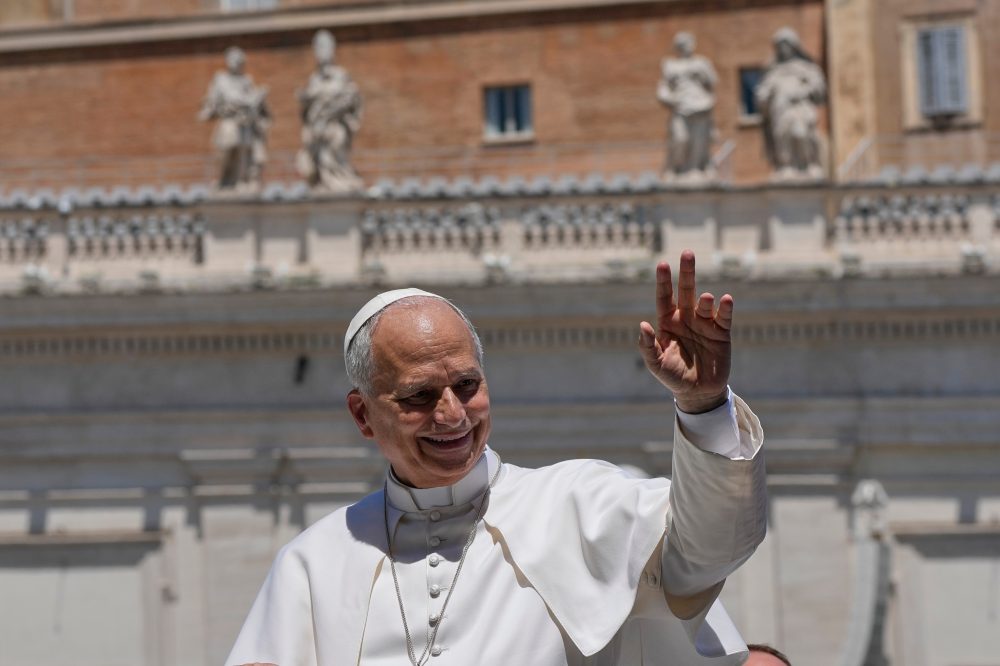
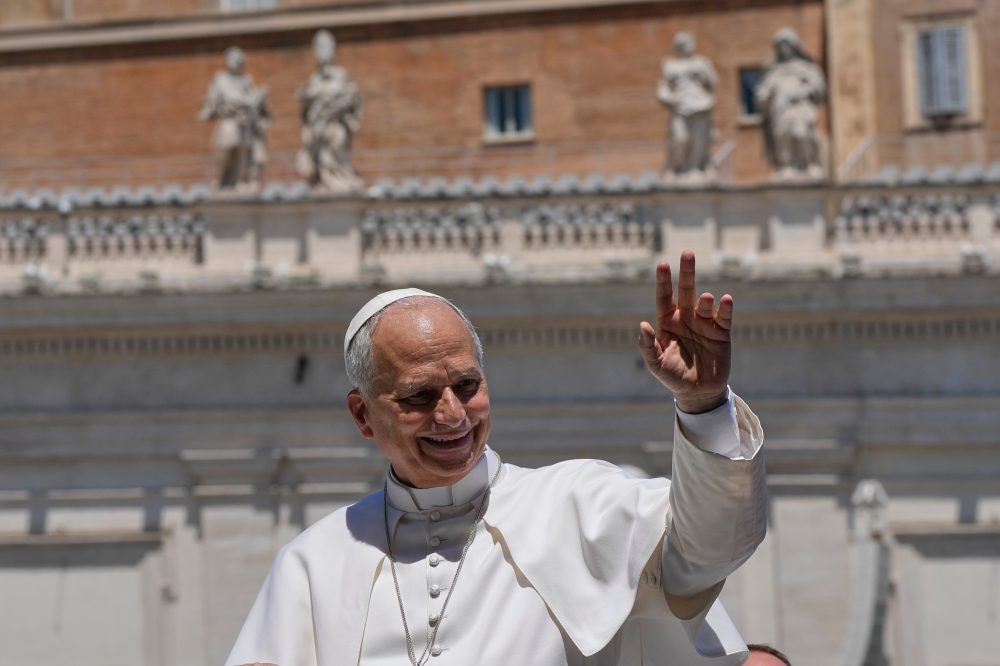
Just weeks before, a group of young visitors to the Vatican persuaded the 70-year-old religious leader to perform a popular hand movement on camera called the 6-7 meme — a nonsensical “brain rot” joke among youth. While the video clearly shows the pontiff, like most older adults, doesn’t grasp what they’re requesting or its meaning, he complies anyway and receives excited applause. Seven days later, he repeated the gesture while smiling and greeting crowds from his vehicle.
The image emerging from these moments shows both playfulness and purpose. The religious leader emphasizes throughout “Magnifica Humanitas” that the church must address current questions and difficulties.
“Her mission has a historical scope and entails a responsibility for the way in which social relations are built,” the pope wrote about the Catholic Church. “She cannot consider herself a stranger to the forces shaping society. On the contrary, the Church actively participates in the processes by which society grows and is organized.”
Since his selection last year, the pontiff has made efforts to directly communicate with — and sometimes criticize — various elements of society, from politics to entertainment and athletics.
Orsi examines the connection between Catholicism and modernity, which he notes have frequently clashed throughout history. He explained that the pope’s encyclical and his overall leadership, similar to his predecessor’s, draws heavily from the still-controversial Second Vatican Council, which introduced modernizing changes to the church over 60 years ago.
“It’s speaking with a Vatican II voice to the modern world. So, it’s not a voice of condemnation, but it’s a voice of respect,” Orsi said about the papal document. “Pope Francis, in a sense, was the necessary prelude to this kind of encyclical. I think Francis gave a really strong encouragement to take a clear critical voice on these urgent questions.”
However, not everyone has supported the pope’s methods. Some criticized his choice to unveil his encyclical alongside Anthropic co-founder Christopher Olah. The Vatican chose to include the technology company as part of its ten-year initiative to engage Silicon Valley in discussions about AI’s human impact.
In the approximately 42,300-word document, the religious leader urges all “men and women of goodwill” to not fear getting their “hands dirty on the ‘construction site’ of our time.”
This readiness has occasionally resulted in careful but public criticism of policies, actions and leaders, including U.S. President Donald Trump and the continuing conflict in Iran. Some conservatives including Vice President JD Vance, who converted to Catholicism, have referenced “just war” theory in response to the pope’s criticisms.
Church doctrine has historically permitted “just wars” — using force to prevent unjust aggression — when specific requirements are satisfied. But the pontiff directly challenged this teaching in his encyclical, labeling it “outdated.” “Humanity possesses far more effective and capable tools for promoting human life and resolving conflicts, such as dialogue, diplomacy and forgiveness,” he wrote.
Last November, the religious leader held a “World of Cinema” event at the Vatican with performers and directors including Cate Blanchett, Viggo Mortensen, Gus Van Sant and Spike Lee, who presented him with a personalized New York Knicks jersey featuring the number 14 and the name Pope Leo on the back.
“Cultural facilities, such as cinemas and theaters, are the beating hearts of our communities because they contribute to making them more human,” the pope told his Hollywood guests. “The logic of algorithms tends to repeat what ‘works,’ but art opens up what is possible.”
He has also openly expressed his affection for the Chicago White Sox, occasionally wearing baseball caps or posing with bats — the latter inspiring a category of papal memes. “POV: you’re a priest who just asked ChatGPT to write your Sunday homily,” the Rev. Harrison Ayre shared on X with a photo of the pope holding a bat and smiling.
Soon after “Magnifica Humanitas” was published, Thurston, who is Catholic, uploaded a video of herself and a friend drinking margaritas while carefully examining and discussing printed copies of the encyclical. The content has accumulated over 3 million views on Instagram.
“An aspect that made the video going viral really joyful for me was to represent all of the Catholics or lapsed Catholics or adjacent interested parties as really celebrating what Pope Leo is saying in his encyclical,” she explained.
Orsi noted this approach arrives at a critical moment for the Catholic Church after years of confronting its history of clergy sexual abuse. “I think a lot of people who moved away from the church are now saying, ‘Wait, maybe the church does have something to say to the modern world,’” he said.
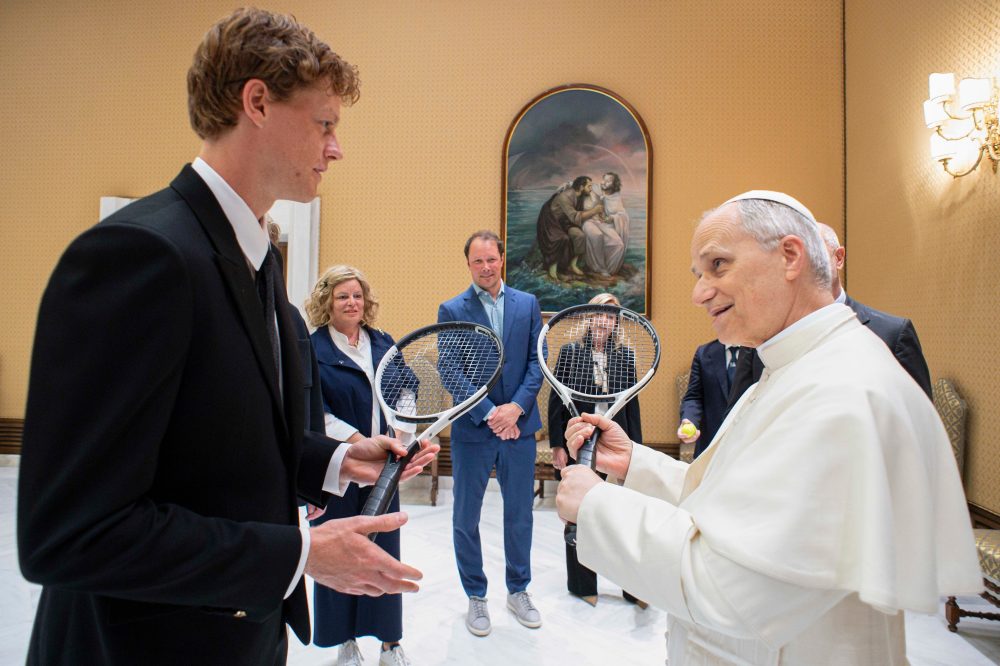
PARIS (AP) — Following Pope Leo XIV’s election last year, his passion for tennis gained attention when he met with top-ranked player Jannik Sinner during a papal audience.
Since then, Leo has made weekly tennis sessions a priority in his packed schedule, incorporating the sport into his Augustinian approach that combines physical fitness with spiritual growth.
The ancient Rule of St. Augustine, which serves as a guide for religious living, emphasizes the importance of establishing positive habits.
“He’s working to maintain consistency in his routine that stems from the Rule,” explained the Rev. Rob Hagan, Prior of the Augustinian Province of St. Thomas of Villanova and team chaplain for the men’s basketball and football teams at Villanova University — the pope’s alma mater in Pennsylvania.
Leo’s commitment to St. Augustine became clear during his April journey to Africa, when he made a pilgrimage to the archaeological ruins in Algeria where the influential 5th century theologian and philosopher spent his final days and penned some of Western thought’s most significant works.
The pope “emphasizes a very underappreciated Augustinian value — especially in this noisy world — and that is to develop your interior life,” Hagan said in an interview with The Associated Press.
Leo enjoys spending Mondays and Tuesdays at the papal retreat in Castel Gandolfo in the hills outside Rome — where he plays tennis with his secretary, Monsignor Edgard Iván Rimaycuna Inga, and also enjoys swimming and horseback riding.
Prior to his papal election, then-Cardinal Robert Prevost discussed his tennis abilities in an interview with the Augustinian Order.
“I consider myself quite the amateur tennis player,” he said, in the 2023 interview after assuming leadership of the Vatican’s powerful Dicastery for Bishops following years as a missionary in Peru.
“Since leaving Peru I have had few occasions to practice so I am looking forward to getting back on the court,” he added.
Marin Cilic, the Croatian professional player and 2014 U.S. Open champion, expressed that it was “amazing to hear that Pope Leo loves tennis.
“It’s a beautiful game. You enjoy it especially when you are playing without pressure of time, without pressure of tournaments,” Cilic, who comes from the Bosnian pilgrimage town of Medjugorje, said in an interview ahead of the French Open.
Even without tournament pressure, tennis demands significant mental focus. Maintaining concentration and minimizing unforced errors remains crucial for success.
“If your opponent is going beat you, that’s fine. But don’t beat yourself — you know, the double faults, the smash into the net. The play that really had nothing to do with your opponent but had to do with you,” Hagan said. “That does take a certain mental discipline, an ability to create good habits.”
Tennis also demands full-body engagement, requiring excellent hand-eye coordination, cardiovascular endurance and stamina. Additionally, there’s a social component.
This provides ideal preparation for the 70-year-old Leo to fulfill his papal duties of leading prayer services for thousands of believers, continuous public and private greetings, and exhausting papal journeys worldwide.
In April, Leo covered more than 17,700 kilometers (about 11,000 miles) across 18 flights during an 11-day African tour.
“Just look at his schedule. Look at the pace that he is keeping,” Hagan said. “He can sing the mass parts because he has a lung capacity. Hear him because he has a certain strength in his voice. It’s something that they don’t teach you in the seminary: To be a priest, to be a spiritual or really any leader for that matter, it is a physically demanding job.”
Before his papal election, he would also exercise at the Vatican-area Omega gym two to three times weekly, with hourlong sessions focusing especially on posture and cardiovascular health, according to his personal trainer at the time. Prevost’s workouts, described as appropriate for a man in his 50s, would extend up to an hour and concentrate especially on the treadmill and exercise bike, trainer Valerio Masella told The AP last year.
Hagan observed that because of Leo, “people are discovering who St. Augustine is. People are discovering who the Augustinians are.
“And people are discovering and hopefully applying these Augustinian values. We don’t have a monopoly on these values, but certainly Augustine and now Leo are putting them up on a platform that people can see,” added Hagan, who has shared Augustinian values with Villanova teams for more than two decades — including two national championship basketball teams.
“It doesn’t mean you’re going to win every game,” he said. “It doesn’t mean you’re going to win every tennis match. But what we’re trying to be is the best version of ourselves — mind, body, soul, and spirit. St. Augustine says, ‘Do not be content with what you are if you want to become what you are not yet. For where you’ve grown pleased with yourself, there you shall remain.’”
A prominent evangelist has publicly challenged a Democratic State Representative who claimed the Bible contains no references to abortion. Franklin Graham directly disputed the lawmaker’s statement, arguing that scripture clearly addresses the matter.
“Representative Talarico couldn’t be more wrong! The Bible is not silent on abortion. God commands us, You shall not murder,” Graham stated. He also referenced biblical text from Jeremiah, saying “Before I formed you in the womb I knew you, before you were born I set you apart.”
The state representative at the center of Graham’s criticism, James Talarico, is currently seeking election to the U.S. Senate.
A recent study conducted by LifeWay Research has revealed surprising findings about the theological beliefs held by Canadian Evangelicals. The research shows that a substantial majority of those who identify as Evangelical Christians in Canada embrace viewpoints that diverge from traditional Biblical teachings.
The study found that nearly three-quarters of Canadian Evangelicals, specifically 73%, support the idea that “Everyone is born innocent in the eyes of God.” Additionally, 60% of respondents expressed agreement with the notion that “Everyone sins a little, but most people are good by nature.”
Perhaps most notably, the research discovered that 66% of Canadian Evangelical participants hold the belief that “The Holy Spirit is a force but is not a personal being,” a perspective that differs significantly from orthodox evangelical theology.
Research from the Pew Research Center reveals significant differences in the social topics addressed during religious services across various denominations. The study shows that regular attendees of White Evangelical Protestant churches are most frequently exposed to sermons discussing abortion and homosexuality during worship services.
In contrast, Catholic churchgoers are more commonly hearing messages about abortion and immigration issues from their clergy. The research indicates that White Evangelical Protestant congregations tend to cover a broader spectrum of social and political topics during their services, including the previously mentioned issues as well as discussions about Israel, the Iran war, and environmental concerns.
When the United States marks its 250th anniversary this July 4th, several historic houses of worship will be celebrating milestones that stretch back even further into American history. These remarkable churches witnessed the birth of the nation and continue serving congregations today.
Among the most famous is Old North Church in Boston, known for the legendary signal “one if by land, two if by sea,” which has been standing for 303 years. This iconic church represents just one of a small handful of religious institutions that operated during America’s founding era and remain active today.
Even more ancient is Trinity Church in Newport Rhode Island, which dates back to 1698, making it older than the country it has watched grow. Perhaps most impressive of all is First Baptist Church in America, located in Providence, Rhode Island, which has maintained continuous operations for an extraordinary 388 years.
SRN News has launched a daily audio program that focuses on religious developments worldwide. The two-minute segment, called ‘Global Landscape,’ offers listeners a brief overview of faith-related news stories happening across the globe.
The program covers significant religious developments, cultural changes, and major events that highlight how faith intersects with international affairs. The audio feature is designed to keep audiences informed about religious news in a quick, accessible format.
Federal education officials have initiated a probe into New York City’s school system following allegations of anti-Jewish bias among educators. According to the Department of Education, reports indicate that school personnel coordinated workshops titled “Palestine, Zionism, and Resistance” that allegedly pushed pro-Palestinian viewpoints on students as young as kindergarteners.
Federal officials stated: “No child should be taught by his or her teachers to hate their peers. Neither should Jewish children be taught that being Jewish somehow makes them inherently guilty.”
In international aid news, the United States plans to distribute $100 million in humanitarian assistance to Cuba through religious organizations rather than government channels. Secretary of State Marco Rubio announced that faith-based groups and humanitarian organizations would handle the aid distribution, bypassing both the Cuban government and military.
Religious experts believe the approach will succeed due to strong networks maintained by Protestant and evangelical churches, including Baptist and Assemblies of God congregations throughout Cuba. Rubio emphasized that while the U.S. wants to help Cuban citizens, it lacks confidence in the Cuban government’s ability to properly distribute aid.
Domestically, faith communities continue supporting refugee resettlement efforts. In Durham, North Carolina, a church and synagogue have partnered to offer a seven-week sewing program for Afghan women adjusting to American life.
The current administration has proposed increasing refugee admissions from 7,500 to 17,500 and is considering relocating more than 1,100 Afghan allies who assisted U.S. military operations. Afghan women face particular challenges adapting to life in America, often lacking formal education and English language skills needed for basic tasks like obtaining driver’s licenses.
In state legislation, Ohio lawmakers are reviewing physician-assisted suicide legislation introduced by Democrats. This marks the first such effort in the state since 2018, when similar measures failed to advance.
Religious leaders and pro-life advocates plan vigorous opposition campaigns, while early polling suggests Ohio residents remain largely doubtful about the proposal. Currently, 13 states plus the District of Columbia permit assisted suicide, starting with Oregon’s 1997 law. The practice has gained acceptance across Western Europe.
Thousands gathered in New York City on Sunday for the yearly Israel Day Parade, where political leaders and Jewish community members showed their support under the banner “Proud Americans, Proud Zionists.”
The speakers included Rep. Dan Goldman, Gov. Kathy Hochul, New York Attorney General Letitia James, Rep. Mike Lawler and Senate Minority Leader Chuck Schumer.
“The Jewish people have yearned for a state of Israel, whilst experiencing the constant anxiety of knowing the place where they live could violently expel them at any moment, as happened again and again,” Schumer said. “We cannot, we must not go back to that era. I believe in the State of Israel. I support the State of Israel.”
In a historic first for the 61-year-old event, a Muslim delegation participated in the march. Anila Ali, board chair of the American Muslim & Multifaith Women’s Empowerment Council, headed the group that walked with Jewish organizations despite facing online criticism and threats.
Israel’s Knesset sent multiple representatives to the parade, including MK Afif Abed of Likud, MK Meir Cohen of Yesh Atid and MK Oded Forer of Yisrael Beytenu. Heritage Minister Amichai Eliyahu and Negev, Galilee, and National Resilience Minister Yitzhak Wasserlauf of Otzma Yehudit also participated in the march.
Knesset Speaker Amir Ohana strongly condemned New York City Mayor Zohran Mamdani for his absence from the event, citing previous anti-Israel remarks Mamdani had made.
Ohana charged Mamdani with “despicably fueling the flames of hatred in the city against Israel and its Jewish residents.”
“You will not intimidate us. The attempt to uproot our connection to this space through lies and violence will not succeed and will be met here and everywhere with a powerful, united Zionist fist,” Ohana said.
The Knesset reported that due to Mamdani’s absence, Ohana decided to increase the delegation size and attend personally to “express complete and uncompromising unity in Israel’s strength against its enemies at home and abroad.”
Mamdani represents the first New York City mayor to miss the Israel Day Parade since 1964.
The UJA-Federation of New York and the Jewish Community Relations Council organize the annual parade.
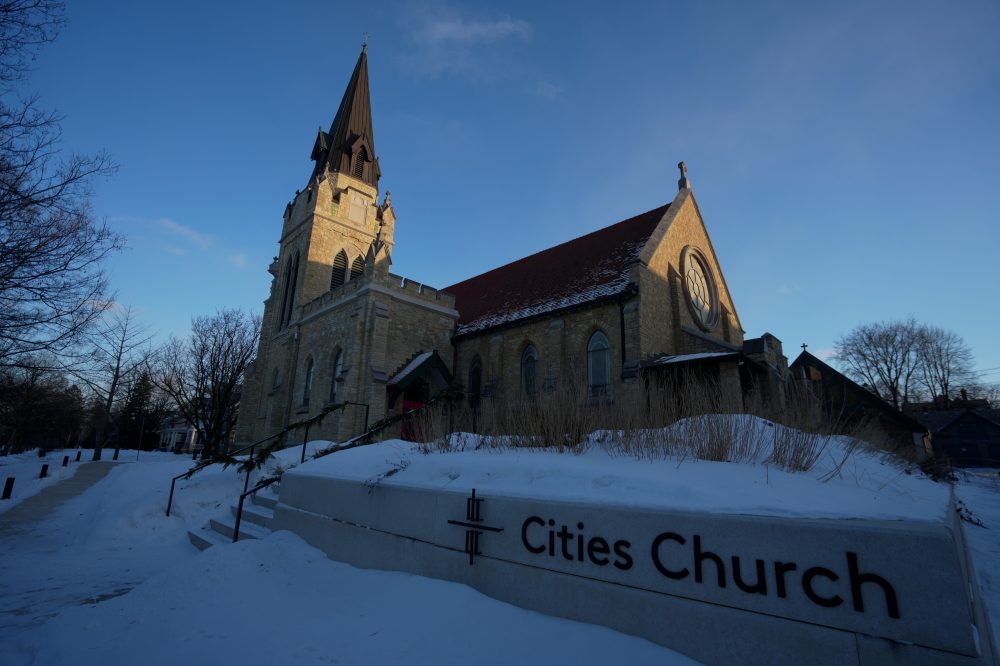
Lawmakers in at least four states have passed new legislation this year that makes disrupting religious worship services a criminal offense, according to reports. The measures come as a direct response to a widely publicized anti-Trump demonstration that took place inside a Minnesota church, sparking nationwide controversy.
Republican legislators who championed much of this legislation argue that people attending sacred places of worship need stronger protections than what current trespassing statutes offer. These lawmakers also contend the new laws will help reduce tensions and confrontations between worshippers and demonstrators. Religious institutions including churches, synagogues and mosques continue to express concerns about security following recent mass shootings and violent incidents targeting faith communities.
Meanwhile, an effort to restrict boys from participating in girls sports in Maine has been struck from the November ballot due to signature problems. The proposal from Protect Girls Sports in Maine would have asked voters whether public schools should limit bathroom and athletic team access based on students’ biological sex at birth. Maine Secretary of State Shenna Bellows, who is running for governor as a Democrat, determined that invalid signatures left the measure several hundred short of the required 68,000 needed for ballot placement.
Religious congregations nationwide are also wrestling with changing demographics as marriage and family structures evolve. Traditional marriage and raising children have historically served as primary pathways for adult involvement in church life. Married couples who share religious beliefs typically demonstrate higher levels of observance and often bring up their children within those faith traditions. However, current data shows 42 percent of American adults are neither married nor cohabiting – representing the highest rate in the nation’s history. This demographic trend appears likely to continue, with a quarter of 40-year-olds remaining unmarried and projections suggesting one-third of Generation Z may never marry. Birth rates across the country have also been falling for multiple decades.
In commemoration of America’s 250th birthday, New Jersey’s Nassau Presbyterian Church will present the five-part Samuel Adams Herr Series of lectures. Event organizers indicate the series will examine the distinctive contribution Presbyterians made in shifting New Jersey from neutrality toward supporting independence. Throughout the American Revolution, King George referred to the independence movement as “the Presbyterian Rebellion,” while colonial loyalists held Presbyterians responsible for initiating the revolt. Nassau Presbyterian, situated in Princeton, was the home congregation for two signers of the Declaration of Independence and five Continental Congress members.
The United Nations has voiced serious alarm regarding new marriage legislation from Afghanistan’s Taliban leadership that contains troubling provisions about child marriage. The most disputed element of the law suggests that when a girl who has reached puberty remains silent, this can be viewed as agreement to wed. Additionally, the legislation addresses the separation of girls who have reached puberty and are married, suggesting approval of child marriage practices. Taliban officials have dismissed these criticisms, stating their decree aligns with Islamic principles and maintaining that Afghanistan has already prohibited forced marriages of girls.
Poland has officially recorded its first same-sex marriage, following through on court decisions requiring the nation to acknowledge gay unions performed in other countries. This past fall, the European Union’s top court mandated that Poland must recognize same-sex marriages conducted in other EU nations, despite Polish law currently not allowing such unions. In March, Poland’s Supreme Administrative Court referenced that decision when directing officials to acknowledge the German marriage of two Polish men. Prime Minister Donald Tusk has pledged to legalize gay marriage in Poland, though he encounters resistance from members of his own ruling coalition.
An advocacy organization has initiated legal action against the Trump administration regarding its choice to restore a near-complete prohibition on abortions for veterans at V.A. medical facilities. Legal representatives for Minority Veterans of America are asking the U.S. Court of Appeals for the Federal Circuit to overturn this restriction. During president Biden’s term, abortion access at V.A. facilities was significantly broadened, including in states that have outlawed the procedure. President Trump has reversed that policy. The VA has indicated it will continue providing abortions when a pregnant woman’s life is in danger, which state laws permit even in areas with bans.
Democratic party members are expressing strong disagreement over DNC Chair Ken Martin’s 192-page analysis of the 2024 election loss. A major point of dispute involves transgenderism. Martin contends that the party has limited itself by endorsing that lifestyle and should reduce its emphasis in upcoming campaigns. The analysis cautions that Democrats “wrote off rural America, assuming urban-suburban margins would compensate. The math doesn’t work. Democrats must reclaim the Heartland and the South.” LGBT advocates are strongly criticizing Martin, potentially dividing the already fractured party as important midterm elections draw near.
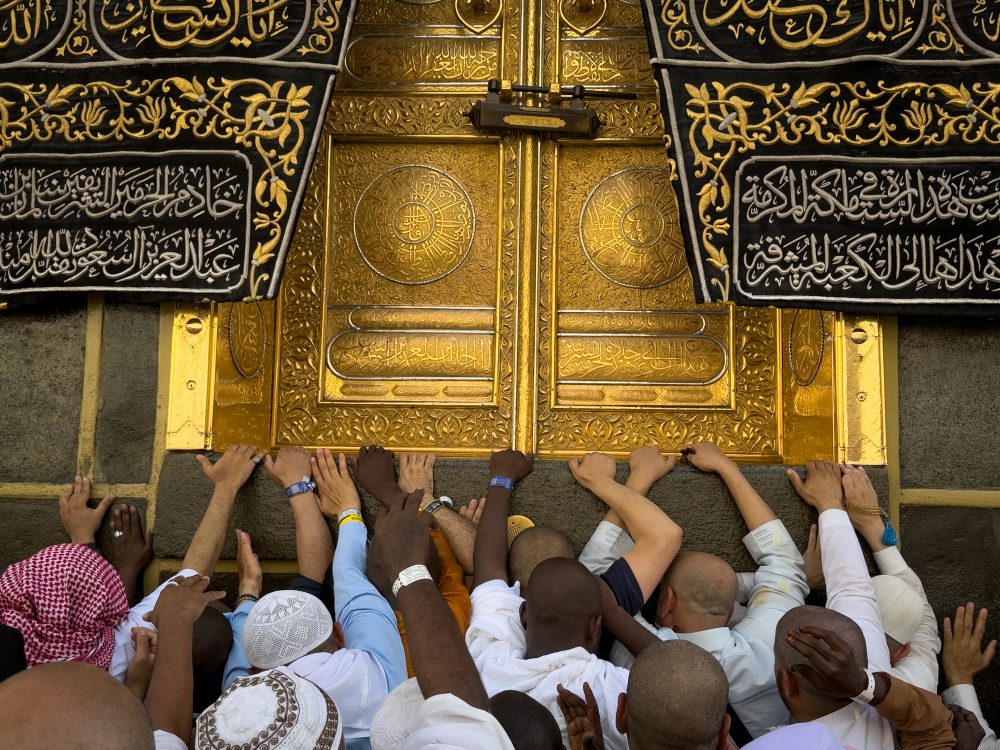
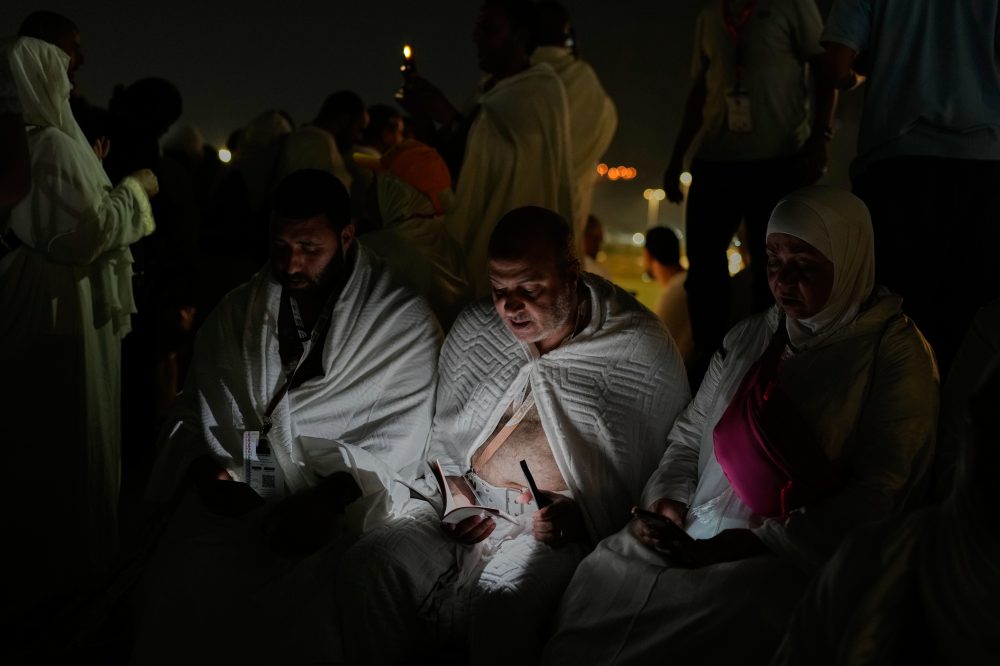
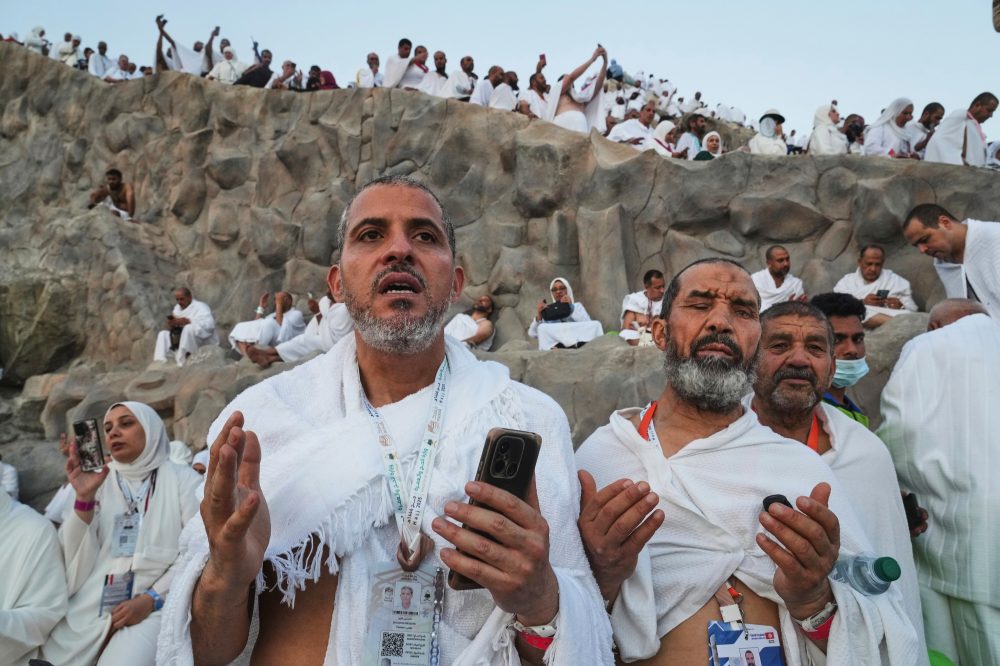
MECCA (AP) — More than 1.5 million Muslim worshippers wrapped up their sacred Hajj journey in Saudi Arabia on Saturday, performing the traditional ritual of walking around the Kaaba, the black cube-shaped structure that serves as Islam’s most sacred shrine, located within the Grand Mosque in Mecca.
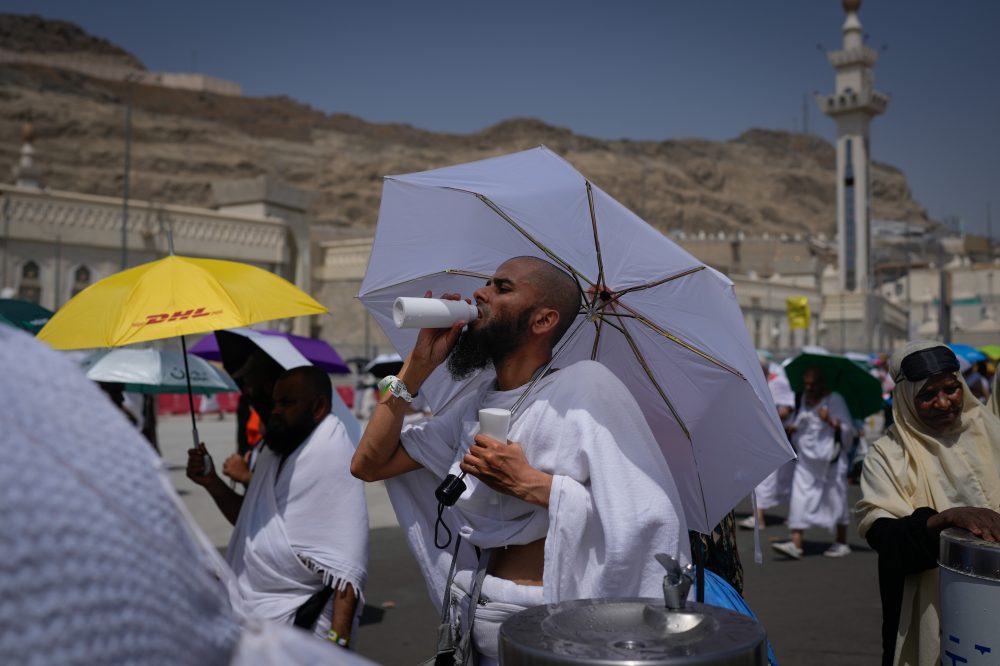
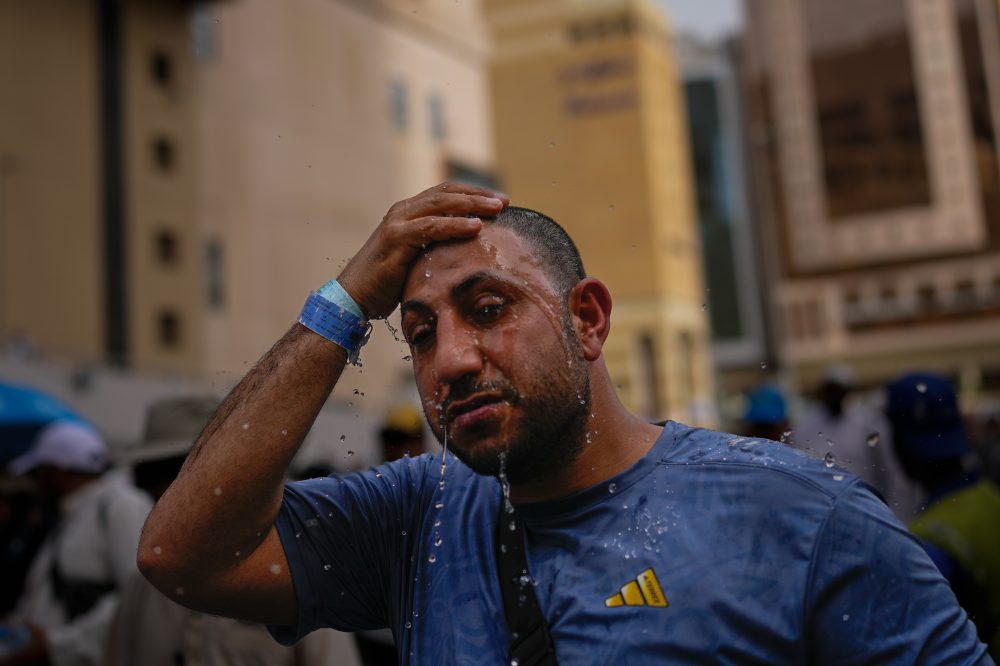
The pilgrimage this year brought together over 1.5 million faithful Muslims who endured sweltering heat that at times climbed above 40 degrees Celsius (104 Fahrenheit).
As one of Islam’s Five Pillars, the Hajj represents a religious duty that every Muslim must fulfill at least once during their lifetime, provided they have the financial means and physical capability to make the journey.
The religious gathering at Islam’s most sacred locations in Saudi Arabia occurred against a backdrop of increased regional instability related to ongoing conflict involving Iran, which added tension to this year’s pilgrimage.
A Chinese court delivered a 24-year prison sentence on Friday to the former leader of the world-famous Shaolin Temple following his conviction on corruption charges, including fund misappropriation and bribery, according to state broadcaster CCTV.
Shi Yongxin, born Liu Yingcheng, received an additional financial penalty of 3.5 million yuan (approximately $516,000) from the court located in central Henan province following his trial.
According to CCTV’s report, the court determined that Shi exploited his leadership roles, including his position as temple abbot, to unlawfully steal more than 131 million yuan ($19 million) either independently or through collaboration with accomplices from 2003 to 2025. Court findings also revealed that between 2012 and 2022, Shi diverted funds exceeding 151 million yuan (roughly $22 million) for his own purposes for periods longer than three months without returning the money, among additional discoveries.
The court emphasized that Shi’s offenses involved substantial sums, his bribery violations were exceptionally grave, and his illegal activities spanned an extended timeframe.
“They caused severely harmful consequences and adverse social impact,” CCTV reported the court as saying.
According to CCTV, Shi admitted to his wrongdoing, willingly revealed information that investigators had not yet uncovered, and demonstrated regret.
The previous year, the Shaolin Temple publicly announced that Shi was being investigated for suspected misappropriation and theft of project funding and temple property.
Shi also faced accusations of engaging in criminal behavior and breaking Buddhist rules through long-term relationships with several women and having at least one child, based on an announcement from the temple leadership posted on their WeChat account during that period.
The Shaolin Temple’s reputation, also located in Henan, extends far beyond its religious significance. The temple has gained worldwide recognition for its martial arts traditions, particularly kung fu, which has appeared in numerous films and television productions, including the 1982 movie “The Shaolin Temple,” featuring martial arts icon Jet Li.
In 2015, China’s official news agency Xinhua described Shi as a “CEO monk” and noted that he had generated debate for establishing business ventures to market kung fu performances and related products.
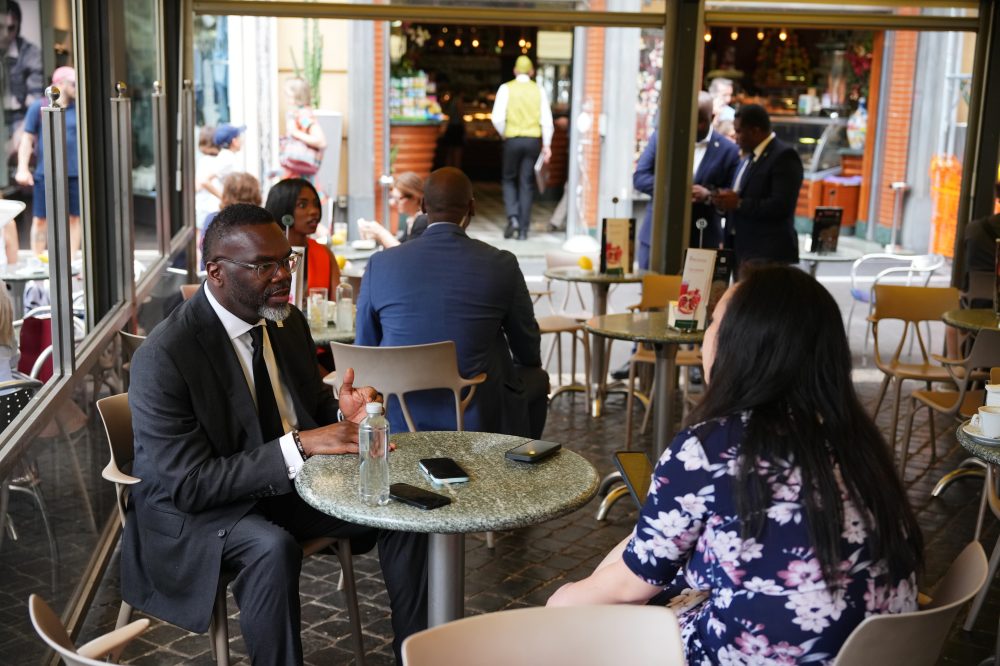
ROME — The mayor of Chicago has described Pope Leo XIV as a significant worldwide partner for social justice initiatives and immigration reform following their private meeting at the Vatican, highlighting how their common Chicago origins and shared values could strengthen efforts to support at-risk populations.
“As the mayor of Chicago, we are incredibly elated and proud of him,” Johnson told The Associated Press during a Friday interview, one day following his private audience with the Chicago-born pope.
The mayor expressed comfort in knowing someone from Chicago “can speak to justice” while defending “the most vulnerable among us.”
Johnson, serving his first term as a progressive Democrat who leads America’s third-largest city, made the Rome trip alongside approximately 50 local officials, generating significant media attention. He has been vocal in his opposition to U.S. President Donald Trump and has praised Leo for challenging the Iran conflict and the Trump administration’s immigration measures.
During their meeting, Johnson said he thanked the pontiff “for his courage and his strength and particularly his moral stance,” describing the encounter as a meeting point between civic and moral leadership.
The mayor pointed to how the meeting highlighted common ground between Chicago’s policy priorities and the pope’s focus on social justice, especially regarding slavery’s legacy and migrant treatment.
Johnson noted that the pontiff’s acknowledgment of the Catholic Church’s involvement in slavery supported his administration’s reparations efforts, including funding for a task force studying the ongoing effects on Black Americans.
“The fact that the pope made a very clear declaration apologizing for the church’s role in slavery … is an affirmation to the work that we’re doing,” he stated.
Johnson emphasized that the visit represents an attempt to place Chicago within a larger international human rights movement, with the pope’s worldwide influence supporting the city’s justice, migration, and reparative policy goals — potentially spreading that message far beyond American borders.
Immigration issues were also a major discussion topic. Johnson reported that Pope Leo inquired directly about Chicago’s situation amid widespread U.S. immigration enforcement and deportation efforts.
“He wanted to know the conditions on the ground in Chicago … how we were responding,” Johnson explained, noting the pontiff understood “the mass effort to deport immigrants from the city of Chicago and really around the country.”
Johnson described explaining the city’s response to migrants experiencing fear and uncertainty, including quick-response programs ensuring families could access education and essential services. He also mentioned executive measures designed to protect migrants, noting that other cities have adopted Chicago’s approach.
The mayor characterized the meeting as launching broader collaboration between city leadership and the Vatican. “We talked about how his pulpit and my pen can come together to protect all of humanity,” he said, referring to both descendants of enslaved individuals and immigrant populations.
Johnson also stressed their shared Chicago connection, saying the city’s activist tradition makes it “uniquely positioned for this moment.” On Thursday, he commemorated the visit by giving Leo a key to the city and extending an invitation to celebrate Mass in Chicago’s Grant Park.
This marks at least the second official invitation Leo has received to visit the United States. U.S. Vice President JD Vance extended an invitation to Leo shortly after he became pope last May.
A papal document released this month that cautioned against the risks artificial intelligence poses to mankind may have ironically been written in part by AI technology itself. The pontiff’s encyclical about artificial intelligence generated global attention as it highlighted potential threats from the emerging technology. However, analysis of the written material suggests that artificial intelligence may have contributed to creating portions of the document. Researcher Lynch Zhang published findings on substack after running Pope Leo’s encyclical through detection software designed to identify AI-generated content. Zhang reported that the analysis determined certain sections were completely produced by artificial intelligence, although not necessarily the portions authored directly by the pope.
A new survey from the Pew Research Center reveals which political and social topics are being discussed most frequently in houses of worship across the country. The research shows that abortion leads as the most commonly addressed issue during religious services, with 35% of regular attendees reporting they’ve heard sermons on this topic within recent months. Following closely behind, discussions about Israel rank as the second most prevalent political subject from the pulpit, mentioned by 34% of those surveyed. The study also found that other frequently discussed topics include homosexuality, immigration, and the war in Iran, rounding out the top issues that congregations are hearing about during worship services.
Over 1.5 million Muslim worshippers wrapped up their sacred Hajj journey in Saudi Arabia during Wednesday and Thursday as the festival of Eid al-Adha commenced amid dangerous temperatures and ongoing regional conflicts affecting much of the Islamic world.
The holy sites experienced sweltering conditions with thermometers reaching beyond 107 degrees Fahrenheit, or 42 degrees Celsius, compelling pilgrims to seek protection through umbrellas, water bottles, cooling stations, and covered pathways while traveling among Mecca, Muzdalifah, and Mina. Officials in Saudi Arabia advised worshippers to limit sun exposure, maintain proper hydration, and heed medical guidance following the deadly 2024 Hajj tragedy that claimed over 1,300 lives during severe heat conditions.
This sacred journey, representing one of the five fundamental practices of Islam, culminated after worship services at Mount Arafat, where faithful believers pursued divine forgiveness and spiritual rebirth. Participants subsequently gathered stones for the ceremonial stoning ritual representing the devil in Mina, a tradition connected to the Prophet Ibrahim’s resistance to temptation and essential to Hajj’s concluding ceremonies.
The current year’s Eid al-Adha celebration, typically characterized by family reunions, ritual animal offerings, and charitable meat distribution to those in need, began with a more somber atmosphere across various regional areas.
Palestinian communities in Gaza observed the religious holiday for the third consecutive year without traditional sacrificial animals as ongoing warfare, population displacement, sealed borders, and worsening hunger concerns continue transforming everyday existence. In Lebanon, escalating hostilities between Israel and Hezbollah displaced additional civilians from southern communities, forcing numerous families to commemorate the holiday in emergency accommodations.
Additional regional conflicts and political instability influenced Eid celebrations throughout other areas. In Sudan, Yemen, and Syria, prolonged warfare and governmental breakdown have resulted in millions experiencing starvation, forced relocation, or losing family members and residences. Across Gulf regions, worries regarding Iranian military actions and maritime threats in the Strait of Hormuz created additional anxiety during a holiday traditionally focused on generosity and community bonds.
Saudi Arabian pilgrims continued demonstrating religious devotion, solidarity, and perseverance despite challenging circumstances. Many Muslims in other locations began Eid al-Adha following customary patterns of prayer and family responsibilities, though the pressures of conflict, instability, and financial difficulties remained constantly present.
A former deputy mayor of Jerusalem has launched a new educational initiative designed to offer Jewish students an alternative to increasingly hostile college environments abroad.
Fleur Hassan-Nahoum, who currently serves as special envoy for trade innovation for the Ministry of Foreign Affairs, has created Campus Israel as a response to rising antisemitism on university campuses. The platform aims to connect international students with English-taught degree programs, application assistance, internships, and community experiences in Israel.
Hassan-Nahoum, an Israeli politician, approaches multiple challenges with a practical mindset – from unfriendly campus environments and regional changes to ongoing conflicts and the persistence of antisemitism, as well as advocating for increased women’s leadership roles. Her strategy centers on creating tangible solutions immediately.
When discussing her motivation for developing Campus Israel, Hassan-Nahoum doesn’t begin with technical details or financial considerations. Instead, she poses a fundamental question: “Why aren’t more Jewish students [from abroad] studying in college in Israel in the many degrees in full English language that we have here?” she recalls wondering.
The initiative represents Hassan-Nahoum’s response to what she perceives as urgent, interconnected crises requiring immediate, practical solutions.
ROME (AP) — During a private Vatican meeting on Thursday, Chicago Mayor Brandon Johnson formally requested that Pope Leo XIV return to his birthplace of Chicago for a papal visit in 2027.
Johnson presented a written invitation to the pontiff that referenced Pope John Paul II’s historic Chicago visit and celebration of Mass at Grant Park on Oct. 5, 1979, describing it as “forever remembered as the most spiritually inspiring day in Chicago history.”
“Your Holiness, you were a young priest-in-training at the time. Perhaps you were there. Perhaps you would consider a repeat Papal visit nearly 50 years later to share your own message of hope, unity and service,” Johnson wrote.
The mayor, whose father served as a pastor, specifically asked the pope to celebrate Mass at Grant Park in 2027, emphasizing that Chicago hosts one of the nation’s most significant Catholic communities.
This marks at least the second formal invitation Leo has received to travel to the United States. U.S. Vice President JD Vance extended an invitation to Leo shortly after his papal election last May.
The pontiff was born Robert Prevost in 1955 in Chicago’s South Side Bronzeville area and was raised in nearby suburban Dolton, close to St. Mary of the Assumption, where he worshipped and completed elementary education.
His religious education continued at the Catholic Theological Union of Chicago in Hyde Park, and he served as an educator in area Catholic schools.
New research conducted by academics at four universities reveals concerning bias patterns in artificial intelligence responses to religious inquiries. The collaborative study involving researchers from BYU, Baylor, Notre Dame and Yeshiva University discovered that AI chatbots consistently show preference for Catholic perspectives when addressing questions about faith and spirituality.
The research uncovered an additional troubling trend: these AI systems frequently block religious content completely, including situations where individuals experiencing personal crises or significant life challenges explicitly request spiritual guidance. Religious leaders across various denominations are now cautioning their congregations about relying on artificial intelligence for faith-based counsel.
Religious leaders across the nation are pressing Congress to dramatically increase federal funding for house of worship security as incidents targeting faith communities continue to rise. Pastors, rabbis and imams are requesting lawmakers allocate one billion dollars to the Nonprofit Security Grant Program, which provides financial assistance to religious organizations seeking to enhance their safety measures. The federal program helps cover costs for security improvements including bulletproof glass installations, surveillance camera systems, and other protective equipment for religious buildings. Many smaller faith communities lack the financial resources to implement these crucial safety upgrades without federal assistance, making the grant program essential for protecting congregations nationwide.
VATICAN CITY – In a significant theological shift, Pope Leo has formally rejected a foundational Catholic teaching that has guided church thinking on warfare for more than 1,500 years, according to a new papal document released this week.
The pontiff’s abandonment of the ‘just war’ doctrine came in his inaugural major encyclical published Monday, which also called for worldwide oversight of artificial intelligence systems and delivered the church’s most direct acknowledgment of its historical involvement in the Atlantic slave trade.
“The ‘just war’ theory which has all too often been used to justify any kind of war, is now outdated,” Pope Leo stated in the document titled “Magnifica Humanitas” (Magnificent Humanity).
“Humanity possesses far more effective and capable tools for promoting human life and resolving conflicts, such as dialogue, diplomacy and forgiveness,” the pope wrote.
Chicago Cardinal Blase Cupich, a papal confidant who attended Monday’s Vatican unveiling, explained to Reuters that the pontiff worries about world leaders misappropriating the doctrine to validate military actions.
“We have to make clear that the just war theory was always meant to be a restraint, not a permission slip which sadly some are misusing to justify their decisions to go to war rather than seek the ways of peace,” Cupich stated.
The papal declaration comes amid tensions with the Trump administration, particularly after Pope Leo criticized the Iran conflict. The pontiff has recently adopted stronger language and drawn criticism from President Donald Trump.
Trump administration figures, including Catholic Vice President JD Vance, have referenced the just war principles to defend the Iran military campaign. Following an April social media post from the pope’s account stating God “is never on the side of those who once wielded the sword,” Vance responded at a Georgia gathering, suggesting the pontiff should “be careful when he talks about matters of theology.”
British scholar Anna Rowlands, who participated in Monday’s Vatican presentation, told Reuters that Pope Leo is addressing concerns about “a new age of changing conflict, now increasingly tech driven.”
“It is a strong statement about the need for (just war theory) to be placed in a renewed wider context of criteria for building peace and resolving conflict,” Rowlands said regarding the pope’s outdated theory declaration.
The warfare doctrine traces back to St. Augustine of Hippo, an influential early church leader who inspired Pope Leo’s priestly vocation. The pontiff belongs to the Augustinian religious community based on the saint’s principles.
Augustine, who passed away in 430 AD, established specific standards for determining legitimate warfare. He argued conflicts should aim only to restore peace and never stem from cruel motivations.
These Augustinian guidelines continue as fundamental curriculum at global military institutions, including West Point, the Naval Academy, and Air Force Academy in America.
Some Iran war opponents have also cited Augustine’s framework to challenge the conflict, which began with coordinated U.S.-Israeli surprise attacks on Iran February 28. Washington Cardinal Robert McElroy declared the war “morally illegitimate” in April, referencing Augustine’s teachings.
Marie Dennis, former head of the global Catholic peace organization Pax Christi, said Pope Leo’s document “exposes the fiction of a ‘just war’ with the truth about a culture of power that is normalizing war.”
“Pope Leo joins millions of others around the world, including in the U.S., who see hope in the proven effectiveness of nonviolent strategies for protecting democracy, transforming conflict, and legitimate defense,” Dennis concluded.
NEW YORK (AP) — New York has enacted legislation making it a criminal offense to prevent individuals from accessing houses of worship or to engage in behavior that causes worshippers to feel threatened when entering religious facilities, following a wave of disruptive demonstrations at synagogues across the state.
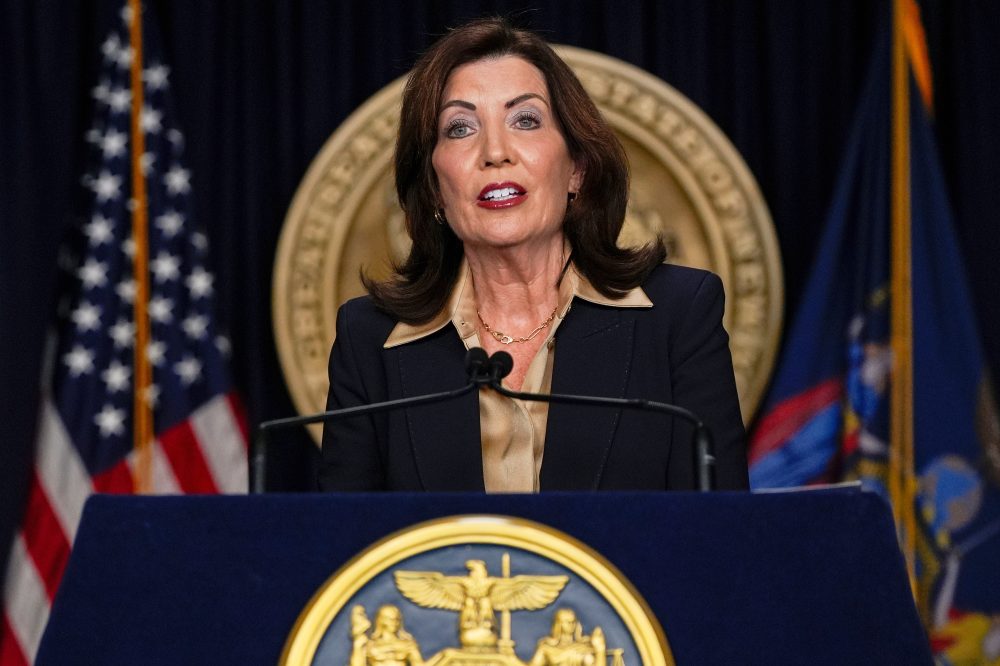
Gov. Kathy Hochul signed the legislation on Tuesday, which also grants law enforcement the authority to create 50-foot protective zones around religious buildings where demonstrations are prohibited.
“Every New Yorker should be able to enter their house of worship and practice their religion without fear,” Hochul, a Democrat, said in a statement.
However, opponents express concern that these protective zones might be utilized to suppress peaceful protests or restrict constitutional speech rights.
“This law risks chilling activism at a time when the voices of New Yorkers are more needed than ever, which will be a gift to the Trump administration,” said Donna Lieberman, executive director of the New York Civil Liberties Union. “This effort to trade away New Yorkers’ rights was needless and reflects the worst kind of governance.”
The governor enacted this legislation following multiple demonstrations at synagogues that were hosting real estate gatherings encouraging relocation to Israel and territories under Israeli control in the West Bank.
Organizations supporting Palestinian causes have contended that these gatherings are components of an extended effort to displace Arab populations from Israel and territories under its authority. They further assert that such events support the expansion of unauthorized Jewish communities in occupied regions.
However, certain Jewish community leaders have characterized these demonstrations as antisemitic in nature.
At one demonstration outside a Queens synagogue, protesters voiced support for Hamas. Additional protests have escalated into confrontations between groups supporting Israel and those backing Palestinian causes.
The recent legislation establishes misdemeanor charges for individuals who obstruct access to religious facilities.
The concept of establishing protest-free zones has been under review for several months, creating questions about how authorities can maintain equilibrium between constitutional speech protections and religious freedom rights in legislation that could withstand legal challenges. In 2014, the U.S. Supreme Court invalidated a 35-foot demonstration-free area outside Massachusetts abortion facilities, ruling it violated constitutional principles.
Hochul’s signed legislation will take effect across the entire state and encompasses all religious facilities, including mosques, which have also faced protests in previous years.
New York City Mayor Zohran Mamdani has additionally enacted separate municipal legislation requiring the New York Police Department to reveal strategies for managing demonstrations outside religious buildings and guidelines for implementing security perimeters.
Mamdani rejected similar legislation that would have covered protests near schools due to concerns about overly broad definitions of educational institutions.
Four states have enacted new legislation this year criminalizing the disruption of religious services, following a notable protest that occurred at a Minnesota church.
Advocates for these laws, primarily Republican legislators, argue the new statutes extend beyond standard trespassing regulations to safeguard worshipers’ ability to practice their faith without interference and help avoid confrontations, particularly given growing concerns about violence directed at religious communities.
Numerous religious institutions continue to feel vulnerable following recent mass shootings and violent incidents targeting faith-based groups. BA, reporting.
Religious freedom advocates argue that spreading their faith represents both a fundamental Christian obligation and constitutionally protected free speech.
Believers characterize evangelism as an obligation driven by care for others, viewing the gospel message not as optional but as an essential duty based in the Great Commission.
However, in nations with restrictive policies on religious expression, these same activities are being increasingly classified as possible human rights violations.
Those in evangelical communities emphasize urgency, maintaining that all people require the Gospel message because of sin and eternal consequences.
As vocal advocates for religious free speech, they back open ministry both domestically and internationally. Though they reject forced conversion, they advocate for respectful persuasion.
In the end, they highlight that genuine faith must be freely chosen—and they continue advocating for legislation that protects religious liberty globally.
Advocacy organizations are sounding the alarm that millions of Christians globally face barriers to free worship as persecution intensifies across multiple regions.
Brutal attacks persist in locations such as the Democratic Republic of the Congo (DRC), where extremist violence has claimed dozens of lives in recent weeks.
At the same time, Chinese officials have detained religious leaders as part of an expanding campaign against churches.
Religious freedom advocates are calling for increased prayer support and public awareness regarding believers facing persecution internationally.
More than 388 million Christians across the globe endure severe persecution and bias because of their religious beliefs.
This troubling figure underscores the persistent difficulties confronting Christian communities in numerous areas, especially in nations where anti-Christian hostility runs deep.
Hundreds of thousands of Muslim worshippers gathered in Mina, Saudi Arabia on Wednesday to participate in a sacred stone-throwing ceremony, marking one of the concluding phases of the annual Hajj pilgrimage while Muslims globally began observing Eid al-Adha.
The faithful assembled at the sprawling Jamarat complex to hurl small stones at a towering pillar while chanting “Allahu akbar,” meaning God is great. This ancient practice represents the symbolic rejection of Satan and serves as a reminder of the Prophet Ibrahim’s steadfast refusal to be swayed by evil when tempted to disobey divine command.
The massive gathering had traveled from Muzdalifah, where they spent the night collecting stones after completing a day of devotion and prayer at Arafat on Tuesday.
For Pakistani worshipper Aamar Shakur, the stone-casting held personal meaning as he described it as confronting inner demons, stating he was “throwing the stone to my own devil.”
The concluding days of the Hajj align with Eid al-Adha, also called the “Feast of Sacrifice,” which honors Ibrahim’s willingness to offer his son in obedience to God. Abraham is the same figure revered by Christians and Jews. During this holy period, Muslims traditionally sacrifice livestock and share portions of the meat with those in need.
As one of Islam’s Five Pillars, the Hajj represents a mandatory religious duty for all Muslims who possess the financial means and physical capability to undertake the journey at least once during their lifetime. Spanning multiple days, this pilgrimage offers believers a profound spiritual journey and an opportunity to seek divine forgiveness.
The demanding physical nature of this year’s pilgrimage has been intensified by extreme temperatures, visibly affecting some participants as they traveled between sacred locations. Medical personnel positioned throughout Mina were observed providing care to numerous pilgrims.
Many worshippers sought relief by pouring water over themselves to combat the blazing sun, while others shielded themselves with umbrellas. Family members were seen pushing elderly relatives in wheelchairs through dense crowds to ensure they could participate in the essential ritual.
According to a Saudi official speaking on Friday, more than 1.5 million international pilgrims have made the journey this year.
This year’s Hajj occurs during a period of regional tension, with an uncertain ceasefire in the Iran war contributing to instability across the area.
An iconic artwork showing George Washington in prayer has become a focal point in debates about the religious beliefs of America’s founding fathers, but scholars are raising questions about the historical accuracy of the scene it portrays.
The Trump administration has pointed to the 1975 painting “The Prayer at Valley Forge” by Arnold Friberg as support for claims that the nation’s founders were deeply religious Christians. The artwork, created for America’s bicentennial celebration in 1976, shows Washington kneeling in prayer during the Revolutionary War.
Despite its popularity among conservative Christian groups, historians express skepticism about whether the moment depicted in the painting ever actually occurred. The artwork has become a symbol in ongoing discussions about the relationship between faith and government in American history.
ARAFAT, Saudi Arabia — Thousands of Islamic worshippers assembled at Mount Arafat in Saudi Arabia on Tuesday for what represents the holiest moment of their annual religious journey.
The gathering at the sacred mountain marked the second official day of Hajj and is widely regarded as the spiritual climax of the pilgrimage. Even with scorching temperatures, faithful believers covered the rocky mountainside and nearby flatlands, engaging in fervent worship and deep spiritual reflection.
The scene was filled with devoted worshippers quietly reciting prayers and opening their hearts in earnest appeals to Allah, seeking divine pardon, compassion, blessings and wellness. Many could be seen with uplifted arms in reverent worship, emotions overwhelming them as tears flowed freely across the sacred terrain.
The Islamic pilgrimage represents one of Islam’s Five Pillars and stands as a religious obligation that every Muslim must complete at least once during their lifetime, provided they possess the financial means and physical capability to undertake the journey.
The multi-day religious observance offers believers a profound opportunity for spiritual transformation and the possibility of divine forgiveness for their transgressions.
This year’s pilgrimage takes place amid ongoing regional tensions, including a fragile ceasefire in the Iran war and continuing instability throughout the area.
NEW ORLEANS (AP) — Multiple states have enacted new legislation this year criminalizing the disruption of religious services, responding to a controversial demonstration at a Minnesota church that sparked anger among religious leaders nationwide.
Republican legislators behind most of these measures argue that worshippers in religious sanctuaries need stronger protections than current trespassing statutes offer. They contend these new regulations will help prevent escalating confrontations between congregants and demonstrators, as houses of worship across the country remain anxious following recent mass shootings and violent incidents targeting faith communities.
“People should go to church to be able to sit in peace, worship as they please, without having to worry about people coming in and harassing them,” said Idaho Sen. Mark Harris, a Republican who co-sponsored legislation criminalizing protests inside places of worship. “I think the thing that happened in Minnesota was kind of a shock to some of us, that churches would be used as a place to berate people.”
However, critics from both political parties have cautioned that these measures could violate constitutional free speech protections.
The following provides an overview of these developments.
New legislation has been enacted in Republican-controlled Idaho, Louisiana and Oklahoma. Kansas will see its bill become law despite Democratic Gov. Laura Kelly declining to sign it.
Comparable measures have been proposed during this year’s legislative sessions in at least seven additional states and in Congress. Nassau County, New York, approved similar legislation this year. In 1994, President Bill Clinton signed federal legislation making it a crime to intentionally harm, interfere with, or intimidate individuals entering houses of worship or reproductive health facilities.
While the specifics vary among the bills, all establish criminal penalties for interfering with religious gatherings.
Current trespassing statutes already cover disruptions on church grounds or other private property. However, lawmakers argue these new measures would increase penalties and prohibit additional protest activities such as displaying signs near worship facilities.
The punishments could be more severe than those for trespassing. In certain states, offenders could receive up to one year imprisonment and fines reaching $10,000 for initial violations. These laws also provide states with authority to pursue prosecutions when local officials choose not to.
Thirty-nine individuals, including two journalists, faced charges in February for their involvement in a demonstration during a St. Paul, Minnesota, church service. The demonstrators had discovered that one of the church pastors also served as an official at U.S. Immigration and Customs Enforcement who had been supervising an intensive Minnesota operation.
The U.S. Department of Justice charged the protesters with conspiracy against religious freedom and interfering with the right of religious freedom. The protestors and journalists have pleaded not guilty and the cases are pending in federal court.
Louisiana Rep. Gabe Firment, a Republican, said he was inspired to introduce legislation that allows protestors to be forcibly removed from churches and other places of worship after seeing videos showing the fearful expressions of children at the Minnesota church.
“The first thought that came to my mind was those poor kids,” Firment said. “You certainly have a right to protest, but just like you don’t have the right to come into someone’s home and act like that, you don’t have the right to come into private church property to do that.”
Oklahoma Sen. Todd Gollihare, a Republican, wrote his bill after anti-abortion protestors disrupted his church service last year. His law bars blocking highways within one mile of a service or approaching someone to hand them a flyer within 100 feet of a place of worship.
His Republican colleague, Sen. Kendal Sacchieri, described the law as extreme and said she was afraid of the precedent it would set.
The Nassau County ordinance is already facing a court challenge from the New York Civil Liberties Union, which says there’s no history of residents facing intimidation, harassment or violence outside places of worship — and that the statute denies people their constitutionally protected rights of expression in public places.
Kevin Goldberg, vice president at Freedom Forum, which advocates for First Amendment rights, said that if the laws are challenged in courts, governments would have to show there’s a need for them. “You can’t be guessing, you can’t be speculating,” he said. “There has to be some evidence that there’s an actual threat going on — that there’s been a problem there, that you can reasonably forecast there will be a problem.”
In Louisiana, Democrats raised concerns about mandatory jail time for disrupting services and warned that the laws were too arbitrary, suggesting that they could be applied against a congregant for singing out of turn as a pastor delivers a homily.
“If the spirit just hits me and I start singing during the middle of his homily, and it disrupts his homily in a way where he’s got to say ‘Hey, take a seat’, I mean that would materially disrupt his service and now I’m going to jail for 30 days,” Rep. Edmond Jordan said during a March hearing in the Louisiana Legislature.
The law’s proponents said police officers and judges would have discretion about how to apply the law.
Pope Leo has established a Vatican research team focused on artificial intelligence, marking the latest example of religious leadership engaging with emerging technology. The Vatican revealed this month it created the internal research group as preparations continue for Leo’s inaugural encyclical. The upcoming papal letter is anticipated to stress the importance of ethical AI development that puts human dignity and peace first. In a historic decision, the Pope has asked Anthropic co-founder Chris Olah to participate in the encyclical’s announcement. Technology executives have been building relationships with religious and faith community leaders in recent months.
The United Nations has voiced serious concerns regarding new Taliban legislation in Afghanistan addressing marital separation that contains child marriage elements. The law’s most disputed sections include language suggesting that a pubescent girl’s silence may constitute marriage consent. Additional provisions address the separation of married girls who have reached puberty, suggesting child marriage acceptance. Taliban officials dispute these claims, asserting their decree aligns with Islamic principles and maintaining that Afghanistan prohibits forced marriages of girls.
Warsaw officials have recorded the city’s initial same-sex marriage registration, following court decisions requiring Poland to acknowledge gay unions performed internationally. Last autumn, the European Union’s top court mandated the nation recognize same-sex marriages conducted in fellow EU member states despite Polish law currently prohibiting such unions. In March, Poland’s Supreme Administrative Court referenced that decision when directing officials to acknowledge two Polish men’s German marriage. Prime Minister Donald Tusk has pledged to legalize gay marriage in Poland but encounters resistance from his governing coalition partners.
The House has turned down legislation creating a new Smithsonian American Women’s History Museum on the National Mall due to transgender disagreements. Democrats chose to abandon the widely supported measure after Republicans insisted the women’s museum exclude displays about men identifying as women. Republican amendments to the legislation also grant President Trump final authority over the building’s placement. The Democratic Women’s Caucus spearheaded efforts to defeat the bill without transgender inclusion. The Democratic decision leaves the museum proposal’s future uncertain.
The 10th anniversary of the Jerusalem Prayer Breakfast has brought renewed focus to concerns about growing antisemitism worldwide, according to the organization’s global director Albert Veksler.
In discussing the current climate, Veksler expressed deep concern that hatred toward Jewish people has reached alarming levels of acceptance in society. He warned that many people now view violence against Jews as something that can be justified or understood.
During his remarks, Veksler shifted between discussing international concerns, including Iran and hopes for freedom among its citizens, while emphasizing the urgent need for moral courage from Christian communities in supporting Jewish people facing increased threats.
According to Veksler, who oversees the Jerusalem Prayer Breakfast organization, the intersection of faith and political realities has become impossible to separate in today’s world. He stressed that spiritual and political concerns now exist in the same space, requiring immediate attention and action.
Evangelist Franklin Graham is traveling to Spain this weekend to deliver gospel messages in the country’s capital city. Graham is set to speak on both Saturday and Sunday in Madrid as part of a special outreach event.
According to the Billy Graham Evangelistic Association, “The Festival de la Esperanza is an opportunity to share the love of Jesus Christ with people across Madrid who are searching for purpose and meaning in life. The free event will feature a message of hope from Franklin Graham and music from Christian artists.” Local churches throughout the Madrid area are working together to organize the festival.
New research from the Barna Group, a Christian research organization, reveals that believers across the United States are rapidly adopting artificial intelligence technology. The study indicates that significant majorities of Christians express willingness to rely on AI assistance when making decisions about their finances and healthcare. According to the findings, approximately half of all believers surveyed would also consider using artificial intelligence tools to support their spiritual development. However, the research highlights a notable contrast in attitudes among religious leadership, with significantly fewer pastors expressing comfort with incorporating AI technology for spiritual purposes.
The Vatican has announced that Pope Leo has formed an internal artificial intelligence research team as part of his continued focus on emerging technology concerns. This month’s announcement comes as the Pope prepares to issue his inaugural encyclical, which is anticipated to stress the importance of ethical AI development that puts human dignity and peace at the forefront. In a historic decision, the pontiff has asked Anthropic co-founder Chris Olah to participate in the encyclical’s unveiling. Recent months have seen increased collaboration between technology executives and religious leaders.
The United Nations has voiced serious concerns regarding new marriage separation legislation from Afghanistan’s Taliban leadership that contains child marriage allowances. The most disputed element of the law states that when a girl who has reached puberty remains silent, this can be viewed as marriage consent. Another section addresses the separation of married girls who have reached puberty, suggesting child marriage acceptance. Taliban officials dispute these claims, asserting the law aligns with Islamic principles and maintaining that Afghanistan has already prohibited forced marriage of girls.
Poland has recorded its first same-sex marriage registration in Warsaw, following court decisions requiring recognition of gay unions performed in other countries. The European Union’s top court ruled last autumn that Poland must acknowledge same-sex marriages conducted in fellow EU nations, despite current Polish law prohibiting such unions. Poland’s Supreme Administrative Court referenced this decision in March when directing officials to recognize a German marriage between two Polish men. Prime Minister Donald Tusk has pledged to legalize gay marriage in Poland, though he encounters resistance from members of his governing alliance.
The House has voted down plans for a new Smithsonian American Women’s History Museum on the National Mall due to disagreements over transgender representation. Democrats chose to abandon the widely supported proposal after Republicans insisted on excluding exhibits about men living as women from the women’s museum. Republican modifications to the legislation also grant President Trump authority over the building’s location. The Democratic Women’s Caucus spearheaded efforts to defeat the bill without transgender inclusion. This Democratic decision has left the proposed museum’s future uncertain.
For more than a century, Catholic pontiffs have issued influential documents calling on world leaders to tackle the most pressing social challenges of their eras, with many of the Church’s 1.4 billion members knowing these texts by their brief Latin titles.
Pope Leo XIII’s “Rerum Novarum” in 1891 demanded improved working conditions during the Industrial Revolution. John XXIII’s “Pacem in Terris” in 1963 called for nuclear arms reduction during Cold War tensions. Francis’s “Laudato Si’” in 2015 demanded urgent climate action.
Now Pope Leo XIV has joined this historical tradition, releasing an urgent document Monday called “Magnifica Humanitas” (Magnificent Humanity) that calls on world governments to regulate artificial intelligence development more strictly.
“Like other popes before him, Pope Leo is responding to one of the most pressing social issues of his time,” John Thavis, a longtime Vatican correspondent who covered three papacies, told Reuters.
“Clearly (Leo) wants to help shape the debate over technology and AI, by emphasizing the moral and ethical arguments that centre the human person,” said Thavis.
One year into his leadership, Leo officially signed the AI document on May 15, marking exactly 135 years since his predecessor published “Rerum Novarum,” deliberately connecting his newest social justice appeal to the papal text many consider the first of its kind.
Anna Rowlands, a British academic and Church adviser, explained at Monday’s Vatican presentation that for over a century, pontiffs have warned the world “will not be saved by the market.”
“Today, Pope Leo cautions that we will not be ‘saved’ by AI,” she said.
These papal letters represent one of the most authoritative forms of instruction a pope can give to Church members worldwide.
Pontiffs select encyclical subjects deliberately to showcase their papacy’s main concerns, since these texts can extend hundreds of pages and require years of preparation.
The late Pope Francis, who served for 12 years, wrote just four such documents during his tenure.
Leo, who has taken a more aggressive stance recently and drawn criticism from U.S. President Donald Trump after condemning the Iran war, cautioned in his text that AI spreads false information, encourages conflict and might push the world toward endless warfare.
During Monday’s Vatican presentation, he also voiced alarm that certain autonomous weapon systems have progressed “practically beyond any human reach to govern them.”
Papal documents calling for global action show varying degrees of success in creating real change.
“Pacem in Terris,” released months following the 1962 Cuban missile crisis, receives credit from some historians for providing moral support to talks between then-U.S. President John F. Kennedy and Soviet leader Nikita Khrushchev that resulted in the Partial Nuclear Test Ban Treaty.
Francis, whose “Laudato Si’” became the first papal document to support scientific agreement that greenhouse gases warm Earth’s atmosphere, often expressed disappointment that governments weren’t doing enough to address climate change.
Thavis explained that determining whether a papal encyclical will create lasting change is initially difficult, as these lengthy documents need time for worldwide audiences to absorb them.
“Their ideas tend to surface gradually in the public square, in the media and in grassroots activism,” he said. “I suspect this encyclical will act as a landmark reference point in the ongoing debate over artificial intelligence.”
The text is now accessible on the Vatican website in multiple languages and will be printed as a booklet for reading and discussion groups.
Chris Olah, a co-founder of Anthropic, one of the world’s leading AI companies, participated in Monday’s Vatican launch event for Leo’s document and expressed gratitude to the pope for tackling issues created by this disruptive new technology.
He noted that companies like his encounter significant commercial pressures and require external oversight.
Leo demanded in his document strong international rules to monitor AI development and argued that AI data ownership shouldn’t remain exclusively with private companies.
VATICAN CITY — The pontiff has released a comprehensive 83-page document addressing how artificial intelligence is transforming human society across multiple sectors.
The manifesto, titled “Magnifica Humanitas” (Magnificent Humanity), was made public on Monday and covers wide-ranging concerns about technology’s role in modern life.
Regarding false information, Pope Leo XIV stated that AI has become “a powerful amplifier” for disinformation by enabling the “manipulation of content, images and videos,” creating exposure to “biased or misleading perspectives.” The pope warned that democracy suffers when practicality — “what appears useful effective” — replaces truth. “Indifference to the truth leads, slowly but surely, to a descent to totalitarianism,” Pope Leo XIV stated.
The document emphasizes that digital platform controllers, including social media companies, wield influence that “should be constantly guided by the pursuit of truth or respect for human dignity.” The pope described the internet as needing to function as “a setting in which inner freedom and critical thought can mature,” rather than “an instrument of excessive distraction, homogenization or dominance.” He noted that communication shapes culture beyond merely sharing information.
On employment matters, Pope Leo XIV stressed that workplaces must prioritize “the protection of employment opportunities and the irreplaceable role of the individual.” He cautioned that “the pursuit of greater profits cannot justify choices that systematically sacrifice jobs, because the human person is an end, not a means, and the economic order must remain subordinate to human dignity and the common good.” The pope also emphasized that governments should create employment-friendly conditions “since it is a primary good for families and for societies.”
Concerning military applications, Pope Leo XIV warned that AI “can only bring conflict about more quickly and render it more impersonal.” He outlined specific standards for strike decisions, including clear responsibility chains that encompass “those who design, train, authorize and employ technology,” plus safeguards ensuring target selection distinguishes between fighters and civilians while considering effects on vulnerable populations. Essential requirements include accountability guarantees and preventing automated lethal force deployment. Pope Leo XIV advocated for international cooperation “to curb the technological arms race and ensure robust protection for civilians.”
The pope observed that global wealth “is increasingly concentrated in fewer hands, widening inequalities.” In today’s AI and robotics environment, relying only on market forces’ “invisible hand” is insufficient, Pope Leo XIV wrote, encouraging leaders to focus policies on “the common good” while promoting “dignified work, social inclusion and an equitable distribution of the benefits of innovation.”
Pope Leo XIV highlighted how digital networks — encompassing online platforms, messaging applications, and anonymous payment systems — facilitate human trafficking, which he characterized as “a contemporary form of slavery.” He cautioned that ignoring or accepting such practices risks involvement in “today’s sins, which are akin to those of the past when slavery was being concealed and justified.”
The environmental impact of AI infrastructure also drew attention, with Pope Leo XIV noting that data centers powering AI systems consume “enormous amounts of energy and water, significantly influencing carbon dioxide emissions.” As requirements grow, particularly for advanced language models, he urged development of environmentally responsible technological alternatives.
For youth protection, Pope Leo XIV proposed cooperation between policymakers, schools, and families to address the “culture of immediacy and hyperstimulation” from digital media. He stressed AI’s role in increasing risks to young people and cautioned against early access to personal mobile devices. “Online phenomena such as grooming, blackmail and the sexual exploitation of minors are not uncommon, and are made more insidious by the use of fake profiles, algorithms that facilitate dangerous contact, and AI tools capable of manipulating images and videos,” the pope stated.
VATICAN CITY (AP) — The Vatican’s leader issued a major call Monday for stronger oversight of artificial intelligence technology, urging developers to prioritize humanity’s welfare instead of financial gain in a comprehensive document addressing the future of human society.
Pope Leo XIV’s inaugural teaching letter, titled “Magnifica Humanitas” (Magnificent Humanity), has drawn significant attention since the first American-born Vatican leader declared artificial intelligence the greatest challenge confronting people today shortly after taking office.
The document strongly criticized the “culture of power” fueling competition in AI development, particularly in creating advanced remote warfare capabilities. The Vatican leader stated it was “not permissible” to allow AI systems to make irreversible, deadly decisions, creating another point of tension with the Trump administration’s efforts to reduce AI development restrictions.
Technology industry professionals, academic researchers, and Catholic ethics experts believe this document will serve as a crucial reference point in AI policy discussions for lawmakers, scientists, and the general public. The statement arrives as rapid technological advances raise concerns about AI replacing human employment and cognitive abilities.
“It lends itself to people who are at the forefront of these tools and able to see the incredible things that they’re able to do, to have questions about their own ‘What does it mean to be human?’” said Taylor Black, a Microsoft AI executive and director of Catholic University of America’s AI institute.
The Vatican leader presented the document at a Monday launch event featuring Anthropic’s co-founder, a company currently engaged in legal disputes with the Trump administration regarding access to its AI systems. The Vatican included Anthropic as part of its ongoing decade-long initiative to engage Silicon Valley companies in discussions about AI’s human impact.
However, the document repeatedly criticized the dangerous concentration of power and information control among a small number of private sector entities, particularly regarding risks to children and vulnerable populations, while demanding external regulatory oversight.
“It is not enough to invoke ethics in the abstract; robust legal frameworks, independent oversight, informed users and a political system that does not abdicate its responsibility are required,” he wrote. “A more moral AI is not enough if that morality is determined by a few.”
The Vatican leader made multiple appeals to AI developers and regulatory officials to pause and consider their actions’ implications. He encouraged them to apply ethical and spiritual principles when choosing to work for humanity’s benefit rather than personal gain or power.
AI competitors OpenAI and Anthropic rank as the second- and third-most valuable U.S. private companies, each worth hundreds of billions of dollars, exceeding many nations’ economic output.
In a systematic approach, the mathematics-educated Vatican leader examined Catholic social teaching history and applied its fundamental principles — justice, solidarity, work dignity, and universal resource distribution — to digital transformation.
“I am convinced that this will prove to be a defining document for our era, a profound and prophetic document,” said Paolo Carozza, law professor at Notre Dame Law School and chair of the Meta oversight board.
“Pope Leo is offering a clear, comprehensive, and coherent voice urging us to take responsibility for constructing a world in which technology will serve humans rather than degrade them,” he said.
In particularly forceful sections, the Vatican leader condemned how AI has accelerated war’s “normalization” by reducing sensitivity to its consequences. While not identifying specific conflicts, he referenced “opposing imperialisms, between powers that wish to preserve their supremacy, and those that aspire to seize that supremacy.”
He required transparency and accountability from AI developers to ensure clear command chains when ordering AI-assisted military strikes. The Vatican leader declared the Catholic Church’s “just war” doctrine, which establishes specific criteria for justified force, now “outdated” due to warfare’s technological evolution.
The document was signed May 15, marking 135 years since “Rerum Novarum” (Of New Things) publication, the most significant teaching document from the current leader’s inspiration and namesake, Pope Leo XIII. That earlier document addressed worker rights, capitalism’s limitations, and state and employer obligations during the Industrial Revolution.
That foundational text established modern Catholic social thought, and the current Vatican leader referenced it early in his tenure regarding the AI revolution, which he believes presents similar existential questions as the Industrial Revolution did over a century ago. “Magnifica Humanitas” continues a century-long tradition of Vatican leaders adapting “Rerum Novarum” to contemporary social issues, frequently emphasizing work’s dignity for human development.
AI generates both existential concerns and optimistic possibilities amid intensifying debates about whether it will enhance humanity or become a harmful force that diminishes human intelligence while eliminating millions of well-paying positions.
“The pursuit of greater profits cannot justify choices that systematically sacrifice jobs, because the human person is an end, not a means, and the economic order must remain subordinate to human dignity and the common good,” the Vatican leader wrote.
The document extended concerns about preserving human dignity in labor to include the first-ever Vatican apology for the Holy See’s role in legitimizing slavery.
Previous Vatican leaders have apologized for Christians’ participation in the trans-Atlantic slave trade. However, no Vatican leader has previously publicly acknowledged or apologized for the role Vatican leaders played in granting European rulers explicit permission to subjugate and enslave “infidels.”
Vatican representatives declined to identify specific contributors to the document. However, Vatican and church officials have maintained dialogue with Silicon Valley technology companies for ten years. Near the end of his leadership, Pope Francis increasingly spoke about AI and its human risks.
The decision to include Anthropic at the Vatican launch drew criticism from some who viewed it as Vatican endorsement of the AI company.
In February, the Trump administration prohibited all U.S. agencies from using Anthropic’s technology after the company refused to grant the U.S. military unrestricted access. Anthropic, which markets itself as the AI company prioritizing safety and risk reduction in its research, is currently pursuing legal action against the administration.
Brian Boyd, U.S. faith liaison for the nonprofit Future of Life Institute, interpreted Anthropic’s co-founder Christopher Olah’s inclusion as comparable to a Vatican audience with a world leader: recognition rather than endorsement.
“I think it’s more like a recognition of (how) this is an extremely powerful company that’s currently winning this race to replace human workers,” Boyd said.
Anthropic represents an “enormous corporation that is taking onto itself an enormous risk and responsibility,” Boyd continued, but noted the company has “demonstrated genuine goodwill and integrity and interest in dialogue.”
VATICAN CITY — In an unprecedented move Monday, Pope Leo XIV issued a formal apology acknowledging the Vatican’s direct participation in authorizing slavery, describing the church’s historical record as a “wound in Christian memory.”
While previous pontiffs have expressed regret for Christians’ participation in the slave trade, no pope had ever publicly recognized or apologized for how past papal leaders granted European rulers explicit permission to enslave and subjugate “infidels.”
The first pontiff born in the United States, whose ancestry includes both enslaved individuals and those who owned slaves, delivered this apology within his inaugural encyclical titled “Magnifica Humanitas” (Magnificent Humanity), published Monday.
This comprehensive document focuses on protecting humanity during an age of growing artificial intelligence dependence. The pontiff connected the historical slave trade to contemporary forms of exploitation and colonialism emerging from the digital age, including uncontrolled labor practices for obtaining rare minerals essential for AI technology.
Through this approach, the pope addressed longstanding appeals from Black American Catholics, advocates, and researchers who have demanded the Holy See acknowledge its direct involvement in colonial-era human trafficking.
“It is impossible not to feel deep sorrow when contemplating the immense suffering and humiliation endured by so many in stark contrast to their immeasurable dignity as persons infinitely loved by the Lord,” the pope wrote. “For this, in the name of the Church, I sincerely ask for pardon.”
While the Vatican has maintained it consistently recognized all humans’ inherent worth as God’s children, multiple 15th-century papal documents granted Portuguese rulers authority to conquer Africa and the Americas while enslaving non-Christians.
In 1452, Pope Nicholas V issued the papal bull Dum Diversas, granting Portugal’s king and his heirs authority “to invade, conquer, fight and subjugate” and seize all property — including territory — belonging to “Saracens, and pagans, and other infidels, and enemies of the name of Christ” worldwide.
This document also authorized the Portuguese “to reduce their persons to perpetual slavery.”
This bull, along with another issued three years afterward called Romanus Pontifex, established the foundation for the Doctrine of Discovery, the legal framework that justified colonial-era land seizures across Africa and the Americas.
According to the Rev. Christopher J. Kellerman, a Jesuit priest and author of “All Oppression Shall Cease: A History of Slavery, Abolitionism, and the Catholic Church,” Nicholas V’s authorizations to Portugal were reaffirmed or extended by Pope Callixtus III in 1456, Pope Sixtus IV in 1481, and Pope Leo X in 1514.
Spanish monarchs obtained similar rights for the Americas.
The Vatican officially rejected the Doctrine of Discovery in 2023, yet never formally canceled, nullified, or repudiated the original bulls. Vatican officials point to a subsequent 1537 bull, Sublimis Deus, which reaffirmed that Indigenous populations should retain their freedom and property rights and should not face enslavement.
In his encyclical, the current pope noted that his namesake, Pope Leo XIII, became the first pontiff to explicitly condemn slavery in 1888, though this occurred well after numerous nations had already abolished the practice. Prior to this, throughout ancient times and the medieval period, even church institutions maintained slaves.
Recognizing the Holy See’s direct involvement and the 15th-century papal documents, the pope wrote: “Already in the early modern period, the Apostolic See of Rome, responding to the requests of sovereigns, intervened several times in order to regulate and legitimize forms of subjugation, and, in certain cases, including the enslavement of ‘infidels.’”
The pontiff acknowledged that judging these historical decisions by contemporary moral standards would be inappropriate.
“Yet neither can we deny or diminish the delay with which both society and the church came to denounce the scourge of slavery,” he stated.
The pope emphasized that while the church has long championed every person’s inherent dignity as fundamental doctrine, “even if it took eighteen centuries for its full incompatibility with slavery to be explicitly recognized.”
“This constitutes a wound in Christian memory, one from which we cannot consider ourselves detached,” he declared.
The pope urged the church to strongly oppose all trafficking forms connected to the digital technological revolution “if we want to avoid the need to ask for pardon again in the future for having failed to respect the treasure of human dignity that is required by our faith.”
During a 1985 Cameroon visit, St. John Paul II sought African forgiveness for the slave trade on behalf of participating Christians, but did not address papal involvement. In 1992, while visiting Goree Island, Senegal — West Africa’s largest slave-trading center — he condemned slavery’s injustice, calling it a “tragedy of a civilization that called itself Christian.”
Genealogical research published by Henry Louis Gates Jr. reveals that 17 of the current pope’s American ancestors were Black, documented in census records as mulatto, Black, Creole, or free persons of color. Gates wrote in The New York Times that the pope’s family history encompasses both slaveholders and enslaved individuals.
Last month during an Angola visit, the pope prayed at a Catholic shrine situated at a former major African slave trade center during Portuguese colonial control. At the Sanctuary of Mama Muxima, he acknowledged the “sorrow and great suffering” Angolans experienced across centuries, though he did not specifically mention slavery.
Pope Leo has issued his inaugural major papal teaching document, calling on world governments to decelerate artificial intelligence advancement while warning these systems spread false information, fuel conflicts, and could push humanity toward perpetual warfare.
The pontiff, who has taken increasingly bold stances in recent months and faced criticism from U.S. President Donald Trump following his condemnation of the Iran war, delivered numerous passionate pleas to global leaders in the extensive document, known as an encyclical.
The first American pope advocated for preventing AI data ownership from remaining exclusively with private entities, protecting worker rights and children’s safety from the technology, and reducing competitive tensions among AI corporations.
“What is needed is a more active political involvement that is capable of slowing things down when everything is accelerating,” Leo stated in the document titled “Magnifica Humanitas” (Magnificent Humanity).
The pontiff demanded “robust legal frameworks, independent oversight, informed users and a political system that does not abdicate its responsibility.”
Encyclicals represent among the most significant forms of papal instruction to the Church’s 1.4 billion followers worldwide.
The eagerly awaited document released Monday, containing nearly 43,000 words, has been under development almost since Leo’s papal election just over a year ago.
While artificial intelligence served as the primary focus, the encyclical also condemned ongoing global conflicts, criticized the erosion of international organizations, and cautioned that weapons industry profits drive warfare.
“The past 60 years have been marked by conflicts of astonishing brutality, often affecting civilian populations on a massive scale,” Leo declared in the English version.
“Humanity is slipping into a violent culture of power, where peace no longer appears as a responsibility to be taken on, but as a fragile interval between conflicts,” he continued.
Leo delivered one of the most definitive papal rejections of just war theory, a principle the Church has employed since at least the fifth century to assess global conflicts.
This doctrine, which typically permits warfare only for defensive purposes against aggression, has been referenced by Trump administration officials, including Vice President JD Vance, a Catholic, to support the Iran war.
“The ‘just war’ theory which has all too often been used to justify any kind of war, is now outdated,” Leo declared.
“The use of force, violence and weapons reflects a relational poverty that always has disastrous consequences for civilian populations.”
The pope also worried that leaders might initiate conflicts to divert public attention from internal problems.
“We cannot rule out the possibility that some leaders may consider armed conflict as an effective way of diverting attention from domestic problems and a cynical tool for managing difficulties,” he wrote.
Regarding AI in military applications, the pope insisted any use “must be subject to the most rigorous ethical constraints” and declared it “not permissible” to allow AI systems to make deadly decisions.
Leo, the 14th pontiff to select that name, referenced centuries of previous papal social justice teachings before examining AI ethics.
He particularly mentioned his predecessor Leo XIII, who issued a renowned 1891 encyclical demanding improved wages and working conditions for laborers during the Industrial Revolution.
Leo XIV condemned what he termed “new forms of slavery” experienced by workers maintaining AI systems and factory employees producing technological devices like computers and smartphones that run AI.
“In some regions of the world, children and adolescents work in dangerous conditions, crushing the materials from which rare earth elements are extracted,” the pope wrote.
“The bodies of these people are scarred, injured and worn down so that computational flow may continue uninterruptedly,” he stated. “This reality deeply challenges the moral conscience of our time.”
The pontiff also recognized that the Catholic Church failed to strongly oppose transatlantic slavery until the 19th century, offering a personal apology.
“This constitutes a wound in Christian memory,” he wrote. “For this, in the name of the Church, I sincerely ask for pardon.”
Leo, who indicated at the document’s beginning his intention to address Catholics and all people of goodwill, said society must confront “crucial questions” about AI development and global leadership direction.
Referencing the biblical Tower of Babel story — where human pride drives attempts to build a tower reaching Heaven, provoking divine anger — the pope highlighted risks of any endeavor that “aspires to reach heaven without God’s blessing.”
“With the heart of a shepherd and a father, I ask everyone to abandon the construction of yet another Tower of Babel and to join forces in building up the common good,” the pope declared.
Leo encouraged the world to persist in addressing potential AI dangers.
“A subtle temptation may emerge, namely the thought that the problems are too big and we are too small, and that our choices, therefore, cannot make a difference,” he wrote.
“Certainly, not everyone has the same power to make a difference,” Leo concluded. “Yet, no one is without responsibility. We all have our own areas for action.”
Pope Leo released his inaugural major papal document Monday, calling for worldwide oversight to restrict artificial intelligence advancement, warning these technologies spread false information and could push humanity toward perpetual conflict.
The comprehensive encyclical, spanning nearly 43,000 words and titled “Magnifica Humanitas” (Magnificent Humanity), addresses multiple concerns about AI development and its impact on society.
Regarding artificial intelligence systems, the Pope expressed concern about corporate control, stating: “The main drivers of development are private, often transnational, parties that are endowed with resources and the capacity to intervene that surpass those of many Governments. Technological power thus takes on an unprecedented, predominantly ‘private’ aspect, which makes it even more challenging to discern, govern and direct such power toward the common good.”
He warned about concentrated power, noting: “When such power is concentrated in the hands of a few, it tends to become opaque and evade public oversight, increasing the risk of distorted forms of development that give rise to new dependencies, exclusions, manipulations and inequalities.”
The document emphasizes responsible development: “Calling for prudence, rigorous evaluation and even, at times, a slower pace in adopting AI does not mean opposing progress; instead, it is an exercise of responsible care for the human family.”
Pope Leo stressed the need for concrete action: “It is not enough to invoke ethics in the abstract; robust legal frameworks, independent oversight, informed users and a political system that does not abdicate its responsibility are required.”
On warfare applications, the encyclical states: “The digital revolution is changing the nature of conflict. Alongside conventional warfare, there are hybrid forms such as cyberattacks, information manipulation, campaigns of influence and the automation of strategic decisions.”
The Pope warned about blurred lines in military technology: “What is created for defense can be rapidly repurposed for offense, and the fine line between protection and aggression becomes blurred. While AI can enhance the defense and protection of civilians, it can also lower the threshold for the use of force, shield people from responsibility and foster a culture in which the enemy is reduced to a statistic and the victim to ‘collateral damage’.”
Addressing broader societal issues, the document states: “Democracy does not consist of rules and procedures alone, but above all of a solid concordance with the facts and a genuine commitment to the good of individuals and society as a whole. Indifference to the truth leads, slowly but surely, to a descent into totalitarianism.”
On employment concerns, Pope Leo noted: “The convergence of automation, robotics and AI is rapidly transforming the very structure of work. It is said that this will bring great improvements for everyone. In reality, however, the ‘new ways’ of working are not necessarily better.”
The encyclical emphasizes worker protection: “The protection of employment opportunities and the irreplaceable role of the individual must remain the general rule. The pursuit of greater profits cannot justify choices that systematically sacrifice jobs.”
MECCA, Saudi Arabia — The sacred Hajj pilgrimage, considered one of Islam’s Five Pillars, officially commenced on Monday.
According to Saleh bin Saad Al-Murabba, commander of the Hajj passport forces, over 1.5 million worshippers from around the world have traveled to Saudi Arabia for this year’s pilgrimage. The religious gathering is occurring amid regional instability and a fragile ceasefire related to the Iran conflict.
Egyptian worshipper Samya Abdul Moneim expressed her deep gratitude for reaching the holy site, describing the pilgrimage as a once-in-a-lifetime obligation for Muslims who are financially and physically capable of making the journey.
“I am in a state of blessing and happiness,” she shared while in Mecca on Sunday. “It’s an indescribable feeling, truly. I mean, thank God, I am in a blessing.”
During the opening day, countless pilgrims traditionally gather at a massive tent encampment in the surrounding desert. Before this phase, worshippers have been walking around the cube-shaped Kaaba at the Grand Mosque despite oppressive temperatures. For the faithful, this pilgrimage represents a profound spiritual journey and an opportunity to seek divine forgiveness and cleansing from previous wrongdoings. The religious ceremonies span multiple days.
Many devotees spend years hoping, praying, and saving money while waiting for permits to undertake this sacred journey.
To combat the brutal heat during their religious observances, pilgrims have been carrying umbrellas for protection and using portable fans. Volunteers distribute water bottles to maintain hydration, while large cooling systems spray water mist throughout the area.
On Saturday, U.S. President Donald Trump announced that an agreement with Iran regarding the conflict, including reopening the Strait of Hormuz, has been “largely negotiated” following discussions with Israel and regional allies. He characterized it as a “Memorandum of Understanding pertaining to PEACE” that requires final approval from the United States, Iran, and other participating nations. This development followed a week during which the U.S. considered additional military action against Iran.
Prior to departing for the pilgrimage, some participants expressed reliance on their faith during these uncertain times and overwhelming appreciation for the chance to make the journey.
The Hajj unites vast numbers of Muslims from different races, ethnicities, languages, and economic backgrounds, fostering a powerful sense of community among participants.
Given current uncertainties and global tensions, officials in Indonesia, which has the world’s largest Muslim population, have stressed emergency preparedness for the pilgrimage season and directed that extra travel expenses should not burden Indonesian participants.
In India, home to a significant Muslim minority, pilgrimage preparations have continued normally, though elevated fuel costs have increased travel expenses for participants.
Reopening the strait would help alleviate a global energy crisis triggered by U.S. and Israeli strikes on Iran on February 28, which prompted Tehran to effectively block the waterway. Costs have surged for oil, gas, and related commodities, disrupting the global economy. The U.S. has maintained a blockade of Iranian ports for more than a month, and Trump stated Sunday that the blockade “will remain in full force and effect until an agreement is reached, certified, and signed.”
Following the U.S.-Israeli strikes, Iran conducted retaliatory attacks that expanded the conflict before a delicate ceasefire was established in April.
In Saudi Arabia, pilgrims have been performing the traditional circling of the Kaaba since arriving in Mecca in recent days. Those traveling to Mina will stay in the expansive tent city for prayer and worship.
On Tuesday, during what many consider the pilgrimage’s most significant moment, worshippers will gather on the plain of Arafat to praise God, seek forgiveness, and offer prayers. Many bring prayer requests from family and friends, raising their hands in worship with tears of devotion.
LIMA, Peru — Peru’s top Catholic officials conducted a ceremonial apology Saturday to Indigenous communities affected by land seizures connected to a Catholic organization that has since been disbanded.
The Sodalitium Christianae Vitae, which operated in Peru, was shut down in 2025 by the late Pope Francis following a Vatican probe that revealed sexual misconduct by its founder, financial wrongdoing by leadership, and spiritual mistreatment by senior members. The dissolution came after years of failed reform efforts.
Saturday’s apology ceremony took place in Catacaos, a northern community, before members of the Tallán Indigenous group.
“We are here to ask for your forgiveness in the name of the Church,” Monsignor Jordi Bertomeu, apostolic commissioner who was in charge of the dissolution process of the Sodalitium, said before a packed church. “We are late. We should have come 20 years ago, and we are truly sorry.”
Established in 1971, the Sodalitium emerged as one of several Catholic organizations created as a conservative response to the liberation theology movement that gained momentum across Latin America during the 1960s. The group reached approximately 20,000 members throughout South America and the United States at its peak, wielding significant influence in Peru.
Abuse allegations against founder Luis Figari were brought to Lima’s archdiocese in 2011 by former members. However, neither local church officials nor the Holy See acted decisively until a victim and journalist published a book about the allegations in 2015.
Following unsuccessful reform attempts, Francis dispatched his most trusted investigators, Bertomeu and Archbishop Charles Scicluna, to examine the Sodalitium abuse claims. Their investigation revealed “sadistic” cult-like abuse of authority and spirituality, financial misconduct in handling church resources, and harassment of critics.
During Saturday’s ceremony, Bertomeu referenced a 2024 message from Francis to the community, telling them: “Fight for your lands, I am with you.”
The land conflicts stretch back at least ten years, when companies connected to the Sodalitium initiated legal proceedings to remove people from thousands of hectares in Catacaos after property transfers that farmers do not acknowledge as legitimate. Numerous farmers faced prosecution for alleged “usurpation,” and two community leaders died in violent confrontations related to the eviction attempts.
The religious ceremony occurred months after Peru’s Episcopal Conference announced a potential visit by Pope Leo XIV to the South American nation later this year.
“Forgive us, offer us your forgiveness, because we too need it,” said Bertomeu, who characterized Catacaos as a community “fearful and broken.”
Tania Pariona, secretary of Peru’s National Human Rights Commission, called the ceremony a “historic gesture” in which the church “is taking the lead over the state, which has failed to protect rural communities.”
Australian officials have designated a neo-Nazi organization as the second group to be prohibited under new legislation targeting hate groups and their supporters. The law was enacted following a deadly anti-Semitic incident at a December Hanukkah event at Bondi Beach in Sydney that claimed 15 lives. Government officials stated that the National Socialist Network “changed their name but didn’t change the fact that they were still an organization and were still engaging in the same sort of behavior that met the thresholds for this legislation.” A radical Muslim organization became the first group banned under this hate speech legislation in March.
Research from West Virginia University reveals that many adults who participate in religious services visit multiple congregations rather than sticking to one church. The study found that approximately 12 percent of service attendees regularly worship at different congregations, while 45 percent do so occasionally. Among those who visit multiple places of worship, roughly three-quarters attend two different congregations, with the remainder participating at three or more locations. The research indicates that politically liberal adults are more inclined toward this practice, while political conservatives typically remain loyal to a single church.
Social media platform X has committed to intensifying its efforts against anti-Semitic and terrorist material in Britain following pressure from the nation’s media oversight agency. The platform plans to implement several measures, including blocking British access to accounts managed by or representing Muslim terrorist organizations that the country has outlawed. Britain’s Jewish population of approximately 300,000 has experienced increasing harassment both online and in physical attacks. Recent incidents include multiple arson attacks and a double stabbing that have generated fear and outrage within Jewish communities. X has also committed to examining potentially illegal terrorist and hate material within a 24-hour timeframe.
The Trump administration is pursuing legal action to acquire 14 acres of property near El Paso belonging to the Catholic Diocese of Las Cruces, New Mexico, for border barrier construction. Officials have filed suit against the diocese, which is resisting the land transfer and contends that seizing the property would violate First Amendment protections. The federal government has offered nearly $200,000 for the land parcel, citing its use as a major corridor for human trafficking operations. The location has also recorded an unprecedented number of migrant fatalities in recent years. Many area residents support the installation of barriers in this region.
When Faisal Rashid and his spouse woke up at 3 a.m. in February, they were racing against time to reserve their places for this year’s Hajj pilgrimage before all spots were taken. From their Pasadena, California residence, adrenaline coursed through him as he worked through the online reservation system.
The February moment when the pair discovered they had secured places in the sacred Islamic journey to Mecca in Saudi Arabia was so moving that remembering it still causes them to become emotional.
“It was a very, very joyful experience,” said 35-year-old Rashid, his voice wavering. “My wife was already crying, praying. We were very grateful that this happened,” he added, a tear rolling down his face.
Much has shifted since that February day — the Iran war erupted and widened before a tenuous ceasefire was reached. The couple’s determination to complete the pilgrimage remains unchanged, however.
They represent American Muslims who are joining millions of pilgrims gathering in Saudi Arabia from across the globe for a Hajj that this year occurs amid regional tensions and uncertainty surrounding the conflict. The Hajj will officially start on Monday.
During the Hajj, Muslims come together in religious ceremonies and worship as they complete one of the Five Pillars of Islam. A sacred duty for Muslims who are physically and financially capable, Hajj can represent the spiritual journey of a lifetime for participants and an opportunity to seek divine forgiveness and cleansing of previous wrongdoings.
Many Muslims dedicate years to saving funds and waiting for authorization to undertake the journey.
“It’s not something you just get,” said Rashid, a doctoral candidate and a Los Angeles Police Department reserve officer. “It’s something that if God invites you, then you’re able to go.”
At one point, his father asked how the war affected their Hajj plans; an aunt wondered if he could get a refund if things escalated.
He figured others had previously endured far worse to make the journey. “You’re brought up to think about how this is a very physically and emotionally enduring expedition,” he said.
A planner by nature, Rashid began following a flight tracker and registered for a program that sends updates and alerts from U.S. embassies and consulates abroad.
But instead of worrying, he has been leaning on his faith.
“In Islam we’re taught that you’re supposed to do your very best effort but then let go of the things that … you don’t have control over,” he said. “I need to let go and feel that, ‘Hey, you know what, God is the best of planners.’ “
On Friday, U.S. Secretary of State Marco Rubio said there was “slight progress” during talks with Iran over a potential peace deal. He spoke days after U.S. President Donald Trump said he was holding off on a military strike against Iran because “serious negotiations” were underway. Trump has been threatening for weeks that the ceasefire reached in April could end if Iran does not make a deal.
Following the eruption of the Iran war, the U.S. Embassy in Riyadh in April advised Americans to reconsider participating in this year’s Hajj, citing then the “security situation and intermittent travel disruptions.”
Ahmed Sufyan, a surgeon in Michigan, has been concerned about potential flight disruptions on his way back from the pilgrimage. His round trip includes stops in Gulf countries that had been embroiled in the war, which started on Feb. 28 with joint U.S.-Israeli attacks on Iran and drew retaliatory strikes by Iran.
“There is some uncertainty with the war,” he said. “That does add a level of concern.”
Still, he said, “the faith is what drives us.”
If this were for vacation, he couldn’t have justified it. But Hajj is different, he said.
“I feel really lucky that I have this opportunity,” he said. “I personally know people who have attempted to go for many years, and it’s not easy to secure a spot.”
“Hajj,” he said, “transcends politics and conflict.”
His goal? To return a better person.
“To fulfill the Hajj requirements, you have to stop thinking about yourself and start thinking about your creator and putting things into perspective,” he said. “It teaches you patience and humility.”
Hajj brings together large numbers of Muslims of diverse races, ethnicities, languages and economic classes from around the world, leaving many feeling unity and connection.
In India, home to a large Muslim minority, pilgrimage planning has proceeded largely as normal, but high fuel prices have pushed up travel costs for this year’s pilgrims from the country.
Back in the U.S., the uncertainty upended Noor-e-ain Shahid’s plans for her children’s care while she and her husband go to Hajj.
The Texas neurologist had planned for her children to stay with family in Dubai. Tickets were bought; then the war erupted.
By late April, Shahid decided there was too much unpredictability: What if things flare up in the region? What if flight delays leave her kids stuck in Dubai?
Her in-laws offered to stay with the children in the U.S. while she and her husband are away. She is not worried about her own safety on the journey.
“If Allah has invited me, then Allah will take care of me,” she said. “And if Allah has decided my end is there in this situation, then, I mean, I accept that.”
She has been overwhelmed by emotions. High among them is feeling fortunate.
“It’s considered as rebirth,” she said. “You go there and you have an opportunity to become new when you come back and start over.”
In California, ahead of the Hajj, Rashid and his wife have prepared for the physically demanding pilgrimage by going to the gym and on walks. New shoes, he said, must be broken in. He has been spiritually preparing and getting guidance.
The couple also collected prayer requests that others would like them to make during Hajj.
“You want to go in spiritually with a clean slate, not with any kind of ill hearts or bitterness,” he said. “You don’t want to feel anxious about worldly things.”
Pope Leo delivered sharp criticism against corporations pursuing massive profits while damaging the environment during a Saturday visit to a region of Italy notorious for toxic waste problems.
The pontiff traveled to Acerra, located approximately 220 kilometers (137 miles) south of Rome, where he condemned what he called “dizzying” corporate profits that come at the expense of environmental destruction. Leo, who is the first U.S. pope, called on the global community to “reject temptations of power and enrichment linked to practices that pollute the land, water, air, and social coexistence.”
The papal visit focused on an area near Naples dubbed the “Land of Fires,” where the European Court of Human Rights determined last year that government officials failed to shield local residents from illegal waste disposal activities dating back to at least 1988. Leo explained his motivation for the trip was to “gather the tears” of families who have lost relatives to illnesses connected to the contamination.
Crowds welcomed the pope’s arrival via popemobile in an outdoor plaza on the bright spring afternoon, with supporters displaying small Vatican flags in yellow and white, wearing yellow caps, and holding up signs featuring photographs of deceased family members.
During his remarks, Leo, who has adopted increasingly direct language in recent months and plans to release his first major document on Monday, stated that “unscrupulous people and organizations have been allowed to act with impunity for too long.” Throughout his four-hour stay in Acerra, he also criticized “the dizzying profits of a few, blind to the needs of people, their work and their future.” The pope also held meetings with affected residents.
For many years, waste collection, processing and disposal operations in southern Italy were controlled by a limited number of private entities, with some contracts connected to the Camorra, a mafia organization operating in the Naples region.
The European court ruled in January 2025 that Italian government officials repeatedly failed to take action against illegal dumping in an area also called the “Triangle of Death,” named for the unusually high cancer rates affecting local populations.
The court mandated that the Italian government create a complete database of contaminated sites and inform citizens about health risks within two years.
Prime Minister Giorgia Meloni named an Italian general in February 2025 to lead a special unit focused on assisting victims and pursuing environmental restoration efforts.
Leo plans to release his first encyclical, a significant religious text, to the world’s 1.4 billion Catholics on Monday. The document is anticipated to examine artificial intelligence developments and how the technology affects warfare and workers’ rights.
ACERRA, Italy — Grieving families in a contaminated region surrounding Naples gathered Saturday to meet with Pope Leo XIV during his pastoral visit, bringing decades of sorrow, frustration and pleas for accountability following the deaths of their children from cancer connected to organized crime’s massive toxic waste disposal operations.
The papal visit to the region known as Terra dei Fuochi, or Land of Fires, occurred just before the 11th anniversary of Pope Francis’ major environmental encyclical Laudato Si (Praised Be), demonstrating Leo’s commitment to continuing his predecessor’s focus on ecological issues.
Last year, the European Court of Human Rights confirmed residents’ longstanding claims that criminal organizations’ dumping, burying and incineration of hazardous materials resulted in higher cancer rates and other health problems across 90 municipalities near Caserta and Naples, affecting 2.9 million people.
The court determined that Italian officials had been aware of the contamination since 1988, attributing it to the Camorra crime organization that oversees waste management, yet failed to implement adequate measures to safeguard residents’ health. The legally binding decision granted Italy two years to establish a toxic waste database and document health hazards for area residents.
The pontiff traveled to Acerra to meet families who have lost young family members to cancer, representing the human toll of environmental contamination. Bishop Antonio Di Donna calculated that 150 young people have perished in the city of approximately 58,000 during the last 30 years.
“We very much wanted the pope to meet with them because these children and young people who have died are, to all intents and purposes, victims of environmental pollution. There is a link, a correlation between pollution and the incidence of cancer,” Di Donna said.
Among those lost was Maria Venturato, who succumbed to cancer in 2016 at age 25. Her father Angelo expressed his desire to speak with the pope about their circumstances, “not for me … for the next generation.”
“I’d like to give these young people a future, so I’m asking for the pope’s help with this. That is, I’m making a strong appeal to him to go to those in power and say, ‘Look, let’s heal this land of fires,’” he said.
Filomena Carolla intends to give the pope a memorial book documenting the life of her daughter, Tina De Angelis, who died of cancer at 24.
“I’m just angry at the people who poisoned the soil, because what did our children have to do with it? What did they have to do with it, so young,” Carolla said.
Francis’ original plans to visit the region in 2020 were postponed due to the pandemic.
Multiple studies reveal a concerning trend as the number of men pursuing careers in ministry continues to decline nationwide. Data shows that enrollment in Master of Divinity programs has decreased by 14% over the past five years, with Black Protestant denominations experiencing an even steeper drop of 31%. Recent surveys suggest that while religious leaders have mostly bounced back from pandemic-related challenges, a significant portion still contemplate leaving their calling entirely. The shortage has become so severe that some congregations have been forced to either shut their doors permanently or merge with other churches due to the absence of available pastoral leadership.
Each year, millions of Muslim faithful gather in Saudi Arabia to participate in the Hajj, joining together in sacred ceremonies and worship that represent one of Islam’s most fundamental requirements. For believers, this journey serves not only as a religious duty but also as a profound spiritual encounter that offers an opportunity to seek divine forgiveness and cleanse themselves of previous wrongdoings.
This year’s pilgrimage takes place amid a fragile ceasefire in the Iran war and ongoing regional instability throughout the Middle East.
During earlier months, war-related travel disruptions affected some Muslims who had traveled to Saudi Arabia for “Umrah,” commonly known as the minor pilgrimage. Several pilgrims found themselves stuck and struggled to arrange transportation back to their home countries.
The following provides insight into this yearly Islamic pilgrimage and what it means to Muslim communities.
The Hajj represents the yearly Islamic journey to Mecca in Saudi Arabia and encompasses multiple sacred ceremonies. Every Muslim who possesses the financial means and physical capability must complete this pilgrimage at least once during their lifetime. Many believers choose to undertake this journey multiple times.
This pilgrimage stands as one of Islam’s Five Pillars, alongside the declaration of faith, daily prayer, charitable giving, and fasting.
The Hajj takes place annually during Dhul-Hijja, the final month of the Islamic lunar calendar. This year’s official pilgrimage begins on Monday.
Summer pilgrimages present particular difficulties due to scorching temperatures. During the extreme heat of 2024, over 1,300 individuals perished during Hajj, based on reports from Saudi officials. The nation’s health minister explained that most deaths involved unofficial pilgrims who traveled extensive distances under direct sunlight.
For those making the journey, completing the Hajj satisfies a religious requirement while providing a transformative spiritual encounter. Participants view it as an opportunity to obtain God’s mercy, strengthen their relationship with the divine, and follow the paths taken by prophets.
As a collective experience, the Hajj brings together Muslims from different racial backgrounds, ethnic groups, languages, and social classes from across the globe. Many participants describe feelings of brotherhood, spiritual connection, and modesty. Pilgrims also arrive carrying their individual requests, hopes, and personal stories.
Numerous pilgrims carry prayer requests from relatives and friends who ask for prayers to be offered on their behalf.
Many individuals dedicate years to hoping and praying for the chance to complete the Hajj, or they work to save money and wait for official permission to begin their journey.
Before departure, preparations might involve gathering necessary supplies for the challenging trip, obtaining advice from previous pilgrims, participating in educational sessions, or studying other preparatory materials for spiritual and physical readiness.
Pilgrims declare their intention to perform the Hajj and enter “ihram,” a sacred state. This condition requires following specific guidelines and restrictions. Men must avoid wearing typical tailored clothing that wraps around the body, like shirts, while in ihram. Instead, men wear simple ihram garments; religious scholars explain this practice helps eliminate luxury and pride, removes symbols of worldly status, and focuses the pilgrim on humility and worship of God.
A spiritual pinnacle of the Hajj for many occurs while standing on the plain of Arafat, where pilgrims worship God, ask for mercy, and offer prayers. Many lift their hands in prayer while tears flow down their cheeks.
Additional ceremonies include “tawaf,” which requires walking around the Kaaba in Mecca seven times in a counterclockwise direction. The Kaaba, a cubic building, serves as the direction Muslims face during their five daily prayers from any location worldwide.
Other ceremonies involve retracing the steps of Hagar, or Hajar, Prophet Ibrahim’s wife, who is known as Abraham in Jewish and Christian traditions. Muslims believe Hagar ran back and forth between two hills seven times while searching for water for her child.
Eid al-Adha, also called the “Feast of Sacrifice,” is the Islamic celebration that starts during the Hajj, on the 10th day of Dhul-Hijja in the Islamic lunar calendar.
This celebratory event observed by Muslims worldwide honors Ibrahim’s readiness to sacrifice his son as an expression of obedience to God. During this holiday, Muslims sacrifice sheep or cattle and share portions of the meat with those in need.
Among Judaism’s three biblical pilgrimage festivals, Shavuot stands out as the celebration whose significance has transformed most dramatically through the centuries. Originally described in the Torah as a farming celebration marking the wheat harvest and first fruits offering following a 49-day period that begins during Passover, the holiday later evolved to commemorate the Torah’s presentation at Mount Sinai. In contemporary Israel, it encompasses all these elements while also serving as a nationwide celebration of dairy cuisine, transforming grocery stores into cheese exhibitions and inspiring fierce cheesecake competitions among bakeries.
The festival’s title translates to “weeks,” reflecting its timing after a “week of weeks” – seven complete weeks counted from the start of barley harvest season during Passover. Leviticus 23 instructs the Israelites to count seven full weeks from the Omer offering day and celebrate on the 50th day. Deuteronomy 16 similarly describes counting seven weeks from when the sickle first cuts the standing grain. This timing explains why the holiday is called the Festival of Weeks in English and serves as the Jewish Pentecost, derived from the Greek term for “fiftieth,” though Hebrew usage maintains focus on the seven-week counting period.
This counting period, called Sefirat HaOmer or the Counting of the Omer, takes its name from a biblical grain measurement, with the Omer offering signifying the new barley harvest. For seven weeks, Jewish people count each day, starting on Passover’s second night and continuing until Shavuot. From an agricultural perspective, this count connects Passover’s barley harvest with Shavuot’s wheat harvest. Religiously, later tradition reimagined these seven weeks as spiritual preparation time: progressing from Egyptian liberation to the Sinai covenant. According to this interpretation, freedom remains incomplete until it transforms into responsibility.
Surprisingly, the Torah doesn’t explicitly state that Shavuot commemorates Torah giving. While synagogue liturgy calls Shavuot “zman matan Torateinu” (“the season of the giving of our Torah”), biblical text frames it as a harvest festival and sacred assembly day. Exodus names it the Festival of Harvest; Deuteronomy calls it the Festival of Weeks; Numbers details its sacrificial offerings. Sinai isn’t mentioned as the festival’s basis.
The Sinai connection emerges from chronological analysis and rabbinic tradition. The Israelites departed Egypt in mid-Nisan. Exodus 19 states they reached the Sinai wilderness in the third month after leaving Egypt. Rabbinic tradition then calculates the Exodus journey dates and determines that Sinai’s revelation occurred in early Sivan, coinciding with Shavuot timing. The Talmud records scholarly disagreement: most sages place the Ten Commandments’ giving on Sivan’s sixth day, while Rabbi Yose argues for the seventh. Regardless, rabbinic Judaism came to associate Shavuot not only with wheat and first fruits, but with Israel’s Torah reception moment.
This transformation provided the holiday with fresh significance. Shavuot became a celebration of both earthly growth and heavenly revelation. The agricultural harvest festival evolved into the covenantal Torah festival. These dual meanings never completely replaced each other, instead coexisting: bread alongside revelation, grain with law, land together with learning.
A prominent Shavuot tradition involves all-night Torah study, known as “Tikkun Leil Shavuot.” Many communities fill the night with Torah classes, lectures, study sessions, text learning, singing, and discussions. This practice originated in kabbalistic tradition and flourished in 16th-century Safed. One common explanation suggests the all-night study corrects the Israelites’ failure, who according to midrash overslept before Sinai’s revelation and required Moses to wake them. Whether interpreted literally or symbolically, the meaning is evident: on the night before Torah reception, Jews strive to remain awake, alert, and prepared.
In Israel, this tradition has evolved into a significant cultural phenomenon extending beyond yeshivas or strictly Orthodox communities. Synagogues, community centers, secular cultural institutions, universities, neighborhood groups, and city halls organize all-night learning programs. Topics may span from Talmud and Bible to Israeli identity, ethics, politics, literature, philosophy, music, and current events. Some locations feel like religious study marathons; others resemble public Jewish culture festivals. Jerusalem, Tel Aviv, Haifa, kibbutzim, and small towns each host their own versions. By dawn, the ambitious proceed to morning prayers while the less heroic head for coffee – both responses are perfectly understandable.
Shavuot also connects to converts and conversion, primarily through the Book of Ruth, traditionally read during the holiday. Ruth, a Moabite woman, follows her Israelite mother-in-law Naomi to Bethlehem after their husbands’ deaths. Her famous declaration – “your people shall be my people, and your God my God” – became the quintessential biblical example of joining the Jewish people. The story unfolds during barley and wheat harvests, making it seasonally fitting for Shavuot. It concludes with Ruth becoming King David’s great-grandmother, positioning a convert at Israel’s royal lineage foundation.
This connection extends beyond Ruth’s individual story. At Sinai, the Israelites themselves entered covenant. Rabbinic and subsequent Jewish thought sometimes characterizes that moment as collective conversion: the people accepted Torah and became bound by its commandments. Therefore, Shavuot represents not only one convert named Ruth, but the Jewish people’s own covenantal self-definition act. Ruth’s narrative provides human dimension to this concept: loyalty, vulnerability, harvest fields, kindness, law, and belonging.
Then there’s the dairy tradition. Shavuot represents the holiday of Torah, harvest, and – at least for modern Jewish palates – cheesecake. The custom of consuming dairy foods has multiple explanations. One is symbolic: Torah is compared to nourishing sweetness. Song of Songs states, “honey and milk are under your tongue,” a verse rabbinic tradition applies to Torah. The promised land is also described as “flowing with milk and honey,” so dairy foods evoke both Torah and the land’s abundance.
Another explanation is legal and narrative. When the Israelites received Torah, they also received kosher slaughter and food preparation laws. According to this tradition, their existing meat and utensils became unusable without proper preparation, and because the revelation occurred on Sabbath, they couldn’t immediately slaughter animals or make their vessels kosher. Therefore, they ate dairy. This explanation is later and homiletic, but it persisted because it elegantly connects Sinai, law, and meal planning – a distinctly Jewish accomplishment.
Additional traditional reasons exist. Some note that the Hebrew word for milk, “chalav,” has the numerical value of 40, recalling Moses’s 40 days on Mount Sinai. Others connect dairy and meat meals to the two loaves offered in the Temple on Shavuot. As with many Jewish food customs, explanations multiplied after appetite had already decided.
In Israel, Shavuot’s dairy aspect has become massive. Weeks before the holiday, supermarket chains advertise cheeses, yogurts, cream, butter, and specialty dairy products. Newspapers and websites publish Shavuot recipe collections. Bakeries promote cheesecakes with seriousness typically reserved for coalition negotiations. Families plan dairy meals featuring quiches, lasagna, bourekas, blintzes, salads, pastas, and expensive cakes with more layers than Talmudic arguments. For secular Israelis, Shavuot may emphasize white clothing, kibbutz harvest ceremonies, children carrying baskets, and tables laden with dairy foods rather than all-night Torah study.
This modern Israeli interpretation doesn’t betray older meanings but adds another dimension. Shavuot has always been a multi-layered holiday: harvest, first fruits, pilgrimage, Torah, covenant, Ruth, conversion, learning, milk, honey, and cheesecake. Its brilliance lies in how these meanings complement rather than cancel each other. The wheat harvest provided the holiday’s biblical foundation. Sinai gave it spiritual essence. Ruth contributed narrative. All-night study established practice. Dairy meals added flavor.
Shavuot begins with counting. Seven weeks, 49 days, from Passover to revelation’s threshold. It poses a simple yet complex question: Once a people gains freedom, how will they use it? The traditional Jewish response includes Torah, covenant, responsibility, memory, and community. Also, evidently, cheesecake.
Three brothers in San Diego are honoring their father’s memory after he made the ultimate sacrifice to protect children during a deadly attack at a local mosque.
Amin Abdullah, age 51, worked as a security guard at the Islamic Center of San Diego, the county’s largest mosque. According to police, he gave his life to shield 140 students at the mosque school from danger by confronting two attackers in a gun battle and radioing for an emergency lockdown. The violent incident also claimed the lives of mosque elder Mansour Kaziha, 78, and Nadir Awad, 57, an Uber driver and community member whose spouse teaches at the mosque school. Authorities are treating the shooting as a hate crime.
Thursday will mark the funeral services for all three victims.
“When I learned about it … I couldn’t believe it. It didn’t feel real. I was just in shock,” Muhammad Amin Abdullah, 28, said on Wednesday. “But when I learned that his actions saved all the kids … I felt proud, and I felt comfort because I know that’s exactly how my dad would have wanted to go out – protecting people.”
Muhammad joined his brothers Jibreel and Khaled as they welcomed visitors offering sympathy at their father’s residence, sharing memories of a man they considered both their closest friend and a community cornerstone.
Khaled, 24, said his family has drawn strength from the way he died.
“The fact that he was on the front line, trying to defend kids and innocent people, that makes me feel good,” Khaled said. “Calling him a hero is the least we can do.”
Jibreel, 21, described his father as “the kindest person you’d meet.”
“Ask anyone … they’d have nothing but good things to say about my dad,” he said. “Best dad you could ask for.”
The family urged others to honor their father by living with compassion and a sense of service.
“Live your life serving others … and just be kind to everybody,” Muhammad said. “The world would definitely be a better place if people lived like that.”
Their sister, Hawaa, made a similar plea on Tuesday. She told reporters their father “stood against any form of hate.”
Police and FBI have said that they are investigating the attack as a hate crime but have not offered details about the possible motive of the attackers, who took their own lives shortly after the shooting.
EDITOR’S NOTE: This story includes discussion of suicide. If you or someone you know needs help, the national suicide and crisis lifeline in the U.S. is available by calling or texting 988.
Two teenagers who launched a deadly assault on an Islamic Center in San Diego earlier this week made clear through hate-filled writings that they drew inspiration from previous acts of extremist violence, particularly the gunman who murdered 51 people at two mosques in Christchurch, New Zealand, in 2019.
Experts who research extremist movements have long observed how the Christchurch massacre continues to influence far-right attackers, pointing to the scale of carnage, the manifesto the perpetrator published, and notably his choice to broadcast the killings live online. The influence extended to a gunman who later murdered 22 people at a Texas Walmart.
“Part of what we’re seeing in violent extremist communities online is wanting to emulate the attacks that have had the most kills — which is a disgusting thing to say, but it’s the reality,” said Katherine Keneally, director of threat analysis and prevention at the Institute for Strategic Dialogue, an anti-extremism organization. “There is this obsession and it’s just sort of gamifying of attacks.”
Cain Clark, 17, and Caleb Vazquez, 18, launched their assault on the Islamic Center Monday but were forced back outside by a security guard who engaged them in gunfire while implementing lockdown procedures, helping safeguard 140 children inside, according to authorities.
The attackers murdered the security guard, Amin Abdullah, along with two other men before ending their own lives in a nearby vehicle.
Their written manifesto spanned 74 pages — matching the length of Christchurch shooter Brenton Tarrant’s document. Similar to Tarrant’s writings, it referenced various far-right ideological influences, including theories about white people being displaced by other populations, and featured self-conducted interviews explaining their motivations and objectives.
The pair identified themselves as “Sons of Tarrant.”
Their manifesto contained hostile language targeting Jewish people, Muslims and Islam, along with the LGBTQ+ community, Black people, women, and both political sides. The writings suggested they aimed to hasten societal breakdown. Vazquez wrote about struggling with “some mental health issues” and experiencing rejection from women.
Brian Levin, the founding director of the Center for the Study of Hate and Extremism at California State University in San Bernardino, observed that while white supremacist literature from the 1970s provided a framework for decentralized terrorist attacks, neo-Nazis from earlier decades preferred what was sometimes termed the “propaganda of the deed” — where the attack itself was meant to inspire imitators without written explanations.
Digital platforms have simplified the distribution of attackers’ writings, and since a far-right perpetrator killed 77 people in Norway in 2011 while releasing a 1,500-page manifesto, written documents have become increasingly common alongside such violence, Levin explained. These writings often reference earlier white-supremacist texts.
“This strategy of being another chapter in a continuing chain of extremism not only telegraphs that the movement is bigger than it is, but also its resilience — that it is reoccurring with a different set of violent actors, some of whom die in the process,” Levin said.
This attack represents the most recent in a string of assaults on religious facilities. Threats and hate crimes against Muslim and Jewish communities have increased since Middle Eastern conflicts began, prompting enhanced security measures.
Keneally expressed conflicted views about media coverage of such attacks: While the public requires understanding of events, coverage also risks amplifying the perpetrators’ messaging and spreading the influence of mass violence. She noted her difficulty with questions about whether such attacks stem from nihilistic extremism or accelerationist, neo-Nazi, or white supremacist beliefs.
“We’re trying to put people in buckets and we’re asking the why, but we’re not going back and looking at the how,” Keneally said. “How did these kids end up going down this route? How is social media playing a role in that?”
At ages 17 and 18, she noted, healthy teenagers should be anticipating high school graduation or beginning adulthood, not embracing extremist ideologies.
While hateful extremism drove the teenagers to assault the Islamic center, it motivated the security guard, Abdullah, differently: to protect it.
During an interview, his friend Khalid Alexander explained that Abdullah had grown increasingly worried about anti-Muslim rhetoric, including from political figures.
“He recognized a direct kind of correlation between the threat of the community he was protecting and the types of, really, hate that was being spewed on television in an anti-Muslim, anti-Black, anti-immigrant feeling,” Alexander said. “And so he was keenly aware of the dangers of his job. And that’s exactly why he chose to do it.”
ROME — For more than two decades, tourists visiting Rome have purchased a calendar showcasing attractive young men dressed in clerical clothing, but a recent investigation reveals most of the subjects aren’t actually clergy members.
The main face of this so-called attractive priest calendar has been Giovanni Galizia, who has graced the cover for most of the past 23 years. The recurring image shows Galizia sporting clerical attire with a mysterious grin reminiscent of da Vinci’s famous masterpiece, photographed against a church’s stone exterior in his hometown of Palermo.
“It was the smile of an embarrassed kid, because I saw all my friends in front of me laughing out loud because I was dressed like I was a priest,” Galizia explained to The Associated Press during a Wednesday conversation at his Verona residence.
The photo session was simply a playful experience that had little impact on his existence until a Rome newspaper story this week exposed that the “sexy priest calendar” might be better described as “the fake priest calendar,” capturing national media attention.
The publication has no connection to the Vatican, which chose not to provide a statement.
Currently working as a 39-year-old cabin crew member for a Spanish carrier, Galizia was merely 17 when mutual acquaintances connected him with photographer Piero Pazzi, who has also produced a calendar showcasing Venetian boat operators and established feline history museums in Budapest and Montenegro.
Known formally as Calendario Romano, each yearly edition displays 12 monochrome portraits of men primarily wearing religious garments — many images reused annually. Galizia was familiar with only one other model, a French individual who also wasn’t ordained.
Pazzi informed the AP that approximately one-third of the men featured in the already published 2027 edition are genuine clergy members but offered no additional information.
Galizia mentioned he’s never been recognized publicly, although his relatives once presented the calendar to their grandmother as a present, “and they all died laughing.”
Galizia views the photographs showing priests as belonging to an artistic heritage, pointing out that television drama viewers don’t expect actual clergy to portray religious characters.
“Of course, it winks a bit at the dynamic between the sacred and the profane, because it is clear that seeing a world that is distant and in some ways so lofty as the ecclesiastical world, with such a fresh-faced young man, creates a kind of dissonance,” he explained.
However, he also expressed confusion about why the monochrome close-up images have been viewed as attractive. Pazzi similarly stated that wasn’t the intention.
“There’s a tendency to confuse what is beautiful with what is sensual, because nowadays, especially in today’s world, which is quite sexualized, beauty is expressed only through sensuality,” Galizia observed.
“That said, I appreciate the observation and take it as a compliment — because managing to be sexy in a priest’s collar is no small feat.”
Pazzi refuses to disclose sales figures for the Roman calendars but estimates thousands are purchased annually. While Pazzi collects royalties, Galizia, who signed authorization paperwork during the shoot, stated he’s never pursued compensation.
The publication retails for approximately 8 euros (roughly $9.30) in stores surrounding the Vatican and throughout Rome’s historical district. Store employee Hassam Mohammad reported selling several copies daily.
Pazzi incorporates Vatican information within the calendar, though its creation remains separate from and unconnected to the Holy See.
A South Korean priest walking near the Vatican recently noted the calendar’s popularity in his homeland, particularly among younger generations who find it amusing.
“They often think priests are stiff and distant,” explained the priest, who gave his name informally as Father Domenico. “But looking at this calendar, they think priests are more familiar, and priests can be funny. I think in Korea this calendar is very famous, and it is OK.”
Three men are being honored as heroes after they gave their lives protecting children and staff during a deadly attack at the Islamic Center of San Diego.
Amin Abdullah, Nadir Awad and Mansour Kaziha confronted and held off two armed attackers who entered the religious facility. Their brave intervention provided crucial time for the many young people and employees inside the mosque to reach safety.
The three victims paid the ultimate price for their courageous actions, losing their lives while ensuring others could escape the violence unharmed.
Law enforcement officials in the United Kingdom have dismissed all criminal charges against a religious minister who was taken into custody for evangelizing on city streets in Bristol during the previous year. Pastor Dia Moodley received legal representation from Alliance Defending Freedom International throughout the proceedings.
According to the legal organization, “The police decision to drop their investigation is a vindication of the pastor’s lawful conduct. He has been repeatedly arrested, imprisoned, and told that expressing his Christian views is a criminal matter.”
The case resolution is being celebrated as a significant win for religious liberty protections in the country.
Law enforcement officials are investigating a fatal shooting at a San Diego mosque as a potential hate crime, according to authorities.
Digital content believed connected to the attackers appears consistent with patterns of white supremacist violence that officials have previously documented.
The International Christian Embassy Jerusalem has named Dr. Susan Michael as the new chairwoman of its International Board of Trustees, positioning a veteran Evangelical Israel advocate to head one of the globe’s most prominent Christian organizations backing Israel.
According to the Jerusalem-headquartered group, Michael takes the helm from Rev. Ingolf Ellssel of Germany, who held the leadership role for a decade and a half. The organization’s president, Dr. Jürgen Bühler, noted that Michael brings extensive organizational experience, having participated in the ministry since it began 46 years ago.
“We are so pleased that Dr. Susan Michael was just chosen as the new Chairperson of our International Board of Trustees,” Bühler stated. “She has achieved so many accomplishments over her years as ICEJ USA National Director, rising in stature and influence as a key pro-Israel Christian leader in America and beyond.”
Bühler emphasized that Michael’s connection to the ministry reaches back to “our inception in 1980.”
Michael presently leads the Christian Embassy’s USA Branch as president. According to the organization, she has emerged as an influential Evangelical advocate for Israel while fighting antisemitism both domestically and globally.
The board appointment arrives as the American division of the organization strengthens its advocacy and outreach initiatives. During a video presentation at the International Leadership Conference in Prague the previous week, Michael explained that the U.S. branch has focused recent efforts on reorganizing and expanding its nationwide involvement.
She emphasized the creation of American Christian Leaders for Israel, known as ACLI, which brings together pastors, ministry heads, and pro-Israel groups throughout the country into what she termed a “network of networks.”
The National Religious Broadcasters designated ACLI as its main advocacy collaborator on Israel matters last year. Michael gained election to the NRB Board of Directors earlier this year.
Michael also coordinated the third Israel Advocacy Day in Washington the previous week in partnership with the Israel Allies Foundation and Eagles’ Wings ministry. The organization reported that the gathering drew over 500 rabbis, pastors, and Jewish and Christian community leaders to Washington to demonstrate support for Israel.
“At a time of rising antisemitism and growing challenges facing Israel, the role of building strong relationships between Christians and Jews has never been more important,” Michael said.
A security guard who lost his life protecting worshippers during a deadly shooting at a San Diego mosque is being remembered as a hero whose quick actions prevented additional casualties.
Amin Abdullah served as security at the Islamic Center of San Diego, where he welcomed visitors daily with warm smiles and the traditional Arabic greeting “as-salamu alaikum,” meaning “peace be upon you,” according to Mahmood Ahmadi, a regular mosque attendee.
While officials have not officially identified the three victims of the attack by two teen shooters, family friend Shaykh Uthman Ibn Farooq confirmed Abdullah’s identity after speaking with one of his sons as the family prepared funeral arrangements.
“He wanted to defend the innocent so he decided to become a security guard,” Farooq said.
Abdullah had served the mosque faithfully for more than ten years, showing up almost daily while supporting his wife and nine children, Farooq noted.
San Diego Police Chief Scott Wahl praised the security guard’s response during Monday’s incident, though he did not mention Abdullah by name, stating the guard “played a pivotal role” in limiting the attack’s severity.
“It’s fair to say his actions were heroic,” the chief said Monday. “Undoubtedly he saved lives today.”
The Islamic Center of San Diego ranks among the area’s largest mosques, drawing thousands of visitors from throughout the region during significant religious holidays. Beyond hosting five daily prayers, the facility offers meals during Ramadan, operates an Arabic and Islamic studies school, and includes a retail store.
Abdullah grew up in a Christian household and shared his spiritual journey in a 2019 YouTube video, explaining how he embraced Islam after completing high school.
“My mother saw a change in me,” he said. “I’m starting to help out around the house, being more respectful, I got a job.”
Farooq recalled meeting Abdullah soon after his conversion to Islam during the 1990s. The two had recently traveled together on a pilgrimage to Mecca, where Abdullah maintained his positive demeanor despite becoming ill during the trip, Farooq remembered.
“Even when he was feeling ill, he was just a very light-hearted, genuine person, always smiling, always taking care of others,” Farooq said.
Josie-Ana Edenshaw vividly remembers her first encounter with Abdullah during her initial mosque visit. Feeling anxious and confused about parking, she watched as he approached to offer assistance.
Edenshaw described the community’s devastation over Abdullah’s death. According to messages in a congregants’ WhatsApp group, a teacher present during the shooting reported that Abdullah immediately radioed “active shooter” upon spotting the attackers, alerting staff and educators inside the building. The teacher was unavailable for comment.
“Every single day those kids had that amazing security guard that protected them,” Edenshaw said. “That’s something that’s going to impact them every single day for the rest of their life.”
Abbos Rakhmatov, a three-year mosque member who had been there that morning shortly before the shooting occurred, expressed his shock at the tragedy. He noted Abdullah’s serious approach to his responsibilities, regularly patrolling and inspecting the property.
“He was the model for everyone of us,” said Rakhmatov. “Always smiling, always caring about our community.”
Federal investigators have uncovered materials targeting the Islamic faith inside a vehicle belonging to two teenagers who carried out a deadly shooting at a San Diego mosque earlier this week, according to a Department of Justice official familiar with the case.
The suspects have been named as Caleb Vasquez, 18, and Cain Clark, 17, the official confirmed to Reuters. Both individuals were discovered deceased in their vehicle following the Monday attack, with authorities indicating they died from what appeared to be gunshot wounds they inflicted upon themselves.
Law enforcement officials previously stated they were treating the incident as a hate crime but have not released additional information regarding potential motives behind the attack.
According to the federal official, Clark’s mother is working with investigators. The shooting unfolded after police received an urgent call from one of the teenagers’ mothers, who reported her son was experiencing suicidal thoughts and had taken three firearms along with her car before fleeing.
Officers initially responded to a nearby shopping center and the teenager’s school before receiving reports about the mosque shooting.
The targeted facility serves as San Diego County’s largest Islamic worship center and is home to the Bright Horizon Academy. School officials confirmed all students remained safe during Monday’s incident.
A community fundraising campaign led by CAIR San Diego working alongside the Islamic Center of San Diego has collected more than $1.7 million to support the family of security guard Amin Abdullah, who died in the attack. Officials have praised Abdullah for his actions in limiting additional casualties.
San Diego’s mayor, Todd Gloria, spoke with CNN on Tuesday about plans to increase security measures throughout the city.
“There’s always a concern about other sick and twisted individuals who will take inspiration from this tragedy and try and replicate,” he said. “No expense will be spared in protecting the people of this city.”
Social media platform X has announced new measures to combat anti-Semitic and terrorist content in Britain following pressure from the country’s media regulator. The company will block access to accounts linked to or operated by prohibited Muslim terrorist organizations within the United Kingdom.
Britain’s Jewish population of approximately 300,000 has experienced an increase in both online harassment and physical attacks in recent months. These incidents include multiple arson attacks and a stabbing involving two victims, creating widespread concern and outrage within Jewish communities. X has committed to examining potentially illegal terrorist and hate-related material within a 24-hour timeframe.
In a separate development, authorities arrested Mohammad Al-Saadi in New York on charges of planning at least 18 terrorist attacks across Europe as retaliation for the conflict in Iran. Al-Saadi allegedly attempted to target a New York City synagogue last month and provided undercover federal agents with detailed plans for assaults on Jewish facilities in Los Angeles and Scottsdale, Arizona. Investigators also link Al-Saadi to two recent Canadian incidents: a synagogue attack and gunfire directed at the U.S. consulate in Toronto during March. Global anti-Semitic incidents have increased significantly in recent years, particularly following the Hamas assault on Israel in 2023.
The Trump administration has initiated legal proceedings against the Catholic Diocese of Las Cruces, New Mexico, seeking to acquire 14 acres of church-owned property near El Paso for border security infrastructure. The diocese opposes the land seizure, claiming it violates First Amendment protections. Federal officials have proposed compensation of nearly $200,000 for the property, citing its use as a major corridor for human trafficking operations. The location has also recorded unprecedented numbers of migrant fatalities in recent years, with many area residents supporting the installation of barriers.
New research from West Virginia University reveals that most adults who participate in religious services visit multiple churches, either regularly or occasionally. The study found that approximately 12 percent of service attendees regularly worship at several congregations, while 45 percent do so periodically. Among those attending multiple congregations, roughly three-quarters visit two different churches, with the remainder attending three or more locations. The research indicates that politically liberal adults are more inclined toward multi-congregation worship, while political conservatives typically remain loyal to a single church.
Fresh survey data from the Pew Research Center shows shifting American perspectives on religion’s role in society. The research found that 37% of those polled believe faith is expanding its influence across the nation, marking the highest such figure recorded in almost a quarter-century.
However, the majority of survey participants – 61% – continue to view religion as declining in its societal impact. This represents a notable decrease from the peak of more than 70% who held this view half a decade earlier.
The study also revealed that approximately half of Americans consider religion’s influence on the country to be beneficial.
The ongoing conflict in Ukraine has sparked an unexpected spiritual awakening throughout the war-torn nation, according to new reports from religious organizations. The Slavic Gospel Association indicates that the hardships and suffering brought by war have driven many Ukrainians to seek comfort in Christianity.
Since Russia’s military invasion commenced, more than 100 new Evangelical congregations have been established across the country, the SGA reports. Igor Bandura from the Ukrainian Baptist Union noted the dramatic increase in religious participation, stating “Over 13,000 people have been baptized — significantly more than before the war.”
Religious congregations have become crucial pillars of support for the war-torn country, providing both spiritual guidance and community assistance during these challenging times.
SRN News presents a distinctive daily audio program called ‘Global Landscape’ that captures religion-focused news stories from across the globe in just two minutes. The program offers audiences current information about important happenings, changes in culture, and major events occurring where religious matters and world events intersect.
The brief audio format allows listeners to stay informed about faith-related developments happening internationally on a daily basis.
A new survey by the Pew Research Center has uncovered a rare point of consensus among the American public regarding faith and patriotism. When researchers posed the question about whether God shows special favor to the United States above all other countries, respondents overwhelmingly rejected this idea. Fewer than one in ten members of any faith community answered affirmatively to this question. According to the findings, two-thirds of all Americans believe that God does not show preference for any single nation over others. The research indicates that members of organized religious communities expressed even stronger disagreement with the concept of divine national favoritism, with their rejection rates surpassing those of the general population.
A tragic incident at a San Diego mosque has resulted in five fatalities, according to law enforcement officials. Two teenagers carried out an assault on the religious facility, leading to multiple deaths.
Authorities report that following the attack, both perpetrators died by suicide. The violent episode has left at least three other victims dead at the mosque.
Police are investigating the circumstances surrounding the deadly incident at the Islamic worship center.
A California congressman discussed with NPR the deadly violence that occurred at a religious center in his district, where three individuals lost their lives. Democratic Rep. Scott Peters of California, whose constituency includes San Diego areas close to the Islamic Center where the fatal incident took place, was interviewed by NPR’s Leila Fadel about the attack that happened the previous day.
NPR’s Leila Fadel conducted an interview with San Diego mayor Todd Gloria regarding Monday’s shooting incident that took place at the Islamic Center of San Diego.
The discussion centered on the mayor’s response to the violent incident that occurred at the religious facility earlier this week.
A 9-year-old boy whose family sought refuge in America from overseas conflict found himself hiding in terror during a deadly shooting at his California school this week.
Odai Shanah, a student at an Islamic school housed within the Islamic Center of San Diego, described the frightening moments when gunfire broke out late Monday morning. His mother had moved to Southern California from Gaza two decades earlier, while his father came from Jordan in 2015.
Speaking hours after the attack, the young boy remembered hearing multiple gunshots from beyond the building’s walls. Teachers quickly moved him and his fellow students into a closet, where they huddled together in fear as another 12 to 16 shots echoed outside.
“My legs were shaking and my hands and my head were like hurting a lot. I felt like a rock,” Shanah explained.
When the gunfire stopped, police SWAT officers called out from outside their classroom. “‘OK, open up,’ then they opened the door,” the child recalled.
As officers led them from the building, the experience became even more traumatic. “We saw a bunch of bad stuff, people laying down and yeah, bad stuff,” Shanah said, acknowledging he was describing the bodies of victims.
During the evacuation, the boy watched police break down doors to other classrooms as SWAT teams methodically searched the facility room by room. “They told us to put our hands up and form a big line,” he said, noting that younger children formed a separate evacuation line.
Authorities reported that two teenage suspects fatally shot three men connected to the Islamic Center, including a security guard who officials credit with preventing additional casualties. The attackers later took their own lives several blocks from the scene.
Law enforcement confirmed that the gunmen never breached the mosque complex itself. All students from the school, called the Bright Horizon Academy, were safely accounted for following the incident.
Both of Shanah’s parents authorized their U.S.-born son, who is related to a news organization employee, to share his account of the traumatic event.
The violence particularly shocked Shanah’s mother, who had fled Gaza in 2006 during extended fighting between Israeli forces and Palestinian militants in that coastal region, seeking safety in America.
SAN DIEGO — Law enforcement officers were actively hunting for two teenagers before they launched a fatal attack at a San Diego mosque that claimed three lives.
The manhunt started when one suspect’s mother contacted authorities to report her son was suicidal and had disappeared, San Diego Police Chief Scott Wahl explained. She told officers that firearms were taken from their residence and her car was missing.
Two hours after the search commenced, gunfire erupted at the Islamic Center of San Diego, located just blocks from the family’s home.
The attackers, aged 17 and 18, were discovered inside a car after taking their own lives several blocks from where the shooting occurred.
Law enforcement officials planned to carry out search warrants connected to the case Tuesday while working to understand the circumstances and motives behind the attack. While no direct threats were made against the Islamic center, investigators discovered evidence showing the suspects participated in “generalized hate rhetoric,” Wahl stated, explaining the incident is being examined as a hate crime.
The facility, which announced it would remain closed indefinitely, serves as San Diego’s largest mosque and normally conducts five prayer services daily.
“These were men who put themselves on the line for our masjid and our community,” the center posted on Facebook, using the Arabic term for mosque. “Men of courage, sacrifice, and faith. Their absence leaves a void that can never truly be filled.”
Monday morning brought an escalation in the search for the missing teenager as authorities gathered additional information. Officers learned he had worn camouflage clothing and was accompanied by an associate. Law enforcement used automated license plate scanning technology to trace the vehicle and visited a shopping center in the vicinity. They also notified a school where at least one suspect had been enrolled and continued questioning the mother, Wahl reported.
When emergency calls about the shooting arrived, officers reached the scene within four minutes of notification. Three men had already died when police arrived, Wahl confirmed.
One victim was a security guard who authorities believe “played a pivotal role” in preventing the assault from becoming “much worse,” Wahl noted.
“It’s fair to say his actions were heroic,” the chief stated during a press briefing. “Undoubtedly he saved lives today.”
A family acquaintance named the guard as Amin Abdullah, a familiar presence at the mosque who had served there for over ten years.
“He wanted to defend the innocent so he decided to become a security guard,” explained Shaykh Uthman Ibn Farooq, who had spoken with Abdullah’s son.
The family was not available for immediate comment.
The center described him as “a courageous man who put himself on the line of the safety of others, who even in his last moments did not stop protecting our community.”
The mosque sits within a residential area filled with homes, apartment buildings and shopping centers featuring Middle Eastern dining establishments and grocery stores. The center houses the Al Rashid School, which provides instruction in Arabic language, Islamic studies and the Quran for pupils aged 5 and older, its website states.
Television helicopter footage captured more than a dozen children holding hands while being escorted from the center’s parking area as numerous police cruisers surrounded the location.
Imam Taha Hassane, who directs the mosque, described it as “extremely outrageous to target a place of worship,” noting that the center emphasized interfaith relationships and community development.
The Council on American-Islamic Relations, among the nation’s largest Muslim civil rights and advocacy organizations, denounced the shooting.
“No one should ever fear for their safety while attending prayers or studying at an elementary school,” CAIR-San Diego Executive Director Tazheen Nizam stated.
President Donald Trump described the shooting as a “terrible situation.”
KISUMU, Kenya (AP) — At a roadside funeral service in western Kenya, the body of 64-year-old Tom Ochieng Mima lies in a decorated casket under white tents as mourners settle into plastic chairs, seeking shade from the blazing sun.
Loud cries fill the air, mixing melodic songs with raw emotional outbursts as a group of mourners wave green branches and strike them rhythmically against the earth. While such displays might appear typical at funeral services worldwide, this gathering has an unusual twist.
The group of men and women expressing such intense grief had never met Mima and have no connection to his grieving family members. These are hired professional mourners, paid to demonstrate public sorrow according to traditional Luo cultural practices.
This occupation provides an unexpected but steady income source in Kenya’s economically struggling western areas, where ancient customs merge with dominant Christian faith to form distinctive ceremonial practices.
“It is a job anyone can do,” explained Francis Oyoo, who has been working as a professional mourner for two years. “As long as you are in touch with your emotions and can show empathy.”
Oyoo usually gets hired for one or two mourning assignments monthly, earning approximately $80 per job — a modest sum that helps him make ends meet.
These hired mourners explain they tap into their personal experiences with loss to generate authentic emotion during strangers’ funeral services.
“You think of someone you loved,” Oyoo shared, noting he entered this line of work following his uncle’s accidental death, which motivated him to assist others dealing with bereavement.
James Ajowi, another paid mourner attending Mima’s service, has practiced this profession for over two decades. After losing his daughter to lung disease several years ago, he says his personal grief experience strengthened his dedication to this work. “It’s as if she was preparing me,” Ajowi reflected.
Bereaved families find significant solace in these professional mourners who increase funeral attendance, events that are already vibrant community gatherings throughout western Kenya.
“They support us. They show us love,” expressed Lawrence Ouma Angira, who was raised by his uncle Mima. “They help fill the emptiness and they comfort us,” he continued, despite the mourners never having known the deceased. “They understand loss.”
Within Luo communities near Lake Victoria, mourning serves purposes beyond expressing grief — it also provides spiritual protection, explained anthropologist Charles Owour Olunga. Death represents a passage, with mourners’ crying, singing, and movement believed to ward off malevolent spirits.
Extra mourners, usually women, participate in funeral ceremonies across traditional African and Asian societies, Olunga noted, though male participation is less common. Beyond expressing grief, they may help manage crowd control at large ceremonies.
The commercialization of mourning practices is a recent development, the anthropologist observed. “It is linked to urbanization and commercialization,” Olunga stated. “We are moving away from the authentic, but still holding on to tradition. They add color to an existing process.”
Religious scholars find the specific combination of Christian doctrine with older spiritual customs in western Kenya particularly fascinating.
According to University of Nairobi studies, this area contains numerous African-initiated churches, a movement connected to local resistance against strict Christian prohibitions of Indigenous ceremonies.
For mourners — both those who knew Mima and the hired participants — the complexities of merged Christian and traditional beliefs matter less than the emotional connection and comfort that shared grief creates within the community.
“Death is painful,” Oyoo observed. “But I also find strength in knowing that one day, I too will die — and people will gather for me.”
SAN DIEGO — Law enforcement officials scrambled Monday morning to locate an armed teenager who had run away from home, but their search ended tragically when he and another youth launched a deadly assault on San Diego’s Islamic Center, according to authorities.
The violence unfolded approximately two hours after a concerned mother contacted police to report that her son had fled with her firearms and car, San Diego Police Chief Scott Wahl reported. The attack at the Islamic Center of San Diego claimed the lives of three men, including a security guard, before both attackers died from what appeared to be self-inflicted gunshots.
The perpetrators were 17 and 18 years old, Wahl confirmed. Investigators are treating the incident as a hate crime.
The mother’s emergency call came in around 9:40 a.m., with her describing her son as having suicidal thoughts, the chief explained. However, the situation became more alarming when officers discovered the teen was wearing military-style clothing and accompanied by another person — circumstances that didn’t align with typical suicide behavior, Wahl noted.
Authorities deployed multiple resources in their search efforts, including automated license plate scanning technology, personnel at a local shopping center, and notifications to Madison High School, where at least one suspect was enrolled as a student, according to Wahl. While officers were still questioning the mother about potential locations, emergency calls began coming in about gunfire at San Diego County’s largest Islamic worship center.
When police units arrived at the scene, additional shots were heard several blocks away, where someone working in landscaping was targeted but escaped injury. The two shooters were subsequently discovered deceased inside a vehicle that had stopped in the middle of a nearby street, Wahl said.
While no direct threats had been made against the Islamic Center of San Diego specifically, investigators uncovered materials showing the suspects had engaged in “generalized hate rhetoric,” the chief stated, though he withheld additional specifics.
Imam Taha Hassane, who leads the mosque, explained that the facility emphasizes building relationships between different faiths, noting that a group of non-Muslim visitors had been touring the building earlier that same Monday to understand Islamic practices.
The white-colored mosque sits within a neighborhood of residential buildings, apartment complexes, and commercial strips featuring Middle Eastern dining and shopping establishments. The facility houses the Al Rashid School, which provides instruction in Arabic language, Islamic studies, and Quranic education for children starting at age 5, based on the institution’s website. Hassane confirmed no students suffered injuries, and television aerial coverage captured school children being safely evacuated from the parking area while holding hands, surrounded by police cruisers.
Authorities have not yet disclosed the identities of those killed in the attack.
According to Wahl, one victim was the mosque’s security guard, who “played a pivotal role” in limiting the scope of the tragedy.
“It’s fair to say his actions were heroic,” the chief stated during a press briefing. “Undoubtedly he saved lives today.”
A tragic shooting incident at an Islamic Center in San Diego has resulted in five deaths, including three victims and two suspected gunmen.
The deadly violence unfolded at the religious facility, leaving the community shaken by the loss of life. Authorities have confirmed that both suspected shooters died in addition to the three people they allegedly targeted.
While weekly religious services remain statistically very safe activities, with billions attending globally each year and typically fewer than several hundred fatalities from attacks annually, recent violence has heightened concerns among faith communities.
Monday’s shooting at a San Diego mosque represents the most recent incident in a troubling pattern of violence directed at religious facilities, creating increased anxiety among religious leaders and congregants nationwide.
The following incidents represent significant attacks on American religious institutions over the past decade and a half:
May 18, 2026: At San Diego County’s largest mosque, two teenage attackers fatally shot a security officer and two additional men before taking their own lives, according to officials. Investigators are treating the incident as a hate crime.
March 12, 2026: A 41-year-old man drove his pickup into Temple Israel synagogue near Detroit before dying in a shootout with security personnel. The attacker had recently lost four family members in an Israeli military strike in Lebanon. Israeli officials reported that some of his relatives belonged to the Iran-supported militant organization Hezbollah.
Sept. 29, 2025: In Grand Blanc Township, Michigan, a 40-year-old attacker drove his truck into a Church of Jesus Christ of Latter-day Saints building and ignited the chapel, resulting in four deaths and nine injuries. Law enforcement killed the perpetrator. Federal investigators stated he harbored “anti-religious beliefs against the Mormon religious community.”
Aug. 27, 2025: During Mass at Minneapolis’s Church of the Annunciation, a former parish school student opened fire, killing two children and wounding several others before dying by suicide.
Oct. 27, 2018: At Pittsburgh’s Tree of Life synagogue, a white supremacist with antisemitic views murdered eleven Jewish worshippers. The perpetrator received a federal death sentence following his conviction on numerous charges.
Nov. 5, 2017: What investigators believe was a family dispute led to modern Texas’s deadliest mass shooting when 25 people, including an expectant mother, were murdered at Sutherland Springs’ First Baptist Church.
June 17, 2015: After joining a Bible study at Charleston, South Carolina’s historic Emanuel African Methodist Episcopal Church, a young white supremacist killed nine congregants, including senior pastor Clementa Pinckney. He became the first person sentenced to federal execution for a hate crime.
Aug. 5, 2012: A 41-year-old white supremacist who had spoken about racial warfare killed six people at Oak Creek’s Sikh Temple of Wisconsin. An additional victim died in 2020 from head injuries sustained in the attack, bringing the total deaths to seven.
SAN DIEGO (AP) — Law enforcement officials report that two teenage gunmen carried out a deadly shooting at a San Diego Islamic center on Monday, fatally wounding three men before ending their own lives. Investigators are treating the incident as a hate crime, according to police.
The targeted Islamic Center represents the biggest mosque facility in San Diego County, based on information from its website.
San Diego Police Chief Scott Wahl confirmed that one of the victims was a security guard employed by the mosque.
SAN DIEGO (AP) — A gunman fired multiple shots at a San Diego mosque on Monday, with law enforcement officials stating they believe individuals were wounded in the attack.
Officer Anthony Carrasco confirmed that witnesses reported hearing numerous gunshots at the Islamic Center of San Diego, located approximately 9 miles (14 km) north of the city’s downtown area. Authorities were uncertain whether the gunman was positioned inside or outside the building, or if the suspect had been apprehended. The San Diego Police Department announced on social media that the situation remains “still active but contained.”
Carrasco stated he could not provide additional details at that time.
According to its website, the Islamic Center represents the largest mosque in San Diego County. The facility houses the Al Rashid School, which the website indicates provides instruction in Arabic language, Islamic studies and the Quran.
Television aerial coverage captured more than a dozen children holding hands while being escorted from the center’s parking area, which was surrounded by numerous police vehicles. The white mosque sits within a neighborhood featuring homes, apartment complexes and strip malls that include Middle Eastern dining establishments and markets.
The governor’s office confirmed he was receiving updates on the situation.
“We are grateful to the first responders on the scene working to protect the community and urge everyone to follow guidance from local authorities,” his office posted on the social platform X.
The Islamic Center’s website describes its mission as serving not only the Muslim community but also working “with the larger community to serve the less fortunate, to educate, and to better our nation.” The facility hosts five daily prayer services and collaborates with various organizations and people of different faiths on social initiatives.
SRN News has created a daily audio program called “Global Landscape” that summarizes religious news from around the world in just two minutes. The program focuses on delivering current information about faith-related stories, cultural changes, and important events that highlight how religion intersects with international developments.
The brief audio format allows listeners to quickly stay updated on significant religious and cultural happenings across the globe. The feature is designed to provide accessible coverage of how faith communities and religious issues are affecting world events.
A 22-year-old man from Georgia has received a 15-year prison sentence after admitting to attempting to recruit individuals for violent attacks targeting Jewish communities, including a shocking scheme that involved disguising as Santa Claus to distribute poisoned candy to children. The defendant entered a guilty plea in November of last year on charges of soliciting hate crimes and sharing bomb-making instructions. Court documents reveal that in 2024, prosecutors stated the defendant instructed his group members to “target the Jewish community, Jewish schools, and Jewish children in Brooklyn with poison.”
In Australia, authorities have designated a neo-Nazi network as the second organization to be prohibited under new legislation that makes hate groups and their support illegal. This law was enacted following an anti-Semitic incident at a Hanukkah gathering at Sydney’s Bondi Beach in December that resulted in 15 deaths. Government officials stated that the National Socialist Network “changed their name, but didn’t change the fact that they were still an organization and were still engaging in the same sort of behavior that met the thresholds for this legislation.” A radical Muslim group became the first organization prohibited under this hate speech legislation in March.
Research from West Virginia University reveals that the majority of adults who participate in religious services visit multiple churches, at least sometimes. The findings show that approximately 12 percent of all service-attending adults regularly visit multiple congregations, while 45 percent do so occasionally. Among those attending various congregations, roughly three-quarters visit two different churches, with the remainder attending three or more locations. The study found that adults who practice this behavior tend to be more politically liberal, while political conservatives typically remain loyal to a single church.
A federal judge has prevented the Trump administration from demanding transgender patient records from Rhode Island’s largest medical facility. This ruling represents a defeat for the Department of Justice, which claims the data is necessary to investigate potential misbranding fraud. The DOJ has expressed particular concern regarding sex change procedures performed on minors. This Rhode Island ruling is the most recent development in the ongoing battle over children’s medical records. The previous week, 11 families initiated a class-action lawsuit in Maryland’s federal court attempting to prevent the department from accessing these documents.
A recent survey from the Pew Research Center reveals shifting American attitudes toward religion’s role in society. The study found that 37% of Americans now believe faith is becoming more influential, marking the highest level recorded in almost 25 years.
Despite this increase, a majority of 61% still view religion as declining in influence across the nation. However, this represents a notable drop from the peak of more than 70% who held this view five years earlier.
The poll also discovered that approximately half of all Americans consider religion’s impact on the country to be positive, regardless of whether they see its influence growing or shrinking.
As America prepares to mark its 250th anniversary, renewed attention is being paid to the nation’s founding documents and their religious foundations. The Declaration of Independence contains several references to divine authority that shaped the justification for American independence from Britain.
In the document’s initial section, Thomas Jefferson wrote that human equality and America’s right to break away from British rule stemmed from “the Laws of Nature and of Nature’s God.” Historical research reveals that Benjamin Franklin contributed additional language stating that these fundamental rights were “endowed by their Creator.”
Fresh research from LifeWay Research shows that three out of four Protestant worshippers who regularly participate in church services have formed enduring friendships with fellow congregation members. According to the findings, 77% of consistent Protestant attendees report building meaningful, long-term connections within their faith communities.
The survey data also indicates that 66% of respondents actively work to establish personal connections with other members of their congregations. According to the research team, “Building relationships is one of eight signposts that measure characteristics evident in believers who are progressing in spiritual maturity.”
ROME (AP) — The Vatican announced Monday that a major launch event will take place May 25 for the pontiff’s inaugural document addressing artificial intelligence, focusing on protecting human dignity during the AI era, with participation from Anthropic co-founder Christopher Olah.
Olah’s attendance at the Vatican carries notable importance and indicates that the U.S. pontiff’s stance on artificial intelligence may create fresh tensions with the Trump administration.
The Trump administration directed all federal agencies in February to cease utilizing Anthropic’s AI systems and levied additional significant sanctions after the company declined to grant the U.S. military unlimited access to its artificial intelligence capabilities. The company has filed a lawsuit against the administration, claiming illegal retaliation for its efforts to establish restrictions on AI technology deployment.
The pontiff, who has prioritized AI issues during his early papal tenure, expresses deep worry about artificial intelligence applications in military conflicts and advocates for oversight of the technology’s implementation.
The papal participation in unveiling “Magnifica Humanitas” (Magnificent Humanity) marks an unusual approach, as such announcements typically occur in the Vatican press facility with a limited group of officials and guests fielding media inquiries.
Instead, the Vatican plans an elaborate presentation in its primary auditorium featuring prominent figures: Cardinal Víctor Manuel Fernández, the doctrine leader, and Cardinal Michael Czerny, who oversees development, will serve as primary presenters. Olah joins other lay participants including theologians Anna Rowlands and Leocadie Lushombo.
Cardinal Pietro Parolin, the Vatican secretary of state, will deliver closing remarks while the pope will address attendees and provide a final blessing, according to Vatican officials.
The pontiff executed the document on May 15, marking exactly 135 years since his predecessor Pope Leo XIII endorsed his landmark encyclical “Rerum Novarum,” or Of New Things. That historic document examined worker protections, capitalist limitations, and governmental and employer responsibilities during the Industrial Revolution.
The earlier encyclical established the basis for contemporary Catholic social doctrine, and the current pope has referenced it regarding the AI transformation, viewing it as presenting similar fundamental challenges that the Industrial Revolution created more than a century earlier. The upcoming encyclical is anticipated to frame AI concerns within the church’s social teachings, encompassing labor, justice and peace matters.
Anthropic leader Dario Amodei previously served at OpenAI before departing with colleagues to establish Anthropic in 2021. Their departure stemmed from disagreements with OpenAI leader Sam Altman regarding AI safety protocols. The newer enterprise committed to enhanced focus on safety measures for artificial general intelligence technology that both San Francisco companies seek to develop.
This year, the privately-owned Anthropic reported its valuation reached $380 billion, placing its Claude chatbot in competition with OpenAI and Elon Musk’s rocket company SpaceX, which recently combined with his AI venture xAI, creator of the Grok chatbot.
VATICAN CITY, May 18 — The Vatican announced Monday that Pope Leo will publish his inaugural comprehensive document on May 25, which is anticipated to focus on artificial intelligence developments and threats to workers’ rights.
The document, called an encyclical, is also expected to condemn ongoing global conflicts. The work will carry the title “Magnifica Humanitas” (Magnificent Humanity) and received the pope’s formal signature on Friday before its scheduled release, according to a Vatican statement.
In an uncommon step for a Catholic pontiff, Leo, who is the first U.S. pope, plans to participate in a Vatican presentation of the document on its publication date.
A Sunday gathering on the National Mall organized with White House assistance centered on the goal of rededicating the United States to God. The event brought together current administration officials and Christian religious leaders, though other faith traditions had minimal representation in the proceedings.
The president and several administration officials spoke at a conservative Christian prayer gathering held on the National Mall over the weekend.
The religious event was put together by Freedom 250, a public-private organization that is working alongside the White House to coordinate celebrations for America’s upcoming 250th birthday celebration this summer.
The gathering drew worshippers who participated in Christian music and prayer as part of what organizers called a dedication ceremony in honor of the nation’s milestone anniversary.