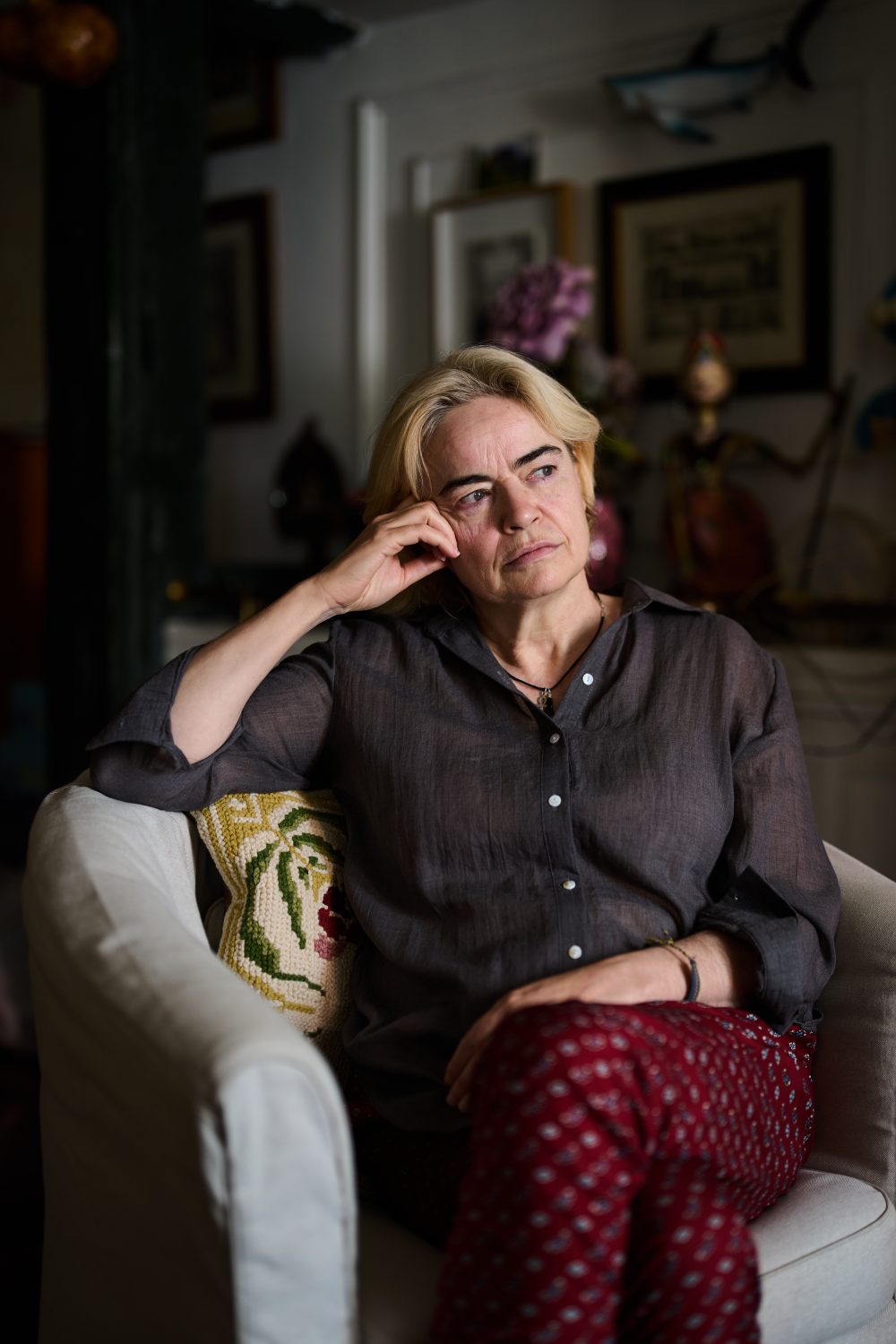

MADRID (AP) — During the 1970s in Catholic Spain under Francisco Franco’s dictatorship, Paula Alonso-Pimentel attended religious education classes at age 8 at a faith-based school in Valladolid, a northern Spanish city.
At that location, she reports, a Marist priest sexually violated her over the course of a year in the school’s entrance area, positioning her on his lap and raising her clothing while other pupils walked by. More than five decades have passed, and she now seeks compensation.
Spain’s delayed confrontation with sexual misconduct within the Catholic Church moved into a fresh stage this year when officials introduced a compensation system for situations like Alonso-Pimentel’s involving accused religious figures who are deceased and whose alleged offenses are beyond prosecution time limits.
The Spanish bishops conference and Spain’s government endorsed the system months ahead of Pope Leo XIV’s scheduled visit beginning Saturday to the nation of 50 million people that was once predominantly Catholic. Significantly, it grants the government ultimate authority over compensation decisions. Globally, clergy sexual misconduct and concealment scandals have shaken Catholic dioceses, harming the Church’s standing and undermining papal support more than thirty years since the crisis first became public in Western nations.
In Spain, certain victims feel reassured while others maintain doubt, contending that the timeframe for compensation applications is insufficient and questioning whether success is possible without mandatory, clear payments.
The system allows victims twelve months to submit applications. Currently, 420 individuals have applied. This follows years of dispute after El País newspaper exposed the extent of alleged misconduct during the church’s silence, plus criticism of the church’s independent victim compensation efforts.
Alonso-Pimentel maintains some doubt but hopes the abuse she has worked for decades to overcome will finally receive attention.
“It must cost them, the Church,” she said. “It must cost them because this cannot come for free. It cannot be that they can continue doing it without paying a huge price.”
The Associated Press does not identify people who say they have been sexually assaulted unless they come forward publicly, as Alonso-Pimentel has done.
For years, she suppressed the recollections. Eventually, she discussed the abuse with friends, romantic partners, mental health professionals and ultimately with others who also claimed clergy had violated them.
Following Pope Francis organizing a worldwide conference in 2019 on clerical misconduct, Alonso-Pimentel contacted the Marist order in Valladolid, requesting information about the priest she claims violated her. She only received his identity. After a short communication period, she became suspicious and ended contact.
When the Spanish church established its independent extrajudicial system for abuse victims in specific cases, she chose not to participate, discouraged by the institution’s approach. Alonso-Pimentel expects the new church-state framework will be more fair.
“I’m going to submit my report no matter what,” she said, “but I also want to see how they work.”
The updated framework requires Spain’s ombudsman to examine each situation through an independent expert team and suggest compensation, whether symbolic, psychological or financial, that the church will subsequently evaluate.
When no consensus is achieved, the situation moves to a joint panel with delegates from the church, the ombudsman’s office and victim organizations. If that panel cannot reach agreement, the ombudsman makes the final decision.
Through El País’ establishment in 2018 of a clergy sexual abuse case database, Spain started addressing a history of priest abuse and concealment by successive generations of bishops and religious leaders. This occurred later than other Western nations, including the United States, Ireland and Australia.
As the database expanded, public anger increased, with Spain’s ombudsman assigned by Parliament to investigate the issue’s scope. In 2023, the ombudsman released a critical 800-page document estimating hundreds of thousands of potential church sexual abuse victims in Spain across decades — using a survey of 8,000 individuals. The document also analyzed 487 documented cases.
Spain’s bishops disputed the estimate, stating their investigation identified 728 sexual abusers within the church since 1945. Most offenses occurred before 1990, the bishops’ conference reported, and 60% of alleged perpetrators were deceased.
In 2024, the bishops independently established a victim assistance system on an individual basis. This came months after the Spanish government declared its plan to require church victim compensation, accusing the church of downplaying the issue. Officials said the church’s internal system was ineffective partly due to lacking external supervision.
For this reason, many victims, including Alonso-Pimentel, stated they preferred not to directly contact the church.
You can’t be a judge and a jury in your own case, Alonso-Pimentel said. “It’s as simple as that.”
Earlier this year, the bishops conference reported paying approximately 2 million euros ($2.3 million) to victims, but recognized some victims’ unease. It accepted the value of the new state-church framework.
“It’s opening a new door for the process that the church has already been developing for the past two years,” said Josetxo Vera, the conference’s communications director.
The Vatican has become more direct about compensating sexual abuse victims. In Leo’s first encyclical, he stated that listening to sexual abuse victims included “acknowledging the harm done” and “just reparation.”
Nevertheless, Spain’s bishops have consistently rejected that clerical abuse is systematic, noting that more sexual crimes occur outside the church.
“We believe that, indeed, human nature is flawed, that it has a propensity for evil, and that it needs a great deal of reconciliation and forgiveness. But I can’t say that it’s a systemic issue,” said Vera. “We are part of this society. We share some of its virtues, and we also share some of its vices and crimes.”
Other victims and advocates fear that Spain’s new approach still lacks sufficient strength. A primary concern: no compensation scale exists based on abuse severity, with the church and government choosing to assess cases individually. Additionally, it lacks legal enforceability.
“I see this protocol actually as being quite fragile,” said Anne Barrett Doyle, co-director of Bishop Accountability, a Boston-based nonprofit that researches child abuse by priests and the management of those cases by bishops, religious orders and the Vatican. “It has a very short time frame. It has no matrix to establish minimum awards for various categories of injuries. So will it be fair? Will it be consistent?”
Before Leo’s visit, Spanish activist Miguel Hurtado has referenced his personal abuse case to emphasize potential system weaknesses.
More than twenty years ago, Hurtado claims that a monk named Andreu Soler sexually assaulted him when he was a 16-year-old Boy Scout in a group supervised by Soler at the Montserrat Abbey, an 11th-century Benedictine monastery in the mountains near Barcelona.
Initially, the monastery convinced his parents not to report the alleged abuse to authorities, Hurtado stated. He attempted to continue with his life. But as Hurtado witnessed the clerical abuse reckoning occurring years later, he publicly shared his accusations, including to El País.
The Montserrat Abbey, through an independent investigation in 2019, confirmed multiple sexual abuse cases committed by Soler over decades. But Hurtado said it did not accept any obligation to formally compensate victims “because everything is time-barred, both criminally and civilly.”
When questioned by the AP, the monastery refused to comment on Hurtado’s case or whether it will participate with other cases that might arise through the new reparations system.
Hurtado expressed disappointment that Leo will visit the monastery despite the abuse allegations, which he has provided to the Vatican and other church authorities.
He worries the new system could leave many victims uninformed.
“The problem is that it’s built on sand,” Hurtado said.