
WASHINGTON — For decades, the Federal Reserve gradually transformed itself from a secretive government institution into one that openly shares its thinking and decision-making with the public. That trend may now be reversing.
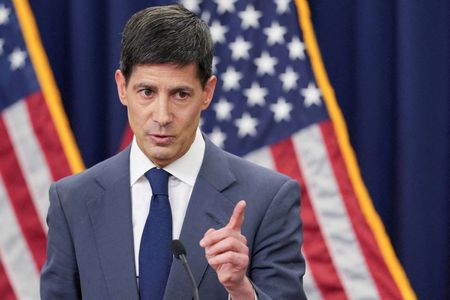
During his first press conference on Wednesday, incoming Fed Chair Kevin Warsh began rolling back some of that transparency. Warsh, echoing the views of many economists, believes financial markets have grown too reliant on the Fed’s guidance, and that such guidance is best reserved for times of financial crisis or economic trouble.
The changes came quickly. The Fed’s interest rate statement was trimmed to just 132 words — down sharply from 341 words in April. Warsh also made clear that the statement contained no hints, or “forward guidance,” about where the Fed might move next.
While Warsh delivered on his promise to scale back the Fed’s communications — especially regarding future interest rate moves — analysts warn the approach carries real risks. More unpredictable swings in stock and bond prices could follow, and consumers and businesses may ultimately face higher borrowing costs.
“Forward guidance in general has served to suppress volatility and anchor market expectations,” said George Pearkes, global macro strategist at Bespoke Investment Group. “And that has led to lower borrowing rates, relative to alternatives.”
That said, Pearkes noted the effect on everyday consumers would likely be limited, perhaps pushing mortgage rates about a quarter of a percentage point higher than they would have been otherwise.
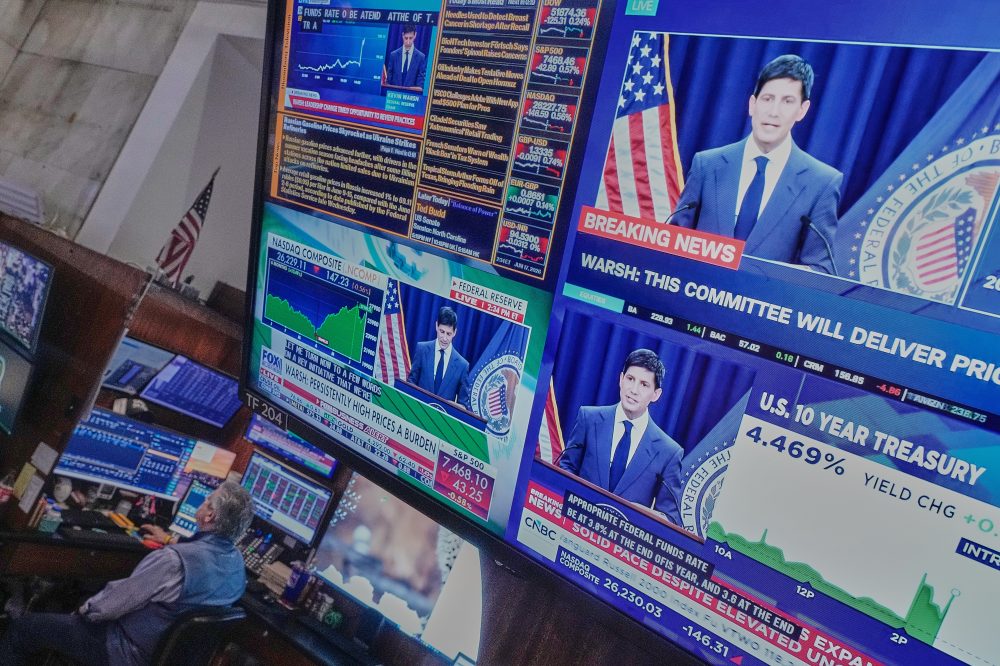
Financial markets reacted with uncertainty Wednesday, falling after the Fed’s statement and Warsh’s news conference. The yield on the 10-year Treasury — which has a strong influence on mortgage rates — climbed to 4.49% from 4.43%, though it retreated somewhat by Thursday. The 2-year Treasury yield, which closely mirrors expectations for Fed action, stood at 4.16% Thursday, up notably from 4.05% before the meeting. The broad S&P 500 stock index fell 1.2% Wednesday.
These swings may be a preview of what’s ahead. Past Fed chairs have given financial markets enough clarity about upcoming decisions that investors could largely anticipate them. Warsh, however, has often pointed to former chair Alan Greenspan as his model — a leader whose carefully guarded comments frequently left investors uncertain about the Fed’s next steps.
Greenspan, who led the Fed from 1987 to 2005, did introduce the practice of issuing a statement after each meeting. The very first one, released February 4, 1994, announced a rate increase for the first time in five years — a move that caught investors off guard and sent the Dow Jones Industrial Average tumbling 2.4% that day.
The pullback in communications is part of a broader set of changes Warsh signaled Wednesday. He announced the creation of five task forces to review the Fed’s communications strategy, its balance sheet, how it collects and analyzes economic data, the effects of artificial intelligence on jobs and productivity, and the frameworks it uses to evaluate inflation.
Warsh said the communications task force would look at the Fed’s quarterly economic projections and other practices that have developed in recent years, including press conferences. Former chair Ben Bernanke was the first to hold such press conferences, though only after every other meeting. Warsh’s predecessor, Jerome Powell, later expanded that to after every meeting. Both of those practices may now be up for review.
The contrast with the 1990s is striking. During that era, Greenspan never publicly explained a Fed decision to reporters on the record. Warsh could ultimately walk back significant portions of the transparency the Fed has built up over the past few decades.
“This is a big change in how the Fed has conducted itself since the (2008-2009) global financial crisis,” said Matthew Luzzetti, chief U.S. economist at Deutsche Bank. “Since then there has been a one-way train to greater communication, more transparency, and more forward guidance. Warsh has now put that train in reverse.”
Previous Fed chairs beginning with Bernanke saw a clear advantage to more open communication: it allows the Fed to steer markets in the direction it wants. While Fed officials directly control a short-term interest rate, longer-term rates — such as the yield on the 10-year Treasury — are heavily shaped by investor expectations about inflation and economic growth. By telegraphing future moves, policymakers can influence those longer-term rates even before any official action is taken.
Warsh, however, believes markets have become too dependent on that guidance. He wants investors to form their own views by studying economic data, which the Fed can then factor into its own assessments.
“Financial market prices are probably the most important source of information to guide central bankers,” Warsh said at Wednesday’s news conference.
David Andolfatto, an economics professor at the University of Miami and a former economist at the St. Louis Fed, said he agrees with Warsh that forward guidance has real weaknesses. Unexpected events — such as Russia’s invasion of Ukraine or the Iran war — can quickly make such guidance irrelevant, he noted.
But Andolfatto argued that Warsh needs to go further and spell out how the Fed would respond to unexpected shocks or challenges like the ongoing struggle with persistent inflation — something Warsh has not yet done.
“I’m with him on dispensing with forward guidance, but you have to replace it with a contingency plan,” Andolfatto said. “It’s not enough to say, trust me, we’ll keep inflation at target.”
There may be an unintended consequence to Warsh’s approach, Pearkes noted. By stepping back from forward guidance, Warsh may actually give more influence to the other 18 members of the Fed’s rate-setting committee. Those officials — six members of the Fed’s governing board and the presidents of the 12 regional Fed banks — regularly give public speeches, and their remarks will draw even greater scrutiny as markets search for clues about the Fed’s direction.
A major test of Warsh’s approach could come if the economy hits a sharp downturn or financial crisis, similar to what happened during the COVID pandemic. In those situations, economists say, forward guidance can be a critical tool for steadying nervous markets.
“Whether it will stand the test of time and he will behave this way for five years is a very different question, but one that we’re going to have to wait for events to unfold to get an answer to,” Pearkes said.