
BOSTON (AP) — Which wine goes best with Shark Week? Can a pinot noir hold up against the mud and sweat of a Tough Mudder obstacle race? And is a wine simply called SEX too bold — or not bold enough?
As strange as those questions might seem, they reflect the very real challenges facing wine marketers today. Sales are down, younger drinkers are harder to reach, and an industry long associated with snobbery and stuffiness is scrambling to reinvent itself for 2026 and beyond.
“That self-important way that wine can refer to itself — we’re really trying to tip that on its head,” said Helen Kurtz, chief of marketing for The Wine Group, which is hoping its easy-drinking Cupcake Vineyards line can appeal to a generation raised on Frappuccinos and gas station BuzzBallz. “It’s about being less serious about ourselves, because that’s what this consumer is demanding,” she added.
That philosophy has led The Wine Group to tie its MD 20/20 brand to World Wrestling Entertainment events under the tagline “Mad Dog Enters the Ring,” and to launch Fuel by Franzia — a boxed wine line aimed squarely at NASCAR fans under the slogan “Full Throttle Flavor.”
The broader picture is one of declining alcohol consumption across the board, a trend that picked up speed after the pandemic. An aging Baby Boomer generation is gravitating toward healthier lifestyles, Gen Z drinkers are reaching for low- and no-alcohol options, and marijuana has become a more widely available alternative. The U.S. alcohol industry, valued at roughly $560 billion, is responding in different ways — hard liquor, for instance, has found a growth area in ready-to-drink canned cocktails. But wine faces a particularly steep climb.
“You’ve got a bunch of things, what you might call friction points, with wine, that are particularly salient to younger consumers,” including cost and drinkability, said Christian Miller, director of research for the Wine Market Council.
Wine has long carried an air of pretension — from the flowery language used to describe it (“notes of asphalt and barnyard,” anyone?) to the price tags that come with many bottles. Styles have historically skewed toward high-alcohol, high-tannin options that don’t exactly appeal to someone used to sipping a hard seltzer. And according to a trends report by the British household products company Lakeland, fewer than a third of Gen Z households even own a corkscrew.
A growing number of wineries are pushing back against all of that, trading the formal façade for a more approachable, even irreverent personality. Price still matters — the sweet spot appears to be between $8 and $20 a bottle — but the message matters more.
“My mantra is always to communicate the language of wine to everyone because not everyone speaks wine. The wine should be a reflection of the consumer who is going to buy it,” said Charles Smith, founder of House of Smith, the company behind brands like Kung Fu Girl Riesling and SEX Rosé.
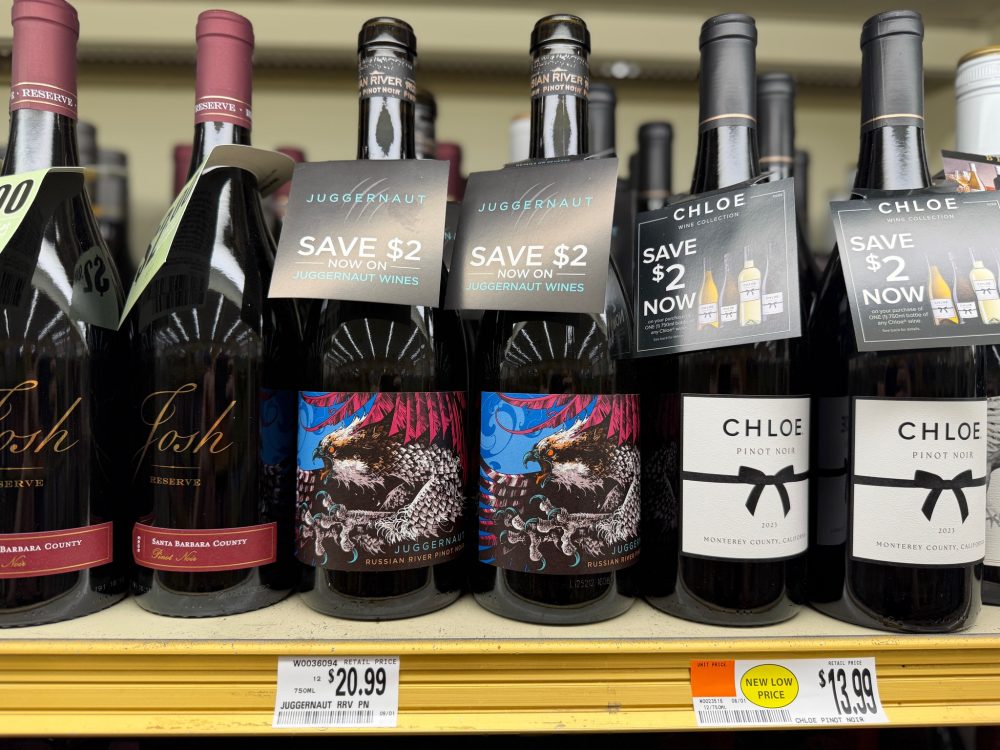
Bogle Family Wine Collection has taken a similarly bold approach with its Juggernaut Wines line. The bottles feature striking labels depicting powerful predators — a shark, a grizzly bear, an orca, a lion, and an aggressive bird of prey — a sharp contrast to the pastoral scenes and elegant imagery that dominate most wine shelves.
The strategy also involves placing those bottles in unexpected settings, said Jessica LaBounty, the company’s marketing director. For two years, Juggernaut has sponsored Tough Mudder obstacle races under the slogan “Adventure awaits.” The brand has also appeared at zoo events where attendees can name dead rodents and insects after former romantic partners before feeding them to the animals.
This year, Juggernaut has partnered with Discovery network’s Shark Week. Its chardonnay label features a particularly fierce great white shark and the tagline “just the right amount of bite.”
“The viewer base of Shark Week lines up really, really nicely with who we know our consumer to be,” LaBounty said. “It’s another way to meet them where they are already versus kind of asking them to come to us.”
The goal is to close a generational gap that wine largely missed. Younger drinkers simply don’t talk about wine the way their older counterparts do. A popular social media meme illustrates the divide perfectly: a Millennial marketing team pitches wine by discussing terroir and full-bodied flavors at length, while the Gen Z version cuts straight to the point — “it’s giving… yummy.”
Bread & Butter Wines has leaned fully into that casual mindset with its tagline, “Don’t overthink it.” The brand suggests pairing its red blend with a candy charcuterie board, its pinot noir with a Thanksgiving leftovers sandwich, and its prosecco with french fries.
“The No. 1 goal is to disrupt the shelf because it is so crowded,” said Caitlin Ward, the brand’s digital and marketing director. “Sassiness is a way to do that.”