
Technology giants are opening their wallets wide to build out artificial intelligence systems and massive data centers — but some of the investors who rode that wave higher are now having doubts.
Supporters of AI view it as the next major transformation of the global economy, but that transformation carries an enormous price tag. Four companies alone — Alphabet, Amazon, Meta Platforms, and Microsoft — are expected to spend a combined total of up to $720 billion this year, with the bulk of that money going toward AI data centers.
This week, investors began taking a harder look at those staggering figures and asking whether AI can realistically deliver the profits and productivity gains needed to make those investments worthwhile. Critics have raised the specter of an AI investment bubble. On Monday, shares of both Amazon and Alphabet dropped roughly 5%.
The pain spread on Tuesday, when chipmakers — including Nvidia, Micron Technology, Broadcom, and Lam Research — led the broader market downward.
Initially, companies like Microsoft and Alphabet used their own cash reserves to fund AI expansion. Increasingly, however, they are turning to financial markets to raise additional capital.
Alphabet, the parent company of Google, announced earlier this month that it plans to raise $80 billion by selling shares of its stock to help cover its investment costs. In total, Alphabet is planning to spend up to $190 billion this year — a figure that exceeds the entire market value of The Walt Disney Co. The company has also signaled that its investment spending next year will “significantly increase.”
In March, Amazon raised $54 billion through bond sales in the United States and Europe as part of its plan to spend around $200 billion this year on AI-related projects.
Elon Musk’s rocket company SpaceX had been on a three-day losing streak heading into Tuesday. The stock clawed back some ground during the session but remained only modestly above where it closed on its first day of trading on June 12. Musk has acknowledged that SpaceX will need to spend heavily to pursue its ambitions of launching AI data centers into space, and the company has said a portion of an upcoming bond offering will go toward that AI buildout.
Several chip companies have seen their stock prices surge as demand for memory and processing power — driven by AI data centers and other projects — pushed prices higher. As investors bid up those stocks in anticipation of growing profits, a key valuation measure known as the price-to-earnings ratio, or P/E ratio, has climbed sharply.
Marvell Technologies posted losses for five consecutive years before recording a profit of $2.7 billion in the fiscal year that ended in January, fueled by strength in its data center business. The stock has more than tripled so far this year, with its P/E ratio jumping from around 30 at the start of 2026 to nearly 100. Some data storage companies have posted even more dramatic gains. Sandisk shares have surged more than 700% year to date, with a P/E ratio of 68.
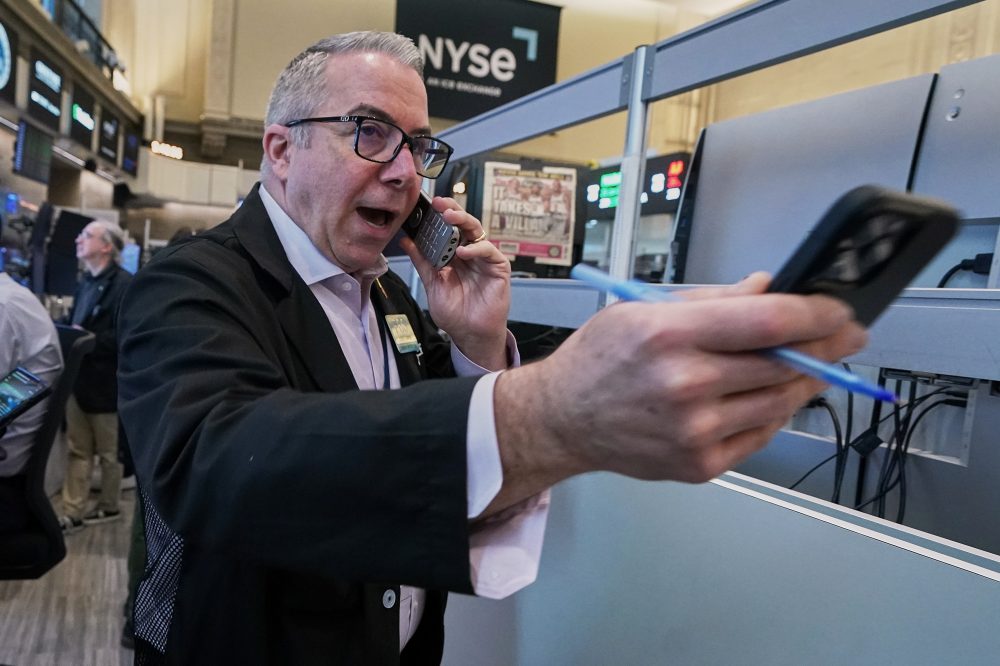
On Tuesday, investors shed at least some of their positions in these high-flying stocks. Sandisk plunged 12.2%, while Marvell fell 8.1%.
The selloff also hit exchange-traded funds with heavy tech exposure. The Invesco QQQ Trust Series ETF declined 2.6%, while the iShares Semiconductor ETF dropped 7.1%.
While some investors may genuinely doubt that companies spending aggressively on AI infrastructure will be able to generate sufficient profits, analysts suggest that at least part of this week’s selling may simply be investors locking in gains after the stock market’s recent run of record highs.
“With no clear catalyst driving the move lower, we believe today’s pullback likely reflects profit-taking following a strong rally from the March lows,” said Brock Weimer, an investments strategy analyst at Edward Jones.
Big Tech’s gains have been a major engine behind record-setting runs in major stock indexes this year. Within the S&P 500, the technology sector alone has risen nearly 27% over just the past three months and about 18% for the year. In Asia, South Korea’s Kospi index has nearly doubled so far in 2026.
Heavy selling on Tuesday triggered a trading halt in the Kospi, which Wedbush analyst Dan Ives noted in a research report set the stage for the wave of tech stock selling when U.S. markets opened. Despite the turbulence, Ives wrote that overall AI demand across Asia is “showing no cracks in the armor, which continue to make us very bullish on owning the tech AI winners over the coming year.”
Still, the technology industry’s race to build out AI infrastructure could be setting the stage for a future oversupply problem, according to Philip Straehl, chief investment officer at Morningstar Wealth.
“Periods of elevated capital investment have historically not translated into strong outcomes for investors, leaving us cautious on the outlook,” Straehl wrote in a report released last week.
He anticipates that the rapid expansion of AI computing capacity will put downward pressure on pricing, squeeze company returns, and eventually lead to a pullback in investment. Semiconductor companies are “particularly exposed to this dynamic,” Straehl wrote.
A shortage of computer memory and rising prices helped drive stocks like Sandisk higher this year, but Straehl noted that the same supply-and-demand conditions are likely to attract competitors — including companies like Nvidia — looking to capture a share of that market.
Straehl suggests that as AI-related companies claim a larger slice of major stock indexes, investors may be better served by spreading their money into sectors such as healthcare and other areas that are less tied to AI expectations.