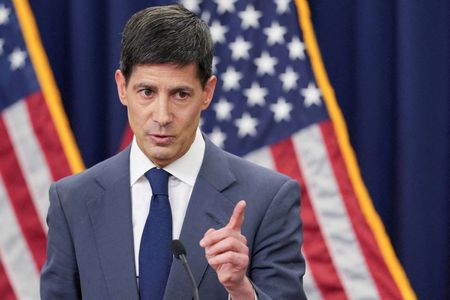

BERLIN — Porsche’s newly appointed chief executive took to the stage Tuesday to ask shareholders for patience, pledging to unveil a full turnaround plan later this year as pressure mounts to reverse shrinking profit margins and a steep sales decline in China.
CEO Michael Leiters, who joined the Volkswagen-owned automaker at the beginning of the year to lead a major restructuring effort, said investors can expect a detailed roadmap when the company hosts a capital markets day on October 7.
That timeline did little to satisfy many shareholders, who are demanding faster action following a dismal 2025 in which Porsche’s troubles in China deepened and its operating margin fell to just under 1%.
“Developments in China, in particular, make it clear that Porsche’s business model is no longer viable in its current form,” said Hendrik Schmidt, representing shareholder DWS.
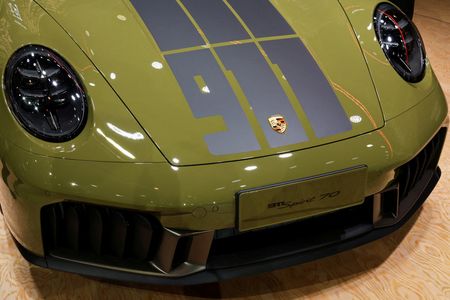
Porsche — long defined by its iconic 911 rear-engine sports car — has seen its stock value cut roughly in half since going public in 2022. Over that same period, China has gone from being one of its most lucrative markets to its worst, with sales tumbling 26% in 2025.
Leiters’ plan to rebuild profit margins centers on shifting focus toward higher-end models and making broad cost reductions, on top of 3,900 job cuts already negotiated with labor unions.
German auto industry analyst Ferdinand Dudenhoeffer said the early signs of Leiters’ approach look like a standard restructuring playbook. “In the mid- to long-term, it is not clear where the journey is going,” he noted.
Harald Klein of the DSW association, which represents smaller investors, pointed out that Leiters made no mention of software development or autonomous driving technology — both considered essential for winning over tech-savvy Chinese consumers.
“It’s not just about brand image, quality or engineering expertise, which Porsche no doubt has. In China, massive investments must be made in the software user experience and new business models,” Klein said.
Under Leiters’ strategy, the beloved 911 and an upcoming all-electric version of the Cayenne SUV are expected to anchor Porsche’s future vehicle lineup.
Dudenhoeffer, however, expressed doubt about whether those models will be enough. “The Cayenne will certainly face its own test in China when it comes to value for money,” he said.
Porsche had long thrived in the world’s biggest auto market on the strength of demand for its premium SUVs. But the landscape has shifted significantly, with homegrown brands like Xiaomi now offering feature-packed SUVs at considerably lower price points.