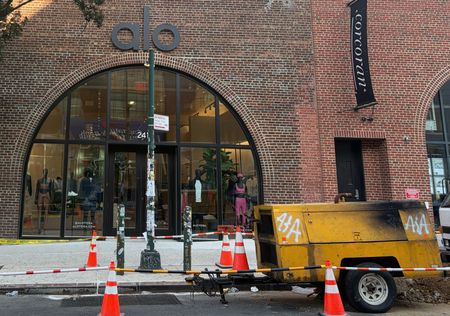

The owner of popular yoga and sportswear brand Alo has agreed to sell its wholesale T-shirt division, Bella+Canvas, in a deal that drew little excitement from Wall Street — but one that analysts say could be laying the groundwork for a major financial move involving the Alo brand itself.
While Alo’s founders have stayed quiet about the company’s future direction, equity analysts and retail merger-and-acquisition advisers believe the Bella+Canvas sale positions Alo for either a public stock offering or an outright sale. The deal has not yet closed.
According to Neil Saunders, managing director at research firm GlobalData Retail, offloading Bella+Canvas gives founders Danny Harris and Marco DeGeorge more room to maneuver with Alo, sharpening its identity as a focused, upscale athleisurewear brand in a crowded and competitive marketplace.
“Alo is a mature business, so it’s at the stage where you generally do something with it. You IPO it, you sell it off, you launch something else alongside it to grow another complementary area to Alo,” Saunders said.
Harris and DeGeorge, described as publicity-shy billionaires, have not made any public statements about whether a sale or IPO is on the table. Notably, when Bella+Canvas announced its sale, it made no mention of its connection to Alo — and that announcement was removed from its website shortly after Reuters reached out for comment last month.
Neither Alo nor Bella+Canvas responded to requests for comment. A spokesperson for SanMar, which agreed to purchase Bella+Canvas for an undisclosed price, confirmed there have been no developments since the May 18 announcement that deal terms had been agreed upon.
Harris and DeGeorge built Bella+Canvas into one of the largest wholesale T-shirt and apparel manufacturers in the United States, starting the company out of a garage in 1992. It operates under the parent company Color Image Apparel Inc. and has long served as a steady, if lower-profile, revenue source for the overall business.
Alo — which stands for air, land and ocean — was launched nearly 20 years ago in Los Angeles and has since grown into a major force in yoga and sportswear. The brand has earned a celebrity following, with stars like Taylor Swift, Bella Hadid and Hailey Bieber photographed wearing Alo clothing during everyday activities and workouts.
As Alo’s popularity climbed, so did its revenue, eventually surpassing Bella+Canvas as the larger business, according to a source with knowledge of the company.
By separating itself from the wholesale T-shirt operation, Alo becomes a more straightforward company for investors or buyers to assess and put a value on — simplifying any potential IPO or sale process, according to about a dozen retail analysts, M&A advisers and investors.
This would not be Alo’s first brush with outside investment. The company held discussions with several private equity firms and other potential investors back in 2023, seeking its first institutional investment partner in a deal that could have valued it at around $10 billion. At the time, Wall Street feedback indicated that Bella+Canvas added little value and made the company’s investment story harder to tell. No deal was reached.
“It makes sense to clean up the model and financials for investors,” said Cristina Fernández, a managing director and senior research analyst at Telsey Advisory Group.
Founded in 2007 as a yoga clothing line, Alo has since branched out into skincare, footwear, beauty and wellness products. The brand has been increasingly targeting luxury consumers, highlighted by the launch of a $3,600 leather duffel bag last year.
Alo competes directly with industry leader Lululemon, as well as rising athleisure brands including Vuori, Fabletics and Gymshark — all of which have reportedly been exploring IPOs in recent years.
The athleisure market surged during the COVID-19 pandemic as people working from home reached for comfortable clothing. But as employers began calling workers back to the office, consumer preferences began shifting away from loungewear.
“[Athleisure] certainly peaked during the pandemic. Since then, it has lost a little bit of its casualwear share and a lot of that is due to the huge resurgence we’ve seen in denim,” said Sky Canaves, a principal analyst at Emarketer. “More broadly we’re seeing a period of normalization in athleisure wear growth in the U.S.”
Those market pressures have hit Lululemon hard. Several quarters of weak performance sparked a bitter dispute with company founder Chip Wilson, who claimed the brand had “lost its cool” and blamed the board for its declining stock price. The board, in turn, accused Wilson of holding outdated views and making damaging public attacks. The two sides reached a settlement last month. Lululemon’s stock has fallen 50% so far this year, leaving the company with a market value of roughly $12 billion.
Typically, founder-owned companies bring in institutional investors before going public in order to establish a valuation benchmark. However, companies can also list on a stock exchange without first taking on outside capital.
The co-founders’ recent comments suggest they have strong preferences about the type of investors they want involved. In the Bella+Canvas sale announcement, DeGeorge said, “It was paramount to my partner and me that Bella+Canvas joins a privately held, family-owned company rather than private equity.”
Harris and DeGeorge have built Color Image Apparel entirely without outside institutional investment. Forbes estimates each founder is worth $3.7 billion.
Alo currently operates more than 150 stores worldwide. Some locations include yoga studios offering classes, and the company maintains an invitation-only gym at its Beverly Hills headquarters where celebrities work out in the brand’s signature leggings, which retail for over $100.
“Alo is a little more exclusive and higher end with stronger ties to luxury that really speak to the affluent or highly aspirational consumer,” Canaves said. “Their most recent campaign was with a super yacht in the French Riviera.”