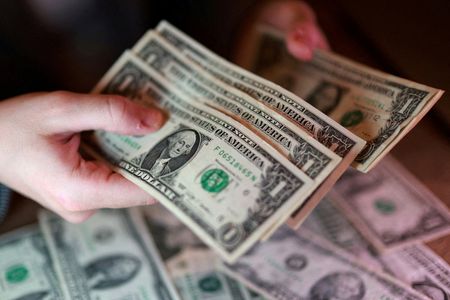

The U.S. dollar pushed higher Wednesday, reaching a fresh 13-month peak against a basket of major world currencies as investors fled a sharp downturn in technology and semiconductor stocks and braced for possible Federal Reserve interest rate increases.
A sweeping sell-off across the tech sector dragged global stock markets lower, as traders locked in profits following a prolonged rally. The turbulence sent investors toward traditional safe-haven assets like the dollar and government bonds.
At the same time, expectations for a Fed rate hike continued to grow, with central bank officials adopting an increasingly hawkish tone in light of the U.S. economy’s continued strength. According to CME FedWatch data, markets are now pricing in a 37% probability of a 25-basis-point rate increase at the July meeting — up sharply from 8.5% just one week ago. The odds for a September hike have also risen, climbing from 29.1% to 70%.
The dollar index, which tracks the greenback against currencies including the Japanese yen and the euro, reached an intraday high of 101.44 — its strongest reading since May 13, 2025.
Ray Attrill, head of FX strategy at National Australia Bank, noted the dollar’s continued appeal. “The U.S. dollar is still the preferred safe-haven,” he said.
Attrill added a note of caution, however. “Obviously the momentum is on its side at the moment, but I think there is a lot priced in,” he said. “We’ll have to see a correction in risk sentiment, one that’s broader rather than just the tech sector, or the market further ratcheting up its expectations for hikes, before the dollar can go very much higher from here.”
The euro was last trading near a one-year low at $1.1375. The British pound slipped slightly to $1.3199 after a Bank of England policymaker, Alan Taylor, indicated that an “extended hold” on interest rates was the appropriate response to ongoing inflation pressure.
The Australian dollar, which tends to reflect investor appetite for risk, held steady at $0.6918 ahead of a key inflation report due later in the day. The New Zealand dollar edged down 0.05% to $0.5665, hitting a fresh seven-month low.
Adding to safe-haven demand, tensions between the United States and Iran emerged over key elements of their fragile framework agreement, including disputes over nuclear matters and control of the Strait of Hormuz — raising doubts about whether the deal can hold.
The Japanese yen remained under significant pressure, last trading at 161.57 after briefly falling to a two-year low of 161.93 late Monday. A move above 161.96 would push the yen to its weakest level since 1986.
Verbal warnings from Japanese government officials have done little to ease the strain on the currency, given the wide gap between U.S. and Japanese interest rates and skepticism about whether Tokyo would actually intervene in currency markets.
Former Bank of Japan policymaker Sayuri Shirai warned that the yen could weaken further to 165 per dollar if the Fed proceeds with rate hikes this year.
Meanwhile, a summary of opinions from the Bank of Japan’s June policy meeting, released Wednesday, revealed that some board members called for additional rate hikes to move the central bank’s policy rate closer to what would be considered a neutral level for the economy.