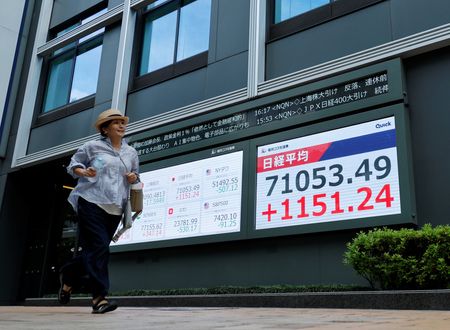

Stock markets in Japan and South Korea soared to all-time highs on Friday, fueled by a sharp drop in oil prices after the Strait of Hormuz reopened to shipping traffic. An interim agreement to end a three-month conflict brought peace to the region and helped ease concerns about inflation.
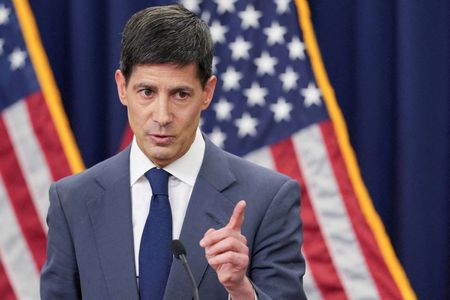
The U.S. dollar surged close to its highest level in 13 months against major currencies after the Federal Reserve took a more aggressive stance on interest rates. Nine of 19 Fed officials indicated they expect borrowing costs to rise further this year, even as the central bank held rates steady at its Wednesday meeting. New Fed Chair Kevin Warsh pledged to keep inflation under control.
Oil tankers began moving through the Strait of Hormuz on Thursday after the United States lifted its blockade on Iran as part of the interim deal. Brent crude futures fell 1% on Friday to $79.03 per barrel, putting the commodity down 9.5% for the week.
It was a remarkable week for global share markets. Japan’s Nikkei index rose 0.8% to set a new record for the fifth consecutive session, bringing its weekly gain to 8.5%. South Korea’s market surged 3.1% on Friday, adding to a weekly increase of 15.3%. Stock markets in mainland China, Hong Kong, and Taiwan were closed for holiday observances.
Despite the optimism surrounding the reopening of the strait, some analysts warned that the situation remains fragile. Madison Cartwright, a senior geo-economics analyst at the Commonwealth Bank of Australia, noted that Iran and Oman will oversee future governance of the waterway, which could allow Iran to impose a so-called maritime service fee. She also pointed out that toll-free passage is only guaranteed for 60 days.
“It undermines international norms on free navigation and sets a precedent that could be followed by others,” Cartwright added.
On Wall Street, futures edged down 0.2% after overnight gains. Intel shares jumped 10% to a record high after U.S. President Donald Trump announced that Apple had agreed to partner with Intel to design and produce chips domestically.
The U.S. dollar index was on pace for a weekly gain of 1%, sitting at 100.78 on Friday. The stronger dollar pushed the Japanese yen to 161.26 per dollar — its weakest point since July 2024 — well past the 160 level that many analysts consider a threshold for potential Japanese government intervention in currency markets.
The British pound slipped 0.1% to $1.3195 after falling 0.7% overnight. The Bank of England voted 7-2 to hold interest rates steady. Separately, Greater Manchester mayor Andy Burnham won an election in northern England on Friday, removing a significant obstacle to a potential leadership challenge against Prime Minister Keir Starmer.
The Fed’s hawkish signals hit short-term bond markets hard. Two-year U.S. Treasury yields climbed 9 basis points this week to 4.1790%. Longer-dated bonds, however, benefited from falling oil prices and confidence that the Fed won’t bow to political pressure to cut rates. Ten-year yields dropped 3 basis points to 4.4510%, while 30-year yields fell 7 basis points to 4.9010% — near their lowest level in two months.
“The curve remained notably flatter than before the meeting, reflecting the combination of higher expected policy rates and firmer confidence in the Fed’s inflation-fighting credibility,” said Molly Nickolin, a strategist at Morgan Stanley.
Trading in U.S. Treasury markets in Asia was paused due to the Juneteenth holiday back home.
Precious metals took a hit from the dollar’s strength. Spot gold fell 0.5% to $4,188 per ounce, while spot silver dropped 0.8% to $65.30 per ounce.