
Nissan has quietly pulled the plug on plans to develop a fully electric version of its most popular vehicle in Europe, according to six people with knowledge of the decision, as the automaker works to reduce costs and streamline its product lineup.
The decision to halt work on an all-electric Qashqai SUV comes at a time when both established competitors and newer Chinese automakers are flooding the European market with competitively priced electric vehicles.
While abandoning the project saves money in the short term, Nissan risks falling behind its competition in an important market category. Even if the company decides to revive the effort, two of the sources said the vehicle would not be available for purchase until the early 2030s.
Back in 2023, Nissan announced its intention to manufacture an electric Qashqai at its Sunderland facility in Britain — the country’s largest car plant — a move that was celebrated by the UK government as reinforcing Britain’s standing as a global hub for electric vehicle production. At the time, Nissan did not provide a specific timeline for delivering the electric model.
Since then, the company has undertaken a sweeping global restructuring. It is currently in discussions with the London government about securing financial backing for an updated plan for the Sunderland plant, which is expected to be announced in the coming months, Reuters previously reported.
That upcoming announcement is expected to shed light on Nissan’s current intentions for the electric Qashqai, development of which was suspended early last year, according to the sources, who requested anonymity given the sensitivity of the matter.
The Sunderland plant already produces the electric compact Leaf, and in April Nissan revealed that an electric crossover version of the Juke would also be built there.
When asked for comment, Nissan did not directly address its plans for a fully electric Qashqai. Instead, the company said it remains committed to growing its “electrified” vehicle lineup, which includes hybrid models. Nissan also noted that the European market has seen “significant volatility” in electric vehicle demand, and said it is pursuing a “balanced” approach to electrification.
A spokesperson for the UK government declined to weigh in on Nissan’s business decisions.
The Qashqai is currently sold in petrol and hybrid versions, and it represented roughly 45% of Nissan’s total European sales of 330,000 vehicles in 2025, according to sales data reviewed by Reuters.
Any new government funding for Nissan is expected to be tied to the automaker’s commitments to produce new models or variants and to protect jobs at the Sunderland plant, which employs around 6,000 workers in England’s industrial northeast, sources previously told Reuters.
Nissan also announced this month that it has entered into an agreement with Chinese automaker Chery to explore the possibility of manufacturing Chery vehicles at one of the two production lines at Sunderland.
Britain is additionally consulting with automakers about potentially easing rules that require them to meet electric vehicle sales targets or face heavy financial penalties, two of the sources said. Those potential rule changes could give Nissan more flexibility to produce hybrid vehicles at the Sunderland plant, which last year accounted for more than 35% of all cars manufactured in Britain, according to the Society of Motor Manufacturers and Traders.
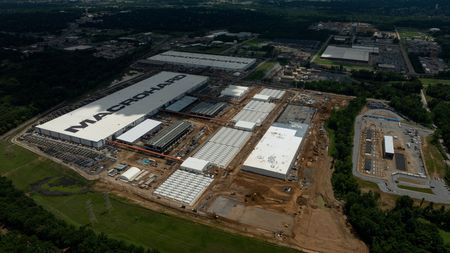
The shelving of the electric Qashqai reflects a wider reassessment of Nissan’s global vehicle lineup. Earlier this year, the company confirmed it was scrapping plans to build two electric SUVs at its Canton, Mississippi, plant, choosing instead to focus on hybrids. Globally, Nissan has said it plans to reduce its total number of models from 56 to 45.
Proposed European Union regulations that would impose local content requirements on electric vehicles have also created uncertainty for manufacturing those cars in Britain, which departed the EU in 2020. About 60% of vehicles produced in Britain are exported to the EU, and the UK car industry lobby group warns that being excluded from “Made in EU” status poses a serious threat to Britain’s automotive sector.
That uncertainty is already rippling through Nissan’s supply chain. A separate plan to build a three-in-one electric vehicle powertrain at a Sunderland factory operated by Nissan subsidiary JATCO has also been scrapped, the companies confirmed in statements to Reuters.